


Cartoon – We’ve found the people responsible

During this week’s National Association of Corporate Directors summit in Washington, DC, there will be lots of time spent on shareholder activism, executive compensation, and several other key in-the-moment issues. But Jane Stevenson, Korn Ferry’s vice chairman of the firm’s Board & CEO Services practice, says that those issues overshadow three, considerably more existential issues modern board directors have to address. Before her own panel presentation, Stevenson laid out what she thinks board directors should have on their minds.
In today’s global and active economy, the lines between competitive markets have never been blurrier.
is Amazon a consumer company, for example, since it sells everything from groceries to garage door openers? Or is it a technology company, since it owns and operates the legions of computer servers that make e-commerce—its own and others—possible? With all the crossover, it’s very difficult for board members to assess whether all the disruptions are accelerators to the organization’s growth, or roadblocks.
This is a huge topic because of the rapid pace of change and needs of leadership with the onset of artificial intelligence and the changing nature of commerce, as our society potentially moves from an exchange of goods to a thought exchange. Typically, there is a good amount of lead time for any transformational innovation, but once it takes hold it tends to be exponential. Boards really need to be able to see around hairpin turns and to fly at a high enough elevation to anticipate appropriately.
Boards needs to step up in a different way and think with a different level of expansiveness, involvement and opportunity building. The day of boards just evaluating based on what’s happening today is not enough, it takes years to build those outcomes. It’s not just about identifying problems, but also about awareness. Boards need to ask the right questions (not just regulatory) that help to improve leadership. Boards need to look at the world and create a lens that the CEO would not have complete access to without the directors.
One way to think about it is: Do you have the right board to pick the next CEO? Do you have the right CEO in place to have the right leaders? Are the right leaders the ones to really define the right workforce of the future? How much of that workforce is human and how much of it is evolving into artificial intelligence and robots?
Access to information used to be a huge cost for businesses. That has gone down enormously. Today, the real questions are: What does the information say? What does it mean? And how do we use it? Whole businesses are changing. The boards have to adapt. What boards have to do is to step up to a different kind of leadership, anticipating what will create value, how that impacts the organization, and evaluating if the right leadership is in place to make those pivotal operating decisions on a day-to-day basis. Boards of the future must look forward in a different way and think with a different level of expansiveness, involvement and opportunity building.
In the end, it all comes back to talent and succession, which are tightly aligned. Talent starts with the board and goes down to the lowest level of employees. It will take different kinds of thinking in the boardroom to effectively anticipate all of these issues. The need for diversity in the boardroom to do that effectively and anticipate things effectively has never been higher, not because it’s a do-good cause but because it will require nimbleness in thinking and diversity of perspectives to make that happen.

The opportunity and ability to step into a tipping point makes us feel responsible, powerful, and apprehensive.
Every decision both responds to and creates a tipping point.
Ease:
The pursuit of ease makes you matter less.
Ease in small doses expands capacity, but in large doses destroys us.
Please know that I’m not encouraging workaholism. However, making a difference requires getting your hands dirty.
Direction:
Every decision contributes to trajectory.
The consequence of decisions is real direction, not intended direction. You’re always heading somewhere.
Long-term or short-term:
The appeal of short-term perspectives is immediate gratification, sometimes at the expense of long-term value.
Crisis requires short-term perspective. Put the fire out! But constant “crisis mode” sacrifices the future on the altar of urgency.
Relationships:
Life is relationships, nothing more, nothing less.
Service:
Tipping points include opportunities to both receive and give value.
5 general questions:
What questions might leaders ask when facing tipping points?
Click to access 2017-State-of-Cost-Transformation-in-U.S.-Hospitals.pdf

Approximately 25 percent of hospital and health system executives have no cost reduction goals for their organizations over the next five years, despite 96 percent of executives noting that transforming costs is a “significant” or “very significant” need for their organization, according to survey findings published by Kaufman Hall.
As hospitals and health systems face a myriad of pressures, including regulatory challenges, the rise of narrow networks and consumer demands, healthcare organizations need to reach a cost position that is equal or lower to competitors. For the majority of hospitals and health systems, achieving such a position will require a 25 percent to 30 percent reduction of costs over the next five years, according to Kaufman Hall.
The report, titled “2017 State of Cost Transformation in U.S. Hospitals: An Urgent Call to Accelerate Action,” presents the results of an online survey of more than 150 senior executives from U.S. hospitals and health systems to determine where the industry stands with transforming the cost of care.
Here are six insights from the report.
1. While almost all (96 percent) of executives identified cost reduction as a “significant” of “very significant” need, more than half (51 percent) of respondents said they have no cost reduction goal or a goal of only 1 percent to 5 percent in the next five years.
2. Only 5 percent of hospitals or health systems have a cost reduction goal of more than 20 percent over the next five years.
3. Seventy-five percent of executives indicated that their cost transformation success is average or below average.
4. Nearly 70 percent of executives acknowledged that they must close the discrepancy between their current operating performance and financial plan.
5. Almost 80 percent of respondents noted that they must proactively revise their cost structure with the industry switch to value-based care.
6. According to the report, a lack of accurate data, along with a lack of insight into costs and savings opportunities, may be the reason for limited cost reduction measures.
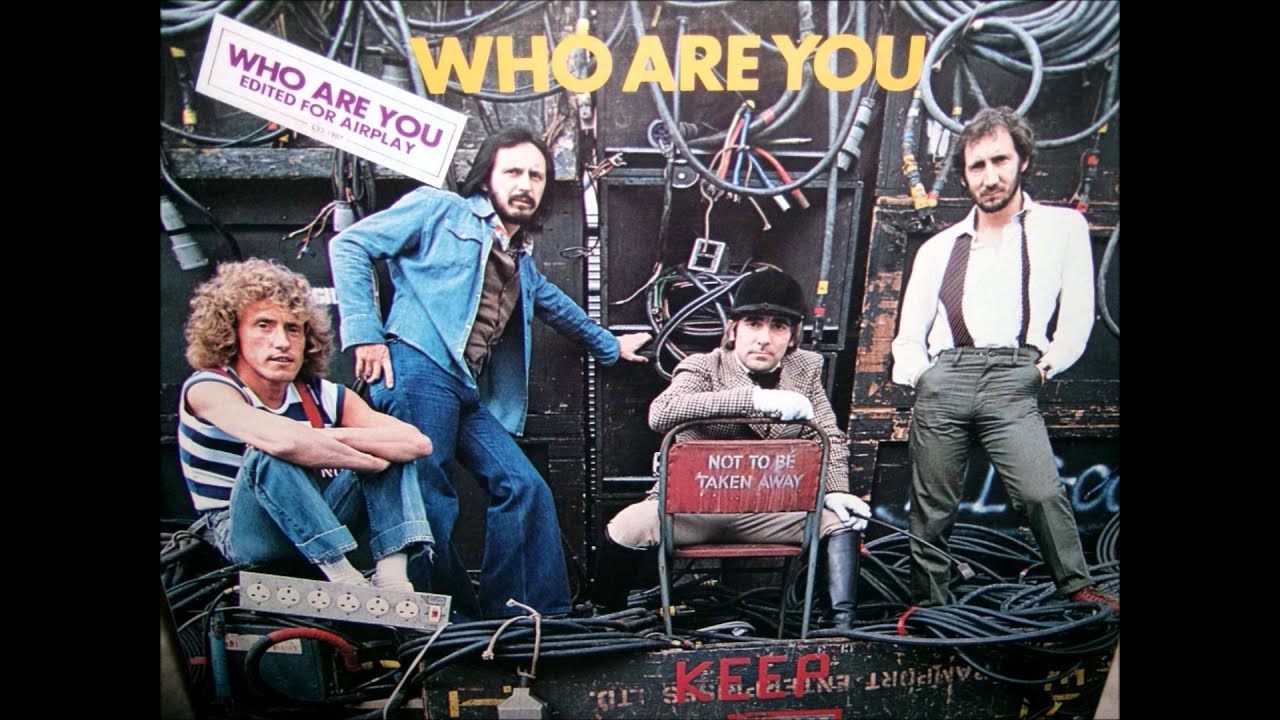
Abstract: This is an article about integrity and its importance as a critical success factor in business.
A very good friend of mine suggested I write an article entitled, “Who are you?” After thinking about this concept, I decided that this is a very good question. Who are you? What are you made of? What are your values, morals, mores, ethics and guiding principles? What are the tenants of your faith? To what power do you ultimately ascribe?
My living has shown me that a lot of people wax eloquently about their high values and standards. I have heard my fill of this around churches. My experience has taught me that in the course of life, you will be tested. Sometimes the test is over a big issue with substantial consequences and a high level of visibility. At other times, the test is trivial. The only witnesses will be you and your God. Will that test show that you are who you say you are when it really matters? Will your proclamations be affirmed by your actions?
I was coming back to my mountain house one day. As we approached, we saw the man of the family that was renting the house next door and two of his small children coming out of our driveway with all of our firewood they could carry. When I confronted the man with his children as witnesses, he offered to pay me for the wood. I told him that if he needed the wood bad enough to feel compelled to enlist his small children in the act of theft by taking, I did not want his money. He offered to return the wood. I asked him if he was inclined to return the wood, why would he steal it in the first place? I told him that if he had asked me in advance, I would have given him enough wood to build a campfire for his family. I told him to enjoy the stolen wood. I did not want it back. I think the man was so ashamed that he did not know what to say. I hope his encounter with me burned an image onto his mind and the minds of his children they will never forget. I wonder how the children’s opinion of their father might have been permanently altered by their encounter with me? The children were not old enough to think about who they are but I wonder if what their dad was doing with them was consistent with other values he was supposed to be teaching them? I wonder if the man will remember his encounter with me when his children become teenagers and get involved in considerably more serious thefts? I wonder if he will connect the dots back to the day he was teaching his children that theft was acceptable? Who was this man? Is who he really is consistent with who he tells others he is? Who will his children grow up to be?
I have seen my fill of bizarre behavior in healthcare organizations. People that will say or do anything to advance their cause in the organization. Business partners that are actively or complicity involved in less than honorable dealings. I worked with a man who had a very simple test of integrity: Does the other person do what he says he will do or not? If you cannot trust someone to do what they say they will do, what can they be trusted about? I have developed a serious problem dealing with people I do not trust. I know that this is more the rule than the exception in politics where anything goes but I choose to avoid dealing with people who have demonstrated they cannot be trusted.
When my children were growing up, I taught them that there is a major problem with integrity. You can spend an entire lifetime developing integrity, respect and rapport among your acquaintances that can be permanently destroyed in a matter of seconds when a breach of honor or integrity occurs. After the breach, there is no cure. People aware of the indiscretion will never trust you again because they have no way of knowing if what you are saying this time is true or not. Along the way, I came across the following poem. It had a profound effect on me and my children and probably has something to do with them going up to be the adults they are. Their formative years were very highly influenced by their grandparents. Do not underestimate you ability to have an effect on others, especially children. Remember the Randy Travis song ‘He Walked On Water?’ I cannot listen to this song without tearing up because Randy is singing about my mother’s father, a man whose shoes I could never hope to fill.
Your Name
You got it from your father,
it was all he had to give.
So it’s your’s to use and cherish, for as long as you may live.
If you lose the watch he gave you, it can always be replaced.
But a black mark on you name son, can never be erased.
It was clean the day you took it, and a worthy name to bear. When he got it from his father, there was no dishonor there.
So make sure you guard it wisely, after all is said and done. You’ll be glad the name is spotless, when you give it to your son.
So, who are you? Are you who you say you are? Who do others say you are? Do you have to tell people who you are or is it evident in your living? What will you do when you are tested? I can say from personal experience that I have been tested and I failed a test when I was younger in an effort to protect my self-interest by going along with something that I knew was wrong. While I have been forgiven, I have never been able to forgive myself. I have been tested since then and I will not make the same mistake twice if for no other reason than the pain of bearing the guilt and remorse is not worth it. What would you do if the stakes of the test was your job? What if you did the wrong thing and still got the outcome you were trying to avoid? Would you judge the risk as having been worth taking? My experience has taught me that it is not worth it to take such a chance in the first place regardless of the risk.
An acquaintance of mine has been charged with felonies by the government related to alleged falsification of reporting related to a corporate integrity agreement among other things. Did he know the reporting was incorrect? The trial will make that determination. If the erroneous reporting was intentional, the result will be devastating. The government has asked the court for his assets to be forfeited. He and his family will be severely impacted regardless of the outcome of this dispute. Sadly, the government’s case has carried so often when healthcare compliance is involved that political candidates like John Osoff run on the claim that they will save the government by curtailing abuse of the Medicare program. The Attorney General recently made news by announcing that he was bringing charges against over four hundred people at the same time alleging they defrauded the Medicare program. Anyone involved in making any kind of disclosure to the government that does not take the potential consequences of inaccurate disclosures whether intentional or not seriously is a certifiable idiot in my opinion. That someone would spend a single second contemplating whether or not to do the right thing when compliance is involved says everything about who they really are.
Willie Nelson said in a song that, “Regret is just a memory written on my brow and there’s nothing I can do about it now.” While you cannot change anything that has happened before, you can change a lot going forward. If you owe anyone an apology for anything you regret, strongly consider doing it.
I would like to thank my dear friend Linda Jackson who is one of the strongest and most incredible people I have ever met for inspiring this article.

Over the past few years, healthcare organizations have joined the likes of nuclear power plants, air traffic control systems and naval aircraft carriers in the journey to become high reliability organizations (HROs).
An HRO is one that has been successful in avoiding disasters despite being in a high-risk field where accidents are expected. But how do we remain resilient and maintain the five principles of a HRO during this chaotic time in healthcare, when we are being asked to do more with less?
The five principles inherent to becoming a HRO are:
We know that system performance in healthcare hinges on the ability to match demand for care with the resources that are needed to provide it. Given the present uncertainty of the Affordable Care Act, the divestiture of hospitals across the country in order to remain solvent, along with decreased payer reimbursement, can providers continue to adopt the five principles of a HRO and maintain resilience in this high-pressure industry?
Remaining adaptable and foreseeing challenges that threaten your mission must become part of your everyday thinking in order to achieve resilient performance.
“HROs give their employees the tools they need to do their jobs, but more importantly, a voice to speak up when processes and systems go awry.”
The inception of accountable care organizations invoked many academic debates, as efforts to drive reform forward resulted in false starts that stopped momentum before it could build. The idea of transformational change has existed for years now, and revolutionary change across the healthcare system is now our reality.
Traditional healthcare reimbursement models are being replaced by new payment methodologies and incentives built around the concept of value and shared risk. Responding to this momentous change is imperative for the long-term viability of all hospitals and health systems.
We now know that evolving with the ever-changing healthcare environment is imperative for the long-term viability of all hospitals and health systems. Health systems must examine their current capabilities and capacity to exist within a value-based environment, and be willing to restructure care delivery when and where necessary, and do it efficiently without compromising the HRO mindset.
An organization’s past success or current position in the market will not shield it from the force of reform, and with that comes inherent risk. HROs give their employees the tools they need to do their jobs, but more importantly, a voice to speak up when processes and systems go awry.
So how do the best managers continue to lead in turbulent times? They remember their fundamental purpose. The more turbulent it gets, stop, assess and reassess the situation and lead with a calm and reassuring manner. Project the organization’s mission, purpose and top goals. Use the daily morning huddle to debrief, reset and refocus before jumping back into the chaos. Eventually you will move through it.
Find opportunities to remind your team of their purpose and mission when things get chaotic. Purpose, above all else, is the source for engagement and motivation in the workplace.
During turbulent times, communication inevitably breaks down. When people stop talking and listening, all the fears and difficulties associated with change come out in force. The role of a manager during periods of change must evolve from encouraging communication to brokering communication. Do not leave effective communication to chance.
When new variables are constantly being introduced at work, setting priorities gets harder. The more things change, the harder it is to prioritize decisions on a day-to-day basis. As a leader in a HRO, your role must evolve to meet this gap.
Above all else, do not forget to listen. When things are crazy at work, your ability to listen is crucial. Even if you do not have all the answers, sometimes just allowing your team to vent, talk things through with you, helps them to see the bigger picture. The sheer act of communication through listening and understanding, can make the difference between a team that stays positive and productive and a team that becomes toxic.
As we all know, the crazier things get; the more mistakes are likely to happen. When pressure and stress are running high, say so. Being transparent with your team gives them perspective and a new appreciation for the work being done. What you don’t want is for the team to be fearful of what’s coming next. Fear brings out the worst in people.
As we move through the next decade, you can expect increasing technological advances that will change the healthcare industry drastically. Digital tablets that aid in patient engagement, radio frequency identification for tracking patients, and electronic health records that reduce medical errors while increasing quality of care are just a few. These advances have propelled the healthcare industry into a new realm of progress.
As we look to the next 10 years, the development of even more advanced technological tools will continue to shift the day-to-day responsibilities of those working in the industry. We must stay preoccupied with safety. We must continue to embrace the principles of HROs.
With the healthcare system undergoing so much change, successful organizations will be those that proactively design strategies that are facile, while cultivating a questioning attitude. It is the core attributes of HROs that organizations must possess today and well into the future, in order to flourish in this new healthcare paradigm. Ask yourself what inspires your team, then do it.
Darlene A. Cunha, MMHC, BSN, RN, ACHE is an accomplished senior healthcare executive, whose focus is leading change for clinical, quality and operational excellence.


