Polling Spotlight: A silver lining for the GOP on Obamacare repeal

https://www.brookings.edu/blog/fixgov/2017/09/27/polling-spotlight-a-silver-lining-for-the-gop-on-obamacare-repeal/

Image result for silver lining

There is good reason to question the assumption that by failing once again to pass legislation repealing and replacing the Affordable Care Act, Republicans have shot themselves in the foot. Although the CBO (Congressional Budget Office) could not analyze in its usual detail the consequences of Graham-Cassidy, it was able to determine that the legislation would cut federal funding for Medicaid by more than $1 trillion over the next decade, throwing millions of low-income Americans off the rolls.

This outcome would have generated a huge political problem for Republicans. A Public Religion Research Institute poll released Monday found 69 percent of Americans opposed to cuts in Medicaid, with only 28 percent in favor. The opposition included 78 percent of Democrats, 69 percent of Independents—and 55 percent of Republicans. In a related finding, nearly 45 percent of Americans are worried that they or a member of their family will lose health coverage in the coming year.

No doubt, failing to act on Obamacare will anger a portion of the Republican base, adding fuel to the insurrection against the Republican establishment and depressing turnout in states and districts where Republican incumbents who support the party’s leadership are running for reelection. But in the long run, it would have been more politically damaging to deprive low-income Americans, including millions of Trump supporters in red states, of the Medicaid coverage they would otherwise have enjoyed.

As behavioral economists have shown, the fear of loss is more acute than the hope of gain. Health policy perfectly illustrates this proposition. Whoever moves to change the status quo must convince people that they will not lose what they already have. The larger the share of people who are satisfied with the status quo, the tougher the task. This is why President Obama put his personal credibility on the line to assure Americans that if they liked their current insurance policy, they could keep it under his proposed reform. When this turned out not to be entirely true, he and his party suffered.

But now, after almost eight years of public disapproval, Obamacare has become the new status quo, the baseline from which most people assess gains and losses. While opposition to Obamacare still exists writ larger, individual provisions—some of which have been under threat from Republican alternatives—are wildly popular among Americans. By threatening to take Medicaid away from millions of people, the Republicans poked a hornets’ nest. Whatever they did after this, they would have been hurt. But by running away, they at least minimized the number of stings. Their legislative failure was a blessing, very effectively disguised.

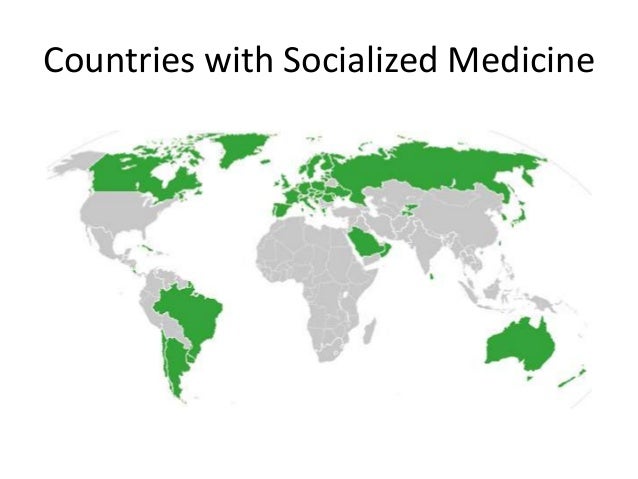
Socialized Medicine Has Won the Health Care Debate

https://newrepublic.com/article/145067/socialized-medicine-won-health-care-debate

Image result for socialized medicine


“It’s coming down to a choice between Federalism vs Socialism,” Senator Lindsey Graham proclaimed on Twitter earlier this week. “I chose Federalism of #GrahamCassidy.” His tweet echoed his words at a press conference days earlier, where he framed his Affordable Care Act repeal bill as the only way “to stop a march toward socialism.”

It’s unclear if the Republican senator realized that he was cribbing from socialist revolutionary Rosa Luxemburg. In a pamphlet composed a century ago while in prison, Luxemburg wrote: “Bourgeois society stands at the crossroads, either transition to socialism or regression into barbarism.” Graham, presumably, didn’t mean to liken his bill to barbarism. But increasingly, those are the terms in which Americans view the health care debate—as a choice between socialism and regression. Republicans have used “socialized medicine” as a bogeyman—and they’ve steadily lost ground on the issue. Despite Graham’s attempts to portray the idea of caring for sick people regardless of their income level as a “nightmare” scenario, just 7 percent of those polled thought Graham-Cassidy would help them.

The repeated rebukes of attempts to undo Obamacare have shown that the average American is no longer moved by the threat of the “S-word.” If we are on a slippery slope toward socialized medicine, it appears that Americans are just fine with that. For the left, there’s a lot to learn from the successful battles against going backward on health care—lessons about how Trump-era politics can be used to push “socialist” policies that move Democrats, and the American public, forward in unexpected ways.

Introduced after the Bernie Sanders Medicare for all bill made its debut with 16 co-sponsors in the Senate, the Graham-Cassidy bill looked all the worse by comparison. Both bills arrived at the end of a summer of activism, a summer that has treated us repeatedly to the sight of people in wheelchairs carted out of the Senate chanting, “No cuts to Medicaid! Save our liberty!” The health care movement has been led by the people directly affected—people with disabilities, in many cases, along with veterans of the AIDS movement. They understood the power of spectacle, initiating those dramatic clashes at the Capitol. They also know better than anyone the inequalities baked into the existing system. Their fighting skills were honed fighting for decades against those who say, implicitly or explicitly, that they don’t deserve care.

Of course, politicians have long been disconnected from the American public on the issue of health care. But the movement to defend Obamacare has drawn into stark relief the difference between what people want and what politicians want to offer. Republicans like Graham banked on the attachment Americans have to the class system we like to pretend doesn’t exist. They played on the idea, honed through decades of dog-whistles, that government programs are always giveaways for the undeserving poor and people of color. As one law professor and conservative columnist complained on Twitter, “Years from now, when your child is denied a liver transplant bc of transplant diversity goals, you’ll be sorry you allowed single-payer.”

In the U.S., we tend to either deny the existence of class or treat it like a set of characteristics divorced from power relations. A Make America Great Again baseball cap, a taste for Budweiser and NASCAR—those, rather than income level or accumulated wealth, are the signifiers of class that we understand. Meritocracy is supposed to be the thing we have instead of class; you can hear it in the endless bipartisan odes to the ability to work hard and achieve anything—including, apparently, a liver transplant if necessary.

Barack Obama and Ben Carson are both heroes of the meritocratic tale, though with a different partisan inflection. Even Sanders falls victim to the meritocratic narrative at times, with his refrain that “No one who works 40 hours a week should be living in poverty.” The implication that comes with Sanders’s qualifier is that there are some people who may, in fact, deserve to be living in poverty. If class is just about some personal preferences rather than structures that maintain inequality, then it’s fine to maintain a healthcare system that treats only those who can afford it. After all, if they just worked harder, they’d have earned that liver.

Graham’s single most tone-deaf argument to sell his bill was drawing an analogy to welfare reform. Welfare reform, of course, was sold to the country by Reagan, Gingrich, and Bill Clinton through fearmongering about undeserving black mothersand “young bucks.” Graham’s rhetoric about the size of the Medicaid budget leaned hard on this analogy, hoping that Americans resented Medicaid as much as they were taught to resent welfare.

Like welfare reform, Graham-Cassidy would have turned Medicaid and the subsidies in the ACA into block grants for the states to manage as they see fit. But the problem with health insurance is that it is designed to be used. The goal of welfare reform was to kick people off of welfare; the goal of healthcare reform was theoretically to get more people onto health insurance plans. Welfare reform increased poverty; Graham and Cassidy didn’t want to admit their bill would do the same. The analogy failed, though it told us a lot about what Republicans think of the people who use Medicaid.

The ham-handed Republican attempts to dismantle the health care system—the “socialism” warnings, the appeals to the selfishness of privileged white folks—have only reinforced the public’s support for government taking care of its citizens. It was telling how, in Monday night’s televised debate between Graham and Cassidy and Senators Sanders and Amy Klobuchar, Graham fell right into a trap, unintentionally proving his opponents’ point about what Americans want. When Sanders asked, “Do you know what the most popular health insurance program in America is? It’s not the private insurance industry,” Graham jumped in like an overeager schoolchild: “It’s Medicare,” he said.


Both Republicans and Democrats have badly misunderstood what makes Obamacare unpopular. What people don’t like are the inequities that still prevail in our health care system, not the fact that “government is too involved.” When Vox’s Sarah Kliff visited Whitley County, Kentucky, to talk to Trump voters who benefited from the ACA, she heard complaints from those buying private insurance with their subsidies that their deductibles were still too high for them to access care. Others, not surprisingly, were angry that the very poor got Medicaid, while they had to pay monthly premiums for care they rarely used. But that anger hasn’t turned them against the program. Medicaid expansion—the “socialized” part of the ACA—remains wildly popular, with 84 percent of those polled by Kaiser Family Foundation saying it’s important to keep the expansion.

The ACA’s means-testing sets up a hierarchy of plans that at times seem calculated to fuel resentment of those getting “free stuff.” It also requires hours of work—I write from personal experience, as a freelancer who has attempted to explain repeatedly that my income varies from month to month and year to year—to prove to the system that you are not getting away with something you haven’t qualified for.

The ways that people have tried to patch the gaps that remain in Obamacare, through charities and crowdfunding, have also highlighted its inequities. As Helaine Olen recently wrote in The Atlantic, charities, too, are often means-testing applicants, while crowdfunding introduces a new kind of means-testing—“means-testing for empathy,” as writer Patrick Blanchfield told me recently. Most GoFundMe or YouCaring campaigns for medical bills don’t go viral; only around 10 percent of them met their stated goals. For those who have a big social media audience, or whose particularly compelling story takes off, crowdfunding might work. But the glut of such campaigns leaves people weighing story against story, deciding who is going to get their donations. It’s health care by popularity contest.

By focusing on the not-good poll numbers for Obamacare, politicians and pundits have missed the whole point: The law didn’t go too far for Americans to get behind. It didn’t go far enough. And while single-payer opponents continue to evoke rationed care, long lines and wait times, and other problems that supposedly plague England or Canada, the public seems well aware that the reality for many Americans is far worse. By their very complaints, the pundits and politicians continually highlight the inequality in the system; the complainers are those who can afford the kind of carethat comes with personal attention, privacy, shorter waits, and avoidance of rubbing elbows with undesirables.

To move forward, then, the single-payer movement should double down on what we learned through this fight: that expanding Medicaid made it harder, not easier, to claim that the program is a “giveaway” to undeserving poor. The willingness of people with disabilities to claim and hold the spotlight—as the New Republic’s Sarah Jones has written—has helped to challenge our preconceptions about who relies on Medicaid ,and to make politicians confront those who will not be served by a market-based program. And the willingness, finally, of politicians to fight publicly for single-payer—rather than mournfully shake their heads and say it will never happen—expands the range of policies that even establishment media is willing to discuss.

Most important, we have learned that the old fearmongering tropes about socialism are no longer enough to whip Republican votes for a major plank of their own platform. If anything, the successful fight should help progressives shed their fears of boldly advocating for what they know is right and working to change public sentiment without endlessly obsessing over potential political pitfalls.

It seems that barbarism, to Graham and his ilk, is the idea that they would lose their right to segregated, high-end care to some undeserving, poor person of color. To the rest of us, however, barbarism is a system that decides who deserves to live or die by the color of their skin, the money in their bank account, the hours that they work, or their ability to work at all. This is now an American consensus. And if socialism is the medicine our system needs, the country is ready to embrace it—even by name.

How investing in public health could cure many health care problems

http://theconversation.com/how-investing-in-public-health-could-cure-many-health-care-problems-84256?utm_medium=email&utm_campaign=Latest%20from%20The%20Conversation%20for%20October%201%202017%20-%2084576980&utm_content=Latest%20from%20The%20Conversation%20for%20October%201%202017%20-%2084576980+CID_49b12b4a2a39e7f173235a40290664ab&utm_source=campaign_monitor_us&utm_term=How%20investing%20in%20public%20health%20could%20cure%20many%20health%20care%20problems

Now that the Cassidy-Graham bill has been pulled, it’s a good time to think about concrete ways to improve health and health care in our country. Despite advances in medicine, U.S. health care spending grew to US$3.2 trillion in 2015, or 17.8 percent of the nation’s gross domestic product. To contain health care costs, the U.S. needs to invest in strengthening the public health system and reconsider approaches to making all Americans healthier.

Making Americans healthier should not be a partisan issue. Conservatives and progressives alike should agree on the importance of keeping Americans healthy – both on principled and financial grounds. The sicker the American people, the more expensive their care, and much of that cost will inevitably be borne by Medicare and Medicaid. Yet major challenges loom.

As the Dean of Columbia University’s Mailman School of Public Health, I have dedicated my career to the health of populations, using science and evidence to transition to a world where health and health care are collective priorities for all. My research and that of others suggests that this situation can be improved, but it will require a major national strategy and commitment to invest in public health – one that can be highly cost-effective.

Just the facts

Take, for example, the toll of chronic disease in the U.S. As of 2012, about half of adult Americans were living with one or more chronic health conditions, according to the Centers for Disease Control and Prevention, and one in four adults had two or more. Treating people with chronic diseases accounts for most of our nation’s health care costs. Eighty-six percent of the nation’s annual health care expenditures are for people with chronic and mental health conditions.

This problem will only grow as the U.S. population increases. And the census projects that the population will increase by 98 million between 2014 and 2060.

At the same time, America’s crumbling infrastructure is putting many Americans’ health at risk. The country’s drinking water systems, which are foundational to health, received a D grade on the 2017 Infrastructure Report Card of the American Society of Civil Engineers. Hazardous waste management and wastewater treatment earned only D+ grades.

The connection between health and infrastructure is strong: Infrastructure greatly affects access to healthy lifestyles. While access to clean drinking water and waste treatment are paramount, there are other examples, too.

Sidewalks and bike lanes encourage physical activity; public parks provide space for exercise and rejuvenation; and public transit is crucial to getting people out of cars, encouraging walking and, of course, reducing pollution and congestion. Subways and buses also enable older adults to reach needed services and remain in their homes longer.

Improvements to infrastructure are typically one-time expenses with recurring benefits. For example, one new sidewalk benefits an entire generation of walkers and runners. Research shows that every $1,300 New York City invested in building bike lanes in 2015 provided benefits equivalent to one additional year of life at full health over the lifetime of all city residents.

Other studies also have shown that preventing illness is far less expensive than paying for treatment. Trust for America’s Health estimates that “an investment of $10 per person per year in proven community-based programs to increase physical activity, improve nutrition, and prevent smoking and other tobacco use could save the country more than $16 billion annually within five years. This is a return of $5.60 for every $1.” With ever-rising health care costs, how can we overlook such opportunities?

Prevention policies and cessation help

The focus of American health care and health-related research needs to be shifted to include prevention, not just treatment. The “Cancer Moonshot,” which has strong bipartisan support, is a vital step in this direction, providing $1.8 billion in funding over seven years.

Cancer prevention must be a high priority, and the success of this effort could inspire a national consensus around future commitments to tackle other diseases and conditions.

Another prevention priority should be healthy aging. Today there are more than 46 million Americans aged 65 years or older; and by 2060, the number of seniors is expected to more than double, according to the Department of Health and Human Services and the Census Bureau. Promoting healthy aging for older Americans should, therefore, be paramount.

And healthy aging begins far earlier than 65 or 70. Obesity, in particular, may be determined in early childhood, even before. According to research by my Mailman School colleague Andrew Rundle, prenatal exposure to air pollution raises risk for obesity in childhood. His research shows that children who are overweight or obese at age five are more likely to be overweight or obese by age 50. We also know that these adults, and increasingly children too, will be more likely to have diabetes, high blood pressure and high cholesterol.

Efforts at smoking cessation should also be increased. The total economic cost of smoking in the United States is more than $300 billion a year in direct medical care and lost productivity, according to the CDC.

That’s more than we’re spending on the Cancer Moonshot annually.

Thinking big

America has extraordinary research capability. The NIH invests nearly $32.3 billion annually in medical research for the American people. Targeted cancer therapies, for instance, are the focus of much anticancer drug development, according to the National Cancer Institute. Precision Medicine is a top priority at the NIH and other research agencies. Even at $32 billion, Americans are investing in the NIH only 1 percent of what we spend on health care annually. The U.S. should build its advantage by increasing research funding to enhance the potential of breakthroughs in preventing known diseases as well as future threats.

There is reason for optimism. The good news stems in large part from the fact that chronic diseases and conditions – such as heart disease, stroke, cancer, Type 2 diabetes, obesity and arthritis – are among the most preventable of all health problems. At least half of these diseases could be prevented, and we are making strides. Death rates from heart disease, the No. 1 cause of death in America, have been reduced by nearly half, for instance, since 1990, according to the American Heart Association.

The growth and aging of the U.S. population and the epidemic of chronic diseases and conditions pose major challenges for America’s health care costs, no matter how health care is constructed. But a relentless focus on public health – and disease prevention in all its dimensions – is the best way to reduce pressure on costs.

ACA “Bare Counties”: Policy Options to Ensure Access Must Address Longer-Term Stability and Competition

http://www.commonwealthfund.org/publications/blog/2017/sep/aca-bare-counties

Image result for Bare Counties


Continued uncertainty about federal funding for health plans is contributing to higher individual market premiums and insurer withdrawals in 2018. The danger that consumers in some regions wouldn’t have any coverage option next year seemed to subside when insurers in the affected states eventually agreed to broaden their participation. But with the September 27 deadline for deciding to participate in the Affordable Care Act (ACA) marketplaces fast approaching, Virginia officials announced an insurer withdrawal that may leave as many as 63 counties without coverage. At the same time, many more counties appear likely to have just one insurer offering marketplace coverage. The risk that any consumer might be without options for health coverage deserves the right response from policymakers.

Relief for Bare Counties?

The threat of counties without individual market insurers, known as “bare counties,” should be a real concern of policymakers. Even if consumers in all counties have a marketplace plan that gives them access to ACA subsidies, a single plan choice locks consumers into the plan that is available to them, not necessarily the one that best meets their needs. It also fails to foster competition on price and quality, and leaves state officials tasked with approving plans in a difficult position. Two proposals in the Senate would address bare counties, and although both might provide access to federal subsidies, each has significant side effects that are likely to negatively impact market stability and future plan choices.

The Health Care Options Act (S. 761), introduced earlier this year by Senator Lamar Alexander (R–Tenn.), would allow individuals who live in an area without a marketplace plan to qualify for premium tax credits — paid at year-end — to purchase coverage off of the marketplace, including coverage that doesn’t comply with ACA consumer protections. A second bill introduced by Senator Claire McCaskill (D–Mo.), the Health Care Options for All Act (S. 1201), would allow individuals living in a bare county to purchase coverage through the District of Columbia marketplace, where members of Congress and their staff obtain coverage.

By allowing tax credits to be used for coverage that does not meet ACA requirements, the Alexander bill will likely encourage insurers to sell skimpy policies and healthy individuals to enroll in them. Noncompliant policies would have far lower premiums than compliant ones, which, because of the ACA, cannot discriminate based on an individual’s health status. Consequently, insurers that choose to sell in the off-marketplace market likely will hike their premiums for comprehensive coverage to account for the likelihood of enrolling fewer and less healthy individuals. Indeed, they may find that offering such coverage is unsustainable, particularly given that they would still be able to capture healthy, subsidized enrollees through the sale of noncompliant plans.

In contrast, the McCaskill bill would allow consumers to continue to have access to the ACA’s upfront premium and out-of-pocket help and would limit federal financial help to marketplace plans that meet critical consumer protections. However, by requiring insurers selling in the District of Columbia’s small business marketplace to offer individual market coverage to out-of-state consumers, many of whom live in rural areas and are likely to be higher-cost individuals, the proposal may undermine premiums and plan choice for D.C.’s residents and small businesses.

Other potential solutions would offer help to residents of bare counties without the potential harm of the Senate proposals. For example, Congress could allow individuals living in bare counties to use ACA subsidies to buy into other comprehensive coverage — for example, the Federal Employees Health Benefits Program or Medicaid — to ensure access to ACA financial help without undermining market stability.

Policymakers also might consider requiring a fallback plan modeled on the approach taken in the Medicare prescription drug benefit. When that program was enacted, policymakers ensured adequate plan participation in the new market by designating a fallback plan that would provide coverage in any county with two or fewer plans. Such an approach would solve not only the bare counties problem but also would foster competition and ensure adequate plan participation.

Looking Forward

Policymakers looking to stabilize the market and avoid bare counties are right to start by ensuring that payments for cost-sharing reductions continue. Insurers have made clear that guaranteeing federal funding for cost-sharing reductions is a defining factor in their decision to participate in marketplaces next year. In the event there are counties without insurers, it is important that policymakers consider not just the immediate effects of potential policy fixes, but also their longer-term consequences for access to affordable, comprehensive coverage. Solutions for bare counties that allow individuals to use upfront assistance to buy a fallback plan that offers comprehensive coverage would help those individuals who are affected buy and maintain comprehensive coverage while insuring healthy and competitive markets for all.

Following the ACA Repeal-and-Replace Effort, Where Does the U.S. Stand on Insurance Coverage?

http://www.commonwealthfund.org/publications/issue-briefs/2017/sep/post-aca-repeal-and-replace-health-insurance-coverage

Image result for Following the ACA Repeal-and-Replace Effort, Where Does the U.S. Stand on Insurance Coverage?

Conclusion and Policy Implications

The findings of this study could inform both short- and long-term actions for policymakers seeking to improve the affordability of marketplace plans and reduce the number of uninsured people in the United States.

Short-Term

The most immediate concern for policymakers is ensuring that the 17 million to 18 million people with marketplace and individual market coverage are able to enroll this fall.

Congress could take the following three steps:

  1. The Trump administration has not made a long-term commitment to paying insurers for the cost-sharing reductions for low-income enrollees in the marketplaces, which insurers are required to offer under the ACA. Congress could resolve this by making a permanent appropriation for the payments. Without this commitment, insurers have already announced that they are increasing premiums to hedge against the risk of not receiving payments from the federal government. Since most enrollees receive tax credits, higher premiums also will increase the federal government’s costs.9
  2. While it appears that most counties will have at least one insurer offering plans in the marketplaces this year, Congress could consider a fallback health plan option to protect consumers if they do not have a plan to choose from, with subsidies available to help qualifying enrollees pay premiums.
  3. Reinsurance to help carriers cover unexpectedly high claims costs.10 During the three years in which it was functioning, the ACA’s transitional reinsurance program lowered premiums by as much as 14 percent.

The executive branch can also play an important role in two ways:

  1. Signaling to insurers participating in the marketplaces that it will enforce the individual mandate. Uncertainty over the administration’s commitment to the mandate, like the cost-sharing reductions, is leading to higher-than-expected premiums for next year.
  2. Affirming the commitment to ensuring that all eligible Americans are aware of their options and have the tools they need to enroll in the coverage that is right for them during the 2018 open enrollment period, which begins November 1. The survey findings indicate that large shares of uninsured Americans are unaware of the marketplaces and that enrollment assistance makes a difference in whether people sign up for insurance.

Long-Term

The following longer-term policy changes will likely lead to affordability improvement and reductions in the number of uninsured people.

  1. The 19 states that have not expanded Medicaid could decide to do so.
  2. Alleviate affordability issues for people with incomes above 250 percent of poverty by:
    1. Allowing people earning more than 400 percent of poverty to be eligible for tax credits. This would cover an estimated 1.2 million people at an annual total federal cost of $6 billion, according to a RAND analysis.11
    2. Increasing tax credits for people with incomes above 250 percent of poverty.
    3. Allowing premium contributions to be fully tax deductible for people buying insurance on their own; self-employed people have long been able to do this.
    4. Extending cost-sharing reductions for individuals with incomes above 250 percent of poverty, thus making care more affordable for insured individuals with moderate incomes.
  3. Consider immigration reform and expanding insurance options for undocumented immigrants.

In 2002, the Institute of Medicine concluded that insurance coverage is the most important determinant of access to health care.12 In the ongoing public debate over how to provide insurance to people, the conversation often drifts from this fundamental why of health insurance. At this pivotal moment, more than 30 million people now rely on the ACA’s reforms and expansions. Nearly 30 million more are uninsured — because of the reasons identified in this survey. It is critical that the health of these 60 million people, along with their ability to lead long and productive lives, be the central focus in our debate over how to improve the U.S. health insurance system, regardless of the approach ultimately chosen.


Medicaid Has A Bull’s-Eye On Its Back, Which Means No One Is Entirely Safe

http://khn.org/news/medicaid-has-a-bulls-eye-on-its-back-which-means-no-one-is-entirely-safe/?utm_campaign=KHN%3A%20First%20Edition&utm_source=hs_email&utm_medium=email&utm_content=56665328&_hsenc=p2ANqtz–jvGnchtUjK6wqfwtrlprJ5BzhHvyK_pxMcOnRWk1VUYBKzAt-i10s3Z-tSObu1Q3YZ4uRmvRvDmo2oj1lc5IskCe0tA&_hsmi=56665328

Image result for Kaiser Health News: GOP Health Bill Changes Go Far Beyond Preexisting Conditions


When high levels of lead were discovered in the public water system in Flint, Mich., in 2015, Medicaid stepped in to help thousands of children get tested for poisoning and receive care.

When disabled children need to get to doctors’ appointments — either across town or hundreds of miles away — Medicaid pays for their transportation.

When middle-class older Americans deplete their savings to pay for costly nursing home care, Medicaid offers coverage.

The United States has become a Medicaid nation.

Although it started as a plan to cover only the poor, Medicaid now touches tens of millions of Americans who live above the poverty line. The program serves as a backstop for America’s scattershot health care system, and as Republicans learned this year in their relentless battle to replace the Affordable Care Act, efforts to drastically change that can spur a backlash.

The latest Republican proposal — by Sens. Lindsey Graham (S.C.) and Bill Cassidy (La.) — is being pummeled by doctors, insurers, hospitals and patient advocates because it would scrap the health law’s Medicaid expansion and reduce federal funding for Medicaid. Senate leaders are trying to get a vote before Sept. 30, when special budget rules would allow the package to pass with only 50 votes.

Today, Medicaid is the nation’s largest health insurance program, covering 74 million, or more than 1 in 5 Americans. Over the next weeks, Kaiser Health News will explore the vast reach of the program. Twenty-five percent of Americans will be on Medicaid at some point in their lives — many are just a pink slip away from being eligible.

Medicaid funding protects families from having to sell a home or declare bankruptcy to pay for the care of a disabled child or elderly parent. It responds to cover disaster relief, public health emergencies and programs in schools that lack other sources of funding.

Millions of women who don’t qualify for full Medicaid benefits each year obtain family planning services paid for by Medicaid. These women have incomes as high as triple the federal poverty rate, or over $36,000 for an individual. And thousands of women, who otherwise don’t qualify for the program, get treated each year for breast and cervical cancers through Medicaid.

“Instead of cutting Medicaid, [lawmakers] increased public awareness of its value and made it even harder to cut in the future,” said Jonathan Oberlander, professor of health policy and management at the University of North Carolina-Chapel Hill and a supporter of the federal health law. The Medicaid cuts passed the House, but the ACA overhaul legislation fell short in the Senate in July.

Medicaid is the workhorse of the health system, covering:

  • 39 percent of all children.
  • Nearly half of all births in the country.
  • 60 percent of nursing home and other long-term care expenses.
  • More than one-quarter of all spending on mental health services and over a fifth of all spending on substance abuse treatment.

Unlike Medicare beneficiaries, who keep that insurance for life, most Medicaid enrollees churn in and out of the program every few years, depending on their circumstances.

Such numbers underline the importance of Medicaid, but also provoke alarm among conservatives and some economists who say the U.S. cannot afford the costs over the long run.

Bill Hammond, director of health policy of the fiscally conservative Empire Center for Public Policy in Albany, N.Y., said Medicaid has been a big help for those it was designed to cover — children and the disabled. But it has grown so big that the cost hurts state efforts to pay for other necessary public services, such as education and roads. “I can’t think of any other anti-poverty program that reaches so many people. … It’s too expensive a benefit.”

“We need to transition people to get coverage in the private sector,” he said, noting how millions on the program have incomes above the federal poverty level.

It May Be The Person Down The Block

Joana Weaver, 49, of Salisbury, Md., who has cerebral palsy, has been on and off Medicaid since birth. For the past few years, it’s paid for home nursing services for six hours a day to help her get dressed, bathed and fed. That’s kept her out of a nursing home and enabled her to teach English part time at a local community college.

“For me, Medicaid has meant having my independence,” Weaver said.

Like Weaver, many people getting Medicaid today are not easily typecast. They include grandmothers — one-quarter of Medicaid enrollees are elderly people or disabled adults.

Or the kid next door. About half of Medicaid enrollees are children, many with physical or mental disabilities.

Many of the rest — about 24 million enrollees — are adults under 65 without disabilities who earn too little to afford health insurance otherwise. About 60 percent of non-disabled adult enrollees have a job. Many of those who don’t work are caregivers.

“It’s the mechanic down the street, the woman waiting tables where you go for breakfast and people working at the grocery store,” said Sara Rosenbaum, a health policy expert at George Washington University in Washington, D.C.

While all states rely on Medicaid, it’s used more in some places than others because of varying state eligibility rules and poverty rates. As of August, about 44 percent of New Mexico residents are insured by Medicaid. In West Virginia and California, the rate is nearly 1 in 3.

peak or walk. It also covers costs for his wheelchair, walker and home health care. (Nick Krug/Lawrence Journal-World)

Jane and Fred Fergus, in Lawrence, Kan., said Medicaid has been a cornerstone in their lives since their son, Franklin, was born eight years ago with a severe genetic disability that left him unable to speak or walk. He is blind and deaf on one side of his body.

Although the family has insurance through Fred’s job as a high school history teacher, Franklin was eligible for Medicaid through an optional program that states use to help families let their children be cared for at home, rather than moving to a hospital or nursing home. Medicaid pays all his medical bills, including monthly transportation costs to Cincinnati Children’s Hospital, where for the past 18 months he has been receiving an experimental chemotherapy drug to help shrink tumors blocking his airway, Jane Fergus said. It also covers his wheelchair, walker and daily nursing care at home.

“We have such great health care for him because of Medicaid,” his mother said.

Jane Fergus was never politically active until this year, when she feared that the GOP plans to cut Medicaid funding would reduce services for her son.

“If there is a silver lining in all this debate, it’s that we have been given a voice, and people in power are being educated on the role of Medicaid,” she said.

Moving Beyond Its Roots

Medicaid was born in a 1965 political deal to help bring more support for President Lyndon Johnson’s dream of Medicare, the national health insurance program for the elderly.

Over the past 40 years and in particular since the 1980s, Medicaid expanded beyond its roots as a welfare program. In 1987, Congress added coverage for pregnant women and children living in families with incomes nearly twice the federal poverty level (about $49,200 today for a family of four).

In 1997, Congress added the Children’s Health Insurance Program to help cover kids from families with incomes too high for Medicaid.

And since September 2013, Obamacare allowed states to expand the program to anyone earning under 138 percent of poverty (or $16,394 for an individual in 2016), adding 17 million people.

In addition, more than 11 million Medicare beneficiaries also receive Medicaid coverage, which helps them get long-term care and pay for Medicare premiums.

“Medicaid is plugging the holes in our health system,” said Joan Alker, executive director of the Georgetown University Center for Children and Families, “and our health system has a lot of holes.”

But that comes at a steep price. 

A Blessing And A Curse

With increasing enrollments and health costs steadily rising, the cost of Medicaid has soared. Federal and state governments spent about $575 billion combined last year, nearly triple the level of 2000.

Those dollars have become both a blessing and a curse for states.

The federal government matches state Medicaid spending, with Washington paying from half to 74 percent of a state’s costs in 2016. Poorer states get the higher shares.

The funding is provided on an open-ended basis, so the more states spend the more they receive from Washington. That guarantee protects states when they have sudden enrollment spikes because of downturns in the economy, health emergencies such as the opioid crisis or natural disasters such as Hurricane Katrina.

The program is the largest source of federal funding to states. And Medicaid is often the biggest program in state budgets, after public education.

“Medicaid is the elephant in the room for health care,” said Jameson Taylor, vice president for policy for the Mississippi Center for Public Policy, a free-market think tank. He said states have become dependent on the federal funding to help fill their state budget coffers. While the poorest states, such as Mississippi, get a higher percentage of federal Medicaid dollars, that still often isn’t enough to keep up with health care costs, he said.

Extensive Benefits

Medicaid provides significant financing for hospitals, community health centers, physicians, nursing homes and jobs in the health care sector.

But the revenue stream flows further. Billions in annual Medicaid spending goes to U.S. schools to pay for nurses; physical, occupational and speech therapists; and school-based screenings and treatment for children from low-income families, as well as wheelchairs and buses to transport kids with special needs.

Medicaid also often covers services that private health insurers and Medicare do not — such as non-emergency transportation to medical appointments, vision care and dental care. To help people with disabilities stay out of expensive nursing homes, Medicaid pays for renovations to their homes, such as wheelchair ramps, and personal care aides.

Rena Schrager, 42, of Jupiter, Fla., who has severe vision problems, has relied on Medicaid  for more than 20 years. Although she often has difficulty finding doctors who will accept Medicaid’s reimbursements — which are often lower than private insurance and Medicare — she is grateful for the coverage. “When you do not have anything else, you are glad to have anything,” Schraeger said.

As it’s grown, Medicaid has become more popular, another reason why politicians are cautious to curtail benefits or spending.

A recent survey by the Kaiser Family Foundation showed three-fourths of the public, including majorities of Democrats (84 percent) and Republicans (61 percent), hold a favorable view of Medicaid. That’s nearly as high as Americans’ views on Medicare. (Kaiser Health News is an editorially independent program of the foundation.)

But it may still have a bull’s-eye on its back.

“The fact that the House passed a bill to cut $800 billion from Medicaid and it came one vote short to passing the Senate shows Medicaid is stronger than maybe many Republican leaders anticipated,” said Oberlander. “But politically it is still in a precarious position.”

A closer look at how the revised health bill would benefit key senators’ states

https://www.washingtonpost.com/news/powerpost/wp/2017/09/25/revised-health-bill-gives-states-limited-leeway-while-steering-more-money-to-alaska-maine/?_hsenc=p2ANqtz-_clpt8SgNxZ9kwl4KEWIyIxO-je4y4txwZTcf-IInlxUuZJsK0VGVNSt2v8TXrZ7Ec4rx3Jmad_zexDD63e8n4EmPw2A&_hsmi=56665328&utm_campaign=KHN%3A%20First%20Edition&utm_content=56665328&utm_medium=email&utm_source=hs_email&utm_term=.06260e61626c

Image result for Kaiser Health News: GOP Health Bill’s Changes Go Far Beyond Preexisting Conditions

The revised Republican health-care bill that senators unveiled Monday would partly even out wide gaps between states that would win and lose financially, providing more generous funding to states of some reluctant GOP lawmakers, but would give states less freedom to unwind federal health insurance rules.

The new version of the Cassidy-Graham legislation eliminates what had been one of the measure’s most controversial features, which would have enabled states to get federal permission to let insurers charge higher prices to customers with preexisting medical conditions. In addition, states now would not be able to allow health plans to impose annual or lifetime limits on coverage, as the original bill would have done.

Yet for the health-care standards that the bill would let states ignore if they wanted, the latest legislative language no longer would require states to get formal permission from the government through a waiver process. Instead, states would simply have to explain to federal officials what they intend to do. The standards that could be sidelined include the benefits that health plans sold to individuals and small businesses must cover and limits on how much more plans may charge older customers than younger ones.

While still giving states block grants for their programs and much more freedom to create their own rules than under the Affordable Care Act, this second draft of the plan would be less punitive financially than the first one for states that have most significantly expanded their residents’ access to insurance under the 2010 law. At the same time, the figures provide no indication that the bill’s chief sponsors have abandoned their plan to make steep cuts to Medicaid through a per-capita cap. Such a move would end up cutting federal funding by billions of dollars by 2026.

The plan update emerged late Sunday after its primary sponsors, GOP Sens. Bill Cassidy (La.) and Lindsey O. Graham (S.C.), worked through the weekend on changes designed to both bolster support on the right and win over a handful of centrists who have been balking.

The latest version would steer more money to states with key senators in a few ways.

One provision would direct $500 million in funding to states like Alaska — whose senior senator, Lisa Murkowski (R), is viewed as a crucial potential holdout — that have been granted waivers under a specific part of the ACA. Section 1332 aims to give states more flexibility in implementing the law, in order to set up a reinsurance program to help lower premiums on a state’s individual insurance market. With this provision included, Alaska will get to keep the federal funds it has been slated to receive.

Another part of the revised bill would give one-fourth of a $6 billion contingency fund to states with the lowest-density population — Alaska among them.

Separately, the law provides $750 million for states that expanded Medicaid after Dec. 31, 2015. That language means additional financial assistance for Montana and Cassidy’s home state of Louisiana.

Another addition to the plan, perhaps intended to appeal to another skeptical Republican, Maine Sen. Susan Collins, would require states to demonstrate that their health-care rules meet several federal standards, including parity for mental health care, reconstructive surgery after mastectomies and minimal hospital stays for newborns, among others.

To even out the checkerboards of winners and losers among states, the bill’s new version substantially revises the formula that would determine the allotment of money through block grants starting in 2020. Among other changes, the revision would spread the change over a decade, rather than the original half-dozen years.

Two of the states that now would fare the worst, Oregon and Minnesota, would lose 17 percent and 15 percent, respectively, of their federal funding between 2020 and 2026 relative to the current law. The two states have only Democrats in the Senate and in the governor’s mansion. It is a topic that is likely to come up on Monday during a Senate Finance Committee hearing on the bill; Sen. Ron Wyden (D-Ore.) is the panel’s ranking member.

The revised Cassidy-Graham legislation doesn’t change the total sum the federal government would spend on the block grants from 2020 to 2026. Instead, it tries to smooth over the formula of how the money would be distributed in an effort to put the states on a more equal footing.

Independent analysts had estimated a wide variation in block grant funding that states could get under the initial version of Cassidy-Graham: Mississippi would get 148 percent more relative to current law, while New York would get 35 percent less, according to an analysis by the Kaiser Family Foundation.

The range in state funding would now be narrower. South Dakota would see the largest funding increase at 88 percent, Oregon the greatest decrease.

The latest version notably retains more funding for states represented by key holdout senators. Kaiser had estimated that Maine would get 8 percent more under the initial Cassidy-Graham; it would get 43 percent more under the revised bill, according to the state-by-state summary.

But the state funding estimates don’t take into consideration the bill’s additional cuts to regular Medicaid spending. If those were considered, states like Alaska would still be losing out on federal funds overall. And the GOP estimates also assume that states would slash their own funding for coverage and then factor that into the final number as “state savings.”

Healthcare Triage News: Let’s Talk Cassidy-Graham

Healthcare Triage News: Let’s Talk Cassidy-Graham

Image result for Healthcare Triage News: Let’s Talk Cassidy-Graham

We had a whole other video planned for today but we have to talk about the Cassidy-Graham bill, which is getting closer to passing despite our predictions last week.

What Graham-Cassidy means for pre-existing conditions

https://www.axios.com/what-graham-cassidy-really-means-for-pre-existing-conditions-2487720743.html

Image result for What Graham-Cassidy means for pre-existing conditions

Jimmy Kimmel’s takedown of Sen. Bill Cassidy, and Cassidy’s response, ripped open the question of whether the GOP’s latest health reform bill protects people with pre-existing conditions. Cassidy and co-sponsor Sen. Lindsey Graham insist it does — as did President Trump in a tweet last night — but experts say that’s not really the case.

The bottom line: The bill’s funding cuts could pressure states — even blue states — to waive protections for sick people, as a way to keep premium increases in check. Older, sicker people in every state could end up paying more as states try to make up for a funding shortfall.

What the bill does: The bill wouldn’t repeal the Affordable Care Act’s rules about pre-existing conditions. But they might end up only existing on paper, the Kaiser Family Foundation’s Larry Levitt said.

Graham-Cassidy doesn’t let states waive the part of the Affordable Care Act that says insurers have to cover sick people. But it does allow states to opt out of several other ACA rules that can cause people with pre-existing conditions to pay more for their health care. Those provisions include:

  • The ban on charging sick people higher premiums than healthy people.
  • The requirement that insurers cover “essential health benefits,” including prescription drugs. People who need expensive drugs might not have access to a plan that covers those drugs, requiring them to pay out of pocket.
    • Services that aren’t “essential” benefits aren’t subject to the ACA’s ban on annual and lifetime limits.
  • The bill also would also loosen rules about how much insurers can raise their premiums because of a customer’s age. (Older people are more likely to have pre-existing conditions.)

What supporters will argue: The bill requires states to say how their waivers would provide affordable and accessible coverage for people with pre-existing conditions. But there’s no definition of what that means, and there’s also no enforcement mechanism.

  • “The bottom line is these protections are much more at risk under this bill than they are now,” said Cori Uccello, a senior health fellow with the American Academy of Actuaries.

Another level: At least theoretically, because the bill gives states so much control, a more liberal state like California might choose to preserve more of the ACA’s regulations than, say, Alabama. But this bill would radically redistribute federal health care funding — generally away from blue and purple states and toward red states. Those cuts could back blue states into seeking more expansive waivers.

  • Caroline Pearson of Avalere told me: “if you have less money, you either cover fewer people, or you cover the same amount of people with less generous coverage. People with pre existing conditions are very reliant on having access to affordable insurance and need insurance that is comprehensive. So if a bill reduces the availability of comprehensive insurance, people with chronic conditions are going to be disproportionately harmed.”


Cassidy-Graham’s Waiver Authority Would Gut Protections for People with Pre-Existing Conditions

https://www.cbpp.org/blog/cassidy-grahams-waiver-authority-would-gut-protections-for-people-with-pre-existing-conditions

Image result for Cassidy-Graham Waiver Authority Would Gut Protections for People with Pre-Existing Conditions


The revised Affordable Care Act (ACA) repeal plan from Senators Bill Cassidy and Lindsey Graham, which is also backed by Senators Dean Heller and Ron Johnson, would give states broad waiver authority to eliminate the ACA’s core protections for people with pre-existing health conditions. These waivers would come on top of the proposal’s elimination of the ACA’s marketplace subsidies and Medicaid expansion, its radical restructuring of the rest of the Medicaid program, and its large cuts to total federal funding for health insurance coverage.

Specifically, a little-noticed provision of the block grant funding states would receive under the plan would let them obtain waivers of ACA pre-existing conditions protections and benefit standards for any insurance plan subsidized by block grant funding. For example, a state that used a small portion of its block grant funding to provide even tiny subsidies to all individual market plans could then waive these protections for its entire individual market. Likewise, states that used block grant funding to offer or subsidize coverage for low-income people could offer plans with large gaps in benefits. States seeking waivers would have to explain how they “intend” to maintain access to coverage for people with pre-existing conditions, but they wouldn’t have to prove that their waivers would actually do so.

In particular, states could waive the ACA’s:

  • Prohibitions against insurance companies charging people higher premiums based on their health status. While insurers would still be required to offer coverage to people with pre-existing conditions, they could offer them plans with unaffordable premiums of thousands or tens of thousands of dollars per month. For consumers, an offer like that is no different than a coverage denial.
  • Requirements that plans cover “essential health benefits.” Before the ACA introduced the requirement that all plans cover a defined set of basic services, 75 percent of individual market plans excluded maternity coverage, 45 percent excluded substance use treatment, and 38 percent excluded mental health care, according to analysis by the Kaiser Family Foundation. Under the Cassidy-Graham proposal, states could let insurers restore these exclusions, leaving many people — especially those with pre-existing conditions — without access to the health services they need.

The waiver authority included in the Cassidy-Graham plan is similar to the so-called “MacArthur amendment” waivers that were included in the House-passed ACA repeal bill. Analyzing those waivers, the Congressional Budget Office concluded:

  • States accounting for one-sixth of the nation’s population would choose to let insurers charge higher premiums based on health status. In those states, “less healthy individuals (including those with preexisting or newly acquired medical conditions) would be unable to purchase comprehensive coverage with premiums close to those under current law and might not be able to purchase coverage at all [emphasis added].”
  • States accounting for half of the nation’s population would choose to let insurers exclude essential health benefits. In those states, “services or benefits likely to be excluded … include maternity care, mental health and substance abuse benefits, rehabilitative and habilitative services, and pediatric dental benefits.” People needing these services “would face increases in their out-of-pocket costs. Some people would have increases of thousands of dollars in a year.”

Announcing their revised plan, Senators Cassidy and Graham explained that they sought to revise their prior legislation to accomplish the goal of letting states waive the ACA’s core consumer protections. Apparently, they largely succeeded: if their bill were adopted, millions of people with pre-existing conditions would lose access to these protections, and, as a result, would lose access to needed coverage and care.