Top 10 Medicaid insurers represent over half of U.S. managed care market

http://www.beckershospitalreview.com/payer-issues/top-10-medicaid-insurers-represent-over-half-of-u-s-managed-care-market.html

Image result for medicaid insurance plans

Fifty-seven percent of the U.S.’s managed Medicaid market is held by the top 10 Medicaid insurers, an analysis from a Washington, D.C., publishing and information company Atlantic Information Services found.

AIS’ Medicare and Medicaid market data found four of the top 10 payers are involved in mergers and acquisitions that may allow them to gain more market share. Specifically, Hartford, Conn.-based Aenta’s proposed acquisition of Louisville, Ky.-based Humana would allocate more than 400,000 Medicaid beneficiaries to Aetna, if the deal is not blocked by the U.S. Department of Justice. In addition, the third ranked insurer, St. Louis-based Centene, acquired Woodland Hills, Calif.-based Health Net in July, leaving the resulting entity with the highest market share.

Here are the top 10 insurers with the most Medicaid beneficiaries and market share.

Campaign 2016 Healthcare Election Issues

http://connect.kff.org/poll-health-care-issues-in-the-2016-elections-the-publics-views-on-zika-and-electronic-medical-records?ecid=ACsprvsNwVqzoYoktjeMadLmMP_j5z4aIEIDLtV7mAYMiD8KEFvV0TCbNnPbhhL1Z-Bec8iS2pPQ&utm_campaign=KFF-2016-August-Tracking-Poll&utm_source=hs_email&utm_medium=email&utm_content=33682024&_hsenc=p2ANqtz-8xtyy8YqJQ7WAY3Hy2-UCQDhQKjYlvB05qHdtEnzbB4uaWO2JZQtkeD0o1C6GXU8BopN7QM81MUjiM3NFIn_7Xlb8t-A&_hsmi=33682024

Chart_1_-_Poll_Alert.png

Two thirds of voters (66%), including large shares of Democrats, Republicans, and independents, identify access and affordability of health care and the future of Medicare, an issue not being widely discussed on the campaign trail, as top priorities for the presidential candidates to talk about during the campaign. Smaller majorities of voters say the same about Medicaid’s future (54%), prescription drug costs (53%), and the future of the 2010 health care law (52%).


CBO: Aging population, drugs driving federal healthcare spending

http://www.healthcaredive.com/news/cbo-aging-population-drugs-driving-federal-healthcare-spending/425062/

The country’s aging population, which is using more Social Security and requiring more Medicare coverage, is driving most of the spending increases, according to the report. Compared to 50 years ago, the number of people who are 65 years old and older has more than doubled, CBO found. As a result, Medicare outlays will remain at about 3% of GDP until 2018 but then increase on an annual basis through 2026.

“Over the next decade, as members of the baby-boom generation age and as life expectancy continues to increase, that number is expected to rise by more than one-third, boosting the number of beneficiaries of those programs,” the report states, adding, “As a result, projected spending for people age 65 or older in three large programs — Social Security, Medicare, and Medicaid — increases from roughly one-third of all federal noninterest spending in 2016 to about 40% in 2026.”

Obamacare CEO Kevin Counihan counterstrikes after Aetna’s ACA exit

http://www.fiercehealthcare.com/payer/obamacare-ceo-kevin-counihan-counterstrikes-aetna-s-aca-exit

hhshhs

In the aftermath of Aetna’s ACA exchange exit, which leaves places like Pinal County, Arizona, with no insurers scheduled to offer plans in 2017, Obamacare CEO Kevin Counihan says HHS has already revved up its efforts to recruit insurers to fill in the gaps, according to an interview with Politico.

Insurers, including most recently the Dallas-based insurer Scott & White Health Plan, say sicker, more expensive populations mean they’re losing money on government-created marketplaces. Aetna, Scott & White, UnitedHealth and Humana have all said they can’t afford to keep offering the plans.

This week, Aetna dropped out of 68 percent of the exchanges in which it was operating.

But the insurance market–a market based in risk, after all–will always be dynamic. That was the case even before healthcare reform. “This is the nature of the industry,” Counihan toldPolitico.

According to University of Chicago economist Robert Kaestner, these exits are entirely normal.

“I don’t think it’s a particularly unusual situation where the firms are leaving the market,” Kaestner told Salon. “The fact that firms can leave and enter markets means the markets are, in fact, quite competitive.”

Hospitals more likely to admit children with private insurance

http://www.fiercehealthcare.com/payer/hospitals-more-likely-to-admit-children-private-insurance?utm_medium=nl&utm_source=internal&mrkid=959610&mkt_tok=eyJpIjoiTXpNd1lqZGlNR0U1WkRJeCIsInQiOiJLOWhzWGhXZ2FrUHdBMEg5d1VNTnppNTR6TEh5XC9tQjI1bDgxcVlUUWNcL1wvSWt0SkRUck9vYm90K1VuSlZJUGFpQ3RubDhPdjFFTWZFUEF1S3RDTUlpZ0VQbmtJRmYyOVg5ZHk0T3RiUUZYRT0ifQ%3D%3D

Medicaid on paper and a stethoscope Medicaid on paper and a stethoscope

New research shows hospitals are more likely to admit children with private insurance over those with publicly funded plans, particularly during times when there are limited inpatient beds, an indication that reimbursement rates play a role in how hospitals manage pediatric patients in the emergency room.

Researchers from the National Bureau of Economic Research studied billing patterns for children in New Jersey that visited an emergency room between 2006 and 2012. The economists found that children with Medicaid or Children’s Health Insurance Program that presented to the ER with flu symptoms were 10 percent less likely to be hospitalized than those with private plans, according to the Washington Post.  During peak flu season, when there was a shortage of inpatient beds, children between 2 and 10 years old on Medicaid and CHIP were 20 percent less likely to be admitted.

To Improve Medicaid, Measure Everywhere


http://altarum.org/health-policy-blog/to-improve-medicaid-measure-everywhere

Image result for data

“In God we trust. All others must bring data.”

So said W. Edwards Deming, a management consultant widely regarded as one of the most influential figures in quality management of the 20th century.

One would think that in the data-driven 21stcentury, we’d have come a long way in applying that dictum to health care. To some degree, we have—Medicaid and CHIP programs that contract with managed care entities include provisions around quality measurement and reporting in state contracts and make use of the Healthcare Effectiveness Data and Information Set. This reporting serves as the foundation of targeted quality improvement projects in states and helps inform consumer choice through products such as the state-published report cards and annual rankings of health insurance plans set out by the National Committee for Quality Assurance.

But this kind of systematic, comprehensive reporting is largely and notably absent from fee-for-service Medicaid and CHIP. We can’t afford to go without it. It’s imperative that we know what works well in Medicaid and CHIP and what areas of the program need attention or improvement. These programs combine to cover more than one in four Americans and command more than half a trillion dollars in federal and state spending per year.

With this in mind, Safety Net Health Plan members of the Association for Community Affiliated Plans (ACAP) have come together to support a suite of legislation on Capitol Hill. This legislation would extend the benefits of quality measurement and reporting to all Medicaid and CHIP delivery systems—including areas such as fee-for-service that have typically not provided regular, systematic quality data.

The good news is that lawmakers in Washington have taken the first steps toward bringing quality measurement forward into the 21st century by introducing two bills.

Pasadena doctor who falsely claimed patients were terminally ill is sentenced to four years for fraud

http://www.latimes.com/local/lanow/la-me-ln-pasadena-doctor-prison-20160824-snap-story.html?utm_campaign=CHL%3A+Daily+Edition&utm_source=hs_email&utm_medium=email&utm_content=33409508&_hsenc=p2ANqtz–KDKuU4PH1yztKbkXarPsY58B6-80M433Uz-u6qd86BDE6zJ4zbv5sPgwskL5rfPSDgOeUJw0jeuHlEK79jrfz4jh2Jg&_hsmi=33409508

Image result for false claims for hospiceImage result for false claims for hospice

A Pasadena doctor convicted of falsely certifying that more than 79 patients were terminally ill as part of a scheme to bilk Medicare and Medi-Cal was sentenced by a federal judge to four years in prison.

U.S. District Judge S. James Otero also ordered Boyao Huang, 43, to pay $1,344,204 in restitution last week. In May, Huang was found guilty of four counts of healthcare fraud at the conclusion of a two-week trial that centered on a ploy to defraud the government of $8.8 million by making it pay for hospice-related services. Huang could have received up to 10 years in prison for each of the counts.

Presidential election: 4 things managed care should watch

http://managedhealthcareexecutive.modernmedicine.com/managed-healthcare-executive/news/presidential-election-4-things-managed-care-should-watch?GUID=A13E56ED-9529-4BD1-98E9-318F5373C18F&rememberme=1&ts=24082016

As the 2016 presidential election approaches, analysts and experts are advising healthcare executives to watch and monitor certain issues, such as pharmaceutical spending and healthcare reform, which will surely impact the health insurance industry. Here’s a look at what they recommend keeping a close eye on in particular.

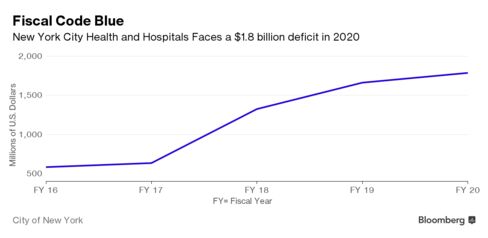
New York Hospitals Facing Fiscal Code Blue

http://www.bloomberg.com/politics/articles/2016-08-22/new-york-city-hospitals-seen-unwilling-to-take-stronger-medicine?utm_campaign=KHN%3A+Daily+Health+Policy+Report&utm_source=hs_email&utm_medium=email&utm_content=33278487&_hsenc=p2ANqtz–Ua5Q-PC5Hs3i1ni8bTaDNOfHhzF8R8meSEL9ZdWL6LejSQMUC3wLCDN9J_cuBB9IHRmZmF7BdmyqhMlNtFPa8KBOrzA&_hsmi=33278487

New York City’s public hospitals are in critical condition with rising costs and plummeting revenue. There’s no dispute about that diagnosis. The problem is with Mayor Bill de Blasio’s proposed cure, according to health policy makers, hospital administrators and budget watchdogs.

As NYC Health + Hospitals President Ram Raju describes it, the largest U.S. municipal-healthcare provider is an ailing system of 11 hospitals that’s losing revenue because of increased competition from non-profit hospitals for Medicaid patients and drastic cuts in federal and state aid for indigents.

His prescription: shift its 40,000-plus employees into a system of neighborhood clinics and transform campuses into affordable housing and long-term care, build enrollment of its MetroPlus insurance plan and persuade federal and state governments to spend more. That aid is projected to fall by almost $1 billion -– from $2.2 billion in FY16 to $1.4 billion in 2020.

Drug and Device Makers Pay Thousands of Docs with Disciplinary Records

http://www.healthleadersmedia.com/physician-leaders/drug-and-device-makers-pay-thousands-docs-disciplinary-records?spMailingID=9400653&spUserID=MTMyMzQyMDQxMTkyS0&spJobID=981898992&spReportId=OTgxODk4OTkyS0

Physicians whose state boards have sanctioned them for harming patients, unnecessarily prescribing addictive drugs, bilking federal insurance programs, and even sexual misconduct nonetheless continue to receive payments for consulting, giving talks about products, and more.