Part owner of proposed Chesapeake eye-surgery center faces allegations in kickback scheme, feds say

https://pilotonline.com/news/government/local/part-owner-of-proposed-chesapeake-eye-surgery-center-faces-allegations/article_dac450e3-d7b1-5e1d-87a1-54a39a5e8ddf.html

Proposed site for the Center for Visual Surgical Excellence in Chesapeake

A North Carolina-based physician and part owner of a proposed medical center in southern Chesapeake is facing allegations of involvement in a kickback scheme.

The U.S. Attorney’s Office in Minnesota is pursuing a civil action against Jitendra Swarup, an ophthalmologist at Albemarle Eye Center in Elizabeth City, N.C., a spokeswoman said Friday. She said the government’s complaint would be filed by a court-mandated mid-November deadline.

Swarup was among more than a dozen physicians and four companies listed as defendants in a 2015 complaint lodged by a “whistleblower” and former executive of Sightpath Medical. The lawsuit alleges physicians were bribed through travel, entertainment and “sham consultancy agreements” to use Sightpath products and services.

The company and its former CEO, James Tiffany, settled with the government and the whistleblower recently for $12 million, according to the U.S. Attorney’s Office in Minnesota and court documents. The 2015 complaint, which was originally filed in 2013, claimed, among other things, that Sightpath paid Swarup consulting fees to induce referrals.

“We intend to vigorously defend Dr. Swarup, and we believe he will be completely exonerated,” Swarup’s lawyer, Marc Raspanti, said Friday. Raspanti said no criminal charges have been filed, and there is no criminal investigation. The spokeswoman in Minnesota wouldn’t comment on the existence of a criminal investigation, but to date, there has not been a criminal charge issued, she said.

Raspanti, a Philadelphia-based attorney, said he is “cautiously optimistic” the government can be persuaded to “spend their time elsewhere.”

Swarup and Chesapeake ophthalmologist Paul Griffey want to build an outpatient surgery center on about 1.5 vacant acres off Carmichael Way in Edinburgh. Twelve surgeons are committed to what’s being called the Center for Visual Surgical Excellence, Griffey told council members last week. Services would include cataract, retinal and other surgeries, city planning documents say.

According to a certificate of public need issued for the center last month by the Virginia Department of Health, the capital costs of the project are $3.7 million, with financing costs of $1.4 million. It’s scheduled for completion by October 2018. A condition of the state’s certificate is that the center must provide “an appropriate level” of charity services, according to department documents.

City staff and the Planning Commission have recommended approval of a conditional-use permit. City Attorney Jan Proctor said Friday the City Council is aware of the civil lawsuit, but it is not a factor in the land-use issue.

“Dr. Swarup vigorously denies the allegations, and they provide no basis to deny the (permit) whether or not true,” Grady Palmer, the attorney for the project, wrote in an email to council members Sept. 1. The council will consider the proposal tonight.

Swarup, a Suffolk resident, told council members last week that he’s been practicing for 20 years in northeastern North Carolina, where Albemarle Eye Center has five offices, including two on the Outer Banks. He is licensed in Virginia and North Carolina, according to state medical board websites, and is affiliated with hospitals in both states.

Settlement documents say Sightpath Medical supplies medical facilities with products that ophthalmologists use for surgeries in ambulatory surgical centers and hospitals.

Federal payers, including Medicare, reimburse the facilities and the physicians, documents said. Sightpath offered and paid illegal remuneration to physicians to promote the use of its products and services, which resulted in the submission of false claims, the settlement documents said.

The 2015 complaint contends that Swarup began receiving $8,000 a month around 2002 as a consultant for Sightpath, but that he “does not perform commercially reasonable services for these payments.”

Instead, the payments were made to gain Swarup’s business in North Carolina and induce referrals, the documents say. Swarup sought these payments, which continued until at least 2008, as a “quid pro quo for arranging for hospital administrations to utilize Sightpath’s services and equipment,” court documents say.

Swarup was also a guest of a company executive on at least one “luxury” fishing trip to Budd’s Gunisao Lake Lodge in Manitoba, Canada, in 2006, according to the 2015 complaint.

Raspanti said Swarup was a consultant for Sightpath from 2002 or 2003 to late 2014, but Sightpath is still contracted with hospitals in which Swarup operates. He said most of those facilities had contracts with the medical service provider before Swarup came to North Carolina to practice.

Swarup made roughly $80,000 a year in consulting fees with Sightpath, Raspanti said, which included discussions on ways to improve products and services and the training of technicians who assisted Swarup with his procedures.

“The contract, as far as we’re concerned, was legal and honored for many years by both sides,” Raspanti said. It was neither unusual nor inappropriate, he said, and contracts like it exist in other medical disciplines.

There were “half a dozen trips” over the course of Swarup’s contract with Sightpath, Raspanti said. Swarup paid for some and contributed to others, and most were requested by Sightpath executives and were part of Swarup’s contractual obligation. Executives also visited Swarup at his North Carolina home, Raspanti said.

“Just because you see an allegation doesn’t mean it’s true,” Raspanti said, noting there have been “no allegations of inappropriate surgeries, no allegations of lack of medical necessity, no allegations of bad medical outcomes.” He said Swarup has not been excluded from Medicaid or Medicare or any private insurance company.

Raspanti, a health care lawyer for many years, said his client – the only local doctor named in the 2015 complaint – has been targeted because he is an active and prolific surgeon. Raspanti said he has told Swarup to do whatever he needs to do to run his practice, including his pursuit of a new venture.

“I have told him to move full speed ahead on it,” Raspanti said.


What’s Causing America’s Rural Health Insurance Crisis?

http://www.realclearhealth.com/articles/2017/10/20/whats_causing_americas_rural_health_insurance_crisis_110736.html?utm_source=morning-scan&utm_medium=email&utm_campaign=mailchimp-newsletter&utm_source=RC+Health+Morning+Scan&utm_campaign=b4650c46a5-MAILCHIMP_RSS_EMAIL_CAMPAIGN&utm_medium=email&utm_term=0_b4baf6b587-b4650c46a5-84752421

Related image

Over recent years, numerous rural health insurance markets have teetered on the brink of collapse. Rural areas have long posed a special challenge to health care policymakers, but a poorly-designed system of subsidies for rural hospital care has turned this into a crisis. It has fostered a rural hospital market structure that has crippled the ability of private insurers to negotiate reasonable payment rates, without fully securing the provision of essential care. By refocusing federal assistance on emergency care, it should be possible to restore rural insurance markets to health, while improving the affordability and access to care available to residents.

Warren Buffett once famously observed that “you only find out who is swimming naked when the tide goes out.” As the Affordable Care Act’s reforms have placed the nongroup market for health insurance under acute strain, it is rural areas that have been most exposed. Of 650 counties that have only a single insurer offering plans on their exchange, 70 percent are rural. For Medicare Advantage, despite total revenues roughly twice as large as the individual market, the situation is even worse—with 140 (mostly rural) counties lacking private insurance coverage options altogether.

It is more challenging to deliver healthcare services in sparsely populated areas. Small communities are unable to support full-time physicians for many medical specialties, and the fixed costs of multi-million-dollar hospital equipment cannot be spread across so many patients. As only 24 percent of rural residents can reach a top trauma center within an hour, rural areas suffer 60 percent of America’s trauma deaths, despite having only 20 percent of the nation’s population.

During the 1990s, economic pressures forced 208 rural hospitals to close. As a result, Congress established the Flex program to boost Medicare payments to isolated rural hospitals. Facilities designated as Critical Access Hospitals under the Flex program were intended to be more than 35 miles by major road from other facilities, but states were allowed to waive that requirement. As a result, the number of such hospitals grew from 41 in 1999 to more than 1,300 in 2011 – covering a quarter of U.S. hospitals, before Congress eliminated the states’ waiver power. By that time, 800 facilities exceeding the 35-mile requirement had been designated as CAHs, and these were grandfathered in.

What makes CAH status so attractive to hospitals? Instead of being paid standard Medicare rates for services, CAHs are allowed to claim reimbursement for whatever costs they incur in the delivery of covered inpatient, outpatient, post-acute and laboratory services to Medicare beneficiaries. Medicare pays more to facilities with the most expensive cost structures and eliminates incentives to control expenses – encouraging all to increase spending on new infrastructure and equipment.

Eighty-one percent of CAHs now have MRI scanners, for which they bill Medicare an average of $633 per scan—double the normal fee schedule rates. From 1998 to 2003, payments per discharge for acute care at CAHs rose by 21 percent, while post-acute care costs per day almost quadrupled. This upward pressure on costs has compounded over time: The longer a hospital has been a CAH, the more its costs have grown.

To check the capacity of CAHs to inflate their overheads, Medicare rules limit them to 25 beds. This has transformed the rural hospital landscape. In 1997, 85 percent of rural hospitals had more than 25 beds; by 2004 only 55 percent did. This makes it very difficult for the best-managed and most cost-effective facilities to win market share and has eliminated whatever competitive forces may have constrained costs. Nonetheless, excess capacity remains enormous: occupancy rates were only 37 percent in small rural hospital in 2014, compared with 64 percent in urban hospitals. Insurers covering care at such facilities must pay for equipment that is often unused and skilled physicians who spend much of their time idle.

Medicare Advantage (MA) plans have been hit hardest by this arrangement. MA plans usually attract enrollees by providing supplemental benefits and reduced out-of-pocket costs, funded by preventing unnecessarily costly hospitalizations. But, as CAHs are able to claim unconstrained reimbursement for Medicare beneficiaries directly from the government, they have little reason to agree to reasonable fees with MA plans, who may constrain their claims or steer enrollees to cheaper sites of care. Even under relatively loose network adequacy requirements, MA plans can, therefore, be effectively locked out of states dominated by CAHs. While 56 percent of Medicare beneficiaries in Minnesota are enrolled in MA plans, only 3 percent of those in Wyoming and 1 percent in Alaska are covered.

Low volumes and the absence of competition have also resulted in a lower quality of care. CAHs are more poorly-equipped than other hospitals, fall short on standard processes of care and have higher 30-day mortality rates for critical conditions. As a result, patients are increasingly willing to travel longer distance for treatments, with rural residents receiving 48 percent of elective care beyond their local providers. This bypass of rural provider networks is particularly common for surgeries on eye, musculoskeletal and digestive systems and for complex procedures more generally.

Although CAH status gives each hospital an average additional $500,000 of revenues, falling volumes of inpatient procedures and the increased costs entailed by this arrangement nonetheless leaves many facilities struggling. According to the National Rural Health Association, 55 rural hospitals closed between 2010 and 2015, while 283 were on brink of closure.

Can the $2 billion total annual cost of additional hospital subsidies provided by the Medicare Flex program not be better spent to support essential care in rural areas?

MedPAC, the agency established by Congress to advise it on Medicare payment policy, has argued that CAHs are “not the best solution”, as “many small towns do not have the population to support efficient, high-quality inpatient services.” MedPAC has proposed that Congress provide lump-sum payments to cover the overheads needed to provide 24/7 emergency care at geographically isolated outpatient-only facilities and suggested that Medicare reimbursement be extended to care provided by standalone emergency departments.

This would focus subsidies to secure emergency services, which must be delivered locally, while leaving elective care to be located efficiently according to market demand. Such a reform would give emergency rural hospital care a firmer financial foundation while restoring payment rules for elective care that would make it possible for insurers to re-enter the rural marketplace.

Keeping the Alexander-Murray health care bill in context

https://www.axios.com/keeping-the-alexander-murray-health-care-bill-in-context-2498670199.html

Image result for Keeping the Alexander-Murray health care bill in context


As debate continues about a bipartisan fix for the Affordable Care Act marketplaces, Drew Altman’s latest Axios column describes the scale of the problems in the ACA marketplaces and the public’s confusion about whether they are impacted. He says that the news media, experts and policy makers can do more to put the marketplace problems and fixes in context as debate evolves.

As the debate unfolds about the bipartisan bill by Senators Lamar Alexander and Patty Murray to repair the Affordable Care Act marketplaces, the public could be just as confused as they have been about the ACA’s marketplaces. That’s why it’s important to debate it in the right context: It’s aimed at an urgent problem affecting a relatively small sliver of the health insurance system, not all of the ACA and not the entire health system.

The bottom line: It’s a limited measure that will never give conservatives or liberals everything they want.

Reality check: Many people will think it affects their insurance when, in actuality, it will have no impact on the vast majority of Americans who get their coverage outside of the relatively small ACA marketplaces.

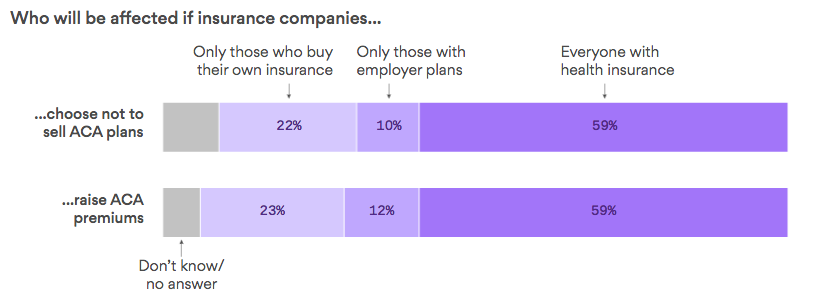
The chart based on our new Kaiser Tracking Poll shows the confusion. Just 23% of the American people know that rising premiums in the ACA marketplaces affect only people who buy their own insurance. More than seven out of 10 wrongly believe rising premiums in the marketplaces affect everyone or people who get coverage through their employer.

The public will be susceptible to spin and misrepresentation of the limited goals of Alexander-Murray: a bipartisan effort to stabilize the marketplaces by funding the cost-sharing reduction subsidies, providing more resources for open enrollment outreach, and expediting state waivers.

President Trump has added to the confusion. He recently pronounced the ACA “dead”, adding, “there is no such thing as Obamacare anymore.” Possibly that’s because he wishes it was dead. More likely, he was referring to the problems in the ACA marketplaces, which he has exaggerated.

Like thinking your whole house is falling down when just a part of the foundation needs shoring up, both he and the American people have an inaccurate picture of where the marketplaces fit in the ACA and where the ACA fits in the health system.

A few facts:

  • There are just 10 million people enrolled in the ACA marketplaces.
  • The law’s larger Medicaid expansion and consumer protections are popular and working well.
  • The far larger Medicare and Medicaid programs and employer based health system combined cover more than 250 million people, and are largely unaffected by developments in the ACA marketplaces.
  • Premiums for the 155 million people who get coverage through their employers rose a very modest 3% in 2017.

Some conservatives in Congress will hold out for repeal, and they’ll resist any legislation that they view as propping up Obamacare. But for everyone else, it’s important to understand the problem and get the facts.


Traveling The Valley Of The Shadow Of Death In 2017

http://healthaffairs.org/blog/2017/10/18/traveling-the-valley-of-the-shadow-of-death-in-2017/

Image result for Traveling The Valley Of The Shadow Of Death

My mother has a letter from her mother written in 1942, telling of the death from pneumonia of a middle-aged neighbor with whom my grandmother had spoken at the post office just a week earlier. For most of human history, that sudden turn to death has been the common experience. Few managed to live into old age; and even for elders, the dying was usually fairly abrupt. There was little risk of living long with dementia, Parkinson’s disease, heart failure, cirrhosis, serious injuries, childbirth complications, or other fatal illnesses. Diabetes was fatal within a few months in 1900. Now, most of us will instead experience a long period of decline in advanced old age. The period of being unable to take care of yourself (mobility, dressing, feeding, toileting) averages more than two years in the last phase of life. During that time, we each will need another person’s help every day—often around the clock. And our society has not even figured out how to talk about the situation, much less how to reorganize to make this newly expectable phase of life comfortable and meaningful, or affordable.

US society seems stuck in an era of “happy talk.” When a fireman pulls a child from a swimming pool, it seems appropriate to call it “saving a life.” But how many times have you seen the newspaper headline touting a new drug or device that will “save X thousands of lives,” when, at best, it will delay the dying of very sick and usually elderly people by some months before something else causes death? That may be a good thing, but it is illusory to claim that it is “saving lives.” Advocacy organizations around each eventually fatal illness promote prevention and cure, but none say what would be a better way to come to the end of life. Influential authors tout odd claims such as “Toward a State of Complete Well-Being,” which persuasively argues for investments in prevention and social determinants of health but does not give voice to the limitations imposed by illnesses associated with aging. Public policy falls into the same pattern, with enthusiasm for supporting development of a costly drug that will delay the progression of heart failure, but inattention to issues such as the struggles of family caregivers, the waiting lists for home-delivered meals, and the misfit of available housing with disabilities.

My mother now lives through the peculiar torment of progressive disability from frailty in a “care system” that is not designed for her situation: losing nearly half of her weight, barely able to get up from a chair, having a plethora of symptoms with no treatable etiology, and yet having enough heart, lungs, kidney, and liver functions to go on for a while. There will be no letter from a neighbor who is startled when she dies; neighbors will be astonished that she lived so long with such severe disabilities. Hospital care is readily available and paid for, but medications after hours are not available, and she must pay out of pocket for personal care. Hospitals, physicians, pharmacists, and civic leaders have not made plans as to how to serve large numbers of elderly people living in the community with serious and worsening disabilities.

Making workable plans would require adopting some novel perspectives and taking account of some salient facts that are often set aside. First, the life possibilities of an elderly person with increasing disabilities is profoundly dependent upon the surrounding community. Is housing accessible? Can you readily get help with minor home repairs, such as changing a light or fixing a gutter? Can you get food delivered, and can you get prepared meals delivered? Can you stay engaged with other people—family, neighbors, and church or club members? Are you considered an embarrassment when out in public with a walker or wheelchair—or an adult diaper? Are walk lights lit long enough for you to cross the street? Are there personal care aides trained to deal with disabilities and challenging behaviors at home, and can elders in need afford them? Are there physicians attuned to your physiology and preferences who will, when needed, come to your home?

None of these things can be made available just for one person; they all are traits that affect whole communities, and they are available to all or most in the community, or to no one. Yet, communities have little voice or resources. Instead, what happens to be available is mostly the result of chance developments and leadership opportunities that vary over time and across communities. Health care has geographically overlapping hospitals, insurers, and other providers, none of which are involved in community planning for elder care and often none of which are actually anchored in any particular community.

Second, the preferences and priorities of elders in this phase of life vary much more than in earlier phases. A 50-year-old with gall bladder attacks is very likely to have about the same preferences for medical care as any other 50-year-old with gall bladder attacks. But two 90-year-olds with frailty syndrome are likely to require substantial customization of their care plans. It matters whether one has a volunteer family caregiver, or a home on one floor, or assets in the bank to hire help. So, elder-driven care planning becomes a central activity, and one that is not yet well-developed or commonly done. We do not yet evaluate care planning; we have aspirational sets of documentation requirements but little actual documentation, and we don’t assure that elders and their families are really driving the choices.

Third, we need more reliable and reasonable financing plans. Working-age people still don’t realize that they need to provide for themselves in old age. Policies need to change to make vehicles for saving affordable and reliable. The Bipartisan Policy Center, a Washington, D.C., think tank committed to balanced policy development, encouraged federal government catastrophic coverage for long-term care when the need for substantial personal care persists for more than a few years. That would make it plausible for many people to save or insure for the first few years of needing long-term supports and services, which is all that most people will need. Other approaches are appealing. For example, by providing flexible hours and part-time work, employers of family caregivers can make it much easier for them to stay at work and still provide care to an elderly family member. The range of possibilities is substantial but largely unexplored in public discourse and policy development.

Fourth, sick and disabled elders living in the community need continuity and reliability across time, instead of the cut-up care system we provide. Remarkable efficiencies are possible if services in the home were allowed to be organized geographically. As much as half of our spending on home care can go to supporting the inefficiencies of having each provider organization spread across a large area.

A substantial revision of Medicare and Medicaid that would put these observations and the existing research together is in order. Call it MediCaring Communities. What would be required? Allow some communities to take on responsibility for monitoring and improving their elder-care system’s performance and enable them to shift resources from medical care to supportive services when appropriate. Let them be able to develop their workforce and improve their built environment. Enable geographic concentration of home care services to capitalize on efficiencies. Help these pioneer communities develop metrics to monitor the local system’s performance over time and to guide setting priorities and monitoring the effects of changes. Explore the possibilities for reliable financing. We could learn a great deal from the first few highly efficient and highly reliable community-anchored care systems for elders. Everyone would want their community to follow suit!

Dozens of revisions in delivery arrangements for elder care have been proven to be effective in improving care and reducing costs. The most comprehensive is PACE, the Program of All-Inclusive Care of the Elderly. PACE serves people who are disabled enough to qualify for nursing home care but who continue to live in the community with substantial support, and PACE provides all Medicare and Medicaid covered services, from enrollment to the end of life. More limited fixes, such as transitional care, have been effective. Our MediCaring Communities reform proposal would incorporate whatever improvements in service supply, quality, and delivery serve the priorities of the community. What’s novel about it would be the development of a deliberate local entity capable of some management of the community’s “system.” This entity could assure elder-directed care planning, adequate supportive services, appropriate medical care tailored to this population, monitoring of system performance, local priority setting, shifting of some resources from overuse of medical care, and implementation of improvements with evaluation to assure learning.

Long-term survival with serious disabilities for very large numbers of elderly people is already a major challenge, and one which will grow with the aging baby boomer population. The models that worked to provide and pay for hospital care for acute illnesses will not work for this new situation. We need an era of innovation and testing, shaped by the facts of the situation. We need a new set of policies for our new way of living at the end of our lives. Let’s try substantial innovations, mostly by relieving communities of the burdens of past policies and regulations, and let’s learn quickly so we can count on living comfortably and meaningfully in the last years of our lives.


The value of hospitals’ tax exemptions

http://www.aha.org/content/17/benefit-of-tax-exemption.pdf?utm_source=newsletter&utm_medium=email&utm_campaign=newsletter_axiosvitals&stream=health-care

Image result for community benefit


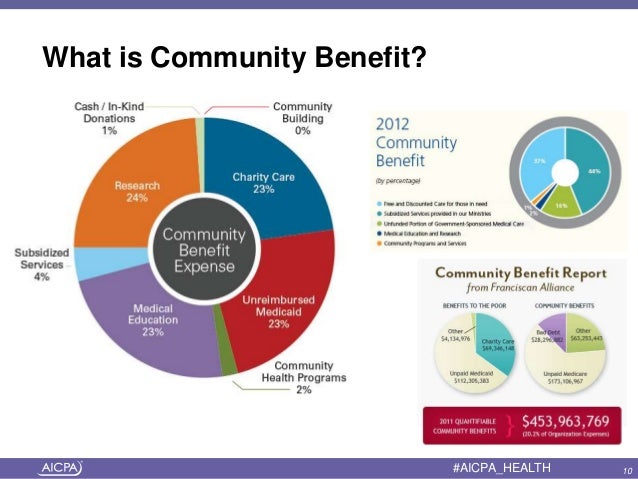
The American Hospital Association released a report last week that said the benefits that not-for-profit hospitals provide to their local communities far outweigh foregone federal tax revenue. But Axios’ Bob Herman talked to some experts who said the AHA’s report has flaws and omissions that exaggerate hospitals’ community roles and understate the power of their tax exemptions.

  • The AHA did not account for the giant tax break hospitals get on their property, “which is just a joke,” said Craig Garthwaite, a health economist at Northwestern University.
  • “Exclusion of property taxes would be a very major problem,” added Gary Young, a health policy professor at Northeastern University who has studied tax exemptions for not-for-profit hospitals.
  • Calculating shortfalls from Medicare as a community benefit also raises a red flag. For-profit hospitals that pay taxes treat Medicare patients. The IRS doesn’t acknowledge Medicare shortfalls as a community benefit.
  • Plus, research shows hospitals often lose money from Medicare because of their high fixed costs and inefficiency, not because payments are too low. “That’s really just trying to get that (community benefits) number as high as possible,” Garthwaite said.

AHA’s response: Mindy Hatton, the AHA’s top lawyer, responded with a statement to Axios. The report did not include property tax values, she said, because the analysis only covered federal exemptions, which “Congress has jurisdiction over.”

Senate Budget Won’t Let GOP Pursue Full Obamacare Repeal

https://www.bloomberg.com/news/articles/2017-09-29/senate-budget-allows-1-5-trillion-tax-cut-not-full-aca-repeal

Image result for Obamacare Repeal

Senate Republicans unveiled a fiscal 2018 budget resolution Friday that they intend to use to push through as much as $1.5 trillion of tax cuts in the coming months, but it won’t allow the GOP to pursue a full repeal of Obamacare.

The budget proposal would still allow Republicans to pursue a much narrower attack on the Affordable Care Act, including repealing the individual mandate to purchase coverage. The resolution also would let the GOP use the fast-track process to open up drilling in the Arctic National Wildlife Refuge.

The budget, authored by Senate Budget Chairman Mike Enzi, forecasts a balance in nine years through $5 trillion in largely unspecified spending cuts. Unlike the House budget proposed in July, Enzi’s blueprint doesn’t call for cuts to Medicaid or a partial privatization of Medicare.

“A pro-growth tax plan will move the U.S. economy forward and help to produce better jobs and bigger paychecks for every American,” Enzi, of Wyoming, said in an emailed statement.

The Senate draft is to be voted on by the Budget Committee next week, with floor votes planned later in October and a conference to resolve differences with the House after that. The House plans a floor vote on its budget plan next week.

Tax Cut

Once in place, the budget resolution would allow Republicans to bring up a tax-cut bill that would increase deficits by as much as $1.5 trillion, compared with a Congressional Budget Office baseline. Under the fast-track process, the GOP-controlled Senate could pass the proposal with no Democratic votes.

The budget sets a target for the Senate Finance to report back with its draft tax bill by Nov. 13.

“The Senate budget resolution drafted by Budget Committee Chairman Mike Enzi is a critical step to advance President Trump’s agenda to provide tax relief for the middle-class and unleash economic prosperity for all Americans,” said White House budget director Mick Mulvaney in a statement. “I urge the Senate to pass this resolution and come to a swift agreement with the House so President Trump can sign America-first tax relief into law this year.”

Senate Democratic leader Chuck Schumer of New York said the GOP plan would “blow a huge hole in the deficit and stack up debt, leading to cuts in programs that middle-class Americans rely on.”

Individual Tax Rate

President Donald Trump and Republican leaders announced a tax-cut plan Wednesday that would cut the top individual rate to 35 percent from the current 39.6 percent. It would let Congress decide whether to create a higher bracket for those at the top of the income scale. The rate on corporations would be set at 20 percent, down from the current 35 percent. Under Senate rules, any tax cuts that increase the deficit would have to expire in 10 years because the budget process can’t be used for long-term deficit increases.

The provision making it easier for Congress to allow oil and gas drilling in part of the Arctic National Wildlife Refuge was sought by Alaska Republican Dan Sullivan. Under the proposal, royalties from oil and gas production in the wildlife refuge would be raise revenue that could help offset at least $1 billion in tax cuts over a decade.

The proposal’s instructions to the Finance Committee could allow a partial repeal of Obamacare, although panel Chairman Orrin Hatch has said he will keep that separate from a tax overhaul. Republican leaders have said they won’t try again on the health-care law until fiscal 2019.

Balanced Budget

When Republicans attempted to use the 2017 budget process to repeal Obamacare earlier this year, they didn’t provide a 10-year plan for reducing the deficit.

The new Senate plan proposes a balanced budget within nine years, while leaving it to other committees to figure out how to achieve that. The proposal calls for $4.8 trillion in spending cuts over 10 years and $1.635 trillion in revenue losses, including the tax cuts. Balance by 2026 is achieved by assuming $1.2 trillion in economic growth, in part due to the tax cuts. Enzi claims to achieve a $197 billion surplus in 2027.

The Republican assumptions of robust economic benefits from the budget were called into question by a separate CBO analysis. CBO predicted that the budget would reduce economic growth in the first two years and slightly increase it in later years.

CBO estimated that annual real GDP growth in the first two years would average 1.3 percent, down from an average of 1.6 percent in CBO’s baseline. In later years, real GDP growth would be 2.0 percent, compared with 1.9 percent in the CBO baseline.

The budget, unlike the one proposed by Trump in May, would hold defense spending at the current budget cap instead of the president’s proposed $489 billion defense increase over 10 years. Non-defense discretionary appropriations — which fund domestic agencies like the Agriculture Department and National Institutes of Health — would be cut by $632 billion over 10 years compared with $1.6 trillion in Trump’s budget request.

While the Trump and House budget proposals contain a number of nonbinding policy suggestions to carry out their spending cuts, Senate Republicans — weary of policy infighting — are keeping things vague.

Medicare, Medicaid

The House budget seeks to make $203 billion in cuts in entitlements such as Medicare, Medicaid and food stamps, and it could be used to fast-track changes to the Dodd-Frank financial law. The Senate plan avoids those options.

The Senate proposal does allow adjustments to increase the defense spending caps. It also urges senators to revise the Children’s Health Insurance Program, improve management of wildfire-prevention funding, prevent private-pension bailouts and improve services to veterans.

The budget resolution doesn’t address Social Security, which will run a trillion-dollar-plus deficit in the coming 10 years. In the past, Republicans have sought to balance a “unified budget” that includes the program. This time, they are keeping it “off-budget.”

CBO says that without the Social Security accounting move, Enzi’s budget would never balance and would show a $424 billion deficit in 2027.

The nonpartisan Committee for a Responsible Federal Budget said in a statement it prefers the House budget. “We encourage the Senate to look to the House Budget Committee, which passed a budget calling for revenue-neutral tax reform and at least $200 billion of mandatory spending cuts on top of that,” it said.

Dynamic Scoring

The Senate plan renews authority for the CBO and Joint Committee on Taxation to use so-called dynamic scoring when evaluating bills — a move allowing lawmakers to assume that tax cuts will cause economic growth that would offset some of the revenue loss.

And it changes several rules to allow senators to rush a tax bill through, including abolishing the need for a CBO analysis at least 28 hours before a vote.

The Senate plan avoids other tricks, though. Enzi included provisions to keep appropriators from using phantom cuts known as “changes to mandatory programs” to offset discretionary spending increases.

The chairman also rejected pressure from some lawmakers to use a baseline number for tax revenue that would allow $450 billion in additional tax cuts. Instead, he stayed with the baseline used by the CBO.

How investing in public health could cure many health care problems

http://theconversation.com/how-investing-in-public-health-could-cure-many-health-care-problems-84256?utm_medium=email&utm_campaign=Latest%20from%20The%20Conversation%20for%20October%201%202017%20-%2084576980&utm_content=Latest%20from%20The%20Conversation%20for%20October%201%202017%20-%2084576980+CID_49b12b4a2a39e7f173235a40290664ab&utm_source=campaign_monitor_us&utm_term=How%20investing%20in%20public%20health%20could%20cure%20many%20health%20care%20problems

Now that the Cassidy-Graham bill has been pulled, it’s a good time to think about concrete ways to improve health and health care in our country. Despite advances in medicine, U.S. health care spending grew to US$3.2 trillion in 2015, or 17.8 percent of the nation’s gross domestic product. To contain health care costs, the U.S. needs to invest in strengthening the public health system and reconsider approaches to making all Americans healthier.

Making Americans healthier should not be a partisan issue. Conservatives and progressives alike should agree on the importance of keeping Americans healthy – both on principled and financial grounds. The sicker the American people, the more expensive their care, and much of that cost will inevitably be borne by Medicare and Medicaid. Yet major challenges loom.

As the Dean of Columbia University’s Mailman School of Public Health, I have dedicated my career to the health of populations, using science and evidence to transition to a world where health and health care are collective priorities for all. My research and that of others suggests that this situation can be improved, but it will require a major national strategy and commitment to invest in public health – one that can be highly cost-effective.

Just the facts

Take, for example, the toll of chronic disease in the U.S. As of 2012, about half of adult Americans were living with one or more chronic health conditions, according to the Centers for Disease Control and Prevention, and one in four adults had two or more. Treating people with chronic diseases accounts for most of our nation’s health care costs. Eighty-six percent of the nation’s annual health care expenditures are for people with chronic and mental health conditions.

This problem will only grow as the U.S. population increases. And the census projects that the population will increase by 98 million between 2014 and 2060.

At the same time, America’s crumbling infrastructure is putting many Americans’ health at risk. The country’s drinking water systems, which are foundational to health, received a D grade on the 2017 Infrastructure Report Card of the American Society of Civil Engineers. Hazardous waste management and wastewater treatment earned only D+ grades.

The connection between health and infrastructure is strong: Infrastructure greatly affects access to healthy lifestyles. While access to clean drinking water and waste treatment are paramount, there are other examples, too.

Sidewalks and bike lanes encourage physical activity; public parks provide space for exercise and rejuvenation; and public transit is crucial to getting people out of cars, encouraging walking and, of course, reducing pollution and congestion. Subways and buses also enable older adults to reach needed services and remain in their homes longer.

Improvements to infrastructure are typically one-time expenses with recurring benefits. For example, one new sidewalk benefits an entire generation of walkers and runners. Research shows that every $1,300 New York City invested in building bike lanes in 2015 provided benefits equivalent to one additional year of life at full health over the lifetime of all city residents.

Other studies also have shown that preventing illness is far less expensive than paying for treatment. Trust for America’s Health estimates that “an investment of $10 per person per year in proven community-based programs to increase physical activity, improve nutrition, and prevent smoking and other tobacco use could save the country more than $16 billion annually within five years. This is a return of $5.60 for every $1.” With ever-rising health care costs, how can we overlook such opportunities?

Prevention policies and cessation help

The focus of American health care and health-related research needs to be shifted to include prevention, not just treatment. The “Cancer Moonshot,” which has strong bipartisan support, is a vital step in this direction, providing $1.8 billion in funding over seven years.

Cancer prevention must be a high priority, and the success of this effort could inspire a national consensus around future commitments to tackle other diseases and conditions.

Another prevention priority should be healthy aging. Today there are more than 46 million Americans aged 65 years or older; and by 2060, the number of seniors is expected to more than double, according to the Department of Health and Human Services and the Census Bureau. Promoting healthy aging for older Americans should, therefore, be paramount.

And healthy aging begins far earlier than 65 or 70. Obesity, in particular, may be determined in early childhood, even before. According to research by my Mailman School colleague Andrew Rundle, prenatal exposure to air pollution raises risk for obesity in childhood. His research shows that children who are overweight or obese at age five are more likely to be overweight or obese by age 50. We also know that these adults, and increasingly children too, will be more likely to have diabetes, high blood pressure and high cholesterol.

Efforts at smoking cessation should also be increased. The total economic cost of smoking in the United States is more than $300 billion a year in direct medical care and lost productivity, according to the CDC.

That’s more than we’re spending on the Cancer Moonshot annually.

Thinking big

America has extraordinary research capability. The NIH invests nearly $32.3 billion annually in medical research for the American people. Targeted cancer therapies, for instance, are the focus of much anticancer drug development, according to the National Cancer Institute. Precision Medicine is a top priority at the NIH and other research agencies. Even at $32 billion, Americans are investing in the NIH only 1 percent of what we spend on health care annually. The U.S. should build its advantage by increasing research funding to enhance the potential of breakthroughs in preventing known diseases as well as future threats.

There is reason for optimism. The good news stems in large part from the fact that chronic diseases and conditions – such as heart disease, stroke, cancer, Type 2 diabetes, obesity and arthritis – are among the most preventable of all health problems. At least half of these diseases could be prevented, and we are making strides. Death rates from heart disease, the No. 1 cause of death in America, have been reduced by nearly half, for instance, since 1990, according to the American Heart Association.

The growth and aging of the U.S. population and the epidemic of chronic diseases and conditions pose major challenges for America’s health care costs, no matter how health care is constructed. But a relentless focus on public health – and disease prevention in all its dimensions – is the best way to reduce pressure on costs.

Population Health Advisors

Click to access Translating_Data_Analytics_into_Population_Health_Insights_BSW.pdf

Related image


Health insurers working the system to pad their profits

https://www.publicintegrity.org/2015/08/17/17863/health-insurers-working-system-pad-their-profits

Image result for Health insurers working the system to pad their profits

Commentary: taking advantage of Medicare Advantage

One of the reasons the health insurance industry worked behind the scenes in 2009 and 2010 to derail Obamacare was the fear that changes mandated by the law would cut their Medicare Advantage profits. Medicare Advantage plans are federally funded but privately run alternatives to traditional fee-for-service Medicare.

Although the industry’s biggest trade group, America’s Health Insurance Plans, said repeatedly that insurers supported Obamacare, the group was secretly financing the U.S. Chamber of Commerce’s TV campaign against reform. Among the companies most concerned about the law were those benefiting from overpayments the federal government had been making to their Medicare Advantage plans since George W. Bush was in the White House.

Bush and other Republicans saw the Medicare Advantage program as a way to incrementally privatize Medicare. To entice insurers to participate in the program, the federal government devised a payment scheme that resulted in taxpayers paying far more for people enrolled in the Medicare Advantage plans than those who remained in the traditional program. The extra cash enables insurers to offer benefits traditional Medicare doesn’t, like coverage for glasses and hearing aids, and to cap enrollees’ out-of-pocket expenses.

When the Affordable Care Act became law in 2010, the payments to Medicare Advantage plans exceeded traditional Medicare payments by 14 percent. To end what they considered an unfair advantage for private insurers, and to reduce overall spending on Medicare, Democrats who wrote the reform law included language to gradually eliminate the over-payments.  So far, the 14 percent disparity has been reduced to 2 percent.  The final reductions are scheduled to be made next year.

Despite that decrease, the fears by Republicans and insurance company executives that the reductions would lead to a steady decline in Medicare Advantage enrollees have proved to be completely unfounded. In fact, the plans have continued to grow at a fast clip.

In March 2010, the month Obamacare became law, 11.1 million people were enrolled in Medicare Advantage plans—one of every four people eligible for Medicare. That was an increase from the 10.5 million Medicare Advantage enrollees in March 2009. Since then, Medicare Advantage membership has grown by more than 8 percent annually. Now 17.3 million—one in three people eligible for Medicare—are enrolled in private plans.

As Center for Public Integrity senior reporter Fred Schulte has written over the past year, many insurers have discovered that even though the overpayments are being reduced, they can boost profits another way: by manipulating a provision of a 2003 law that allows them to get additional cash for enrollees deemed to be sicker than average.

A risk-coding program was put in place by the government primarily because insurers were targeting their marketing efforts to attract younger and healthier—and thus cheaper— beneficiaries. Under the risk-coding program, insurers are paid more to cover patients who are older and sicker; the idea was to encourage the firms to cover those folks by offering a financial incentive. They get more money, for example, to cover someone with a history of heart disease than they do for someone with no such risk.  Last week Schulte uncovered whistleblower accusations that a medical consulting firm and more than two dozen Medicare Advantage plans have been ripping taxpayers off by conducting in-home patient exams that allegedly overstated how much the plans should be paid.

The Center for Medicare and Medicaid Services has refused to provide information that would enable taxpayers to know just how widespread fraud and abuse in the Medicare Advantage program might be. But CMS announced earlier this year that it will implement plans designed to make it harder for insurers to manipulate the risk scores. As you can imagine, insurers have howled and have put on a full court press to get CMS to scuttle those plans, but so far the agency says it intends to go forward. We’ll see.

This all matters to insurers because more and more of their revenue and profits are coming from the Medicare and Medicaid programs. When Aetna announced a few weeks ago that it planned to buy Humana, which has more than three million Medicare Advantage members—second only to UnitedHealthcare—Aetna and Humana executives said 56 percent of revenues from the combined company would come from the government programs.

Indeed, some of the firms would not be growing at all if it weren’t for their government business. When Aetna announced second quarter earnings earlier this month, the company noted that its membership in Medicare and Medicaid programs was up 8 percent over the same period last year. By contrast, its commercial membership was down from last year.

Despite that dip in commercial membership, Aetna surprised Wall Street with stronger profits than financial analysts had expected.

So don’t expect the Medicare Advantage program to wither on the vine because of Obamacare. If anything, it will continue to grow—as will the profits of the private insurers that participate in the program.

OIG: Acute care hospitals owe Medicare $51.6M, CMS agrees to provider clawbacks

http://www.fiercehealthcare.com/finance/oig-medicare-overpayment-acute-care-hospitals-audit?utm_medium=nl&utm_source=internal&mrkid=959610&mkt_tok=eyJpIjoiWmpSaVpqZGxPREF5TlRBMiIsInQiOiJCamZSYmt6YkZzc0FcL2J1NWFyaFBTRHdtT2Rwd3BKbnI0OGQ5RW1jWXhEcklUa2RYcjVOU2JhWEJXTFBuRlJEcnJRWXVXd0ROT0drZmF5WG00dkVYNFY2QmtMWk1BTUFXRmVtcmUwWVhHdnNKejA2dlZBMmhYbGVyVW9EazZtZTUifQ%3D%3D

money

A new government report finds that Medicare improperly paid acute care hospitals for outpatient services they provided to patients who were inpatients at other facilities. And now Medicare wants the money back

The Centers for Medicare and Medicaid Services has agreed to claw back the $51.6 million and require hospitals to refund patient copays and deductibles.

The Department of Health and Human Services Office of Inspector General audited (PDF) Medicare payments made between Jan. 1, 2013, and Aug. 31, 2016, and found that in that window CMS made $51.6 million in improper payments to hospitals for outpatient services provided to patients who were inpatients at long-term care facilities, critical access hospitals, inpatient rehabilitation facilities and inpatient psychiatric facilities.

Medicare typically would not pay an acute care hospital for outpatient treatments for a patient who is an inpatient at a different facility, according to the OIG, and instead the services should be rendered through an agreement between the two facilities, with payments going to the inpatient provider.

In addition, Medicare beneficiaries were responsible for $14.4 million in coinsurance and unnecessary deductibles paid to the acute care hospitals, the OIG found.

“Medicare overpaid the acute care hospitals because the system edits that should have prevented or detected the overpayments were not working properly,” the OIG concluded.

“If the system edits had been working properly since 2006, Medicare could have saved almost $100 million, and beneficiaries could have saved $28.9 million in deductibles and coinsurance that may have been incorrectly collected from them or someone on their behalf.”

OIG made three recommendations to CMS to resolve this issue:

  1. Recover the $51.6 million in inappropriate payments.
  2. Have the acute care hospitals refund the patients’ $14.4 million in coinsurance and deductibles.
  3. Identify improper payments outside of the audit window, and recover those as well.

CMS has agreed to these recommendations, OIG said.

OIG conducted the audit as previous investigations showed Medicare made inappropriate payments for outpatient services for people who were inpatients at acute care hospitals, and the organization wanted to see whether the trend extended to other types of facilities.