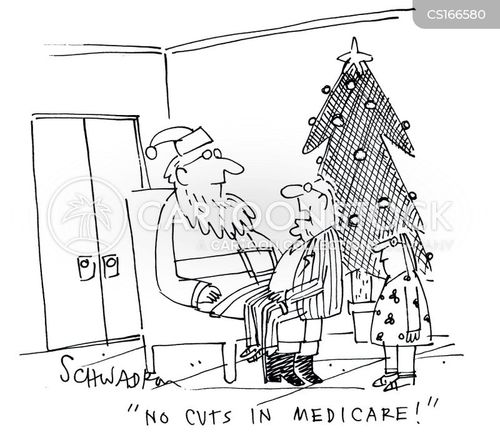
No Limit: Medicare Part D Enrollees Exposed to High Out-of-Pocket Drug Costs Without a Hard Cap on Spending

No Limit: Medicare Part D Enrollees Exposed to High Out-of-Pocket Drug Costs Without a Hard Cap on Spending – Issue Brief

Related image


Introduction

Prescription drugs play an important role in medical care for 59 million seniors and people with disabilities.  Medicare beneficiaries have access to outpatient prescription drug coverage through the Part D prescription drug benefit, which is administered by private stand-alone prescription drug plans (PDPs) and Medicare Advantage drug plans (MA-PDs). Since the start of the Medicare Part D program in 2006, the drug benefit has helped to lower out-of-pocket drug spending for all enrollees. Beneficiaries in Part D plans with low incomes and modest assets are eligible for additional assistance with plan premiums and cost sharing through the Low-Income Subsidy (LIS) program, reducing out-of-pocket costs even further for this population.

The Centers for Medicare & Medicaid Services (CMS) establishes guidelines that all Part D plans must follow for the design of the drug benefit and the value of coverage that must be offered. Plans are allowed to vary, however, along dimensions that affect beneficiaries’ access to and costs for medications, including which drugs are covered and cost-sharing requirements. The standard Part D benefit in 2017 includes a deductible ($400), followed by 25 percent coinsurance for prescriptions up to an initial coverage limit ($3,700 in total costs), and then a coverage gap where enrollees without low-income subsidies pay a larger share of their drug costs until their out-of-pocket drug spending exceeds a catastrophic coverage threshold ($4,950). The Affordable Care Act (ACA) included a provision to phase out the Part D coverage gap by requiring plans to cover a growing share of total drug costs and providing a manufacturer price discount of 50 percent for brand-name drugs filled in the gap, with the amount of the manufacturer discount counting towards the out-of-pocket threshold that triggers catastrophic coverage. Once enrollees’ drug spending reaches the catastrophic threshold, those without the LIS pay up to 5 percent of their total drug costs; those who qualify for the full low-income subsidy pay nothing for their drugs in this phase of the benefit. Plans typically place drugs that cost over $670 per month on a specialty drug tier, with coinsurance that ranges from 25 percent to 33 percent.

Concern has been rising in recent years about the growing cost burden on Medicare and beneficiaries posed by new, unique, and expensive specialty drugs used to treat a range of diseases. The Medicare Boards of Trusteesand the Medicare Payment Advisory Commission have documented this rising cost burden on the Medicare program, which is reflected in higher Part D program spending overall, as well as higher spending for reinsurance of high-cost Part D enrollees who reach the catastrophic coverage phase of the benefit, where Medicare pays for 80 percent of drug costs. Although Part D provides coverage of catastrophic drug expenses, enrollees who do not receive the LIS are still responsible for up to 5 percent of their drug costs in this phase of the benefit. For very high-priced medications, this relatively small coinsurance rate can translate to a significant amount of out-of-pocket costs for beneficiaries who do not receive low-income subsidies.

This analysis examines the out-of-pocket prescription drug cost burden for Medicare beneficiaries in Part D plans who do not receive low-income subsidies, focusing on those enrollees who have drug costs that exceed the catastrophic coverage threshold. We refer to this group as Part D enrollees with high out-of-pocket drug costs. Although these enrollees do not comprise the entire group of enrollees who have high total drug spending that exceeds the catastrophic coverage threshold, they are exposed to a potentially large cost burden because they do not receive the financial protection of the low-income subsidies. We analyze Medicare prescription drug event claims data for 2015, the most recent year of publicly available Medicare claims data, and trends since 2007, the first full year of the Part D drug benefit. For detail on the data and methods, see the Methodology.

Discussion

In recent years, the high and rising cost of prescription drugs has emerged as a pressing issue for consumers, public programs, and private insurers. As our analysis shows, Medicare beneficiaries who do not receive the additional financial protection provided by low-income subsidies are not insulated from this cost burden and can incur substantial out-of-pocket costs for their medications. We find that one million Medicare beneficiaries in Part D plans who were not receiving low-income subsidies had high out-of-pocket costs in 2015—that is, drug spending above the catastrophic coverage threshold—and their annual out-of-pocket spending averaged over $3,000 in 2015.

Our analysis indicates that out-of-pocket costs above the catastrophic threshold represent a growing concern for people with Medicare, and both MedPAC and Medicare’s actuaries have shown that rising spending for catastrophic coverage has placed greater fiscal pressure on Medicare. Our analysis also shows that the number of Part D enrollees who did not receive low-income subsidies and had out-of-pocket spending above the catastrophic threshold has increased over time. Looking to the future, we would expect to see continued increases in the number of enrollees reaching the catastrophic coverage threshold in 2016 and later years, due in part to the ACA changes to the coverage gap as well as the greater availability and use of high-priced drugs. These trends have cost implications both for beneficiaries and, as the Medicare actuaries have projected, for Medicare.

Part D enrollees with high out-of-pocket costs in 2015 spent an average of $1,215 out of pocket on their prescriptions filled above the catastrophic threshold, or $1.2 billion in the aggregate. In other words, Part D enrollees would have collectively saved $1.2 billion if Part D had a hard cap on out-of-pocket spending, rather than requiring enrollees to pay up to 5 percent coinsurance in the catastrophic coverage phase. Placing a hard cap on out-of-pocket spending under Part D would save money for enrollees, but would increase costs to Medicare and would not address underlying concerns related to high-priced drugs.

While Part D has helped make drugs more affordable for people with Medicare, and the ACA has provided additional relief to enrollees with high drug costs by gradually closing the coverage gap, the absence of an annual out-of-pocket spending limit under Part D exposes enrollees to significant costs—unless their incomes and assets are low enough to qualify for low-income subsidies. Various proposals to reduce drug costs—including allowing the federal government to negotiate prices for Medicare beneficiaries, and allowing Americans to import drugs from Canada and other countries—enjoy broad, bipartisan public support. With a growing number of people on Medicare facing high out-of-pocket drug costs, alleviating this burden remains an issue for federal policymakers to address.

Liquid Gold: Pain Doctors Soak Up Profits By Screening Urine For Drugs

https://khn.org/news/liquid-gold-pain-doctors-soak-up-profits-by-screening-urine-for-drugs/

The cups of urine travel by express mail to the Comprehensive Pain Specialists lab in an industrial park in Brentwood, Tenn., not far from Nashville. Most days bring more than 700 of the little sealed cups from clinics across 10 states, wrapped in red-tagged waste bags. The network treats about 48,000 people each month, and many will be tested for drugs.

Gloved lab techs keep busy inside the cavernous facility, piping smaller urine samples into tubes. First there are tests to detect opiates that patients have been prescribed by CPS doctors. A second set identifies a wide range of drugs, both legal and illegal, in the urine. The doctors’ orders are displayed on computer screens and tracked by electronic medical records. Test results go back to the clinics in four to five days. The urine ends up stored for a month inside a massive walk-in refrigerator.

The high-tech testing lab’s raw material has become liquid gold for the doctors who own Comprehensive Pain Specialists. This testing process, driven by the nation’s epidemic of painkiller addiction, generates profits across the doctor-owned network of 54 clinics, the largest pain-treatment practice in the Southeast. Medicare paid the company at least $11 million for urine and related tests in 2014, when five of its professionals stood among the nation’s top billers. One nurse practitioner at the company’s clinic in Cleveland, Tenn., single-handedly generated $1.1 million in Medicare billings for urine tests that year, according to Medicare records.

Dr. Peter Kroll, one of the founders of CPS and its medical director, billed Medicare $1.8 million for these drug tests in 2015. He said the costly tests are medically justified to monitor patients on pain pills against risks of addiction or even selling of pills on the black market. “I have to know the medicine is safe and you’re taking it,” Kroll, 46, said in an interview. Kroll said that several states in which CPS is active have high rates of opioid use, which requires more urine testing.

Kaiser Health News, with assistance from researchers at the Mayo Clinic, analyzed available billing data from Medicare and private insurance billing nationwide, and found that spending on urine screens and related genetic tests quadrupled from 2011 to 2014 to an estimated $8.5 billion a year — more than the entire budget of the Environmental Protection Agency. The federal government paid providers more to conduct urine drug tests in 2014 than it spent on the four most recommended cancer screenings combined.

Yet there are virtually no national standards regarding who gets tested, for which drugs and how often. Medicare has spent tens of millions of dollars on tests to detect drugs that presented minimal abuse danger for most patients, according to arguments made by government lawyers in court cases that challenge the standing orders to test patients for drugs. Payments have surged for urine tests for street drugs such as cocaine, PCP and ecstasy, which seldom have been detected in tests done on pain patients. In fact, court records show some of those tests showed up positive just 1 percent of the time.

Urine testing has become particularly lucrative for doctors who operate their own labs. In 2014 and 2015, Medicare paid $1 million or more for drug-related tests billed by health professionals at more than 50 pain management practices across the U.S. At a dozen practices, Medicare billings were twice that high.

Thirty-one pain practitioners received 80 percent or more of their Medicare income just from urine testing, which a federal official called a “red flag” that may signal overuse and could lead to a federal investigation.

“We’re focused on the fact that many physicians are making more money on testing than treating patients,” said Jason Mehta, an assistant U.S. attorney in Jacksonville, Fla. “It is troubling to see providers test everyone for every class of drugs every time they come in.”

Lawsuit: Epic’s software double-bills Medicare, Medicaid for anesthesia services

https://www.beckershospitalreview.com/finance/lawsuit-epic-s-software-double-bills-medicare-medicaid-for-anesthesia.html

Image result for false claims act

Health IT giant Verona, Wis.-based Epic Systems has been hit with a False Claims Act lawsuit that alleges the company’s software double-bills Medicare and Medicaid for anesthesia services, resulting in the government being overbilled by hundreds of millions of dollars.

The lawsuit, which was filed under the qui tam provision of the False Claims Act in 2015 and made public Thursday, alleges Epic’s billing software’s default protocol is to charge for both the applicable base units for anesthesia provided on a procedure and the actual time taken for the procedure. This results in the provider being reimbursed twice for the base unit component, according to the lawsuit.

The whistle-blower who filed the lawsuit, Geraldine Petrowski, worked at Raleigh, N.C.-based WakeMed Health from September 2008 through June 2014. In her role as supervisor of physician’s coding, Ms. Petrowski served as the hospital liaison for Epic’s implementation of its software at WakeMed Health.

Ms. Petrowski claims she provided examples to Epic representatives illustrating the double-billing practice, and the company initially ignored her complaints. “It was only after relator, Petrowski, reiterated her direction to fix this software setting that [Epic] relented and fixed it only for the WakeMed Health facility,” according to the lawsuit.

The lawsuit alleges the unlawful billing protocol has resulted “in the presentation of hundreds of millions of dollars in fraudulent bills for anesthesia services being submitted to Medicare and Medicaid as false claims.”

In a statement to Healthcare IT News, an Epic spokeswoman said, “The plaintiff’s assertions represent a fundamental misunderstanding of how claims software works.”

The Department of Justice declined to intervene in the case, and the whistle-blower will move forward in the case without the government.

House votes to repeal ObamaCare’s Medicare cost-cutting board

House votes to repeal ObamaCare’s Medicare cost-cutting board

Image result for independent payment advisory board (ipab)

The House on Thursday voted to repeal a controversial Medicare cost-cutting board that has drawn the ire of both parties.

Lawmakers voted 307-111 to abolish what is known as the Independent Payment Advisory Board (IPAB). The board is tasked with coming up with Medicare cuts if spending rises above a certain threshold but has been criticized as outsourcing the work of Congress.

It has also been the target of the false attacks from ObamaCare opponents that the board enables unelected bureaucrats to helm “death panels.”

The bill now moves to the Senate, but it’s not likely the upper chamber will act before the end of the year. Even then, Republicans may not get the 60 votes needed to pass it as a stand-alone bill.

Nobody has been appointed to the panel and budget experts have estimated they don’t expect IPAB to be triggered until 2021 or 2022. Democrats say Congress has the authority to overrule any recommendations the panel could make.

This was not the first time the House has tried to get rid of the panel; they’ve been trying since 2012, but it is the first attempt with a Republican in the White House. It’s also the first vote since congressional Republicans failed to abolish IPAB as part of a larger ObamaCare repeal earlier this year.

The White House on Wednesday signaled support for the bill, noting in a statement that IPAB repeal was part of President Trump’s budget request.

The bill has bipartisan co-sponsors, but Democrats said during the bill’s committee markup that they wished Republicans were focusing on other priorities.

Democrats are also angry that Republicans are not seeking to offset the repeal, which is estimated to cost $17 billion but are requiring offsets to fund the Children’s Health Insurance Program.

Still, 76 Democrats backed abolishing the board despite the objections of leadership.

The panel’s proponents say the board is necessary to address Medicare’s runaway spending and keep the program fiscally solvent for future enrollees.


CMS finalizes 340B drug program cut

https://www.healthcaredive.com/news/cms-finalizes-340b-drug-program-cut/509892/

Dive Brief:

  • The CMS on Wednesday released a final rule that will significantly cut drug payments to hospitals that use the 340B Drug Pricing Program. The changes to the Hospital Outpatient Prospective Payment and Ambulatory Surgical Center Payment Systems and Quality Reporting Program take effect Jan. 1, 2018.
  • The rule also puts a moratorium on enforcement of the direct supervision policy in certain cases, increases outpatient payments by 1.35%, removes six measures from the Outcome Reporting Program and removes total knee arthroplasty from the inpatient only list.
  • The American Hospital Association released a statement blasting the 340B cut, saying it “will dramatically threaten access to healthcare for many patients, including uninsured and other vulnerable populations.” AHA, America’s Essential Hospitals and the Association of American Medical Colleges plan to sue the administration over the change.

Dive Insight:

The cut to drug payments in the 340B program, which is mostly used by safety net hospitals, is dramatic. Instead of being paid the average sales price plus 6%, they will now be paid 22.5% less than the average price. Children’s hospitals and community hospitals in rural areas are exempt from the reduction.

Hospitals that use the program say it is necessary to helping them care for vulnerable populations, and have cautioned the cut will jeopardize that. There is little oversight, however, over how hospitals track and use the savings generating through 340B. Some lawmakers have said hospitals should be required to make this information readily available.

A controversial study released last month showed hospitals participating in 340B had more of a decline in charity care than other hospitals. AHA said the report is misleading and doesn’t take into account other community benefits hospitals provide.

Hospitals will also be angered by the CMS decision to allow total knee replacement surgeries to take place in outpatient settings. The agency is following the lead of commercial payers, who are pushing for care to move away from more expensive inpatient settings. CMS has said the change will let Medicare beneficiaries get a knee replacement at lower cost, but hospitals say the quality of care for those procedures could decrease.


Site-neutral payments called an assault on the financial stability of hospitals

http://www.healthcarefinancenews.com/news/site-neutral-payments-called-assault-financial-stability-hospitals?mkt_tok=eyJpIjoiWVdWa1lXTTBORFJpWTJSayIsInQiOiJndXNTdWM2czNvZzR6dDlRVXA4N3ZZWUhiV29FTzZ4VndOT3VGeUkzSGtGcms1QnlhSnNRTTlQbGRmcmY5UEpEY2VuWWg1UHIwTXVQUkg1ZklLZGN6SGYxMmpwc3lmZGJtK1pBcTNDNnZZZ0FmYzQ3Q2R2YWloNjVJSlorWStcL3QifQ%3D%3D

To integrate care, provide more services and stay competitive, hospitals are still building outpatient facilities.

Site-neutral payments all but stopped hospitals from building outpatient facilities in 2016.

Outpatient development effectively froze in 2016, down from $19.6 million in projects in 2015, to $16.4 million in 2016, according to Revista, a resource for healthcare property data.

Historically, hospital-owned outpatient centers received significantly higher reimbursement than private physician offices or ambulatory surgical centers performing the same procedures.

The Medicare Payment Advisory Commission recommended closing the gap between the rates. There was also concern that hospitals were buying up physician practices to take advantage of the higher reimbursement rate.

Congress enacted the Bipartisan Budget Act of 2015, putting site-neutral payments into effect.

New outpatient facilities that used to be paid on the outpatient prospective payment system are now reimbursed by Medicare on the physician fee schedule. The estimate on savings to Medicare runs into the billions.

Those hospitals that had new off-campus departments and began billing before Nov. 2, 2015, were still reimbursed at the higher outpatient rate. Outpatient facilities built later than the cut-off date are now paid under the less lucrative physician fee schedule.

The result of the legislation that went into effect on January 1, was to effectively freeze the geographic footprint of hospitals that rely heavily on Medicare reimbursement, according to Larry Vernaglia, an attorney and chairman of Foley & Lardner’s healthcare practice group in Boston.

For some hospitals, Medicare represents half of their operating revenue.

“It’s one more assault on the financial stability of hospitals,” Vernaglia said. “It definitely means the economics of outpatient services are dramatically different now. Hospitals have to work twice as hard to structure their outpatient buildings to get proper reimbursement.”

While some experts predicted a continued freeze in outpatient building, a surprising thing happened in 2017. The amount of outpatient projects soared to $22.9 million, the highest it has been in four years, according to Revista. However, that could be driven by the latest way skirt site-neutral rules.

“There was a big jump in 2017, that may come down a little bit,” said Revista principle Hilda Martin. “There was a sudden hold-off while systems wrapped their head around (the new policy). It is coming back. I’m wondering if this is beginning of a new trend, because so much inventory is starting this year.”

Martin said Revista is still analyzing the building boom, especially the new focus on micro-hospitals.

There’s been a significant uptick in micro-hospital development, she said. At medical real estate conferences, micro-hospitals are the hot topic because they offer a way to circle around the change in reimbursement, Martin said.

Also, the outpatient slowdown in 2016 may reflect in pause as providers submitted applications to the Centers for Medicare and Medicaid Services to show they were far enough along in planning to get an exemption and remain on the outpatient prospective payment system.

The 21st Century Cures Act provided exemptions. Hospitals in the middle of building an off-site facility could submit an application under the mid-build requirement by Feb. 13.

Many hospitals submitted mid-build applications before the deadline, including 40 in New York, seven in Massachusetts and five in Maine, Vernaglia said.

Applications are still being reviewed, and CMS did not respond to a request for information on the total number of submitted requests, or the names of the applicants.

“I’m familiar with at least 86 of them,” said Vernaglia, who also did not give specific information.

Exemptions allow hospitals to build new outpatient settings on-campus and be reimbursed at the outpatient rate.

“You’re going to see hub and spoke arrangements,” Vernaglia predicted of facility design.

Hospitals can also can build an emergency facility and still receive the higher reimbursement.

In a proposed 2017 payment rule, CMS originally required off-campus provider-based sites to offer the same services they did on Nov. 2, 2015, in order to be excluded from the site-neutral payment provisions, but opted not to include that requirement in the final rule.

For 2017, CMS finalized a Medicare physician fee schedule policy to pay non-excepted, off-campus provider-based departments at 50 percent of the outpatient rate for most services. For 2018, CMS proposed to reduce those payments further, by 25 percent.

Site neutrality creates hardships for hospitals trying to provide more services, integrate care and stay competitive in regions where patients have numerous choices for healthcare.

“There is quite a bit of cynicism in Congress and others that led to passage of Section 603 of the Bipartisan Budget Act of 2015,” Vernaglia said. “It assumed the only reason hospitals were developing these sites was to take advantage of preferential outpatient payment.”

Site neutrality also gave an advantage to hospitals that were early movers in getting their outpatient facilities built. The downside, said Vernaglia, is they’re stuck with what they’ve got. They can’t build another one or relocate. And if they don’t own the building, they can’t threaten to move if the landlord jacks up the rent.

“Soon we’ll see facilities getting long in the tooth,” he said. “There will be fewer outpatient facilities off-campus. I think you’ll see more on-campus. It’s status quo for sure, unless you do some creative things like off-campus emergency.”

Developer Henry Johnson, chief strategy officer for Freese Johnson in Atlanta, Georgia, said hospitals are still building, because not to do so would mean the loss of a competitive edge. The ambulatory facilities may be less profitable now, but there’s the risk that the gap for off-site care will be filled by another facility, or physician practice.

“There’s a greater impact not filling these gaps in the marketplace,” Johnson said. “Right now it’s a battle for marketshare, rather than site-neutral payments.

Johnson has been in the business for over 20 years, working with healthcare systems and large physician practices.

“We’re building micro hospitals, ambulatory surgery centers, outpatient surgery centers,” Johnson said. “Everyone is trying to build a network.”

Value-based care has also given incentives to have patients visit outpatient clinics, rather than the more expensive emergency room.

“They want to keep less expensive procedures in a less expensive environment,” Johnson said.

Providers are being cost-conscious on square-foot costs as well, he said.

“Most of our clients are saying, ‘This is expensive real estate. Let’s build a building that costs half as much, that’s what we want to do.'”

The two trends he’s seeing are micro hospitals, and smaller, acute care facilities, which he likens to “a hospital without beds.”

These freestanding ER facilities are still reimbursed at outpatient rates.

Patients would also rather go to a local, smaller facility, than drive to a hospital, try to find parking and walk the long hallways.

“They’re not going to go places if it’s inconvenient,” Johnson said.

Off-campus buildings, he said, invite people in.

“I’m personally seeing in healthcare, patients aren’t just patients now, they’re consumers,” Johnson said. “The biggest trend we’re seeing, is the consumerization of healthcare.”


Hospital groups to sue CMS over $1.6 billion cut to 340B payments

http://www.healthcarefinancenews.com/news/cms-finalizes-outpatient-payment-rule-reduces-hospitals-payment-rate-under-340b-drug-program?mkt_tok=eyJpIjoiWVdWa1lXTTBORFJpWTJSayIsInQiOiJndXNTdWM2czNvZzR6dDlRVXA4N3ZZWUhiV29FTzZ4VndOT3VGeUkzSGtGcms1QnlhSnNRTTlQbGRmcmY5UEpEY2VuWWg1UHIwTXVQUkg1ZklLZGN6SGYxMmpwc3lmZGJtK1pBcTNDNnZZZ0FmYzQ3Q2R2YWloNjVJSlorWStcL3QifQ%3D%3D

Credit: <a href="https://en.wikipedia.org/wiki/United_States_Department_of_Health_and_Human_Services#/media/File:DHHS2_by_Matthew_Bisanz.JPG">Matthew Bisanz</a>.

The final rule will also allow for higher payment when Medicare beneficiaries receive certain procedures in outpatient departments.

Several groups representing U.S. hospitals on Wednesday said they plan to sue the Centers for Medicare and Medicaid Services over a hospital outpatient prospective payment system final rule released Wednesday that reduces what hospitals are paid under the 340B drug program.

The rule lowers the cost of prescription drugs for seniors and other Medicare beneficiaries by reducing the payment rate to hospitals for certain Medicare Part B drugs purchased through the 340B program. The existing rule would have paid hospitals 6 percent above the sale price of drugs, but the final rule instead pays hospitals 22.5 percent less than sale prices, amounting to a $1.6 billion cut.

The American Hospital AssociationAssociation of American Medical Collegesand America’s Essential Hospitals said they will seek litigation to prevent the cuts.

“CMS’s decision in today’s rule to cut Medicare payments to hospitals for drugs covered under the 340B program will dramatically threaten access to health care for many patients, including uninsured and other vulnerable populations,” AHA Executive Vice President Tom Nickels said in a statement. “We strongly urge CMS to abandon its misguided 340B rule, and instead take direct action to halt the unchecked, unsustainable increases in the cost of drugs.”

America’s Essential Hospitals CEO Bruce Siegel said the organization saw no reasonable rationale for diverting Medicare Part B reimbursement from hospitals in the 340B drug pricing program that are in the greatest need of support to providers not eligible for 340B discounts. CMS has no evidence that the policy will combat rising drug prices, he said.

“Congress clearly intended that the 340B program help hospitals that care for many vulnerable patients; this new policy subverts that goal,” Siegel said. “Essential hospitals operate with an average margin less than half that of other hospitals and depend on 340B program savings to stretch resources for patient care and community services. Given their fragile financial position, essential hospitals will not weather this policy’s 27 percent cut to Part B drug payments without scaling back services or jobs.”

340B Health said the rule is a backdoor effort to undermine an important drug discount program.

“Responding to a survey earlier this year, 340B hospitals were unanimous in saying implementation of the CMS rule would cause them to cut back services. For example, Genesis Healthcare System in Zanesville, Ohio, estimates a loss of $3 million in Medicare payments could force it to cancel critical services such as substance abuse treatment, cancer treatment, and behavioral health programs.The MetroHealth System Cancer Center in Cleveland, Ohio, estimates an $8 million loss would raise patients’ costs and reduce access to needed services including transportation and care navigation that are supported by 340B savings,” said 340B Health CEO Ted Slafsky.

However, the AIR340B Coalition said it would continue to advocate for regulatory action to better align the program with its original intent of helping vulnerable patients.

“We applaud the Administration for taking action to help address one aspect of the 340B program that has been leading to higher costs for Medicare and its beneficiaries,” the AIR340B Coalition said.

Areas of change it supports include clearly defining a 340B eligible patient, examination of hospital and satellite clinic eligibility criteria, and a more rational and legally supportable policy on contract pharmacy arrangements.

CMS said the savings will be reallocated equally to all hospitals paid under the hospital outpatient prospective payment system. Children’s hospitals, certain cancer hospitals, and rural sole community hospitals will be excluded from these drug payment reductions.

CMS will work with Congress for additional considerations on 340B for safety net hospitals, said CMS Administrator Seema Verma.

Consumers would save an estimated $320 million in copayments in 2018 under the new payment rule that gives Medicare beneficiaries the benefit of discounts hospitals receive under the 340B program, according to Verma.

“As part of the president’s priority to lower the cost of prescription drugs, Medicare is taking steps to lower the costs Medicare patients pay for certain drugs in the hospital outpatient setting,” Verma said.

The final rule will also allow outpatient payment to be made when Medicare beneficiaries receive certain procedures in a lower cost setting, the outpatient department. The new availability of the higher OPPS payment applies to six procedures, including total knee replacements, a common and costly Medicare surgical procedure, CMS said.

Starting in January 2018, Medicare beneficiaries undergoing any of the six procedures can opt to have them performed in a lower cost setting when a clinician believes such a setting is appropriate.

Additionally, the final rule provides relief to rural hospitals by placing a two-year moratorium on the direct physician supervision requirements for rural hospitals and critical access hospitals.

“CMS understands the importance of strengthening access to care, especially in rural areas,” Verma said. “This policy helps to ensure access to outpatient therapeutic services for seniors living in rural communities and provides regulatory relief to America’s rural hospitals.”

In a home health prospective payment system final rule, CMS is not finalizing the home health groupings model and will take additional time to further engage with stakeholders.