

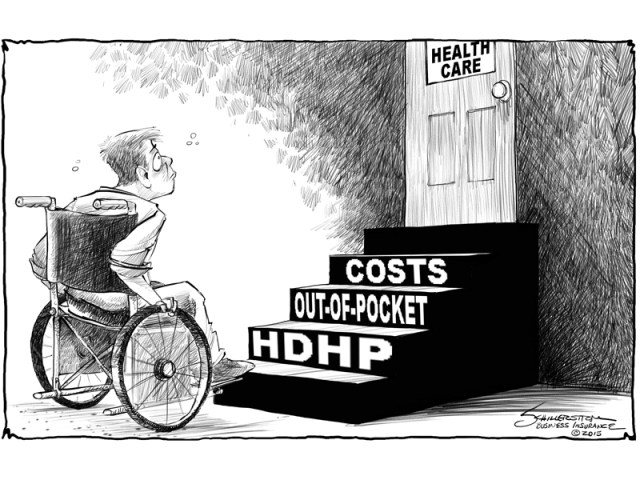
Cartoon – Healthcare Today


Rep. Pete Sessions and Sen. Bill Cassidy introduced legislation last month calling for replacing elements of the Affordable Care Act. A House task force established by SpeakerPaul Ryan is expected to follow with more health-care proposals. These Republican health plans are generally referred to as “replacements” for the ACA–in the spirit of “repeal and replace”–as though they would accomplish the same objectives in ways that conservatives prefer. But the proposals are better understood as alternatives with very different goals, trade-offs, and consequences. Whether they are “better” or “worse” depends on your perspective.
To boil down to the most basic differences: The central focus of the Affordable Care Act is expanding coverage and strengthening consumer protections in the health insurance marketplace through government regulation. By contrast, the primary objective of Republican plans is to try to reduce health-care spending by giving people incentives to purchase less costly insurance with more “skin in the game,” with the expectation that they will become more prudent consumers of health services. They also aim to reduce federal spending on Medicare and Medicaid and the federal government’s role in both programs. Elements of the ACA were designed to reduce costs, such as the law’s Medicare payment reforms, and elements of Republican plans such as tax credits aim to expand access to insurance, but the primary aims of the ACA and the Republican plans differ.
http://www.thefiscaltimes.com/2016/06/14/Obamacare-Repeal-Plan-Cripples-State-Budgets-and-Economies

If Republicans finally make good on their vow to repeal the Affordable Care Act — but without adopting a suitable replacement — 24 million Americans would be removed from the health care insurance rolls in 2021. And federal spending on health care would decline by $927 billion over the next decade, according to a provocative new study by the Urban Institute and the Robert Wood Johnson Foundation.

The American College of Emergency Physicians has filed suit against HHS over a provision in the Affordable Care Act health law they say lets insurers get away with underpayments for out-of-network emergency care, Modern Healthcare reported.
The shrinkage of employee retirement resources in the U.S. has been well documented, as employers shift more risk onto their workers. Less so is the rate at which employers have been eliminating healthcare benefits for retirees. As the Kaiser Family Foundation recently reported, retiree health coverage is becoming an endangered species.

Study findings may drive efforts to curb improper prescription practices.



 HENRY KOTULA