The Unsung Role of the Pharmacist in Patient Health

The Unsung Role of the Pharmacist in Patient Health

Related image

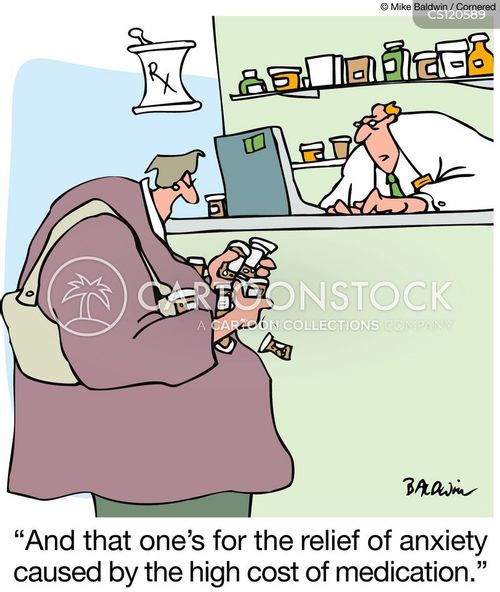
We know many people end up with a risky pileup of prescribed medications. Many efforts have been made, with varied success, to correct this problem. Yet we’ve usually focused on physician behavior, when there’s another powerful lever: pharmacists.

About 30 percent of older adults in the United States and Canada filled a prescription in the last few years for one of many medications that the American Geriatrics Society recommends they avoid. Such drugs can lead to more harm — like cognitive impairment or falls — than good, and often safer options are available.

“Older adults are taking an awful lot of pills these days — 66 percent take five drugs or more per day, and 27 percent take 10 or more per day — so if some of those pills are no longer necessary and may even be causing harm, why not ask if it is time to deprescribe?” said Dr. Cara Tannenbaum, a professor of medicine and pharmacy at the University of Montreal, and director of the Canadian Deprescribing Network.

It’s not easy to get patients off such drugs, though. Physicians often don’t have enough information about what patients are taking, or may lack the time to talk to patients about these medications. They fear that stopping the drugs might cause harm or make patients upset.

To explore the possible role of pharmacists, Dr. Tannenbaum conducted a large randomized controlled trial over four years in community pharmacies in Quebec. The results of the study were recently published in JAMA.

Patients 65 years or older were randomly assigned to one of two groups. In the intervention group, pharmacists gave both patients and their physicians educational materials on the specific drug that might have been inappropriately prescribed. Such brochures could be delivered by mail or in person. The control group got the usual care, with no educational materials.

Drugs that were targets for deprescribing included sedatives, first-generation antihistamines, glyburide (used to treat diabetes), and certain nonsteroidal anti-inflammatory drugs, like ibuprofen or naproxen. The main outcome of interest was the ending of a prescription for one of the four medication classes six months later.

Almost 500 patients, average age 75, participated in the trial, and about 90 percent of them completed it. The intervention made a difference. Within six months, 43 percent of the patients in the intervention group had stopped taking one of the selected medicines. The corresponding figure was 12 percent in the control group.

In medicine, we often focus on the traditional doctor/patient interaction. We tend to ignore practitioners who come into contact with patients more than physicians, who in this case could hand over brochures personally. In the study, pharmacists were also paid to send information to the patients’ doctors ($19 Canadian, equivalent to $14 American, per physician outreach).


Discipline based on arrest records upheld for health are professionals

https://www.sfgate.com/news/article/Discipline-based-on-arrest-records-upheld-for-12792563.php

Image result for medical license

Doctors and other health professionals in California can be disciplined or lose their licenses for criminal conduct such as possession of illegal drugs even if they complete a pretrial treatment program and have the case erased from their record, under a ruling that has now become final.

The state Supreme Court unanimously refused Wednesday to take up a physician’s appeal of a ruling that said a licensing agency, such as the California Medical Board, can rely on arrest records as evidence that a license-holder committed professional misconduct, even if the underlying criminal case no longer exists.

That ruling, by a San Francisco appellate panel, is now a binding precedent for all trial courts in California. Besides doctors, it applies to other licensed medical professionals such as nurses and pharmacists.

The case involved a Southern California physician, Brandon Erdle, who was arrested in September 2013 on suspicion of possessing cocaine. His lawyer, Mitchell Green, said Erdle was actually arrested for an unrelated minor crime and was carrying bags with small amounts of the drug that he was about to drop into a medical disposal unit.

One DeLand police officer was fired and two others disciplined after losing meth during an arrest.

The case never went to trial, and the drug charge was dismissed in January 2016 after Erdle went through a treatment program known as pretrial diversion. In the meantime the Medical Board, citing his arrest report, accused Erdle of unprofessional conduct, then issued him a public reprimand in 2016 and placed him on probation.


Will Getting Bigger Make Hospitals Get Better?

https://tincture.io/will-getting-bigger-make-hospitals-get-better-d3c565223670

Image result for Will Getting Bigger Make Hospitals Get Better?


This month, two hospital mega-mergers were announced between Ascension and Providence, two of the nation’s largest hospital groups; and, between CHI and Dignity Health.

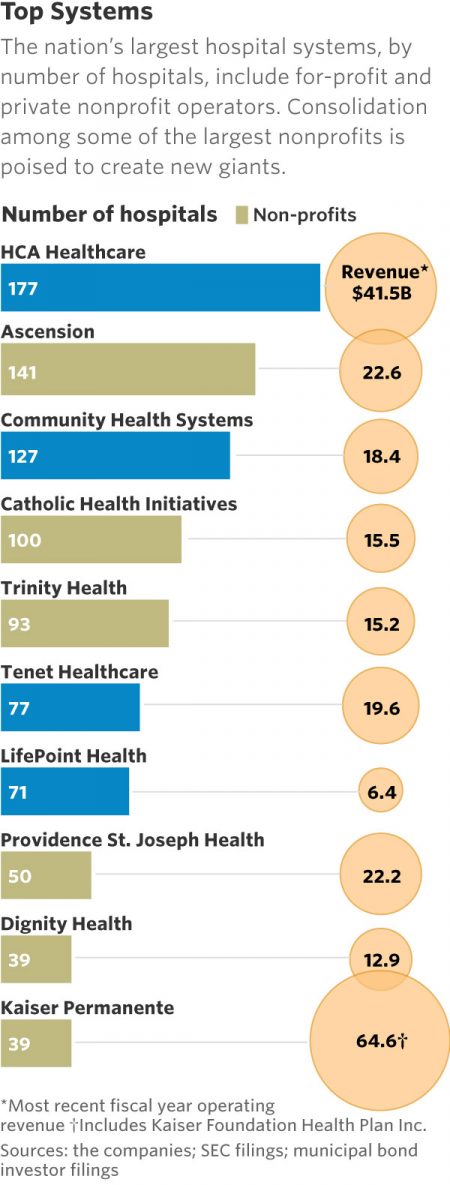
In terms of size, the CHI and Dignity combination would create a larger company than McDonald’s or Macy’s in terms of projected $28 bn of revenue. (Use the chart of America’s top systems to do the math).

For context, other hospital stories this week discuss layoffs at Virtua Health System in southern New Jersey. And this week, the New Jersey Hospital Association annual report called the hospital industry the “$23.4 billion economic bedrock” of the state.

Add a third important item to paint the state-of-the-U.S. hospital-industry picture: Moody’s negative ratings outlook for non-profit hospital finances for 2018.

So will getting bigger through merger and consolidation make the hospital business better?

In the wake of the CVS-Aetna plan to join together, the rationale to go big seems rational. Scale matters when it comes to contracting with health insurance plans at the front-end of pricing and financial planning for the CFO’s office, and to managing population health by controlling more of provider elements of care from several lenses: influencing physician care; crafting inpatient hospital care; doing smarter, cheaper supply purchasing; and leaning out overhead budgets for things like marketing and general management.

But the Wall Street Journal warned today the “serious condition” of U.S. hospitals, despite these big system mergers.

Health Populi’s Hot Points: In the past two years, I’ve had the amazing opportunity of speaking about new consumers and patients growing into healthcare payors with leadership from hospitals in over 20 states, some more rural, some more urban, and all in some level of financial crisis mode.

After describing the state of this consumer in health and healthcare, and how she/he got here, I have challenged hospital leadership to think more like marketers with a fierce lens on consumer experience and values. That equal proportions of U.S. consumers trust large retail and digital companies to help them manage their health is a jarring statistic to these hospital executives. The tie-up between CVS and Aetna marries the retail health/healthcare segments and responds to this consumer trust issue.

But then, I remind them that nurses, pharmacists, and doctors are the three most-trusted professions in America.

These three professional clinicians are the human capital that comprise the heart of a hospital in a community.

Hospitals should be mindful that trust is necessary for patient/health engagement. And the trust is with hospitals if the organization chooses to leverage that goodwill for a value-exchange. Hospitals are economic engines in their local communities — often, the largest employer in town. “Everyone” in most communities knows someone who works in a hospital.

And hospital employees spend money in communities, bolstering local employment and tax bases.

Partnering with patients means empathizing with them as both clinical subjects and consumers. For the latter, refer to the sage column from JAMA which recommends that Value-Based Healthcare Means Valuing What Matters to Patients. This means thinking about the value-chain of the patient journey, from keeping people well in their communities through to managing sticker-shock in the financial office. The financial toxicity of healthcare is one risk factor threatening the hospital-patient relationship with the patient-as-payor.

As Mufasa told Simba in The Lion King, “You are more than what you have become. Remember who you are.”


California’s Health Care Workforce

http://www.chcf.org/publications/2017/08/california-workforce

Image result for California's Health Care Workforce

California’s health care industry employed more than 1.4 million people in 2015. Five Almanac guides provide data on wages, education, and workplaces for selected health professions.

California’s health care industry employed more than 1.4 million people in 2015. Among these workers, nearly 55% were employed in ambulatory settings, about 25% in hospitals, and 20% in nursing or residential care facilities. An aging population, population growth, and federal health reform will likely contribute to increased demand.

This series of Quick Reference Guides from the CHCF California Health Care Almanac examines specific segments of the state’s health care workforce, focusing on pharmacists and pharmacy technicians, physician assistants, health diagnostic and treatment therapists, clinical laboratory scientists and technicians, and imaging professionals.

Among the trends:

  • California’s supply of pharmacists grew 17% between 2012 and 2015, while the supply of pharmacy technicians increased by 8%. About half of the state’s pharmacists were trained in California.
  • The number of physician assistants (PAs) in California grew 37% between 2012 and 2015. The Northern and Sierra region had more licensed PAs per capita than the rest of the state.
  • The supply of occupational and physical therapists increased between 2012 and 2015, while the supply of speech-language pathologists decreased slightly.
  • Between 2012 and 2015, California’s supply of clinical laboratory scientists remained stable while the number of medical/clinical lab technicians rose 11%.

The complete guides, as well as the 2014 editions, are available as Document Downloads.

Pharmacists critical to success in 5 value-based models

http://managedhealthcareexecutive.modernmedicine.com/managed-healthcare-executive/news/pharmacists-critical-success-5-value-based-models?cfcache=true

Medication Therapy Management

Pharmacists take on broader role

http://www.utsandiego.com/news/2015/jun/15/pharmacists-healthcare-california/#article-copy

UC San Diego's Sarah McBane was recently elected president of the California Pharmacists Association.

UC San Diego’s Sarah McBane was recently elected president of the California Pharmacists Association.