Infectious Diseases Keep Delivering Surprises To The U.S.

http://www.npr.org/sections/health-shots/2016/11/22/503004023/infectious-diseases-keep-delivering-surprises-to-the-u-s?utm_campaign=KHN%3A+First+Edition&utm_source=hs_email&utm_medium=email&utm_content=38118653&_hsenc=p2ANqtz-_5lt711bnuqlazwV5ct-xcrJYo7Q1p8GiMl2X3dDaM1ncz_MiHQN1fx4nJ2W-d5VWPMxduzKAaWur38GtqvRqTX6ZvSw&_hsmi=38118653

Image result for Infectious Diseases Keep Delivering Surprises To The U.S.

Infectious diseases are no longer the major killers in the U.S. that they once were, but they still surprise us.

According to a report published Tuesday in JAMA, the journal of the American Medical Association, deaths from infectious disease accounted for 5.4 percent of deaths from 1980 to 2014.

That’s a big change from 1900, when infectious diseases like pneumonia, tuberculosis and diarrhea accounted for almost half of all deaths. The historical decline represents great progress in sanitation, antibiotic discovery and vaccination programs, says Heidi Brown, an assistant professor of public health at the University of Arizona and an author of the research letter. “We’ve done phenomenal and amazing things with respect to infectious diseases,” she says.

But if you dig into the data a bit, she says, you can see where new diseases make an appearance, sometimes a deadly and dramatic one. For example, between 1980 and 1995, the number of deaths per 100,000 people from HIV/AIDS rose by an average of more than 85 percent per year. Then when new antiretroviral drugs became available, that rate fell by an average of more than 10 percent annually from 1995 to 2014.

“We went from not understanding [the disease] to being able to do something about it in a relatively short period of time,” says Brown. (To be sure, even with the gains we’ve made, the epidemic is not over.)
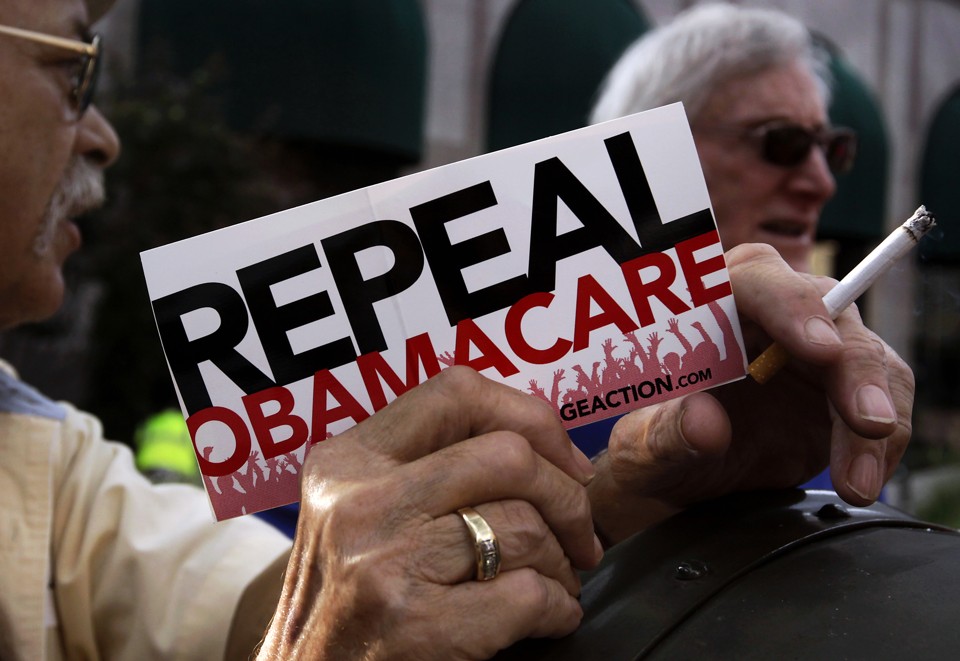
Will Obamacare be repealed? If so, what then?

Will Obamacare be repealed? If so, what then?

Image result for aca repeal

The election of Donald J. Trump gives the Republicans in Congress a chance to act ontheir often-stated desire to get rid of Obamacare, a wish that Mr. Trump mostly says he shares. Aaron E. Carroll and Austin Frakt, our health policy columnists, discuss: Then what?

Northwell releases 37-point rescue plan for Brooklyn hospitals

http://www.beckershospitalreview.com/finance/northwell-releases-37-point-rescue-plan-for-brooklyn-hospitals.html

Image result for rescue

Northwell Ventures, the consulting division of Great Neck, N.Y.-based Northwell Health, recently released a report that includes a rescue plan for Brooklyn’s distressed community hospitals.

In 2015, the State of New York allocated $700 million to overhaul the healthcare delivery system in Brooklyn, N.Y. In early 2016, the state awarded a grant to Northwell Ventures to prepare a feasibility and sustainability study to identify ways to improve the quality of healthcare in central and northeastern Brooklyn.

Northwell’s recently released report primarily focuses on four financially troubled hospitals in Brooklyn: Brookdale University Hospital and Medical Center, Interfaith Medical Center, Kingsbrook Jewish Medical Center and Wyckoff Heights Medical Center. In fiscal year 2017, the four hospitals will require more than $300 million in state operating assistance to remain open, according to the report.

The 165-page study includes 37 recommendations for the Brooklyn hospitals. Under the plan, the four hospitals would join together to form a new regional health system with a single board. “The market and financial forces confronting these hospitals make it virtually impossible for them to succeed as stand-alone hospitals,” the study reads.

The study also recommends Kingsbrook scale back by consolidating its inpatient services with the Brookdale campus, and moving its behavioral health beds to Interfaith. “From the standpoint of availability of services, it should be noted that Kingsbrook would maintain an emergency department and serve as a location for ambulatory care programs,” the study reads.

In addition to the clinical restructuring of services, the study also includes recommendations to address facility infrastructure deficiencies, develop an expanded ambulatory care network and deploy an enterprise-wide health IT platform.

Victims Seek Payments As ‘Dr. Death’ Declares Innocence

http://khn.org/news/victims-seek-payments-as-dr-death-declares-innocence/

Farid Fata

Victims of “Dr. Death” had until this week to submit receipts for unnecessary chemotherapy, medical bills for liver damage and funeral expenses for their loved ones. By an initial count on Tuesday, 517 former patients and their families had filed claims against Farid Fata, the Detroit-area cancer doctor convicted of raking in over $17 million by poisoning patients with chemotherapy and other drugs they did not need.

Fata was branded by prosecutors as “the most egregious fraudster” in U.S. history for scamming Medicare and private insurers by giving at least 553 patients, some of whom did not have cancer, thousands of doses of unnecessary and expensive drugs. Now he insists he did nothing wrong. Breaking his silence in a jailhouse interview, Fata said victims claiming he killed loved ones or ruined their lives are misguided and that those who died were “going to die anyhow because of the nature of the diseases.”

Fata, nicknamed “Dr. Death” by his victims, is serving a 45-year sentence in a federal prison in South Carolina after pleading guilty to 13 counts of health care fraud, one count of conspiracy to pay or receive kickbacks and two counts of money laundering. He ran one of Michigan’s largest private cancer practices, with a network of clinics outside of Detroit, from 2005 to 2013.

The 51-year-old prisoner told Kaiser Health News he plans to speak in court at a Jan. 17 restitution hearing and declare his innocence. Fata said his guilty plea in 2014 came under duress, and he is preparing to seek freedom through a habeas corpus petition, by which a judge would determine if his detention is lawful.

http://www.beckershospitalreview.com/legal-regulatory-issues/physician-claims-innocence-after-admitting-he-administered-unnecessary-chemotherapy-to-patients.html


Nixed Hershey-PinnacleHealth marriage could send them into arms of someone else

http://www.pennlive.com/news/2016/11/nixed_hershey-pinnaclehealth_m.html

PinnacleHealth System and Penn State Milton S. Hershey Medical Center said a marriage made sense for many reasons.

Not the least of which was to gain size and strength needed to fend off megasystems from outside their traditional service area. Those systems, they said, are positioning to siphon away patients needing the most advanced care, thereby eroding revenues needed to support those services in Harrisburg-area counties.

But the Federal Trade Commission opposed the merger on the grounds it would create a local hospital monopoly, and Hershey and Pinnacle subsequently called off their engagement.

 Still, experts say the forces that pulled the one-time rivals together are real and won’t go away. Those forces have triggered a wave of health system consolidation all over the country. In the Harrisburg region, they have prompted players such as Geisinger Health System, WellSpan Health and the newly-merged Lancaster General Health-University of Pennsylvania Health System to eye the territory traditionally served by Pinnacle and Hershey.

Those systems now surround Pinnacle and Hershey. At the same time, health care has entered an era where health systems are forever trying to attract more patients. That often requires expanding their footprint.

“It’s going to be hard for them to maintain what they’re doing as stand-alones,” said David Sarcone, an associate professor of business management and health studies at Dickinson College.

Stephen Foreman, an associate professor of health care administration at Robert Morris University in Pittsburgh said, “I can’t say I think their positions are all that great right now.”


Cost, Not Choice, Is Top Concern of Health Insurance Customers

It is all about the price.

Millions of people buying insurance in the marketplaces created by the federal health care law have one feature in mind. It is not finding a favorite doctor, or even a trusted company. It is how much — or, more precisely, how little — they can pay in premiums each month.

And for many of them, especially those who are healthy, all the prices are too high.

The unexpected laser focus on price has contributed to hundreds of millions of dollars in losses among the country’s top insurers, as fewer healthy people than expected have signed up. And that has created two vexing questions: Will the major insurance companies stay in the marketplaces? And if they do, will the public have a wide array of plans to choose from — a central tenet of the 2010 Affordable Care Act?

“The marketplace has been and continues to be unsustainable,” said Joseph R. Swedish, chief executive of Anthem, one of the nation’s largest insurers.

Most Americans with health insurance get it through their employers or from government programs like Medicare and Medicaid. The marketplaces were created under the health care law to give the millions of people not covered in those ways a way to buy health plans.

While major insurers continue to make profits over all, they say that the economics of the marketplaces do not work for them. Insurers can offer marketplace plans at four different coverage tiers, and the government subsidizes the premiums for millions of people. The thinking was that enough healthy people would buy insurance to balance out the costs for the not-so-healthy.

But things are not going exactly as envisioned.


The Future of Health Care Mergers Under Trump

Though there has been a flurry of merger and acquisition activity in recent years, industry experts are unsure whether the merger momentum will continue under President-elect Donald Trump’s administration, according to The New York Times.

Here are five things to know about how M&A activity in the healthcare industry may be affected under the Trump administration.

1. President-elect Trump nominated Sen. Jeff Sessions (R-Ala.) to replace Attorney General Loretta Lynch. While it is unclear how the department will handle antitrust cases under Sen. Sessions, the impact from the change in leadership will not be felt immediately. The outcomes of the two major antitrust cases in the insurance market, the Anthem-Cigna and Aetna-Humana mergers, are expected to be decided before Mr. Trump takes office in January. However, the new administration might still have an impact on the mergers, particularly if either the companies or the government decide to appeal the decision, according to the article.

2. According to the article, there is little expectation the Department of Justice under President-elect Trump would drop the cases if the insurers lost and appealed. However, any agreed upon settlement deal may be less onerous to the insurers involved.

3. There is a chance the federal government’s approach to healthcare mergers may not change, according to the article. “There is a history of bipartisan support for antitrust enforcement in healthcare,” said Leslie Overton, a partner at Alston & Bird and a former DOJ official. “I don’t think we should expect a wholesale shift, based on the change from Democratic to Republican.”

4. The Federal Trade Commission’s position on M&A activity may change even less, according to industry experts interviewed by The New York Times. The independent agency is less subject to the political preferences of the president and of Congress.

5. Industry experts also suggest the possible repeal of the ACA will not impede the increasing M&A activity of the past few years. According to the article, hospitals may feel more pressure to join together if the ACA is repealed due to reduced Medicare and Medicaid payments and increased volumes of uninsured patients.