2 California hospitals face closure if sale delayed

https://www.beckershospitalreview.com/finance/2-california-hospitals-face-closure-if-sale-delayed.html?origin=cfoe&utm_source=cfoe

Image result for hospital closure

Santa Clara County (Calif.) officials criticized California Attorney General Xavier Becerra at a press conference Jan. 24 for trying to block the county’s purchase of two bankrupt hospitals, according to The Mercury News.

In December, the bankruptcy court approved Santa Clara County’s $235 million offer to buy O’Connor Hospital in San Jose and St. Louise Regional Hospital in Gilroy from El Segundo, Calif.-based Verity Health, which entered Chapter 11 bankruptcy in August. Mr. Becerra appealed the bankruptcy court’s approval of the sale earlier this month, putting the deal in jeopardy.

Mr. Becerra is seeking to halt the sale because Santa Clara County has not agreed to conditions put in place in 2015 when private hedge fund Blue Mountain Capital acquired six hospitals owned by Los Altos, Calif.-based Daughters of Charity Health System. The deal and name change to Verity were approved, subject to several conditions.

“In this case, we have the responsibility to ensure any transfer of the hospital maintains previously imposed conditions,” Mr. Becerra’s office said in an emailed statement to The Mercury News. “The conditions include the requirement to have an emergency room, inpatient facility beds, intensive care services, and NICU. The Attorney General is fighting to ensure these conditions are enforced.”

At the Jan. 24 press conference, Santa Clara County CEO Jeff Smith, MD, said Mr. Becerra cares more about maintaining “power and control” over regulations than local residents’ access to public hospitals, according to the report.

A bankruptcy court hearing on Mr. Becerra’s request to halt the sale of the hospitals is set for Jan. 30. Dr. Smith said the outcome of the hearing could determine whether the hospitals shut down.

“If that stay is granted, that will delay the process … and it is highly likely those hospitals will close,” he said, according to The Mercury News.

O’Connor Hospital and St. Louise Regional Hospital are two of the six hospitals Verity operated when it filed for bankruptcy protection. On Jan. 18, Verity announced it had received a $610 million offer for the other four hospitals.


38 hospitals sue HHS over site-neutral payment rule

https://www.healthcarefinancenews.com/news/38-hospitals-sue-hhs-over-site-neutral-payment-rule?mkt_tok=eyJpIjoiT0RrNVpXSmpZV1UzTTJVdyIsInQiOiJNNFh6MElhd0lmVE5Zc09kZTl5d3BPc1h3ZkRpZGNIbWhHSE9RNVp5NkN1MFwvXC9kK3h6WHh5KzRHTWdsQTlWZ203aitRRnhUYWZ5QTVScVZcL01HaTkyUm5LNDRvanVuY0NUdVN4Y0czMzRkMzdNZzMrdVp6WjlmV2N5WHYxMEkrNCJ9

Hospitals named in the suit include Vanderbilt Medical Center, Atrium Health, Rush University Medical Center, Ochsner Clinic Foundation, Montefiore.

A month and a half after several hospital advocacy groups joined together to sue the U.S. Department of Health and Human Services over it’s finalized site-neutral payment policy, 38 hospitals have followed, filing suit against HHS Secretary Alex Azar for a policy they say will deprive hospitals of hundreds of millions of dollars and could compel them to cut patient services due to loss of reimbursement.

The complaint argues that medical services provided in hospital outpatient departments are more “resource-intensive”–and therefore more costly–than those performed in an independent physician’s office. It also sharply criticized Secretary Azar, saying he “has blatantly disregarded a specific and unambiguous statutory directive, acted well beyond his authority and nullified that statutory exemption” that would have had hospital outpatient centers reimbursed for services at the higher grandfathered rate previously legislated.

The hospitals suing include Vanderbilt Medical Center, Atrium Health hospitals, Rush University Medical Center, Ochsner Clinic Foundation, Montefiore Health System and many others.

THE IMPACT

The outpatient prospective payment system seeks to equalize what physician offices and hospital outpatient departments are paid for certain clinical visits, a change that will be phased in over two years. The new rule cuts payments for hospital outpatient clinic visits at off-campus provider- based facilities in order to level them out against what is paid to physician offices. Half of the total reduction, $380 million, will take effect in 2019 and the remaining cuts will be phased the next year.

THE TREND

The Bipartisan Budget Act of 2015 amended the Social Security Act such that Medicare pays the same rates for medical services regardless of whether they are provided in a physician’s office or in an “off campus” hospital department. At the time, Congress provided an exemption from the rule for all off-campus hospital outpatient departments that were providing services before the enactment.

The AHA, in the suit they are part of, said the Azar’s reversal on the grandfathered exemption exceeds the administration’s legal authority. The AHA previously called the OPPS final rule  “unsupportable analyses and erroneous policy rationales,” and said it will have “negative consequences” for patients, with those in rural and vulnerable communities getting hit especially hard. The AHA and other hospital associations are already challenging the 340B policy included in the current outpatient rule.

ON THE RECORD

“The Secretary’s unlawful rate cut directly contravenes clear congressional directives and will impose significant harm on affected off-campus hospital outpatient departments and the patients they serve. Accordingly, this Court should declare the Secretary’s Final Rule to be ultra vires and enjoin the agency from implementing any payment methodology other than OPPS rates for all E/M services provided by excepted off-campus PBDs,” the complaint states.

Mark Polston, a partner with King & Spalding, the firm representing the plaintiffs: “Our clients’ mission is to provide high-quality healthcare. They have relied for years upon their off-campus departments to expand access to care and bring hospital services directly to their communities, many of which are underserved by other providers. Congress preserved their ability to do that work when it excepted them from the changes contained in Section 603 of the Bipartisan Budget Act of 2015. But the Secretary overstepped his bounds when he took that away. We are asking the court to reinstate the decision Congress made to preserve our clients’ ability to bring the best possible care to their patients.” Mark Polston, a partner with King & Spalding, the firm representing the plaintiffs:


Walgreens settles False Claims suits for $270 million

https://www.healthcarefinancenews.com/news/walgreens-settles-false-claims-suits-270-million?mkt_tok=eyJpIjoiT0RrNVpXSmpZV1UzTTJVdyIsInQiOiJNNFh6MElhd0lmVE5Zc09kZTl5d3BPc1h3ZkRpZGNIbWhHSE9RNVp5NkN1MFwvXC9kK3h6WHh5KzRHTWdsQTlWZ203aitRRnhUYWZ5QTVScVZcL01HaTkyUm5LNDRvanVuY0NUdVN4Y0czMzRkMzdNZzMrdVp6WjlmV2N5WHYxMEkrNCJ9

Two cases emerged from whistleblower claims about improper billing related to discounted drug prices and insulin pens.

Pharmacy giant Walgreens will pay nearly $270 million dollars as part of two major settlements, one that alleged the company had improperly billed federal healthcare programs for insulin pens it distributed to beneficiaries who didn’t need them and another that alleged Walgreens failed to disclose and charge lower drug prices offered through a discount program.

Both settlements were approved in mid-January and unsealed Tuesday. Walgreens must pay the United States and state governments a total of $269.2 million. Both cases arose from lawsuits filed by whistleblowers under the False Claims Act. Walgreens did not admit any wrongdoing as part of either settlement.

THE IMPACT

The DOJ said as a result of the conduct alleged in both cases, federal programs were inappropriately taxed. The alleged inappropriate disbursement of insulin resulted in the waste of valuable medication and created the potential for misuse “such as the improper resale of insulin pens on the Internet.” Because the company did properly disclose its discounted drug prices, federal healthcare programs paid out higher reimbursements than were actually warranted.

MORE ON THE CASES

The first settlement resolved allegations that Walgreens improperly billed Medicare and other federal healthcare programs for “hundreds of thousands” of insulin pens dispensed to beneficiaries who didn’t need them. According to a statement from the Department of Justice, it was alleged that Walgreens programmed its electronic pharmacy management system to prevent its pharmacists from dispensing less than a full box of five insulin pens, whether the patient needed that amount or not. It also said Walgreens falsely stated that they had not exceeded limits set on total days of supply in its reimbursement claims. This settlement totaled $209.2 million.

In this case, the DOJ said Walgreens admitted that when a federal health program denied a claim because the reported days of supply for a full carton of five insulin pens exceeded the federal program’s days-of-supply limit, the company dispensed and billed for the full carton and reduced the reported days of supply to conform to the program’s days-of-supply limit. Walgreens also admitted that it “repeatedly” reported days-of-supply data to federal health programs that differed from the days-of-supply calculated according to the standard pharmacy billing formula.

The company will pay $60 million as part of a second settlement to resolve allegations it overbilled Medicaid by failing to disclose and charge Medicaid the lower drug prices that it offered the public through a discount program called the Prescription Savings Club. Legally, the company must seek reimbursement only for the “the lowest of certain drug price points, including the ‘usual and customary price'” namely the price offered through such programs as the PSC. Those prices were not disclosed, causing overpayment from Medicaid to Walgreens, the DOJ said. The agency also said that Walgreens admitted it did not identify its PSC program prices as its U&C prices for the drugs on the PSC program formulary, resulting in overpayments.

ON THE RECORD

“Walgreens is pleased to have resolved these matters with the Department of Justice. The company fully cooperated with the government and has admitted no wrongdoing. Walgreens is a company of pharmacists living and working in the communities we serve, and we have always taken the safety and reliability of the medicines our patients need very seriously. We are resolving these matters because we believe it is in the best interest of our customers, patients and other stakeholders to move forward…In relation to these matters, Walgreens has entered into a Corporate Integrity Agreement (CIA) with the Office of the Inspector General of the Department of Health and Human Services. The CIA builds upon the company’s already existing comprehensive compliance program,” Walgreens said in a statement.

“In both settlements, Walgreens admitted and accepted responsibility for conduct the Government alleged in its complaints under the False Claims Act,” the DOJ said in a statement.

Being explicit about decision-making

https://mailchi.mp/900e9e419717/the-weekly-gist-january-25-2019?e=d1e747d2d8

Image result for responsible accountable consulted and informed (raci) chart

Recently we facilitated a day-long meeting for one of our clients who is looking to build a new governance model for their regional clinical enterprise. It’s a complex undertaking, requiring them to bring together a broad spectrum of stakeholders—their own employed medical group, a handful of independent groups with whom they’ve built partnerships over the years, a joint venture partner, the leaders of the system’s hospitals, and their academic affiliate. All of these relationships—each with its own decision-making structure and incentive model—have accreted over time but have not operated as a cohesive whole. Now, faced with an increasingly competitive marketplace, the system wants to build an overarching structure to coordinate the activities of the disparate constituents, and to allow them to go to market with a unified platform capable of delivering better value to consumers and purchasers.

In preparing for the meeting, we quickly realized that the crux of the problem is decision rights. Every initiative or major decision that the system wants to make is getting bogged down in an endless process of discussion, second-guessing, and turf battles between the constituent groups. In our session with the group, we shared our perspective that the most important part of designing any organizational structure is being very explicit about how decisions are going to get made. To that end, we provided with them a decision-making framework that we’ve seen implemented in other organizations, a variation on the RACI responsibility assignment matrix that’s been a mainstay in organizational science for decades.

At its heart, it’s a role-based decision process, in which different stakeholders are assigned discrete parts to play in coming to a decision. RACI is an acronym for four of the pivotal roles: Responsible, Accountable, Consulted, and Informed. There’s no magic to the specific framework—indeed, there’s a multitude of different flavors of RACI.

(We like the Bain & Company notion of asking “Who has the ‘D’”, or—to paraphrase George W. Bush—who’s the Decider?) Across the day, we introduced the framework, role-played making a specific decision using it, and then began to evaluate a strawman model for the unified clinical enterprise using the framework.

We’ll keep you posted as the model moves from evaluation to implementation, but we were struck by the power of having an explicit, concrete discussion around decision rights. Given the complexity and organizational inertia that characterize many healthcare organizations, taking the time to clarify who gets to make which decisions, and how, seems like a worthwhile endeavor.


Temple University Health loses top execs amid restructuring

https://www.beckershospitalreview.com/hospital-management-administration/temple-university-health-loses-top-execs-amid-restructuring.html

Image result for temple university health system

Philadelphia-based Temple University Health System President and CEO Larry Kaiser, MD, confirmed in a letter to colleagues that two top executives plan to depart and their roles will be eliminated, The Inquirer reports.

The Jan. 23 letter, obtained by The Inquirer, states that the health system’s CMO Susan Freeman, MD, and Chief Administrative Officer Alan Rosenberg, are departing and their roles will be eliminated.

Dr. Kaiser, who also serves as dean of the affiliated Lewis Katz School of Medicine, wrote in the letter that Philadelphia-based Temple University Hospital CEO Verdi DiSesa, MD, and its CMO will also step down from their positions. He did not specify what the individuals’ new roles would be.

“I ask that all of you work with me and the leadership team as we move forward with our ongoing restructuring that will allow us to continue to provide superb clinical care for the population we serve and an outstanding education for our students,” Dr. Kaiser wrote in the letter.

Temple University Health System is working with a chief restructuring officer to become more financially sustainable. For the three months ended Sept. 30, 2018, the system reported a net loss of $11.63 million.

To access the full report, click here.


Harbinger of things to come as the Healthcare Landscape becomes Dominated by Massive, Vertically-Integrated Competitors

https://www.cnbc.com/2019/01/18/walmart-cvs-health-hammer-out-new-pbm-pharmacy-network-deal–.html

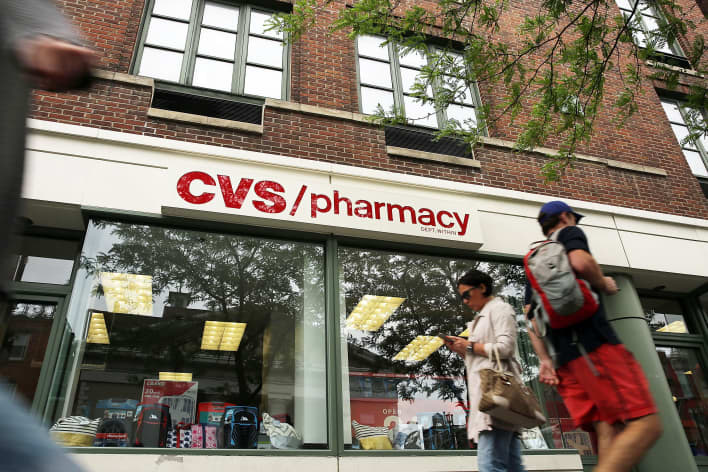
Subs: CVS Pharmacy exterior

Verticals gonna vertical

As we wrote last week, the recent dust-up between CVS’s pharmacy benefit management (PBM) subsidiary Caremark and Walmart, during which the retail giant threatened to sever its relationship with CVS over a dispute regarding reimbursement levels before finally coming to a settlement, is a harbinger of things to come as the healthcare landscape becomes dominated by massive, vertically-integrated competitors.

new investigative piece from The Columbus Dispatch this week seems to confirm this view. Examining previously-undisclosed data about CVS’s drug plan pricing practices as part of Ohio’s Medicaid program, the article reveals that CVS paid its own retail pharmacies much higher reimbursement rates than it offered to key competitors Walmart and Kroger to provide generic drugs to Medicaid beneficiaries. According to the article, CVS would have had to pay Walmart pharmacies 46 percent more, and Kroger pharmacies 25 percent more, to match the levels of reimbursement it paid its own retail pharmacies, data that are cited in a state report on the Medicaid pharmacy program that CVS is engaged in a court battle to keep secret. The reimbursement differential is “startling information”, according to a former Justice Department antitrust official quoted in the article. A spokesman for CVS maintained that the PBM’s payment rates are “competitive” and influenced by a complex range of factors. Underscoring the opaque and complicated methodology drug plans use to determine payments to retail pharmacies, independent pharmacy operators were paid more than CVS stores, as were Walgreens stores. A separate analysis of PBM pricing behavior in New York uncovered similar evidence, according to Bloomberg.

The Ohio and New York pharmacy stories are yet more evidence that, as healthcare companies continue to expand their control over greater segments of the “value chain”—combining, for example, insurance, distribution, and care delivery—they are able to flex their market power in ways that look increasingly anti-competitive. Hospitals that “own” their referral sources, insurers that “own” the delivery of care, and pharmacies that “own” drug benefit managers all edge closer to creating closed, proprietary platforms that can lock out competitors in any one segment.

That’s a feature, not a bug—indeed, much of the logic of population health is predicated on “network integrity”: keeping consumers inside a fully-controlled ecosystem of care to enable better coordination and reduce duplication and inefficiencies. Yet as giant healthcare corporations turn themselves into Amazon-style “everything stores”, we need to keep a watchful eye on competition.

Red flags to watch for: using the courts to maintain secret agreements or block the free flow of talent or information, “vertical tying” behavior that requires all-or-nothing contracting, and pricing strategies that leverage market power in one segment to raise prices in another.

The biggest flaw in using “market competition” to lower the cost of care: most companies hate actually competing in the marketplace—a problem made even more vexing by vertical integration.


Questioning the ethics of pursuing “grateful patients”

Image result for Hospitals Are Asking Their Own Patients to Donate Money


Questioning the ethics of pursuing “grateful patients”

Naming a wing, unit or hospital building after a wealthy donor is nothing new, and hospital executives have long had programs to build relationships with “grateful patients” who wish to make a contribution.

piece this week in the New York Times challenges this practice, and in particular, the ethics of analyzing patient financial data and public records to identify likely donors.

A 2013 change to privacy laws made it easier for hospitals to share information with fundraisers. Now many hospitals have built automated systems to perform “wealth screenings”, combining patient medical records, financial information and publicly-available information such as property records, and political and charitable contributions to identify patients with the means and likelihood of making a large donation. Target patients may receive nicer amenities or a visit from a hospital executive, and follow-up from the hospital’s development staff.

Medical ethicists are split on the practice, with one calling it “unseemly but not illegal or unethical”, but another saying that the practice, and particularly getting physicians involved in the process, is “fraught with danger”.

Previous research has shown that half of oncologists reported being trained to identify potential donors, and a third had been directly asked to solicit donations from patients. The reactions of physicians and patients profiled are mixed. Many doctors feel uncomfortable about the practice but recognize the importance of philanthropy.

Some patients want to express their gratitude through donation—but others expressed concerns about misleading connections between their doctors’ needs and where their donations would be spent.

They also questioned whether large health systems with billions in revenue and millions in profits should be routinely pursuing large donors. Rising public scrutiny around billing practices also highlights the dissonance between asking for philanthropic donations while at the same time aggressively pursuing a schoolteacher or bus driver for thousands of dollars in out-of-network claims.

We’d expect these tensions to continue to grow, as rising margin pressures make philanthropic income even more critical for hospitals—but transparency and a growing healthcare consumer marketplace raise questions of how much of a nonprofit health system’s work truly is “charitable”.


KFF Health Tracking Poll – January 2019: The Public On Next Steps For The ACA And Proposals To Expand Coverage

KFF Health Tracking Poll – January 2019: The Public On Next Steps For The ACA And Proposals To Expand Coverage

Key Findings:

  • Half of the public disapproves of the recent decision in Texas v. United States, in which a federal judge ruled that the 2010 Affordable Care Act (ACA) is unconstitutional and should not be in effect. While the judge’s ruling is broader than eliminating the ACA’s protections for people with pre-existing conditions, this particular issue continues to resonate with the public. Continuing the ACA’s protections for people with pre-existing conditions ranks among the public’s top health care priorities for the new Congress, along with lowering prescription drug costs.
  • This month’s KFF Health Tracking Poll continues to find majority support (driven by Democrats and independents) for the federal government doing more to help provide health insurance for more Americans. One way for lawmakers to expand coverage is by broadening the role of public programs. Nearly six in ten (56 percent) favor a national Medicare-for-all plan, but overall net favorability towards such a plan ranges as high as +45 and as low as -44 after people hear common arguments about this proposal.

    Poll: Majorities favor a range of proposed options to expand public health coverage, including Medicare buy-in and #MedicareForAll 

  • Larger majorities of the public favor more incremental changes to the health care system such as a Medicare buy-in plan for adults between the ages of 50 and 64 (77 percent), a Medicaid buy-in plan for individuals who don’t receive health coverage through their employer (75 percent), and an optional program similar to Medicare for those who want it (74 percent). Both the Medicare buy-in plan and Medicaid buy-in plan also garner majority support from Republicans (69 percent and 64 percent­).


Figure 1: Most Americans Are Unaware Of Federal Judge’s Ruling That ACA Is No Longer Valid

Texas v. United States: The Future of the Affordable Care Act

On December 14, 2018, a federal district court judge in Texas issued a ruling challenging the future of the 2010 Affordable Care Act (ACA).The judge sided with Republican state attorneys general and ruled that, since the 2017 tax bill passed by Congress zeroed out the penalty for not having health insurance, the ACA is invalid. Democrat attorneys general have already taken actions to appeal the judge’s ruling in the case and, due to the government shutdown, the 5th Circuit Court of Appeals has paused the case. Currently, the ACA remains the law of the land. If this ruling is upheld, the consequences will be far-reaching.1 Less than half of the public (44 percent) are aware of the judge’s ruling that the ACA is unconstitutional and most (55 percent) either incorrectly say that the judge ruled in favor of the ACA (20 percent) or are unsure (35 percent).

Overall, a larger share of the public disapprove (51 percent) than approve (41 percent) of the judge’s ruling that the ACA is not constitutional. This is largely divided by party identification with a majority of Republicans (81 percent) approving of the decision while a majority of Democrats disapproving (84 percent). Independents are closely divided (49 percent disapprove v. 44 percent approve).

Figure 2: Partisans Divided On Whether They Approve Or Disapprove Of Federal Judge’s Ruling That The ACA Is No Longer Valid

The Trump administration had originally announced that as part of Texas v. United States, it would no longer defend the ACA’s protections for people with pre-existing medical conditions. While the judge’s ruling was broader than just the ACA’s pre-existing condition protections, KFF polling finds attitudes can shift when the public hears that these protections may no longer exist. Among those who originally approve of the federal judge’s ruling, about three in ten (13 percent of the public overall) change their mind after hearing that this means that people with pre-existing conditions may have to pay more for coverage or could be denied coverage, bringing the share who disapprove of the judge’s ruling to nearly two-thirds (64 percent) of the public.2

Fewer – but still about one-fifth (8 percent of total) – change their minds after hearing that as a result of this decision, young adults would no longer be able to stay on their parents’ insurance until the age of 26, bringing the total share who disapprove of the judge’s ruling to 60 percent.

Figure 3: Majorities Disapprove Of Judge’s Ruling After Hearing How It Impacts Protections For Pre-Existing Conditions And Young Adults

Overall, a slight majority of the public hold a favorable view of the ACA (51 percent) while four in ten continue to hold unfavorable views. (INTERACTIVE)

Public’s Views of Democratic Health Care Agenda

With the new Democratic majority in the U.S. House of Representatives, this month’s KFF Health Tracking Poll examines the public’s view of Congressional health care priorities including a national health plan.

Proposals to Expand Health Care Coverage

Most of the public favor the federal government doing more to help provide health insurance for more Americans and one way for lawmakers to expand coverage is by broadening the role of public programs, such as Medicare or Medicaid. The Kaiser Family Foundation has been tracking public opinion on the idea of a national health plan since 1998 (see slideshow). More than twenty years ago, about four in ten Americans (42 percent) favored a national health plan in which all Americans would get their insurance from a single government plan. In the decades that followed, there has been a modest increase in support – especially since the 2016 presidential election and Bernie Sanders’ rallying cry for “Medicare-for-all.” The most recent KFF Health Tracking Poll finds 56 percent of the public favor “a national health plan, sometimes called Medicare-for-all, where all Americans would get their insurance from a single government plan” with four in ten (42 percent) opposing such a plan.

Figure 5: Majorities Across Partisans Favor Medicare Buy-In And Medicaid Buy-In

MALLEABILITY IN ATTITUDES TOWARDS NATIONAL HEALTH PLAN AND LINGERING CONFUSION ABOUT POSSIBLE IMPACTS

This month’s KFF Health Tracking Poll finds the net favorability of attitudes towards a national Medicare-for-all plan can swing significantly, depending on what arguments the public hears.

Depending on what arguments people hear, the public’s views of #MedicareForAll can swing from 71% in favor to 70% opposed highlighting the importance of any future legislative debate 

Net favorability towards a national Medicare-for-all plan (measured as the share in favor minus the share opposed) starts at +14 percentage points and ranges as high as +45 percentage points when people hear the argument that this type of plan would guarantee health insurance as a right for all Americans. Net favorability is also high (+37 percentage points) when people hear that this type of plan would eliminate all premiums and reduce out-of-pocket costs. Yet, on the other side of the debate, net favorability drops as low as -44 percentage points when people hear the argument that this would lead to delays in some people getting some medical tests and treatments. Net favorability is also negative if people hear it would threaten the current Medicare program (-28 percentage points), require most Americans to pay more in taxes (-23 percentage points), or eliminate private health insurance companies (-21 percentage points).

Figure 8: Four In Ten Say Medicare-For-All Plan Would Not Have Much Impact On People Like Them

MEDICARE-FOR-ALL AND SENIORS

On October 10th, 2018, President Trump wrote an op-ed in USA Today arguing that a Medicare-for-all plan would “end Medicare as we know it and take away benefits they have paid for their entire lives.”3 One-fourth of adults 65 and older (26 percent) say seniors who currently get their insurance through Medicare would be “worse off” if a national Medicare-for-all plan was put into place. Four in ten Republicans, ages 65 and older, say seniors who currently get health coverage through Medicare would be “worse off” under a national Medicare-for-all plan. Overall, a larger share of the public say a Medicare-for-all plan will “not have much impact” on seniors (39 percent) or say that they would be “better off” (33 percent) than say seniors would be “worse off” (21 percent).

Figure 10: Democrats Want House Democrats To Focus On Improving And Protecting The ACA Rather Than Passing Medicare-For-All

PARTISANS HAVE DIFFERENT HEALTH PRIORITIES FOR CONGRESS, EXCEPT FOR PRESCRIPTION DRUG PRICES

A majority of the public say it is either “extremely important” or “very important” that Congress work on lowering prescription drug costs for as many Americans as possible (82 percent), making sure the ACA’s protections for people with pre-existing health conditions continue (73 percent), and protecting people with health insurance from surprise high out-of-network medical bills (70 percent). Fewer – about four in ten – say repealing and replacing the ACA (43 percent) and implementing a national Medicare-for-all plan (40 percent) are an “extremely important” or “very important” priority. When forced to choose the top Congressional health care priorities, the public chooses continuing the ACA’s pre-existing condition protections (21 percent) and lowering prescription drug cost (20 percent) as the most important priorities for Congress to work on. Smaller shares choose implementing a national Medicare-for-all plan (11 percent), repealing and replacing the ACA (11 percent), or protecting people from surprise medical bills (9 percent) as a top priority. One-fourth said none of these health care issues was their top priority for Congress to work on.

Figure 11: Continuing ACA Pre-Existing Conditions Protections And Prescription Drug Costs Top Public’s Priorities For Congress

Continuing the ACA’s pre-existing condition protections is the top priority for Democrats (31 percent) and ranks among the top priorities for independents (24 percent) along with lowering prescription drug costs, but ranks lower among Republicans (11 percent). Similar to previous KFF Tracking Polls, repealing and replacing the ACA remains one of the top priority for Republicans (27 percent) along with prescription drug costs (20 percent).

Table 1: Pre-Existing Condition Protections and Prescription Drug Costs Top Public’s Health Care Priorities for Congress; Republicans Still Focused on ACA Repeal
Percent who say the following is the top priority for Congress to work on: Total Democrats Independents Republicans
Making sure the ACA’s pre-existing condition protections continue 21% 31% 24% 11%
Lowering prescription drug costs for as many Americans as possible 20 20 20 20
Implementing a national Medicare-for-all plan 11 20 8 3
Repealing and replacing the ACA 11 3 7 27
Protecting people from surprise high out-of-network medical bills 9 4 10 8
Note: If more than one priority was chosen as “extremely important,” respondent was forced to choose which priority was the “most important.”

The Role of Independents in the Democratic Health Care Debate

One of the major narratives coming out of the 2018 midterm elections was the role that health care was playing in giving Democratic candidates the advantage in close Congressional races. Consistently throughout the election cycle, KFF polling found health care as the top campaign issue for both Democratic and independent voters. While a majority of Democrats want the new Democratic majority in the U.S. House of Representatives to focus on improving and protecting the ACA, Democratic-leaning independents have more divided opinions of the future of 2010 health care law. These individuals – who tend to be younger and male – would rather Democrats in Congress focus efforts on passing a national Medicare-for-all plan (54 percent) than improving the ACA (39 percent) – which is counter to what Democrats overall report. In addition, when asked whether House Democrats owe it to their voters to begin debating proposals aimed at passing a national health plan or work on health care legislation that can be passed with a divided Congress and a Republican President, Democrats are divided (49 percent v. 44 percent) while Democratic-leaning independents prioritize House Democrats working on bipartisan health care legislation (53 percent) over debating national health plan proposals (39 percent).