20 recent hospital, health system outlook and credit rating actions

https://www.beckershospitalreview.com/finance/20-recent-hospital-health-system-outlook-and-credit-rating-actions.html?origin=cfoe&utm_source=cfoe

Related image

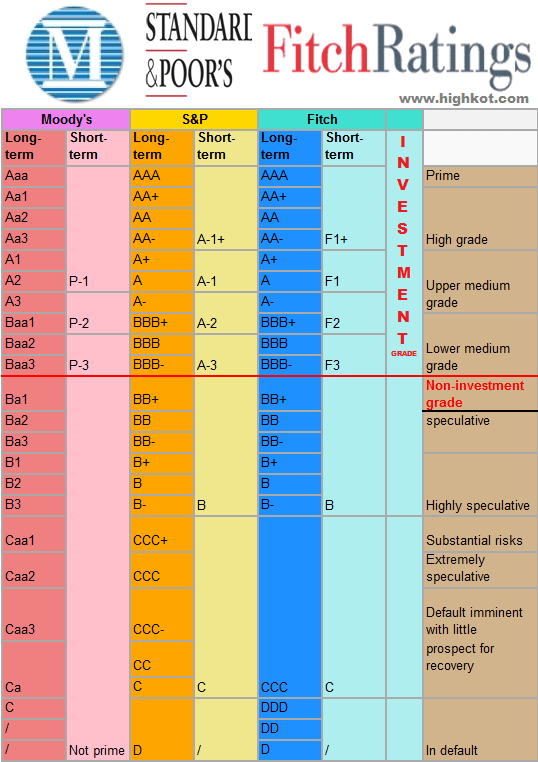
The following hospital and health system credit rating and outlook changes or affirmations occurred in the last two weeks, beginning with the most recent:

1. Fitch upgrades Cottage Health rating to ‘AA-‘

Fitch Ratings assigned an issuer default rating of “AA-” to Santa Barbara, Calif.-based Cottage Health and upgraded its revenue bond rating from “A+” to “AA-.”

2. Moody’s assigns ‘A1’ rating to Bexar County Hospital District

Moody’s Investors Service assigned an “A1” rating to Bexar County (Texas) Hospital District.

3. Moody’s confirms ‘Ba1’ ratings for Monroe County Health Authority

Moody’s Investors Service confirmed its “Ba1” issuer and general obligation limited tax ratings for Monroe County (Ala.) Health Care Authority.

4. Moody’s affirms ‘A3’ rating for The Christ Hospital

Moody’s Investors Service has affirmed its “A3” rating for Cincinnati-based The Christ Hospital, affecting $311 million of outstanding debt.

5. Moody’s assigns ‘Aa3’ rating to Partners Healthcare System

Moody’s Investors Service assigned an “A3” rating to Boston-based Partners Healthcare’s proposed revenue bonds.

6. Moody’s affirms ‘Aa2’ rating for Northwestern Memorial HealthCare

Moody’s Investors Service affirmed its “Aa2,” “Aa2/VMIG 1,” and “P-1” ratings for Chicago-based Northwestern Memorial HealthCare, affecting $1.1 billion of debt.

7. Moody’s affirms Yale New Haven Health’s ‘Aa3’ rating

Moody’s Investors Service affirmed the long-term underlying “Aa3” ratings of Yale New Haven (Conn.) Health, affecting $715 million of rated debt.

8. Moody’s assigns ‘A2’ rating to Kettering Health Network

Moody’s Investors Service assigned an “A2” rating to Dayton, Ohio-based Kettering Health Network.

9. S&P assigns ‘A+’ rating to Indiana’s Marion General Hospital

S&P Global Ratings assigned an “A+” long-term rating to Marion (Ind.) General Hospital.

10. Moody’s affirms ‘Ba3’ rating for Antelope Valley Healthcare District

Moody’s Investors Service affirmed its “Ba3” rating for Lancaster, Calif.-based Antelope Valley Health District, which includes Antelope Valley Hospital, affecting $122 million of revenue bonds.

11. Moody’s affirms ‘Ba2’ rating for Community Memorial Health System

Moody’s Investors Service affirmed Ventura, Calif.-based Community Memorial Health System’s “Ba2” rating, affecting $339 million of rated debt.

12. Moody’s affirms ‘A2’ rating for University of Maryland Medical System

Moody’s Investors Service affirmed its “A2” rating for the Baltimore-based University of Maryland Medical System, affecting $1.1 billion of outstanding debt.

13. Moody’s affirms ‘B1’ rating for Sauk Prairie Healthcare

Moody’s Investors Service affirmed its “B1” rating for Sauk Prairie Healthcare in Prairie du Sac, Wis., affecting $38 million of fixed rate bonds.

14. Moody’s affirms ‘A3’ rating for Excela Health

Moody’s Investors Service affirmed Greensburg, Pa.-based Excela Health’s “A3” rating, affecting $72 million of outstanding debt.

15. Moody’s affirms Northwest Community Hospital’s ‘A2’ rating

Moody’s Investors Service affirmed its “A2” rating for Arlington Heights, Ill.-based Northwest Community Hospital, affecting $194 million of rated debt.

16. Fitch assigns ‘AA-‘ long-term rating to Trinity Health

Fitch Ratings assigned an “AA-” long-term rating to Livonia, Mich.-based Trinity Health, affecting $175 million of bonds.

17. Fitch withdraws rating for Greenwich Hospital

Fitch Ratings has withdrawn its issuer default rating for Greenwich (Conn.) Hospital.

18. Fitch assigns ‘A’ rating to East Tennessee Children’s Hospital

Fitch Ratings has assigned an “A” rating and an “A” issuer default rating to Knoxville-based East Tennessee Children’s Hospital.

19. Moody’s affirms ‘A1’ rating for Lexington County Health Services District

Moody’s Investors Service affirmed its “A1” rating for Lexington County (S.C.) Health Services District, affecting $369 million of outstanding revenue bonds.

20. Moody’s assigns ‘A1’ rating to Munson Healthcare

Moody’s Investors Service assigned an “A1” long-term rating to the proposed revenue refunding bonds for Traverse City, Mich.-based Munson Healthcare while also maintaining an “A1” rating on the system’s existing debt.


Bankrupt hospital chain receives $610M bid

https://www.beckershospitalreview.com/hospital-transactions-and-valuation/bankrupt-hospital-chain-receives-610m-bid.html?origin=cfoe&utm_source=cfoe

Image result for verity health system bankruptcy

El Segundo, Calif.-based Verity Health received a $610 million offer for four of its hospitals in California.

Four things to know:

1. Verity Health, which operated six hospitals in California when it entered Chapter 11 bankruptcy in August, is selling its assets through the bankruptcy process.

2. Corona, Calif.-based KPC Group bid $610 million to purchase the following four Verity hospitals: St. Francis Medical Center in Lynwood, St. Vincent Medical Center in Los Angeles, Seton Medical Center in Daly City, and Seton Coastside in Moss Beach.

3. KPC Group’s offer is a stalking horse bid, meaning Verity will evaluate competing bids to ensure it receives the highest offer for its assets.

4. Verity’s hospitals in San Jose and Gilroy are not included in KPC Group’s bid. Santa Clara County previously placed a bid for those two hospitals. The bankruptcy court approved the sale, but California Attorney General Xavier Becerra appealed the bankruptcy court’s approval.


Loosening Up Stark and Anti-Kickback Laws: What Would It Look Like?

https://mailchi.mp/burroughshealthcare/pc9ctbv4ft-1611881?e=7d3f834d2f

Image result for Stark and Anti-Kickback Laws

The Department of Health and Human Services under the Trump administration has taken a deregulatory approach toward healthcare delivery. Its efforts on the payer side includes expanding the availability of individual health insurance policies that don’t conform to the rules of the Affordable Care Act, and more recently liberalizing the use of tax credits to purchase them.

However, the HHS has made one of its boldest proposals on the provider side. Over the summer, the Centers for Medicare & Medicaid Services issued a request for information (RFI) regarding potentially loosening up the Stark and anti-kickback laws.

Originally signed into law in 1972, the Anti-Kickback Statute barred any sort of renumeration to a provider to induce the referral of a patient. The Stark Law, enacted in 1990, bars doctors from referring Medicare or Medicaid patients to any ‘designated facility’ in which they have any form of a financial relationship. Both laws have been updated – and strengthened – numerous times in the intervening years. The HHS’ proposed changes would signal a shift away from how those laws are interpreted.

According to Mark Hardiman, partner with the Nelson Hardiman healthcare law firm in Los Angeles, the move represents a desire by HHS “to move all payments away from fee-for-service and make the providers at risk on both the upside and downside.”

Although the proportion of fee-for-service payments made to Medicare providers has shrunk in recent years, it still comprises the majority. A total of $392 billion in Medicare fee-for-service payments were made in 2017, according to the Kaiser Family Foundation, 56 percent of all payments made from the program. Although that’s down from 70 percent of all Medicare payments made a decade prior, the continuing aging of the Baby Boomer population and healthcare cost inflation is putting pressure on CMS and HHS to find ways to continue to pare back costs. Coordinated care initiatives such as accountable care organizations comprise just a small fraction of all Medicare payments, and many providers are balking about taking on too much downside financial risk when forming accountable care organizations.

 According to HHS, the intent is to make it easier for providers to implement value-based care initiatives. “Removing unnecessary government obstacles to care coordination is a key priority for this administration,” said HHS Deputy Secretary Eric Hargan of the rationale behind the regulatory review. “We need to change the healthcare system so that it puts value and results at the forefront of care, and coordinated care plays a vital role in this transformation.”

Nonetheless, the hospital sector has been generally supportive of regulatory changes. In testimony to a U.S. House Ways and Means subcommittee over the summer, Michael Lappin, chief integration officer at Advocate Aurora Health, observed that strict liability rules discourage value-based arrangements.

So, what would the healthcare delivery environment resemble with looser regulations governing both laws?

   According to Hardiman, the changes HHS is seeking to the regulations are far from sweeping.
“They are really on the margins, and they are not signaling a fundamental shift in the enforcement of the Stark and  Anti-Kickback Law,” he said. 

Why would there not be a major regulatory unraveling? Hardiman notes that doing so would create chaos in healthcare delivery. Moreover, qui tam(whistleblower) lawsuits in healthcare have become a major source of income for attorneys, and they would object to too much of an unwinding. Data from the non-profit watchdog organization Taxpayers Against Fraud bears that out: Of the more than $3.7 billion in False Claims Act settlements reached in 2017, $2.4 billion involved litigation involving healthcare enterprises. It was the eighth consecutive year that healthcare case settlements topped $2 billion. Hardiman also noted that more and more litigation is being settled for large sums even when the U.S. Justice Department declines to intervene in a case.

Hardiman believes that if the regs are loosened, they would likeliest be in the form of a “series of fraud and abuse waivers.” They would cover initiatives such as managed care ventures or ACOs, making it easier for hospitals and physicians to collaborate on care coordination, as well create models to more equitably share expenses and profits and encourage cross-referrals.

“You are going to see a much more comprehensive definition as to what types of risk-sharing arrangements will not be reviewed as renumeration under the kickback statute,” Hardiman said. “I wouldn’t be surprised to see safe harbors around Medicare Advantages, ACOs, and participants in other innovative risk-sharing arrangements.”

Individual physicians and medical groups may also have the opportunity to pay inducements to patients to lose weight or engage in another health-enhancing activity – something they are currently barred from doing under most circumstances.

“Everybody knows we’re heading toward a value-based coordinated care model,” Hardiman said. “And promoting and incentivizing it is still a risky business. You want at least some practical guideposts.” 


ARE YOU WORKING WITH PEOPLE OR THROUGH PEOPLE?

Are You Working With People or Through People?

Image result for ARE YOU WORKING WITH PEOPLE OR THROUGH PEOPLE?

One of the mentors I feel very fortunate to have had in my life was the late Richard Neustadt, a founding professor of the Kennedy School of Government at Harvard and author of the classic book Presidential Power. When I was a student at the Kennedy School in the mid-80’s, I had Dr. Neustadt for a couple of classes, got to work with him on some special projects and was part of a group of students he’d occasionally have over to his house to teach us about the subtleties of scotch whiskey.

There are a lot of insights that Dick Neustadt is remembered for but the one that is probably the most cited is that, in spite of the awesome resources at his (and, someday soon, her) command, the true power of the President of the United States is the power to persuade. To really be effective in accomplishing their agenda, the President must influence different stakeholders and constituencies to work with him or her.

Note the key preposition in that last sentence. It’s with. As an executive I was talking with recently reminded me, great leaders work with people, not through people. You may, at first, think that the dichotomy between with and through is a distinction without a difference. Not so fast, my friend. Let’s dig a little deeper on the difference between these two prepositions, with and through, and the impact they have on effective leadership.

We can start with definitions. The primary definition of with is “accompanied by.” The primary definition of through is “moving in one side and out of the other side of.” Maybe I could end this post right here. If you’re the colleague, the follower or some other stakeholder, would you rather be accompanied by or moved through one side and out the other? My guess is that for most people the answer is self-evident. You’d rather be accompanied. That’s likely at the essence of the power of persuasion that Dr. Neustadt wrote and talked about.

So, what are other markers of a leader who works with people instead of through people?

As the executive I was recently talking with told me, when you’re working with people, you start with respect for your colleagues. Unless proven otherwise, you assume that they, like you, are acting in the similar best interests of the enterprise. You assume that they’re highly motivated and qualified until proven otherwise.

You also have a focus on what they need as much as on what you need. If you only come in with what you need and what you have right and everyone else has wrong, over the long run you lose your effectiveness.

When you don’t have total control, you have to have influence.  Influence – the power to persuade – takes root when you work with people rather than through them.

Kaiser Permanente just invested in a housing complex. Here’s what it’s doing with it

https://www.fiercehealthcare.com/hospitals-health-systems/kaiser-permanente-aims-to-address-homelessness-by-investing-affordable?mkt_tok=eyJpIjoiTlRnM1lUZGhNV1kzWXpjeSIsInQiOiI5UFUwa2VZSFwvMU0rSjZjcys5ZDdlWXB2dll2SlBPNTFXcVVvd3Y3ODA3S0hSMFZxZFVtbUd6TDV4bU9qSVpmTEljSUZOc3JsbWRmT3g1dGplaVhuSXJtYWhXUUtiSUlHNTRnTk1sU2VuSVdCYUF2SnZlbU03M1wvVks4N0U3TVJJIn0%3D&mrkid=959610&utm_medium=nl&utm_source=internal

Kaiser Permanente

Kaiser Permanente has gotten into the business of housing.

The health system announced in May that it would put $200 million toward initiatives targeting housing insecurity and homelessness in the communities it serves. On Tuesday night, it announced the first investment is the $5.2 million purchase of an affordable housing complex in Oakland, California, through a fund in partnership with Enterprise Community Partners and the East Bay Asian Local Development Corporation.

The 41-unit building is in an Oakland neighborhood “on the brink of gentrification” which puts the existing residents at risk for displacement. By purchasing the building, it will be blocked from redevelopment that prices out the existing residents, preventing displacement, Kaiser Permanente CEO Bernard Tyson said at a press event on Tuesday.

Preserving buildings like this is a “key component to addressing the national homelessness crisis,” he said. “We know that preserving affordable housing is more effective than building new units.”

It’s part of a comprehensive strategy, officials said, to invest in addressing the economic, social and environmental conditions that ultimately affect the health of their patients.

Kaiser also announced it is “adopting” 500 homeless individuals in the city, Tyson said. He said that several of the system’s employees focused for 12 weeks to expedite a strategy to partner with community groups to house older homeless patients with chronic conditions.

All 500 people identified by the system have at least one chronic condition. The system is working with local groups to secure housing and other needed services for this group.

The plans unveiled by the system on Tuesday also expand beyond Oakland and the Bay Area, where Kaiser is headquartered. On top of the two initiatives focused in that region, Kaiser and Enterprise are teaming up to launch a $100 million loan fund to create or maintain affordable housing units in all of the communities Kaiser Permanente serves. 

Tyson said the health system will make future announcements about specific plans under that fund. Tackling this issue, he said, “ties into who we are and what we’re about as Kaiser Permanente.”

“This is the beginning of us being in traffic and backing our talk that we want to help to make a difference in Oakland, in the Bay Area, in this great country,” Tyson said.