CMS: Negotiated drug prices would have saved Medicare $6B last year

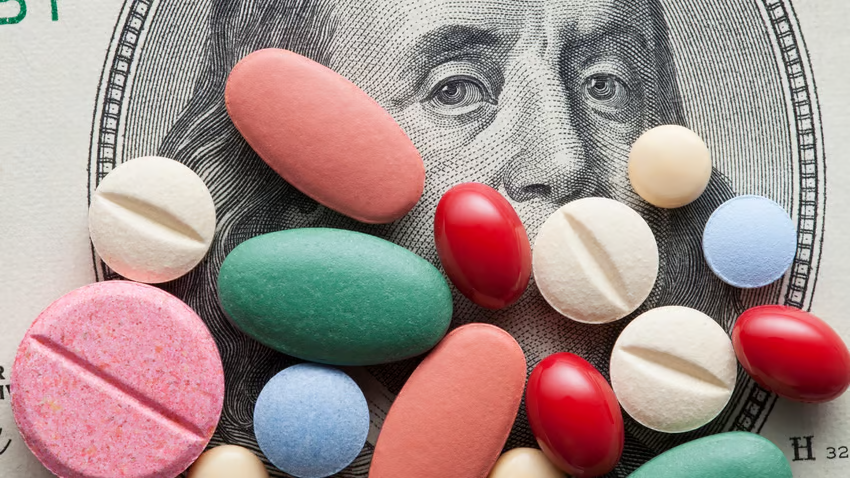
The Centers for Medicare & Medicaid Services offered the first look at the potential savings generated by the first crop of Medicare drug price negotiations.

On Thursday morning, the agency released data that show if the negotiated prices for the first 10 drugs in the program had been available last year, it would have generated an estimated $6 billion in savings for Medicare. That’s savings of about 22% on those 10 products.

CMS will offer additional details on negotiations down the line, officials said on a call with reporters on Thursday, but they said the program led to price reductions of between 38% and 79% on the initial list of drugs.

On the highest end, negotiations led to a price decrease for Merck’s Januvia, a diabetes drug, from $527 for a 30-day supply to $113, down 79%. CMS said 843,000 Medicare beneficiaries took Januvia in 2023, with the drug accounting for nearly $4.1 billion in spending.

“Americans pay too much for their prescription drugs. That makes today’s announcement historic. For the first time ever, Medicare negotiated directly with drug companies and the American people are better off for it,” said U.S. Department of Health and Human Services (HHS) Secretary Xavier Becerra.

Here’s a look at savings for other drugs included in the program:

  • Fiasp and NovoLog insulins (Novo Nordisk): Reduced the cost of a 30-day supply from $495 to $119, a decrease of 76%.
  • Farxiga (AstraZeneca): List price for a 30-day supply decreased from $556 to $178.50, or 68%.
  • Enbrel (Immunex Corporation): Cut the list price for a 30-day supply by 67% from $7,106 to $2,355.
  • Jardiance (Boehringer Ingelheim): Reduced the cost of a 30-day supply by 66%, or from $573 to $197.
  • Stelara (Janssen): The list price for a 30-day supply dropped from $13,836 to $4,695 or by 66%.
  • Xarelto (Janssen): Lowered the cost for a 30-day supply by 62%, or from $517 to $197.
  • Eliquis (Bristol Myers Squibb): The cost for a 30-day supply decreased from $521 to $231, or by 56%.
  • Entresto (Novartis): Reduced the list price for a 30-day supply by 53%, or from $628 to $295.
  • Imbruvica (Pharmacyclics): Decreased the cost for a 30-day supply from $14,934 to $9,319, or by 28%.

CMS sent the initial offers for the 10 drugs to the manufacturers on Feb. 1, and the companies had until March 2 to respond with a counteroffer. Then throughout the summer, the agency held meetings with the drugmakers to continue negotiations, before sending final offers on July 15.

The negotiation period ended on Aug. 1 with a deal in place for all 10 drugs, CMS said.

The new prices will go into effect on Jan. 1, 2026. CMS estimates that Medicare beneficiaries will see aggregate savings of $1.5 billion in their personal out-of-pocket costs in 2026.

Final cost savings can vary based on the enrollee’s specific plan, the agency said.

CMS said it will select up to 15 additional drugs for negotiation in 2027, and the list will be announced by Feb. 1, 2025.

Reaction rolls in

Multiple lawmakers praised CMS and the efforts to reduce drug prices in statements Thursday.

Sen. Ron Wyden, D-Ore., who chairs the Finance Committee, said that Medicare used “the bargaining power of tens of millions of American seniors to fight Big Pharma for lower drug prices.”

“These new, lower prices for prescription drugs in Medicare means seniors save money at the pharmacy counter and marks the first step in a seismic shift in the relationship between Big Pharma, taxpayers, and seniors who need affordable prescription drugs,” Wyden said.

Rep. Frank Pallone, D-N.J., who is the ranking Democrat on the House Energy & Commerce Committee, said that the negotiations will lead to $101 million in savings for seniors living in the Garden State.

Pallone also helped to co-write the Inflation Reduction Act, which gave Medicare the power to negotiate with drug companies.

“This is a historic day for New Jersey and the nation. After more than two decades of fighting, we have finally empowered Medicare to negotiate lower prescription drug prices for our seniors,” said Pallone. “This milestone is especially meaningful for New Jersey, where many seniors rely on Medicare for their life-saving medications.”

Reactions, however, were not universally positive. Pharmaceutical Research and Manufacturers of America (PhRMA) CEO Steve Ubl said in a statement Wednesday that regulators won’t be able to achieve their ultimate goal as the negotiation program does not take aim at pharmacy benefit managers.

Ubl also said that the IRA “fundamentally alters” the incentives drugmakers have in researching and developing new products and therapies. He said companies are already making changes to their R&D programs in response.

“The administration is using the IRA’s price-setting scheme to drive political headlines, but patients will be disappointed when they find out what it means for them,” Ubl said. “There are no assurances patients will see lower out-of-pocket costs because the law did nothing to rein in abuses by insurance companies and PBMs who ultimately decide what medicines are covered and what patients pay at the pharmacy.”

“As a result of the IRA, there are fewer Part D plans to choose from and premiums are going up,” he continued.” Meanwhile, insurers and PBMs are covering fewer medicines and say they intend to impose further coverage restrictions as the price-setting scheme is implemented.”

The Pharmaceutical Care Management Association, which represents PBMs, meanwhile, said that its analyses show that PBM negotiations have driven more significant discounts on six of the 10 drugs included in the program.

“While we share the Administration’s goal to reduce prescription drug costs for America’s seniors and to push back against the high prices set by drug manufacturers, the Administration has missed the mark by choosing several prescription drugs for which PBMs are already actively negotiating steep discounts that significantly lower costs for beneficiaries and taxpayers,” PCMA said.

“The key to reducing drug costs is to increase competition among manufacturers,” the organization said. “We encourage the Administration to focus on those drugs where a lack of competition is driving higher prices and higher costs, and to allow PBM negotiations to continue to deliver value and savings for Medicare.”

While the negotiation program takes more direct aim at drugmakers, PBMs are also under the microscope on the Hill. Lawmakers are mulling a slew of potential reforms to the industry, which critics argue is too concentrated, too opaque and too profit-driven at the expense of patients.

COVID-19’s summer surge shows no signs of slowing down

A surge in COVID-19 infections has swept the country this summer, upending travel plans and bringing fevers, coughs and general malaise. It shows no immediate sign of slowing. 

While most of the country and the federal government has put the pandemic in the rearview mirror, the virus is mutating and new variants emerging.   

Even though the Centers for Disease Control and Prevention (CDC) no longer tracks individual infection numbers, experts think it could be the biggest summer wave yet.  

So far, the variants haven’t been proven to cause a more serious illness, and vaccines remain effective, but there’s no certainty about how the virus may yet change and what happens next.

The highest viral activity right now is in the West, according to wastewater data from the CDC, but a “high” or “very high” level of COVID-19 virus is being detected in wastewater in almost every state. And viral levels are much higher nationwide than they were this time last year and started increasing earlier in the summer.

Wastewater data is the most reliable method of tracking levels of viral activity because so few people test, but it can’t identify specific case numbers.

Part of the testing decline can be attributed to pandemic fatigue, but experts said it’s also an issue of access. Free at-home tests are increasingly hard to find. The government isn’t distributing them, and private insurance plans have not been required to cover them since the public health emergency ended in 2023.   

COVID has spiked every summer since the start of the pandemic.  Experts have said the surge is being driven by predictable trends like increased travel and extreme hot weather driving more people indoors, as well as by a trio of variants that account for nearly 70 percent of all infections. 

Vaccines and antivirals can blunt the worst of the virus, and hospital are no longer being overwhelmed like in the earliest days of the pandemic. 

But there remains a sizeable number of people who are not up-to-date on vaccinations. There are concerns that diminished testing and low vaccination rates could make it easier for more dangerous variants to take hold.  

“One of the things that’s distinctive about this summer is that the variants out there are extraordinarily contagious, so they’re spreading very, very widely, and lots of people are getting mild infections, many more than know it, because testing is way down,” said William Schaffner, a professor of preventive medicine and infectious diseases at Vanderbilt University. 

That contagiousness means the virus is more likely to find the people most vulnerable — people over 65, people with certain preexisting conditions, or those who are immunocompromised. 

In a July interview with the editor-in-chief of MedPage Today, the country’s former top infectious diseases doctor, Anthony Fauci, said people in high-risk categories need to take the virus seriously, even if the rest of the public does not. 

“You don’t have to immobilize what you do and just cut yourself off from society,” Fauci said. “But regardless of what the current recommendations are, when you are in a crowded, closed space and you are an 85-year-old person with chronic lung disease or a 55-year-old person who’s morbidly obese with diabetes and hypertension, then you should be wearing a mask when you’re in closed indoor spaces.” 

Schaffner said hospitalizations have been increasing in his region for at least the past five weeks, which surprised him. 

“I thought probably they had peaked last week. Wrong. They went up again this week. So at least locally, we haven’t seen the peak yet. I would have expected this summer increase … to have plateaued and perhaps start to ease down. But we haven’t seen that yet,” he said.  

Still, much of the country has moved on from the pandemic and is reacting to the surge with a collective shrug. COVID-19 is being treated like any other respiratory virus, including by the White House.  

President Biden was infected in July. After isolating at home for several days and taking a course of the antiviral Paxlovid, he returned to campaign trial.  

Biden is 81, meaning he’s considered high risk for severe infection. He received an updated coronavirus vaccine in September, but it’s not clear if he got a second one, which the CDC recommends for older Americans. 

Updated vaccines that target the current variants are expected to be rolled out later this fall, and the CDC recommends everyone ages 6 months and older should receive one. 

As of May, only 22.5 percent of adults in the United States reported having received the updated 2023-2024 vaccine that was released last fall and tailored to the XBB variant dominant at that time. 

The immunity from older vaccines wanes over time, and while it doesn’t mean people are totally unprotected, Schaffner said, the most vulnerable should be cautious. Many people being infected now have significantly reduced immunity to the current mutated virus, but reduced immunity is better than no immunity.  

People with healthy immune systems and who have previously been vaccinated or infected are still less likely to experience the more severe infections that result in hospitalization or death. 

Almost “none of us are naive to COVID, but the people where the protection wanes the most are the most frail, the immunodeficient, the people with chronic underlying illnesses,” Schaffner said. 

Another ACA fight rides on election

https://www.axios.com/pro/health-care-policy/2024/08/14/aca-subsidies-fate-depends-on-election

The fate of billions of dollars of Affordable Care Act subsidies is riding on the election, which will also determine how much the next Congress will be consumed with relitigating the law.

Why it matters: 

Enhanced ACA subsidies expire at the end of 2025 without congressional action. They’ve substantially lowered consumers’ premiums and driven more enrollment in marketplace plans, though at a hefty cost to the government.

Driving the news: 

Although the fight over repealing the ACA itself has faded, the partisan battle is shifting to the fate of the enhanced subsidies, passed as part of the American Rescue Plan Act and then extended via the Inflation Reduction Act.

  • If Republicans win both chambers of Congress and the presidency, they’re strongly expected to let the subsidies expire.
  • But if Democrats win the presidency or even partial control of Congress, there’s a good chance for a prolonged debate and, possibly, a grand bargain to extend them.
  • Sen. Bill Cassidy, the top Republican on the HELP Committee, tied the fate of the subsidies to the election results when asked what’s ahead.
  • “Tell me, do Republicans have everything, do Democrats have everything, or is it divided government?” he told Axios.

By the numbers: 

The enhanced subsidies have cut premium costs an average of 44%, or $705 per year, for qualified ACA enrollees, according to a KFF analysis.

  • “If they expire, the uninsured rate would jump and people would see huge premium increases,” said Larry Levitt, KFF’s executive vice president for health policy.
  • The CBO finds that extending them would raise the deficit by $335 billion over 10 years and increase the number of people with health coverage by 3.4 million.
  • Some Republicans are portraying the continuation of subsidies as a sop to health insurers.
  • “At a time when we are experiencing a record $35 trillion national debt … it is unconscionable that Democrats would continue to push for massive taxpayer-funded handouts to the wealthy and large health insurance companies,” House Budget Chair Jodey Arrington and Ways and Means Chair Jason Smith said in a joint statement responding to the CBO estimate.

What they’re saying: 

“I think just not doing the enhanced subsidies, I would take that as a win for 2025,” said Brian Blase, a former Trump administration health adviser now president of Paragon Health Institute.

  • He pointed to the cost, also arguing that enhanced subsidies incentivize fraud, with ineligible people enrolling in zero-premium plans. “They’re associated with an unprecedented level of fraud,” he said.
  • “It’s entirely possible that some people are fraudulently misestimating their income,” Levitt said. But, he noted, many low-income people simply lead “volatile lives” and don’t always know what their income will be in a coming year.

What’s next: 

Senate Finance Chair Ron Wyden told Axios he wants to combine an extension of the enhanced subsidies with a bill he’s sponsored that would crack down on unscrupulous insurance brokers, to help counter GOP arguments about fraud.

  • “I think it would be a real good package to crack down on these insurance scams and these brokers ripping off the ACA and focus on something that actually helps people, which is the premium [tax credits],” Wyden said.
  • The expiration of some of the 2017 Trump tax cuts next year also could provide an opening for a deal with Republicans to extend the ACA subsidies in divided government.

The bottom line: 

Levitt said that although some of the repeal fervor has faded, “the future of the program, the future success of the program, very much depends on these enhanced subsidies.”

Analysts shrug

Unless you were under a rock, you saw yesterday’s news that Medicare negotiated a better deal than the private market for some of the program’s top-selling drugs.

Why it matters: 

So what? How meaningful is that difference, and what will the longer-term effects be?

  • Some seniors will likely pay less out of pocket for drugs (that’s a whole topic that we’re not going to get into right now), and that obviously matters to patients. But how pharma interprets the negotiated prices and reacts to them will have a huge impact on future drug development.

Our thought bubble: 

Democrats are thrilled, Republicans are appalled. The drug industry is complaining publicly but telling investors everything is fine.

  • For all of the uproar this law caused when it was passed, the financial world’s reaction to today’s rollout made everything seem pretty good — for now (more on that below).

Between the lines: 

The announced prices — an overall 22% reduction in net spending but no details on individual drugs’ net price reductions — are less drastic than some feared.

  • “There are strong price reductions, but it also shows there is plenty of room for the industry to continue to make some profits on these drugs,” Vanderbilt’s Stacie Dusetzina said.

Analysts are reacting much more neutrally than the politicians.

  • In a note titled “CMS Spins, Pharma Wins (Relatively),” Raymond James analyst Chris Meekins wrote that “the impact is far less than politicians proclaimed and the industry as a whole seems to be managing this fine so far.”
  • And in a note titled “Sigh of Relief,” Leerink analysts concluded that “22% is not as bad as anticipated earlier this year,” though recent earnings calls had assuaged fears somewhat.

Where it stands: 

No one knows for sure the net prices of Part D drugs, much less what they would have otherwise been in 2026. But there are some estimates, and Medicare’s negotiated rate is generally lower than those estimates.

The big picture: 

If there’s anything everyone agrees on, it’s that America’s high drug prices make up a grossly disproportionate bulk of pharma’s revenue compared with the rest of the world’s.

  • Critics — which include many politicians from both parties! — say all that means is that America is getting ripped off.
  • Pharmaceutical companies and some experts say that this subsidization allows drug companies to keep searching for and investing in new therapies despite too-low prices in other countries.

Regardless, that tasked the administration with figuring out how much of a revenue haircut — or a subsidy reduction — drug companies could take without sacrificing the new drugs we want them to continue bringing to market.

  • So far, that haircut seems to be pretty manageable.
  • “We’ve shown that it can be done successfully and the sky doesn’t fall,” said Harvard’s Aaron Kesselheim. “It’s not surprising to me that the markets haven’t come crashing down, because I think this process was not set up to bankrupt the pharmaceutical industry.”

There are several reasons why the outcome of negotiations over this particular group of drugs may not say much about future outcomes.

  • Many of them were already about to get generic competition, which may not be the case for drugs selected down the road. Most of them are already highly rebated.
  • And the number of drugs any given company is receiving a negotiated price for will likely go up over time, as more drugs enter the program each year.
  • “The financial impact will be a lot worse when companies have many drugs negotiated rather than just one or two in ’26 that are going off patent anyway,” said Leerink’s David Risinger.

Plus, positive earnings calls may not reflect the full picture.

  • “Over time, will they adjust and make money? Big pharma — of course. It’s small pharma … that’s getting severely impacted,” said Joe Grogan, the former director of the United States Domestic Policy Council in the Trump administration.
  • “They’re figuring out how to continue to make money, but it doesn’t alter the fact that it upset their R&D expenditures and their R&D plans, and it’s going to leave fewer therapies and fewer treatments down the road,” he added.
  • “Medicine development is a long and complex process, and the negative implications of these changes will not be fully realized for decades to come,” said PhRMA CEO Steve Ubl in a statement before the rates were released.

And perhaps the biggest wild card of all: Different administrations could take different approaches — and nothing requires any given administration to be consistent.

  • “They have flexibility to negotiate harder in coming years, and maybe they didn’t want to poke pharma in the eye too hard in the first year,” Risinger said.
  • “The problem is it’s unpredictable so it’s hard to forecast,” former FDA commissioner Scott Gottlieb told me. “These will ultimately be political decisions, and as much as CMS says there’s a process and a formula, there isn’t.”

The bottom line: 

For now, it looks like the Biden administration found a way to save the government some money — it helped me to consider how I’d think about a 22% sale in my personal life — without really upsetting the drug market.

  • That balance may not be reproduced going forward.