Many states now scrutinizing healthcare consolidation 

https://www.kaufmanhall.com/healthcare-consulting/gist-resources-kaufman-hall/kaufman-hall-blogs/gist-weekly

This week’s graphic looks at the plethora of state-level mergers and acquisitions (M&A) oversight laws that are now in place, part of a recent trend that adds further scrutiny to healthcare consolidation. 

Thirty-five states currently have laws that require not-for-profit healthcare entities that meet certain requirements, usually based on revenue size, to report M&A activity to state regulators. Fourteen of these states extend these requirements to for-profit healthcare entities as well. 

These state laws vary in scope but generally target healthcare deals that fall below the federal reporting threshold for transaction size, updated to $119.5M in 2024.

Two states with particularly strong healthcare M&A oversight laws are Oregon and Minnesota. The Oregon Health Authority must pre-approve any healthcare transaction of at least $35M in size.

Passed in 2023, Minnesota’s healthcare antitrust law sets the deal size reporting requirements at $10M, 

but the state commissioner of health and the attorney general do not have to pre-approve all healthcare mergers. Minnesota also requires merging parties to disclose extensive details on the transaction agreement, market impact, service cuts, and more to state regulators, who have broad authority to block mergers on public interest grounds. 

Although some believe that these state laws will help preserve healthcare competition and access, they will increase the complexity, cost, and timeline for healthcare entities seeking to merge and could make survival for smaller providers even more difficult. 

Hospital at home programs at a critical juncture

https://www.kaufmanhall.com/healthcare-consulting/gist-resources-kaufman-hall/kaufman-hall-blogs/gist-weekly

Published in Health Affairs last month, this piece explores the history of hospital at home (HaH) programs and examines some of the barriers currently limiting their growth.

HaH programs were introduced in the US back in the 1990s but remained rare due to a lack of reimbursement. That changed in 2020 when the Centers for Medicare and Medicaid Services (CMS) introduced the Acute Hospital Care at Home waiver, which allows fee-for-service Medicare reimbursement for providing inpatient-level care at home, prompting the number of HaH programs nationwide to swell from about 20 to more than 320 today.

Although early findings from this initiative have been positive, the future of many of HaH programs is in doubt, as the waiver is set to expire at the end of 2024, barring congressional action.

The authors argue that making the Medicare waiver program permanent is essential to overcome HaH’s “common agency problem,” which prevents many hospitals from building out their home-based programs to scale if they cannot receive reimbursement for all eligible patients. 
The Gist: The Medicare waiver program has incubated many new HaH programs, but most of these programs remain very small; even for systems with the most robust programs, HaH volume only represents a sliver of their total inpatient volume. 

Without guaranteed fee-for-service Medicare reimbursement, the average health system will find it difficult to devote the significant resources and investment that program creation and expansion requires. 

If Congress moves to make the waiver program permanent, or at least extends it for several more years, state Medicaid programs and private payers may be more incentivized to follow suit and provide reimbursement for the care model. 

Although legislation has been introduced to this end in Congress, action on this front in an election year is going to be challenging. 

Dollar General ends mobile health clinic pilot

https://www.kaufmanhall.com/healthcare-consulting/gist-resources-kaufman-hall/kaufman-hall-blogs/gist-weekly

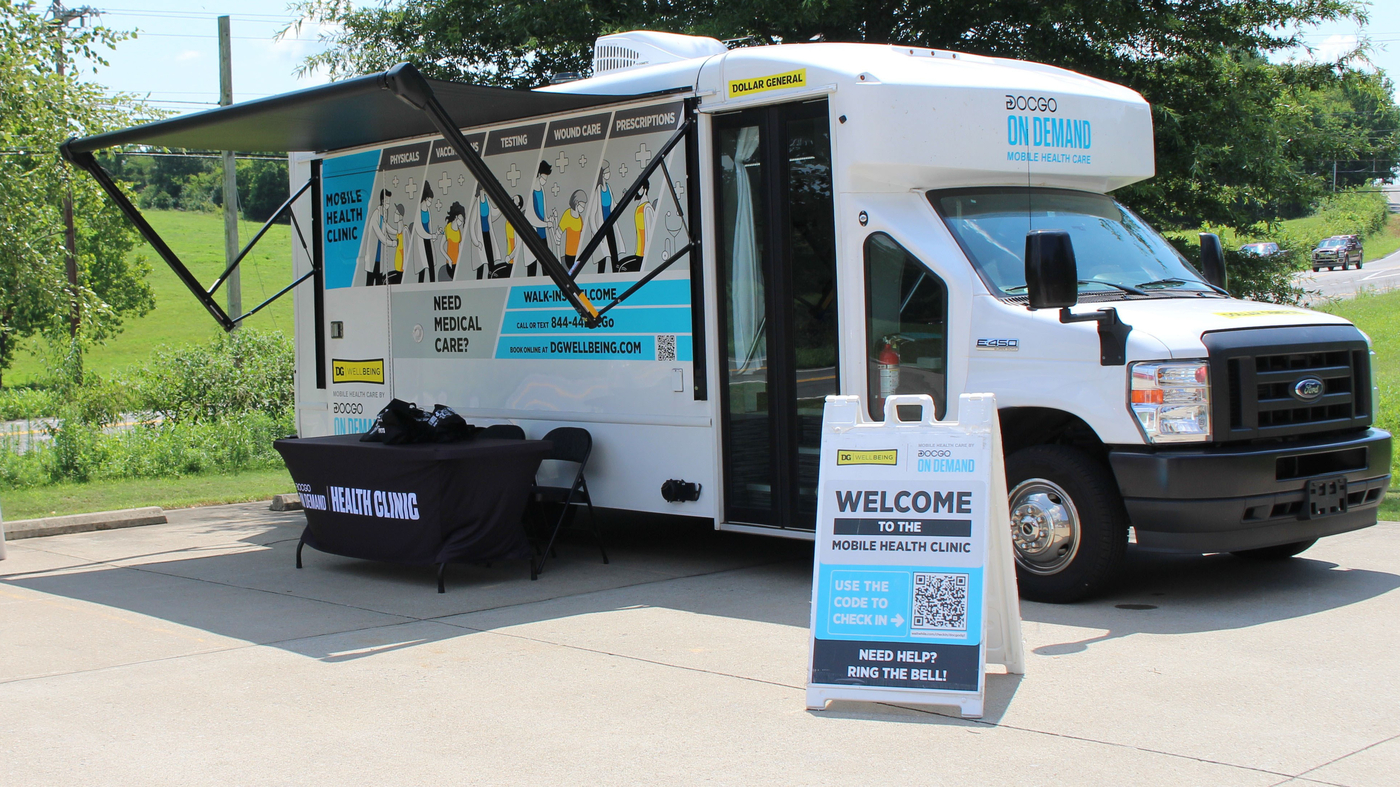
Discount retail giant Dollar General announced late last week that it will end its mobile health clinic pilot program, run in partnership with mobile medical care provider DocGo.

Launched in Jan. 2023, the mobile clinics provided basic healthcare services—including annual physicals, vaccinations, urgent care, and lab testing services—several days per week outside three Dollar General stores near the company’s Goodlettsville, Tennessee headquarters.

A Dollar General spokesperson said that ending the mobile clinics program was a mutual decision between Dollar General and DocGo and did not provide additional details on the decision. 
The Gist: Dollar General’s small healthcare delivery pilot received significant attention when it was announced, due to the retailer’s extensive footprint in rural and medically underserved areas. 

Although the discount retailer never touted a healthcare strategy on the scale of Walmart or Walgreens, which have each also walked back their healthcare delivery ambitions this year, Dollar General did hire a chief medical officer in 2021, and many thought that this pilot could be the company’s first step toward broader healthcare delivery. 

Instead, Dollar General’s role in improving the health of rural Americans for now remains limited to its retail offerings: it continues to expand its DG Fresh initiative, now selling fresh produce at more than a quarter of its 20K locations, and its DG Wellbeing section, which now accepts supplemental health benefits for its selection of more than 300 over-the-counter medicines and supplements.

OHSU and Legacy sign definitive merger agreement

https://www.kaufmanhall.com/healthcare-consulting/gist-resources-kaufman-hall/kaufman-hall-blogs/gist-weekly

Late last week, Oregon Health & Science University (OHSU) and Legacy Health, both not-for-profit health systems based in Portland, OR, shared that they had signed a definitive agreement to merge after first announcing their intent to combine last August.

The combined system would be the largest in the Portland region, with 12 hospitals and a total annual revenue of about $6.6B. As part of the deal, OHSU has promised to invest about $1B over ten years to upgrade Legacy’s facilities.

The systems are expected to apply this summer for review by Oregon’s Health Care Market Oversight Program, which was established in 2022 and has the authority to deny or attach conditions to healthcare mergers in the state. 
The Gist: If finalized, this merger would connect OHSU’s academic medical center to Legacy’s network of community hospitals and clinics, as well as secure Legacy a needed capital infusion. 

Next steps include review by both federal regulatory agencies and Oregon, which is among a growing number of states to implement M&A oversight laws.

What to look for the in the Labor Department’s May jobs report

https://www.cbsnews.com/news/jobs-report-may-inflation-interest-rates/


The US labor market added more jobs than expected in May defying previous signs of a slowdown in the economy.

Data from the Bureau of Labor Statistics released Friday showed the labor market added 272,000 nonfarm payroll jobs in May, significantly more additions than the 180,000 expected by economists.

Meanwhile, the unemployment rate rose to 4% from 3.9% the month prior. May’s job additions came in significantly higher than the 165,000 jobs added in April.

The print highlights the difficulty the Federal Reserve faces in determining when to lower interest rates and how quickly. The economy and labor market has held up overall, and inflation has remained sticky, building the case for holding rates higher for longer. Yet some cracks have emerged, such as signs of inflation pressuring lower income consumers and rising household debt.

“They’re really walking a tight rope here,” Robert Sockin, Citi senior global economist, told Yahoo Finance of the central bank. He noted the longer the Fed holds rates steady, the more cracks could develop in the economy.

Wages, considered an important metric for inflation pressures, increased 4.1% year over year, reversing a downward trend in year-over-year growth from the month prior. On a monthly basis, wages increased 0.4%, an increase from the previous month’s 0.2% gain.

“To see more confidence that inflation could move lower over time, you’d really like to see the wage numbers look a little lower than we’ve seen them today,” Lauren Goodwin, New York Life Investments economist and chief market strategist, told Yahoo Finance.

Also in Friday’s report, the labor force participation rate slipped to 62.5% from 62.7% the month prior. However, participation among prime-age workers, ages 25-54, rose to 83.6%, its highest level in 22 years.

The largest jobs increases in Friday’s report were seen in healthcare, which added 68,000 jobs in. May. Meanwhile, government employment added 43,000 jobs. Leisure and hospitality added 42,000 jobs.

The report comes as the stock market has hit record highs amid a slew of softer-than-expected economic data, which had increased investor confidence that the Federal Reserve could cut interest rates as of September. After Friday’s labor report, that trend reversed with investors pricing in a 53% chance the Fed cuts rates in September, down from a roughly 69% chance seen just a day prior, per the CME FedWatch Tool.

Other data out this week has reflected a still-resilient labor market that’s showing further signs of normalizing to pre-pandemic levels. The latest Job Openings and Labor Turnover Survey (JOLTS), released Tuesday, showed job openings fell in April to their lowest level since February 2021.

Notably, the ratio between the number of job openings and unemployed people returned to 1.2 in May, which is in line with pre-pandemic levels.