The Personal Toll of Whistle-Blowing

https://www.newyorker.com/magazine/2019/02/04/the-personal-toll-of-whistle-blowing?utm_source=newsletter&utm_medium=email&utm_campaign=newsletter_axiosvitals&stream=top

Why one physician took the risk of becoming an F.B.I. informant to expose alleged Medicare fraud.



Amazon now sells hospital rooms

https://www.beckershospitalreview.com/supply-chain/amazon-now-sells-hospital-rooms-5-notes.html?origin=rcme&utm_source=rcme

Image result for Amazon now sells hospital rooms

Image result for Amazon now sells hospital rooms

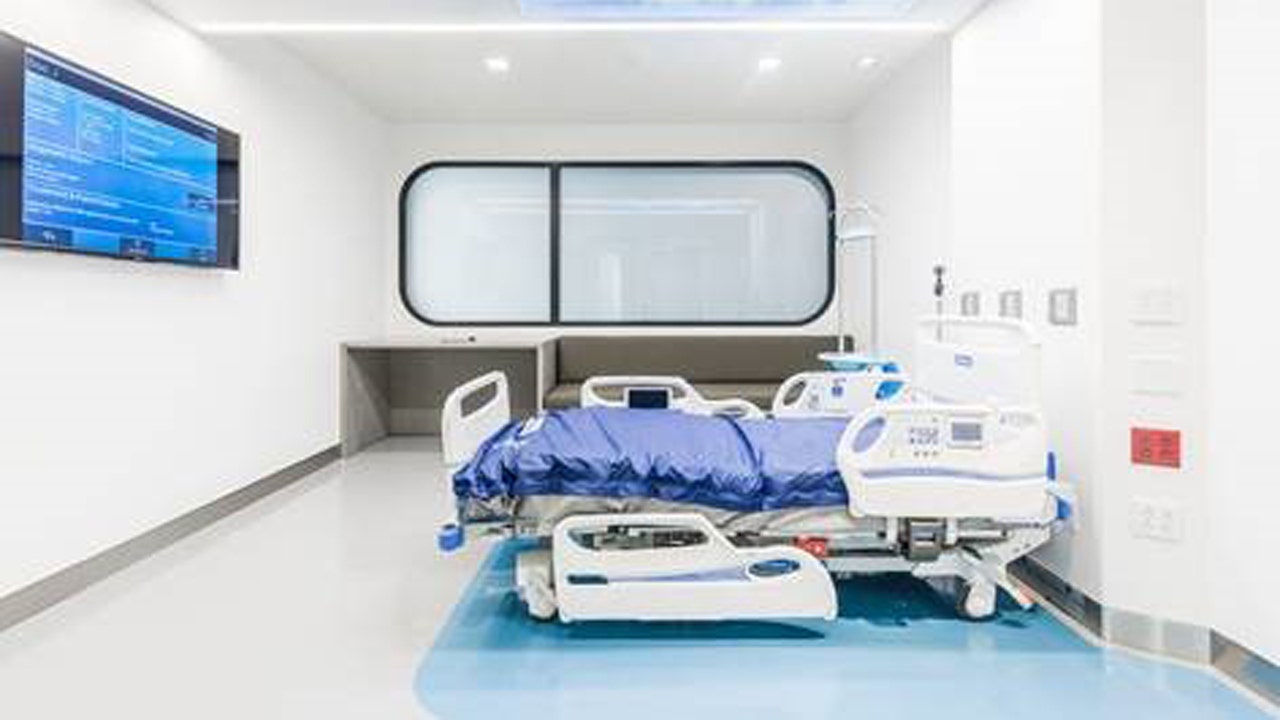
Hospitals, health systems and businesses can now purchase a hospital room on Amazon, CNBC reports.

Five things to know:

1. Amazon already offers a slew of medical supplies, from syringes to bed pans. The e-commerce giant also sells a line of 60 over-the-counter healthcare products.

2. Businesses can now purchase a “smart” hospital room on Amazon from the vendor EIR Healthcare, through a service dubbed MedModular.

3. MedModular is customizable, but all the rooms are equipped with a bathroom and a bed.

4. The rooms cost about $285,000 — or $814 per square foot — and are targeted toward hospitals and other business buyers. EIR Healthcare claims the units are more affordable that traditional construction, CNBC reports.

5. EIR Healthcare CEO Grant Geiger told CNBC that hospital customers have expressed interest in using the units as simulation labs or urgent care facilities.


ER “facility fees” strike again

https://www.npr.org/sections/health-shots/2019/01/28/688350600/a-fainting-spell-after-a-flu-shot-leads-to-4-692-er-visit?utm_source=dlvr.it&utm_medium=twitter&utm_campaign=newsletter_axiosvitals&stream=top

Image result for excessive emergency room fees

Kaiser Health News and NPR are back with another installment of their “Bill of the Month” series: This time, it’s a guy who fainted after getting a flu shot, was taken to the ER, and ended up with a $4,692 bill.

The biggest culprit, at almost $3,000 of the total bill, was the ER’s “facility fee” — a charge just for walking in the door, not for any particular services.

  • Hospitals code each ER visit on a scale of 1 to 6; a 6 is supposed to be reserved for the most critical care, like a gunshot wound. The higher the number, the higher the facility fee.
  • The patient in this case was coded as a 5. The hospital, run by Atrium Health, said that’s because he received more than 3 tests.

“It’s not a perfect system. Hospitals have an incentive to do a CT exam, and taxi drivers have an incentive to take the long way home,” the David McKenzie, reimbursement director at the American College of Emergency Physicians, told NPR.

Go deeper: Vox did a good rundown of rising facility fees as part of its own series on hospital billing.
 

Reforming Stark/Anti-Kickback Policies

Reforming Stark/Anti-Kickback Policies

Image result for Reforming Stark/Anti-Kickback Policies

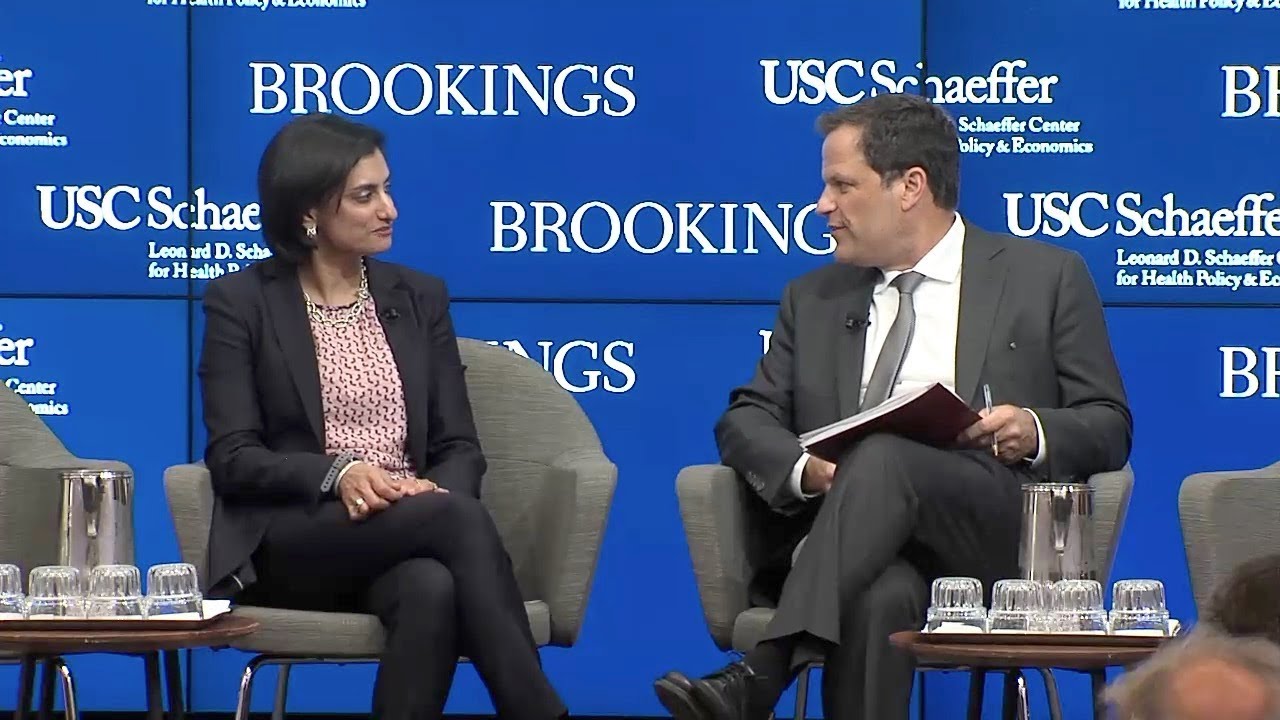
An event from the USC-Brookings Schaeffer Initiative for Health Policy

In recent years, the health care system has accelerated experimentation into new payment and delivery models that reward care coordination, integration, and value.  However, observers and market participants have expressed concerns that long-standing anti-fraud rules in Medicare and Medicaid prevent innovation and hold back potentially promising new arrangements.  In 2018, the Trump administration sought stakeholder feedback on how the regulations implementing those laws might be modified to promote value-based, coordinated, integrated care delivery while protecting taxpayers and beneficiaries from fraud.

On January 30, 2019 the USC-Brookings Schaeffer Initiative for Health Policy will host Eric Hargan, the Deputy Secretary of Health and Human Services, for a discussion about this effort. Following his presentation, experts in health care payment and delivery system reform will discuss the issue and the path forward.




Washington is under a state of emergency as measles cases rise

https://www.cnn.com/2019/01/26/health/washington-state-measles-state-of-emergency/index.html?utm_source=Sailthru&utm_medium=email&utm_campaign=Issue:%202019-01-28%20Healthcare%20Dive%20%5Bissue:19128%5D&utm_term=Healthcare%20Dive

Image result for Washington is under a state of emergency as measles cases rise

As of Sunday, there are 35 confirmed cases of measles in the state of Washington — an outbreak that has already prompted Gov. Jay Inslee to declare a state of emergency.

“Measles is a highly contagious infectious disease that can be fatal in small children,” Inslee said in his proclamation on Friday, adding that these cases create “an extreme public health risk that may quickly spread to other counties.”
There were 34 cases of the measles in Clark County, which sits on the state’s southern border, just across the Columbia River from Portland, Oregon. Officials said 30 of the cases involved people who have not had a measles immunization; the other four are not verified. Of the 34 cases, 24 are children between age 1 and 10. There are also nine suspected cases in Clark County.
There is also one case in King County, which includes Seattle. While the King County website says the patient, a man in his 50s, is a “suspected case,” the governor said in a news release it is a confirmed case of measles.
In a health alert from King County, it was said the man had recently traveled to Clark County.
Inslee’s proclamation allows agencies and departments to use state resources and “do everything reasonably possible to assist affected areas.”
A news release on the governor’s website says the Washington State Department of Health, or DOH, has implemented an infectious disease incident management structure so it can manage the public health aspects of the outbreak through investigations and lab testing.
The Washington Military Department, the release says, is organizing resources to assist the DOH and local officials in easing the effects on people, property and infrastructure.
Last week, a person infected with measles attended a Portland Trail Blazers home game in Oregon amid the outbreak. Contagious people also went to Portland International Airport, as well as to hospitals, schools, stores, churches and restaurants across Washington’s Clark County and the two-state region, county officials said.

Most patients with symptoms should call first

Measles is a contagious virus that spreads through the air through coughing and sneezing. Symptoms such as high fever, rash all over the body, stuffy nose and red eyes typically disappear without treatment within two or three weeks. One or two of every 1,000 children who get measles will die from complications, according to the US Centers for Disease Control and Prevention.
In 1978, the CDC set a goal to eliminate measles from the United States by 1982. Measles was declared eliminated — defined by absence of continuous disease transmission for greater than 12 months — from the United States in 2000.
But there has been a recent rise in unvaccinated children. The proportion of children receiving no vaccine doses by 2 years old rose from 0.9% among those born in 2011 to 1.3% among those born in 2015, the CDC reported in October.
The CDC recommends people get the measles, mumps and rubella vaccine to protect against those viruses. The typical recommendations are that children should get two doses of MMR vaccine, the first between 12 to 15 months of age and the second between 4 and 6 years old.