
Doctors have gotten better at treating coronavirus patients

https://www.axios.com/coronavirus-treatment-better-drugs-hospitals-6f92cf31-4fa1-4181-ba21-a5a8c778ec9e.html

Doctors and hospitals have gotten better at treating coronavirus ...

Doctors and hospitals have learned a lot about how best to treat people infected with the coronavirus in the months since the pandemic began.

Why it matters: Better treatment means fewer deaths and less pain for people who are infected, and research into pharmaceutical treatments is advancing at the same time as hospital care.

The big picture: Some of the simplest changes have been the most effective. For example, doctors have learned that flipping patients onto their stomachs instead of their backs can help increase airflow to the lungs.

  • Providers also now prefer high-flow oxygen over ventilators, despite the early focus on ventilator supply.
  • “If you can avoid ventilation, it is preferred if someone is able to breathe on their own and you just help them out by giving them more oxygenated air to breathe,” said Janis Orlowski, chief health care officer of the Association of American Medical Colleges.

Researchers have also discovered new utility in old drugs.

  • Dexamethasone, a cheap steroid used to treat inflammation, has been found to reduce deaths by one-third among patients on ventilators and one-fifth among those on oxygen.
  • Preliminary data has shown that remdesivir, an antiviral, probably doesn’t save seriously ill patients’ lives, but can help others get out of the hospital a few days earlier. “Anyone who has evidence of lung injury or needing oxygen, we give it,” said Armond Esmaili, a hospitalist at the University of California San Francisco Medical Center.
  • Doctors have also learned to put all COVID patients on drugs to prevent blood clots, Esmaili said.

What they’re saying: There’s still a lot doctors and scientists don’t know about the virus, but they say they’ve come along way since February and March, when they were essentially flying blind.

  • “It was very scary, just to give you the subjective feeling, of caring for patients and talking with patients and their families and a lot of the time saying, ‘We don’t know a lot about this disease. We don’t know how you’re going to do,’” Esmaili said.

Between the lines: Hospitals are also able to provide better care when they’re not overwhelmed with patients.

  • New York’s hospitals were so overwhelmed in the spring that they brought in employees to work well outside of their specialties. In some hospitals’ emergency rooms, patient-to-nurse ratios rose to more than 20 to 1the NYT reports — five times the recommended ratio.
  • “Really attentive-level care is important,” Esmaili said.“It’s not that hard to imagine that when you have the resources and you’re not overburdened with a massive amount of patients that patients are going to get better care.”

What we’re watching: These advances in treatment protocols will only go so far, especially if hospitals in states like Florida, Arizona and Texas become too full to put them into practice.

  • In states with rising case counts, “I think you’re going to see mortality rates increase there because of that phenomenon of hospitals being unable to deliver optimal care, because they don’t have the staffing,” said James Lawler, an infectious disease specialist at the University of Nebraska Medical Center.
  • “You don’t want your ICU nurse to have to take care of five or six patients at the same time,” he said.



Coronavirus autopsies: A story of 38 brains, 87 lungs and 42 hearts

https://www.washingtonpost.com/health/2020/07/01/coronavirus-autopsies-findings/?fbclid=IwAR2UIzjRRkEDq-1e-NEe9pC2Mf7AIVKc5mPwwOLc8hlymiFKFe7QKM0bLVg

Coronavirus autopsies: A story of 38 brains, 87 lungs and 42 ...

What we’ve learned from the dead that could help the living.

When pathologist Amy Rapkiewicz began the grim process of opening up the coronavirus dead to learn how their bodies went awry, she found damage to the lungs, kidneys and liver consistent with what doctors had reported for months.

But something was off.

Rapkiewicz, who directs autopsies at NYU Langone Health, noticed that some organs had far too many of a special cell rarely found in those places. She had never seen that before, yet it seemed vaguely familiar. She raced to her history books and — in a eureka moment — found a reference to 1960′s report on a patient with dengue fever.

In dengue, a mosquito-borne tropical disease, she learned, the virus appeared to destroy these cells, which produce platelets, leading to uncontrolled bleeding. The novel coronavirus seemed to amplify their effect, causing dangerous clotting.

She was struck by the parallels: “Covid-19 and dengue sound really different, but the cells that are involved are similar.”

Autopsies have long been a source of breakthroughs in understanding new diseases, from HIV/AIDS and Ebola to Lassa fever — and the medical community is counting on them to do the same for covid-19, the disease caused by the coronavirus. With a vaccine probably many months away in even the most optimistic scenarios, autopsies are becoming a critical source of information for research into possible treatments.

When the pandemic hit the United States in late March, many hospital systems were too overwhelmed trying to save lives to spend too much time delving into the secrets of the dead. But by late May and June, the first large batch of reports — from patients who died at a half-dozen institutions — were published in quick succession. The investigations have confirmed some of our early hunches of the disease, refuted others — and opened up new mysteries about the pathogen that has killed more than 500,000 people worldwide.

Among the most important findings, consistent across several studies, is confirmation the virus appears to attack the lungs the most ferociously. They also found the pathogen in parts of the brain, kidneys, liver, gastrointestinal tract and spleen and in the endothelial cells that line blood vessels, as some had previously suspected. Researchers also found widespread clotting in many organs.

But the brain and heart yielded surprises.

“It’s about what we are not seeing,” said Mary Fowkes, an associate professor of pathology who is part of a team at Mount Sinai Health that has performed autopsies on 67 covid-19 patients.

Given widespread reports about neurological symptoms related to the coronavirus, Fowkes said, she expected to find virus or inflammation — or both — in the brain. But there was very little. When it comes to the heart, many physicians warned for months about a cardiac complication they suspected was myocarditis, an inflammation or hardening of the heart muscle walls — but autopsy investigators were stunned that they could find no evidence of the condition.

Another unexpected finding, pathologists said, is that oxygen deprivation of the brain and the formation of blood clots may start early in the disease process. That could have major implications for how people with covid-19 are treated at home, even if they never need to be hospitalized.

The early findings come as new U.S. infections have overtaken even the catastrophic days of April, amid what some critics say is a premature easing of social distancing restrictions in some states, mainly in the South and West. A new modeling study has estimated that about 22 percent of the population — or 1.7 billion people worldwide, including 72 million in the United States — may be vulnerable to severe illness if infected with the virus. According to the analysis published this month in Lancet Global Health, about 4 percent of those people would require hospitalization — underscoring the stakes as autopsy investigators continue their hunt for clues.

Microclots in lungs

At their best, autopsies can reconstruct the natural course of the disease, but the process for a new and highly infectious disease is tedious and requires meticulous work. To protect pathologists and avoid sending virus into the air, they must use special tools to harvest organs and then dunk them in a disinfecting solution for several weeks before they are studied. They must then section each organ and collect small bits of tissue for study under different types of microscopes.

One of the first American investigations to be made public, on April 10, was out of New Orleans. The patient was a 44-year-old man who had been treated at LSU Health. Richard Vander Heide remembers cutting the lung and discovering what was probably hundreds or thousands of microclots.

“I will never forget the day,” recalled Vander Heide, who has been performing autopsies since 1994. “I said to the resident, ‘This is very unusual.’ I had never seen something like this.”

But as he moved onto the next patient and the next, Vander Heide saw the same pattern. He was so alarmed, he said, that he shared the paper online before submitting it to a journal so the information could be used immediately by doctors. The findings caused a stir at many hospitals and influenced some doctors to start giving blood thinners to all covid-19 patients. It is now common practice. The final, peer-reviewed version involving 10 patients was subsequently published in the Lancet in May.

Other lung autopsies — including those described in papers from Italy of 38 patients, a Mount Sinai Health study on 25 patients, a collaboration between Harvard Medical School and German researchers on seven and an NYU Langone Health study on seven — have reported similar findings of clotting.

Most recently, a study out this month in the Lancet’s eClinicalMedicine, found abnormal clotting in the heart, kidney and liver, as well as the lungs of seven patients, leading the authors to suggest this may be a major cause of the multiple-organ failure in covid-19 patients.

Heart cells

The next organ studied up close was the heart. One of the most frightening early reports about the coronavirus from China was that a significant percentage of hospitalized patients — up to 20 to 30 percent — appeared to have a heart problem known as myocarditis that could lead to sudden death. It involves the thickening of the muscle of the heart so that it can no longer pump efficiently.

Classic myocarditis is typically easy to identify in autopsies, pathologists say. The condition occurs when the body perceives the tissue to be foreign and attacks it. In that situation, there would be large dead zones in the heart, and the muscle cells known as myocytes would be surrounded by infection-fighting cells known as lymphocytes. But in the autopsy samples taken so far, the dead myocytes were not surrounded by lymphocytes — leaving researchers scratching their heads.

Fowkes, from Mount Sinai, and her colleague, Clare Bryce, whose work on 25 hearts has been published online but not yet peer reviewed, said they saw some “very mild” inflammation of the surface of the heart but nothing that looked like myocarditis.

NYU Langone’s Rapkiewicz, who studied seven hearts, was struck by the abundance of a rare cell called megakaryocytes in the heart. Megakaryocytes, which produce platelets that control clotting, typically exist only in the bone marrow and lungs. When she went back to the lung samples from the coronavirus patients, she discovered those cells were too plentiful there, too.

“I could not remember a case before where we saw that,” she said. “It was remarkable they were in the heart.”

Vander Heide, from LSU, who reported preliminary findings on 10 patients in April and has a more in-depth paper with more case studies under review at a journal, explained that “when you look at a covid heart, you don’t see what you’d expect.”

He said a couple of patients he performed autopsies on had gone into cardiac arrest in the hospital, but when he examined them, the primary damage was in the lungs — not the heart.

Brain grid

Of all the coronavirus’s manifestations, its impact on the brain has been among the most vexing. Patients have reported a host of neurological impairments, including reduced ability to smell or taste, altered mental status, stroke, seizures — even delirium.

An early study from China, published in the BMJ, formerly the British Medical Journal, in March, found 22 percent of the 113 patients had experienced neurological issues ranging from excessive sleepiness to coma — conditions typically grouped together as disorders of consciousness. In June, researchers in France reported that 84 percent of patients in intensive care had neurological problems, and a third were confused or disoriented at discharge. Also this month, those in the United Kingdom found that 57 of 125 coronavirus patients with a new neurological or psychiatric diagnosis had had a stroke due to a blood clot in the brain, and 39 had an altered mental state.

Based on such data and anecdotal reports, Isaac Solomon, a neuropathologist at Brigham and Women’s Hospital in Boston, set out to systematically investigate where the virus might be embedding itself in the brain. He conducted autopsies of 18 consecutive deaths, taking slices of key areas: the cerebral cortex (the gray matter responsible for information processing), thalamus (modulates sensory inputs), basal ganglia (responsible for motor control) and others. Each was divided into a three-dimensional grid. Ten sections were taken from each and studied.

He found snippets of virus in only some areas, and it was unclear whether they were dead remnants or active virus when the patient died. There were only small pockets of inflammation. But there were large swaths of damage due to oxygen deprivation. Whether the deceased were longtime intensive care patients or people who died suddenly, Solomon said, the pattern was eerily similar.

“We were very surprised,” he said.

When the brain does not get enough oxygen, individual neurons die, and that death is permanent. To a certain extent, people’s brains can compensate, but at some point, the damage is so extensive that different functions start to degrade.

On a practical level, Solomon said, if the virus is not getting into the brain in large amounts, that helps with drug development because treatment becomes trickier when it is pervasive, for instance, in some patients with West Nile or HIV. Another takeaway is that the findings underscore the importance of getting people on supplementary oxygen quickly to prevent irreversible damage.

Solomon, whose work was published as a June 12 letter in the New England Journal of Medicine, said the findings suggest the damage had been happening over a longer period of time, which makes him wonder about the virus’s effect on people who are less ill. “The big lingering question is what happens to people who survive covid,” he said. “Is there a lingering effect on the brain?”

The team from Mount Sinai Health, which took tissue findings from 20 brains, was also perplexed not to find a lot of virus or inflammation. However, the group noted in a paper that the widespread presence of tiny clots was “striking.”

“If you have one blood clot in the brain, we see that all the time. But what we’re seeing is, some patients are having multiple strokes in blood vessels that are in two or even three different territories,” Fowkes said.

Rapkiewicz said it is too early to know whether the newest batch of autopsy findings can be translated into treatment changes, but the information has opened new avenues to explore. One of her first calls after noticing the unusual platelet-producing cells was to Jeffrey Berger, a cardiac specialist at NYU who runs a National Institutes of Health-funded lab that focuses on platelets.

Berger said the autopsies suggest anti-platelet medications, in addition to blood thinners, may be helpful to stem the effects of covid-19. He has pivoted a major clinical trial looking at optimal doses of 38 to examine that question as well.

“It’s only one piece of a very big puzzle, and we have a lot more to learn,” he said. “But if we can prevent significant complications and if more patients can survive the infection, that changes everything.”


Learning from the largest US study of coronavirus patients

https://mailchi.mp/0d4b1a52108c/the-weekly-gist-april-24-2020?e=d1e747d2d8

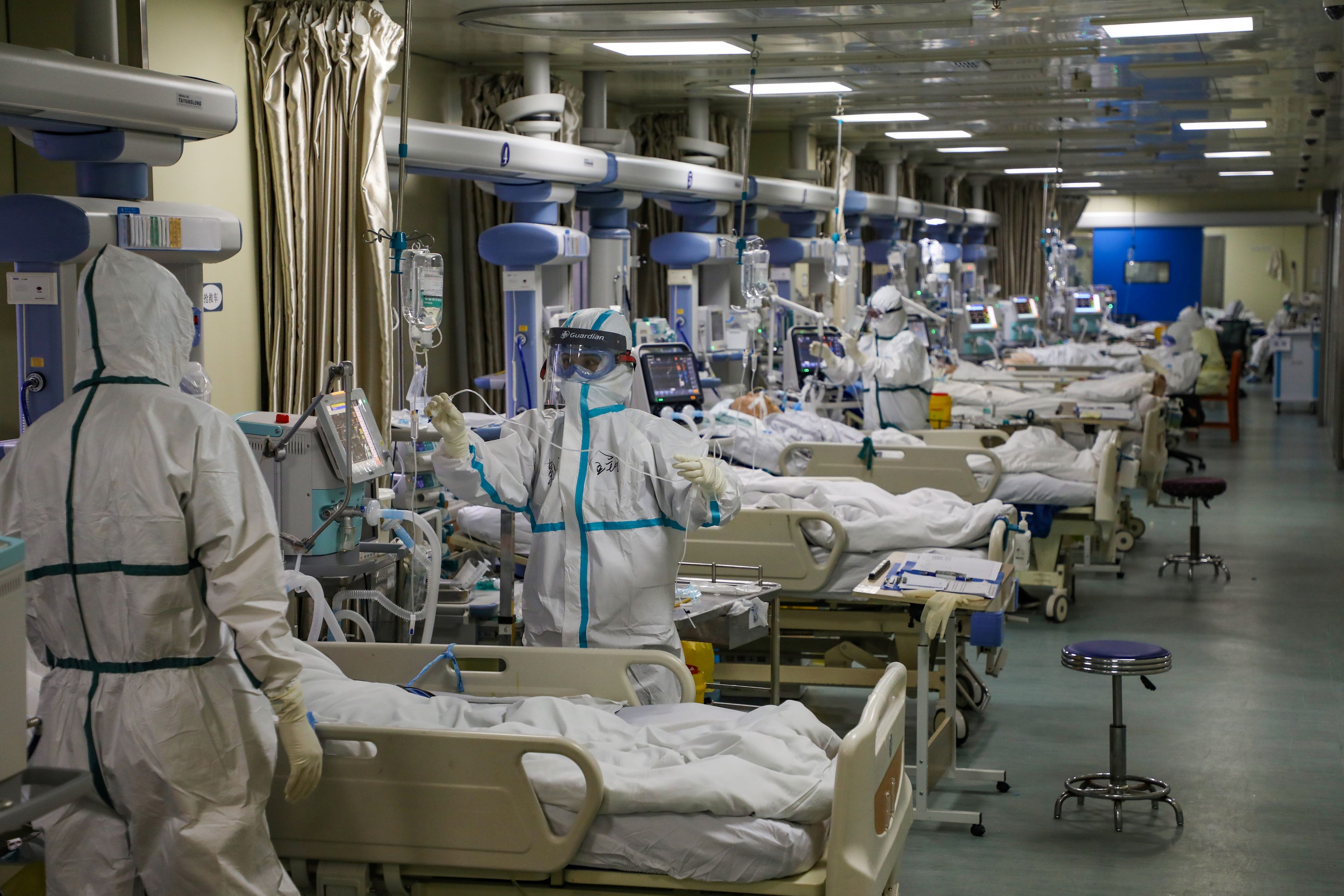
ICU patients with coronavirus and pneumonia treated in Wuhan ...

study published this week in JAMA provides a look at the largest series of COVID-19 hospitalized patients studied to date in the US, reporting that almost all patients treated had at least one underlying condition. Physicians from Northwell Health evaluated the outcomes, comorbidities and clinical course of 5,700 confirmed coronavirus patients hospitalized between March 1st and April 4th across the New York City area. Hospitalized patients, 60 percent of whom were men, had a high burden of chronic disease.

Similar to other reports, older patients, and those with a higher chronic disease burden (especially diabetes) were both more likely to require mechanical ventilation, and more likely to die. Only nine of the 436 patients under age 50 who had no significant cormorbidities (as measured by the Charlson Comorbidity Index) had died. One number received the most press coverage: as reported in the abstract, 88 percent of patients who received mechanical ventilation died. Digging into the details of the series, this may end up being an overestimation, as the statistic is based on a subset of 320 ventilated patients who either died or were discharged by April 4th. At that time, 831 patients remained in the hospital on ventilators, with outcomes still to be determined. Ultimately, the mortality rate of full cohort of ventilated patients could fall nearer to the 50-60 percent range seen in other studies.

Regardless, the rich dataset of the Northwell report adds to the body of evidence that severe COVID-19 infections and deaths involve several organ systems. This Science article provides a thorough (and comprehensible to the non-clinician) review of how the virus invades the body. While the lungs remain “ground zero” for infection, critically ill patients may experience serious kidney, cardiac, or even nervous system involvement. A host of chronic diseases predispose patients for worse outcomes—yet doctors remain puzzled that they aren’t seeing “a huge number of asthmatics” in ICUs. Patients are presenting with dangerously low oxygen levels but less distress than expected, likely because they are able to still “blow off” carbon dioxide, limiting the body’s ability to sense the seriousness of their condition.

Many dying patients are overwhelmed by a “cytokine storm”—an overreaction of the immune system that compounds organ failure. And new evidence suggests that large numbers of critically ill patients may experience abnormal blood clotting, contributing to the high mortality rates of the disease. The more doctors and scientists learn about coronavirus, the more complex the disease process seems—leaving doctors with work to do to understand, manage, and treat the tens of thousands of these seriously ill patients.


A mysterious blood-clotting complication is killing coronavirus patients

https://www.washingtonpost.com/health/2020/04/22/coronavirus-blood-clots/?utm_campaign=wp_news_alert_revere_trending_now&utm_medium=email&utm_source=alert&wpisrc=al_trending_now__alert-hse–alert-national&wpmk=1

Blood-clotting complication is killing coronavirus patients ...

Once thought a relatively straightforward respiratory virus, covid-19 is proving to be much more frightening.

Craig Coopersmith was up early that morning as usual and typed his daily inquiry into his phone. “Good morning, Team Covid,” he wrote, asking for updates from the ICU team leaders working across 10 hospitals in the Emory University health system in Atlanta.

One doctor replied that one of his patients had a strange blood problem. Despite receiving anticoagulants, the patient was still developing clots in various parts of his body. A second said she’d seen something similar. And a third. Soon, every person on the text chat had reported the same thing.

“That’s when we knew we had a huge problem,” said Coopersmith, a critical-care surgeon. As he checked with his counterparts at other medical centers, he became increasingly alarmed: “It was in as many as 20, 30 or 40 percent of their patients.”

One month ago, as the country went into lockdown to prepare for the first wave of coronavirus cases, many doctors felt confident that they knew what they were dealing with. Based on early reports, covid-19 appeared to be a standard variety respiratory virus, albeit a very contagious and lethal one with no vaccine and no treatment. But they’ve since become increasingly convinced that covid-19 attacks not only the lungs, but also the kidneys, heart, intestines, liver and brain.

And many are also reporting bizarre, unsettling cases that don’t seem to follow the textbooks they’ve trained on. They describe patients with startlingly low oxygen levels — so low that they would normally be unconscious or near death — talking and swiping on their phones. Asymptomatic pregnant women suddenly in cardiac arrest. Patients who by all conventional measures seem to have mild disease deteriorating within minutes and dying at home.

With no clear patterns in terms of age or chronic conditions, some scientists now hypothesize that at least some of these abnormalities may be explained by severe changes in patients’ blood.

The concern is so acute that some doctors groups have raised the controversial possibility of giving preventive blood thinners to everyone with covid-19 — even those well enough to endure their illness at home.

Blood clots, in which the red liquid turns gel-like, appear to be the opposite of what occurs in Ebola, Dengue, Lassa and other hemorrhagic fevers that lead to uncontrolled bleeding. But they are actually part of the same phenomenon — and can have similarly devastating consequences.

Autopsies have shown that some people’s lungs are filled with hundreds of microclots. Errant blood clots of a larger size can break off and travel to the brain or heart, causing a stroke or a heart attack. On Saturday, Broadway actor Nick Cordero, 41, had his right leg amputated after being infected with the novel coronavirus and suffering from clots that blocked blood from getting to his toes.

Lewis Kaplan, a University of Pennsylvania physician and head of the American Society of Critical Care Medicine, said that every year, doctors treat a large variety of people with clotting complications, from those with cancer to victims of severe trauma, “and they don’t clot like this.”

“The problem we are having is that while we understand that there is a clot, we don’t yet understand why there is a clot,” Kaplan said. “We don’t know. And therefore, we are scared.”

‘It crept up on us’

The first sign that something was going haywire was in legs, which were turning blue and swelling. Even patients on blood thinners in the ICU were developing clots in them — which is not unusual in one or two patients in one unit, but is for so many at the same time. Next came the clogging of the dialysis machines, which filter impurities in blood when kidneys are failing, and were getting jammed up several times a day.

“There was a universal understanding that this was different,” Coopersmith said.

Then came the autopsies. When they opened up some deceased patients’ lungs, they expected to find evidence of pneumonia and damage to the tiny air sacs that exchange oxygen and carbon dioxide between the lungs and the bloodstream. Instead, they found tiny clots all over.

Zoom meetings were convened in some of the largest medical centers nationwide. Tufts. Yale-New Haven. The University of Pennsylvania. Brigham and Women’s. Columbia-Presbyterian. Theories were shared. Treatments debated.

And although there was no consensus on the biology of why this was happening and what could be done about it, many came to believe the clots might be responsible for a significant share of U.S. coronavirus deaths — possibly helping to explain why so many people are dying at home.

In hindsight, there were hints that blood problems had been an issue in China and Italy as well, but it was more of a footnote in studies and on information-sharing calls that focused on the disease’s effects on lungs.

“It crept up on us. We weren’t hearing a tremendous amount about this internationally,” said Greg Piazza, a cardiovascular specialist at Brigham and Women’s who has begun a study of bleeding complications of covid-19.

Helen W. Boucher, an infectious-disease specialist at Tufts Medical Center, said there’s no reason to think anything is different about the virus in the United States. More likely, she said, the problem was more obvious to American doctors because of the unique demographics of U.S. patients, including large percentages with heart disease and obesity that make them more vulnerable to the ravages of blood clots. She also noted small but important differences in the monitoring and treatment of patients in ICUs in this country that would make clots easier to detect.

“Part of this is by virtue of the fact that we have such incredible intensive care facilities,” she said.

A leading cause of death

The body’s circulatory or cardiovascular system is often described as a network of one-way streets that connect the heart to other organs. Blood is the transport system, responsible for moving nutrients to the cells and waste away from them. A common cold or a cut on the finger can lead to changes that help repair the damage, but when the body undergoes a more significant trauma, the blood can overreact, leading to an imbalance that can cause excessive clots or bleeding — and sometimes both.

Scientists call this “hemostatic derangement.” In math, a derangement is a permutation in which no element is in its original position.

Harlan Krumholz, a cardiac specialist at the Yale-New Haven Hospital Center, said no one knows whether blood complications are a result of a direct assault on blood vessels, or a hyperactive inflammatory response to the virus by the patient’s immune system.

“One of the theories is that once the body is so engaged in a fight against an invader, the body starts consuming the clotting factors, which can result in either blood clots or bleeding. In Ebola, the balance was more toward bleeding. In covid-19, it’s more blood clots,” he said.

A Dutch study published April 10 in the journal Thrombosis Research provided more evidence that the issue is widespread, finding that among 184 covid-19 patients in an intensive care unit, 38 percent had blood that clotted abnormally. The researchers called it “a conservative estimation” because many of the patients were still hospitalized and at risk of further complications.

Early data from China on a sample of 183 patients showed that more than 70 percent of patients who died of covid-19 had small clots develop throughout their bloodstream.

Although acute respiratory distress syndrome (ARDS) still appears to be the leading cause of death in covid-19 patients, blood complications are not far behind, said Behnood Bikdeli, a fourth-year fellow at Columbia University Irving Medical Center, who helped anchor a paper about the blood clots in the Journal of The American College of Cardiology.

“My guess is it’s one of the top three causes of demise and deterioration in covid-19 patients,” he said.

That recognition is prompting many hospitals to change the way they think about the disease and manage it. When the novel coronavirus first hit, the Centers for Disease Control and Prevention and others put people with asthma at the top of their lists of those who might be the most vulnerable. But recently, European researchers writing in the journal Lancet noted that it was “striking” how underrepresented asthma patients had been. Earlier this month, when New York state released data about the top chronic health problems of those who died of covid-19, asthma was not among them. Instead, they were almost all cardiovascular conditions.

Some medical centers recently have begun giving all hospitalized covid-19 patients small doses of blood thinners as preventive measures, and many are adjusting doses upward for the most seriously ill. The challenge is that the more you give, the greater the danger of upsetting the balance in the other direction and having the patient bleed out.

Another big mystery the doctors hope the blood issue will shed light on is why some maternity patients are collapsing during or after giving birth.

A paper published in the American Journal of Obstetrics & Gynecology MFM in late March detailed how two women with no prior symptoms of covid-19 ended up in intensive care. The first was a 38-year-old patient of New York-Presbyterian/Columbia University Irving Medical Center in Manhattan who spiked a fever of 101.3 while undergoing a C-section delivery and began bleeding profusely. The second woman, 33, also underwent a C-section. But the next day, she developed a cough that progressed to respiratory distress. Her heart started beating irregularly and her blood pressure jumped to as high as 200/90.

Several physician-researchers said that the relationship between covid-19, clotting and pregnant women is “an area of interest.” Women in childbirth have always experienced clotting and bleeding complications because of the involvement of the blood-rich placenta, but it’s possible that covid-19 may be triggering additional cases by making some women’s bodies “lose balance.”

“There’s lots of speculation,” Krumholz said. “That’s one of the frustrating things about this virus. We’re in a lot of darkness still.”