Michael Dowling: ‘Every single US hospital leader should be screaming about what an abomination this is’

Americans and global leaders have responded to the May 24 shooting at a Texas elementary school with heartbreak, anger and calls for change to better fight gun violence. But if you’re paying attention, the calls out of healthcare — from trauma surgeons, pediatricians, nurses, leaders and more — carry a distinct type of exasperation and sorrow. 

“I’m in one of my hospitals now, sitting with some staff talking about it — it’s just so frustrating,” Michael Dowling, president and CEO of New Hyde Park, N.Y.-based Northwell Health, told me over the phone early Wednesday morning. “This does not represent what the United States stands for — that we allow people who should never be allowed to carry a gun to do so and walk into a school and kill fourth graders.”

The attack by a lone 18-year-old gunman at Robb Elementary School in the small town of Uvalde, Texas, has left at least 19 students and two adults dead. Students in the school, grades 2 through 4, were two days away from summer vacation. 

Unlike many other known threats to our health, seeing the medical community condemn mass shootings still seems to leave some Americans doing a double take. It’s increasingly difficult to see what has them confused. 

In 2016, the American Medical Association declared gun violence a public health crisis after a lone gunman killed 49 people and wounded 53 more in a mass shooting in a gay nightclub in Orlando, Fla. Even after the declaration, healthcare professionals and leaders continued to defy insistence from gun rights advocates that gun violence was not within their specialty or expertise. Or as the National Rifle Association put it in simpler terms in 2018: “Someone should tell self-important anti-gun doctors to stay in their lane.” The #ThisIsOurLane movement started then. The attempt to silence medical professionals ironically made their calls for action louder.

As healthcare professionals responded to the ongoing public health emergency of COVID-19, the arms race grew and gun buying intensified — “a surge in purchasing unlike anything we’ve ever seen,” as one gun researcher at the University of California, Davis, put it. People who already owned guns bought more, and people who had never owned a gun bought them too. In 2020, firearm-related injuries were the No. 1 cause of death of children and teens, according to the CDC

Every day, 321 people are shot in the United States, and more than 40,000 Americans die from gun violence each year. Yet some healthcare executives still fear that taking the position that gun violence is a public health crisis will throw them into political turmoil given how toxic politics are in this country. It’s one position for the AMA and its 250,000-plus members to take, but another for an individual leader who may be the face of an organization in their community. There are risks of offending board members, donors, elected officials and other constituents ⁠— including patients. But here’s the thing: There will always be a reason to delay, to soften language, to wonder if this mass shooting is the one to react to.

Mr. Dowling urges his colleagues to step it up, noting how hospital and health system leaders can be ambassadors for gun safety in their communities, given the influence they wield as the largest employers in many communities.

“This is about protecting people’s health. This is about protecting kids’ lives. Have some courage. Stand up and do something,” he said. “Put the interest of the community in the center of what you think about each and every day. Our job is to save lives and prevent people from illness and death. Gun violence is not an issue on the outside — it’s a central public health issue for us. Every single hospital leader in the United States should be standing up and screaming about what an abomination this is.

“If you were hesitant about getting involved the day before May 24, May 24 should have changed your perspective. It’s time.”

Northwell established The Gun Violence Prevention Learning Collaborative for Health Systems and Hospitals, a grassroots initiative that gives healthcare professionals the space to have open dialogue about the impact of gun violence, share best practices and collectively take action. Learn more here

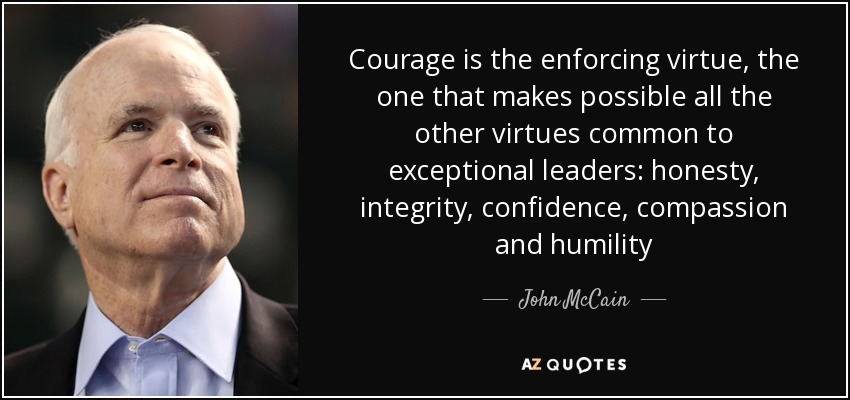
5 virtues of consequential leadership

https://www.fastcompany.com/90727010/how-ukranian-president-volodymyr-zelenskyy-exhibits-the-5-virtues-of-consequential-leadership

In recent years, I’ve written and spoken a lot about consequential leadership. History has presented us with far too many examples to share here: Abraham Lincoln, Ernest Shackleton, Rosa Parks, Amelia Earhart, and John Lewis are a few names that immediately come to mind.

As we watch Russia’s unprovoked invasion of Ukraine unfold night by night, attack by attack, and tweet by tweet, the gut-wrenching and heartbreaking scenes expose an unimaginable magnitude of inhumanity. At the same time, we’re witnessing an unforeseen spirit of resilience, patriotism, and heroism emerge that reveals the best of humanity.

No one personifies the consequential leadership we are observing more than Ukrainian President Volodymyr Zelenskyy. It has been said that a crisis doesn’t build character—it reveals it. The heroic response to this crucible has demanded much of Zelenskyy and his people. But it has revealed even more about the character of this unfamiliar leader and country than any of us ever expected.

As I reflect on this past week, there are five virtues of consequential leadership Zelenskyy and his brave comrades are illuminating for us we can learn from.

Conviction: Consequential leaders know—and honor—their purpose. They recognize their responsibility to use the talent, health, education, opportunities, and influence they are blessed with to solve big problems and do really hard things. And in rare circumstances—like Zelenskyy’s— they are called to do things no person should ever have to do. While most of us devote our lives to preparing to be the leader we want to be, in moments of consequence, we must become the leaders the world needs us to be.

Courage: Consequential leaders have the fearlessness to live their purpose—even under life-threatening conditions. It’s easy for us to talk about our convictions when times are good from the comfort and safety of our corporate suites and government offices. But how many of us and our political leaders would, or could, summon the primal valor we’re seeing Zelenskyy and his lieutenants model?

Composure: Consequential leaders thrive under fire and in times of great uncertainty. There is no blueprint for moments of consequence like the one Zelenskyy is facing. There is no playbook for responding to the unprovoked invasion of your country by a neighboring world superpower. However, leaders of consequence like Zelenskyy don’t panic. They stay calm, rational, and in control. They know that panic fuels fear and that composure catalyzes confidence.

Communication: Consequential leaders communicate frequently, authentically, and truthfully. They speak to our minds, move our hearts, and have the intuition to know when and how to deliver the hard truth as well as realistic hope. Consequential leaders like Zelenskyy are brutally blunt about the abundance of resources they are lacking, but they also remind us of the prosperity of blessings we have—things like family, friends, country, and faith.

Compassion: Finally, consequential leaders put serving others ahead of serving themselves. Zelenskyy and leaders like him put the public interest ahead of their self-interest. While most leaders measure their success in the world, consequential leaders measure their significance on the world. It is never too late for any of us to rethink how we gauge our leadership impact.

It is unclear how the battle over Ukraine will play out. But it is unambiguously clear this moment will redefine leadership for generations. As in all moments of great consequence, history will judge Zelenskyy and Putin, as well as other world leaders, by how they acted–and the consequences of their humanity and inhumanity.

As New York Times columnist David Brooks tweeted yesterday: “Would you be Zelenskyy? Would I? What a high and heroic standard that guy has set for us in the years ahead.”

Douglas MacArthur on True Leadership

douglasmacarthur #american #army #general #military #wwii #leadership  #confidence #integrity #decisions #courage #comp… | Leadership, Douglas  macarthur, Self help

Ruth Bader Ginsburg helped shape the modern era of women’s rights – even before she went on the Supreme Court

https://theconversation.com/ruth-bader-ginsburg-helped-shape-the-modern-era-of-womens-rights-even-before-she-went-on-the-supreme-court-95705?utm_medium=email&utm_campaign=Latest%20from%20The%20Conversation%20for%20September%2018%202020%20-%201736916802&utm_content=Latest%20from%20The%20Conversation%20for%20September%2018%202020%20-%201736916802+Version+A+CID_e457010c9229c8655a12000ef21183e1&utm_source=campaign_monitor_us&utm_term=Ruth%20Bader%20Ginsburg%20helped%20shape%20the%20modern%20era%20of%20womens%20rights%20%20even%20before%20she%20went%20on%20the%20Supreme%20Court

Ruth Bader Ginsburg helped shape modern era of women's rights

Justice Ruth Bader Ginsburg died on Friday, the Supreme Court announced.

Chief Justice John Roberts said in a statement that “Our nation has lost a jurist of historic stature.”

Even before her appointment, she had reshaped American law. When he nominated Ginsburg to the Supreme Court, President Bill Clinton compared her legal work on behalf of women to the epochal work of Thurgood Marshall on behalf of African-Americans.

The comparison was entirely appropriate: As Marshall oversaw the legal strategy that culminated in Brown v. Board of Education, the 1954 case that outlawed segregated schools, Ginsburg coordinated a similar effort against sex discrimination.

Decades before she joined the court, Ginsburg’s work as an attorney in the 1970s fundamentally changed the Supreme Court’s approach to women’s rights, and the modern skepticism about sex-based policies stems in no small way from her lawyering. Ginsburg’s work helped to change the way we all think about women – and men, for that matter.

I’m a legal scholar who studies social reform movements and I served as a law clerk to Ginsburg when she was an appeals court judge. In my opinion – as remarkable as Marshall’s work on behalf of African-Americans was – in some ways Ginsburg faced more daunting prospects when she started.

Starting at zero

When Marshall began challenging segregation in the 1930s, the Supreme Court had rejected some forms of racial discrimination even though it had upheld segregation.

When Ginsburg started her work in the 1960s, the Supreme Court had never invalidated any type of sex-based rule. Worse, it had rejected every challenge to laws that treated women worse than men.

For instance, in 1873, the court allowed Illinois authorities to ban Myra Bradwell from becoming a lawyer because she was a woman. Justice Joseph P. Bradley, widely viewed as a progressive, wrote that women were too fragile to be lawyers: “The paramount destiny and mission of woman are to fulfil the noble and benign offices of wife and mother. This is the law of the Creator.”

And in 1908, the court upheld an Oregon law that limited the number of hours that women – but not men – could work. The opinion relied heavily on a famous brief submitted by Louis Brandeis to support the notion that women needed protection to avoid harming their reproductive function.

As late as 1961, the court upheld a Florida law that for all practical purposes kept women from serving on juries because they were “the center of the home and family life” and therefore need not incur the burden of jury service.

Challenging paternalistic notions

Ginsburg followed Marshall’s approach to promote women’s rights – despite some important differences between segregation and gender discrimination.

Segregation rested on the racist notion that Black people were less than fully human and deserved to be treated like animals. Gender discrimination reflected paternalistic notions of female frailty. Those notions placed women on a pedestal – but also denied them opportunities.

Either way, though, Black Americans and women got the short end of the stick.

Ginsburg started with a seemingly inconsequential case. Reed v. Reed challenged an Idaho law requiring probate courts to appoint men to administer estates, even if there were a qualified woman who could perform that task.

Sally and Cecil Reed, the long-divorced parents of a teenage son who committed suicide while in his father’s custody, both applied to administer the boy’s tiny estate.

The probate judge appointed the father as required by state law. Sally Reed appealed the case all the way to the Supreme Court.

Ginsburg did not argue the case, but wrote the brief that persuaded a unanimous court in 1971 to invalidate the state’s preference for males. As the court’s decision stated, that preference was “the very kind of arbitrary legislative choice forbidden by the Equal Protection Clause of the 14th Amendment.”

Two years later, Ginsburg won in her first appearance before the Supreme Court. She appeared on behalf of Air Force Lt. Sharron Frontiero. Frontiero was required by federal law to prove that her husband, Joseph, was dependent on her for at least half his economic support in order to qualify for housing, medical and dental benefits.

If Joseph Frontiero had been the soldier, the couple would have automatically qualified for those benefits. Ginsburg argued that sex-based classifications such as the one Sharron Frontiero challenged should be treated the same as the now-discredited race-based policies.

By an 8–1 vote, the court in Frontiero v. Richardson agreed that this sex-based rule was unconstitutional. But the justices could not agree on the legal test to use for evaluating the constitutionality of sex-based policies.

Strategy: Represent men

In 1974, Ginsburg suffered her only loss in the Supreme Court, in a case that she entered at the last minute.

Mel Kahn, a Florida widower, asked for the property tax exemption that state law allowed only to widows. The Florida courts ruled against him.

Ginsburg, working with the national ACLU, stepped in after the local affiliate brought the case to the Supreme Court. But a closely divided court upheld the exemption as compensation for women who had suffered economic discrimination over the years.

Despite the unfavorable result, the Kahn case showed an important aspect of Ginsburg’s approach: her willingness to work on behalf of men challenging gender discrimination. She reasoned that rigid attitudes about sex roles could harm everyone and that the all-male Supreme Court might more easily get the point in cases involving male plaintiffs.

She turned out to be correct, just not in the Kahn case.

Ginsburg represented widower Stephen Wiesenfeld in challenging a Social Security Act provision that provided parental benefits only to widows with minor children.

Wiesenfeld’s wife had died in childbirth, so he was denied benefits even though he faced all of the challenges of single parenthood that a mother would have faced. The Supreme Court gave Wiesenfeld and Ginsburg a win in 1975, unanimously ruling that sex-based distinction unconstitutional.

And two years later, Ginsburg successfully represented Leon Goldfarb in his challenge to another sex-based provision of the Social Security Act: Widows automatically received survivor’s benefits on the death of their husbands. But widowers could receive such benefits only if the men could prove that they were financially dependent on their wives’ earnings.

Ginsburg also wrote an influential brief in Craig v. Boren, the 1976 case that established the current standard for evaluating the constitutionality of sex-based laws.

Like Wiesenfeld and Goldfarb, the challengers in the Craig case were men. Their claim seemed trivial: They objected to an Oklahoma law that allowed women to buy low-alcohol beer at age 18 but required men to be 21 to buy the same product.

But this deceptively simple case illustrated the vices of sex stereotypes: Aggressive men (and boys) drink and drive, women (and girls) are demure passengers. And those stereotypes affected everyone’s behavior, including the enforcement decisions of police officers.

Under the standard delineated by the justices in the Boren case, such a law can be justified only if it is substantially related to an important governmental interest.

Among the few laws that satisfied this test was a California law that punished sex with an underage female but not with an underage male as a way to reduce the risk of teen pregnancy.

These are only some of the Supreme Court cases in which Ginsburg played a prominent part as a lawyer. She handled many lower-court cases as well. She had plenty of help along the way, but everyone recognized her as the key strategist.

In the century before Ginsburg won the Reed case, the Supreme Court never met a gender classification that it didn’t like. Since then, sex-based policies usually have been struck down.

I believe President Clinton was absolutely right in comparing Ruth Bader Ginsburg’s efforts to those of Thurgood Marshall, and in appointing her to the Supreme Court.