


Cartoon – It will go away Magically
https://theintercept.com/2020/12/01/covid-health-officials-death-threats/

As people across the country refuse mask mandates, public health officials are fighting an uphill battle with little government support.
DR. MEGAN SRINIVAS was attending a virtual American Medical Association discussion around the “Mask Up” initiative one evening in July when she began to receive frantic messages from her parents begging her to confirm to them that she was all right.
“Somebody obtained my father’s unlisted cell phone number and spoofed him, making it look like it was a phone call coming from my phone,” she told Des Moines’s Business Record for a November profile. “Essentially they insinuated that they had harmed me and were on the way to their house to harm them.”
This malicious hoax, made possible by doxxing Srinivas’s private information, was only the most severe instance of abuse and harassment she had endured since she became a more visible proponent of mask-wearing and other mitigation measures at the beginning of Covid-19 pandemic. A Harvard-educated infectious disease physician and public health researcher on the faculty of the University of North Carolina, Srinivas currently lives and works in Fort Dodge, her hometown of 24,000 situated in the agricultural heart of northwest Iowa.
Srinivas is not just a national delegate for the AMA, but a prominent face of Covid-19 spread prevention locally, appearing on panels and local news segments. Fort Dodge itself is situated deep within Iowa’s 4th Congressional District, a staunchly conservative area that simply replaced white supremacist Rep. Steve King with a more palatable Republican.Join Our NewsletterOriginal reporting. Fearless journalism. Delivered to you.I’m in
Basic health measures promoted by Srinivas in Iowa since the beginning of the pandemic have been politicized along the same fault lines as they have across the rest of the country. Some remain in the middle ground, indifferent to health guidelines out deep attachment to “normal” pre-pandemic life. Others have either embraced spread-prevention strategies like mask-wearing or refused to acknowledge the existence of the virus at all. In a red state like Iowa, an eager audience for President Donald Trump’s misinformation about the dangers of the coronavirus has made the latter far more common, which has made Srinivas’s job more difficult and more dangerous.

“It was startling at first, the volume at which [these threats were] happening,” Srinivas told The Intercept. “I know people get very heated about politics and the issues that people advocate for in general, but especially on something like this where it’s merely trying to provide a public service, a way people can protect themselves and their loved ones and community based on medical objective facts. That’s surprising that this is the reaction people have.”
“I have trolls like other people, I’ve been doxxed, I’ve gotten death threats,” she said. “When you say anything people don’t want to hear, there will be trolls and there will be people who will try to argue against you. The death threats were something I wish I could say were new, but when I’ve done things like this in the past, I’ve had people say not-so-nice things in the past when I’ve had advocacy issues.”An untenable pressure has been placed on public health workers thrust in a politicized health crisis — and that pressure only appears to be worsening.
At the same time, as an Iowa native, Srinivas has been able to gain some trust through tapping into local networks like Facebook. Though she has encountered a great deal of anger, she’s also seen success in the form of a son who’s managed to convince his diabetic father, a priest, to hold off on reopening his church thanks to her advice, and through someone who’s been allowed to work from home based on recommendations Srinivas made on a panel.
“At this point, almost everyone knows at least one person that’s been infected. Unfortunately, it leads to a higher proportion of the population who knows someone who’s not just been infected, but who’s had serious ramification driven by the disease,” Srinivas said. “So it’s come to the point where, as people are experiencing the impact of the disease closer to home, they’re starting to understand the true impact and starting to be willing to listen to recommendations.”
Without cooperation and support at the state level, however, what Srinivas can accomplish on her own is limited. Even as the number of Covid-19 cases grew and put an increasing strain on Iowa’s hospitals over the past few months, it took until after the November election for Iowa’s Republican Gov. Kim Reynolds to tighten Iowa’s mask guidance. And board members in Webster County, where Srinivas lives, only admitted in November that she had been right to advocate for a mask mandate all along. Though Trump lost the election nationally, he won Iowa by a considerable margin, which Reynolds has claimed as a vindication of her “open for business” attitude and has continued downplaying the pandemic’s severity.
“The issue with her messaging is it creates a leader in the state that should be trusted who’s giving out misinformation,” Srinivas said. “Naturally, people who don’t necessarily realize that this is misinformation because it’s not their area of expertise want to follow what their leader is saying. That’s a huge issue under the entire public health world right now, where we have a governor that is spreading falsehood like this.”
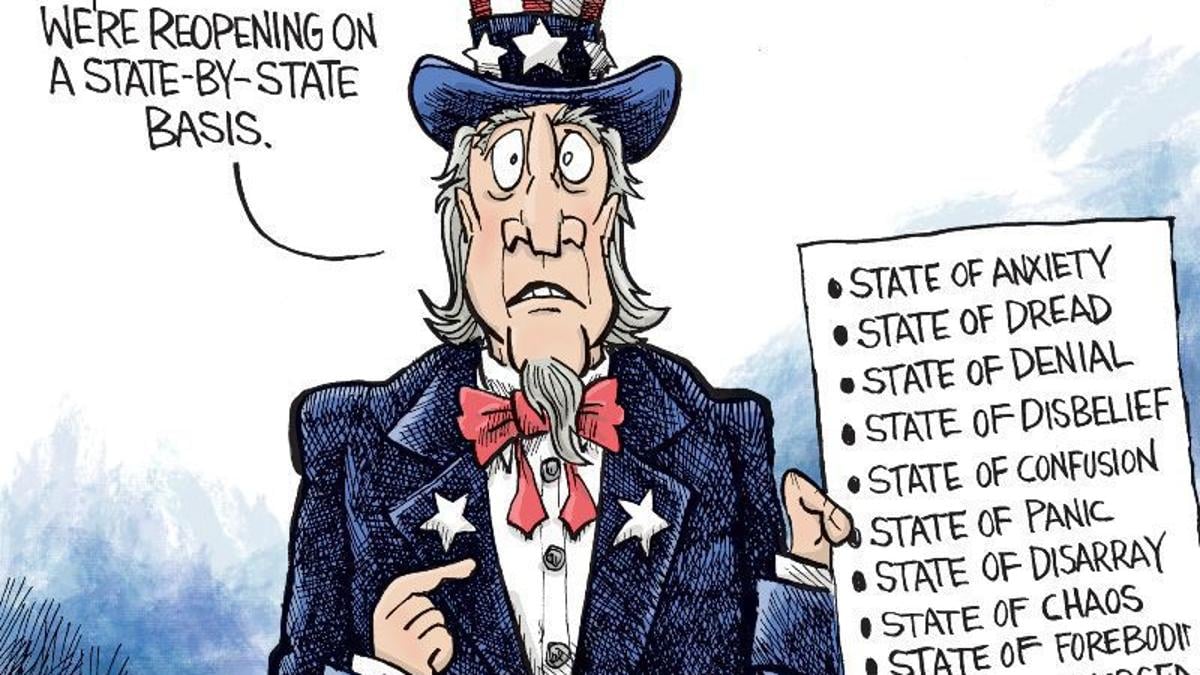
The embattled situation in which Srinivas has found herself is the new normal for public health officials attempting to stem the tide of a deadly viral outbreak, particularly in the middle of country where the pandemic winter is already deepening. Advocating for simple, potentially lifesaving measures has become a politically significant act, working to inform the public means navigating conflicting regulatory bodies, and doing your job means making yourself publicly vulnerable to an endless stream of vitriol and even death threats. The result across the board is that an untenable pressure has been placed on public health workers thrust in a politicized health crisis — and that pressure only appears to be worsening.
DESPITE THE FACT that Wisconsin’s stay-at-home order was nullified by the state’s Supreme Court in May, the Dane County Health Department has used its ability to exercise local control in an attempt to install mitigation measures that go beyond those statewide. By issuing a mask mandate ahead of a statewide rule and advocating for education and compliance efforts, the department currently considers itself in a good place regarding health guideline compliance.
These actions have drawn a lot of ire from those unhappy with the regulations, however. According to a communications representative for the department, anti-maskers have held a protest on a health officer’s front lawn, a staff member was “verbally assaulted” in a gas station parking lot (an incident that prompted the department to advise its employees to only wear official clothing to testing sites), and employees performing compliance checks on businesses have been told to never perform these checks alone after “instances of business owners get a little too close for comfort.” They’ve also received a number of emails accusing health workers of being “Nazis,” “liars,” “political pawns,” and purely “evil.”

In Kansas’s Sedgwick County, Wichita — the largest city in the state — has been considering new lockdown measures after a November surge in coronavirus cases has threatened to overwhelm its hospitals. Though Democratic Gov. Laura Kelly attempted to instate a mask mandate in July, 90 of the state’s 105 counties rejected it, including Sedgwick, though the health board issued its own directive and Wichita had installed its own at the city level.
Now, with cases surging again, just as Srinivas saw the number of believers rising as more got sick, counties in Kansas that previously resisted mask mandates are changing their tune after Kelly announced a new mandate. But Sedgwick County health officials see an intractable line in the sand when it comes to who’s on board with mitigation measures and are focused more on what those who are already on board need to be told.
“It seems like a lot of the naysayers are naysayers and the supporters are supporters,” Adrienne Byrne, director of Sedgwick County Health Department, said. “There’s some people that are just kind of whatever about it. We just remind people to wear masks, it does make a difference. As we’ve gone on, studies have shown that it works.”
“I think it’s important to acknowledge to people that it is tiring, to acknowledge and validate their experience that people want to be over this stuff, but it’s important to reinforce that we are in a marathon,” she said. “In the beginning, we all wanted to hear that we would reach a magical date and we would be done with this stuff.”
Sedgwick has managed the streams of angry messages but has seen her colleagues in rural counties endure far worse, including death threats. She knows of one public health worker in Kansas who quit after being threatened, and others who have cited the strain of the politicized pandemic as their reason for leaving the public health profession.
“We’re certainly losing some health officials, there’s no question about that,” said Georges Benjamin, president of the American Public Health Association. “In the long arc of history, public health officials are pretty resilient. And while it absolutely will dissuade people from entering the field, we all need to do a better job of equipping them for these issues in the future.”
Benjamin would like to see institutional and public support for public health workers resemble that given to police or firefighters, government professionals who are well-funded, believed to be essential to the functioning of society, and wielding a certain level of authority.
“For elected officials who are charged with protecting the officials and their public officials, our message to officials then is that they should protect their employees,” Benjamin said.

IN RURAL NEBRASKA, the situation has presented even more complex challenges to public health workers. Outside of Omaha, the rural expanse is ruled by a deeply entrenched conservatism and, like Iowa’s governor Reynolds, Nebraska’s Republican Gov. Pete Ricketts has resisted a mask mandate. The Two Rivers Public Health Department, which oversees a wide swath of central Nebraska and its biggest population center, Kearney (population 33,000), is a popular pit stop along the Interstate 80 travel corridor and home to a University of Nebraska outpost.
Prior to the pandemic, Nebraska’s decentralized public health system had seen significant atrophy, according to Two Rivers Health Director Jeremy Eschliman, and was wholly unprepared for this level of public health event. There were few epidemiologists to be found outside of Omaha, though the department was able to hire one earlier this year. It also became clear early on that, despite the department’s traditionally strong ties with local media, messaging around the pandemic would be an uphill battle to get people to adapt new habits, especially when the president was telling them otherwise.
“There was one clear instance I remember when I caught a bit of heckling when I said, ‘Hey, this is serious. We’re going to see significant death is what the models show at this point in time,’” Eschliman said. “[The station said], ‘Are you serious? That seems way out in left field’ or something to that effect. That station had a very conservative following and that was the information they received.”
Eschliman has taken a realistic stance to promoting mask-wearing, thinking of it as akin to smoking. (“You could walk up to 10 people and try to tell them to quit smoking and you’re not going to get all 10 to quit,” he said. “Fun fact: You’re not going to get more than maybe one to even quit for a small period of time.”) Over the summer, he traveled just over Nebraska’s southern border into Colorado, where he was struck by the night-and-day difference between his neighbor state’s adoption of mask-wearing and Nebraskan indifference to it, each following the directives of their state leaders.“It’s become very difficult to do the right thing when you don’t have the political support to do so.”
Home rule is the law of the land in Nebraska, and there’s been strong rural opposition to mask mandates, despite more liberal population centers like Lincoln and Omaha installing their own. It’s taken Kearney until November 30 to finally install its own after outbreaks at the college and in nursing homes. Public health care workers have also been left on their own to make controversial decisions that have caused political friction. In May, the local health board voted not to share public health information with cities and first responders due to what they decided were issues of information confidentiality.
“Mayors, county board members, and police chiefs ran a sort of a smear campaign against me and the organization,” Eschliman said. “So when we talk about resiliency, that’s what we’re dealing with. It’s become very difficult to do the right thing when you don’t have the political support to do so.”
Even having a Democratic governor doesn’t necessarily ensure that support. In Hill County, a sparsely populated region of Montana’s “Hi-Line” country along the Canadian border, Sanitarian Clay Vincent supports Gov. Steve Bullock’s mask mandate, but doesn’t understand why it exists if it’s not enforceable. The way he sees it, if laws are made, they should create consequences for those who refuse to follow them.
But Vincent and the Hill County Health Board also saw what happened elsewhere in the state, in Flathead County, where lawsuits were brought against five businesses who refused to follow Bullock’s mask mandate. After a judge threw the lawsuit out, those businesses launched a countersuit against the state, alleging damages. In order to bring businesses in Hill County into compliance with the mask mandate, the health board is considering slapping them with signs identifying them as health risks or, barring that, simply asking them to explain their refusal to comply.
“These are community members. Everybody knows everybody and [the board isn’t] trying to make more of a division between those who are and those who are not, but I come back to the fact that public laws are put there for the main reason to protect the public from infectious diseases,” Vincent said. “You have to support the laws, or people sooner or later don’t give any credence to the public health in general.”
Regardless of whether they can push the Hill County businesses into compliance, the political winds are already changing in Montana. Republican Gov.-elect Greg Gianforte will take power in January and likely bring the party’s aversion to mask mandates with him. President-elect Joe Biden will take power at the same time, and even if he attempts to install a nationwide mask mandate, it will likely be difficult to enforce and may end up meaning little out in Montana. It will also likely exacerbate ongoing tensions in communities throughout the state. The building that houses Hill County Health Department in the town of Havre was already closed this summer out of fear that a local group opposed to the mask mandate and nurses doing contract tracing are routinely threatened in the course doing their jobs.
Regardless, Vincent is determined to encourage and enforce public health guidelines as much as it’s in his power to do so, no matter the backlash. He sees protecting the public as no different than preventing any other kind of disease. “I don’t care if it’s hepatitis or HIV or tuberculosis or any of these things,” he said. “You’re expected to deal with those and make sure it’s not affecting the public. Otherwise you have a disaster.”

At a rural health system in Wisconsin, officials and medical experts began drawing up protocols for the once unthinkable practice of deciding which patients should get care. The chief quality officer of a major New York hospital network double- and triple-checked his system’s stockpile of emergency equipment, grimly recalling the last time he had to count how many ventilators he had left. In Arizona, a battle-weary doctor watched in horror as people flooded airports and flocked to stores for Black Friday sales, knowing it was only a matter of time before some of them wound up in his emergency room.
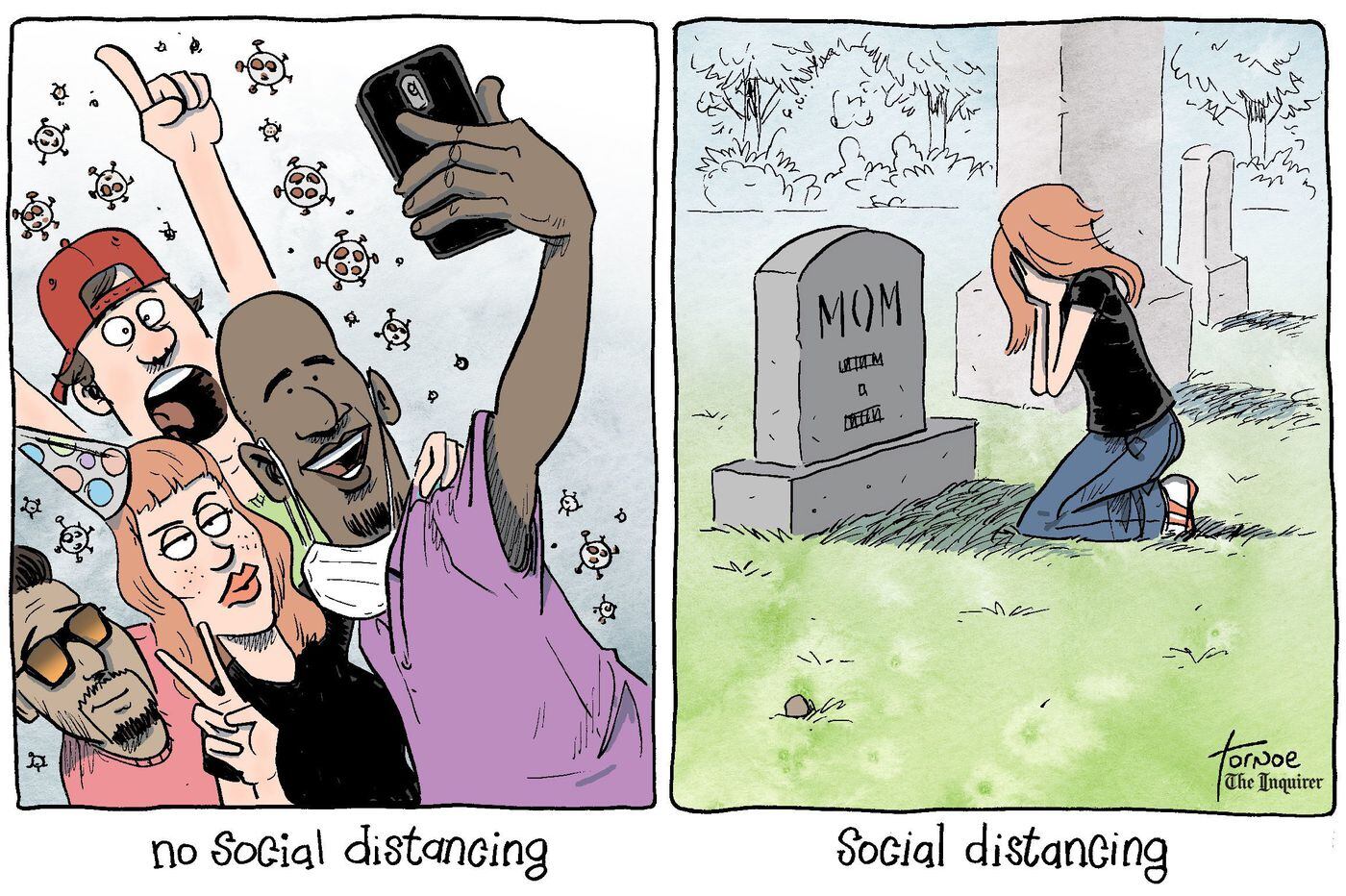
Days after millions of Americans ignored health guidance to avoid travel and large Thanksgiving gatherings, it’s still too soon to tell how many people became infected with the coronavirus over the course of the holiday weekend. But as travelers head home to communities already hit hard by the disease, hospitals and health officials across the country are bracing for what scientist Dave O’Connor called “a surge on top of a surge.”
“It is painful to watch,” said O’Connor, a virologist at the University of Wisconsin at Madison. “Like seeing two trains in the distance and knowing they’re about to crash, but you can’t do anything to stop it.”
“Because of the decisions and rationalizations people made to celebrate,” the scientist added, “we’re in for a very dark December.”
The holiday, which is typically one of the busiest travel periods of the year, fell at a particularly dire time in the pandemic. Some 4 million Americans have been diagnosed with the coronavirus in November — twice the previous record, which was set last month. More than 2,000 people are dying every day. Despite that, over a million people passed through U.S. airports the day before Thanksgiving — the highest number of travelers seen since the start of the outbreak.
Many states did not report new case counts over the holiday, and it typically takes about a week for official records to catch up after reporting delays, said Caitlin Rivers, an epidemiologist at the Johns Hopkins Center for Health Security.
But in two to three weeks, she said, “I fully expect on a national level we will see those trends continue of new highs in case counts and hospitalizations and deaths.”
The nation has already notched several bleak milestones over the holiday weekend. On Thanksgiving Day, hospitalizations in the United States exceeded 90,000 people for the first time. The following day, the country hit 13 million cases. At least nine states have seen 1 in every 1,000 residents die of the coronavirus.
Mark Jarret, the chief quality officer for New York’s Northwell Health system, said he understood that many people are tiring of constant vigilance after nine months of isolation and Zoom gatherings and waving at people from six feet away.
“But we’re so close to getting some control,” he said, noting that federal officials are on the verge of authorizing one or more vaccines against the virus next month. “This is not the time to let up. This is the time to put on the best defense we can to prevent further spread, further death.”
Officials urged people who traveled or spent time with people outside their household to stay at home for 14 days to avoid further spread of the virus. Some jurisdictions are moving toward lockdown measures not seen since the spring. Los Angeles County on Friday issued a three-week “safer at home” order, limiting business capacity and prohibiting gatherings other than religious services and protests.
Meanwhile, the December holidays are looming.
“Hopefully people will try to minimize their risks around Christmas, especially if there’s data that show Thanksgiving was really harmful,” O’Connor said.
To Cleavon Gilman, a Navy veteran and emergency room doctor in Yuma, Ariz., the wave of holiday travel was “a slap in the face.”
“It’s as if there’s not a pandemic happening,” he said. “We’re in a war right now, and half the country isn’t on board.”
On Friday, members of the University of Arizona coronavirus modeling team issued an urgent warning to state health officials, projecting that the state will exceed ICU capacity by the beginning of December.
“If action is not immediately taken, then it risks a catastrophe on a scale of the worst natural disaster the state has ever experienced,” the team wrote in a letter to Steven Bailey, chief of the Bureau of Public Health Statistics. “It would be akin to facing a major forest fire without evacuation orders.”
Arizona has no statewide mask mandate, and businesses in many parts of the state, including indoor dining at restaurants, remain open.
Gilman said the intensive care unit at his hospital is full and there’s nowhere to transfer new patients. When he’s home, his mind echoes with the sound of people gasping for breath. He and his colleagues are exhausted, and with cases spiking across the country, he worries there is no way they can handle the surge that will probably follow Thanksgiving celebrations.
In La Crosse, Wis., Gundersen Health System chief executive Scott Rathgaber echoed that fear. “We’ve had to tell our hard-working staff, ‘There’s no one out there to come rescue us,’” he said.
Like many in his college town, Rathgaber is anxious about what will happen when students who spent the holiday with their families return to campus. Though the University of Wisconsin and other schools shifted classes online for the remainder of the semester, he anticipates students who have jobs and apartments in La Crosse will return to town.
“We had trouble the first time the students came back,” Rathgaber said, noting that the start of college classes in September preceded outbreaks in nursing homes and a spike in deaths in La Crosse County. “I will continue to implore, to beg people to take this seriously.”
Gundersen has already more than tripled the size of the covid-19 ward at its main hospital, and even before this week it was almost entirely full. Physicians from the system’s rural clinics have been reassigned to La Crosse to help in the ICU. Staff who may have been exposed to the virus are being called back before completing their 14-day quarantine. And Rathgaber now attends regular meetings with ethicists and end-of-life caregivers to figure out Gundersen’s triage protocol if the hospital becomes overwhelmed.
“We’re not at a breaking point, but we are getting there,” Rathgaber said. “I’m concerned about what the next two weeks will bring.”




 HENRY KOTULA