Home of the Brave

Image may contain: 8 peopleImage may contain: 8 people

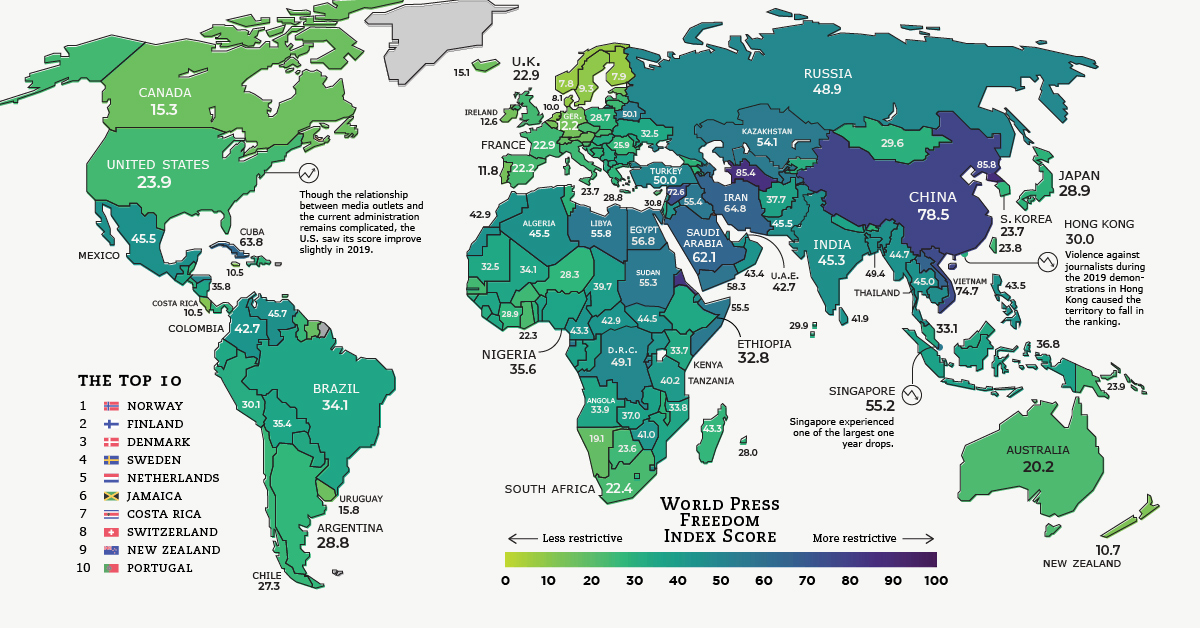
Mapped: The State of Press Freedom Around the World

Mapped: The State of Press Freedom Around the World

Mapped: The State of Press Freedom Around the World - Visual ...

Mapped: The State of Press Freedom Around the World

View a more detailed version of the above map by clicking here

In many Western countries, it’s easy to take press freedom for granted.

Instances of fake news, clickbait, and hyper-partisan reporting are points of consternation in the modern media landscape, and can sometimes overshadow the greater good that unrestricted journalism provides to society.

Of course, the ability to do that important work can vary significantly around the world. Being an investigative journalist in Sweden comes with a very different set of circumstances and considerations than doing the same thing in a country such as Saudi Arabia or Venezuela.

Today’s map highlights the results of the 2020 Global Press Freedom Index, produced by Reporters Without Borders. The report looks at press freedom in 180 countries and territories.

A Profession Not Without Its Risks

Today, nearly 75% of countries are in categories that the report describes as problematic, difficult, and very serious.

While these negative forces often come in the form of censorship and intimidation, journalism can be a risky profession in some of the more restrictive countries. One example is Mexico, where nearly 60 journalists were killed as a direct result of their reporting over the last decade.

journalists killed around the world

There is good news though: the number of journalists killed last year was the lowest since the report began in 2002.

Even better, press freedom scores increased around the world in the 2020 report.

Press Freedom: The Good, The Bad, The Ugly

Here are the scores for all 180 countries and territories covered in the report, sorted by 2020 ranking and score:

Which countries stood out in this year’s edition of the press freedom rankings?

Norway: Nordic Countries have topped the Press Freedom Index since its inception, and Norway (Rank: #1) in particular is an example for the world. Despite a very free media environment, the government recently mandated a commission to conduct a comprehensive review of the conditions for freedom of speech. Members will consider measures to promote the broadest possible participation in the public debate, and means to hamper the spread of fake news and hate speech.

Malaysia: A new government ushered in a less restrictive era in Malaysia in 2018. Journalists and media outlets that had been blacklisted were able to resume working, and anti-fake news laws that were viewed as problematic were repealed. As a result, Malaysia’s index score has improved by 15 points in the past two years. This is in sharp contrast to neighbor, Singapore, which is ranked 158th out of 180 countries.

Ethiopia: When Abiy Ahmed Ali took power in Africa’s second most populous country in 2018, his government restored access to over 200 news websites and blogs that had been previously blocked. As well, many detained journalists and bloggers were released as the chill over the country’s highly restrictive media environment began to thaw. As a result, Ethiopia (#99) jumped up eleven spots in the Press Freedom Index in 2020.

The Middle East: Though the situation in this region has begun to stabilize somewhat, restrictions still remain – even in relatively safe and stable countries. Both Saudi Arabia (#170) and Egypt (#166) have imprisoned a number of journalists in recent years, and the former is still dealing with the reputational fallout from the assassination of Saudi dissident and Washington Post columnist, Jamal Khashoggi.

China: Sitting near the bottom of the list is China (#176). More than 100 journalists and bloggers are currently detained as the country maintains a tight grip over the press – particularly as COVID-19 began to spread. Earlier this year, the Chinese government also expelled over a dozen journalists representing U.S. publications.

2020: A Pivotal Year for the Press

As the world grapples with a deadly pandemic, a global economic shutdown, and a crucial election year, the media could find itself in the spotlight more than in previous years.

How the stories of 2020 are told will influence our collective future – and how regimes choose to treat journalists under this atypical backdrop will tell us a lot about press freedom going forward.


Truth dies in silence. Sadly, so do people.

https://www.kevinmd.com/blog/2020/04/truth-dies-in-silence-sadly-so-do-people.html
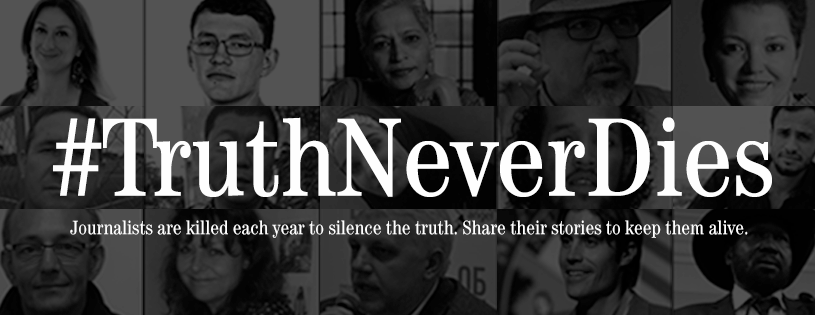
UNESCO launches “Truth Never Dies” campaign to tackle crimes ...

I have been writing columns for physicians for twenty years.  And year after year, I have had physicians say this: “I’m glad you said what you did. If I said it, I’d be fired.” There are variations on the theme, but they’re much the same.  Twenty years, and far more than 20 years, during which the alleged health care leaders in America have been routinely muzzled because they aren’t supposed to speak the truth.  Open discussions shut down because they might embarrass someone or upset an administrator. Because it might, heaven forbid, shine a light on a genuine problem.

Some years ago, as the mental health crisis was gathering steam across the emergency departments of the land, I was contacted by a news show in France.  The producers wanted to come to South Carolina and follow me on some shifts in my ED. They wanted to see how mental health was working out here. “We have socialized care, but mental health is also a huge problem in our country,” the producer said.

I dutifully, and appropriately, went to administration. “No, we can’t do that,” I was informed. I was given this explanation when everyone knew the mental health system was at the breaking point: “What if they uncover a problem?” Here was a chance for publicity, for potential grant money or to demonstrate that a political solution was in order.  How dare we let in fresh air? How dare we suggest that things were not perfect?

The same thing is happening in the midst of the pandemic.  Physicians, nurses, and other assorted health care professionals are being threatened for wearing masks.  Administrators say, “They make the patients nervous.” Also likely, administrators have realized they don’t have adequate equipment.  Facilities and systems with enormous budgets caught unprepared in a pandemic.

I see the stories of these professionals as I follow online forums.  Physicians, nurses, and others, threatened with firing because they dared to speak out on the issue of PPE (personal protective equipment).

Like police officers without ballistic vests, these physicians don’t want to go into the rooms of COVID-19 patients without the masks and respirators, gloves, gowns, and face shields that will keep them safe. The equipment that will allow them to return home to their loved ones and prevent them from infecting their families.  This isn’t a good look.  A hospital that refuses to acknowledge the concerns and safety of its professionals is a hospital that ultimately doesn’t deserve them.

The same veil of silence pervades dialogue on the treatment of coronavirus.  When I follow discussions, I see a lot of shaming. “There just isn’t enough evidence to try hydroxychloroquine, Zithromax, convalescent plasma, an untried vaccine, HIV drugs, etc.” Those who suggest we might try are considered reckless or ignorant.  As the battle rages and lives are lost, innovation and risk are viewed with disdain.  And our medical establishment is locked into the paradigm of double-blinded, placebo-controlled studies involving tens of thousands of people and lasting years. Here’s a view of the same from the U.K. Unfortunately, to suggest that we may need to react faster is only met with ridicule, and often tied to political views instead of expediency. Worse,  it ignores the deep, fundamental need to offer hope, any hope, to hundreds of millions of professionals and citizens who are living in fear.

There is a tragic irony here; a painful coincidence.  Physicians silenced. Let’s see.  Where did we see that sort of thing resulting in a worldwide pandemic?  Does China come to mind? The Chinese Communist Party threatened (and who knows what else) physicians who dared to speak out about coronavirus, even when they knew its danger.  Even when they knew how easily and widely it spread.

They continued to soft-peddle numbers about total cases and case fatality.  The party continued to allow travel to and from China long after the problem was known. They even suggested that Italians have a “hug a Chinese person” campaign to combat alleged racism; a charge delightfully accepted and repeated by gullible Western journalists in pursuit of a narrative.

Truth dies in silence.  Sadly, so do people.  And certainly when we tell dedicated health care professionals to keep their mouths shut when they have identified problems, offered solutions and simply asked for help.  Whether it’s a private business, a totalitarian government, or anything in between, we should insist that the truth be spoken; freely and without fear of punishment.

Because, for the foreseeable future, lives will depend on it.


White House reverses position after blocking health officials from appearing on CNN

https://www.cnn.com/2020/04/09/media/pence-office-tv-bookings-coronavirus/index.html?utm_medium=social&utm_content=2020-04-09T18%3A50%3A06&utm_source=twCNN&utm_term=link&fbclid=IwAR3vThr8ecjeeG6VqkgR6s1blEbkkOK6ocqYTUof8cVVQKMByXoKMhBXfuw

White House reverses position after blocking health officials from ...

Vice President Mike Pence’s office reversed course on Thursday afternoon, after declining for days to allow the nation’s top health officials to appear on CNN and discuss the coronavirus pandemic, in what was an attempt to pressure the network into carrying the White House’s lengthy daily briefings in full.

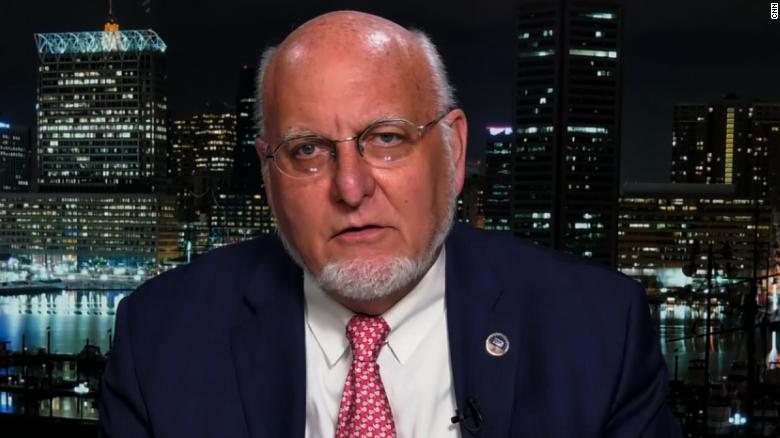
After this story was published, Pence’s office allowed for the booking of Centers for Disease Control and Prevention Director Dr. Robert Redfield for CNN’s Thursday night coronavirus town hall. Dr. Anthony Fauci was also booked for Friday on “New Day.”
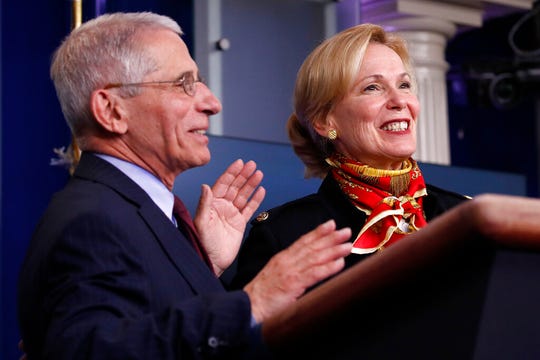
Previously, Pence’s office, which is responsible for booking the officials on networks during the pandemic, said it would only allow experts such as Fauci or Dr. Deborah Birx to appear on CNN if the network televised the portion of the White House briefings that includes the vice president and other coronavirus task force members.
CNN often only broadcasts President Donald Trump’s question and answer session, which sometimes includes the health care officials, live on-air.
After Trump leaves the podium, CNN frequently cuts out of the White House briefing to discuss and fact-check what the President has said. A CNN executive said that the network usually returns to such programming because of the extensive length of the full briefing that includes Pence, which can run in excess of two hours.
CNN did, however, air the vice president’s portion of the briefing Wednesday night.
Regardless, Pence’s office for several days declined to make the nation’s top health care officials available to CNN for the last seven days.
“When you guys cover the briefings with the health officials then you can expect them back on your air,” a Pence spokesperson told CNN Thursday morning.
Fauci, Birx, FDA Commissioner Stephen Hahn and Surgeon General Jerome Adams have all appeared on NBC, CBS, ABC and Fox during the last week, despite the fact that the broadcast networks have generally not covered the briefings that have included the vice president and health officials.
But the Vice President’s office had blocked all CNN appearances since last Thursday night.
Fauci appeared on the last five weekly CNN Town Halls, with Anderson Cooper and Dr. Sanjay Gupta. Until this story was published, Vice President’s office has refused to make him, or anyone, available for Thursday’s town hall.
The White House has made two non health care officials available to CNN in the last week. Secretary of Defense Mark Esper appeared on “State of the Union” on Sunday and Peter Navarro appeared on Anderson Cooper’s show on Friday and “New Day” on Monday.
Trump has declined CNN’s repeated requests for an interview, instead appearing only on Fox News for softball interviews multiple times during the national emergency.
A CNN spokesperson declined to comment for this story.


Pence Blocks Fauci, Birx from Appearing on CNN after Network Stops Airing Full White House Coronavirus Briefings

https://news.yahoo.com/pence-blocks-fauci-birx-appearing-163022678.html

Anthony Fauci and Deborah Birx are diving into social media to ...

Vice President Mike Pence has blocked Drs. Anthony Fauci and Deborah Birx, as well as other top U.S. health officials, from appearing on CNN following the network’s decision to not air the White House coronavirus press briefings in full.

“When you guys cover the briefings with the health officials then you can expect them back on your air,” a spokesman for the vice president told CNN.

Trump and the White House Coronavirus Task Force, led by Pence, have been giving daily briefings to the press for several weeks after rising numbers of Americans have been infected. A CNN executive said that the network has sometimes cut away from the briefings after Trump speaks, and turns to a panel to fact-check the president. However, the network usually broadcasts only the president’s question-and-answer session.

Fauci and Birx regularly appear at the briefings to give updates on the status of the coronavirus epidemic within the U.S. Fauci has also appeared on CNN virtual townhalls on the coronavirus for the past five weeks, but will not be present this Thursday.

The New York Times, another outlet that has been a target of the Trump administration’s ire, stopped airing the briefings on its website entirely.

“We stopped doing that because they were like campaign rallies,” Elisabeth Bumiller, the paper’s Washington bureau chief, told the Washington Post. “The health experts often have interesting information, so we’re very interested in that, but the president himself often does not.”