The Case for the Public Option Over Medicare for All

https://hbr.org/2019/10/the-case-for-the-public-option-over-medicare-for-all?utm_source=The+Fiscal+Times&utm_campaign=27ee43ca78-EMAIL_CAMPAIGN_2019_10_16_09_52&utm_medium=email&utm_term=0_714147a9cf-27ee43ca78-390702969

How can the United States better control its health care costs and quality and still achieve universal coverage? The strongest choice is not Medicare for All, which would eliminate private insurance; it’s the public option, which would allow people to choose from Medicare or private insurers. But the public option can only succeed in controlling costs and quality and achieving universal coverage if it is implemented without the financing gimmicks that characterize Medicare.

In this article, we define the principles that can make the public option the legitimate and powerful competitor to private insurance firms and how this competition would expand access and improve cost and quality. But first we’ll clarify how extremely important the universal coverage is.

Universal Health Care Coverage: Life and Death Politics

Universal health care coverage is central to the physical, fiscal, and political well-being of a nation. Nowhere is that more evident than in the United States, the wealthiest nation in the world, which  still has 28.3 million people without health insurance. Americans have literally died, gone bankrupt, become disabled, and stayed in dead-end jobs that offer insurance. And yet, despite the lack of universal coverage, the United States spends more as a percentage of GDP than any other nation and its quality of care is erratic. Even with its world-class resources and medical technology, it ranks the lowest among developed nations in avoiding preventable deaths.

Universal coverage has a long history in other developed countries. It began as primarily employer-based health insurance coverage in the 1880s in Germany, morphed into government-backed universal coverage in England in 1948, marched across Western and Eastern Europe in the ensuing 25 years, and then into Latin America, Africa, Asia, and Canada, making the United States the exception among developed countries. Finally, after 65 years and 12 presidents, the United States passed the Affordable Care Act (ACA) in 2010 to significantly reduce the 45 million Americans who did not have insurance.

The passage of the legislation was hard fought and its results, nine years later, are mixed. On the plus side, the ACA insured more than 20 million additional Americans, lowering the percentage of the U.S. population that was uninsured from 17% in 2008 to 10% in 2016, and fewer people have suffered financial shocks since being insured through the ACA. Although the data are early, it may help make Americans healthier.

But there are negatives too. The ACA’s slogan, “if you like your plan or doctor, you can keep it,” proved to be false for many. And 14.7 million of the more than 20 million were insured through Medicaid, the U.S. health insurance for the indigent, which the important Oregon Health Insurance Experiment found had no effect on health status (but it did have a positive effect on self-reported mental health status). Health care remains unaffordable to millions: Premiums for insurance purchased on ACA-related exchanges rose by a staggering 26%, which helps explain why unsubsidized enrollment declined by 2.5 million people between 2017 and 2018. Those newly insured who were not covered by Medicaid faced ACA policies with substantial deductibles of at least $1,400 for an individual or $2,800 for a family. Finally, the small numbers of insurers that agreed to participate in the ACA had little incentive to compete on price, lower out-of-pocket costs, or by offering a broad choice of providers.

So what the United States needs, and Americans want, are lower premiums and out-of-pocket costs for health care, a sufficient number of competitive private insurers to honor the promise “if you like your plan or doctor, you can keep it,” and, as surveys reveal, no  exclusion for pre-existing conditions, no lifetime limits on benefits, and coverage for children up to age 26 on parents’ insurance.

The Medicare for All option, which would eliminate all private insurers, is clearly not the answer Americans want. They do not want to lose their private health insurance to a public bureaucracy or to pay its $3.2 trillion annual price tag in the form of higher taxes.

How the Public Option Can Cure the U.S. Health Care System

The aim of improving health care affordability, continued private insurance, and better access to quality providers can be achieved with the public option, but only if it is implemented with rates that reflect realistic underwriting and accurate and fair cost accounting.

The Medicare component of the public option is wildly popular: 85% of Medicare beneficiaries are satisfied with the federal program. And why not? Many doctors accept it, and the beneficiaries pay only a fraction of the cost, passing the rest onto future generations. The U.S. Congress, Democrats and Republicans alike, gives away benefits to users whose value substantially exceeds what they pay. Each beneficiary on average receives $310,000 more in benefits than they paid. The unpaid bills — $37 trillion at last count — have been kicked down the road to future generations in the form of bigger federal deficits. The Galen Institute reports that Medicare’s annual deficits are responsible for one-third of U.S. federal debt.

Yet, Medicare’s enormous scale confers genuine administrative and purchasing efficiencies. Medicare spends up to seven times less than private insurers on administrative costs. It also pays hospitals 40% less and providers 2 to 3.5 times less than private insurers do for the same services. Some contend that providers merely shift Medicare and Medicaid’s unpaid charges to private insurers, but that charge has been refuted. Rather, it is plausible that these payments appropriately help to squeeze out the one-third of health care expenditures that many experts view as sheer waste.

The public option can take advantage of these efficiencies but only if it is implemented without the financing gimmicks that have artificially lowered the costs of Medicare at the expense of our progeny and that would allow it to unfairly compete with private insurers.

To assure that all insurers play on a level playing field, public-financing principles must conform to those of private insurers. For one, the public option’s expenses must be financed by current users, not future generations. In other words, it should be pay as you go, just like private insurance. The public option’s accounting also should include all its expenses, such as the unfunded liability for Medicare employees’ post-retirement benefits, which are often buried in some fund other than Medicare’s. It must also account for the cost of the money that American taxpayers and debt holders have invested in building Medicare’s infrastructure, including its buildings, equipment, and workers. After all, private insurers incur costs to build the infrastructure that allows them to market their products; yet, under current accounting practices, Medicare gets these assets for free. To keep it real, expert accountants would routinely audit the public option’s financial statements to certify that its expenses are accurately stated, just as they do for private insurers.

Private insurers will be forced to compete with the public option’s lower costs through improved pricing, service, and quality. They can offer, for example, low-cost policies that transport enrollees from high-cost states to high-quality, low-cost ones such as Utah. Or they can emulate Ashley Furniture’s sending an enrollee to low-cost Mexico for an orthopedic procedure, replete with an American surgeon who was paid three times Medicare’s rate payments to the patient of $5,000 plus all her travel and out-of-pocket costs. (For political reasons, Medicare cannot emulate policies that favor certain states or send its enrollees out of the United States.) To help the private insurers to compete, new legislation should allow bundling of health, life, casualty, disability, and any other products, as well as the ability to sell across state lines. This enhanced competition among insurers and providers would lower costs, thereby increasing access to coverage and likely improving the quality of care.

We personally believe that the United States would be better off emulating three European countries — Germany, Switzerland, and The Netherlands — which are lauded for the quality of their universal coverage health care systems and yet spend far less on them than the United States. These countries are fiscally much healthier than nations with government-run health insurance systems akin to Medicare for All. But the reality is this model is politically untenable in the United States because it relies entirely on private insurers and would require eliminating highly popular Medicare and giving people vouchers for buying private-insurance policies.

Americans generally like both private insurance and Medicare but universally deplore their costs. Medicare for All eliminates private insurers and increases taxpayers’ burden. The public option keeps private insurers and controls health care costs.  However, it will require legislative and governmental administrative backbone and independent oversight to assure that the public option achieves these goals legitimately — without resorting to Medicare’s financing gimmicks.


Americans already pay a ‘gigantic’ hidden health-care tax, economists say

https://www.washingtonpost.com/business/2019/10/16/americans-already-pay-gigantic-hidden-health-care-tax-economists-say/?fbclid=IwAR1dG0uH1k6nZ8hC3UL7z8pDZtyTQa55NAWxM1Nni1uh7CLsD0sEaGjqie8

Image without a caption


The topic of Medicare-for-all was front and center — again — during Tuesday night’s Democratic presidential debate. Moderators were particularly interested in how its supporters, like Sen. Elizabeth Warren (D-Mass.), would pay for it. Specifically, would it require raising taxes on the middle class?

To some economists, the question is moot: Americans already pay a massive “tax” to fund health care, they say. It just happens to go to private insurance companies, rather than the federal government.

That’s the argument put forth in Emmanuel Saez and Gabriel Zucman’s new book,The Triumph of Injustice.” The economists at the University of California at Berkeley, who have advised Warren and Sen. Bernie Sanders (I-Vt.) on the creation of a wealth tax, call private health insurance costs “taxes in everything but name.” They are automatically deducted from workers’ paychecks. And they are essentially mandatory for families who don’t want to be crippled by long-term health-care costs or unexpected illnesses.

“Whether insurance premiums are paid to a public monopoly (the government) or to a private monopoly (the notoriously uncompetitive US private health insurance system) makes little difference,” the economists write. “Both payments reduce the take-home pay of workers; and although it’s always possible to evade taxes or to refuse to pay one thin dime to insurance companies, in practice almost everyone abides.”

The issue sparked a spirited discussion during Tuesday’s debate in Ohio for the 12 Democrats vying to take on President Trump in 2020, with Warren and Sanders’s plans getting blasted as being overly expensive and unworkable. Warren was specifically called out for refusing to say whether her proposal would result in higher taxes for the middle class or get into how it would eliminate employer-sponsored coverage for 160 million Americans. Although she vowed that her plan would not raise overall costs for the middle class, she notably evaded the specific issue of taxes.

Saez and Zucman have produced an estimate of just how much we’re already paying for health insurance and find it’s a little north of $1 trillion per year: “close to 6% of national income in 2019 — the equivalent of one-third of all federal income tax payments!” Health insurance costs raise the average effective tax rate on American labor from 29 percent to 37 percent, they said.

Thinking about health-care costs in this way is useful, Saez and Zucman write, because it allows for better tax comparisons between the United States and other wealthy countries, most of which fund health care via their tax codes. “Americans on average keep about the same fraction of their pretax income as their European brethren,” they write.

One of the key uncertainties about transitioning to a Medicare-for-all plan like the ones proposed by Warren and Sanders is whether doing so would raise or lower total health-care costs. Preliminary estimates have so far yielded wildly divergent outcomes, in part, because the financing specifics behind various candidates’ plans are largely still up in the air. How the change would affect the wallet of the typical middle-class tax payer relative to other groups also remains an open question.

But the Saez and Zucman data underscore that Americans already are paying a large health-care levy that is for all intents and purposes mandatory. If you consider health insurance costs as a tax on labor, as they do, it means the extremely rich, who derive most of their income from capital, are carrying a disproportionately light share of the total health cost load.


Heads Up: A Ruling On The Latest Challenge To The Affordable Care Act Is Coming

https://www.npr.org/sections/health-shots/2019/10/12/769038397/heads-up-a-ruling-on-the-latest-challenge-to-the-affordable-care-act-is-coming?fbclid=IwAR3g7_yZtBbywVWukbTC0PmcInHcioxPcF9Y5LsWYLpEH5Gs-3ZgBGgINVM

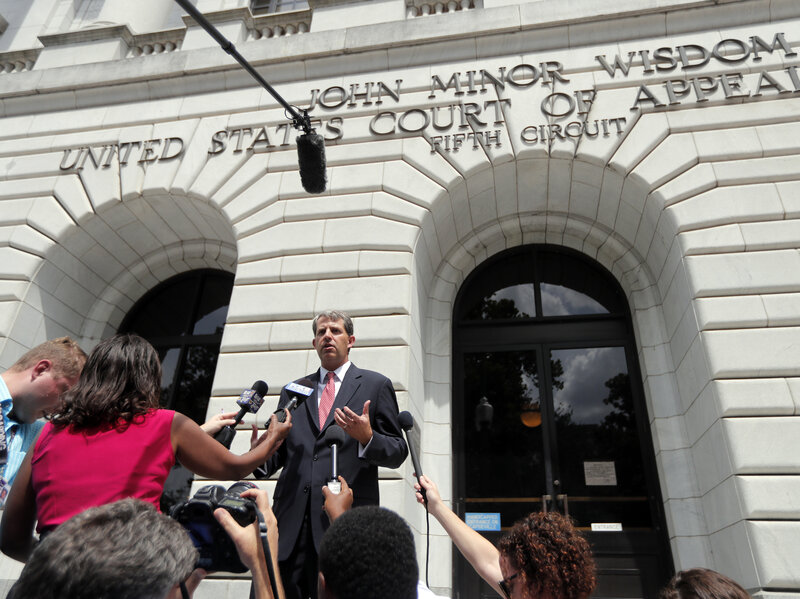
A decision in the latest court case to threaten the future of the Affordable Care Act could come as soon as this month. The ruling will come from the panel of judges in the 5th Circuit Court of Appeals, which heard oral arguments in the Texas v. Azar lawsuit.

An estimated 24 million people get their health coverage through programs created under the law, which has faced countless court challenges since it passed.

In court in July, only two of the three judges — both appointed by Republican presidents — asked questions. “Oral argument in front of the circuit went about as badly for the defenders of the Affordable Care Act as it could have gone,” says Nicholas Bagley, a professor of law at the University of Michigan. “To the extent that oral argument offers an insight into how judges are thinking about the case, I think we should be prepared for the worst — the invalidation of all or a significant part of the Affordable Care Act.”

Important caveat: Regardless of this ruling, the Affordable Care Act is still the law of the land. Whatever the 5th Circuit rules, it will be a long time before anything actually changes. Still, the timing of the ruling matters, says Sabrina Corlette, director of the Center on Health Insurance Reforms at Georgetown University.

“If that decision comes out before or during open enrollment, it could lead to a lot of consumer confusion about the security of their coverage and may actually discourage people from enrolling, which I think would be a bad thing,” she says.

Don’t be confused. Open enrollment begins Nov. 1 and runs at least through Dec. 15, and the insurance marketplaces set up by the law aren’t going anywhere anytime soon.

That’s not to underplay the stakes here. Down the line, sometime next year, if the Supreme Court ends up taking the case and ruling the ACA unconstitutional, “the chaos that would ensue is almost possible impossible to wrap your brain around,” Corlette says. “The marketplaces would just simply disappear and millions of people would become uninsured overnight, probably leaving hospitals and doctors with millions and millions of dollars in unpaid medical bills. Medicaid expansion would disappear overnight.

I don’t see any sector of our health care economy being untouched or unaffected,” she adds.

So what is this case that — yet again — threatens the Affordable Care Act’s very existence?

A quick refresher: When the Republican-led Congress passed the Tax Cuts and Jobs Act in 2017, it zeroed out the Affordable Care Act’s penalty for people who did not have health insurance. That penalty was a key part of the Supreme Court’s decision to uphold the law in 2012, so after the change to the penalty, the ACA’s opponents decided to challenge it anew.

Significantly, the Trump administration decided in June not to defend the ACA in this case. “It’s extremely rare for an administration not to defend the constitutionality of an existing law,” says Abbe Gluck, a law professor and the director of the Solomon Center for Health Law and Policy at Yale University. “The administration is not defending any of it — that’s a really big deal.”

The basic argument made by the state of Texas and the other plaintiffs? The zero dollar fine now outlined in the ACA is a “naked, penalty-free command to buy insurance,” says Bagley.

Here’s how the argument goes, as Bagley explains it: “We know from the Supreme Court’s first decision on the individual mandate case that Congress doesn’t have the power to adopt a freestanding mandate, it just has the power to impose a tax.” So therefore, the argument is that “the naked mandate that remains in the Affordable Care Act must be unconstitutional.”

The case made by the plaintiffs goes further, asserting that because the individual mandate was described by the Congress that enacted it as essential to the functioning of the law, this unconstitutional command cannot be cut off from the rest of the law. If the zero dollar penalty is unconstitutional, the whole law must fall.

Last December, a federal judge in Texas agreed with that entire argument. His judgement was appealed to the panel of judges in the 5th Circuit. Even if those judges agree that the whole law is unconstitutional, that would not be the end of the story — the case will almost certainly end up before the Supreme Court. It would be the third case to challenge the Affordable Care Act in the nation’s highest court.

So if the ruling will be appealed anyway, does it matter? “It matters for at least two reasons,” Bagley says. “First of all, if the 5th Circuit rejects the lower court holding and decides that the whole law is, in fact, perfectly constitutional, I think there’s a good chance the Supreme Court would sit this one out.”

On the other hand, if the 5th Circuit invalidates the law, it almost certainly will go the Supreme Court, “which will take a fresh look at the legal question,” he says. Even if the Supreme Court ultimately decides whether the ACA stands, “you never want to discount the role that lower court decisions can play over the lifespan of a case,” Bagley says.

The law has been dogged by legal challenges and repeal attempts from the very beginning, and experts have warned many times about the dire consequences of the law suddenly going away. Nine years in, “the Affordable Care Act is now part of the plumbing of our nation’s health care system,” Bagley says. “Ripping it out would cause untold damage and would create a whole lot of uncertainty.”


Trump’s Plan To Privatize Medicare

https://www.americanprogress.org/issues/healthcare/news/2019/10/11/475646/trumps-plan-privatize-medicare/?utm_source=The+Fiscal+Times&utm_campaign=bc4ead3dce-EMAIL_CAMPAIGN_2019_10_11_09_27&utm_medium=email&utm_term=0_714147a9cf-bc4ead3dce-390702969

Image result for medicare privatizing

Last week, President Donald Trump signed an executive order titled “Protecting and Improving Medicare for Our Nation’s Seniors.” The order is the latest example of how Trump says one thing while doing another. Rather than strengthening Medicare, Trump envisions turning large swaths of the 54-year-old program for the elderly over to the private sector while directing the federal government to dismantle safeguards on seniors’ health care access, shift costs onto beneficiaries, and limit seniors’ choice of providers.

Among other things, the executive order lays out a path to:

  • Shift the Medicare program toward private plans
  • Expand private contracting between beneficiaries and providers, putting seniors at risk for higher costs and surprise medical bills
  • Further restrict seniors’ choice of providers in Medicare Advantage
  • Expand Medicare Medical Savings Accounts as a tax shelter for the wealthy

President Trump rolled out the executive order in a speech at a retirement community in Florida, during which he echoed his administration’s previous attacks on progressive health reform proposals by referring to them as “Medicare for None.” In fact, several recent congressional proposals would offer new choices for coverage, expand the benefits of insurance, and strengthen Medicare benefits for the elderly. Unlike these Medicare for All-type proposals, Trump’s plan fails to address some more common problems in Medicare, such as high out-of-pocket costs or difficulties navigating Medicare Advantage networks.

A shift toward Medicare privatization

Today, about one-third of seniors are enrolled in private plans through Medicare Advantage; the other two-thirds are in traditional, fee-for-service Medicare. The share of beneficiaries enrolled in Medicare Advantage has grown over the past two decades. Medicare Advantage attracts a relatively healthier, less expensive pool of enrollees than that of traditional Medicare, and its per-beneficiary spending is lower. Some of that difference is attributable to lower health care utilization, although local market conditions and beneficiary health status also contribute. A number of studies have shown how Medicare Advantage plans profit from selection by attracting relatively healthier enrollees while also gaming the Centers for Medicare and Medicaid Services’ (CMS) risk adjustment program to make their enrollees appear sicker. Medicare Advantage plans also enjoy distinct advantages over the traditional Medicare program, including integrated plan designs and the ability to avoid providers involved in graduate medical education.

Last week’s executive order emphasizes so-called market-based approaches, signaling that President Trump envisions an even bigger role for the private sector in Medicare. In fact, Trump has already taken steps to accelerate enrollment in private plans. Last year, the administration bombarded beneficiaries with email messages promoting Medicare Advantage to such an extent that one former CMS official described the effort as “more like Medicare Advantage plan advertising than objective information from a public agency.”

The executive order directs the secretary of the U.S. Department of Health and Human Services (HHS) to ensure that traditional Medicare “is not advantaged or promoted over [Medicare Advantage] with respect to its administration.” For example, one way the administration could nudge more enrollees into Medicare Advantage would be to further relax CMS guidelines governing how plans market to beneficiaries. A more aggressive tactic to shift enrollees into private plans would be to make Medicare Advantage, rather than the traditional Medicare program, the default for more seniors. While auto-enrollment could result in lower costs for some beneficiaries, others could find themselves stuck in plans with limited networks or insufficient coverage for services they need. In addition, studies of the private drug plans offered through Medicare Part D have shown that seniors find it cumbersome to switch plans, even when the one they have is not the best value.

CMS’ existing Medicare Advantage auto-enrollment mechanism, though limited to a small subset of beneficiaries, caused enough problems that the agency suspended expansion of the process in 2016. In some instances, beneficiaries subject to “seamless conversion,” which allows insurance companies to auto-enroll their marketplace or Medicaid customers into Medicare Advantage, were unaware what type of Medicare coverage they had until they were assigned a new primary care doctor or they already had received out-of-network care. Even if a future Trump administration plan allowed people automatically enrolled in Medicare Advantage to opt back into traditional Medicare, the switch could cause seniors to miss enrollment deadlines for private Medigap plans. Unable to obtain supplemental benefits for traditional Medicare coverage, those people would effectively be stuck in Medicare Advantage.

Another part of the order asks the HHS secretary to align Medicare’s reimbursement rates with the prices paid by Medicare Advantage plans and commercial insurers. Broad application of market-based pricing in Medicare could raise expenses for beneficiaries and taxpayers and drain the Medicare trust fund: Bloated provider rates for commercial insurance show that the market does not work in patients’ interests and cannot be trusted to ensure fair prices. Dominant provider systems leverage their market power to demand prices well above the cost of care. A recent RAND Corporation study found that private insurance typically pays hospitals about 241 percent of Medicare rates, with wide variation across geographic regions. While Medicare Advantage plans’ negotiated rates for individual items or services can be lower or greater than those in the traditional Medicare fee schedule, reimbursement rates in the two programs are generally close, on average. The administratively set rates in Medicare keep the prices for hospital and physician services reasonable not only for traditional Medicare beneficiaries but also for those in Medicare Advantage plans. Allowing traditional Medicare prices to float up toward commercial rates while also delinking Medicare Advantage rates from Medicare rates could cause traditional Medicare premiums and the overall cost of the program to skyrocket and deplete the Medicare trust fund.

The executive order could also give new life to a deeply unpopular, longstanding conservative scheme to privatize Medicare. Under so-called premium support plans, seniors would receive vouchers that they would use to purchase either a private Medicare plan or traditional Medicare. Past premium support proposals differ in how they set the amount of the voucher: Some plans set the voucher amount arbitrarily, while others put a thumb on the scale to encourage beneficiaries to choose a private plan.

The executive order calls for using Medicare Advantage negotiated rates to set traditional Medicare rates and instructs the HHS secretary to develop a transition plan to adopting “true market-based pricing” for the traditional Medicare program, including through competitive bidding, which in the past has been a method for setting the voucher amount. Traditional Medicare—saddled with now-higher costs—would have to bid against private Medicare plans in order to compete for beneficiaries. Past premium support plans would then cap the yearly growth of the voucher, and as costs exceeded those caps, Medicare beneficiaries would pay a greater share of the costs of the program over time.

Expansion of private contracting would weaken Medicare’s financial safeguards

The executive order also directs the HHS secretary to “identify and remove unnecessary barriers to private contracts.” Today, Medicare protects beneficiaries from surprise medical bills by limiting the amount that doctors who see Medicare beneficiaries can charge these patients. Physicians may opt out of the Medicare program and enter into private contracts that set higher prices than Medicare will pay; in these cases, the patient is responsible for the entire billed amount. However, less than 1 percent of doctors have chosen to opt out of the program, in large part because Medicare’s rules protect consumers from these arrangements.

For example, doctors must give Medicare beneficiaries written notice that they have opted out of Medicare, and the patient must sign the document acknowledging that they understand they are responsible for paying the entire charge. Doctors may not enter into private contracts with patients who qualify for both Medicare and Medicaid or with patients experiencing a medical emergency. In addition, if a physician opts out of the Medicare program, they must do so entirely instead of cherry-picking beneficiaries or services. The opt-out period is a minimum of two years. Together, these limits protect beneficiaries by providing greater certainty about their doctors’ status and avoiding confusion about which visits and services Medicare will reimburse.

Loosening these rules could allow doctors to more easily circumvent Medicare consumer protections; opt out of Medicare; and charge higher prices to Medicare patients, who have lower incomes and greater health needs than privately insured individuals, on average. While wealthy beneficiaries might benefit from expanded access to nonparticipating providers, higher private prices could make it difficult for most Medicare patients to keep their doctors or afford to see other providers. Nevertheless, Trump’s first HHS secretary, Tom Price, sponsored legislation to permit private contracting and supported allowing doctors to balance bill Medicare beneficiaries.

Restriction of seniors’ choice of doctors in Medicare Advantage

During his Florida speech, Trump asked the crowd, “You want to keep your doctors, right?” Yet his order calls for changes that could restrict Medicare beneficiaries’ choice of doctors by favoring Medicare Advantage plans and by tinkering with the CMS network adequacy standards for those plans.

From a beneficiary perspective, a distinguishing feature of Medicare Advantage is that plans typically have restrictive provider networks. Under the Trump proposal, the network adequacy standards would take into account state laws affecting provider competition and the availability of telehealth services. If these changes lower the bar for Medicare Advantage plans and allow plans to include even fewer doctors in a particular area, a position the Trump administration has previously supported, they could make it harder for seniors to schedule in-person visits or see the provider of their choice. They could also increase costs for beneficiaries who need to see out-of-network specialists.

Lower-cost, narrower network plans could profit by cream-skimming healthier seniors because healthy individuals benefit most from the trade-off between lower premiums and fewer providers. Enrollees in traditional Medicare, including seniors who need the broad provider access that only traditional Medicare offers, could see their premiums rise as a result of a sicker risk pool and imperfect risk adjustment.

If networks become narrower, it may be increasingly hard for Medicare Advantage beneficiaries to identify and schedule visits with providers included in their plans. Moreover, online provider directories for Medicare Advantage are already filled with inaccuracies. A 2018 CMS report found that 45 percent of directories had inaccurate location information for providers. The CMS audit also found that 221 providers who were listed as in-network were not accepting new Medicare Advantage patients. This lack of accurate information, combined with Medicare Advantage’s relatively weak network adequacy standards, means that the Trump plan’s changes to the program could decrease, rather than increase, choice for seniors.

Savings accounts to benefit the wealthy and healthy

The executive order proposes wider access to Medicare Medical Savings Accounts (MSAs), which are available to those enrolled in high-deductible Medicare Advantage plans. Like health savings accounts (HSAs), the money in MSAs is tax-free and can be used toward health care costs, including dental, hearing, and vision. While high-deductible health plans and MSAs can be a good value for relatively healthy seniors who have high enough incomes to afford to fund these accounts, they may not provide adequate financial protection for those who need first-dollar coverage or have greater health needs.

President Trump has previously proposed turning MSAs into a tax shelter, which would chiefly benefit the wealthy. Trump’s FY 2020 budget proposed allowing seniors to deposit additional funds into MSAs beyond the plan’s contribution, as they can with HSAs. Data on HSA contributions show that higher-income individuals are more likely to contribute toward accounts and to benefit more from the tax exemption.

Trump sidesteps seniors’ most pressing concerns

A glaring omission in the president’s plan is any provision to directly take on one of seniors’ widespread concerns: the high cost of health care. Although Americans have overwhelmingly favorable experiences with the existing Medicare program, it is far from perfect. According to a report from the Commonwealth Fund, about 1 in 4 Medicare beneficiaries is underinsured, meaning their out-of-pocket health care costs are 10 percent or more of their income. A 2011 analysis by the Medicare Payment Advisory Commission (MedPAC) found that Medicare beneficiaries without supplemental plans, also known as “medigap” coverage, paid 12 percent of their medical costs out of pocket, on average.

For example, traditional Medicare has no limit on out-of-pocket costs. By contrast, the CMS limits out-of-pocket costs in Medicare Advantage to $6,700 for in-network services, and many individual plans offer lower out-of-pocket limits. In 2012, the MedPAC commissioners voted unanimously to recommend that Congress rework Medicare’s benefit design to include an out-of-pocket maximum. Doing so would give Medicare beneficiaries better financial protection against high health care costs.

President Trump claims that his executive order protects Medicare from “destruction.” In fact, not only would recent prominent Medicare for All and public option reforms proposed in Congress maintain the benefits of the existing Medicare program for seniors, but many also lay out improvements to the program in recognition of its shortcomings. For example, Sen. Bernie Sanders’ (D-VT) Medicare for All bill would almost immediately add an out-of-pocket limit for seniors in Medicare parts A and B. The Medicare for America Act, sponsored by Reps. Rosa DeLauro (D-CT) and Jan Schakowsky (D-IL), would also add out-of-pocket limits and strengthen Medicare Advantage network adequacy standards. And multiple proposals have provisions to lower beneficiaries’ prescription drug costs; eliminate the two-year waiting period for nonelderly disabled people; and add hearing, dental, and vision coverage to standard Medicare benefits.

Conclusion

President Trump has laid out a plan to privatize Medicare and undermine the program, breaking his promise that “no one will lay a hand on your Medicare benefits.” Furthermore, he is trying to scare seniors away from supporting congressional proposals that would genuinely improve Medicare beneficiaries’ access to health care and financial security. Although seniors need better protection against out-of-pocket medical costs and better access to care providers, the changes Trump has proposed will only make things worse.


Health care is getting more and more expensive, and low-wage workers are bearing more of the cost

https://www.vox.com/policy-and-politics/2019/9/30/20891305/health-care-employer-sponsored-premiums-cost-voxcare

Is the rapidly rising cost of employer-sponsored health insurance sustainable?

Half of all Americans get their health insurance through work. Trouble is, doing so is becoming less and less affordable — especially for already low-wage workers.

In 2019, the Kaiser Family Foundation Employer Health Benefits Survey — an annual account of roughly 2,000 small and large businesses’ employer-sponsored insurance — found the average annual premium to cover a family through work was a whopping $20,576, and $7,188 for an individual. Employers cover most of that, but families still contributed an average of $6,015 in premiums, and single Americans covered about $1,242 of the annual cost.

The kicker? Over the past 10 years, the cost of the portion of employer-sponsored health insurance premiums that falls on American families has increased by 71 percent. Overall, premiums have gone up 54 percent since 2009. That’s faster than the rate of inflation and faster than the average wage growth.

Nearly half of all Americans get their health insurance through work, a system that covers roughly 153 million people. And for lower-wage workers it’s a system that is increasingly unaffordable.

Workers at companies with a significant number of low-wage employees (which the Kaiser Family survey quantifies as a company in which at least 35 percent of employees are making an annual salary of $25,000 or less) have lower premiums than those who work at companies with fewer low-wage workers, probably because their plans cover less. But at the same time, workers at firms with a significant number of low-wage employees are faced with high-deductible plans, and also pay a larger share of the premium cost than workers at companies with fewer lower-wage employees.

According to the survey, workers at lower-wage companies pay an average of $7,000 a year family plan — $1,000 more than employees at companies with higher salaried workers.

“When workers making $25,000 a year have to shell out $7,000 a year just for their share of family premiums,” Drew Altman, the president of Kaiser Family Foundation, said in a statement, that’s where cost becomes prohibitive. Such employees are putting almost 30 percent of their salaries toward premiums.

The takeaway is clear. Health care is getting more and more expensive, and families and employers are having to bear more of the cost, which research has shown not only has an effect on how much workers are actually getting paid, but how many workers are hired.

As Sarah Kliff reported for Vox, there are a lot of studies spanning decades that show how a rapid rise in health insurance premiums has unfavorable outcomes for workers. This is in large part because employers think of compensation in totality; they lump together an employee’s salary, as well as their benefits as one total cost. So if covering a worker’s health insurance gets more and more expensive, employers see less room to give the worker a raise.

For example, a 2006 study from Katherine Baicker and Amitabh Chandra, both with the National Bureau of Economic Research, found that an overall 10 percent increase in health insurance premiums reduced wages by 2.3 percent and actually reduced the probability of becoming employed by 1.2 percent.

Results such as these, and the high premiums low-wage workers must pay, led the Kaiser survey’s authors to explicitly question the tenability of employer-sponsored insurance: “the national debate about expanding Medicare or creating public program options provides an opportunity to step back and evaluate how well employer­-based coverage is doing in achieving national goals relating to costs and affordability,” the report reads.

The United States is unique in its reliance on employers to provide health insurance. And, as Democratic candidates for president continue to go in circles debating health care, employer-sponsored insurance is often the biggest sticking point.

Several candidates, like Sen. Bernie Sanders, who popularized a plan for Medicare-for-all, a single government-run program, and Sen. Elizabeth Warren, who supports Sanders’s plan, have called for getting rid of the employer-based system, and private insurance, all together.

But their critics always bring up the same talking point: that the people who like their health insurance plans through work, should be able to keep it. The Kaiser survey raises questions as to how affordable those plans really are, and, as Democrats debate ideas like Medicare-for-all, how sustainable the current trajectory is.