Interim Coronavirus Relief Bill

https://heathercoxrichardson.substack.com/p/april-23-2020

Congress expected to announce deal on latest coronvirus relief bill

Today the House of Representatives passed a new $484 billion coronavirus relief bill by a vote of 388-5. The Senate passed it Tuesday. $381 billion is for small businesses left out in the cold when the money from the previous coronavirus relief package quickly ran dry. Republicans wanted to stop there, but Democrats demanded $75 billion for hospitals, and $25 billion for coronavirus testing, as well as a requirement that the administration figure out a strategy to get tests to states.

The relief bill comes as more than 26 million Americans are out of work and almost 50,000 Americans have died of Covid-19. The representatives had to drive to Washington, D.C., or fly unusual routes because regular flights are canceled. They arrived for the vote in the Capitol building in alphabetical groups of 50 to 60 so they could keep their distance from each other. A number of Republicans refused to wear masks during the vote, while all but one Democrat wore one.

Democrats inserted into the bill a new committee to oversee the administration’s “preparedness for and response to the coronavirus crisis,” chaired by Jim Clyburn (D-SC). The committee has the power to subpoena witnesses and documents. Republicans and Trump objected.

But the Democrats did not get any more aid to states, crippled by the crisis, than the $150 billion previously provided. The bipartisan National Governors Association, headed by Maryland Governor Larry Hogan, a Republican, has asked for $500 billion to help the states replace lost tax revenues. Democrats wanted such aid, but Republicans refused.

Senate Majority Leader Mitch McConnell (R-KY) went on talk radio host Hugh Hewitt’s show on Wednesday and tried to make the question of state aid partisan. He said that he opposed granting money to states whose problems, he said, stemmed from their underfunded state pension plans. Instead, the states should consider bankruptcy. A document put out by McConnell’s office called aid to the states a “blue state bailout.”

In fact, Michael Leachman, the senior director of state fiscal research at the Center on Budget and Policy Priorities, said that McConnell has it wrong. States have not been overspending; their expenses for education and infrastructure are actually significantly below what they were in 2008, despite more inhabitants, and they have put about 7.6% of their budgets into rainy day funds, a historic high, up from the previous high of 5% they held in reserve in 2006 before the Great Recession.

The problem is that states have to balance their budgets annually, and they depend on sales and income taxes for 70% of their revenue. The shutdowns have decimated tax revenues as shopping ends and people lose their jobs. At the same time, unemployment claims are climbing dramatically. States are looking at a $500 billion loss between now and 2022.

States need money to avoid massive layoffs and deep spending cuts, actions that would make the economic crisis continue much longer than it would if they do not have to make them. They would not use bailout money on pensions, Leachman writes, but put it in state general funds, which are collapsing. Pensions come out of a separate trust fund (although the general fund does put money toward future pensions, that’s less than 5% spending from the general fund). Federal bankruptcy law currently does not allow states to declare bankruptcy, but in any case, Leachman writes, there is no need for it. Bankruptcy relieves high debt levels, but state debt is not high, and once the pandemic passes, the states should be financially sound again.

If Leachman’s explanation was scholarly, New York Governor Andrew Cuomo was blunt. “New York puts into that federal pot $116B more than we take out. Kentucky takes out $148B more than they put in,” he said at a press conference. “Senator McConnell, who’s getting bailed out here? It’s your state that’s living on the money that we generate.” A recent study by the Rockefeller Institute of Government shows that New Yorkers as a group pay in to the federal government $1,792 per capita more than they take out, while for every dollar Kentucky puts in, it gets $2.61 back.

Cuomo called McConnell out for trying to turn the crisis into a political fight: “That’s not what this country is all about,” Cuomo said. “It’s not red and blue, it’s red, white and blue.”

Today’s other big news was Trump’s suggestion at his coronavirus briefing that it would be worth studying whether injecting disinfectant into patients would kill the novel coronavirus. “And then I see the disinfectant where it knocks it out in a minute. One minute. And is there a way we can do something like that, by injection inside or almost a cleaning?” he said. “Because, you see, it gets on the lungs, and it does a tremendous number on the lungs. So it’d be interesting to check that. So that you’re going to have to use medical doctors, but it sounds — it sounds interesting to me.” He also suggested using heat and light to kill the virus.

Doctors were horrified at his comment, calling it irresponsible and dangerous. Disinfectants are poisonous and are deadly if they are used inappropriately. “To be clear:” emergency medicine physician Dara Kass tweeted, “Intracavitary UV light and swallowing bleach or isopropyl alcohol can kill you. Don’t do it.”

Trump’s emphasis on dramatic cures for Covid-19 reinforces his disagreement with health experts that we must dramatically increase our testing for the disease so we can identify hot spots and isolate them before they spread. At today’s briefing, Trump disagreed with Dr. Anthony Fauci, the director of the National Institute of Allergy and Infectious Diseases and one of the administration’s top medical advisors about the pandemic, who recently said “We absolutely need to significantly ramp up, not only the number of tests but the capacity to actually perform them.” Today, Trump said: “I don’t agree with him on that, no, I think we’re doing a great job on testing.”

In fact, the U.S. lags behind other nations in per capita tests, and Trump’s continuing reluctance to support getting them seems to me mystifying. It is this odd gap Congress is trying to address with its requirement in the new coronavirus package that the administration must figure out a strategy to get tests to states. The bill now heads to the Oval Office for Trump’s signature.

For all the dark nitty-gritty of politics today, it is also a day that begins a joyous month, and that seems to me a far better way to leave you all tonight than with the day’s troubles. For those who celebrate, Ramadan Mubarak.


4.4 million Americans sought jobless benefits last week, as economic pain continued across the United States

https://www.washingtonpost.com/business/2020/04/23/economy-coronavirus-unemployment/?fbclid=IwAR3EbJpE7nmIUWOM4HUrZVOKaBmls7Uh3gL5ewCP98q7So0s38JlPdTT-SI&utm_campaign=wp_main&utm_medium=social&utm_source=facebook

4.4 million Americans sought jobless benefits last week, as ...

The White House and Congress have tried to arrest the downturn, but the coronavirus pandemic keeps pushing Americans out of the labor force.

More than 4.4 million Americans filed for unemployment benefits last week, according to the Labor Department, a signal the tidal wave of job losses continues to grow during the coronavirus pandemic.

It’s the fifth straight week that job losses were measured in the millions. From March 15 to April 18, 26.5 million people have probably been laid off or furloughed. The number of jobs lost in that brief span effectively erased all jobs created after the 2008 financial crisis. Jobless figures on this scale haven’t been seen since the Great Depression.

The new weekly total comes on top of 22 million Americans who had sought benefits in previous weeks, a volume that has overwhelmed state systems for processing unemployment claims. Economists estimate the national unemployment rate sits between 15 and 20 percent, much higher than it was during the Great Recession in 2008 and 2009. The unemployment rate at the peak of the Great Depression was about 25 percent.

The new weekly jobless claims figure came in around economists’ predictions, which were expected “to be staggering, but not growing, which is a small mercy,” said Julia Pollak, a labor economist at ZipRecruiter. For comparison, 5.2 million people filed unemployment claims for the week ending April 11.

As the coronavirus began spreading in the United States earlier this year, many businesses rapidly began to close. Hotels, restaurants, and airlines were hit particularly hard, but few businesses were immune from the economic toll. The problems have only worsened each week, as more Americans reduced their spending and more businesses cut workers because income has fallen so sharply.

Pollack said many businesses quickly “cut to the bone” when they realized how the pandemic would gut sales. Now, many of the new layoffs stem from businesses like news organizations and tech companies that weren’t directly affected by people staying home but are suffering the consequences of vanishing ad revenue and paid subscriptions.

“We see declines across every major industry and state, although the declines hit industries at different times,” Pollak said.

Meanwhile, consumer spending, the engine behind the longest economic expansion in U.S. history, has evaporated. If they’re still operating, many offices are working with skeleton staffs and staring down months of dismal revenue.

The White House and Congress have tried to intervene, but with limited impact so far.

New funding for small businesses in a $2 trillion March emergency spending package quickly dried up in the face of overwhelming demand, prompting the Senate to expand funding by $310 billion on Tuesday. The bill would direct an additional $60 billion to a separate small-business emergency grant and loan program. The House is slated to vote on the measure Thursday afternoon.

Even with all the new government spending, hopes for a sharp economic rebound are fading, overtaken by the public fear of going back to restaurants, movie theaters, schools and gyms. The growing possibility of a “W”-shaped recovery — in which a resurgence of the virus, or a spike in defaults and bankruptcies, triggers another downturn — has analysts reframing what a reopened or rehabilitated economy might look like.

This year defies historical comparison. In 2020, 28.9 million people have filed for unemployment benefits. Halfway through the fourth month of the year, the figure has already eclipsed the full-year totals of every year but 1982 (30.4 million) and 2009 (29.8 million). At this rate, it will overtake both within a week or so.

Less than half of working-age Americans will be earning a wage next month, said James Knightley, ING Chief International Economist.

“In an election year, this means that the call for politicians to reopen the economy is only going to get louder, irrespective of the health advice,” Knightley said.

In five weeks, 9.4 percent of the working-age population has filed for unemployment insurance, said Nick Bunker, Indeed Hiring Lab’s director of economic research. That’s about twice the share of the population that lost a job during the Great Recession. In some states, such as Michigan, about one in four workers has filed an unemployment claim in the past few weeks.

“The numbers detailing the shock to the U.S. labor market are so large, and cover such a short time, that your first reaction is that they’re a typo,” Bunker said.

Employers are also unlikely to be hiring at the same levels they were before the pandemic. As of April 16, job postings on Indeed were down 34 percent compared with last year, Bunker said.

The job losses, like the epidemic itself, haven’t fallen evenly across the country. In three states — Hawaii, Kentucky and Michigan — about 1 in 4 workers have filed for unemployment benefits in the past 5 weeks. In Michigan, plant shutdowns and furloughs have ravaged the manufacturing economy, which had only recently recovered all the jobs it lost in the Great Recession.

On the opposite of the ledger sits South Dakota, where Gov. Kristi L. Noem (R) has resisted calls to lock down the state’s businesses to slow the spread of the coronavirus. Only 6 percent of the state’s labor force has applied for unemployment benefits. It may be a regional trend: Neighboring Wyoming and Nebraska, and nearby Utah, also have unusually low claims numbers.

As part of its sprawling stimulus package, Washington has rolled out relief for millions of households and small businesses struggling to make ends meet. But money for struggling businesses quickly ran dry, and system glitches have prevented $1,200 stimulus checks from reaching some of the neediest.

On Tuesday, the Senate passed a bill to expand the Paycheck Protection Program for small businesses by $310 billion, and flood a separate small-business emergency grant and loan initiative by an additional $60 billion.

Meanwhile, many low-income veterans and Social Security recipients still haven’t received the stimulus money in their bank accounts, while other IRS checks are going to dead people. People who didn’t file tax returns last year or don’t have direct-deposit information may have weeks more to wait.

In the wake of the Great Recession, the number of unemployed — about 15 million — was significantly higher than the number who claimed benefits, and the unemployment rate still peaked at just 10 percent. Economists expect the United States to blow by that figure when April’s jobs data are released on May 8.

Granted, this comes as unemployment eligibility and benefits have been greatly expanded. The government has relied on the unemployment insurance system to deliver relief to out-of-work Americans as it forces millions of businesses to close during temporary stay-at-home orders. The soaring numbers are, for once, a sign of the system working as intended.


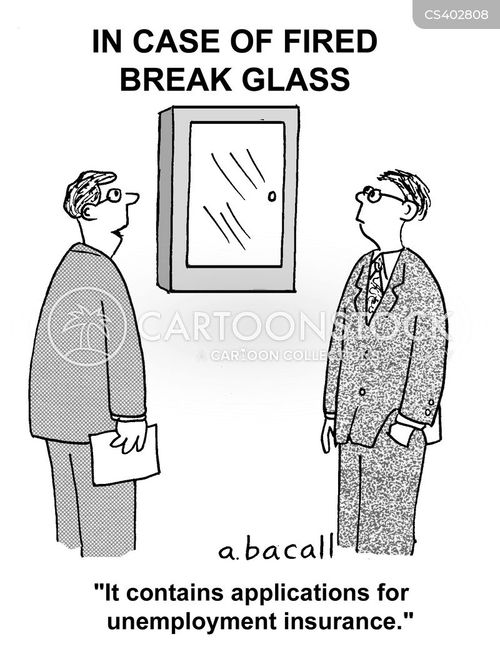
Cartoon – Job Opportunity

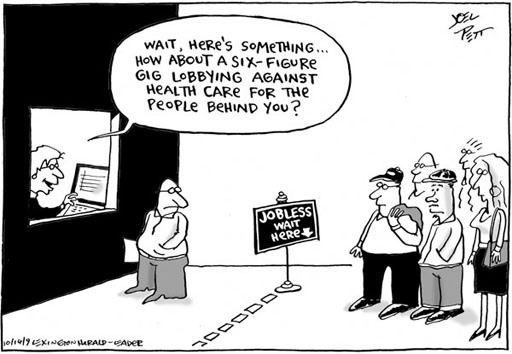
Political Cartoon: “Overheard In The Unemployment Line” by Joel ...

Another 5.2 million jobless claims filed last week amid coronavirus crisis

https://www.axios.com/coronavirus-unemployment-filings-caded026-fce4-43cc-8dc0-5f0037747b69.html?stream=top&utm_source=alert&utm_medium=email&utm_campaign=alerts_all

Arrow

Another 5.2 million Americans filed for unemployment last week, the Labor Department announced Thursday.

Why it matters: With the more than 16 million jobless claims filed over the past three weeks, more jobs have now been lost in the last month than were gained since the Great Recession.

The big picture: The weekly unemployment filings report has become a must-watch for Wall Street and economists. It offers the timeliest glimpse into how efforts to contain the coronavirus outbreak are ravaging the job market.

  • And economists say that as bad as these weekly numbers look on the surface, they’re likely even higher. There are widespread complaints that state labor departments are having trouble processing the never-before-seen wave of jobless filings.

The bottom line: In just one month, the coronavirus economic shutdown has caused a staggering 22 million Americans to lose their jobs.