


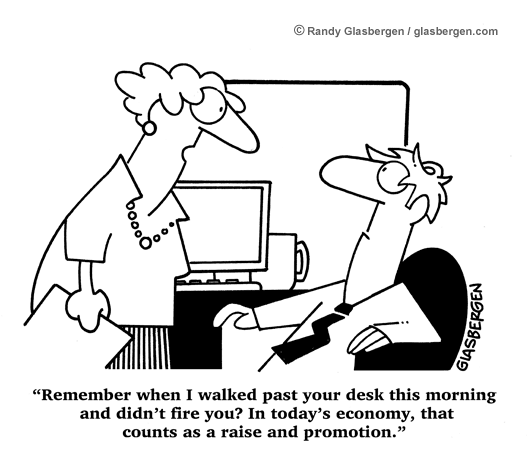
Cartoon – Please Give


Nearly 4 million Americans have been unemployed for 27 weeks or longer — trapped in a vicious cycle that makes it harder to get back to work.
The big picture: Long-term unemployment during a pandemic is a double whammy. Millions are experiencing food and housing insecurity and lack health care when they need it most.
What’s happening: “The troubling amount of long-term unemployment and its continuing rise is dangerous for the U.S. labor market,” says Nick Bunker, an economist at the jobs site Indeed. “A fast labor market recovery will help alleviate these concerns, but that bounce back is still a ways away and dependent on controlling the coronavirus.”
Why it matters: Studies have shown that long-term unemployment hurts workers’ physical and mental health, reports Bloomberg. And the longer someone is unemployed, the harder it is for that person to get another job — let alone another job at the same pay level.
Job-seeking is even more exhausting during a pandemic, says Tim Classen, an economist at the Quinlan School of Business at Loyola University in Chicago.
“The fluctuations in uncertainty play into this, too,” Classen says. Millions of restaurant workers, flight attendants, retail workers and more aren’t sure when the pandemic will end — or if their employers will even survive it.
There’s a bit of a silver lining, though.
https://interimcfo.wordpress.com/2021/02/11/i-just-got-fired/

I went out on a social event with a hospital CFO. During the course of the day, it seemed that all I heard was griping about the CEO. Then I heard that the organization was ‘giving back’ most of the last year’s gains, how most of the leadership team were idiots, and on and on. Finally, I told my friend that I thought he was in burn-out and that if he did not do something to alleviate the stress he was bearing, things were not going to end well. A couple of weeks later, I received a call from my friend. The conversation started with, “You will not believe what just happened.” My answer was, “How many guesses do I get?”
In hindsight, it was easy to see this transition coming. I know. It has happened to me – more than once. The circumstances, emotions, and process leading up to a transition event are relatively consistent in my experience. People stop listening to you. You start feeling out of touch with the rest of the organization. Your relationships with peers begin to cool, especially the relationship with the boss. You learn that you are increasingly not invited to important meetings or summoned to participate in matters that are clearly within your scope. You begin to sense divergence of political and or philosophical views with the core leadership of the organization. Your boss and others start going around you to approach your staff directly.
These processes continue until you get invited to an unscheduled meeting where you learn that you are about to be freed up to seek other opportunities.
First, a disclaimer. I am assuming that the termination is not for cause, i.e., violation of policy, violation of the law, or behavior unbecoming. The majority of separations and terminations I am familiar with have little if anything to do with cause and occur primarily because of lack of fit or growing disagreement between the incumbent and their manager regarding the organization’s course. Sometimes, the incumbent’s area of responsibility is no longer meeting the needs of the organization. Too often, internal corporate politics are responsible for deals that started well souring. Sometimes, a transition follows an executive, usually but not always the CFO, digging in over their interpretation of the organization getting too close to crossing a compliance red line. Instead of greasing the squeaky wheel, the organization decides to address the problem by getting rid of the irritant. I have been in a situation more than once where I had to decide whether my integrity was for sale and what a fair price might be. In every case, I elected to avoid the disaster that has befallen executives that flew too close to the OIG’s flame, and in one case, it led to a separation from the organization.
One of my favorite Zig Ziglar quotes is, “Failure is an event; it is not a person.” Just because someone ends up in a transition does not mean by definition that they are a terrible person. Time and again, in these blogs, I have stipulated that for me to follow someone that was ‘bad’ in some way is extremely rare. In these articles, I address termination from the view of the ‘victim.’
I am speaking from experience writing this as I have been through an unplanned transition more than once. I know my problem; I get frustrated with politics, BS, sub-optimization, the toxicity of culture, and eventually lose my sense of humor or ability to eat crap without gagging. Not too long after I start telling people what I really think and, . . . . well, you know the rest of the story. What I believe is a growing risk of being an employee is why I decided to leave permanent employment and become a career Interim Executive Consultant. Regardless of the cause of a turnover event, it is gut-wrenching. Even if you sense it coming, it is no easier to bear. In a matter of a few minutes, you go from someone whose expertise and perspective are in high demand to someone that has no reason to get out of bed. The pain is increased exponentially by those that used to dote on you refusing to return phone calls or answer emails.
More than once, I have received a call from someone looking for help because their deal either has gone bad or is in the process of deterioriation. Invariably, a few weeks later, I get the call. Upon answering the phone, the conversation starts, “You aren’t going to believe what just happened to me!” My first thought is not again! It pains me almost as much to witness someone else go through a transition as it is to go through it yourself. As I said before, my response is, “How many guesses do I get?” I ask this question with a high degree of certainty that the answer is a forgone conclusion.
Sadly, people going through a transition process do not fully appreciate what they are facing, especially the first time. The first problem is the amount of time the executive is going to be unemployed. When this happened to me the first time in the ’80s, I was shocked when a mentor told me to expect a month for each $10,000 of pre-transition compensation. I could not believe this was possible, but I have seen it happen time after time. With the inflation that has occurred since then, a good rule of thumb is probably a month for each $20,000 of pre-transition compensation. Thinking back to my principle that the time to start planning for a transition is now, one of the things to be prepared for is up to a year of interruption in income unless you are fortunate enough to have a severance agreement.
Contact me to discuss any questions or observations you might have about these articles, leadership, transitions, or interim services. I might have an idea or two that might be valuable to you. An observation from my experience is that we need better leadership at every level in organizations. Some of my feedback comes from people who are demonstrating an interest in advancing their careers, and I am writing content to address those inquiries.
I encourage you to use the comment section at the bottom of each article to provide feedback and stimulate discussion. I welcome input and feedback that will help me to improve the quality and relevance of this work.
If you would like to discuss any of this content, provide private feedback or ask questions, you can reach me at ras2@me.com.

Tucked in the shadow of the Tetons, the town of Jackson, Wy., and surrounding Teton County is home to less than 25,000 fulltime residents, but annually hosts over 2.5 million visitors. The valley’s natural beauty attracts an influx of tourists, who in turn are responsible for roughly 30% of the region’s jobs and over $1 billion in annual revenue, but this year, visitors came with an unwelcome price tag for locals: “Every time in this pandemic that we’ve had an influx of visitation, whether that’s second homeowners, or people just coming for a weekend, it follows with an uptick in cases and hospitalizations” says Dr. Jeff Greenbaum, medical director at the Emergency Department for St. John’s hospital and the Jackson Hole Mountain Ski Resort (JHMR) ski patrol.
With just one major hospital and eight emergency room physicians serving Teton County, any increase in COVID-19 cases is cause for concern. And in January, following the Christmas and New Year’s tourism rush, COVID-19 cases in Teton County skyrocketed to some of their highest levels since the pandemic began. Despite these developments, the ski resort, hotels, bars and restaurants remain open in the town. And Greenbaum remains optimistic that with the right strategies and precautions, the small hospital will not be overwhelmed by cases and skiing can stay open during the season for both visitors and locals. “The nightmare scenario is if the patients are stacking up in the emergency room and we don’t have enough personnel to treat them,” says Greenbaum. “But we’ll see that coming in advance, and we are not there yet.” The local hospital still has over 50% of its ICU beds unoccupied and has no COVID-19 patient on a ventilator. JHMR is similarly optimistic that it can stay open the entire season, trusting in the protocols it has put in place to protect both guests and staff.
Teton is the wealthiest county in the U.S., with a per capita income of over $250,000. At the start of the pandemic, a flurry of private jets landed at the Jackson Hole Airport, sometimes with a private ventilator in tow, as second homeowners and new buyers escaped to this rural paradise. Greenbaum posits that part of the reason why St. John’s hasn’t been overrun by cases is that many of the tourists that get COVID-19 in Teton County might not stay to get treatment in Teton County. At a time when millions of Americans are out of work, when daily infection rates are at an all-time high, and when thousands across the country are dying daily from the virus, should the wealthy indulge in an après ski, looking out onto the beautiful Teton mountains, all while potentially shuttling COVID-19 into and out of Jackson?
“This place is pretty much a gigantic country club, relying on second homeowners and tourism for its revenue,” says Jesse Bryant, a doctoral candidate in American Sociology at Yale University and creator of Yonder Lies, a podcast exploring the history of Jackson Hole. “But Jackson has to balance the ultra-wealthy with the real reality of people eking out a living here.” Teton County has the largest income gap of any county in the U.S., with the top 1% making almost 150 times more than the other 99%. From mountain guides to house cleaners to bartenders, much of the employment in Jackson cannot easily be transitioned to remote work, meaning that Jackson’s working class are among the most susceptible to unemployment from the pandemic. All across America the costs of the pandemic are being born by the poorest members of society; a Pew Research Center survey from September found that about 50% of low-income Americans say they or someone in their household has lost employment or had take a pay cut due to the pandemic, and similarly about 50% of low-income Americans reported having trouble paying their bills since the pandemic started.
During the spring and summer, the Coronavirus Aid, Relief, and Economic Security Act passed by the federal government at the start of the pandemic had provided $600 in additional unemployment payment per week, assuring many local and seasonal workers that their livelihoods were safe even if their jobs weren’t. But almost a year into the pandemic, Jackson’s working class are left with far fewer options: federal unemployment relief dropped to $300 and state unemployment benefits in Wyoming, although extended by 13 weeks, dry up after 39 weeks. “Many of the workers here don’t have a six-month buffer saved up,” said one restaurant worker who wished to remain anonymous for risk of losing their job, “so, while tourism presents a risk, we’re willing to take it to keep our paychecks coming in.”
This is the predicament that America has put herself in: a country with a limited safety net during the pandemic forces her workers to choose between the risk of getting sick, or losing their livelihoods. The mountain and the town are left trying to find a balance between keeping the economy open for tourists, and keeping COVID-19 out. As the second largest employer in Teton County, JHMR takes center stage in this unfolding drama. The resort is responsible for the livelihood of around 2,000 seasonal and local workers, and if the mountain were to shut down, many of the ancillary services in the town, like hotels, restaurants, rental shops, clothing stores and other retailers, would likely shutter their doors as well. In 2017, when the resort had to close for five days because of a power outage, the net economic impact to the local economy topped $5.5 million. “What’s happening in Jackson isn’t just a story of wealthy people coming into the rural west and getting the locals sick,” says Bryant. “This place has become more like a symbiotic relationship.”
One particularly vulnerable population is the Latino community, a significant number of which is undocumented, that lives in Jackson, and in the neighboring towns of Victor and Driggs. While it’s difficult to get exact numbers of their contribution to the economy, these workers keep Jackson running by filling jobs in all sectors, from house cleaners and construction workers to cooks and waiters.
“I’ve lived in Jackson for 25 years and used to go back to Mexico every winter because it was just too cold,” says Jorge, an undocumented construction worker in the town. “But then I got used to the cold and began skiing every single day.” Asked whether opening up the resort is worth the risk of bringing more COVID-19 into Jackson, Jorge says that by and large the Latino community welcomes the tourism with open arms, because it means job security. This lines up with findings from a survey undertaken by the Yale School of Environment this past summer, showing that Latino residents in the rural West had some of the highest rates of COVID-related unemployment in the country. “My wife and I work hard, her as a house cleaner, me in construction,” said Jorge. “The resort opening up and tourists coming to town is how many of us make our living.”
For its part, JHMR has been doing nearly everything within its power to keep COVID-19 from spreading on its slopes, iterating as the situation evolves to try to keep the 2021 season operating. In March of 2020, as the first wave of the pandemic was sweeping across the globe, the Wyoming State Health Officer shut down JHMR for the remainder of the season. The resort reopened in May, first for hikers and then mountain bikers—the summer tourists that in total are only about 10% the size of the winter tourist population. Before reopening for the summer crowd, it tested every single one of its staff members for COVID-19, and the resort’s human resources department transitioned into a contact-tracing team, coordinating with town officials whenever a case arose. While Wyoming didn’t issue a statewide mask mandate until Dec. 7, the resort instituted a mandatory mask policy during the summer. JHMR also learned to be more flexible in its operations: staff are now trained to perform a number of different functions, so they can sub in if there’s a shortage in a department, and shifts function as separate pods, meaning that if a person in one group has been exposed to COVID-19, another totally isolated pod can come in to take its place.
Over the summer and fall, tourists came in droves to Jackson, with as many as 40,000 total visitors in a day. According to the Jackson Hole Chamber of Commerce, both Yellowstone and Grand Teton National Parks—both within a quick drive from of Jackson—had about 50% more visitors in October of 2020 than they did for the same month in 2019. While many of the outdoor activities that bring people to Teton County during the summer—hiking, biking, climbing—have been deemed relatively safe during the pandemic, tourists also flocked indoors to the bars, restaurants and stores that remained open throughout most of the summer and fall. As a result, Teton County experienced large COVID-19 spikes in July and again at the end of October and into November.
Unsurprisingly, workers got sick. In response, Teton County’s Health Officer, Travis Riddell, sent out a series of recommendations pressing citizens to not gather with groups outside of their immediate family, avoid crowded indoor spaces and not congregate at trail heads, parks or other outside spaces. Still, most businesses stayed open as patrons kept coming. Riddell noted that the town had little choice: “Economic disasters are public health disasters,” Riddell said in an interview in July 2020 to National Geographic. “We know that when there are economic downturns, where there is an increase in poverty, an increase in uninsured numbers—that has direct health effects.”
Once JHMR opened for skiing the weekend after Thanksgiving, it was clear that demand for outdoor recreation would carry into winter; even with almost no international travel, JHMR expects demand during the 2021 winter months to be comparable to past years, at least. “If we just opened up [completely], the mountain would be packed, because demand itself is through the roof,” says LaMotte, “but we’ve imposed a maximum daily capacity for the mountain, to keep guests and staff safe.”
On a bluebird day near Christmas, the resort was sold out. It had snowed almost 15 inches the day before, and cars inched into the packed parking lot. Skiers and snowboarders waited in line for the lot shuttle bus, which, despite operating at 25% capacity, still felt uncomfortably full. The restaurants and bars looking out onto the sunny mountain were similarly capped at 25% capacity, and while masks and social distancing were required, patrons waiting for tables escaped the cold by standing shoulder to shoulder in the foyer.
At the resort, the socially distanced lines for the gondola were dangerously compressing. A resort worker cheerfully reminded guests from every corner of the U.S. to keep their distance and their masks above their noses. “We’re going to make it all the way through the season, without closing” yelled the worker, to cheers from the crowds. The lines moved slow—normally eight people fit onto the gondola, but under the new policies there was no mixing between groups, so often times the gondola ascends with just one or two passengers. At the top of the mountain, with views of the valley floor against the backdrop of the jagged Tetons, everyone breathed a bit easier.
Rob Kingwill and Emilé Zynobia, professional snowboarders based out of Jackson, stepped off the gondola into the cold Wyoming air, about 4,000 feet above the valley floor. Both sported COVID-19 masks made by Kingwill’s apparel company, Avalon 7. “I feel like this is almost an essential service, to give people the opportunity to be outside, said Kingwill. “We need this for our mental health.” When JHMR shut down in March of 2020, Kingwill strapped his snowboard to his backpack and hiked up Teton Pass’s infamous 1,300-foot Glory Boot Pack—every day for 77 days until all the snow had melted. But, he points out, most recreational skiers don’t have the knowledge and skills to navigate such technical terrain—and without the money those tourists bring in, Jackson’s working class would suffer. “It seems like the benefits outweigh the costs of keeping the resort open,” agreed Zynobia, as she and Kingwill strapped onto their boards. “Even though this is an activity skewed towards to wealthier people, it is helping a remote economy, and it is getting people outside at a time when we feel caged in.”
By the middle of January, Teton County’s COVID-19 cases were skyrocketing. Teton County currently has the highest caseload per capita of any county in the state of Wyoming and the highly contagious U.K. variant of COVID-19 was found to be circulating in the area. While the state of Wyoming had loosened COVID-19 gathering restrictions, the county reissued a series of guidelines on Jan. 25 that kept indoor gatherings capped at 25% and limited outdoor gatherings to 250 guests. At the resort, group ski lessons have been replaced by private lessons (at no extra cost), and the gondolas and lifts are ascending the mountain with minimal group mixing. Still JHMR can only control what happens on the mountain; “My main concern is not skiing itself,” says Greenbaum. “But rather I’m concerned about peripheral activity to skiing that lead people indoors, whether it’s a bar, a restaurant, a hotel lobby, a rental shop, a bus.”
Across the nation cases are surging, and other Colorado mountain towns like Telluride and Crested Butte have had similar spikes, likely due to an influx of winter tourism. The infection rate in Pitkin County, Colo., home to the Aspen and Snowmass ski resorts, was skyrocketing in the middle of January, with an incidence rate of about 3,500 per 100,000 people. In response, the county’s health department shut down all indoor dinning operations, but left the ski resorts open. The results were promising: in the past two weeks the COVID-19 rates for Pitkin County dropped by over 50%. “We’re on pace to be below 700 [cases per 100,000 people] in early February and I don’t think any of us thought that would happen so quickly,” said Josh Vance, the county’s epidemiologist, in an interview with the Aspen Times. “I’ll be honest—I think not having indoor dining plays a role.”
In Teton County, restaurants and bars remain open for indoor operations long as they follow social distancing guidelines. The reliance on the ultra-rich creates an undeniable risk to the livelihood of Jackson residents and workers. In the early days of the pandemic, ski resorts across Europe became super spreaders, with visitors transporting the virus like carry-on luggage, threatening other tourists and locals alike. As a result, resorts have been closed this winter across much of Europe, including in France, Germany and Italy. These precautions protect remote mountain towns from an influx of the virus, but there are other, massive costs associated with closing down. Without government support, there is little option for communities like Jackson but to stay open, follow existing public health guidelines and hope for the best. “When the pandemic first started coming to work felt like entering the lion’s den,” said the restaurant worker from Jackson who wished to remain anonymous. “But by now we’re all used to the risk, and really what choice do we have?”

Dallas-based Baylor Scott & White Health will outsource, lay off or retrain 1,700 employees who work in information technology, billing, revenue cycle management and other support services, according to The Dallas Morning News.
The health system said outsourcing the finance and IT jobs and other support services will help it improve efficiencies and focus on reducing costs in noncore business areas.
About two-thirds of the 1,700 employees will be joining third-party RCM, IT, billing or support staff vendors. About 600 to 650 positions will be eliminated.
Baylor Scott & White said that employees whose positions are being eliminated will be invited to participate in retraining programs.
The retraining program would allow the employees to remain employed at the health system and receive the same pay or higher, depending on their role, according to the report. Some of the retraining programs that will be available are learning to become a certified medical assistant or learning a job in patient support services.
“In no case — in no case — is anyone going to miss a paycheck,” Baylor Scott & White CEO Jim Hinton, told The Dallas Morning News. “We can afford to make these commitments, and we want to do the right thing for the great employees of Baylor, Scott & White. They’ve really done everything we’ve asked and more during this last year.”
This is the third time Baylor Scott & White has announced cost-cutting initiatives related to its workforce since the pandemic began. Last May, 930 Baylor Scott & White employees were laid off, and in December the health system said it would lay off employees and outsource 102 corporate finance jobs.
Mr. Hinton said that Baylor Scott & White has 2,000 clinical positions open, and it is investing in a new regional medical school campus and a joint venture to improve care for the underinsured.
“This is a transition to a new business model, a transition to a new way of working,” Mr. Hinton told The Dallas Morning News.
https://thehill.com/policy/finance/536247-economy-shrank-35-percent-in-2020

The U.S. economy shrank 3.5 percent in 2020 as the coronavirus pandemic shuttered businesses, schools and events, marking the first annual contraction since the Great Recession, according to data released by the Commerce Department on Thursday.
U.S. gross domestic product (GDP) suffered its largest annual decline since 1946 due to the coronavirus pandemic, according to the Commerce Department release. The outbreak of COVID-19 caused the steepest economic collapse since the Great Depression, wiping out more than 20 million jobs and years of economic growth within two months.
U.S. GDP increased by an annualized rate of 4 percent in the final three months of 2020, according to the data released Thursday, following an annualized gain of 33.4 percent in the third quarter and a 31.4 percent annualized decline in the second quarter. But the economic rebound staged in the second half of 2020 has been dampened by the continued rapid spread of COVID-19 throughout the country.
The U.S. economy came into 2020 remarkably strong. Unemployment reached a 50-year low of 3.5 percent in the previous year, inflation remained low and the U.S. had just set a record for the longest economic expansion in its modern history. While the U.S. was likely to face some headwinds from slowing economies overseas, the stunning emergence of the coronavirus pandemic shattered the strong labor market and forced thousands of businesses to shutter.
Consumer spending — which makes up nearly two-thirds of the U.S. economy — fell 2.6 percent in 2020, driven mainly by a 3.4 percent decline in spending on services. Spending on goods rose 0.8 percent, however, as purchases shifted from gatherings to products that could be used during lockdowns.
Economists expect the U.S. economy to bounce back quickly in the second half of 2021, assuming enough Americans are vaccinated to prevent large coronavirus outbreaks. Both economists and health experts insist that a full return to normal is not possible until the pandemic is defeated.
Roughly 9 million jobs lost during the onset of the pandemic have yet to be recovered, and those without work have struggled to get by with swaths of the economy still largely shut down by the virus. The federal government approved more than $4 trillion to fund pandemic response and economic rescue in 2020, though Democratic lawmakers and many economists say more is still needed.
President Biden and congressional Democrats are pushing to pass another $1.9 trillion COVID-19 bill meant to ramp up vaccine distribution and offer more economic relief to those in the greatest need.
Republican lawmakers have not ruled out passing another relief bill, but most object to the size and scope of Biden’s proposal after approving a $900 billion measure in December.
Treasury Secretary Janet Yellen and Federal Reserve Chairman Jerome Powell have both warned lawmakers that the risks of holding back on necessary fiscal relief are far greater than adding more to the national debt or risking an increase in inflation.
“I’m much more worried about falling short of a complete recovery and losing peoples’ careers and lives and the damage that will do to productive capacity than about the possibility of higher inflation,” Powell said Wednesday.
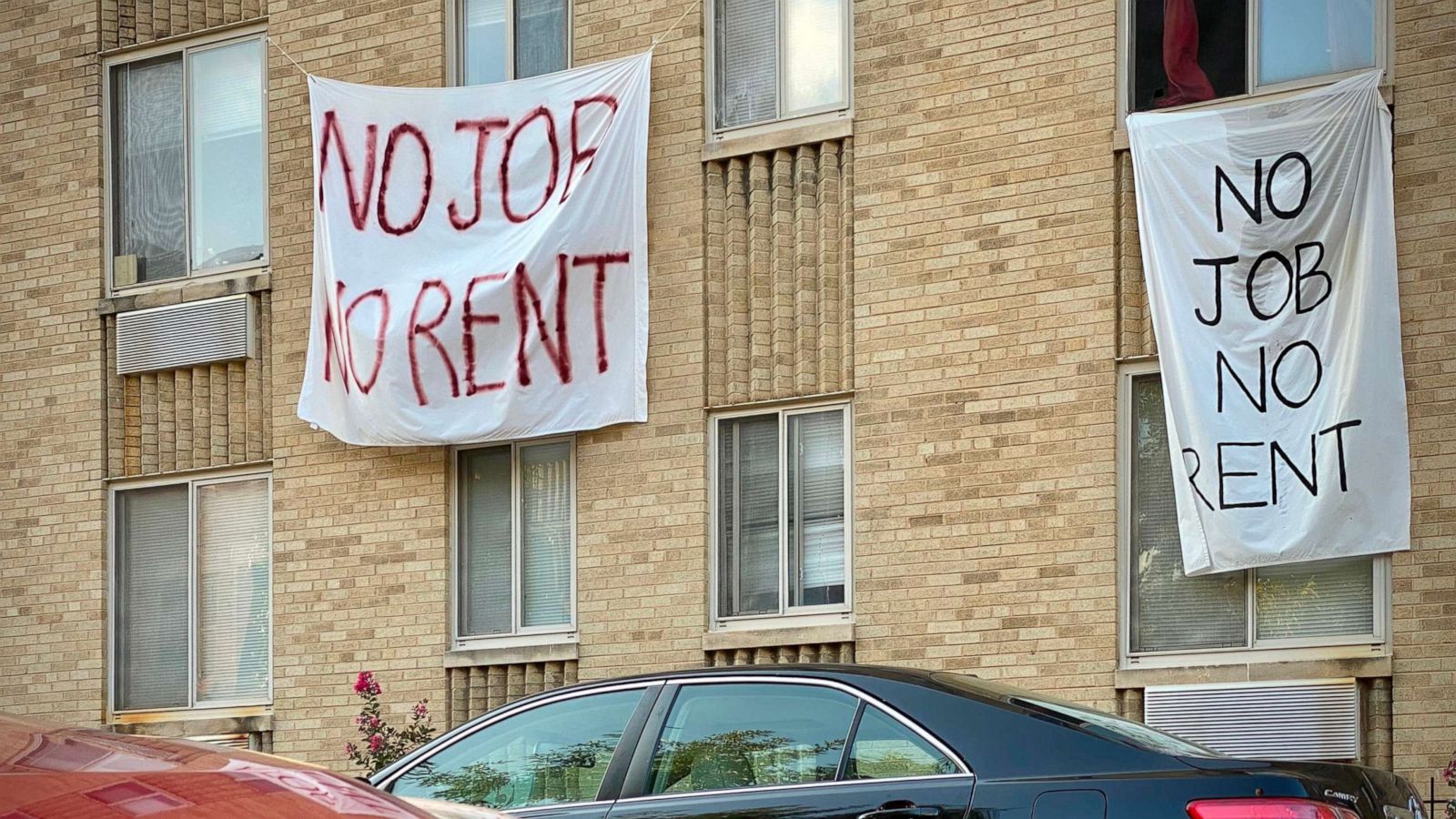
The number of new unemployment claims filed last week jumped by 181,000 the week before to 965,000, the largest increase since the beginning of the pandemic.
It was the largest number of new unemployment claims since August.
An additional 284,000 claims were filed for the Pandemic Unemployment Assistance, the insurance for gig and self-employed workers.
The weekly report is President Trump’s last before President-elect Joe Biden is sworn in on Jan. 20. Biden will inherit a labor market badly weakened by the coronavirus pandemic and an economic recovery that appears to have stalled: 140,000 people lost their jobs in December, the first decline in months, with the U.S. still down millions of jobs since February.
The dire numbers will serve as a backdrop for Biden as he formally unveils an ambitious stimulus package proposal on Thursday, which could top $1 trillion, and is expected include an expansion of the child tax credit, a $2,000 stimulus payment, and other assistance for the economy.
Democrats were already using the weak labor to argue about the necessity of more aid.
Economists say that the economy’s struggles could be explained, in part, by the delay Congress allowed between the summer, when many fiscal aid programs expired and December, when lawmakers finally agreed on a new package after months of stalemate.
The number of new jobless claims has come down since the earliest days of the pandemic, but remains at a extremely high level week in and week out.
The total number of continuing people in any of the unemployment programs at the end of the year was 18.4 million, although officials have cautioned that the number is inflated by accounting issues and duplicate claims.
The increase in claims is not entirely unexpected. As the aid package passed by Congress in December kicks in, including a $300 a week unemployment supplement, some economists expected that to result in more workers filing claims.
 HENRY KOTULA