CDC director walks tightrope on pandemic messaging

CDC director walks tightrope on pandemic messaging

Images: Tightrope walk across the Grand Canyon

Centers for Disease Control and Prevention (CDC) Director Rochelle Walensky finds herself in a delicate position as she seeks to balance the optimism of increasing vaccinations with the reality that the U.S. is still very much in the grip of a deadly pandemic.

Walensky started the CDC job with a reputation as a savvy communicator, tasked with salvaging the reputation of an agency that took a beating under the Trump administration.

“When I first started at CDC about two months ago, I made a promise to you: I would tell you the truth, even if it was not the news we wanted to hear,” Walensky told reporters recently.

Walensky’s expertise is in HIV research, like her predecessor Robert Redfield, and before being appointed to lead the CDC, she was head of infectious diseases at Massachusetts General Hospital.

While former colleagues say Walensky is the perfect fit for the CDC post, her skills are now being put to the test as she faces criticism for being both too negative and too hopeful.

“She is quite a compelling and clear communicator, but it’s a challenging set of messages to try and get out there,” said Chris Beyrer, a professor of epidemiology at Johns Hopkins Bloomberg School of Public Health.

Public health messaging during a global pandemic is complicated enough, but experts say this particular moment is especially difficult.

After weeks of decline and then stagnation, the rate of coronavirus infections has once again started to climb across much of the country. Cases are up about 12 percent nationally compared with the previous week, averaging around 62,000 cases per day, according to the CDC.

At the same time, nearly 100 million Americans have received at least one dose of a coronavirus vaccine. Many states are expanding vaccine eligibility, in some instances to all adults, and federal health officials say there will be enough supply for everyone to be vaccinated by the end of May.

Walensky tried to emphasize both aspects this week when she issued an emotional appeal to the public.

“We have so much to look forward to, so much promise and potential of where we are, and so much reason for hope. But right now I’m scared,” Walensky said, adding that she had a “sense of impending doom” if people continued to ignore public health precautions.

Yet almost in the next breath, she talked about a “tremendously encouraging” new study showing that vaccinated people were 90 percent protected from infection, meaning they pose an extremely low risk of spreading the virus.

While that may come across as mixed messaging, experts say it accurately reflects not only where things stand right now but also how the country has been reacting to the virus for the past year.

“Whiplash is a true reflection of how we’re all experiencing the epidemic and the response to it. So I’d rather she be honest about that and others be honest about that than give people something that they want … to make them feel better,” said Judith Auerbach, a professor in the University of California San Francisco School of Medicine.

Auerbach, who previously worked with Walensky on HIV research, praised the director’s openness, which she said had been missing from agency leadership during the Trump administration.

“She’s being really honest about her own emotions. That’s hard for a fed to do and get away with,” Auerbach said. “The science that says we all still need to be, in fact, quite scared because we’re in this race between the vaccines … versus the emergence of these variants, and she felt it at a visceral level, and she conveyed that in a way that I thought was quite telling.”

Glen Nowak, director of the Center for Health and Risk Communication at the University of Georgia and a former CDC media relations director, said Walensky’s candor helps establish credibility.

“She has embraced the fact that credibility comes from being transparent and honest and genuine about your fears and your concerns,” Nowak said.

The CDC declined to make Walensky available for an interview, but in a statement to The Hill, an agency spokesman said every communication reflects the latest science and epidemiology.

“At times, moments must balance hope that we will move out of the pandemic with the reality that we are not out of it yet,” the spokesman said.

“We acknowledge the challenge of conveying such hope and promise that vaccines offer with the reality that cases and deaths are rising. While we are sending the critical message that people cannot and should not let up on their prevention measures, we do remain very optimistic about what the future of a fully vaccinated public will offer,” the spokesman added.

On Friday, Walensky again came under criticism for her messaging. In updated guidance, the CDC said it is safe for people who have been fully vaccinated to travel.

But Walensky struck a cautionary tone by saying the CDC still recommends anyone, vaccinated or not, avoid nonessential travel because infection numbers are so high.

“We know that right now we have a surging number of cases,” Walensky said during a White House briefing. “I would advocate against general travel overall. Our guidance is silent on recommending or not recommending fully vaccinated people travel. Our guidance speaks to the safety of doing so.”

Nowak said part of what makes public health messaging so difficult is the fact that science doesn’t always deal in absolutes and that the public overall doesn’t do well with nuance.

“Often people don’t want to listen to the nuance; they want advice and guidance to be stable. They get frustrated with the changes or when it seems to be contradictory. They also get frustrated if it doesn’t match their everyday living experiences,” Nowak said.

With the travel guidance, Walensky attempted to spell out the balance she was trying to strike and asked the public for patience and understanding.

“I want to acknowledge today that providing guidance in the midst of a changing pandemic and its changing science is complex,” Walensky said.

“The science shows us that getting fully vaccinated allows you to do more things safely, and it’s important for us to provide that guidance, even in the context of rising cases. At the same time, we must balance the science with the fact that most Americans are not yet fully vaccinated, which is likely contributing to our rising cases,” she said.

Jen Kates, director for global health and HIV policy at the Kaiser Family Foundation, who has known Walensky for decades, said she thinks the CDC director is aware that she can’t escape criticism, especially when so many people have pandemic fatigue.

If the CDC is too strict and refuses to endorse relatively normal behavior, especially after people get vaccinated, it could risk others refusing to get the shot, Kates said.

But if the agency paints too rosy a picture, more people could act like the pandemic is over and risk further spread of the virus.

“It behooves public officials to always be cognizant that their words are being listened to and can be taken out of context or may be hard for people to grasp,” Kates said. “So I think Dr. Walensky is a great communicator, but that doesn’t mean that this is always easy to do and the balance is always straightforward.”

Experts take pro-vaccine message to right-wing skeptics

Experts take pro-vaccine message to right-wing skeptics

Stick your vaccine up your arse' – the Covid-19 vaccine, the science and  the sceptics

Top public health experts and officials are developing new strategies to reach out to the conservatives most skeptical of or hesitant about receiving a coronavirus vaccine.

The efforts are targeting supporters of former President Trump, who have emerged as the most significant hurdle to widespread vaccination.

The officials and experts are making appearances on Fox News and Newsmax and taking part on panels with prominent conservative politicians to reach out to vaccine skeptics on the right.

And the public health experts are not taking an antagonistic approach either. They say many conservatives have legitimate questions about COVID-19 vaccinations that are worth listening to and answering.

“These are folks who really feel disrespected. They feel that COVID and the vaccines and the response has been politicized and weaponized, in their words,” said Tom Frieden, the former director of the Centers for Disease Control and Prevention under President Obama. “They feel deeply alienated from the government.”

Up to now, the main problem with increasing vaccinations has been one of supply and demand, but administration officials expect that to change shortly. 

“We are approaching the point where we will have a sufficient supply of vaccines for everybody in the United States to have the chance to get immunized by the end of May,” Francis Collins, director of the National Institutes of Health (NIH), said in an interview with The Hill on Wednesday. 

At that point, convincing skeptical conservatives to get a shot could mean the difference between the U.S. achieving herd immunity and resuming normal life or variants of COVID-19 getting second and third winds, leading to new lockdowns or restrictions on life.

As Collins puts it, “the hesitancy will begin to become the defining factor on whether we reach herd immunity or not.”

“I think that means this has to be the moment where we really pull into this conversation all of the trustworthy voices,” he added.

A recent CBS poll found a third of Republicans said they would not be vaccinated, compared to 10 percent of Democrats. A “PBS NewsHour” poll showed similar results: Nearly half of U.S. men who identify as Republicans said they have no plans to get vaccinated.

The underlying mistrust comes after a year in which Trump and his allies played down the severity of a virus that has killed more than half a million Americans already. 

Circumstances have conspired to allow that skepticism to grow: The coronavirus arrived later in more rural, conservative enclaves than it did in liberal metropolitan areas like Seattle, New York and Detroit, giving some the sense that they had been locked out of the economy to protect against a virus that was not yet present in their community.

Julie Morita, executive vice president of the Robert Wood Johnson Foundation, who advised the Biden transition team on COVID-19 issues, said she has been surprised to see how political vaccine hesitancy has become.

In the past, Morita said, public health officials have focused on race and ethnicity. “We didn’t really look at politics or political affiliation,” she said.

Morita said her message remains the same, but that she has had to focus on where to deliver it. She recently co-wrote a Fox News op-ed answering some of the common questions about the available COVID-19 vaccines and urging people to get the shots when they’re available.

“Whether you’re a community of color, or whether you’re a conservative, these are the questions that people ask and want to have the answers to before they get vaccinated,” Morita said. “I don’t feel like that’s a shifted message as much as maybe we’re just able to get it into a more conservative news outlet.”

Convincing a group of people who did not vote for the president presents a challenge to a Democratic administration. So President Biden has been outsourcing the message. 

Appearing on Hugh Hewitt’s radio show this week, Anthony Fauci, the director of the National Institute for Allergy and Infectious Diseases, said he doesn’t shy away from conservative outlets that may not be friendly.

“I say yes to a wide variety of requests. I’ve been on Fox multiple times, so I don’t shy away from that, no,” Fauci said.

Health officials are increasingly convinced that successful messaging is not going to come from politicians or government officials but from doctors, clergy and trusted community leaders.

Last month, Frieden participated in focus groups with vaccine-hesitant Republican voters led by veteran GOP pollster Frank Luntz. 

The groups, first reported by The Washington Post, showed vaccine-hesitant conservatives were not swayed by Republican politicians like House Minority Leader Kevin McCarthy (Calif.) or former New Jersey Gov. Chris Christie — or even by Trump himself. 

Instead, Frieden said, the message that moved the hesitant to the accepting hit closer to home: Their doctors took the vaccine when it was offered.

“You listen to the audience, you understand where they are and you address their concerns. And that’s the same thing we have to do for Trump voters who are reluctant to get vaccinated or African Americans or Latinx or vegans who don’t want to get vaccinated,” Frieden said.

Morita said she thinks the same efforts and resources that go into convincing communities of color should also be directed at conservatives.

“High-level government officials espousing the importance of vaccines and sharing their experiences with it is really important but it’s not sufficient,” Morita said. 

Support for Trump and a distrust of the government is not the only reason conservatives might be reluctant to accept the vaccine. Many are concerned about how quickly the vaccines were developed. 

Still others object on religious grounds, which is where Collins, the NIH director, comes in.

A devout Christian who is open about his faith, Collins has become an ambassador to the faith community. He spends hours a day talking to faith leaders, assuring them of the vaccine’s soundness and science.

Collins told The Hill he frames the decision to get vaccinated in religious terms.

“Is this a love your neighbor moment? Yes, it is,” Collins said. “And whatever faith you are, the Golden Rule seems to apply, and the Golden Rule would say, for your neighbor or for your family, for your neighbors down the street who may be vulnerable, this is something you can do for them.”

A somber milestone on the path to brighter days ahead

https://mailchi.mp/05e4ff455445/the-weekly-gist-february-26-2021?e=d1e747d2d8

U.S. tops 500,000 COVID-19 deaths | PBS NewsHour

Although the nation reached a grim and long-dreaded milestone on Monday, surpassing 500,000 lives lost to COVID—more than were killed in two World Wars and the Vietnam conflict combined—the news this week was mostly good, as key indicators of the pandemic’s severity continued to rapidly improve.

Over the past two weeks, hospitalizations for COVID were down 30 percent, deaths were down 22 percent, and new cases declined by 32 percent—the lowest levels since late October. This week’s numbers declined somewhat more slowly than last week’s, leading Dr. Rachel Walensky, director of the Centers for Disease Control and Prevention, to caution people against letting their guard down just yet: “Things are tenuous. Now is not the time to relax restrictions.” Of particular concern are new variants of the coronavirus that have emerged in numerous states, including one in New York and another in California, that may be more contagious than the original virus.
 
The best news of the week was surely a report from the Food and Drug Administration (FDA) evaluating the new, single-shot COVID vaccine from Johnson & Johnson (J&J), showing it to be highly effective at preventing severe disease, hospitalization, and death caused by COVID, including variants. On Friday, a panel of outside experts met to assess whether to approve the J&J vaccine for emergency use, which would make it the third in the nation’s arsenal of COVID vaccines. If approved, the vaccine will be rolled out next week, according to the White House, with up to 4M doses available immediately.

The sooner the better: new data show that since vaccinations began in late December, new cases among nursing home residents have fallen more than 80 percent—a hopeful glimpse at the future that lies ahead for the general population once vaccines become widely available.

Paying due attention to the “why” of strategy

https://mailchi.mp/41540f595c92/the-weekly-gist-february-12-2021?e=d1e747d2d8

Image result for the why of strategy

We spend a lot of our time helping health system executives craft and communicate enterprise-level strategy: entering new markets or businesses, developing new services, responding to competitive threats, exploring partnership opportunities. Strategy is about the “what” and “when”—what moves are we going to make, and when is the right time to make them? Answering those questions requires an understanding of industry and market forces, organizational capabilities, and consumer needs. But there’s another important component that often goes missing in the rush to get to the “how” of strategy execution: the “why”.

Yet understanding why we’re pursuing one path and not another is critical for aligning stakeholders: physicians, operators, and (importantly) the board. Joan Didion famously wrote that “we tell ourselves stories in order to live”, and we’d agree; the “why” is about storytelling. What’s the strategic narrative, or story, that frames our intended actions? Making sure that everyone involved—including our patients and consumers—has a clear understanding of why we’re opening a new facility, or launching a new service, or entering into a new partnership, is a key to success.

It’s about sharing the vision of our desired role as a system, and the part we see ourselves playing in improving healthcare. We’re sometimes criticized for spending so much time on “framing” and drawing “pretty graphics”, but we’ve come to believe that the ability to succinctly and compellingly describe the “why” of strategy is as important as coming up with the vision in the first place. And then, of course, delivering on the “why”—a job made easier if all involved are clear on just what it is.

“I got the vaccine…now what can I do?”

https://mailchi.mp/85f08f5211a4/the-weekly-gist-february-5-2021?e=d1e747d2d8

Image result for after the vaccine covid

A family member in her 70s called with the great news that she received her first dose of the COVID vaccine this week. She mentioned that she was hoping to plan a vacation in the spring with a friend who had also been vaccinated, but her doctor told her it would still be safest to hold off booking travel for now: “I was surprised she wasn’t more positive about it. It’s the one thing I’ve been looking forward to for months, if I was lucky enough to get the shot.” 

It’s not easy to find concrete expert guidance for what it is safe (or safer?) to do after receiving the COVID vaccine. Of course, patients need to wait a minimum of two weeks after receiving their second shot of the Pfizer or Moderna vaccines to develop full immunity.

But then what? Yes, we all need to continue to wear masks in public, since vaccines haven’t been proven to reduce or eliminate COVID transmission—and new viral variants up the risk of transmission. But should vaccinated individuals feel comfortable flying on a plane? Visiting family? Dining indoors? Finally going to the dentist?
 
It struck us that the tone of much of the available guidance speaks to public health implications, rather than individual decision-making. Take this tweet from CDC director Dr. Rochelle Walensky. A person over 65 asked her if she could drive to visit her grandchildren, whom she hasn’t seen for a year, two months after receiving her second shot. Walensky replied, “Even if you’ve been vaccinated, we still recommend against traveling until we have more data to suggest vaccination limits the spread of COVID-19.” 

From a public health perspective, this may be correct, but for an individual, it falls flat. This senior has followed all the rules—if the vaccine doesn’t enable her to safely see her grandchild, what will? It’s easy to see how the expert guidance could be interpreted as “nothing will change, even after you’ve been vaccinated.”

Debates about masking showed us that in our individualistic society, public health messaging about slowing transmission and protecting others sadly failed to make many mask up.

The same goes for vaccines: most Americans are motivated to get their vaccine so that they personally don’t die, and so they can resume a more normal life, not by the altruistic desire to slow the spread of COVID in the community and achieve “herd immunity”. 

In addition to focusing on continued risk, educating Americans on how the vaccinated can make smart decisions will motivate as many people as possible to get their shots.

Turning the tide in the battle against the virus

https://mailchi.mp/85f08f5211a4/the-weekly-gist-february-5-2021?e=d1e747d2d8

Image result for Turning the tide

The national COVID indicators all continued to move in the right direction this week, with new cases down 16 percent, hospitalizations down 26 percent, and deaths (while still alarmingly high at more than 3,000 per day) down 6 percent from the week prior.

More good news: both nationally and globallythe number of people vaccinated against COVID now exceeds the total number of people infected with the virus, at least according to official statistics—the actual number of coronavirus infections is likely several times higher.

On the vaccine front, Johnson & Johnson filed with the Food and Drug Administration (FDA) for an Emergency Use Authorization for its single-dose COVID vaccine, which could become the third vaccine approved for use in the US following government review later this month. The J&J vaccine is reportedly 85 percent effective at preventing severe COVID disease, although it is less effective at preventing infection than the Pfizer and Moderna shots.

Elsewhere, TheLancet reported interim Phase III results for Russia’s Sputnik V vaccine trials, showing it to be 91 percent effective at preventing infection, and a new study found the Oxford-AstraZeneca vaccine to be 75 percent effective against the more-contagious UK virus variant.

Amid the positive vaccine news, the Biden administration moved to accelerate the vaccination campaigninvoking the Defense Production Act to boost production and initiating shipments directly to retail pharmacies. With the House and Senate starting the budget reconciliation process that could eventually lead to as much as $1.9T in stimulus funding, including billions more for vaccines and testing, it feels as though the tide may be finally turning in the battle against coronavirus.

While the key indicators are still worrisome—we’re only back to Thanksgiving-week levels of new cases—and emerging variants are cause for concern, it’s worth celebrating a week that brought more good news than bad.

Best to follow Dr. Fauci’s advice for this Super Bowl weekend, however: “Just lay low and cool it.”

Washington health system rebuked for offering COVID-19 vaccines to ‘major donors’

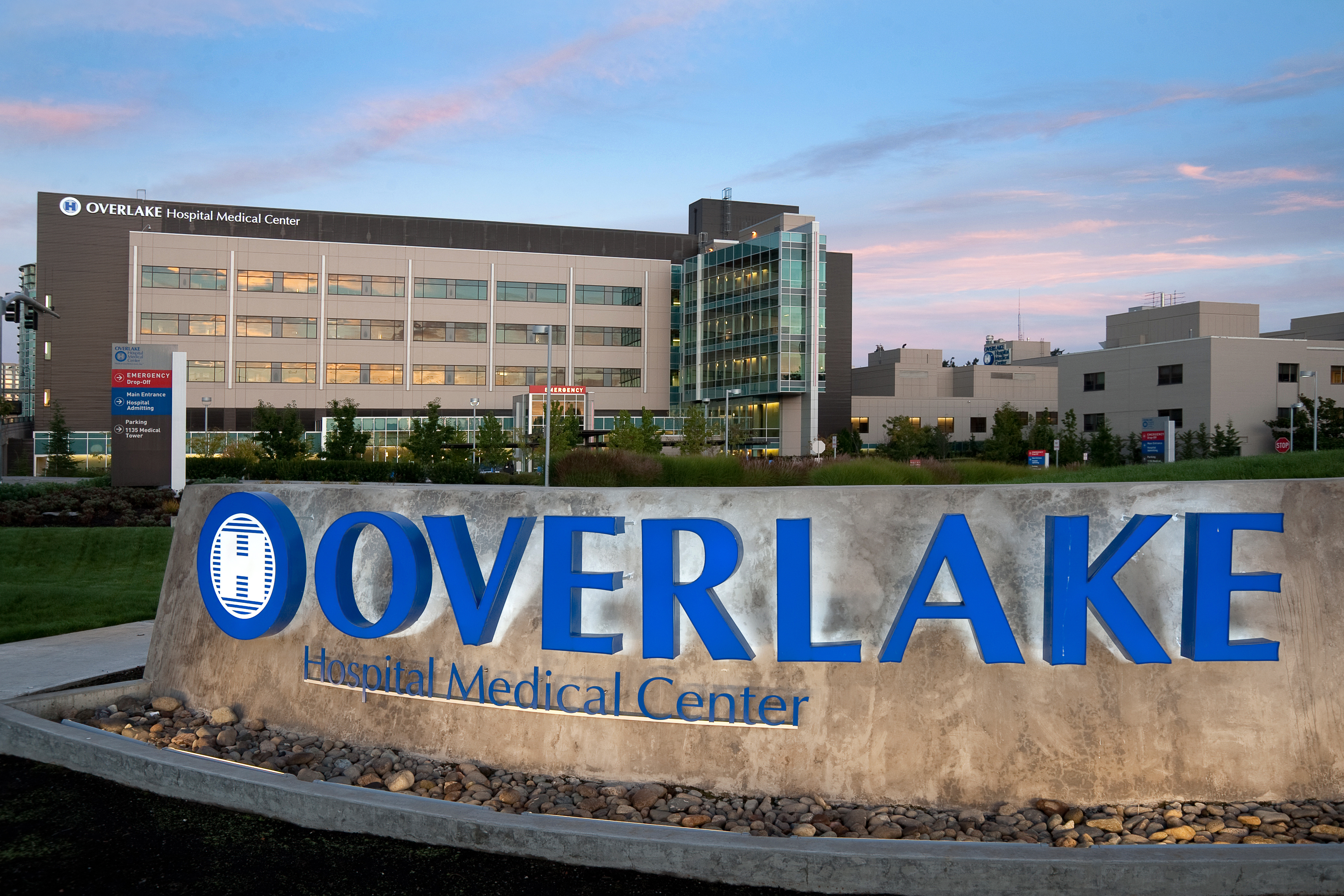
Overlake Hospital Medical Center (Bellevue, Wash.) | 100 hospitals and  health systems with great orthopedic programs 2017

Overlake Medical Center & Clinics invited about 110 donors who gave more than $10,000 to the Bellevue, Wash.-based health system to receive COVID-19 vaccines, drawing criticism from the state’s governor, according to The Seattle Times

Molly Stearns, the chief development officer at Overlake, emailed the “major donors,” as they were addressed in correspondence, about 500 open appointments in its COVID-19 clinic that were set to open Jan. 23. According to The Seattle Times, donors who received the email got an access code to register for appointments. 

The vaccination appointments weren’t exclusive to donors, but were open to some 4,000 people who were board members, some patients, volunteers, employees and retired health providers, Overlake told the newspaper. All registrants were supposed to meet state-specific eligibility requirements for the vaccine, according to The Seattle Times.

Tom DeBord, Overlake’s COO, told the newspaper that the invitation was sent after the hospital’s scheduling system stopped working properly. To speed up distribution, the system began contacting people whose emails they had access to, which included donors, retirees, some patients and board members.

“We’re under pressure to vaccinate people who are eligible and increase capacity. In hindsight, we could certainly look back and say this wasn’t the best way to do it,” Mr. DeBord told The Seattle Times.

Once Gov. Jay Inslee’s office found out about the “invite-only” appointments, the office asked Overlake to shut down the sign-ups, which the system did.

In a Jan. 27 statement posted to the health system’s website, Overlake said all communications with people invited to sign up for the vaccine “made clear that people must show proof of eligibility under current Washington State requirements to ultimately be vaccinated, no matter who they are or how they are affiliated with us. We recognize we made a mistake by including a subset of our donors and by not adopting a broader outreach strategy to fill these appointments, and we apologize. Our intent and commitment has always been to administer every vaccine made available to us safely, appropriately, and efficiently.”

Read the full report here.