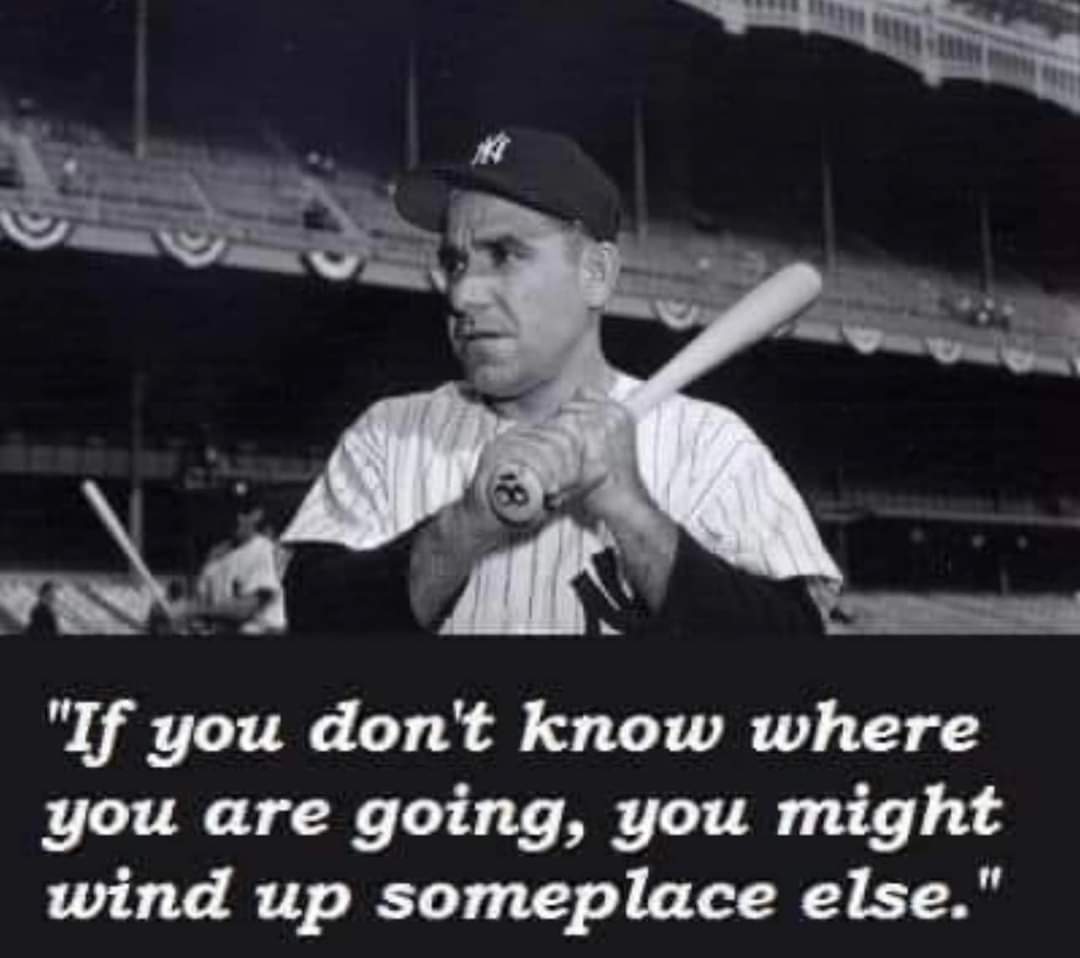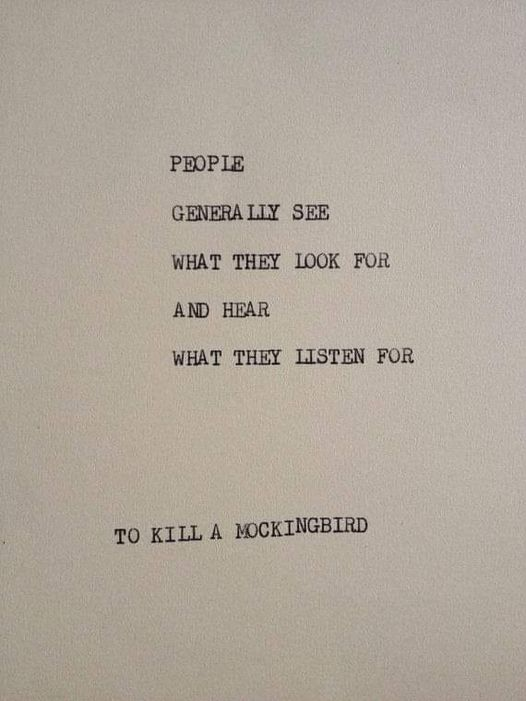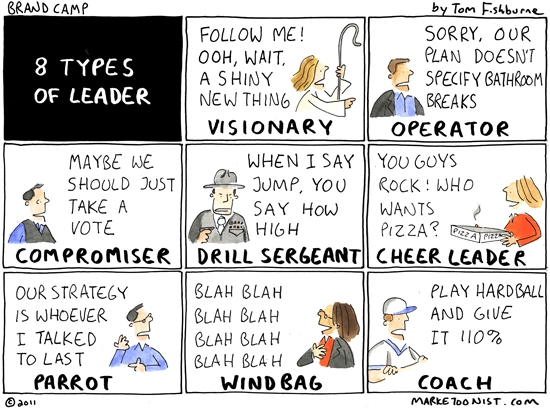
10 signs your board has a strong pulse

https://www.beckershospitalreview.com/hospital-management-administration/10-signs-your-board-has-a-strong-pulse.html

Great systems are usually governed by great boards, who are made up of people who match the following 10 descriptions. 

Great board members do more than comply with corporate governance structure and rules. Too often, board members have loose ties to one another, are passive to the wants and views of the CEO or are not as informed about the specifics of healthcare as they ought to be. We view all of these traits, and more, as signs that a board has lost its charge and is no longer effectively governing.

We consider the following 10 items as descriptors of a board member who has a strong pulse and adds value to a governing body. 

1. The board member is active, engaged and passionate about being a board member. No board can afford to have disengaged members. Bylaws and attendance requirements are important, but simply complying with them does not necessarily equate to being an active, contributing and passionate trustee. Engaged board members show up to meetings, and they show up prepared. While members typically refrain from meddling in day-to-day operations, boards with high levels of trust and candor make a point to communicate with the CEO outside of scheduled board meetings. Quality of board engagement is an important contributing factor to board performance, and there is a correlation between board engagement and the ability to attract board members. Everything that follows is dependent on board engagement. 

2. The board member has a point of view on what the organization must be great at, and the board member is vehement about it. Health systems cannot be all things to all people, although the opportunities to attempt this are ample. The best organizations are not static, but disciplined. Well-governed systems know the specialties they are great in, and they continue to double down on their strengths. Their boards are cognizant of where revenues come from and ensure resources are allocated accordingly.

3. The board member realizes that her top job is to ensure the system has great leadership in place. Leaders can fall short in all sorts of ways, some more visible and easily detectable than others. The active, engaged and vehement board does not easily accept disappointment. Boards have many steps at their disposal to manage a problem before firing a CEO or senior leader, but they should never function in a way where termination is unthinkable. Boards cause great damage when they tolerate mediocre performance or compromised values among people at the top of the organization. 

4. The board member understands accountability for patient safety and quality of care rests firmly in the boardroom. It rests on board members to insist that they receive sufficient, timely information about patient safety and care quality from the CEO. It rests on board leadership to ensure members have access to expertise and resources to properly obtain, process and interpret this information. It is not a bad idea for quality expertise to be included in board members’ competency profiles and for boards to undergo training and continued education in quality and safety. This is especially relevant for board members who come from industries outside of healthcare. It rests on the board when care quality declines or when lapses in patient safety are unaddressed: It is unacceptable for a board to say it missed the memo on care outcomes or that it did not understand the information in front of it. 

5. The board member is a watchdog on societal, governance and audit issues. Informed citizens make for strong board members. It is important to not only be plugged in and aware of the issues and challenges confronting the organization today, but to be aware of broader societal issues that could affect system strategy and performance tomorrow. This is not hypothetical thinking. The past year was a master class in how broader issues affected healthcare in acute and direct ways: systemic racism, a global supply chain and a churning labor market are just three. Good boards are made up of members who stay informed and are biased toward anticipatory thinking, in which they are eager to explore the ways in which issues larger than or outside of their industry may come to affect the organization they help govern. 

6. The board member supports the leadership team, but also questions it and holds it accountable. Board members cannot be pushovers for leadership. Directors are nominated by existing board directors on the nominating committee, which often includes the CEO. As a result, trustees can empathize with the CEO of the organization on whose board they sit. Empathy does not equate to blind acceptance, but this is nonetheless a dynamic trustees should be aware of and work to keep in check. It is not unusual for board members to struggle when giving candid feedback to the CEO, for example. As a result, chief executives carry on and live in a bigger and bigger bubble. 

It’s worth noting that the reverse can occur within boardrooms as well, in which board members disagree about strategy and seek a CEO they can easily influence. At the end of the day, being a pushover is not associated with strong leadership and should be avoided by both trustees and senior executives. Instead, trustees need to embrace constructive tension in the boardroom. Questions, challenges and disagreements that reach resolution can drive valuable dialogue and stronger outcomes.

7. The board member allows others to voice their thoughts. In many boardrooms, a small number of the participants do most of the talking while the majority stays relatively quiet. A powerful or well-connected member may dominate discussions. Ideally, boards embrace the middle in interpersonal communication, with trustees contributing not too much nor too little. Either goes against the board’s very reason for being. 

8. The board member helps ensure the board as a whole reflects the racial, ethnic, gender, religious and socioeconomic diversity of the community served by the organization. This is important for a number of reasons, with health equity being principal. Trustees are stewards for the communities they serve. For hospitals and health systems to increase opportunities for everyone to be healthier — including those who face the greatest obstacles — they need visions, strategies and goals that begin at the top from individuals who have viewpoints from the community. Without these insights, the board simply can’t govern effectively. Additionally, research has consistently found that teams of people who have diversity in knowledge and perspectives — as well as in age, gender and race — can be more creative and better avoid groupthink.

9. The board member is accessible. Just as no board wants its CEO in a bubble, governing bodies must actively resist this risk. For a stretch of time, boards were less visible groups of people who would meet four to six times a year in a mahogany-paneled room to decide the future of an organization that employs tens of thousands and serves even more. This dynamic cannot hold in healthcare. Community members and employees should know — or be able to easily learn — who serves on their health system’s board. If stakeholders bring issues or concerns to a board member, the trustee should be prepared to respond and follow up. In 2021’s healthcare, board members cannot breathe rarified air.

10. The board member emulates the values of the health system. So often when people talk about the tone being set at the top, they have the CEO in mind. The board is just as responsible, if not more responsible, for this charge. What a board permits, it promotes. Board members that emulate system values are better positioned to collaborate with mutual respect, candor and trust. Board members whose values are mismatched or personal agendas are at cross-purposes with the good of the organization should be replaced. 

Health System Chief Strategy Officer Roundtable Assessment: ‘The Near-Term is Tough, the Long-Term is Uncertain and the Deck is Stacked against Hospitals’

On November 2-3 in Austin, I moderated the 4th Annual CSO Roundtable* in which Chief Strategy/Growth Officers from 12 mid-size and large multi-hospital systems participated. The discussion centered on the future: the issues and challenges they facing their organizations TODAY and their plans for their NEAR TERM (3-5 years) and LONG-TERM (8-10 years) future. Augmenting the discussion, participants rated the likelihood and level of disruptive impact for 50 future state scenarios using the Future State Diagnostic Survey. *

Five themes emerged from this discussion:

1-Major change in the structure and financing of U.S. health system is unlikely.

  • CSOs do not believe Medicare for All will replace the current system. They anticipate the existing public-private delivery system will continue with expanded government influence likely.
  • Public funding for the system remains problematic: private capital will play a larger role.
  • CSOs think it is unlikely the public health system will be fully integrated into the traditional delivery system (aka health + social services). Most hospital systems are expanding their outreach to public health programs in local markets as an element of their community benefits strategy.
  • CSOs recognize that states will play a bigger role in regulating the system vis a vis executive orders and referenda on popular issues. Price controls for hospitals and prescription drugs, restraints on hospital consolidation are strong possibilities.
  • Consensus: conditions for hospitals will not improve in the immediate and near-term. Strategies for growth must include all options.

2-Health costs, affordability and equitable access are major issues facing the health industry overall and hospitals particularly.

  • CSOs see equitable access as a compliance issue applicable to their workforce procurement and performance efforts and to their service delivery strategy i.e., locations, patient experiences, care planning.
  • CSOs see reputation risk in both areas if not appropriately addressed in their organizations.
  • CSOs do not share a consensus view of how affordability should be defined or measured.
  • There is consensus among CSOs that hospitals have suffered reputation damage as a result of inadequate price transparency and activist disinformation campaigns. Executive compensation, non-operating income, discrepancies in charity care and community benefits calculations and patient “sticker shock” are popular targets of criticism.
  • CSO think increased operating costs due to medical inflation, supply chain costs including prescription drugs, and labor have offset their efforts in cost reduction and utilization gains.
  • CSO’s are focusing more of their resources and time in support of acute clinical programs where streamlining clinical processes and utilization increases are achievable near-term.
  • Consensus: the current financing of the system, particularly hospitals, is a zero-sum game. A fundamental re-set is necessary.

3-The regulatory environment for all hospitals will be more challenging, especially for not-for-profit health systems.

  • Most CSOs think the federal regulatory environment is hostile toward hospitals. They expect 340B funding to be cut, a site neutral payment policy in some form implemented, price controls for hospital services in certain states, increased federal and state constraints on horizontal consolidation vis a vis the FTC and State Attorneys General, and unreasonable reimbursement from Medicare and other government program payers.
  • CSOs believe the challenges for large not-for-profit hospital systems are unique: most CSOs think not-for-profit hospitals will face tighter restrictions on their qualification for tax-exempt status and tighter accountability of their community benefits attestation. Most expect Congress and state officials to increase investigations about for-profit activities, partnerships with private equity, executive compensation and other issues brought to public attention.
  • CSOs think rural hospital closures will increase without significant federal action.
  • Consensus: the environment for all hospitals is problematic, especially large, not-for-profit multi-hospitals systems and independent rural facilities.

4-By contrast, the environment for large, national health insurers, major (publicly traded) private equity sponsors and national retailers is significantly more positive.

  • CSOs recognize that current monetary policy by the Fed coupled with tightening regulatory restraints for hospitals is advantageous for national disruptors. Scale and access to capital are strategic advantages enjoyed disproportionately by large for-profit operators in healthcare, especially health insurers and retail health.
  • CSOs believe publicly traded private equity sponsors will play a bigger role in healthcare delivery since they enjoy comparably fewer regulatory constraints/limitations, relative secrecy in their day-to-day operations and significant cash on hand from LPs.
  • CSOs think national health insurer vertical consolidation strategies will increase noting that all operate integrated medical groups, pharmacy benefits management companies, closed networks of non-traditional service providers (i.e. supplemental services like dentistry, home care, et al) and robust data management capabilities.
  • CSOs think national retailers will expand their primary care capabilities beyond traditional “office-based services” to capture market share and widen demand for health-related products and services
  • Consensus: national insurers, PE and national retailers will leverage their scale and the friendly regulatory environment they enjoy to advantage their shareholders and compete directly against hospital and medical groups.

5-The system-wide shift from volume to value will accelerate as employers and insurers drive lower reimbursement and increased risk sharing with hospitals and medical groups.

  • CSOs think the pursuit of value by payers is here to stay. However, they acknowledge the concept of value is unclear but they expect HHS to advance standards for defining and measuring value more consistently across provider and payer sectors.
  • CSOs think risk-sharing with payers is likely to increase as employers and commercial insurers align payment models with CMS’ alternative payment models: the use of bundled payments, accountable care organizations and capitation is expected to increase.
  • CSOs expect network performance and data management to be essential capabilities necessary to an organization’s navigation of the volume to value transition. CSOs want to rationalize their current acute capabilities by expanding their addressable market vis a vis referral management, diversification, centralization of core services, primary and preventive health expansion and aggressive cost management.
  • Consensus: successful participation in payer-sponsored value-based care initiatives will play a bigger role in health system strategy.

My take:

The role of Chief Strategy Officer in a multi-hospital system setting is multi-functional and unique to each organization. Some have responsibilities for M&A activity; some don’t. Some manage marketing, public relations and advocacy activity; others don’t. All depend heavily on market data for market surveillance and opportunity assessments. And all have frequent interaction with the CEO and Board, and all depend on data management capabilities to advance their recommendations about risk, growth and the future. That’s the job.

CSOs know that hospitals are at a crossroad, particularly not-for-profit system operators accountable to the communities they serve. In the 4Q Keckley Poll, 55% agreed that “the tax exemption given not-for-profit hospitals is justified by the community benefits they provide”  but 45% thought otherwise. They concede their competitive landscape is more complicated as core demand shifts to non-hospital settings and alternative treatments and self-care become obviate traditional claims-based forecasting. They see the bigger players getting bigger: last week’s announcements of the Cigna-Humana deal and expansion of the Ascension-LifePoint relationship cases in point. And they recognize that their reputations are under assault: the rift between Modern Healthcare and the AHA over the Merritt Research ’s charity care study (see Hospital section below) is the latest stimulant for not-for-profit detractors.

In 1937, prominent literary figures Laura Riding and Robert Graves penned a famous statement in an Epilogue Essay that’s especially applicable to hospitals today: “the future is not what it used to be.”

For CSO’s, figuring that out is both worrisome and energizing.

The Conundrum facing Not-for-Profit Hospital Systems

Does hospital ownership matter? According to a study published last week in Health Affairs Scholar, NOT MUCH. That’s a problem for not-for-profit hospitals who claim otherwise.

58% of U.S. hospitals are not-for-profit hospitals; the rest are public (19%) or investor-owned (24%). In recent months, not-for-profit systems have faced growing antagonism from regulators and critics who challenge the worthwhileness of their tax exemptions and reasonableness of the compensation paid their top executives.

The lion’s share of this negative attention is directed at large, not-for-profit hospital system operators. Case in point: last week, Banner Health (AZ) joined the ranks of high-profile operators taken to task in the Arizona Republic for their CEO’s compensation contrasting it to not-for-profit sectors in which compensation is considerably lower.

Unflattering attention to NFP hospitals, especially the big-name systems, is unlikely to subside in the near-term. U.S. healthcare has become a winner-take-all battleground increasingly dominated by large-scale, investor-owned interests in hospitals, medical groups, insurance, retail health in pursuit of a piece of the $4.6 trillion pie. 

The moral high ground once the domain of not-for-profit hospitals is shaky.

The NYU study examined whether hospital ownership influenced decisions made by consumers: they found “Fewer than one-third of respondents (29.5%) indicated that hospital status had ever been relevant to them in making decisions about where to seek care…significantly more important to respondents who indicated the lowest health literacy—74.7% of whom answered the key question affirmatively—than it was for people who indicated high health literacy, of whom only 18.3% found hospital ownership status to be relevant…also considerably more relevant for people working in health care than for those who did not work in health care (61.0% vs 24.5%)…

We found little evidence that hospital nonprofit status influenced Americans’ decisions about where to seek care. Ownership status was relevant for fewer than 30% of respondents and preference was greatest overall for public hospitals. Only 30–45% of respondents could correctly identify the ownership status of nationally recognized hospitals, and fewer than 30% could identify their local hospitals.

These findings suggest that contract failure does not currently provide a justification of nonprofit hospitals’ value; further scrutiny of tax exemption for nonprofit hospitals is warranted.”

Are NFP hospitals concerned? YES. It’s reality as systems address near term operational challenges and long-term questions about their strategies.

Last weekend, I facilitated the 4th Annual Chief Strategy Officers Roundtable in Austin TX sponsored by Lumeris. The group consisted of senior-level strategists from 11 not-for-profit systems and one for-profit. In one session, each reacted to 50 future state scenarios in terms of “likelihood” and “disruptive impact” in the NEAR term (3-5 years) and LONG TERM (8-10 years) using a 1 to 10 scale with 10 HI.

From these data and the discussion that followed, there’s consensus that the U.S. healthcare market is unlikely to change dramatically long-term, their short-term conditions will be tougher and their challenges unique.

  • Near-term cost containment is a priority. Hospitals are here-to-stay, but operating them will be harder.’
  • ‘Increased scale and growth are necessary imperatives for their systems.’
  • ‘Hospital systems will compete in a market wherein private capital and investor ownership will play a growing role, insurers will be hostile and value will the primary focus of cost-reduction by purchasers and policymakers.’
  • Distinctions between not-for-profit and for-profit hospitals are significant.’
  • ‘Conditions for hospitals will be tougher as insurers play a stronger hand in shaping the future.’

Given the NYU study findings (above) concluding NFP ownership has marginal impact on hospital choices made by consumers, it’s understandable NFPs are anxious.

My take:

The issues facing not-for-profit hospitals in the U.S. are unique and complex. Per the commentary of the CSOs, their market conditions are daunting and major changes in their structure, funding and regulation unlikely.

That means lack of public understanding of their unique role is a conundrum. 

Paul

PS: Issues about CEO compensation in healthcare are touchy and often unfair.

In every major NFP system, comp is set by the Independent Board Compensation Committee with outside consultative counsel. The vast majority of these CEOs aren’t in the job for the money joining their workforce in pursuit of the unique higher calling afforded service leaders in NFP healthcare.

Listening and Learning

Something I have been writing about and speaking about recently is how difficult it is to operate a hospital in post-Covid America.

The line-up of management and governing obstacles includes both old and new healthcare issues:

  • Financial instability
  • Ongoing labor disruption
  • Remnants of significant healthcare inflation
  • Payer chaos
  • A continuing pivot from inpatient to outpatient services
  • The endless introduction of alternative care options (CVS, Walgreens, Walmart, Amazon, and now Costco)

It takes considerable hard thinking within executive suites to figure out the best way forward; to find the best roadmap through—at a minimum—the six obstacles outlined above. And as I have noted in my recent speaking engagements, a solution to one of these obstacles might actually make others of these obstacles more difficult to solve.

I have in recent weeks been looking for a “thought platform” that can assist hospital C-suite executives in resetting managerial expectations and operational initiatives—expectations and initiatives that can more effectively cope with the current and distressingly difficult environment.

Moving the hospital organizational thought platform from its 2019 managerial themes to a more relevant platform that better suits the challenges of 2023 is a managerial problem all of its own. Simply telling a large and very complex healthcare organization to stop thinking in pre-Covid terms is not likely to accomplish much. Before you can establish the organizational thought platform that best guides your hospital forward, you will need a leadership team that is committed to creating a “listening and learning” healthcare company.

A good tool for making your way to a listening and learning organization and eventually to a new and more relevant thought platform is the book The First 90 Days: Proven Strategies for Getting Up to Speed Faster and Smarter, by Michael D. Watkins.

Mr. Watkins is a co-founder of Genesis Advisers and a professor at the IMD Business School in Lausanne, Switzerland. The First 90 Days was originally published in 2003 as a guide to business executives moving into new senior positions of major responsibility. But the book also contains general management advice which is relevant not only to new jobs, but also to executives struggling with fast-changing and especially difficult market conditions.

One of the most compelling chapters in The First 90 Days is a chapter that focuses on the absolute importance of executive learning and the need to accelerate that learning.

While Professor Watkins was making a general business point, I would suggest that the need to accelerate executive learning and listening was never more important than in the “right now” post-Covid healthcare environment. Professor Watkins posed a series of critical leadership learning questions that I have modified to reflect the complex operating conditions of the 2023 hospital.

From that perspective, here are six critical learning questions for the hospital leadership team:

  1. How effective are you as a hospital leader at learning about your current job and how that current job is changing?
  2. What is your learning agenda for your current assignment? Have your day-to-day responsibilities changed so dramatically that you no longer know what you need to know?
  3. Given questions one and two, how should you go about gaining better insight?
  4. What is the best structure for being a top-flight learner within your organization? Note that this is a question that has both individual and organizational implications.
  5. What support is there within your organization for ongoing day-to-day learning? Note this should not be viewed as “training.” This is how executives “learn” through constant interaction with their changing jobs and changing market conditions. We are headed here not toward “skillsets” but toward “learned strategies and insights.” The difference is material.
  6. Professor Watkins suggests creating a learning agenda that relates directly to an ongoing learning plan. What don’t you know right now and how are you going to learn what you don’t know? And, importantly, how has the healthcare macroeconomy made your job more difficult and why?

One of my last blogs focused on the importance of vision and strategy in the post-Covid hospital recovery process; the importance of reinventing the hospital of the future that best fits into a rapidly changing marketplace. This marketplace requires entirely new skillsets and functions on top of changing shared experiences and perceived social values. Finding the right going-forward strategy and vision is the first imperative.

But without executive learning and listening that leads directly to organizational-wide learning and listening, the chances of finding your way to that highest and best and most effective vision and strategy will be greatly diminished.

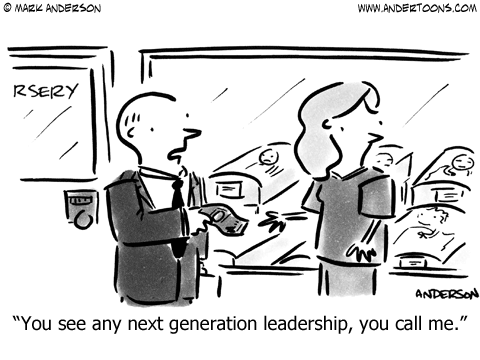
Cartoon – Next Generation Leadership

“Culture Eats Strategy for Breakfast” But Probably Not Right Now

https://www.kaufmanhall.com/insights/thoughts-ken-kaufman/current-management-issues-healthcare-c-suite?mkt_tok=NjU0LUNOWS0yMjQAAAGN5bowgtV1D72jA8pbxTCk4NjIzNuu9fxXT5eRT0vb8A3oKGzQB_5C2mtXCgYRufhJVxSpI0VqOQ6lwqJvDhs6pzxAVL1Xsoxc5EfcQUJr7Bhu

2022 and 2023 have been particularly difficult operating years for hospital providers. The financial challenges stand out but as we concluded in the August 7, 2023, blog, strategic planning and vision issues may be more compelling over the long term.

We previously identified two strategic issues that need to be reckoned with:

  1. Strategic Relevance. Has everything changed organizationally post-Covid or does it just feel that way? If your strategy still seems dynamic and relevant, how do you capitalize on that? If your strategy feels entirely lost, how do you recapture organizational excitement and enthusiasm?
  2. Vision. How important is organizational vision right now? You know the old saying, “a camel is a horse designed by a committee.” And many vision statements wind up looking more like that camel than like that desired horse. But be that as it may: Covid has been so disruptive to the organizational momentum of hospitals that finding a relevant and executable vision should be top of mind right now.

Given circumstances, one obvious conclusion is that any strategic exercise undertaken in the current moment needs to be well accomplished. Executive teams, clinicians, and Boards are simply too distracted or too tired to spend time on planning processes that are not well thought out and highly directed. This immediate observation next demands a discussion that outlines post-Covid strategic principles, definitions, and the creation of a vision that relates immediately to actionable strategy. It would be an understatement to note that for hospitals there is no “strategic time” to waste.

Start the post-Covid planning process with four very clear strategic definitions:

  1. Vision: A time-bounded view of the future destination of your business.
  2. Strategic Workstreams: The ways you devise to achieve the strategic vision.
  3. Goals: Goals are the lag outcomes that you seek to achieve for your customers.
  4. Metrics: Metrics measure the progress toward the goals.

Working from these definitions then allows you to move toward an organizationally appropriate vision and an actionable strategy that efficiently supports that vision as follows:

  1. The vision should drive growth. Many hospital organizations have stopped growing organically. No growth is harmful financially, clinically, intellectually, and creatively.
  2. The vision should differentiate the business from that of competitors. Everybody and everything competes with hospitals these days: other hospitals, pharmacy companies, insurers, private equity. It has no end.
  3. The vision should endeavor to solve a basic customer problem or problems. The problem list is pretty apparent. The list of helpful solutions has been harder to come by.
  4. The vision should be either incremental or transformational. In all candor, most hospitals’ post-Covid vision is going to be incremental. It takes considerable financial and capital capacity to move toward a transformational vision. That kind of capacity is available at only a small minority of hospitals nationwide.
  5. Recognize that a transformational vision will require active management of culture and stakeholders. If you pivot to a transformational vision, you are likely to upset certain stakeholders and your existing culture may need to also adjust to the transformation.
  6. Be prepared to modify or improve upon the vision, workstreams, and/or goals as you get ongoing feedback during the planning and execution process. Under any circumstances you need to be open to learning all along the way. For this to happen, your organization needs to be a listening organization and a learning organization. Not all hospitals and health systems are.

Does all this sound hard? It should sound hard because it is hard. Leading the hospital back to financial stability while finding a relevant post-Covid vison that proves to be competitive and, at the same time, energizes your team to find renewed purpose in your hospital’s work; that is unforgivably hard.

As Piet Hein, the Danish mathematician, profoundly said, “Problems worthy of attack prove their worth by fighting back.” And fighting back is the hospital job of the moment.

Note: “Culture eats strategy for breakfast” is a quote attributed to management consultant and writer Peter Drucker.