


Cartoon – Redirecting Shared Passion

The Anti-Kickback Statute forbids providers from paying for or otherwise soliciting other parties to get them to refer patients covered by federal programs like Medicare, while the Physician Self-Referral Law, otherwise known as the Stark Law, prohibits a hospital from billing for those services. Despite the laws and a bevy of other regulations resulting in a barrage of DOJ lawsuits and been a thorn in the side of providers for decades, fraud is still rampant in healthcare.
Of the more than $3 billion recovered by the government in 2019 from fraud and false claims, almost 90% involved the healthcare industry, according to DOJ data.
“Physicians must make referrals and other medical decisions based on what is best for patients, not to serve profit-boosting business arrangements,” HHS Office of Inspector General Special Agent in Charge Lamont Pugh said in a statement on the AGHS settlement.
Cleveland Clinic struck a deal with AGHS in 2014, agreeing to pay $100 million for minority ownership in the system. The agreement gave the clinic the option to fully acquire AGHS after a year, which it exercised as soon as that period expired in August 2015.
The settlement stems from a whistleblower suit brought by AGHS’s former Director of Internal Audit Beverly Brouse, who will receive a portion of the settlement, the DOJ said. The False Claims Act allows whistleblowers to share in the proceeds of a suit.
As fraud has increased in healthcare over the past decade — the DOJ reported 247 new matters for potential investigation in 2000, 427 in 2010 and 505 in 2019 — the federal government has renewed its efforts to crack down on illegal schemes. That’s resulted in the formation of groups like the Medicare Fraud Strike Force in 2007 and the Opioid Fraud and Abuse Detection Unit in 2017, which has in turn resulted in the DOJ recovering huge sums in stings, settlements and guilty verdicts.
Some of the biggest settlements reach into the hundreds of millions, and involve billions in false claims.
In 2018, DOJ charged more than 600 people for falsely billing federal programs more than $2 billion; last year federal agencies charged almost 350 people for submitting more than $6 billion in false claims. That last case led to creation of a rapid response strike force to investigate fraud involving major providers in multiple geographies.
Other large settlements include Walgreens’ $270 million fine in 2019 to settle lawsuits accusing the pharmacy giant of improperly billing Medicare and Medicaid for drug reimbursements; hospital operator UHS’ $122 million settlement last summer finalizing a fraudulent billing case with the DOJ after being accused of fraudulently billing Medicare and Medicaid for services at its behavioral healthcare facilities; and West Virginia’s oldest hospital, nonprofit Wheeling Hospital, agreeing in September to pay $50 million to settle allegations it systematically violated the laws against physician kickbacks, improper referrals and false billing.
EHR vendor eClinicalWorks paid $155 million to settle False Claims Act allegations around misrepresentation of software capabilities in 2017, while Florida-based EHR vendor Greenway Health was hit with a $57.3 million fine in 2019 to to settle allegations the vendor caused users to submit false claims to the EHR Incentives Program.




https://mailchi.mp/bfba3731d0e6/the-weekly-gist-july-2-2021?e=d1e747d2d8

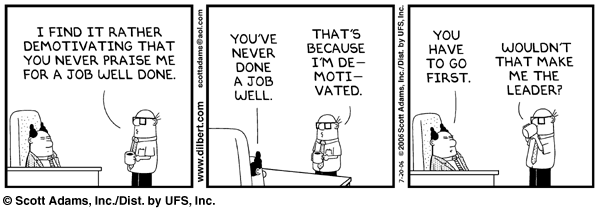
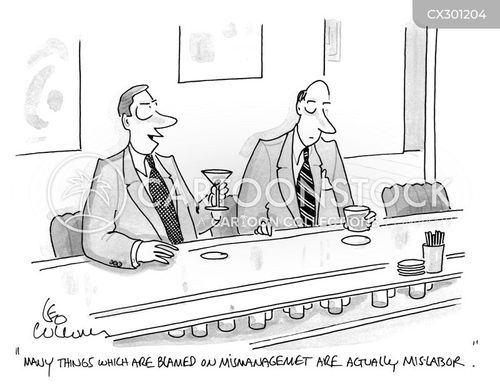
In theory, the idea of salaried compensation for employed physicians makes a lot of sense. For one thing, it’s blessedly simple, with the potential to remove the tensions that arise in shifting to value-based payment or implementing lower-cost (but lower-reimbursement) care models like telemedicine.
However, medical group leaders have long feared that productivity would tank if doctors were put on salary. (As a consulting colleague said recently, the switch to salary would cause a 20+ percent drop in productivity in the medical group, creating a challenge akin to keeping an airline profitable after removing a quarter of the seats on its planes). We’ve been expecting that more doctors might seek stable compensation models in the wake of the pandemic, and so weren’t entirely surprised when the question of moving to straight salary came up in three conversations over the past two weeks.
In all three cases, leaders are hoping to create more predictability, and to decrease the resources and effort needed to execute against a menu of complex plans. They believe that a move to salary is inevitable, and their questions have more to do with timing.
Gauging when to make the move should be determined not by external market shifts, but by internal cultural and operational readiness. Are the systems in place to enable doctors to work at a high level of efficiency? And do we have the group collaboration needed to maintain high performance without paying doctors as if they are salesmen on commission?
Another wrinkle has popped up for groups who might be ready now: the past year has upended the benchmarks that groups might otherwise use to inform decisions on where to set salaries. Nevertheless, over time we expect more groups to move in this direction, with the hope of getting off the “hamster wheel” of compensation committee meetings and ever more exotic permutations of bonus plans, in search of a more stable model.
 HENRY KOTULA