Bringing bots into the health system

https://mailchi.mp/95e826d2e3bc/the-weekly-gist-august-28-2020?e=d1e747d2d8

Robotic Process Automation – Everything You Need to Know - Part 1 -  ITChronicles

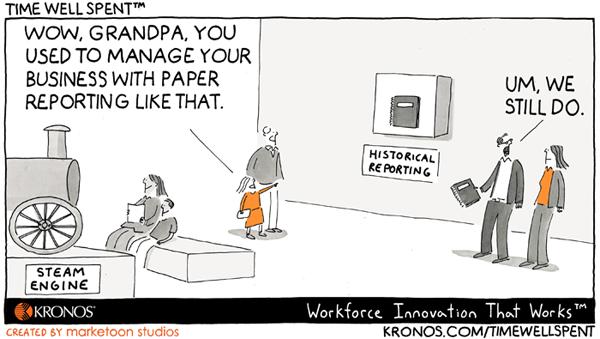
This week we hosted a member webinar on an application of artificial intelligence (AI) that’s generating a lot of buzz these days in healthcare—robotic process automation (RPA).

That bit of tech jargon translates to finding repetitive, often error-prone tasks performed by human staff, and implementing “bots” to perform them instead. The benefit? Fewer mistakes, the ability to redeploy talent to less “mindless” work (often with the unexpected benefit of improving employee engagement), and the potential to capture substantial efficiencies. That last feature makes RPA especially attractive in the current environment, in which systems are looking for any assistance in lowering operating expenses. 

Typical processes where RPA can be used to augment human staff include revenue cycle tasks like managing prior authorization, simplifying claims processing, and coordinating patient scheduling. Indeed, the health insurance industry is far ahead of the provider community in implementing these machine-driven approaches to productivity improvement.

We heard early “lessons learned” from one member system, Fountain Valley, CA-based MemorialCare, who’s been working with Columbus, OH-based Olive.ai, which bills itself as the only “AI as a service” platform built exclusively for healthcare.

Listening to their story, we were particularly struck by the fact that RPA is far more than “just” another IT project with an established start and finish, but rather an ongoing strategic effort. MemorialCare has been particularly thoughtful about involving senior leaders in finance, operations, and HR in identifying and implementing their RPA strategy, making sure that cross-functional leaders are “joined at the hip” to manage what could prove to be a truly revolutionary technology.

Having identified scores of potential applications for RPA, they’re taking a deliberate approach to rollout for the first dozen or so applications. One critical step: ensuring that processes are “optimized” (via lean or other process improvement approaches) before they are “automated”. MemorialCare views RPA implementation as an opportunity to catalyze the organization for change—“It’s not often that one solution can help push the entire system forward,” in the words of one senior system executive.

We’ll be keeping an eye on this burgeoning space for interesting applications, as health systems identify new ways to deploy “the bots” across the enterprise.


Warren Buffett: An appreciation

https://www.mckinsey.com/business-functions/strategy-and-corporate-finance/our-insights/warren-buffett-an-appreciation?cid=other-eml-alt-mip-mck&hlkid=500c2a923cdd4ff19d66acac00e2a9fa&hctky=9502524&hdpid=e758f2ed-7de7-4263-9faa-7daf7b3bdaa7

Celebrating Warren Buffett on his 90th birthday | McKinsey

As Warren Buffett turns 90, the story of one of America’s most influential and wealthy business leaders is a study in the logic and discipline of understanding future value.

Patience, caution, and consistency. In volatile times such as these, it may be difficult for executives to keep those attributes in mind when making decisions. But there are immense advantages to doing so. For proof, just look at the steady genius of now-nonagenarian Warren Buffett. The legendary investor and Berkshire Hathaway founder and CEO has earned millions of dollars for investors over several decades (exhibit). But very few of Buffett’s investment decisions have been reactionary; instead, his choices and communications have been—and remain—grounded in logic and value.

Buffett learned his craft from “the father of value investing,” Columbia University professor and British economist Benjamin Graham. Perhaps as a result, Buffett typically doesn’t invest in opportunities in which he can’t reasonably estimate future value—there are no social-media companies, for instance, or cryptocurrency ventures in his portfolio. Instead, he banks on businesses that have steady cash flows and will generate high returns and low risk. And he lets those businesses stick to their knitting. Ever since Buffett bought See’s Candy Shops in 1972, for instance, the company has generated an ROI of more than 160 percent per year —and not because of significant changes to operations, target customer base, or product mix. The company didn’t stop doing what it did well just so it could grow faster. Instead, it sends excess cash flows back to the parent company for reinvestment—which points to a lesson for many listed companies: it’s OK to grow in line with your product markets if you aren’t confident that you can redeploy the cash flows you’re generating any better than your investor can.

As Peter Kunhardt, director of the HBO documentary Becoming Warren Buffett, said in a 2017 interview, Buffett understands that “you don’t have to trade things all the time; you can sit on things, too. You don’t have to make many decisions in life to make a lot of money.” And Buffett’s theory (roughly paraphrased) that the quality of a company’s senior leadership can signal whether the business would be a good investment or not has been proved time and time again. “See how [managers] treat themselves versus how they treat the shareholders .…The poor managers also turn out to be the ones that really don’t think that much about the shareholders. The two often go hand in hand,” Buffett explains.

Every few years or so, critics will poke holes in Buffett’s approach to investing. It’s outdated, they say, not proactive enough in a world in which digital business and economic uncertainty reign. For instance, during the 2008 credit crisis, pundits suggested that his portfolio moves were mistimed, he held on to some assets for far too long, and he released others too early, not getting enough in return. And it’s true that Buffett has made some mistakes; his decision making is not infallible. His approach to technology investments works for him, but that doesn’t mean other investors shouldn’t seize opportunities to back digital tools, platforms, and start-ups—particularly now that the COVID-19 pandemic has accelerated global companies’ digital transformations.

Still, many of Buffett’s theories continue to win the day. A good number of the so-called inadvisable deals he pursued in the wake of the 2008 downturn ended paying off in the longer term. And press reports suggest that Berkshire Hathaway’s profits are rebounding in the midst of the current economic downturn prompted by the global pandemic.

At age 90, Buffett is still waging campaigns—for instance, speaking out against eliminating the estate tax and against the release of quarterly earnings guidance. Of the latter, he has said that it promotes an unhealthy focus on short-term profits at the expense of long-term performance.

“Clear communication of a company’s strategic goals—along with metrics that can be evaluated over time—will always be critical to shareholders. But this information … should be provided on a timeline deemed appropriate for the needs of each specific company and its investors, whether annual or otherwise,” he and Jamie Dimon wrote in the Wall Street Journal.

Yes, volatile times call for quick responses and fast action. But as Warren Buffett has shown, there are also significant advantages to keeping the long term in mind, as well. Specifically, there is value in consistency, caution, and patience and in simply trusting the math—in good times and bad.


Cartoon – The Vagueness Campaign

The Dilbert Strip for September 27, 2012: Social Media Expert This ...

The right to vote is not in the Constitution

https://theconversation.com/the-right-to-vote-is-not-in-the-constitution-144531?utm_medium=email&utm_campaign=Latest%20from%20The%20Conversation%20for%20August%2026%202020%20-%201713516549&utm_content=Latest%20from%20The%20Conversation%20for%20August%2026%202020%20-%201713516549+Version+A+CID_ca860340297de2ef2c2c85020b74576b&utm_source=campaign_monitor_us&utm_term=The%20right%20to%20vote%20is%20not%20in%20the%20Constitution

Why The Right To Vote Is Not Enshrined In The Constitution by Sean ...

If you’re looking for the right to vote, you won’t find it in the United States Constitution or the Bill of Rights.

The Bill of Rights recognizes the core rights of citizens in a democracy, including freedom of religion, speech, press and assembly. It then recognizes several insurance policies against an abusive government that would attempt to limit these liberties: weapons; the privacy of houses and personal informationprotections against false criminal prosecution or repressive civil trials; and limits on excessive punishments by the government.

But the framers of the Constitution never mentioned a right to vote. They didn’t forget – they intentionally left it out. To put it most simply, the founders didn’t trust ordinary citizens to endorse the rights of others.

They were creating a radical experiment in self-government paired with the protection of individual rights that are often resented by the majority. As a result, they did not lay out an inherent right to vote because they feared rule by the masses would mean the destruction of – not better protection for – all the other rights the Constitution and Bill of Rights uphold. Instead, they highlighted other core rights over the vote, creating a tension that remains today.

James Madison of Virginia. White House Historical Association/Wikimedia Commons

Relying on the elite to protect minority rights

Many of the rights the founders enumerated protect small groups from the power of the majority – for instance, those who would say or publish unpopular statements, or practice unpopular religions, or hold more property than others. James Madison, a principal architect of the U.S. Constitution and the drafter of the Bill of Rights, was an intellectual and landowner who saw the two as strongly linked.

At the Constitutional Convention in 1787, Madison expressed the prevailing view that “the freeholders of the country would be the safest depositories of republican liberty,” meaning only people who owned land debt-free, without mortgages, would be able to vote. The Constitution left voting rules to individual states, which had long-standing laws limiting the vote to those freeholders.

In the debates over the ratification of the Constitution, Madison trumpeted a benefit of the new system: the “total exclusion of the people in their collective capacity.” Even as the nation shifted toward broader inclusion in politics, Madison maintained his view that rights were fragile and ordinary people untrustworthy. In his 70s, he opposed the expansion of the franchise to nonlanded citizens when it was considered at Virginia’s Constitutional Convention in 1829, emphasizing that “the great danger is that the majority may not sufficiently respect the rights of the Minority.”

The founders believed that freedoms and rights would require the protection of an educated elite group of citizens, against an intolerant majority. They understood that protected rights and mass voting could be contradictory.

Scholarship in political science backs up many of the founders’ assessments. One of the field’s clear findings is that elites support the protection of minority rights far more than ordinary citizens do. Research has also shown that ordinary Americans are remarkably ignorant of public policies and politicians, lacking even basic political knowledge.

Is there a right to vote?

What Americans think of as the right to vote doesn’t reside in the Constitution, but results from broad shifts in American public beliefs during the early 1800s. The new states that entered the union after the original 13 – beginning with Vermont, Kentucky and Tennessee – did not limit voting to property owners. Many of the new state constitutions also explicitly recognized voting rights.

As the nation grew, the idea of universal white male suffrage – championed by the commoner-President Andrew Jackson – became an article of popular faith, if not a constitutional right.

After the Civil War, the 15th Amendment, ratified in 1870, guaranteed that the right to vote would not be denied on account of race: If some white people could vote, so could similarly qualified nonwhite people. But that still didn’t recognize a right to vote – only the right of equal treatment. Similarly, the 19th Amendment, now 100 years old, banned voting discrimination on the basis of sex, but did not recognize an inherent right to vote.

A painting of Andrew Jackson

Andrew Jackson of Tennessee. Ralph Eleaser Whiteside Earl/Wikimedia Commons

Debates about voting rights

Today, the country remains engaged in a long-running debate about what counts as voter suppression versus what are legitimate limits or regulations on voting – like requiring voters to provide identification, barring felons from voting or removing infrequent voters from the rolls.

These disputes often invoke an incorrect assumption – that voting is a constitutional right protected from the nation’s birth. The national debate over representation and rights is the product of a long-run movement toward mass voting paired with the longstanding fear of its results.

The nation has evolved from being led by an elitist set of beliefs toward a much more universal and inclusive set of assumptions. But the founders’ fears are still coming true: Levels of support for the rights of opposing parties or people of other religions are strikingly weak in the U.S. as well as around the world.

Many Americans support their own rights to free speech but want to suppress the speech of those with whom they disagree.

Americans may have come to believe in a universal vote, but that value does not come from the Constitution, which saw a different path to the protection of rights.


Fake vs genuine people: 10 ways to spot the difference

Fake vs genuine people: 14 ways to spot the difference

Check Out 10 Ways To Identify Fake People - EKSUOLOFOFO

Not sure who you’re dealing with?

Fake vs genuine people may look the same, but with a little bit of knowledge, you can spot the difference.

Fake people are ingenuine and often hypocritical. They do things for their own gain but hide behind altruism.

Genuine people are true to themselves. They do things because they want to, not because they have to. Plus, they enjoy helping people.

Fake people aren’t just frustrating—they can even be damaging to your health.

In this article, I’ll break down the key difference between fake and genuine people, explain how to tell if someone is a genuine person, and share some tips on standing up for yourself.

Let’s begin.

Fake vs genuine people

The key difference between fake and genuine people is honesty.

Fake people aren’t honest with themselves and the people around them. They do things based on lies and deceit.

Genuine people are honest with themselves and others. Their actions are aligned with what they believe.

The problem is that fake people often don’t know they’re being fake. They may be acting based on lies without knowing how hypocritical they are being.

Fake people don’t know they’re fake because of self-deception.

How can you recognize someone is being fake?

5 things fake people often do

1) Lead people on

Fake people often lead people on because they are trying to please everyone. They spend so much time trying to please everyone else that a lot of people get let down in the process.

2) Cancel plans

Whether they never invite you out to do things in the first place or they cancel at the last minute, they’re fake. They’re probably so busy trying to please the other people that they made plans with that they have to cancel yours.

3) Talk about you behind your back

This is what’s really annoying about fake people. To your face, you’re their best friend. But as soon as you’re away, you’re nothing. They sit and gossip about you to make themselves look better to whoever it is they’re trying to impress.

4) Never get mad

You know who gets mad? Real people! Those who claim that they hardly ever get mad or frustrated about things are fake. Everyone is passionate about something, and everyone gets mad.

5) Disappear when you need them

Need help moving? Going through a difficult breakup? Fake people disappear right when you need them. As soon as you ask them for help, they are gone.

How to tell if someone is genuine

It can be hard to tell if someone is a genuinely nice person or if they are only being nice to you because they need something from you.

Unfortunately, many people are only out to help themselves, but there are still lots of genuine people walking around on the planet.

Here’s how you can spot a genuine person from a fake person.

1) Have a few close friends

Those who are authentic to their selves know that they can’t do everything. They can’t commit to dozens of people, so they have a few close friends that they really commit to.

2) Show up

When a true, genuine person makes plans with you, they’re going to show up. They don’t cancel on you last minute, and they aren’t going to make you wait for a “date” that’s never going to happen. They enjoy your company.

3) Admire people

Genuine people don’t gossip. Instead, they admire the positive qualities that they find in people around them. They talk about the positive, not the negative, and like to share good things.

4) Get angry and feel hurt

Real people feel things. They aren’t going to sugarcoat and act as though nothing bothers them. When genuine people are passionate about something, they’re here to show it. They invest their time and energy into their passions, and they’ll make it known.

5) There for you

When you’re hurting, genuine people hurt with you. They aren’t going to make you feel like you have no one. You can rely on them, and when something happens or you need a helping hand, they’ll be there.

Standing up to fake people

If you have fake people in your life, it’s essential to build the courage to stand up for yourself.

It’s not just about not being pushed around by this particular fake person, though this is important.

It’s also important because it teaches you to set boundaries.

This will make a big difference the next time someone fake enters your life.

I learned the importance of boundary-setting in Rudá Iandê’s free masterclass on embracing your inner beast. It’s a brilliant masterclass and completely changed how I see myself.

I used to think it was a bad idea standing up for myself. I would worry so much about what other people think.

By the time I finished watching Rudá Iandê’s masterclass, my perspective had completely shifted.

Are fake people bad for you?

Fake people are annoying, but are they actually bad for your health? Well, yes, they can be.

It takes time and energy to invest in a relationship, and when that investment is in something fake, it’s hurtful. But it goes beyond that.

Plenty of studies have found that there is a link between our relationships and our well-being. When our social relationships are complicated or one-sided, we feel worse. The strength of our connection to people is what really matters.

So, what does this mean?

Basically, if you have 20 friends, but none of them would come and pick you up after you’ve blown a tire, then your relationships aren’t that great.

But if you had just one or two friends that you could count on, that would show up when needed, the strength of that connection is great. This helps you to feel whole and connected to others, which is beneficial to your health.

Why are there so many fake people?

In today’s world, it seems like there are a lot more fake people than ever before. And it may be true. Thanks to social media and the notoriety that a person can gain from it, it seems like everyone wants to be famous.

To be famous, at least some people have to like you. So, a lot of people will act fake in hopes of getting a following and more people to like them. There are a lot of people who use the internet as a means to stop their loneliness, but it can just make it worse for them.

Why do people act fake?

People act fake because:

  • They aren’t happy with who they truly are
  • They want to feel better about themselves
  • They want people to follow them
  • They want to control others
  • They don’t like their life

Everyone is fake sometimes

The truth is when it comes to fake vs genuine people, everyone is fake sometimes. Whether you’re fake to your coworkers or your so-called friends is up to you. But being fake isn’t something that is good for us.

The opposite, being authentic, is what makes us better people. And while I’m going to talk a bit more about authenticity in a moment, I just want to say that anyone who is fake and putting on a show, isn’t worth your time. You make strong connections with others, and those are the friendships to keep.

How do you really know you’re dealing with a fake person? Well, I’m glad you asked. There are 10 easy ways to test whether the person you’re dealing with is fake or genuine.

10 ways to know you’re dealing with a fake person

Every fake person has 10 tell-tale signs that they’re fake. No matter how hard they try to hide how unauthentic they are, these signs say otherwise:

1) Full of themselves

It probably doesn’t come as a surprise, but fake people are full of themselves. They think that they’re better than everyone around them, and they love to brag. If you find that you have that one friend who is always trying to brag about their own accomplishments, they’re not being genuine.

2) Are manipulative

Fake people have a sort of “mob mentality.” They manipulate others and want everyone to believe what they believe. To do this, they will appeal to others’ emotions. Sometimes, they’ll bandwagon behind a “hot issue” or something that will give them the most notoriety.

3) Jaded with emotions

Like I mentioned before, fake people don’t do emotions well. Most of the time, they think that they’re a waste of time. Since it doesn’t get them ahead, they don’t do them.

Sure, they can fake emotions here and there to get a rise out of people and hope for more people to follow them. But, that’s about as far as they get. Their emotions are jaded, and when you come to them for help, they’re going to be emotionally there for you.

4) Judge you

Do you have a friend that is always judging you? A lot of times, fake people are insecure about what they have. They think that if you don’t believe the same things they do, then you’re wrong. To counteract their own insecurity, they judge you.

It doesn’t feel good. They even use this judgment as a way to try and get back control. Since they want to build their own egos up, they think that by putting you down, it makes them look better. This is where all of their energy is focused.

5) Have hostile humor

Though they may plaster on a kind smile and say nice things, when their humor comes out, it’s clear to see that they’re fake. Many people use hostile humor to try and hide the shame that they feel with their own selves.

Since fake people aren’t happy with their true, authentic selves, they use hostile humor to make them feel better. By putting you down, it builds them up. Then when you get mad about their hostile humor, they blow you off or act like it isn’t a big deal. Remember, they don’t “do” emotions.

6) Aren’t consistent

It’s that friend who always has a new idea. One moment they’re investing in stocks, the next moment their opening up an online store, and finally, they’ve found their dream of being a realtor.

Sound familiar?

Those friends who lack consistency and can’t stay still aren’t true to themselves. They’re as fake as they come, and they don’t care if they leave a big mess behind them.

7) Don’t learn lessons

Fake people don’t get a free pass when it comes to their mistakes, but they think that they do. When they do make a mistake, they aren’t going to admit to it. Or even if they do admit to it, they aren’t going to learn from it.

Genuine people recognize their mistakes and learn from them. Fake people would rather act like it never happened in the first place.

8) Unrealistic expectations

Not only do they put you down and try to control you, but fake people also have unrealistic expectations. They expect people to drop everything for them last-minute, but they wouldn’t do the same for you.

On top of that, they expect to have the best of everything. Often times, fake people are constantly buying new things, especially expensive ones. They want to showcase the success that they have, and they believe that their belongings are how they can do that.

9) Always need the attention

Having your engagement party? Well, your fake friend is about to announce a huge promotion. If they have the chance to steal the spotlight, they will. These people want to be the star of the show, and they don’t care what show it is.

Attention always has to be focused on this person because they demand it. They want to be noticed, and they need that praise from others to feel good about themselves. Unfortunately, it leads to a lot of hurt people when they do something toxic like this.

10) Don’t respect your boundaries

Maybe the biggest sign of fake people? They don’t respect your boundaries.

Once you talk to them, they blow you off. This can be if you bring up hurt feelings or some time where they made a mistake. Boundaries are nonexistent to them unless they were the ones that set them.

Because of this, these friendships can be hard to sever, and they can lead to a lot of pain. But anyone who doesn’t respect your boundaries is not worth keeping around in your life.

Be authentic and attract authenticity

When it comes to fake vs genuine people, it can be hard to know which is which. However, the 10 ways I’ve outlined is a great start. Because fake people usually look for people who will follow them or people who are easily controlled, the best way to get rid of fake people is by being authentic yourself.

As Rudá Iandê says, “Our world is full of fake perfection and happiness, but craving for authenticity.” It is by being your authentic self that you will find deep, lasting connections that will help you to lead a happy and healthy life.

Our lives are too short to spend investing in fake people. Choose to be yourself and be authentic, and you’ll find genuine people to share your life with.