

Category Archives: Leadership
Pay Cuts, Furloughs, Redeployment for Doctors and Hospital Staff

— Health systems see massive disruption from COVID-19
In Michigan, Trinity Health is furloughing 2,500 of its 24,000 employees. In Florida, Sarasota Memorial Health Care is taking “immediate steps to reduce costs, including temporary furloughs and reduced hours” for workers.
In less than 1 month, COVID-19 has made swift, deep cuts in hospital billings. Despite high volumes in the first 2 weeks, March revenue plunged by $16 million at Sarasota Memorial. Surgery cases fell by more than 50%, and volumes dropped by 45% at two emergency care centers and by 66% at seven urgent care centers.
Squeezed by plummeting income and climbing COVID-19 expenses, hospitals and health systems are bracing themselves for system-wide disruption by announcing temporary layoffs, reassignments, and pay cuts.
Many changes, like Trinity’s furloughs in Michigan, affect mainly non-clinical workers. Some alter compensation or duties for doctors, nurses, and other healthcare providers.
“In all parts of the country, physicians are being asked to sign agreements or acknowledgments for pay cuts ranging from 20% to 75%, depending on what their specialty is, where they are, and what the institutions are doing,” said Scott Weavil, JD, a California lawyer who counsels physicians nationwide about employment contracts.
“Many of these providers are not on the front lines of COVID, but they are still working,” Weavil noted. “Babies are being born. People are having accidents and visiting emergency departments. Urgent surgeries are happening. Physicians are at work or on call and ready to help if needed. And in most of these environments, there are patients who have tested positive for COVID-19,” he told MedPage Today.
“Ob/gyns aren’t doing a lot of elective procedures like hysterectomies, but they are delivering babies for COVID-positive patients, wearing donated cloth masks that may or may not be effective,” Weavil added.
In some cases, doctors have been sidelined and face the prospect of dwindling income as patient volumes fall. “We have 2,600 physicians and advanced-practice providers,” said Mark Briesacher, MD, senior vice president and chief physician executive of Intermountain Healthcare in Salt Lake City. “About 800 of them are on a patient volume-related type of contract, similar to what you would have in private practice.”
Because non-urgent and elective procedures are being delayed, some of these clinicians now see 30% to 50% fewer patients and could face big income drops, Briesacher told MedPage Today. “But we’ve put a floor in place,” he said: these providers will receive their usual pay until May 30, then 85% of that amount until normal patient volumes resume.
Redeployment can help practitioners make up lost income, Briesacher added. “A general surgeon often has critical care training,” he noted. “When this increase in patient care needs due to COVID-19 does come to Utah, we can deploy that surgeon to work in our ICUs with a critical care doctor, and if they’re working fulltime, they’ll get paid the same as they were before.”
Reassignment does not stop with doctors at Intermountain: hospital nurses can be deployed to screening desks, drive-through testing sites, or telehealth centers and will keep their current rate of pay, spokesperson Daron Crowley said.
“I recently reviewed a COVID-19 compensation plan of a health system in Florida that would give physicians their base or draw, or a midpoint between their 2019 base and their 2019 overall compensation,” noted Weavil, the attorney. “That seemed pretty good, but it came at a cost: the physicians had to agree to practice outside of their normal setting, as long as they were credentialed for the work.”
“At first blush, the credentialing requirement sounded like a protection; if you are a psychiatrist, you’d think ‘they’re not going to send me to the ICU,’ and normally, that’s correct,” Weavil continued.
But hospitals are adopting emergency credentialing provisions during COVID-19 and “doctors can be forced to practice pretty far afield of their specialty,” he said. In some ways, the situation resembles residency, he pointed out: “You have an attending physician who knows what she’s doing directing fish-out-of-water physicians who have been conscripted into service beyond their specialties.”
The list of hospital systems announcing major changes — including pay cuts for hospital executives, as Trinity Health in Michigan has done — grows each day. Boston Medical Center Health System has furloughed 700 employees; Cincinnati-based Bon Secours Mercy Health has announced it will do the same. Kentucky’s Appalachian Regional Healthcare will furlough about 500 staff members. South Carolina’s Prisma Health will lay off an undisclosed number of clinical, corporate, and administrative workers. Tenet Healthcare in Dallas has furloughed 500 fulltime positions.
Furloughing staff “was an extremely difficult decision, and one that we did not make lightly,” Sarasota Memorial CEO David Verinder wrote in a letter to employees.
“Staff have gone above and beyond to care for our patients throughout this crisis, even as they have been anxious about the health and well-being of themselves and their families,” he continued. “But as the health care safety net for the region, we must do all we can to continue fulfilling that critical role in the weeks ahead and for the long-term.”
Navy chief resigns amid uproar over handling of aircraft carrier coronavirus crisis

Acting Navy Secretary Thomas Modly resigned Tuesday after fanning the flames of a controversy over a coronavirus outbreak on board an aircraft carrier.
In a tweet, Defense Secretary Mark Esper said he accepted Modly’s resignation and that undersecretary of the Army James McPherson will take over as acting Navy secretary.
“This morning I accepted Secretary Modly’s resignation. He resigned of his own accord, putting the Navy and the sailors above self so that the USS Theodore Roosevelt, and the Navy as an institution, can move forward,” Esper said in a statement attached to the tweet.
The resignation comes a day after transcripts and audio of an inflammatory speech, in which Modly defended his decision to fire Capt. Brett Crozier as commander of the USS Theodore Roosevelt, leaked to the media.
Modly relieved Crozier of his command of the Roosevelt last week after a letter the captain wrote pleading for help with a coronavirus outbreak on the ship leaked in the media. Modly did not explicitly accuse Crozier of leaking the letter, but noted it appeared first in his hometown paper, the San Francisco Chronicle, and that he sent a copy to too many people to expect it not to leak.
In the speech aboard the Roosevelt, Modly said that if Crozier didn’t think the letter would leak, he was “too naive or too stupid to be a commanding officer of a ship like this.”
Alternatively, Modly said, if Crozier leaked the letter on purpose, that would be a “serious violation” of the Uniform Code of Military Justice.
He also called Crozier’s action a “betrayal” and warned sailors that there is “no situation” in which they should go to the media, alleging “the media has an agenda” that “depends on which side of the political aisle they sit.”
Modly at first said Monday afternoon he stands by “every word,” but by Monday night was apologizing.
“Let me be clear: I do not think Captain Brett Crozier is naive or stupid,” Modly said in a statement. “I apologize for any confusion this choice of words may have caused.”
At a White House press briefing, President Trump said he would not have asked Modly to resign.
“I had heard he did because he didn’t want to cause any disturbance for our country. He wouldn’t have had to resign. I would not have asked him. I don’t know him. I didn’t speak to him. But he did that I think just to end that problem. And I think in many ways that was a very unselfish thing to do.”
Trump said he was unsure what would happen to Crozier, leaving it up to Defense Secretary Mark Esper and the Naval chain of command. He called the letter a “mistake,” harping on its eventual leak to the media.
“The whole thing was very unfortunate. The captain should not have written a letter. He didn’t have to be Ernest Hemingway.”
The day before, as uproar over Modly’s speech and Crozier’s firing was growing, Trump had said he “may just get involved” with the situation.
Modly initially had Esper’s support in firing Crozier, but the fallout from his speech became too much to overcome as a growing chorus of lawmakers called for his removal from office, including House Armed Services Committee Chairman Adam Smith (D-Wash.) and Speaker Nancy Pelosi (D-Calif.).
“When I listened to the speech that acting Secretary Modly gave, it was almost like he was trying to do sort of a half-assed imitation of how Donald Trump would have given a speech,” Smith told reporters Tuesday in a response to a question from The Hill.
After the resignation, Smith said in statement that Modly “submitting his formal resignation to Secretary Esper was the right thing to do.”
Sen. Jack Reed (D-R.I.), the top Democrat on the Senate Armed Services, also said he agreed with Esper’s desicion to accept Modly’s resignation because Modly “mishandled the situation.”
“These actions were inappropriate for the leader of the U.S. Navy at any time, particularly in a crisis, and did a disservice to Captain Crozier, the sailors of the USS Theodore Roosevelt, and all Navy personnel,” Reed said in a statement. “The new leadership of the Navy must do better in leading and protecting sailors, Marines and their families in this unprecedented crisis.”
Senate Armed Services Committee Chairman Jim Inhofe (R-Okla.) said he supports Esper’s personnel decisions “especially as we deal with this pandemics,” but that “it’s disturbing to me that there’s been so much turmoil at the top of the Department of the Navy over the last year.”
In his statement on Tuesday, Esper said Modly’s “care for the sailors was genuine” and that he “wish[es] him all the best.”
Esper said he briefed Trump after his conversation with Modly and that the president supported his appointment of McPherson to replace Modly.
Esper said he also met with McPherson, Chief of Naval Operation Adm. Michael Gilday, Deputy Defense Secretary David Norquist and Joint Chiefs of Staff Chairman Gen. Mark Milley. He gave Gilday and McPherson guidance “on the way ahead.”
Esper also said he emphasized that his first priority in the coronavirus crisis is “protect our people, which means putting the health, safety and welfare of the USS Theodore Roosevelt’s crew first.”
“We must now put the needs of the Navy, including the crew of the USS Theodore Roosevelt, first, and we must all move forward together,” he said.
Crozier’s letter warned sailors could die if all but 10 percent of the 4,800-percent crew wasn’t evacuated from the ship.
“We are not at war. Sailors do not need to die,” Crozier wrote. “If we do not act now, we are failing to properly take care of our most trusted asset — our sailors.”
After he was fired, his crew gave him a hero’s sendoff, clapping and chanting his name as he walked off the ship.
As of Tuesday, the Navy reported 230 cases of coronavirus on the Roosevelt after 79 percent of the crew has been tested. The Navy said 1,999 sailors have been taken off the ship as it is docked in Guam, with 1,232 staying at hotels.
Over the weekend, Modly told The Washington Post he stepped in to fire Crozier in part because he wanted to get out in front of any action by the president. Modly’s predecessor, Richard Spencer, was ousted amid a dispute with Trump.
Spencer was fired amid the fallout from Trump’s decision to restore the rank of Navy Chief Petty Officer Eddie Gallagher, who was convicted in the military justice system of posing with the corpse of an ISIS fighter but acquitted of murder.
In addition to restoring Gallagher’s rank, Trump ordered the Navy to allow Gallagher to keep his status as a SEAL after news broke the Navy was reviewing his Trident pin.
Last month, Trump nominated U.S. Ambassador to Norway Kenneth Braithwaite to be Navy secretary after first saying he would immediately after Spencer’s departure in November.
But it’s unclear when the Senate will be able to hold a confirmation hearing for Braithwaite and approve his nomination as lawmakers remain largely out of Washington during the coronavirus pandemic.
“Once the Senate is back in session, I will make sure the Armed Services Committee considers the nomination of the next secretary of the Navy quickly, and I ask my fellow committee members to help me expedite this nomination as well,” Inhofe said in his statement. “Our Sailors, Marines and their families deserve to have stable, capable leadership at the helm during these challenging times.”
Resilience, dedication, conviction: Hospital CEOs write thank-you notes to staff

Healthcare workers have been on the front lines of the COVID-19 pandemic, providing care to ill patients and battling the public health crisis from various angles. In honor of these workers, Becker’s asked hospital and health system CEOs to share notes to their staff and team members.
Michael Apkon, MD, PhD
President and CEO
Tufts Medical Center & Floating Hospital for Children (Boston)
At Tufts Medical Center, we see some of the sickest people in Boston. Our teams routinely surround each of these patients with the extraordinary care and services they need to get well.
This pandemic is unprecedented. I know our staff are balancing the concerns that we all have for our families and friends, our own health, as well as the changes to our lives outside of work at the same time they do everything they can to provide the level of care people have come to trust from our organization. I can tell you that over my 30 years in this industry, I have not seen more dedication, innovation and willingness to help than I have during these past few months, as we fight a largely unknown enemy.
I could not be more proud of our doctors, nurses, technologists, transporters, housekeepers, cooks, public safety officers and all others who have been vital to the care of all of our patients, including those with a COVID-19 diagnosis. I know that people are coming together across our industry in nearly every city and town. Many thanks to each of our team members and to the healthcare workers around our country as well as to their families, who have had to worry day after day about their loved one on the front lines. Please know your partners, mothers, fathers, sister, brother, sons or daughters have played a critical role in saving lives, and we are doing everything we can to keep them safe.
Marna Borgstrom
CEO Yale New Haven (Conn.) Health
During these unprecedented times I welcome the opportunity to reflect on all that our staff at Yale New Haven Health are doing for each other and for our communities. We have a team of more than 27,000 hardworking and talented people to care for communities in Connecticut, New York and Rhode Island. I am truly humbled and honored to work alongside these amazing individuals.
Our staff, like healthcare workers everywhere, are being tasked in seemingly conflicting ways during this pandemic. Not only are they continuing to do their jobs by caring for the sickest patients, but they are also managing extremely challenging issues at home. Children of all ages are home from school, some need to be home-schooled. Businesses are closed, impacting many spouses and other family members. Staff worry that they may not have an adequate amount of protective equipment and supplies while at work.
But Yale New Haven Health staff are strong, they are resilient and most of all they are caring. As we do everything in our power to keep our staff safe, they are doing everything in their power to care for very ill patients in a world where new information is coming in real time and changing rapidly. We all hope and pray that this pandemic will end soon, but until it does, we are all in this together. I have never been more proud to work with this this wonderful Yale New Haven Health team.
Audrey Gregory, PhD, RN
CEO of the Detroit Medical Center
We know that the current situation around COVID-19 is unnerving, and as things continue to change rapidly every day, it can also be overwhelming.
I want to take this opportunity to thank all the front-line staff at every level in our organization and at healthcare facilities all across the country.
I also would like to say thank you to all of the providers, including residents, fellows and advanced practice providers. I recognize the commitment that you have to provide care to our patients. Not only do I want to acknowledge that, I never want to take that for granted. As healthcare workers, this is the time that we courageously stay on the front lines.
Please be safe and do your part to protect each other. If you have any flu-like symptoms such as fever, cough, sore throat, body aches or shortness of breath, please stay home. I know that as healthcare workers we have a tendency to ignore symptoms, and work through them, so that we do not let the team down. This is the time that I implore you not to do so.
Thank you for your commitment and dedication to the patients and families that depend on us during this challenging time.
R. Guy Hudson, MD
CEO of Swedish Health Services (Seattle)
As we come together to fight this unprecedented pandemic, I am continually impressed by the resilience, professionalism and dedication of our community’s healthcare workers, first responders and other providers of essential services. Without their selfless commitment to serving others, we would not be able to weather this crisis.
Though we have yet to see the full costs that COVID-19 will exact on our region, I am confident that our community will continue to come together, support each other and manage through this situation with resolve.
I am grateful to the community’s outpouring of support for healthcare providers on the front lines, including the 13,000 dedicated caregivers at Swedish. It is often in times of crisis that our humanity, resilience and compassion shine brightest.
The pandemic poses the greatest risk to the most vulnerable members of our community. There are hundreds of nonprofits and other organizations that are doing heroic work to help our neighbors who struggle with mental illness, housing instability, food insecurity and other challenges. Their efforts are more critical than ever and need our support.
In this unchartered territory, I find strength in the dedication and conviction of the caregivers I have the privilege to work alongside. Providing care to our community in a time like this is exactly why we chose careers in healthcare. In the face of this pandemic, we will continue to serve the needs of our community, and we will not waver in our commitment to our patients.
To all our Swedish caregivers: I am proud to work with you.
Alan Kaplan, MD
CEO of UW Health (Madison, Wis.)
We find ourselves in an unprecedented time. We are preparing for a global pandemic, an insidious virus, that is already at our doorstep. To do this, the physicians and staff at UW Health are adjusting every aspect of our standard service to care for those who need us now, to prevent the spread of COVID-19 and to save as many lives as possible.
Despite these dire circumstances, I remain optimistic and proud. The faculty and staff at UW Health, from our diligent technicians to our expert physicians and nurses, are all working incredibly hard to ensure we are doing everything in our power to care for the communities we serve. Your early actions and quick flexibility gave our health system the best chance to manage this crisis. I am especially impressed by the ongoing collaboration, because it shows how much we are capable of accomplishing together. This work is highly valued and deeply appreciated, both within our walls and beyond.
I know this is a trying time for everyone in our organization and so many others around the world. Much of our specialty care has been put on hold, clinics have closed, and regular schedules are nonexistent. I appreciate the long hours and commitment it takes to serve patients and the public good in a time like this. For those on the frontlines of COVID-19, know that our entire organization and our community are proud of the work you are doing.
Finally, I hope you all do what you can to stay healthy, refresh and take time for yourself and to be with loved ones however possible during this new and challenging time. Thank you for everything you do. You are a daily inspiration.
Sarah Krevans
President and CEO of Sutter Health (Sacramento, Calif.)
The healthcare profession attracts those who want to make a difference in the lives of others. They all have a higher calling and always rise to the challenges in front of them. This happens every day, but it’s very apparent during this time in our history. There is no part of our organization that is untouched by this public health emergency. And yet, our teams stand tall. They don’t back down. From front-line health workers, to food and nutrition services staff, to information services personnel — they are committed to keeping our communities safe. Words will never be able to adequately thank them for their dedication, their perseverance and their heart, but all of us across our organization are forever grateful.
Jody Lomeo
President and CEO of Kaleida Health (Buffalo, N.Y.)
As we face these historic and challenging times, it is vitally important that we come together and stick together as a community. It’s just as important that we remain unified as the Kaleida Health family.
That said, let me thank everyone for their incredible dedication and teamwork this past week.
This is an unprecedented issue for healthcare providers to have to deal with; yet the response by the organization as a whole is what we have come to expect: nothing short of remarkable and solely focused on taking care of our community.
On behalf of a grateful community, the board of directors and the Kaleida Health leadership team, we thank you all for your incredible dedication these past few weeks. I have said it numerous times this week: You are the true heroes of this pandemic. And while our way of life has been forever changed, one constant that remains the same: the outstanding work that is done by the Kaleida Health team!
A special note of gratitude goes out to all of those who have volunteered to care for COVID-19 patients within their respective hospitals and across the Kaleida Health system. We could not do this without you!
In closing, thanks again. Stay healthy, stay safe.
We remain #KaleidaStrong.
Elizabeth Nabel, MD
President of Brigham Health (Boston)
We face an unprecedented challenge — possibly the greatest we will ever experience in our careers, maybe even our lifetimes. I am inspired by the indomitable dedication, courage and innovative spirit of our medical and scientific community as we navigate through these most trying events. From providers working on the front lines of patient care to investigators racing to discover an effective treatment for COVID-19, we are surrounded by countless demonstrations of commitment, collaboration and compassion. We will get through this together and come out on the other side stronger than ever.
New Zealand isn’t just flattening the curve. It’s squashing it.

It took only 10 days for signs that the approach here — “elimination” rather than the “containment” goal of the United States and other Western countries — is working.
The number of new cases has fallen for two consecutive days, despite a huge increase in testing, with 54 confirmed or probable cases reported Tuesday. That means the number of people who have recovered, 65, exceeds the number of daily infections.
“The signs are promising,” Ashley Bloomfield, the director-general of health, said Tuesday.
The speedy results have led to calls to ease the lockdown conditions, even a little, for the four-day Easter holiday, especially as summer lingers on.
But Prime Minister Jacinda Ardern is adamant that New Zealand will complete four weeks of lockdown — two full 14-day incubation cycles — before letting up. She has, however, given the Easter Bunny special dispensation to work this weekend.
How has New Zealand, a country I still call home after 20 years abroad, controlled its outbreak so quickly?
When I arrived here a month ago, traveling from the epicenter of China via the hotspot of South Korea, I was shocked that officials did not take my temperature at the airport. I was told simply to self-isolate for 14 days (I did).
But with the coronavirus tearing through Italy and spreading in the United States, this heavily tourism-reliant country — it gets about four million international visitors a year, almost as many as its total population — did the previously unthinkable: it shut its borders to foreigners on March 19.
Two days later, Ardern delivered a televised address from her office — the first time since 1982 that an Oval Office-style speech had been given — announcing a coronavirus response alert plan involving four stages, with full lockdown being Level 4.
A group of influential leaders got on the phone with her the following day to urge moving to Level 4.
“We were hugely worried about what was happening in Italy and Spain,” said one of them, Stephen Tindall, founder of the Warehouse, New Zealand’s largest retailer.
“If we didn’t shut down quickly enough, the pain was going to go on for a very long time,” he said in a phone interview. “It’s inevitable that we will have to shut down anyway, so we would rather it be sharp and short.”
On the Monday, March 23, Ardern delivered another statement and gave the country 48 hours to prepare for a Level 4 lockdown. “We currently have 102 cases,” she said. “But so did Italy once.”
From that Wednesday night, everyone had to stay at home for four weeks unless they worked in an essential job such as health care, or were going to the supermarket or exercising near their home.
There have been critics and rebels. The police have been ordering surfers out of the waves. The health minister was caught — and publicly chastised by Ardern, who said she would have fired him if it weren’t disruptive to the crisis response — for mountain biking and taking his family to the beach.
But there has been a sense of collective purpose. The police phone line for nonemergencies has been overwhelmed with people calling to “dob in,” as we say here, others they think are breaching the rules.
The response has been notably apolitical. The center-right National Party has clearly made a decision not to criticize the government’s response, and in fact to help it.
These efforts appear to be paying off.
After peaking at 89 on April 2, the daily number of new cases ticked down to 67 on Monday and 54 on Tuesday. The vast majority of cases can be linked to international travel, making contact tracing relatively easy, and many are consolidated into identifiable clusters.
Because there is little evidence of community transmission, New Zealand does not have huge numbers of people overwhelming hospitals. Only one person, an elderly woman with existing health problems, has died.
The nascent slowdown reflected “a triumph of science and leadership,” said Michael Baker, a professor of public health at the University of Otago and one of the country’s top epidemiologists.
“Jacinda approached this decisively and unequivocally and faced the threat,” said Baker, who had been advocating for an “elimination” approach since reading a World Health Organization report from China in February.
“Other countries have had a gradual ramp-up, but our approach is exactly the opposite,” he said. While other Western countries have tried to slow the disease and “flatten the curve,” New Zealand has tried to stamp it out entirely.
Some American doctors have urged the Trump administration to pursue the elimination approach.
In New Zealand’s case, being a small island nation makes it easy to shut borders. It also helps that the country often feels like a village where everyone knows everyone else, so messages can travel quickly.
New Zealand’s next challenge: Once the virus is eliminated, how to keep it that way.
The country won’t be able to allow people free entry into New Zealand until the virus has stopped circulating globally or a vaccine has been developed, said Baker. But with strict border control, restrictions could be gradually relaxed and life inside New Zealand could return to almost normal.
Ardern has said her government is considering mandatory quarantine for New Zealanders returning to the country post-lockdown. “I really want a watertight system at our border,” she said this week, “and I think we can do better on that.”
Cartoon – Profits here we come

Cartoon – Worthless Hodgepodge of Complexity

Cartoon – Strategy for the Coming Year

Cartoon – Importance of a Good Explanation

TED Danielle Allen: Here’s how we might save both lives and the economy
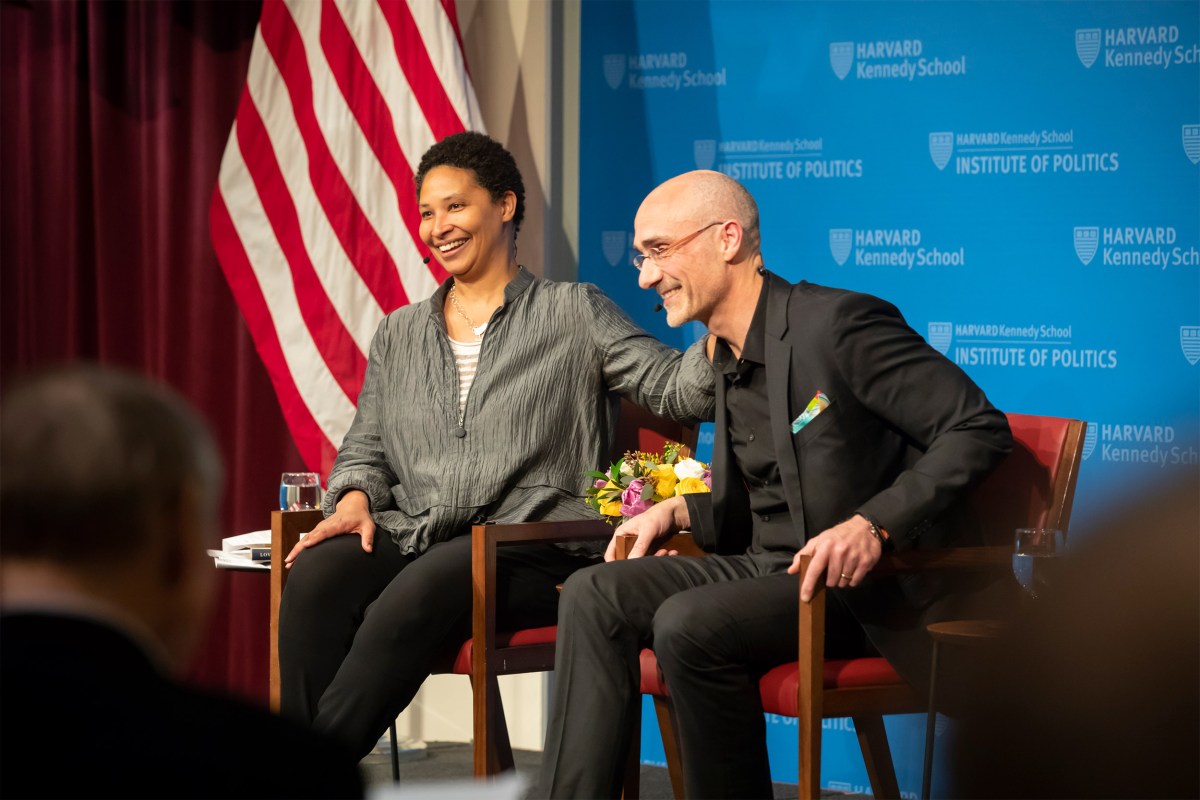
As the coronavirus pandemic sweeps the globe, it’s hard to know where to turn or what to think. TED Connects is a free, live, daily conversation series featuring experts whose ideas can help us reflect and work through this uncertain time with a sense of responsibility, compassion and wisdom.
Danielle Allen serves as Director of the Edmond J. Safra Center for Ethics at Harvard University. The Center seeks to advance teaching and research on ethical issues in public life. Widespread ethical lapses of leaders in government, business, and other professions prompt demands for more and better moral education. More fundamentally, the increasing complexity of public life – the scale and range of problems and the variety of knowledge required to deal with them – make ethical issues more difficult, even for men and women of good moral character. Not only are the ethical issues we face more complex, but the people we face them with are more diverse, increasing the frequency and intensity of our ethical disagreements.
Given these changes in the United States and in societies around the globe, the Center seeks to help meet the growing need for teachers, scholars, and leaders who address questions of moral choice across many of the professions and in public life more generally, and promotes a perspective on ethics informed by both theory and practice. We explore the connection between the problems that professionals confront and the social and political structures in which they act. More generally, we address the ethical issues that all citizens face as they make the choices that profoundly affect the present and future of their societies in our increasingly interdependent world.
https://scholar.harvard.edu/danielleallen/edmond-j-safra-center-ethics
 HENRY KOTULA