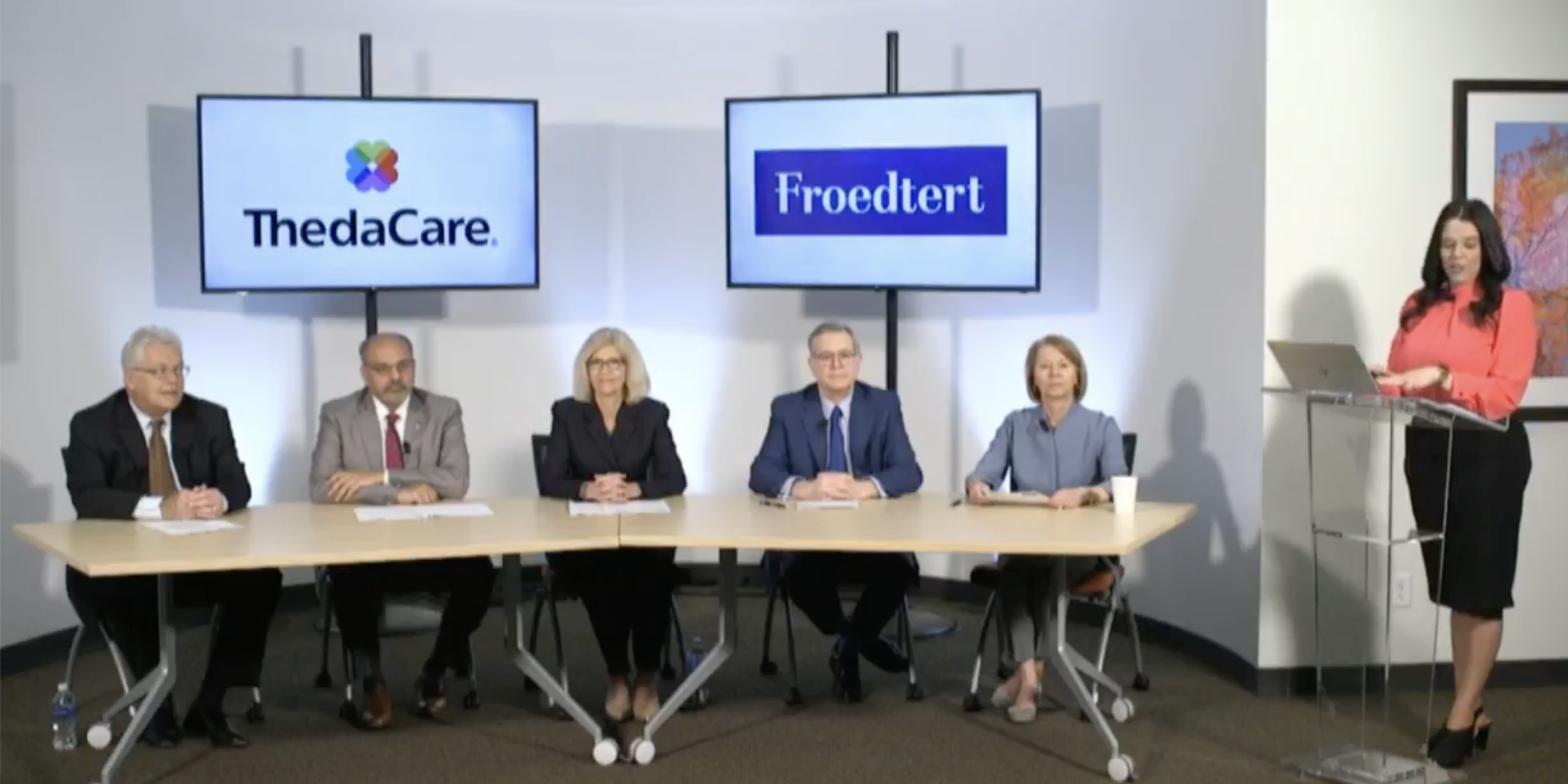
On Tuesday, Milwaukee, WI-based Froedtert Health and Neenah, WI-based ThedaCare shared they have signed a letter of intent to form a $5B, 18-hospital system.
The merger would unite Froedtert’s southeast Wisconsin service area with ThedaCare’s northeast and central Wisconsin footprint, linking tertiary care patients in ThedaCare’s high-growth service areas in the Fox Valley to Froedtert’s Medical College of Wisconsin in Milwaukee. As the systems serve non-overlapping markets, the merger is not expected to receive challenge from federal regulators.
The Gist: These two systems have partnered previously, striking a joint venture last fall to build two health campuses with micro-hospitals, which likely served as the operational test case for merger plans already in the works.
The pace of consolidation has quickened in the Badger State, with Gundersen Health System and Bellin Health completing a merger last fall to form an 11-hospital system.
While interstate mega-mergers have defined recent health system M&A trends, these types of regional mergers, which bring together systems in adjacent but non-overlapping markets, could serve to bolster the combined system’s value proposition as a partner to employers and other healthcare entities in the state and beyond.
Jaime King On Consolidation and Competition — The Trials and Triumphs of Health Care Antitrust Law New England Journal of Medicine March 18, 2023; 388:1057-1060 DOI: 10.1056/NEJMp2201629
“Over the past 30 years, health care consolidation has gone largely unchecked by federal and state antitrust enforcers, which has resulted in higher prices, stagnant quality of care, and limited access to care for patients. Similarly, consolidation has contributed to the availability of fewer employment options, limited wage growth, longer hours, and staff shortages for health care providers.
Antitrust law is designed to prevent such harms, but its failure to evolve alongside the health care industry has led to pervasive consolidation, which now necessitates regulation in some markets to address market-power abuses that competitive forces can no longer govern…
Although mergers are often justified with promises of improved quality or patient access, evidence supporting these claims is lacking.
Clinical integration as envisioned in accountable care organizations, for example, requires substantial oversight, training, and investment that goes well beyond the financial integration involved in most mergers. Most studies have found either no changes or a reduction in quality after provider mergers. Consolidation can also limit access to care; post-merger facility closures, reductions in charity care, and elimination of abortion and other reproductive health services have often occurred.
Consolidation among insurers also affects health care prices and quality. Insurers with market power can increase premiums above competitive levels by exercising monopoly power or can push provider payments below competitive levels by exercising monopsony power. Lower premiums are commonly found in areas with more insurers, whereas in the absence of competition, insurers that obtain price concessions from providers may not pass savings on to consumers.4 Some evidence suggests, however, that moderate amounts of insurer consolidation may be associated with improved patient experience, since providers in such markets have an incentive to compete on quality.
Given the health care industry’s growing complexity, future oversight could involve a combination of more responsive antitrust enforcement and creative regulatory interventions. Combining competitive and regulatory forces may offer the only hope for controlling health care prices, restoring high-quality care, protecting health care workers, and preserving and expanding access to care.”
The payer services market is expected to grow by double digits annually over the next several years, according to a new analysis.
These services, which include data analytics, digital health and care management, are in growing demand, according to analysts at Markets and Markets, which conducts market research. The report said the sector was worth about $69.9 billion in 2022. That’s expected to increase by an 11.1% compound annual growth rate, reaching $118.2 billion by 2027, according to the analysis.
The projected growth is backed by increasing health insurance enrollment, rising fraud, federal mandates and increasing rates of chronic illness. However, multiple factors could constrain the market, too, the analysts said: cultural and language barriers, the risk of data breaches and the high costs related to outsourcing this work.
In addition to supporting payers, the services provided in this space can help providers keep up with the evolving expectations of patients, Markets and Markets said in a press release.
“As the industry continues to evolve, providers will need to focus on leveraging technology, as well as improving customer service, to remain competitive,” according to the release. “In addition, they must ensure compliance with various healthcare regulations and be prepared to comply with the changing demands of the healthcare industry.”
The report analyzed these services in three categories—business process outsourcing (BPO), information technology outsourcing (ITO) and knowledge process outsourcing—as well as compared the likely performance of private and public payers. As of 2021, BPO services made up the largest share of the broader health payer services market, according to the analysts, as they can drive lower costs, boost efficiency and allow companies to focus on their core operations.
However, the analysts project that ITO services will see the highest growth over the next five years, driven by greater integration between healthcare and technology as well as the adoption of electronic health records.
Private payers also account for the largest share of this market and are expected to grow at a faster rate than their public payer counterparts due to increasing competition between insurers.
North American firms accounted for the largest market share in the payer services space, though the analysts expect that companies based in the Asia-Pacific market will grow the most over the next several years.
“Factors such as increasing adoption of advanced technologies, increasing pressure to reduce healthcare costs, growing prevalence of chronic disease, presence of large and growing patient population in this region, availability of skilled labor at low costs, high growth opportunities and growing focus of established players on emerging [Asia Pacific] countries are driving the market growth in this region,” they said in the report.
In last week’s graphic, we showed how the nation’s largest health insurance companies earn annual revenues several times greater than the largest health systems. In the graphic above, we unpack the 2022 revenue of five of the largest payers, to show just how diversified they have become.
UnitedHealth Group (UHG) continues to lead the way not only as the largest US payer, but also the most vertically integrated, growing its OptumCare provider business by over 30 percent last year.
Playing catch-up, the other payers have also shown willingness to spend large sums on provider acquisitions, with CVS dropping nearly $20B on primary care company Oak Street and home health company Signify last year. UHG and Humana also recently spent over $5B each, on their own home health companies, in pursuit of lower cost settings for treating their Medicare Advantage enrollees.
In contrast, Cigna and Elevance have not been as active in the M&A space of late, prompting Cigna investors to question the CEO on whether the company may be at a competitive disadvantage. We’d expect the race to create full-stack, vertically integrated healthcare platforms, of the kind illustrated by these large payers, to gain steam across the rest of 2023 and beyond. Looming even larger than UHG, CVS Health, and the like: Amazon and Walmart, both of which are actively pursuing their own platform visions in healthcare.
The deal, first announced in March 2022, will bring LHC’s home health locations, hospice sites, and long-term acute care hospitals across 37 states into UHG’s Optum division. LHC also has over 400 joint-venture arrangements with hospitals. The acquisition received heightened scrutiny from antitrust regulators, but was ultimately allowed to proceed.
The Gist: LHC’s postacute footprint expands UHG’s Medicare Advantage value play, guaranteeing postacute capacity and providing a platform to funnel care into lower-cost settings.
UHG’s strategy is right in line with its peers: Humana fully owns home health provider Kindred at Home (now branded CenterWell Home Health), and CVS Health plans to acquire Signify Health, which provides home care services with an emphasis on risk scoring. But achieving lower cost of care will require integration of postacute referrals and care management across rapidly expanding physician networks.
We’ve updated our annual comparison of the relative size of the largest healthcare companies, with the graphic below comparing 2022 revenues to 2019 for a sense of how different companies and industry sectors weathered the pandemic.
The annual revenues of the five largest health systems in 2022 pale in comparison to the industry’s true giants—and the gap only widened over the pandemic. The largest health systems averaged just 5 percent annual growth since 2019, while the largest companies in each other healthcare subsector have grown revenues by over 10 percent annually.
Unsurprisingly, the pandemic drove Pfizer’s revenue to a record $100B in 2022—over half of that was driven by the company’s COVID vaccine and antiviral treatment, Paxlovid. Amazon’s 2022 revenue was nearly double its pre-COVID level. While very little of that growth came from healthcare, it enabled the company to fund investments like its all-cash $3.9B purchase of One Medical, which closed this week.
Even the nation’s largest health systems cannot compete with that kind of firepower, and looking beyond revenue paints an even more difficult picture. According to Kaufman Hall, although the median hospital has grown its revenue by 15 percent, it has seen expenses climb 20 percent, and lost 26 percent of margin since 2019.
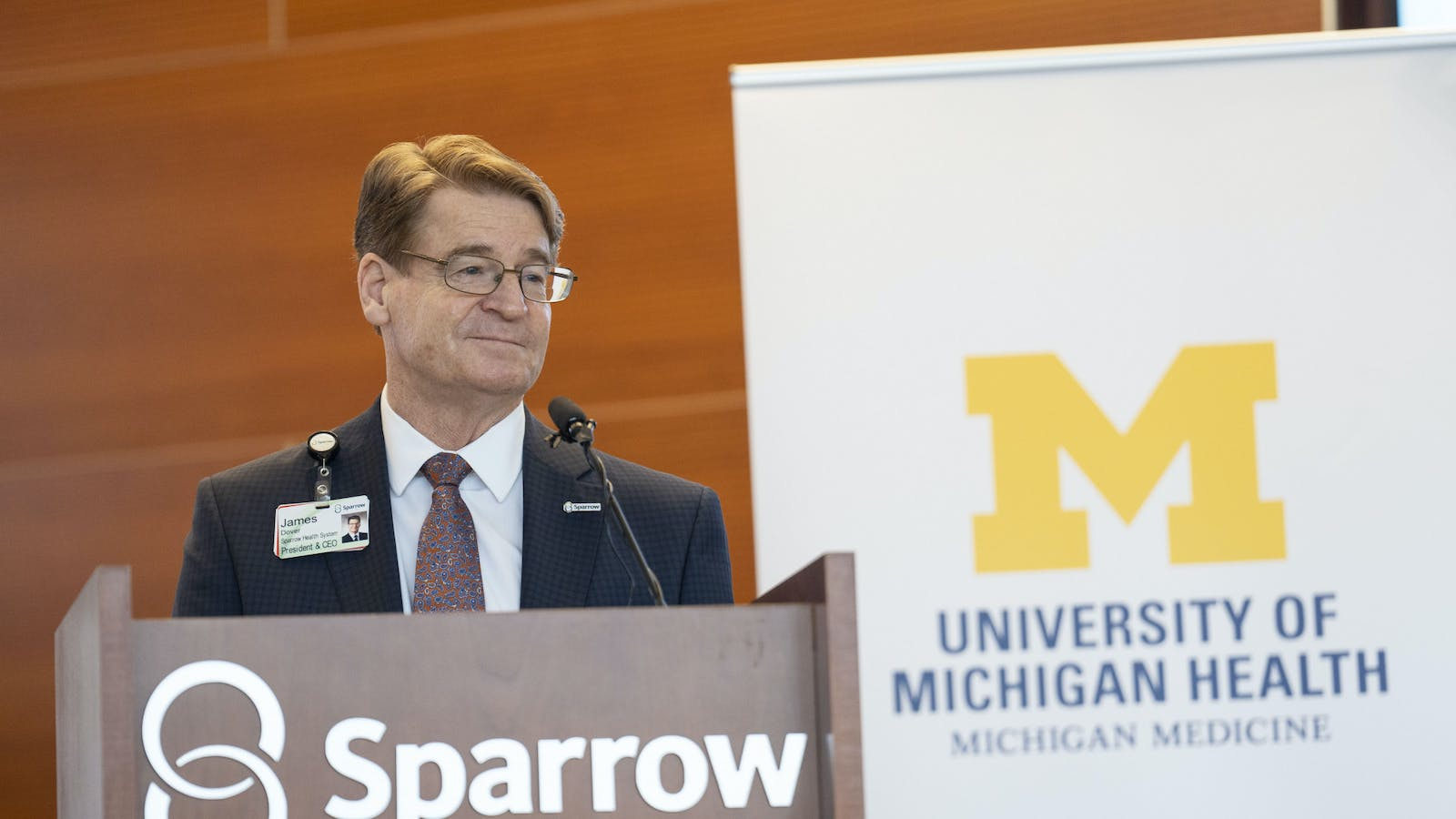
Ann Arbor, MI-based University of Michigan Health (UM Health), part of Michigan Medicine, announced last Thursday that it will acquire Lansing, MI-based Sparrow Health System, forming a $7B health system with over 200 care sites across southeast and mid-Michigan. The acquisition will connect Sparrow’s six hospitals to UM Health’s flagship academic medical center (AMC) and sole hospital, while extending the reach of Sparrow’s 70K-member health plan, in which UM Health had previously invested. Pending regulatory approvals, the deal is expected to be completed in the first half of 2023.
The Gist: Given Sparrow’s recent financial struggles—the system announced hundreds of layoffs in September after posting a $90M loss in the first half of 2022—this was a sensible pickup for UM Health, extending its reachinto lower-cost community healthcare adjacent to its current market. Other AMCs have made similar moves in recent years, as the differentiated services of an AMC and the local patient reach of community hospitals make for a strong pairing—and this deal will go far toward advancing UM as a truly regional system.
But even if UM Health got a good deal on the acquisition, the current status of Sparrow’s infrastructure and workforce will require considerable investment (UM Health has already committed $800M in the deal’s announcement).
An enlightening piece published this week in Stat News lays out exactly how UnitedHealth Group (UHG) is using its vast network of physicians to generate new streams of profit, a playbook being followed by most other major payers. Already familiar to close observers of the post-Affordable Care Act healthcare landscape, the article highlights how UHG can use “intercompany eliminations”—payments from its UnitedHealthcare payer arm to its Optum provider and pharmacy arms—to achieve profits above the 15 to 20 percent cap placed on health insurance companies.
So far in 2022, 38 percent of UHG’s insurance revenue has flowed into its provider groups, up from 23 percent in 2017. And UHG expects next year’s intercompany eliminations to grow by 20 percent to a total of $130B, which would make up over half of its total projected revenue.
The Gist:
The profit motive behind payer-provider vertical integration is as clear as it is concerning for the state of competition in healthcare.
UHG now employs or affiliates with 70K physicians—10K more than last year—seven percent of the US physician workforce, and the largest of any entity.
Given the weak antitrust framework for regulating vertical integration, the federal government has proven unable to stop the acquisition of providers by payers. Eventually, profit growth for these vertically integrated payers will have to come from tightening provider networks, and not just acquiring more assets. That could prompt regulatory action or consumer backlash, if the government or enrollees determine that access to care is being unfairly restricted.
Until then, the march of consolidation is likely to continue.
Consolidation continues across the healthcare industry with many hospitals and health systems looking to complete planned acquisitions or sales by the end of 2022 or early 2023.
Here are 15 planned hospital or health system sales that Becker’s Hospital Review has reported on in the last month:
1-2. El Segundo, Calif.-based Pipeline Health System, which filed for Chapter 11 bankruptcy in October, has agreed to sell two hospitals — Weiss Memorial Hospital in Chicago and West Suburban Medical Center in Oak Park, Ill. — to Princeton, N.J.-based Ramco Healthcare Holdings and Resilience Healthcare.
Pending approval of a motion submitted Nov. 22 to the U.S. Bankruptcy Court for the Southern District of Texas, Resilience is expected to assume operations of the two hospitals on Dec. 2.
Since acquiring ownership of the hospitals in 2019, Pipeline said it has invested $60 million to improve facilities, add technology and expand clinical programs. The hospitals employ a combined total of 1,700 employees.
3-4. The Centurion Foundation, an Atlanta-based nonprofit organization, has inked an asset purchase agreement to acquire the CharterCare Health Partners system from Los Angeles-based Prospect Medical Holdings.
Two hospitals are included in the transaction: Providence, R.I.-based Roger Williams Medical Center and Our Lady of Fatima Hospital. The change in control application process is expected to be submitted to the Rhode Island Department of Health and the state attorney general before the end of 2022.
5. West Reading, Pa.-based Tower Health plans to sell Chestnut Hill Hospital in Philadelphia to Temple University Health System for $28 million. The news comes less than a year after the health system closed two other hospitals: Brandywine Hospital in Coatesville, Pa., and Jennersville Hospital in West Grove, Pa.
Tower Health plans to rebuild around its flagship Reading Hospital and the two other hospitals it acquired for $423 million from Franklin, Tenn.-based Community Health Systems: Phoenixville Hospital and Pottstown Hospital. It also owns St. Christopher’s Hospital for Children in Philadelphia in a joint venture with Drexel University.
6. As of Nov. 14, potential buyers can submit offers for Singing River Health System, a three-hospital system with locations in Ocean Springs, Pascagoula and Gulfport, Miss.
Supervisors from Jackson County — which owns the health systems — gave the green light for proposals to sell Singing River Health System. Potential buyers have until March 10 to submit their bids.
7-9. New Orleans-based LCMC Health plans to acquire three Tulane University hospitals — New Orleans-based Tulane Medical Center; Covington, La.-based Lakeview Regional Medical Center; and Metairie, La.-based Tulane Lakeside Hospital — from Nashville, Tenn.-based HCA Healthcare.
LCMC Health will purchase the three hospitals for $150 million, expanding its portfolio to nine hospitals in the New Orleans area. The two parties hope to finalize the deal by the end of 2022 or early 2023.
10-12. Peoria, Ill.-based UnityPoint Health – Central Illinois and Des Moines, Iowa-based UnityPoint Health plans to spin off three Illinois hospitals to Urbana, Ill.-based Carle Health.
The transaction results in Carle Health taking over as the parent organization of UnityPoint Health – Central Illinois, which includes Peoria-based Methodist and Procter, and Pekin (Ill.) Hospitals and affiliated clinics, Peoria-based UnityPlace and Methodist College.
An April 1 closing date is anticipated, pending all regulatory approvals.
13. Hill Country Memorial Hospital in Fredericksburg, Texas, has entered into an agreement to become part of San Antionio-based Methodist Healthcare System.
Hill Country Memorial has 15 locations, including a hospital, an urgent care clinic, and primary and specialty care offices. Methodist Healthcare — a 50-50 co-ownership between HCA Healthcare and Methodist Healthcare Ministries of South Texas — has more than 30 facilities, including eight hospitals and nine freestanding emergency departments.
The transaction is expected to be completed in early 2023.
14. Orlando (Fla.) Health plans to acquire Sabanera Health Dorado, an acute care hospital in Puerto Rico.
The hospital will change its name to Doctors’ Center Hospital-Orlando Health Dorado, according to Orlando Health, which will team up with four additional hospitals operated by the Doctors’ Center Hospital team. The operation of all five hospitals will remain with the Doctors’ Center Hospital group.
15. Tacoma, Wash.-based MultiCare Health System and Yakima (Wash.) Valley Memorial reached an acquisition agreement, according to an Oct. 21 news release shared with Becker’s Hospital Review.
Terms of the agreement include Memorial becoming a wholly owned subsidiary of MultiCare, MultiCare investing in new programs, installing an integrated electronic health record, and providing a sustainable future for Yakima’s only hospital. The transaction is subject to routine regulatory approval and closing conditions.
47-hospital Sanford Health, based in Sioux Falls, SD, and 11-hospital Fairview Health Services, based in Minneapolis, MN, have signed a letter of intent to form a combined $14B health system that would retain Sanford’s name. Sanford has been seeking a health system partner for several years; most recently it was in talks with Intermountain Health, before they ended the process following a COVID-masking controversy with Sanford’s then-CEO. An announced merger with Iowa-based UnityPoint Health was also called off in 2019. Sanford had earlier attempted to combine with Fairview, in 2013, but abandoned plans after receiving pushback from Minnesota’s Attorney General, who was concerned that services could be cut, and that the system’s long-term partnership with University of Minnesota could be at risk.
The Gist: Perhaps Sanford has finally found its dance partner, one that gives it access to the booming Minneapolis metropolitan area, which the largely rural health system lacks. Like many recent mergers, the deal brings together two systems across non-overlapping markets, making it likely to pass antitrust scrutiny.
Fairview has posted losses for the last two consecutive years, making it an easier pickup for Sanford, which can now introduce its 220K member health plan to a new market. We expect more health system mergers like this in 2023, as margin pressures are motivating many to seek the promise of shelter in scale.






 HENRY KOTULA