Lawsuit Challenges GA’s 1332 Waiver, ACA in the Biden Pandemic Plan

Lawsuit Challenges GA's 1332 Waiver, ACA in the Biden Pandemic Plan |  Health Affairs

On January 14, 2021, Planned Parenthood Southeast and the Feminist Women’s Health Center filed a lawsuit challenging the Trump administration’s approval of Georgia’s waiver under Section 1332 of the Affordable Care Act (ACA). The lawsuit was filed in federal district court in DC. This post summarizes that legal challenge as well as parts of President Biden’s recent proposed pandemic relief package that relate to the ACA and coverage. The $1.9 trillion American Rescue Plan includes several coverage-related proposals and would follow the pandemic relief passed by Congress in December 2020.

Advocates Challenge The Approval of Georgia’s 1332 Waiver

Regular readers know that the Trump administration—through the Centers for Medicare and Medicaid Services (CMS) and the Treasury Department—approved a broad waiver request from Georgia under Section 1332 of the ACA. The approved waiver authorizes the state to establish a reinsurance program for plan year 2022 and eliminate the use of HealthCare.gov beginning with plan year 2023. CMS and Treasury approved the waiver application on November 1, 2020. The history of Georgia’s waiver application and approval is summarized in prior posts as well as in the complaint filed in the lawsuit.

The reinsurance portion of the waiver is straightforward; of the 16 states with an approved Section 1332 waiver, all but one state has established a state-based reinsurance program. But the second part of the waiver application, known as the Georgia Access Model, is far more controversial. This is the broadest waiver yet to be approved under Section 1332 and relies on interpretations of Section 1332 made in much-criticized Trump-era guidance from 2018.

Critics have long argued that Georgia’s proposal fails to satisfy Section 1332’s procedural and substantive guardrails, meaning it could not be lawfully approved by the Trump administration. Given this controversy, legal challenges to the waiver approval were expected.

The Lawsuit

Planned Parenthood Southeast and the Feminist Women’s Health Center—represented by Democracy Forward—filed a lawsuit in federal district court in DC on January 14, 2021. The lawsuit alleges that the Trump administration’s 2018 guidance and approval of Georgia’s waiver are unlawful because these actions violate Section 1332 of the ACA and the Administrative Procedure Act (APA). The lawsuit also cites many of the Trump administration’s ongoing efforts to undermine the ACA as evidence that the 2018 guidance and waiver approval are part of a pattern of ACA sabotage.

In particular, the plaintiffs argue that the 2018 guidance and waiver approval are contrary to Section 1332, exceed the scope of the agencies’ authority (by allowing states to waive non-waivable provisions of the ACA), and are arbitrary and capricious. They also argue that the waiver approval failed to satisfy procedural requirements under the ACA and APA because Georgia and the Trump administration rushed through the process without adequate time for public comment and without adequate clarification of how the state intends to approach key issues.” Here, the lawsuit points to the fact that Georgia went through four iterations of its waiver application, that its application was incomplete, and that only eight comments (less than one half of one percent) of the 1,826 total comments submitted during the most recent federal public comment period were in support of the Georgia Access Model.

As such, the plaintiffs ask the court to vacate both the approved waiver and the 2018 guidance and declare that they are unlawful. They also ask that the federal government be enjoined from taking further action on Georgia’s waiver or considering other waivers under the 2018 guidance. The plaintiffs acknowledge that the reinsurance portion of the waiver is uncontroversial and that the focus of the lawsuit is on the Georgia Access Model; however, the plaintiffs challenge approval of the waiver as a whole and ask the court to set aside the waiver in whole or in part. The plaintiffs have not sued Georgia, although it is possible that Georgia may ask to intervene in the litigation to defend its interests.

Much of the lawsuit turns on how the Trump administration interpreted the statutory guardrails under Section 1332 and long-standing concerns about direct enrollment and enhanced direct enrollment. Federal officials can grant a Section 1332 waiver only if a state demonstrates that their proposal meets certain statutory “guardrails.” These guardrails ensure that a waiver proposal will 1) provide coverage that is at least as comprehensive as ACA coverage ( “comprehensiveness” guardrail); 2) provide coverage and cost-sharing protections that are at least as affordable as ACA requirements (“affordability” guardrail); 3) provide coverage to at least a comparable number of residents as under the ACA ( “coverage” guardrail); and 4) not increase the federal deficit. The Obama administration issued guidance in 2015 on its interpretation of these guardrails.

In 2018, the Trump administration replaced that guidance and adopted its own interpretation, which many argued was inconsistent with Section 1332. The 2018 guidance tried to pave the way for the Trump administration to approve waivers where only some coverage under the waiver (instead of all coverage) satisfied the comprehensiveness and affordability guardrails. Under this view, waivers could be approved even if only some coverage under the waiver was as comprehensive, as affordable, and as available as coverage provided under the ACA. The 2018 guidance would also allow waivers to expand access to plans that do not have to meet the ACA’s requirements. (Separately, the Trump administration issued a final rule to codify the 2018 guidance’s interpretations into regulations.)

The lawsuit argues that the Georgia Access Model violates all four statutory guardrails because it will “drastically underperform the ACA.” The waiver proposal could lead to net enrollment losses in Georgia, which violates the coverage guardrail. The waiver could lead some consumers to enroll in non-ACA plans (such as short-term plans) with benefit gaps, which violates the comprehensiveness guardrail. And consumers will have to pay higher premiums and out-of-pocket costs through higher broker commissions, reduced competition, and adverse selection against the ACA markets, which violates the affordability guardrail and potentially the deficit neutrality guardrail (since higher ACA premiums mean higher federal outlays in the form of premium tax credits).

As health care providers in Georgia, Planned Parenthood Southeast and the Feminist Women’s Health Center allege they will be harmed for several reasons. They argue that the Georgia Access Model will make it more difficult and expensive for their patients to obtain health insurance. Fewer patients with health insurance will result in higher levels of uncompensated care. More uncompensated care will strain the plaintiffs’ resources and limit other services, such as community outreach. The loss of coverage resulting from the waiver will leave their patients in worse health and develop more complex treatment needs, making it more expensive for plaintiffs to treat those patients as a result. And approval of the waiver will make it more complicated for the plaintiffs to assist their patients with enrollment.

What Happens Next

The lawsuit was assigned to Judge James E. Boasberg of the federal district court for DC. Health policy watchers know Judge Boasberg as the judge who repeatedly invalidated the Trump administration’s approval of state Section 1115 waivers with work and community engagement requirements. He is thus no stranger to assessing the legality of waiver approvals under the APA and other federal statutes.

The lawsuit will proceed, and the Biden administration will be responsible for filing a response in court. One potential option could be for the Biden administration to ask the court for a stay while it revisits the approved waiver and perhaps holds another round of public comment on the most recent version of the waiver (which, as the lawsuit points out, was never submitted for public comment). The Biden administration could consider any new comments in reevaluating approval of the Georgia Access Model.

If the federal government newly concludes that the proposal fails to satisfy the substantive guardrails, it could have grounds to amend, suspend, or terminate Georgia’s waiver, so long as certain procedures are followed. This is because the terms and conditions of the waiver agreement between the federal government and Georgia (as well as implementing regulations) always give the federal government “the right to suspend or terminate a waiver, in whole or in part, any time before the date of expiration, if the Secretaries determine that the state materially failed to comply with the terms” of the waiver.

Georgia’s waiver agreement includes some unique terms and conditions relative to waivers in other states. Those terms seem designed to limit the federal government’s ability to suspend or terminate Georgia’s waiver. But the federal government can do so as long as it complies with relevant procedures. This includes notifying Georgia of its determination, providing an effective date, and citing reasons for the amendment or termination (i.e., why the Georgia Access Model fails to satisfy Section 1332’s substantive guardrails). Georgia would have 90 days to respond, with the possibility of providing a corrective action plan to come into compliance with the waiver conditions. Georgia must also be given an opportunity to be heard and challenge the suspension or termination.

Alternatively, the Biden administration could regularly assess and monitor the state’s compliance with the terms and conditions and its progress, or lack thereof, in implementing the Georgia Access Model. Federal officials do this with all waivers. Under the waiver approval, Georgia must, for instance, satisfy requirements related to funding, reporting and evaluation, development of an outreach and communications plan, and operational standards for eligibility determinations. If Georgia fails to comply with these terms and conditions, that too would be grounds to initiate the process to amend or terminate parts or all of Georgia’s waiver.

Coverage Provisions In Biden’s American Rescue Plan

On January 14, a few days before taking office, President Biden issued a 19-page fact sheet outlining his proposed American Rescue Plan to contain the COVID-19 virus and stabilize the economy. The announcement praised the bipartisan package adopted in December 2020 as “a step in the right direction” but notes that Congress did not go far enough to fully address the pandemic and economic fallout. Following Inauguration Day, Biden is expected to lay out an additional economic recovery plan. 

Among many other initiatives, the comprehensive $1.9 trillion plan would provide funding for a national vaccination program, create a new public health jobs program, provide funding for schools to reopen safely, extend and expand emergency paid leave, extend and expand unemployment benefits, raise the minimum wage, and deliver $1,400 in support for people across the country. The Biden plan also calls for preserving and expanding health insurance, noting that 30 million people were uninsured even before the pandemic and that millions may have lost job-based coverage in 2020.

First, the American Rescue Plan calls for Congress to provide COBRA subsidies through the end of September. Presumably, these subsidies would be available from the beginning of 2021, rather than subsidizing premiums from 2020. COBRA subsidies during an economic emergency are not new. Congress subsidized COBRA premiums during the 2008 recession, with mixed results. Full COBRA subsidies were included in the original Heroes Act passed by the U.S. House of Representatives in May 2020, although not in the revised Heroes Act that was passed by the House in October 2020. But neither bill was ever taken up by the U.S. Senate. It is not clear from the fact sheet whether the Biden administration is aiming for full COBRA subsidies where the government would pay 100 percent of the premiums for COBRA coverage for laid-off workers and furloughed employees—or some other amount (e.g., 80 percent of premiums).

Second, the American Rescue Plan would accomplish one of candidate Biden’s key campaign promises by expanding and increasing the value of premium tax credits under the ACA. Democrats in Congress have repeatedly passed legislation that would accomplish what the American Rescue Plan fact sheet seems to call for. For instance, the Patient Protection and Affordable Care Enhancement Act—passed by the House in July 2020—would have expanded the availability of premium tax credits to those whose income is above 400 percent of the federal poverty level and made those credits more generous by reducing the level of income that an individual must contribute towards their health insurance premiums to 8.5 percent for those with the highest incomes. This subsidy expansion and enhancement would improve the affordability of coverage for millions of Americans who purchase coverage in the individual market.

Beyond COBRA and ACA subsidies, the American Rescue Plan calls for additional funding for veterans’ health care needs and for the Substance Abuse and Mental Health Services Administration and the Health Resources and Services Administration to expand access to behavioral health services. The proposal would also increase the federal Medicaid assistance percentage (FMAP) to 100 percent for the administration of COVID-19 vaccines to help ensure that all Medicaid enrollees will be vaccinated. The proposal does not appear to otherwise mention Medicaid, which is serving as a key safety net as incomes have dropped for millions of Americans, despite bipartisan support for an enhanced FMAP during the pandemic.

The growth of “pharmacy deserts”

https://www.axios.com/pharmacy-deserts-cities-prescriptions-45c32271-37ac-4105-b1bb-e2d2436b88c1.html

Neighborhoods in cities like Chicago are rapidly becoming places where people can’t fill medical prescriptions locally because their drugstores have shuttered or don’t accept Medicaid.

Why it matters: The pandemic has accelerated the growth of “pharmacy deserts” as unprofitable and less-profitable stores have closed. It’s a worrisome trend for the urban poor, who are less likely to try online pharmacies and more likely to let their drug regimens lapse when they can’t get medication locally.

Driving the news: Effective Dec. 1, Medicaid patients in Illinois — of which there are 400,000, per the Chicago Tribune — could no longer get their prescriptions filled at Walgreens, a prevalent chain headquartered in a Chicago suburb.

  • The change came because Aetna, which provides contracts with the state of Illinois to serve Medicaid recipients, dropped Walgreens as a provider. CVS — a top Walgreens rival — owns Aetna as well as the pharmacy benefits manager CVS Caremark.
  • CVS “has no pharmacies in five key West Side neighborhoods,” per the Tribune.
  • Illinois state Rep. La Shawn Ford called Aetna’s decision “pathetic” and told the Tribune, “It’s an attack not just on Black people, but on those that are struggling during the pandemic.”

The backstory: Researcher Dima Qato coined the term “pharmacy desert” in a 2014 article that found there were far fewer pharmacies in Chicago’s Black neighborhoods than in white and mixed neighborhoods.

  • Medicaid policies like the one in Illinois “are all over the country, where Medicaid dictates where and where you can go fill your medication,” Qato tells Axios. “And that leads to certain pharmacies having less patients in them, which leads to less profits, which leads to closures.”
  • Qato — who recently took a post as a professor at the University of Southern California, and is in the process of moving from Chicago — said that the new Medicaid policy in Illinois is generating “a lot of outrage in the community right now.”
  • Per Qato’s definition, people live in a “pharmacy desert” if they can’t fill a prescription within a half-a-mile of their homes (for low-income people without cars), and a mile for others.
  • “We’ve estimated it for Chicago at a third of the city’s population, with substantial difference by racial composition,” Qato says.

Between the lines: Because pharmacies get the lowest reimbursements for filling Medicaid prescriptions, they’re more likely to close stores in low-income neighborhoods and open them in wealthy ones, notes Antonio Ciaccia, chief strategy officer of 3 Axis Advisors, a consultancy focused on the drug supply chain.

  • “We’re seeing a general retreat from impoverished areas,” said Ciaccia, who serves as an adviser to the American Pharmacy Association.

Of note: Studies draw a direct line between pharmacy closures and people stopping their vital medications — with terrible health outcomes.

  • Adults over 50 were more likely to drop their cardiovascular pills after their local drug store closed, according to a study published in the Journal of the American Medical Association in 2019 (of which Qato is the lead author). 
  • Benjy Renton, the Middlebury College senior who has been closely tracking the COVID-19 outbreak, noted on Twitter that pharmacy deserts could hold back the administration of vaccines.

What’s next: While “food deserts,” where inner-city residents lack access to fresh and healthy groceries, are a bigger problem in places like New York City, pharmacy access is a growing concern. The number of drugstores has declined 20% in NYC since 2016, according to Jonathan Bowles, executive director of the Center for an Urban Future.

  • “I for one will miss the 70 Duane Reades that closed this year,” was the headline of an an article that New York Magazine’s “Curbed” ran on Dec. 30. (Duane Reade is owned by Walgreens.)

ACA plan enrollment for 2021 ticked up slightly

Healthcare.gov (ACA) 2021 Enrollment Information | Congressman Steve Cohen

Dive Brief:

  • Consumers choosing insurance via the federal Affordable Care Act exchanges reached 8.25 million over the 2021 open enrollment period, about the same number as the year before, CMS said Wednesday.
  • Because two fewer states are participating in the federal marketplace this year, adjusted year-over-year growth in plan selections was 7%, the agency said.
  • Of the total, 23% of consumers were new, down by 3.6%Renewing consumers who actively chose a new plan and those who were automatically re-enrolled both increased.

Dive Insight:

The figures are the last from the Trump administration, which has drastically reduced money toward navigators who help people use the Healthcare.gov website and find the best ACA plan for them. The administration has made no secret of its opposition to the law and after failing to overturn it in Congress has used executive actions to undermine it.

Still looming is the Trump administration’s lawsuit seeking to overturn the landmark law.

President-Elect Joe Biden and his pick for HHS chief, California Attorney General Xavier Becerra, however, are eager supporters and are likely to take a number of actions to restore and burnish it. That could be increasing tax credits and subsidies, increasing navigator funding and building on protections like essential health benefits.

The U.S. Supreme Court is expected to make its ruling on the ACA case later this spring or summer, but the Biden administration could essentially make it moot by walking back the zeroing out of the individual mandate penalty that is the linchpin of the lawsuit against it.

The relatively steady enrollment could be increased through those actions and the possibility of a special enrollment period to account for needs during the coronavirus pandemic. The COVID-19 crisis and the recession it has caused have kicked millions of people off their employer-sponsored insurance, and they could turn to the exchanges for coverage, especially with higher tax credits and subsidies.

Trump Administration Approves First Medicaid Block Grant, in Tennessee

Trump Administration Approves First Medicaid Block Grant, in Tennessee |  Kaiser Health News

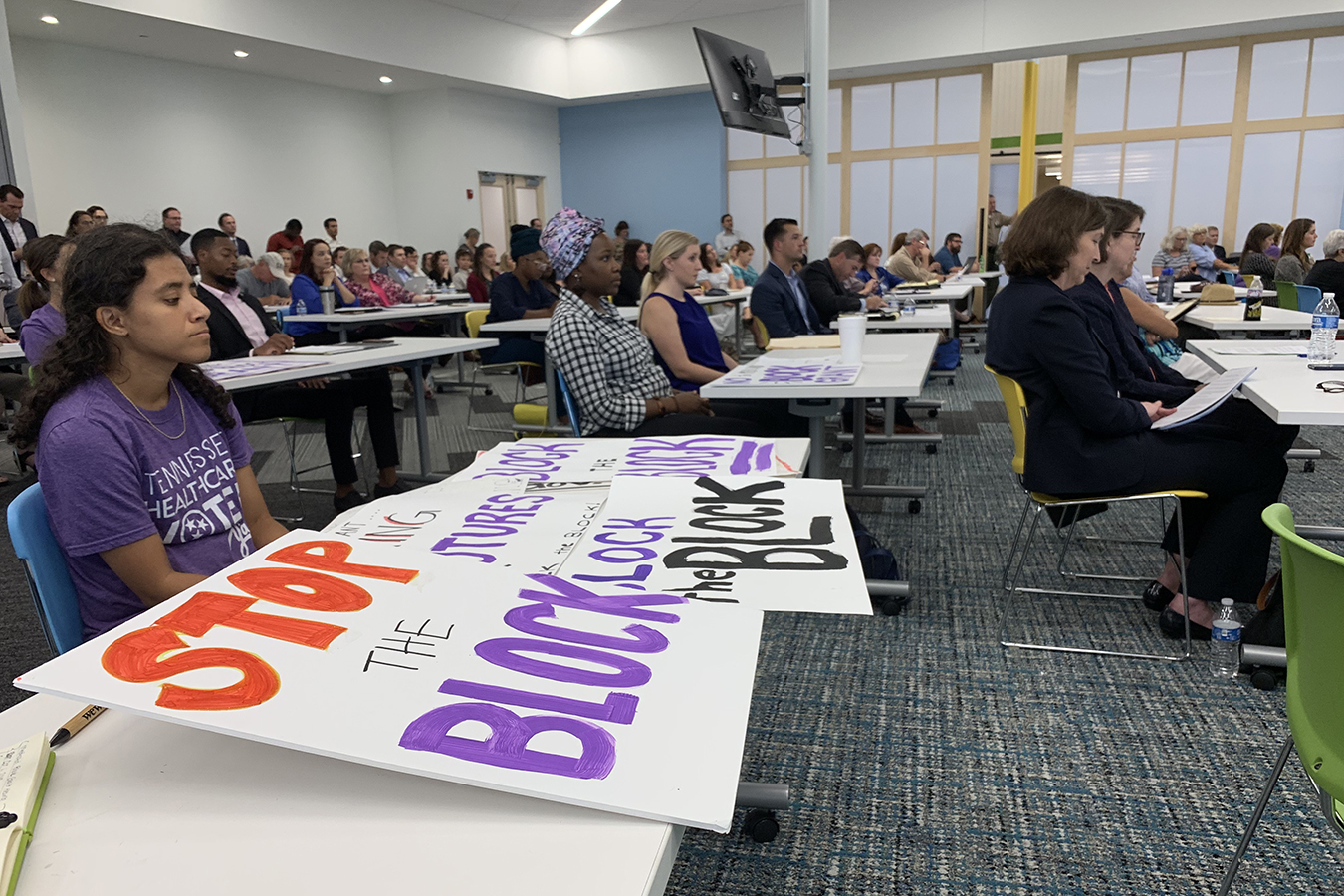
With just a dozen days left in power, the Trump administration on Friday approved a radically different Medicaid financing system in Tennessee that for the first time would give the state broader authority in running the health insurance program for the poor in exchange for capping its annual federal funding.

The approval is a 10-year “experiment.” Instead of the open-ended federal funding that rises with higher enrollment and health costs, Tennessee will instead get an annual block grant. The approach has been pushed for decades by conservatives who say states too often chafe under strict federal guidelines about enrollment and coverage and can find ways to provide care more efficiently.

But under the agreement, Tennessee’s annual funding cap will increase if enrollment grows. What’s different is that unlike other states, federal Medicaid funding in Tennessee won’t automatically keep up with rising per -person Medicaid expenses.

The approval, however, faces an uncertain future because the incoming Biden administration is likely to oppose such a move. But to unravel it, officials would need to set up a review that includes a public hearing.

Meanwhile, the changes in Tennessee will take months to implement because they need final legislative approval, and state officials must negotiate quality of care targets with the administration.

TennCare, the state’s Medicaid program, said the block grant system would give it unprecedented flexibility to decide who is covered and what services it will pay for.

Under the agreement, TennCare will have a specified spending cap based on historical spending, inflation and predicted future enrollment changes. If the state can operate the program at a lower cost than the cap and maintain or improve quality, the state then shares in the savings.

Trump administration officials said the approach adds incentive for the state to save money, unlike the current system, in which increased state spending is matched with more federal dollars. If Medicaid enrollment grows, the state can secure additional federal funding. If enrollment drops, it will get less money.

“This groundbreaking waiver puts guardrails in place to ensure appropriate oversight and protections for beneficiaries, while also creating incentives for states to manage costs while holding them accountable for improving access, quality and health outcomes,” said Seema Verma, administrator of the Centers for Medicare & Medicaid Services. “It’s no exaggeration to say that this carefully crafted demonstration could be a national model moving forward.”

Opponents, including most advocates for low-income Americans, say the approach will threaten care for the 1.4 million people in TennCare, who include children, pregnant women and the disabled. Federal funding covers two-thirds of the cost of the program.

Michele Johnson, executive director of the Tennessee Justice Center, said the block grant approval is a step backward for the state’s Medicaid program.

“No other state has sought a block grant, and for good reason. It gives state officials a blank check and creates financial incentives to cut health care to vulnerable families,” she said.

The agreement is different from traditional block grants championed by conservatives since it allows Tennessee to get more federal funding to keep up with enrollment growth. In addition, while the state is given flexibility to increase benefits, it can’t cut them on its own.

Democrats have fought back block grant Medicaid proposals since the Reagan administration and most recently in 2018 as part of Republicans’ failed effort to repeal and replace major parts of the Affordable Care Act. Even some key Republicans opposed the idea because it would cut billions in funding to states, making it harder to help the poor.

Implementing block grants via an executive branch action rather than getting Congress to amend Medicaid law is also likely to be met with court challenges.

“This is an illegal move that could threaten access to health care for vulnerable people in the middle of a pandemic,” Rep. Frank Pallone (D-N.J.), chair of the House Energy and Commerce Committee, posted on his Twitter account. “I’m hopeful the Biden Administration will move quickly to rollback this harmful policy as soon as possible.”

The block grant approval comes as Medicaid enrollment is at its highest-ever level.

More than 76 million Americans are covered by the state-federal health program, a million more than when the Trump administration took charge in 2017. Enrollment has jumped by more than 5 million in the past year as the economy slumped with the pandemic.

Medicaid, part of President Lyndon B. Johnson’s “Great Society” initiative of the 1960s, is an entitlement program in which the government pays each state a certain percentage of the cost of care for anyone eligible for the health coverage. As a result, the more money states spend on Medicaid, the more they get from Washington.

Under the approved demonstration, CMS will work with Tennessee to set spending targets that will increase at a fixed amount each year.

The plan includes a “safety valve” to increase federal funding due to unexpected increases in enrollment.

“The safety valve will maintain Tennessee’s commitment to enroll all eligible Tennesseans with no reduction in today’s benefits for beneficiaries,” CMS said in a statement.

Tennessee has committed to maintaining coverage for eligible beneficiaries and existing services.

In exchange for taking on this financing approach, the state will receive a range of operating flexibilities from the federal government, as well as up to 55% of the savings generated on an annual basis when spending falls below the aggregate spending cap and the state meets certain quality targets, yet to be determined.

The state can spend that money on various health programs for residents, including areas that Medicaid funding typically doesn’t cover, such as improving transportation and education and employment services for enrollees.

The 10-year waiver is unusual, but the Trump administration has approved such long-term experiments in recent years to give states more flexibility.

Tennessee is one of 12 states that have not approved expanding Medicaid under the Affordable Care Act, leaving tens of thousands of working adults without health insurance.

“The block grant is just another example of putting politics ahead of health care during this pandemic,” said Johnson of the Tennessee Justice Center. “Now is absolutely not the time to waste our energy and resources limiting who can access health care.”

State officials applauded the approval.

“It’s a legacy accomplishment,” said Tennessee Gov. Bill Lee, a Republican. “This new flexibility means we can work toward improving maternal health coverage and clearing the waiting list for developmentally disabled.”

“This means we will be able to make additional investments in TennCare without reduction in services and provider cuts.”

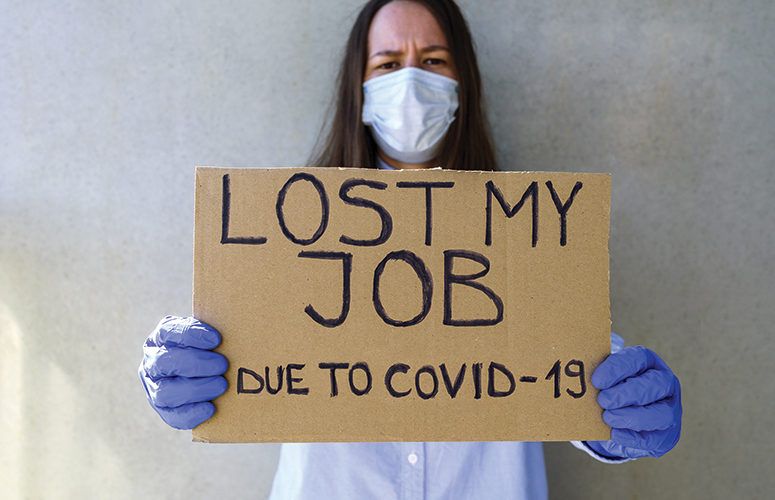
Economy loses 140K jobs in December, first losses since April

https://thehill.com/policy/finance/533242-december-jobs-report

57% of Unemployed Americans Blame COVID-19 for Job Loss - New Jersey  Business Magazine

The economy lost 140,000 jobs in December, the first reported losses since April, as the unemployment rate remained steady at 6.7 percent.

Economists expected a small jobs gain of nearly 50,000. The drop is the latest sign of a weakening economy amid the ongoing COVID-19 crisis. All in all, the economy remains about 10 million jobs below its pre-pandemic levels.

“There’s not much comfort to be taken from the stable unemployment rate, given that millions of Americans have left the labor force with nearly 11 million listed as officially out of work,” said Mark Hamrick, senior economic analyst at Bankrate.com.

“Between the human and economic tolls taken by the pandemic, these are some of the darkest hours of this soon-to-be yearlong tragedy.”

The biggest losses were concentrated in leisure and hospitality, a sector particularly vulnerable to the effects of the pandemic, which lost an astonishing 498,000 jobs.

State and local government payrolls shed 51,000 jobs. Congress deferred passing state and local aid in its latest COVID-19 relief bill.

But the overall loss would have been worse had it not been for gains in professional and business services, which added 161,000 jobs; retail trade, which added 120,500 jobs; and construction, which added 51,000.

Some demographic groups have been hit harder by the economic downturn.

The unemployment rate for Hispanics rose to 9.3 percent in December, while Black unemployment remained elevated at 9.9 percent. The rate for whites was 6 percent, and for Asians it was 5.9 percent.

Over a third of jobless people have been unemployed for over 27 weeks.

3 health care policy predictions now that Democrats have won control of the Senate

https://www.vox.com/policy-and-politics/22216716/georgia-senate-election-results-obamacare-vote

Health Care Reform - American Academy of Nursing Main Site

How Democratic wins in Georgia affect the odds on 3 health care policy proposals.

Democrats have won control of the Senate, and suddenly the possibilities for health care policy look a little wider than they did before the Georgia runoff elections.

Their Senate majority will be slim as can be, and their margin for error in the House is also quite small. So it’s not going to be easy to get anything done. But it seems likely that the Biden White House and a Democratic Congress will try to pass legislation to expand health coverage.

Regarding what Democrats’ health care agenda would look like if the party enjoyed full control of Congress and the White House, a senior party official told reporters this fall: “If we don’t take full advantage of this moment, we’ll be making a huge mistake.”

The question is how big they will go. A lengthy health care section will likely be part of any new Covid-19 relief and recovery bill. But will that be the end of it, or do Democrats want to try to pass another health care plan through budget reconciliation? Given Senate rules, that process is probably their best chance of passing a major bill.

Taking a cue from my Future Perfect colleagues and their 21 predictions for 2021, I thought I would lay out some of my expectations for the coming two years of health policy. These projections are based on my own reporting, but they are not meant to be definitive — and nothing is 100 percent guaranteed. It’s more like a list of issues I’ll be watching.

Democrats will expand eligibility for Obamacare subsidies: 85 percent chance

Democrats could attempt to take two bites at the health care apple: first as part of a Covid-19 relief bill, and second in a budget reconciliation package that can pass with a bare majority. I think there is a very strong chance both attempts would end up with provisions expanding eligibility for insurance tax subsidies.

The $2.4 trillion HEROES Act passed by the House, a likely starting point for Covid-19 negotiations between the House and the Senate, would have made anybody currently on unemployment insurance eligible for premium tax credits. That would help people who have lost their employer-sponsored coverage afford a new health care plan. A provision like that is likely to become part of whatever Covid-19 bill Congress comes up with.

A reconciliation bill could make that change permanent and universal. Back in spring 2020, Senate Democrats released a list of their health care priorities in response in response to Covid-19. At the top was a plan to raise the current cutoff for Obamacare subsidies, which stands at 400 percent of the federal poverty level.

Under current law, anybody with an annual income above that threshold, which is about $51,000 for an individual or $87,000 for a family of three, is ineligible for any assistance. Democrats have introduced plans to expand eligibility, either by doubling the income cap to 800 percent of the federal poverty level (like in this bill from Sen. Jeanne Shaheen) or by eliminating it entirely so that nobody pays more than a fixed percentage of their income on health insurance (as President-elect Joe Biden proposed). Democrats could also try to make low-income people in states that have not expanded Medicaid eligible for tax credits to buy private coverage.

The people squeezed under Obamacare have been the ones ineligible for the law’s financial aid. Expanding eligibility could insure up to 4 million people, and it seems like the bare minimum Democrats would want to do on health care with their new power.

The public option won’t be part of a Democratic health care bill: 75 percent chance

Much like the 2009 debate over Obamacare, a new government insurance plan would probably be the most hotly debated proposal if Democrats try to approve a major health care bill. Biden embraced the public option in his campaign, but passing it won’t be easy — in fact, I think it’s more likely than not that it doesn’t happen.

One problem for a public option is budget reconciliation. Unless Democrats are willing to eliminate the 60-vote legislative filibuster, they’ll have to use this special procedural tool in order to pass a bill with just 51 votes.

But budget reconciliation comes with limits on what provisions can be included, narrowly targeted to federal spending, and creating this new program may not qualify. Capital Alpha, a health care policy analysis group, thinks there is “virtually zero chance” a public option like that proposed by Biden during his campaign would be enacted because it likely doesn’t satisfy the reconciliation rules.

Progressives will push Democratic leadership to be as aggressive in pursuing a public option as possible, including in how they handle those procedural limits. But the moderate Senate Democrats who will ultimately dictate what the final package will look like have sounded ambivalent about the public option, and Democrats are wary of the party getting dragged into a messy health care fight.

Support for a public option would be substantial — about 70 percent of Americans say they’re for it, polls show — but so would the opposition. The health care industry will surely mobilize against the plan if Democrats look serious about pursuing it.

I suspect that, either because the moderates rule it out from the start or Democratic leaders balk at a drawn-out health care debate, politics will take the policy off the table.

Democrats will approve Medicare negotiations for prescription drugs: 55 percent chance

Democrats have campaigned for several election cycles now on a promise to give Medicare more power to negotiate drug prices with pharma companies. This promise was a part of the drug pricing bill that House Democrats passed in the last Congress, a plan that was estimated to cut federal spending by $456 billion over 10 years.

Savings are the reason the policy could be handy for Democrats in crafting a budget reconciliation plan. Democrats will need to include provisions that save the government money to help pay for the new provisions that cost money, like expanding eligibility for tax subsidies.

“We have long believed that pharma faces the greatest risk of drug pricing reforms in conjunction with Democrats’ efforts to expand coverage,” Capital Alpha wrote in a recent analysis.

Those twin incentives — delivering on a campaign promise and finding offsets — could help overcome what would surely be fierce industry opposition.

But the politics of drug pricing have shifted during the Covid-19 pandemic, which is why I think there’s only a slightly better than even chance that Congress will approve Medicare negotiations. Pharma has delivered the Covid-19 vaccines in record time, improving the industry’s relationship with the public in the process. This, in turn, has lowered expectations among the experts for how aggressive Democrats will be on drug prices.

“I think now you don’t have all those stories about insulin and EpiPen, plus you have positive stories about vaccines and other drugs,” Walid Gellad, director of the Center for Pharmaceutical Policy and Prescribing at the University of Pittsburgh, told me in December. “You don’t have as fertile an environment for more extreme drug measures.”

Thus, my feeling that the odds for Medicare negotiations are closer to 50/50.

Expect a Different Senate Healthcare Agenda if Dems Win Georgia Senate Races

A woman dropping her ballot into a ballot box decorated with the flag of Georgia

If Democratic candidates Raphael Warnock and Jon Ossoff both win Senate seats in Tuesday’s runoff election, and give the Democrats majority power in that chamber, it will change not only what type of healthcare policies are passed by the Senate but which healthcare bills get brought up in the first place.

“The big thing that it means is that [Senate Majority Leader] Mitch McConnell (R-Ky.) no longer controls what bills even get a vote” in the full chamber, said one policy advocate who asked to speak on background. “Last year, a bill on prescription drug pricing passed on a somewhat bipartisan basis out of the Senate Finance Committee,” with the blessing of committee chairman Chuck Grassley (R-Iowa), “and it never even got a vote. It certainly would have passed the House. So it’s not so much that you’re going to see a lot of partisan bills passed with [Vice President Kamala] Harris casting the tie-breaking vote … it’s that things will actually get voted on.”

Leadership of Senate committees also will change, noted Dan Mendelson, founder of Avalere Health, a consulting firm here. And because of that, “you’d see the Senate Finance Committee focused on coverage, and you’d see kind of an aggressive push to figure out how do we expand exchanges, expand Medicaid, and get more people covered in the U.S.”

One of the top priorities will be shoring up the Affordable Care Act (ACA), he continued. “There is no consensus on how to replace the law if it’s struck down by the Supreme Court. Legislation is necessary on an urgent basis.” Some other issues, such as drug costs, “are more likely to be addressed through regulatory approaches rather than legislative ones initially,” Mendelson said.

Marie Fishpaw, director of domestic policy studies at the Heritage Foundation, a right-leaning think tank here, suggested that expanded federal control of healthcare would be under consideration. “Last Congress, a majority of Democrats in the House of Representatives and 15 Democratic senators have already signaled their support for Medicare for All, so we can expect the left will push for more government control of healthcare should they get more power in Congress,” she said in an email. “Whether that happens by expanding Obamacare with a public option or setting up Medicare for All, it all leads to the same outcome in which government officials in Washington have more decision-making power over the kind of healthcare that Americans receive.”

Joe Antos, PhD, scholar in healthcare and retirement policy at the American Enterprise Institute, another right-leaning think tank, said in an email that “with Harris as the tie breaker, Biden will need to avoid issues where Democrats are not solidly behind him (at least Democratic senators). Drug pricing limits and another COVID spending bill are the most likely to be enacted, perhaps fairly quickly.”

The COVID bill will include “another trillion or two,” Antos said, because “despite all the moaning on TV about lack of state funding, the problem isn’t money — it’s organization and the skilled people to wield the needle. I think there would be more money for states and public health.”

As for the ACA, Biden “might try to reinstate the individual mandate with a penalty/tax, but that would only be a political show since the mandate really hasn’t mattered much in increasing number with insurance (after the first 2 years of ACA enrollment),” said Antos. “Increasing access to the premium subsidy is a possibility, but the true left won’t like it.” On the regulatory side, Antos predicted that Biden will “rewrite Medicaid guidance and reject waiver projects that tighten Medicaid rules,” such as waivers seeking to add work requirements for Medicaid.

Like Mendelson, Antos expects to see Biden push for action to lower prescription drug prices — possibly legislatively. “He would even get some Republican votes for limiting what Medicare will pay for Part B drugs and maybe even Part D drugs,” he said. “This isn’t Medicare ‘negotiating’ drug prices — it’s just old-fashioned price setting, which Medicare has done for decades.” Such a thing would be easier to implement in Part B “since we are already in a price-setting regime.” And, because the price controls would only be in effect for Medicare, “prices paid by everyone else will likely rise,” Antos added.

Less likely to succeed is Biden’s proposal for an advisory board that would consider drugs’ therapeutic value in its recommendations on prices. That is “a complex version of the Independent Payment Advisory Board, which never got off the ground,” Antos said.

Biden also may try to ease rules related to funding of reproductive healthcare organizations like Planned Parenthood that provide abortions, but legislative action in that regard would be a tough slog, Antos said, even with a nominally Democrat-controlled Senate. But Biden “could do something administratively” as the Trump administration has done in the other direction.

Senate confirmations of Cabinet members, such as California Attorney General Xavier Becerra as Secretary of Health and Human Services, would also be smoother under a majority-Democratic Senate, said Mendelson.

And what if the Republicans retain the Georgia Senate seats — and their majority? “The primary strategy the Republican leadership has pushed is to slow things down and to kill major legislation, and that goal gets facilitated if there’s a Republican majority,” he added. With McConnell keeping control of the Senate’s agenda, “things will run much more slowly and there will be a mentality of not doing things.”

But it could go the other way as well, Mendelson noted. “The optimistic scenario is that Senate Republicans feel like they have something lose in the midterms in 2022, and they need to build some sort of record of legislative accomplishments.” In that case, premium support for ACA marketplace enrollees and bringing down costs in the small-group insurance market might be in play, he said.

About 523,000 people select healthcare plans in the fourth week of open enrollment

https://www.healthcarefinancenews.com/news/about-523000-people-select-healthcare-plans-fourth-week-open-enrollment

More than 818,000 people select healthcare plans in first week of open  enrollment | Healthcare Finance News

That brings the total number of enrollees to 2.9 million, a slight jump over last year but with more days to sign up over 2019.

During the fourth week of the 2020 open enrollment period, from November 22-28, 523,020 people selected plans using the HealthCare.gov platform.

That brings the total number of enrollees to 2,903,547 after the first four weeks of open enrollment. That’s an increase of 523,020 people from last year, which saw 2,380,527 consumers sign up for plans after the first four weeks.

It’s important to note, however, that in 2020 there were more days in this four-week period than last year, since the Centers for Medicare and Medicaid Services measures enrollment Sunday through Saturday. Nov. 1 was on a Sunday this year and on a Friday in 2019, so the first week of 2019 had only three days, while the first week this year measured a full seven.

The numbers are a dip from the third week of open enrollment, during which 758,421 signed up for coverage. 

The HealthCare.gov platform is used by the federally facilitated exchange and some state-based exchanges. Notably, New Jersey and Pennsylvania transitioned to their own platforms for 2021, and due to this they’re absent from HealthCare.gov for 2021 coverage. Those two states accounted for 578,251 plan selections last year, 7% of all plan selections. These enrollees’ selections will not appear in CMS’ figures until it announces the state-based marketplace plan selections.

Open enrollment lasts six weeks and ends on December 14. Those who sign up within that time frame will see their coverage begin January 1, 2021.

WHAT’S THE IMPACT

This is the fourth snapshot of open enrollment figures by CMS during this sign-up period.

Of those selecting plans, 138,183 were new consumers, while 384,837 were renewing coverage. This brings the total number of new consumers to 659,455 since the beginning of open enrollment, while the tally for those renewing coverage now stands at 2,244,092. More than 4,386,530 consumers have been on the applications submitted to date.

A consumer is considered to be a new consumer if they did not have 2020 exchange coverage through Dec. 31 of this year and had a 2021 plan selection. They’re considered a renewing consumer if they have 2020 exchange coverage through Dec. 31 and actively select either the same plan or a new plan for 2021.

The numbers represent those who have submitted an application and selected a plan, net of any cancellations from a consumer, or cancellations from an insurer. The weekly metric represents the net change in the number of uncanceled plan sections over a given period.

Plan selections will not include those consumers who are automatically re-enrolled into a plan. To have their coverage effectuated, consumers generally need to pay their first month’s health plan premium. CMS did not report the number of effectuated enrollments.

In all, there were 1,749,555 HealthCare.gov users recorded during the fourth week, and 57,502 of the Spanish-speaking equivalent, CuidadoDeSalud.gov, bringing the four-week totals to 9,582,790 and 317,487, respectively.

To date, Florida tops in the number of plan selections over the first four weeks with 871,361 sign-ups, followed by Texas (471,849) and Georgia (198,090).

THE LARGER TREND

President-elect Joe Biden has said he is favorable to strengthening and expanding the Affordable Care Act, and favors a government-run public option to run parallel with private offerings.

But prior to Biden’s inauguration on Jan. 20, 2021, CMS may release a final rule based on a proposed rule it released late on Thanksgiving Eve to allow states to implement Section 1332 waivers to waive certain ACA requirements. This allows states to decentralize enrollment through insurers and web brokers. Opponents have said this will expose consumers to junk plans. 

Georgia has already been approved for such a waiver.

According to a recent report from the Kaiser Family Foundation, insurer participation in the ACA marketplace in 2021 is seeing a third straight year of growth as several insurers are entering the market or expanding their service area.

For 2021, 30 insurers are entering the individual market, and an additional 61 are expanding their service area within states.

Appeals court sides with hospitals in latest challenge of DSH payment calculations

lady justice

A federal appeals court upheld a ruling that would allow hospitals to calculate their disproportionate share hospital (DSH) payments using Medicaid patients as well as patients eligible for treatment under experimental Medicaid “demonstration projects” approved by the Department of Health and Human Services (HHS).

The opinion, issued Friday, upheld the decision of a lower court that sided with 10 Florida hospitals seeking to include days of care funded by Florida’s Low Income Pool, an approved Medicaid demonstration project. Through the pool, the state and federal governments jointly reimbursed hospitals for care provided to uninsured and underinsured patients.

HHS argued against allowing the hospitals to include those patients in their Medicaid fraction on the ground that the patients were treated out of charity rather than as designated beneficiaries of a demonstration project.

“The district court found the Secretary’s arguments to the contrary unpersuasive. The Secretary argued the text of the regulation allows hospitals to include days of care provided under a demonstration project only if the project entitles specific patients to specific benefit packages,” the judges said (PDF). “As the court noted, however, this is not what the regulation says. Rather, a patient must have been ‘eligible for inpatient services,’ meaning the demonstration project enabled the patient to receive inpatient services, regardless whether the project gave the patient a right to these services or allowed the patient to enroll in an insurance plan that provided the services.”

DSH payments have traditionally been calculated using the costs incurred to treat Medicaid and uninsured patients. However, the Centers for Medicare & Medicaid’s 2017 rule says costs incurred treating other patients are applicable. For example, a dually eligible patient who’s admitted to the hospital will likely have their stay paid for by Medicare, the agency said, as Medicaid is treated as the “payer of last resort.” As such, those costs would be eligible to be subtracted from DSH payouts.

In backing the hospitals on the DSH dispute, the judges pointed to a similar case considered by the Fifth Circuit last year in which the agency sought to exclude from the Medicaid fraction days of care funded through an “uncompensated care pool” created by a demonstration project. That pool reimbursed hospitals in Mississippi for services provided to uninsured patients affected by Hurricane Katrina but did not entitle specific patients to specific services.

In that case, the Fifth Circuit held “plain regulatory text demands that such days be included—period.”

“We see no flaw in Judge Collyer’s analysis and therefore embrace the district court’s opinion as the law of this circuit,” the judges said.

ACA heads to Supreme Court Nov. 10: 5 things to know

https://www.beckershospitalreview.com/hospital-management-administration/aca-heads-to-supreme-court-nov-10-5-things-to-know.html?utm_medium=email

What to know as ACA heads to Supreme Court — again | National |  insightnews.com

The U.S. Supreme Court is set to hear a case questioning the legality of the ACA on Nov. 10.

Five things to know:

1. At the center of the case is whether the health law should be struck down. In a brief filed June 25 in Texas v. United States, the Trump administration argues the entire ACA is invalid because in December 2017, Congress eliminated the ACA’s tax penalty for failing to purchase health insurance. The administration argues the individual mandate is inseverable from the rest of the law and became unconstitutional when the tax penalty was eliminated; therefore, the entire health law should be struck down.

2. The administration’s brief was filed in support of a group of Republican-led states seeking to undo the ACA. Meanwhile, California Attorney General Xavier Becerra is leading a coalition of more Democratic states to defend the ACA before the Supreme Court. 

3. The case goes before the Supreme Court days after media outlets projected Joe Biden as the next president of the U.S. President-elect Biden has said he seeks to expand government-subsidized insurance coverage and wants to the bring back the ACA’s tax penalty for failing to purchase health insurance, according to The Wall Street Journal. If a change regarding the tax penalty did occur, the publication notes that Republicans’ argument on severability would no longer apply.

4. The case also goes before the Supreme Court about two weeks after the Senate voted Oct. 26 to confirm Amy Coney Barrett to the Supreme Court. Ms. Barrett previously criticized Chief Justice John Roberts’ 2012 opinion sustaining the law’s individual mandate, The New York Times reported, but she said during her confirmation hearings in October that “the issue in the case is this doctrine of severability, and that’s not something that I have ever talked about with respect to the Affordable Care Act.”

5. According to the Journal, the Supreme Court is not expected to make a decision in the case until the end of June.