$5B offer to North Carolina hospital gives it ‘best of both worlds,’ Novant CEO says

https://www.beckershospitalreview.com/hospital-transactions-and-valuation/5b-offer-to-north-carolina-hospital-gives-it-best-of-both-worlds-novant-ceo-says.html?utm_medium=email

Novant Health: Transforming Revenue Cycle Services in the ...

Novant Health presented its proposal June 10 to partner with New Hanover Regional Medical Center, a county-owned hospital in Wilmington, N.C. The Winston-Salem, N.C.-based health system is one of three organizations interested in securing the deal. 

During the public presentation, Novant Health President and CEO Carl Armato highlighted the system’s financial strength and its potential partnership with Chapel Hill, N.C.-based UNC Health, according to WilmingtonBiz.

In May, Novant, UNC Health and UNC School of Medicine signed a letter of intent to enhance clinical services and medical education at New Hanover Regional if the hospital chooses to form a joint venture with, affiliate with or sell to Novant.  

“We are binging, I believe, the best of both worlds: one of the largest not-for-profit health care systems in the country, that’s financially strong, along with UNC Health Care and UNC medical school to really enhance and grow the economic development of Wilmington,” Mr. Armato said, according to WilmingtonBiz.

The 15-hospital system is offering up to $2 billion to New Hanover County, $50 million to the hospital’s foundation to fund unmet community needs and an investment of $3.1 billion in capital projects over the next decade, according to the report. 

“We actually proposed a very significant financial commitment to New Hanover Regional Medical Center, that local board, that management team, that community — your community,” Mr. Armato said, according to the report. “And we want you to know that we have the resources to back that up.”

Novant made its proposal the day after Durham, N.C.-based Duke Health pitched its deal for New Hanover Regional. Charlotte, N.C.-based Atrium Health, the third health system trying to secure a deal with the hospital, will make its presentation June 11. 


Duke Health pitches $3B deal for North Carolina hospital

https://www.beckershospitalreview.com/hospital-transactions-and-valuation/duke-health-pitches-3b-deal-for-north-carolina-hospital.html?utm_medium=email

Duke Clinic... - Duke University Health System Office Photo ...

Duke Health presented its proposal on June 9 to purchase New Hanover Regional Medical Center in Wilmington, N.C. The Durham, N.C.-based system is one of three organizations trying to secure the deal.  

During the presentation, Duke Health officials proposed purchasing the hospital for $1.4 billion and investing $1.9 billion in capital improvements over the next five years, according to TV station WWAY. The health system would also bring its graduate medical school programs to New Hanover Regional and keep all hospital employees on staff for at least one year, according to the report.

The other two health systems interested in acquiring the hospital — Winston-Salem, N.C.-based Novant Health and Charlotte, N.C.-based Atrium Health — will present their proposals on June 10 and June 11. 

Access the full WWAY article here.


R1 RCM buys Cerner’s revenue cycle outsourcing business for $30M

https://www.fiercehealthcare.com/tech/r1-rcm-buys-cerner-s-revenue-cycle-business-30m-deal?mkt_tok=eyJpIjoiTXpReVptRTBOemxoWW1OaCIsInQiOiJcL0FZVXVvVmhwQWpxdFBoV1VKRjhON29CaWhLY3g2bXFhT0doXC9tWVFpWTd0blh3TEY3MTN0M3lsZEs3K002d0hLS25BNld4dlk0b3NhWDBYaUhWYkNTUGc5SVRlRjBEMERoS01kWlZER1hVMmhFTkczdTAzMDhxWWpIaWxORk1mIn0%3D&mrkid=959610

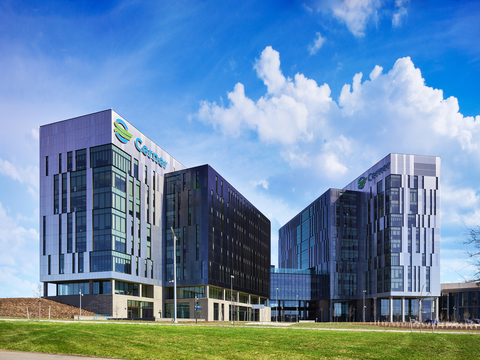
Cerner's headquarters are in Kansas City, Missouri

R1 RCM plans to pay $30 million for health IT giant Cerner’s revenue cycle business.

Chicago-based R1, a leading revenue cycle management technology vendor, is acquiring Cerner RevWorks’ services business and commercial, nonfederal client relationships. The deal, which was announced Wednesday, does not include RevWorks’ federal clients.

R1 said it plans to hire Cerner RevWorks employees once the deal closes in the third quarter of 2020.

Both companies have committed to a seamless integration between the company’s technology-enabled services platform and Cerner’s software, R1 said in a press release.

As part of the transaction, Cerner said it will extend R1’s revenue cycle capabilities and expertise to Cerner clients and new prospects, helping drive sustainable financial improvements for providers while enhancing their patients’ overall experience.

The closing of the acquisition is expected to take place in the third quarter of 2020, subject to customary closing conditions.

According to R1’s filing with the U.S. Securities and Exchange Commission (SEC), the deal is valued at $30 million inclusive of working capital, financed with cash on the balance sheet.

The acquisition price will be paid in three installments, according to the SEC filing.

R1’s stock rose 12% Wednesday following the news.

The deal further establishes R1’s footprint across the acute and ambulatory markets, the company said in the SEC filing. The RevWorks business brings in approximately $80 million in annual revenue across more than 150 customers.

“We look forward to working collaboratively with Cerner to deliver superior results for healthcare providers and the communities they serve,” said Gary Long, executive vice president and chief commercial officer of R1. “With our interoperable technology and end-to-end platform, we are well-positioned to serve Cerner’s customers, as well as other healthcare organizations across the country.”

“Cerner’s overall goal is to deliver client success and accelerate our ability to deliver scalable innovations,” said Brenna Quinn, senior vice president of revenue cycle management at Cerner, in a statement.

In a statement provided by the company, Cerner executives said the deal with R1 will bring its commercial, nonfederal clients a total solution that pairs “Cerner’s advanced technology with R1’s world-class revenue services, ultimately optimizing financial performance for health systems.”

“Cerner remains committed to and heavily invested in its revenue cycle solutions to help our clients combine clinical, financial, and operational health information when and where it’s needed,” the company said.

Centerview Partners LLC acted as financial adviser, and Kirkland & Ellis LLP acted as legal adviser to R1. Greenhill & Co. acted as an adviser to Cerner.

Earlier this year, R1 acquired SCI Solutions, a provider of SaaS-based scheduling and patient access solutions, for approximately $190 million in cash.

The RCM vendor’s revenue grew 16.2% in the first quarter of 2020, up $44.6 million to reach $320.5 million.

However, during its first-quarter earnings call in May, R1 executives said the company is expecting to see revenue decline by $10 million to $20 million in the second quarter, driven by lower patient volumes for its smaller physician customers.

Cerner’s revenue cycle business took a hit last year when Adventist Health terminated its revenue cycle outsourcing contract with the company, resulting in a $60 million impairment charge for Cerner in the third quarter of 2019, the company reported during its third-quarter earnings call.

Adventist transitioned all its revenue cycle operations to Huron Consulting Group. At the time, about 1,700 Cerner employees transitioned over to Adventist and Huron.

During the company’s fourth-quarter and year-end 2019 earnings call in February, Cerner Chief Financial Officer Marc Naughton hinted at a potential sell-off of the RevWorks business.

“Those areas that we don’t think are the growth areas for the company we want to focus on, we’re going to consider divesting as one of the options,” Naughton said during a Q&A with analysts. “It will be an existing business that we will basically go out to market and look for opportunities to say here is this asset, it’s something we’re willing to let go and some of these assets have significant value.”


Physicians acquire 35-hospital health system from private equity firm

https://www.beckershospitalreview.com/hospital-transactions-and-valuation/physicians-acquire-35-hospital-health-system-from-private-equity-firm.html?utm_medium=email

Sources: Boston-based Steward Health Care System to relocate ...

The 35-hospital system announced June 2 that a management group of Steward physicians led by the company’s CEO and founder acquired a controlling interest of Steward from Cerberus Capital Management, a private equity firm. The physicians will control 90 percent of the company and Medical Properties Trust will maintain its 10 percent stake. 

“The COVID-19 global pandemic has exposed serious deficiencies in the world’s health care systems, with a disproportionate impact on underserved communities and populations,” Steward CEO and Founder Ralph de la Torre, MD, said in a news release. “We believe that future health care management must completely integrate long-term clinical needs with investments. As physicians first, we will focus on creating structures and timelines that meet the long-term needs of our communities and the short-term needs of our patients.”

Steward was founded more than a decade ago, and Cerberus invested in the company in 2010. Today, Steward has 35 hospitals in nine states and more than 40,000 employees. 


Coronavirus: 15 emerging themes for boards and executive teams

https://www.mckinsey.com/business-functions/risk/our-insights/coronavirus-15-emerging-themes-for-boards-and-executive-teams?cid=other-eml-alt-mip-mck&hlkid=0e0b80570bfe48508db4370a1999a949&hctky=9502524&hdpid=b867bc22-e8f5-41b6-b080-40a5d4c21c71

11 Ways To Create More Time To Think | Auguste rodin, Rodin, Rodin ...

Board directors and executives can pool their wisdom to help companies grapple with the challenge of a lifetime.

As Winston Churchill said, “Now this is not the end. It is not even the beginning of the end. But it is, perhaps, the end of the beginning.” We are seeing some faint signs of progress in the struggle to contain the pandemic. But the risk of resurgence is real, and if the virus does prove to be seasonal, the effect will probably be muted. It is likely never more important than now for boards of directors and executive management teams to tackle the right questions and jointly guide their organizations toward the next normal.

Recently, we spoke with a group of leading nonexecutive chairs and directors at companies around the world who serve on the McKinsey Resilience Advisory Council. They generously shared the personal insights and experiences gained from their organizations’ efforts to manage through the crisis and resume work. The 15 themes that emerged offer a guide to boards and executive teams everywhere. Together, they can debate these issues and set an effective context for the difficult decisions now coming up as companies plan their return to full activity.

Managing through the crisis

1. Boards must strike the right balance between hope for the future and the realism that organizations need to hear. There are many prognostications on what comes after COVID-19. Many will be helpful. Some will be right. Boards and managers may have some hopes and dreams of their own. Creating value and finding pockets of growth are possible. It is important to have these aspirations, because they form the core of an inner optimism and confidence that organizations need. However, leaders should not conflate aspirations with a prescience about the future.

2. The unknown portion of the crisis may be beyond anything we’ve seen in our professional lives. Boards and managers feel like they might be grappling with only 5 percent of the issues, while the vast majority are still lurking, unknown. Executives are incredibly busy, fighting fires in cash management and other areas. But boards need to add to their burden and ask them to prepare for a “next normal” strategy discussion. Managers need to do their best to find out what these issues are, and then work with boards to ensure that the organization can navigate them. The point isn’t to have a better answer. The point is to build the organizational capability to learn quickly why your answer is wrong, and pivot faster than your peers do. Resilience comes through speed. This may be a new capability that very few organizations have now, and they will likely need to spend real time building it.

3. Beware of a gulf between executives and the rank and file. Top managers are easily adapting to working from home and to flexible, ill-defined processes and ways of working, and they see it as being very effective and also the wave of the future. Many people in the trenches think it is the worst thing to happen to them (even those that are used to working remotely). Remote working is raising the divide between elites and the common man and woman. There is a real risk of serious tension in the social fabric of organizations and in local and national communities.

4. Don’t overlook the risks faced by self-employed professionals, informal workers, and small businesses. These groups are often not receiving sufficient support. But their role in the economy is vital, and they may be noticed only later, when it is too late.

5. Certain industries and sectors are truly struggling and require support. Several disrupted industries and many organizations in higher education, the arts, and sports are severely struggling and require support to safeguard their survival.

Return to work—the path ahead

6. Mid- to long-term implications and scenarios vary considerably. It’s important to differentiate between industries and regions. Some industries may never come back to pre-COVID-19 levels.

7. What went wrong? Boards and executives, but also academics, need to debate the question. Where should we have been focusing? Take three examples. Why did companies ignore the issue of inadequate resilience in their supply chain? The risks of single sourcing were well known and transparent. Also, why did we move headlong toward greater specialization in the workforce, when we knew that no single skill was permanently valuable? Finally, why did we refuse to evolve our business models, although we knew that technology and shifts in societal preferences were forcing us down a treadmill of ever decreasing value-creation potential?

8. How can we prevent a backlash to globalization? The tendency toward nationalism was already strong and is growing during the crisis. The ramifications will be challenging. For example, in pharmaceutical development, residents of the country where a pharma company has its headquarters may expect to get the drug first. Global companies, despite their experience, may find it harder to address and engage directly with diverse, volatile, and potentially conflicting stakeholders. In such times, societies may need someone to mediate between the private sector and some of these stakeholders.

9. Companies need help with government relations. Strong government interventions are occurring on the back of a serious loss of confidence in free-market mechanisms. There is little question that different governments will land on different answers to the debate around how free markets really ought to be structured. The corporate community has been thrust into a new relationship with government, and it is struggling. The government landscape is fragmented, with highly varied approaches and competencies. Companies are looking for a playbook; no one has an infrastructure to manage this complexity.

10. Where will the equity come from, and with what strings attached? Governments are propping up various sectors with new capital. What will they receive in return? Will they distort markets? How can companies manage this process carefully to emerge from the crisis with a stronger balance sheet? Further, much more capital is likely needed; presumably some of it will come from the private sector. Will capital markets be effective and trusted in such times? Who governs this overall process, and what role should the government play? Is it the time for more state funds?

11. The balance between profits and cash flow is tricky, and essential to get right. Many companies are caught right now and are sacrificing their bottom line in order to pay for their financing. That’s not sustainable; companies will need guidance on how to balance the two.

12. It may be time for responsible acquisitions, including to help restructure certain industries. Many “resilients” have “kept their powder dry,” and are now ready to acquire. But they need to be sensitive and allow sellers a good path to exit. We need guidelines for responsible acquisitions.

13. Cyberrisk is growing. Remote working increases the “attack surface” for criminals and state actors. Both are more active. Chief information officers and chief information security officers are grappling with the overwhelming demand for work-from-home technology and the need for stringent cybersecurity.

14. Innovation may never have been so important. Innovation has always been essential to solving big problems. The world is looking not just for new things but also for new ways of doing things (especially on the people side, where we need new behaviors, long-term rather than short-term), capabilities, and work ethics.

15. The path ahead will surely have ups and downs and will require resilience. As lockdowns are relaxed, and segments of the economy reopen, viral resurgences and unforeseen events will keep growth from being a straight line going up. It will likely be a lengthy process of preserving “lives and livelihoods” over several months, if not years. The reality is that many or even most business leaders made choices over the past decades that traded resilience for a perceived increase in shareholder value. Now may be the moment to consider that the era of chipping away at organizational resilience in the name of greater efficiency may have reached its limits. This is not to say that there are no efficiencies to be sought or found, but more that the trade-off between efficiency and resiliency needs to be defined far more clearly than it has been in recent years.


It is the board’s responsibility to coach and advise its management team, especially when the terrain is trickier than usual. However, boards should not mistake the need for vigorous debate with the need for consensus. More than ever, a bias to action is essential, which will frequently mean getting comfortable with disagreement. Apart from all the operational focus needed for the return to work, it is even more important that boards and management teams take a step back to reflect upon these 15 core themes. In summary:

  1. Take the time to recognize how the people who (directly or indirectly) depend on the company feel.
  2. Have aspirations about the post-COVID world, but build the resilience to make them a reality.
  3. Strengthen your capability to engage and work with regulators and the government.
  4. Watch out for non-COVID risks, and make sure to carve out time to dedicate to familiar risks that have never gone away.
  5. Find out what went wrong, and answer the uncomfortable truths that investigation uncovers.


Beaumont, Summa Health cancel $6.1B merger plan

https://www.beckershospitalreview.com/hospital-transactions-and-valuation/beaumont-summa-health-cancel-6-1b-merger-plan.html?utm_medium=email

Summa Health's deal with Beaumont: 5 things you need to know ...Beaumont Health to acquire Ohio's Summa Health system

Southfield, Mich.-based Beaumont Health announced May 29 that it is calling off a proposed merger with Akron, Ohio-based Summa Health. 

The health systems are ending talks about five months after signing a definitive agreement, under which Summa Health would have become a subsidiary of Beaumont. The health systems announced in April that they were delaying the deal due to the COVID-19 pandemic.

“The organizations are now finalizing details and next steps to end the planned partnership,” reads a joint statement from Beaumont and Summa. “Throughout this process, each of the organizations has continued to operate independently, and each will continue to focus on providing exceptional health care services for their respective markets.”

The proposed deal, which had already received all necessary regulatory approvals, would have created a nonprofit system with 12 hospitals and $6.1 billion in annual revenue. 

Beaumont and Summa’s announcement comes just three days after four Chicago hospitals called off their plans to merge. Several other deals have been canceled or delayed since Jan. 1. 


Chicago hospitals blame 11th-hour legislation shakeup for ending $1B South Side project

https://www.healthcaredive.com/news/chicago-hospitals-end-plans-for-new-south-side-system/578673/

Chicago hospitals blame 11th-hour legislation shakeup for ending ...

Dive Brief:

  • Four Chicago hospitals were on track to create a new health system designed to expand access to care to reduce health inequities on the city’s South Side, but the effort was derailed after state funding plans changed. The hospitals planned on receiving $520 million over five years from the state to offset any losses as they stood up the new system.
  • The hospitals are blaming an “eleventh-hour shift in the legislation” that they say forces them to abandon plans to form the new system, according to a letter sent to the director of the Illinois Department of Healthcare and Family Services. They contend a broad health bill as approved did not provide the requested funding.
  • The quartet warned that the move by the legislators would only continue to perpetuate health disparities among the African American community, also laid bare by the novel coronavirus claiming more African American lives in Chicago than whites.

Dive Insight:

The four hospitals — Advocate Trinity Hospital, Mercy Hospital and Medical Center (a member of Trinity Health), South Shore Hospital and St. Bernard Hospital — had ambitious plans for the underserved area of the city, in which nearly 60% of residents leave the area for care, leaders have claimed.

The group had planned to invest at least $1.1 billion to erect a new hospital and community health centers, targeted at reducing the health disparities. Average life expectancy is 30 years shorter for residents on the South Side compared to other parts of the city.

But forming a new health system would create financial challenges of its own, which is why the four hospitals were leaning on the state to help with funding.

The system “moved closer to reality in recent weeks, as the agreements for the complex legal transaction as well as the financial and operational models — have been refined and finalized,” the letter to the Illinois health official said.

The system even held virtual town hall meetings, convening more than 700 community leaders and residents across 11 ZIP codes to assess their needs and wants from the new provider.

But leaders blamed the failed plans due to changes in legislation that they expected to help fund the effort. The bill was approved by both the state Senate and House on Friday.

“You can imagine our profound disappointment that our project is not identified in the final form of the legislation and that, in fact, HFS cannot allocate funds associated with the hospital and health care transformation pool without further action,” according to the letter. ​

The group hopes that its business plan will serve as a resource for the state should a similar plan be developed in the future.


10 hospital deals called off, delayed

https://www.beckershospitalreview.com/hospital-transactions-and-valuation/10-hospital-deals-called-off-delayed.html?utm_medium=email

Beaumont, Summa Health Delay Hospital Merger Until After COVID-19

Below are 10 hospital transactions or partnerships that have been delayed or called off since Jan. 1, beginning with the most recent:

1. Pandemic delays UMass Memorial’s acquisition of Harrington HealthCare
The COVID-19 pandemic has pushed back UMass Memorial Health Care’s acquisition of Harrington HealthCare, a Southbridge, Mass.-based system comprising a 119-bed hospital,  satellite location and three medical office buildings.

2. Jefferson Health, Temple call off cancer center deal
Thomas Jefferson University will no longer purchase the Fox Chase Cancer Center from Temple University due to the “devastating economic impact of COVID-19.”

3. St. Luke’s takeover of Kansas hospital pushed back amid COVID-19 crisis
The date that St. Luke’s Health System will take over Allen County Regional Hospital in Iola, Kan., has been pushed back due to the COVID-19 pandemic.

4. Astria Health cancels sale of hospitals as COVID-19 affects markets 
Yakima, Wash.-based Astria Health, which filed for Chapter 11 bankruptcy in 2019, has taken its hospitals off the market.

5. Beaumont, Summa Health delay merger
Southfield, Mich.-based Beaumont Health is delaying its merger with Akron, Ohio-based Summa Health due to the COVID-19 pandemic, Beaumont CEO John Fox said during a news briefing April 21.

6. North Carolina health systems call off partnership talks
Citing uncertainties brought on by the COVID-19 pandemic, Greensboro, N.C.-based Cone Health has ended talks to become a successor to Asheboro, N.C.-based Randolph Health after Randolph emerges from bankruptcy.

7. New York hospital to split with Ascension after 18 years
St. Mary’s Healthcare in Amsterdam, N.Y., became an independent hospital after 18 years as a member of St. Louis-based Ascension.

8. Geisinger, AtlantiCare sever merger
Danville, Pa.-based Geisinger and Atlantic City, N.J.-based AtlantiCare have agreed to part ways, the two health systems announced March 31.

9. Home healthcare providers abandon $1.25B deal amid FTC probe 
Two home healthcare providers, Aveanna Healthcare and Maxim Healthcare Services, have terminated their proposed acquisition agreement, the Federal Trade Commission said.

10. FTC sues to block Jefferson Health-Einstein Healthcare merger
The Federal Trade Commission will sue to block the merger of Philadelphia-based Jefferson Health and Einstein Healthcare Network, a deal that has been pending since 2018. The commission said it will seek a temporary restraining order and a preliminary injunction to prevent the deal.


Prospect Medical Group to add 10,000 physicians with 3 acquisitions

https://www.beckershospitalreview.com/hospital-transactions-and-valuation/prospect-medical-group-to-add-10-000-physicians-with-3-acquisitions.html?utm_medium=email

Prospect Medical Group to acquire three physician practices

Prospect Medical Group will double in size when it completes the acquisition of three medical practices later this year. 

Prospect Medical Group, owned by Los Angeles-based Prospect Medical Holdings, entered into an agreement April 22 to acquire certain assets of CalCare IPA and Los Angeles Medical Center IPA, both of which serve Los Angeles County, and Vantage Medical Group in San Diego, San Bernardino and Riverside, Calif.

The transaction, which is subject to customary closing conditions and approvals from contracted health plans, is expected to close this summer. 

The three independent medical associations, representing more than 10,000 physicians, will join Prospect’s existing network of about 10,000 providers when the transaction closes.

“This is a great opportunity to expand Prospect’s system of coordinated care to a much larger market,” said Prospect Medical Systems CEO Jim Brown. “Our vision is that everyone has access to quality health care when they need it, and we look forward to partnering with a new network of physicians to make that a reality.”


Hoag sues to end Providence affiliation

https://www.beckershospitalreview.com/hospital-transactions-and-valuation/hoag-sues-to-end-providence-affiliation.html?utm_medium=email

Hoag Memorial Hospital Presbyterian | Visit Newport Beach

Hoag Memorial Hospital Presbyterian, a two-hospital network based in Newport Beach, Calif., is trying to sever its ties to Renton, Wash.-based Providence. 

Hoag announced May 4 that it has filed a lawsuit in an attempt to dissolve its affiliation with Providence. Hoag said it filed the lawsuit after a year of attempted negotiations.

“Hoag must be able to keep local resources and decision making in Orange County to address all the health needs of community members for years to come,” Robert T. Braithwaite, president and CEO of Hoag, said. “The current structure of our relationship with Providence, we believe, is not in the best interest of our patients, the community, our physicians and team members.”

The link up dates back to 2012 when Hoag entered into an affiliation agreement with Irvine, Calif.-based St. Joseph Health, which has since been acquired by Providence, a 51-hospital system.

“Under the existing affiliation, Hoag’s mission and legacy are at risk of being diluted within a large national hospital system,” Mr. Braithwaite said. “We must be able to maintain Hoag’s unique character and role as Orange County’s most trusted health care network, as well as keep local control of community assets.”

Regarding Hoag’s lawsuit, officials from Providence released the following statement to The Orange County Register:

“Now, at a time when all hospitals and health systems are battling the COVID-19 pandemic, the Hoag leaders took legal action to sever its relationship with Providence for reasons that remain unclear,” said the statement from Providence. “Our relationship has been strong since 2012. The Hoag leaders’ so-called ‘realignment’ plan would negatively impact patient care, diminish resources and medical expertise available to Orange County.”