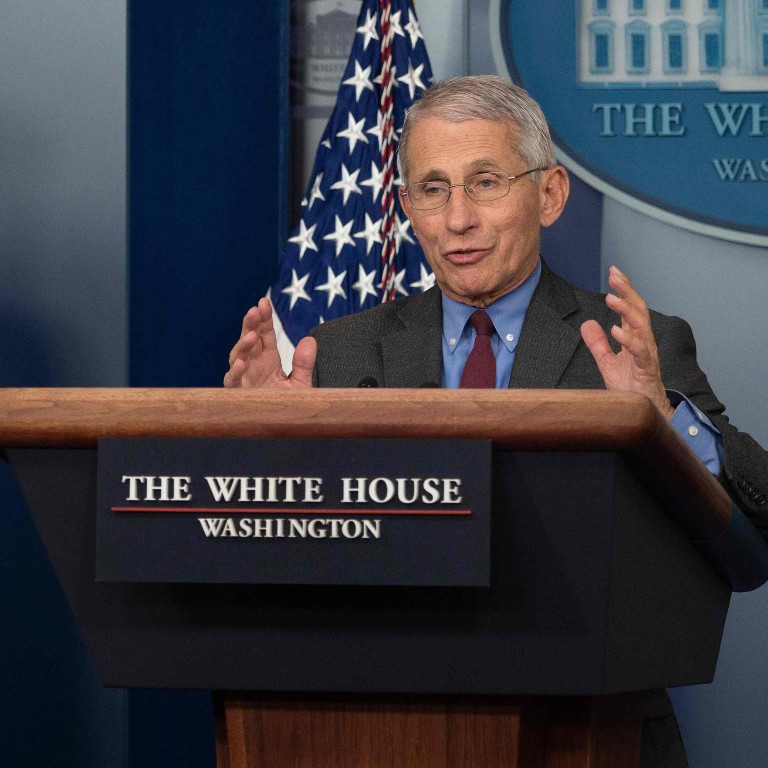
Bill Gates, in rebuke of Trump, calls WHO funding cut during pandemic ‘as dangerous as it sounds’

https://www.washingtonpost.com/nation/2020/04/15/who-bill-gates-coronavirus-trump/?fbclid=IwAR1AY1otbc2PccrdeOWGrWMyb7RznpZJMyGfMaOIe_09pw7WeS5kdvmHUvA&utm_campaign=wp_main&utm_medium=social&utm_source=facebook

Bill Gates: Trump halting funding to World Health Organization ...

Microsoft co-founder Bill Gates criticized President Trump’s decision to suspend funding to the World Health Organization as “dangerous,” saying the payments should continue particularly during the global coronavirus pandemic.

“Halting funding for the World Health Organization during a world health crisis is as dangerous as it sounds,” Gates tweeted early Wednesday. “Their work is slowing the spread of COVID-19 and if that work is stopped no other organization can replace them. The world needs @WHO now more than ever.”

The United States, the organization’s largest donor, has committed to provide the WHO with $893 million during its current two-year funding period, a State Department spokesperson told The Washington Post.

The Bill & Melinda Gates Foundation, the family’s giant philanthropy, is the next biggest donor to WHO after the U.S., accounting for close to 10 percent of the United Nations agency’s funding.

As The Washington Post’s Anne Gearan reported, the president said on Tuesday that the halt in U.S. funding would continue for a period of 60 to 90 days “while a review is conducted to assess the World Health Organization’s role and severely mismanaging and covering up the spread of the coronavirus.”

“We have not been treated properly,” Trump said at the Tuesday news briefing. He added, “The WHO pushed China’s misinformation about the virus.”

It remains unclear whether the United States will cut off money to the main international organization, or if Trump is setting conditions for a resumption of U.S. payments at a later date, The Post reported.

The announcement looms as a potentially devastating blow to the agency during the coronavirus pandemic, as the United States’ donations make up nearly 15 percent of all voluntary donations given worldwide.

The criticism from Gates, whose foundation has committed up to $100 million as part of the global response to the pandemic, comes as Trump has attempted to deflect blame for the administration’s failure to respond vigorously and early to the deadly novel coronavirus.

Also defending the WHO was U.N. Secretary General António Guterres, who, while not naming Trump, said it was “not the time to reduce the resources for the operations of the World Health Organization or any other humanitarian organization in the fight against the virus.”

“Now is the time for unity and for the international community to work together in solidarity to stop this virus and its shattering consequences,” he said.

Others, such as the American Medical Association, called Trump’s announcement to cut WHO funding “a dangerous step in the wrong direction.”

“Cutting funding to the WHO — rather than focusing on solutions — is a dangerous move at a precarious moment for the world,” the organization said in a statement. “The AMA is deeply concerned by this decision and its wide-ranging ramifications, and we strongly urge the President to reconsider.”

While some of Trump’s conservative allies are focusing on the WHO as complicit in a Chinese coverup of the outbreak, others have urged the president to hold off on moving forward on suspending funding.

“If the president wants to genuinely hold the WHO accountable, counter Chinese efforts to shift blame for COVID-19, and reform the WHO to better respond to the next pandemic, he should not cut funding — at least not yet,” wrote Brett D. Schaefer, an expert at the conservative Heritage Foundation and member of the U.N.’s Committee on Contributions.

It isn’t the first time that Gates has questioned the country’s response to the pandemic. In a TED interview last month, Gates, while not mentioning Trump by name, suggested the push to relax social distancing to reopen the country was reckless.

“There really is no middle ground, and it’s very tough to say to people: ‘Hey, keep going to restaurants, go buy new houses, ignore that pile of bodies over in the corner. We want you to keep spending because there’s maybe a politician who thinks GDP growth is all that counts,’” Gates said. “It’s very irresponsible for somebody to suggest that we can have the best of both worlds.”

In a March 31 op-ed for The Post, Gates emphasized that while the U.S. lost valuable time in getting out ahead of its response, there was still a path forward for recovery through decisions made by “science, data and the experience of medical professionals.”

“There’s no question the United States missed the opportunity to get ahead of the novel coronavirus. But the window for making important decisions hasn’t closed,” Gates wrote. “The choices we and our leaders make now will have an enormous impact on how soon case numbers start to go down, how long the economy remains shut down and how many Americans will have to bury a loved one because of covid-19.”


COVID-19 fatality rates vary widely, leaving questions for scientists

COVID-19 fatality rates vary widely, leaving questions for scientists

Coronavirus death toll: Americans are almost certainly dying of ...

The COVID-19 outbreak that has infected more than half a million Americans is killing people or causing them to become seriously ill at vastly different rates in different states, baffling scientists who are still learning about the coronavirus that causes the illness.

The virus so far has killed at least 23,529 people in the United States, a case fatality rate of just over 4 percent.

But the true mortality rate of COVID-19 is almost certainly much lower. Studies have showed that many infected with the virus show no symptoms, or nothing worse than a common cold, suggesting that the actual number of people who have contracted the virus is much larger than the 579,390 who had tested positive as of Tuesday morning.

The worst outcomes have come in states with the highest number of cases. Experts said that is likely a function of state rules that govern who is eligible to get one of the limited number of tests available: Only those who are sickest, and thus most likely to die from the disease, are tested, while those who are likely to make a speedy recovery are sent home to convalesce.

“In lots of places that are hard hit, what they have to do is limit testing to those who have symptoms, and sometimes pretty severe symptoms,” said Amira Roess, an epidemiologist and global health expert at George Mason University’s College of Health and Human Services.

“Different states are having to make testing decisions. They’re having to change their testing policies as they move through the epidemic.”

In Michigan, where 25,635 people have tested positive, the case fatality rate stands at 6.3 percent, the highest level in the country. New York, the epicenter of the outbreak in the United States, has recorded 10,056 deaths out of 195,031 cases, a fatality rate of 5.1 percent. And in Washington, where an early outbreak claimed dozens of lives at a nursing home, the case fatality rate stands at 5 percent.

Connecticut and New Jersey also have high case fatality rates amid outbreaks that are concentrated in the New York City suburbs.

Other states near the top of the list have large numbers of residents who suffer from the underlying conditions that seem to exacerbate the coronavirus. Kentucky, Oklahoma and Indiana all have relatively high case fatality rates, even though their number of confirmed cases is lower than in other states; they are among the states with higher-than-average obesity, diabetes and smoking rates.

“If you’re having a large number of elderly or people with underlying conditions getting infected, then you’re going to have a higher case fatality rate,” Roess said.

On the other end of the spectrum are smaller rural states that have seen relatively few cases so far, and where geography or population density have created a sort of built-in social distancing.

Wyoming on Monday became the last state in the union to report a death from the coronavirus. It has only reported 275 confirmed cases. Utah and South Dakota both have case fatality rates under 1 percent, though the number of cases in South Dakota has risen rapidly for such a small state in recent weeks.

West Virginia, Montana, Hawaii and Idaho all have case counts under 2 percent. So does North Carolina, a larger state but one with a substantial rural population.

The United States is trending better than the global average case fatality rate, according to data compiled by the European Centers for Disease Control. Worldwide, COVID-19 has killed a little more than 6 percent of confirmed cases. The rates are much higher in places like Italy and Spain, where health systems were overwhelmed by a huge explosion of cases in early March and where fatality rates stand north of 10 percent.

But the United States is faring worse than places like Germany and South Korea, where aggressive testing regimes have identified more people with the coronavirus — and therefore, more people who show few if any symptoms and are most likely to recover. The case fatality rate in Germany is about 2.4 percent, while it stands at just 2.1 percent in South Korea.

In Iceland, where huge teams of contact tracers have fanned out across Reykjavik and the country’s rural communities in what may be the world’s most ambitious testing regime, the case fatality rate stands at 0.5 percentage points.

Case fatality rates in countries like China and Iran are unclear, as scientists raise questions about the accuracy and transparency of the data those nations have made public.

Epidemiologists say they will earn a better understanding of the true toll of COVID-19 once they are able to do broader studies, randomized tests — like a public opinion poll, but with blood samples — to see just how many people in society at large have been infected by the virus, including the asymptomatic cases who might never know anything is wrong with them.

“We don’t have infection rates. We haven’t done a very simple test in epidemiology, which is to try to randomly sample a population in an overall area,” said Jennifer Prah Ruger, director of the Health Equity and Policy Lab at the University of Pennsylvania. “We don’t know how many people have been infected, have already recovered.”

Case fatality rates can change over time, and experts said they are already seeing a difference in states that promoted or enforced social distancing policies early on. The fast start to the outbreak in Washington state meant the fatality rate there was among the highest in the world in its earliest days — at one point in early March, nearly a third of the confirmed COVID-19 patients had died.

But as the state enforced distancing rules, and as the virus spread outside of the nursing home at its epicenter, the case fatality rate has dropped steadily. California, too, acted aggressively to ban large gatherings and encourage people to work from home, efforts that have paid off.

“The early social distancing has had a huge effect on mortality, which is what we’re really trying to do. We may be closer to being able to come out of shelter in place than other locations,” said George Rutherford, an epidemiologist at the University of California-San Francisco.

In states that waited longer to implement strict measures, the fatality rate may be on the rise — and the number of cases is growing quickly. Southern states like Florida, Alabama and Georgia have seen their case counts rising in recent days, after governors in those states were slow to take steps like closing beaches, restaurants and bars.

“They’ve come to the party late in terms of social distancing, and there may still be a price to be paid,” Rutherford said.


Trump retweeted a threat to fire Fauci after he said the US’s slow response to COVID-19 has cost lives

https://www.businessinsider.com/trump-retweets-threat-fire-fauci-2020-4

Coronavirus: Trump retweets call to fire Dr Fauci who said US ...

  • On Sunday, President Trump retweeted a call to fire Dr. Anthony Fauci to his 76.8 million followers.
  • Earlier in the day, Fauci had told CNN that “no one is going to deny” that lives could’ve been saved if the US had implemented containment measures earlier in the novel coronavirus outbreak.
  • A week ago, at a White House briefing, Trump stopped Fauci from weighing in on using hydroxychloroquine, a malaria drug, for people with COVID-19, the illness caused by the coronavirus.
  • It’s unclear whether his retweet was more than a vague threat, but Trump has fired several government officials over the past few weeks.

President Donald Trump on Sunday retweeted a call to fire Dr. Anthony Fauci, the US government’s top infectious-disease expert who has so far lasted six presidential administrations, to his 76.8 million followers.

The Trump administration has been in damage-control mode over the slow response to dealing with the coronavirus outbreak. Fauci, who has been the director of the National Institute of Allergy and Infectious Diseases since 1984, helping to tackle AIDS, Zika, and Ebola outbreaks, is one of the top experts on the White House’s coronavirus task force.

The tweet, written by DeAnna Lorraine, a Republican who ran for Congress in California, said: “Fauci is now saying that had Trump listened to the medical experts earlier he could’ve saved more lives. Fauci was telling people on February 29th that there was nothing to worry about and it posed no threat to the US public at large. Time to #FireFauci.”

It’s been about two months since the US’s first coronavirus case was reported. According to data from Johns Hopkins University, as of Sunday night more than 22,000 people had died from the virus in the US and more than 555,300 had been infected.

A week ago, during a White House briefing, Trump stopped Fauci from telling reporters what he thought about using hydroxychloroquine, a antimalaria drug, for people with COVID-19, the illness caused by the virus. Trump has been vocal about his support for the drug — though it is not approved for treating COVID-19 — repeatedly saying, “What do you have to lose?”

It’s unclear whether Trump’s retweet was more than a vague threat, but he has fired several government officials in the past few weeks.

Five days ago, he got rid of Glenn Fine, the acting inspector general at the Department of Defense, who had been tasked with overseeing the implementation of the $2 trillion coronavirus stimulus package. On April 3, he fired Michael Atkinson, the intelligence community inspector general who alerted Congress about the whistleblower complaint that accused Trump of soliciting election interference from Ukraine.

Fauci had spoken to CNN earlier on Sunday, and he was quoted in a New York Times report on Saturday that outlined recommendations he backed on February 21.

The Times reported that — in stark contrast to Lorraine’s tweet — Fauci, along with the Trump administration’s other top public-health experts, said on February 21 that the administration needed to announce aggressive social-distancing policies, even at the cost of disrupting normal life and the US economy.

On Sunday, Fauci said on CNN’s “State of the Union” that “no one is going to deny” that lives could have been saved if the US had implemented containment measures earlier in the novel coronavirus outbreak.

Fauci suggested that fewer people would have died if the Trump administration had announced isolation measures in February instead of in mid-March after warnings from public-health officials.

“As I’ve said many times, we look at it from a pure health standpoint,” he said. “We make a recommendation. Often, the recommendation is taken. Sometimes it’s not. But it is what it is. We are where we are right now.”


The US just became the first country in the world to record more than 2,000 coronavirus deaths in 24 hours

https://www.yahoo.com/news/us-just-became-first-country-092209704.html

US becomes first country to record 2,000 coronavirus deaths in 1 ...

The US has become the first country in the world to record more than 2,000 coronavirus deaths in a single day.

2,108 people lost their lives on Friday, according to data collated by researchers at Johns Hopkins University.

The US also surpassed half a million infections at the end of what has been a devastating week.

More Americans died between Monday and Saturday (8,800) than died from the wars in Afghanistan and Iraq combined. 

The US death toll, 18,693, as of Saturday morning, is expected to surpass that in Italy, 18,849, by Sunday, but the overall picture indicates that while deaths continue to rise, the speed of the outbreak looks to be slowing.

“We’re starting to see the leveling off and the coming down,”Dr Anthony Fauci, the US top epidemiologist advising the White House, said on Friday.

But other officials were keen to play down any thoughts of an end to the crisis.

“As encouraging as they are, we have not reached the peak,” Dr Deborah Birx, White House coronavirus response director, said of the easing of new cases on Friday.

While the US as a whole may look better, New York state is still in a dire situation, and remains the country’s worst affected region. 777 new fatalities were reported on Friday, according to The Associated Press.


U.S. coronavirus updates: U.S. passes Italy on reported deaths

https://www.axios.com/coronavirus-west-virginia-first-case-ac32ce6d-5523-4310-a219-7d1d1dcb6b44.html

Trump dodges whether he was briefed on aide's doomsday scenario on ...

The U.S. passed Italy for recorded coronavirus deaths on Saturday, per Johns Hopkins data. 18,860 Americans have died.

Where it stands: Government projections show lifting social distancing restrictions after just 30 days will lead to a dramatic infection spike this summer and death tolls would rival doing nothing, the New York Times reports.

The big picture: The coronavirus has killed more than 1,000 people every day in the U.S. since April 1, and infected over 501,000 others. New York’s death toll sits at 8,627 as of Saturday after 783 people died in 24 hours — a slight uptick from the day prior.

  • Public health officials warned this would be a deadly week for America, even as New York began to see declining trends of hospitalizations and ICU admissions.
  • All but eight states have issued stay-at-home orders.

What’s happening: New York hospitalizations appears to have plateaued as the state flattens the coronavirus curve, Gov. Andrew Cuomo (D) said on Saturday. Intubations are also down, a good sign for fatalities in the state.

  • Surgeon General Jerome Adams disagreed Friday that the federal government’s 30-day campaign will provide enough time for all Americans to resume their work and lifestyles.
  • Smaller airlines receiving bailouts of up to $100 million won’t have to provide the federal government with compensation, the Treasury Department said.
  • This Easter Sunday will be America’s biggest test yet for whether people can social distance long enough to flatten the coronavirus curve.
  • Apple and Google announced a joint effort to notify people via smartphone — on an opt-in basis — if they’ve come into contact with someone with the coronavirus, without having to share users’ location information with government authorities.
  • Roughly 16 million Americans have filed for jobless benefits over the past three weeks due to the pandemic’s growing economic repercussions. Trump is preparing to launch a second coronavirus task force focused on economic recovery.
  • President Trump has been increasingly frustrated with the pandemic’s impact on the economy and pushed for a May 1 reopening.
  • 20 cruise ships at port or anchorage in the U.S. have reported “known or suspected COVID-19 infection” among their crews, the CDC says.
  • The pandemic will likely drop global carbon dioxide emissions more than any prior crisis or war.
  • The U.S. expelled more than 6,000 migrants under new powers invoked by the CDC’s emergency public health order. The number of people coming into the U.S. has plummeted due to coronavirus travel bans.
  • Hospitals, doctors’ offices, suppliers and other health care facilities have now received $51 billion in “advance payments” from Medicare.
  • The federal government is deploying 90% of stockpiled medical equipment to fight the pandemic. These shipments aren’t enough to meet current demands from states.

Between the lines: Data on fatalities generally lag a couple of weeks behind what’s fueling the outbreak, which is mainly the number of new cases and hospitalizations, NIAID Director Dr. Anthony Fauci told Fox News on Wednesday.

  • State officials have stressed that lockdowns must continue even if cities begin to see slight improvements from social distancing.
  • Coronavirus testing capacity is still far enough behind demand that the U.S. continues to only test the sickest patients, which allowed the coronavirus outbreak to spread without detection, almost certainly making it worse than it would have been otherwise.

Go deeper: In photos: Life in the era of coronavirus across the U.S.


U.S. surpasses Italy for most confirmed covid-19 deaths in the world

https://www.washingtonpost.com/world/2020/04/11/coronavirus-latest-news/?fbclid=IwAR1NatwrfUviYtKlsOYZjwKwL-vITiAK41IpQ_lp4OeI5o9wisxwJvn6vAY&utm_campaign=wp_main&utm_medium=social&utm_source=facebook

US coronavirus deaths projected to peak Sunday | TheHill

The United States’ covid-19 death tally is now the highest in the world, eclipsing Italy’s toll on Saturday, despite experts calling the U.S. figure “an underestimation.”

The U.S. toll is now 19,424, with nearly half a million confirmed cases, surpassing Italy’s total of 18,849. Italy has 147,577 infected with the virus.

Despite the country’s large elderly population, experts had previously forecast that Italy’s staggering toll wasn’t an outlier so much as a preview of what other countries could expect. The steady climb of cases has slowed, and the Mediterranean country is now preparing to reopen.

Friday marked the highest single-day total yet with at least 2,056 people reported dead from complications related to covid-19 in the 50 states and the District of Columbia, according to a Washington Post tally. The virus claimed about 1,900 lives in the United States each of the past three days.

The country’s first death from the virus was reported on Feb. 29 in Washington state. Less than a month later, 1,000 people coronavirus-related deaths had been recorded across the nation.

Experts and government leaders predict the apex is still looming and may come mid-April.

Experts fear the toll is worse than the numbers provided by Johns Hopkins University, given a lack of transparency in China and elsewhere, and the difficulty of confirming cause of death, especially outside hospitals.

In addition, a lack of widespread testing has likely contributed to an undercount of U.S. deaths. The Centers for Disease Control and Prevention counts only deaths in which the virus is confirmed in a laboratory test. It’s not known how accurate testing is.


TED How we must respond to the COVID-19 pandemic | Bill Gates

https://interestingengineering.com/video/bill-gates-explains-how-we-must-respond-to-the-covid-19?utm_source=Facebook&utm_medium=video&utm_campaign=organic&utm_content=Mar26&fbclid=IwAR2rdOpbqBMQpAk9iklTVoZ3FMtkuLKHisfa0kUKRalvFRksb5gfFDaoV_I

Image result for TED How we must respond to the COVID-19 pandemic | Bill Gates

The billionaire philanthropist predicted the pandemic several years ago. Now, he shares his views on the current situation.

In this TED talks interview, philanthropist billionaire Bill Gates discusses his expert views on COVID-19. He shares why he predicted a few years ago that a global pandemic would hit the world.

Gates explains that the real danger in COVID- 19 is that it is infectious before symptoms have started. He calls these types of viruses worst-case scenarios.

“Ebola, you’re actually flat on your back before you’re very infectious so you’re not at church or on a bus or at a store. With most respiratory viruses like the flu at first, you only feel a little bit of a fever and a little bit sick. So there’s the possibility you’re going about your normal activities and infecting other people. Human to human transmissible respiratory viruses that in the early stage aren’t stopping you from doing things, that’s kind of a worst-case,” says the Microsoft co-founder.

He goes on to say that people move around more now, making for more worldwide victims. Gates also says that he understood the virus would be very difficult to contain back in January when he heard that it was human to human transmissible.

Finally, the entrepreneur shares what was happening behind the scenes during that period. The interview is a must-see not only for Bill Gates fans but for everyone who is concerned about COVID-19.


Administration Considers Reopening Economy, Over Health Experts’ Objections

Image result for Trump Considers Reopening Economy, Over Health Experts’ Objections

The president is questioning whether stay-at-home orders have gone too far. But relaxing them could significantly increase the death toll from the coronavirus, health officials warn.

As the United States entered Week 2 of trying to contain the spread of the coronavirus by shuttering large swaths of the economy, President Trump, Wall Street executives and many conservative economists began questioning whether the government had gone too far and should instead lift restrictions that are already inflicting deep pain on workers and businesses.

Consensus continues to grow among government leaders and health officials that the best way to defeat the virus is to order nonessential businesses to close and residents to confine themselves at home. Britain, after initially resisting such measures, essentially locked down its economy on Monday, as did the governors of Virginia, Michigan and Oregon. More than 100 million Americans will soon be subject to stay-at-home orders.

Relaxing those restrictions could significantly increase the death toll from the virus, public health officials warn. Many economists say there is no positive trade-off — resuming normal activity prematurely would only strain hospitals and result in even more deaths, while exacerbating a recession that has most likely already arrived.

The economic shutdown is causing damage that is only beginning to appear in official data. Morgan Stanley researchers said on Monday that they now expected the economy to shrink by an annualized rate of 30 percent in the second quarter of this year, and the unemployment rate to jump to nearly 13 percent. Both would be records, in modern economic statistics.

Officials have said the federal government’s initial 15-day period for social distancing is vital to slowing the spread of the virus, which has already infected more than 40,000 people in the United States. But Mr. Trump and a chorus of conservative voices have begun to suggest that the shock to the economy could hurt the country more than deaths from the virus.

On Monday, Mr. Trump said his administration would reassess whether to keep the economy shuttered after the initial 15-day period ends next Monday, saying it could extend another week and that certain parts of the country could reopen sooner than others, depending on the extent of infections.

“Our country wasn’t built to be shut down,” Mr. Trump said during a briefing at the White House. “America will, again, and soon, be open for business. Very soon. A lot sooner than three or four months that somebody was suggesting. Lot sooner. We cannot let the cure be worse than the problem itself.”

Similar views are emanating from parts of corporate America, where companies are struggling with a shutdown that has emptied hotels, airplanes, malls and restaurants and sent the stock market tumbling so fast that automatic circuit breakers to halt trading have been tripped repeatedly. Stocks have collapsed about 34 percent since the coronavirus spread globally — the steepest plunge in decades — erasing three years of gains under Mr. Trump.

Lloyd Blankfein, the former chief executive of Goldman Sachs, wrote on Twitter that “crushing the economy” had downsides and suggested that “within a very few weeks let those with a lower risk to the disease return to work.”

Even Gov. Andrew M. Cuomo of New York, whose state has emerged as the epicenter of the outbreak in the United States, has begun publicly floating the notion that, at some point, states will need to restart economic activity and debating how that should unfold.

“You can’t stop the economy forever,” Mr. Cuomo said in a news conference on Monday. “So we have to start to think about does everyone stay out of work? Should young people go back to work sooner? Can we test for those who had the virus, resolved, and are now immune and can they start to go back to work?”

Any push to loosen the new limits on commerce and movement would contradict the consensus advice of public health officials, risking a surge in infections and deaths from the virus. Many economists warn that abruptly reopening the economy could backfire, overwhelming an already stressed health care system, sowing uncertainty among consumers, and ultimately dealing deeper, longer-lasting damage to growth.

The recent rise of cases in Hong Kong, after there had been an easing of the spread of the virus, is something of an object lesson about how ending strict measures too soon can have dangerous consequences. Yet places like China, which took the idea of lockdown to the extreme, have managed to flatten the curve.

“You can’t call off the best weapon we have, which is social isolation, even out of economic desperation, unless you’re willing to be responsible for a mountain of deaths,” said Arthur Caplan, a professor of bioethics at NYU Langone Medical Center. “Thirty days makes more sense than 15 days. Can’t we try to put people’s lives first for at least a month?”

For the last four days, some White House officials, including those working for Vice President Mike Pence, who leads the coronavirus task force, have been raising questions about when the government should start easing restrictions.

Among the options being discussed are narrowing restrictions on economic activity to target specific age groups or locations, as well as increasing the numbers of people who can be together in groups, said one official, who cautioned that the discussions were preliminary.

Health officials inside the administration have mostly opposed that idea, including Dr. Anthony S. Fauci, an infectious diseases expert and a member of the White House coronavirus task force, who has said in interviews that he believes it will be “at least” several more weeks until people can start going about their lives in a more normal fashion.

Dr. Deborah L. Birx, the White House coronavirus response coordinator, said the United States had learned from other countries like China and South Korea, which were able to control the spread of the virus through strict measures and widespread testing.

“Those were eight- to 10-week curves,” she said on Monday, adding that “each state and each hot spot in the United States is going to be its own curve because the seeds came in at different times.”

Dr. Birx added that the response “has to be very tailored geographically and it may have to be tailored by age group, really understanding who’s at the greatest risk and understanding how to protect them.”

Other advisers, including members of Mr. Trump’s economic team, have said repeatedly in recent months that the virus does not itself pose an extraordinary threat to Americans’ lives or the economy, likening it to a common flu season. Some advisers believe the White House overreacted to criticism of Mr. Trump’s muted actions to deal with the emerging pandemic and gave health experts too large a sway in policymaking.

On Monday, Mr. Trump echoed those concerns, saying that things like the flu or car accidents posed as much of a threat to Americans as the coronavirus and that the response to those was far less draconian.

“We have a very active flu season, more active than most. It’s looking like it’s heading to 50,000 or more deaths,” he said, adding: “That’s a lot. And you look at automobile accidents, which are far greater than any numbers we’re talking about. That doesn’t mean we’re going to tell everybody no more driving of cars. So we have to do things to get our country open.”

Mr. Trump has watched as a record economic expansion and booming stock market that served as the basis of his re-election campaign evaporated in a matter of weeks. The president became engaged with the discussion on Sunday evening, after watching television reports and hearing from various business officials and outside advisers who were agitating for an end to the shutdown.

Casey Mulligan, a University of Chicago professor who served as chief economist for Mr. Trump’s Council of Economic Advisers, said on Monday that efforts to shut down economic activity to slow the virus would be more damaging than doing nothing at all. He suggested a middle ground, one that weighs the costs and benefits of saving additional lives.

“It’s a little bit like, when you discover sex can be dangerous, you don’t come out and say, there should be no more sex,” Mr. Mulligan said. “You should give people guidance on how to have sex less dangerously.”

Many other economists say the restrictions in activity now are helping the economy in the long run, by beginning to suppress the infection rate.

“The idea that there’s a trade-off between health and economics right now is likely badly mistaken,” said Jason Furman of Harvard University, a former chairman of the Council of Economic Advisers under President Barack Obama. “The thing damaging our economy is a virus. Everyone who is trying to stop that virus is working to limit the damage it does to our economy and help our eventual rebound. The choice may well be taking pretty extreme steps now or taking very extreme steps later.”

Mr. Furman and other economists have pushed Mr. Trump and Congress to ease the economic pain by offering trillions of dollars in government assistance to affected workers and businesses. As lawmakers tried to negotiate an agreement on such a bill Monday, an influential business lobbying group, the U.S. Chamber of Commerce, said it supported restrictions on the economy to slow the virus.

“Our view is, when it comes to how you contain the virus, you do everything the public health professionals say to contain the virus,” said Neil Bradley, the chamber’s executive vice president and chief policy officer.

The president’s suggestion that the response may be an overreaction plays into doubts already held by some Americans suffering the economic consequences. Among the self-quarantined, some have questioned the purpose of isolating themselves if the virus is already circulating widely. Students sent home from college have wondered whether they are more likely to infect higher-risk older adults at home.

Dan Patrick, Texas’ lieutenant governor, said Monday on Fox News that he was in the “high-risk pool” but would be willing to risk his life to preserve the country for his children and grandchildren.

“We are going to be in a total collapse, recession, depression, collapse in our society,” said Mr. Patrick, who turns 70 next week. “If this goes on another several months, there won’t be any jobs to come back to for many people.”

But public health officials stress that there would be consequences to ending the measures too quickly. In a tweet on Monday morning, Thomas P. Bossert, the former homeland security adviser who for weeks has been vocal about the need for the U.S. government to take stricter measures, said: “Sadly, the numbers now suggest the U.S. is poised to take the lead in #coronavirus cases. It’s reasonable to plan for the US to top the list of countries with the most cases in approximately 1 week. This does NOT make social intervention futile. It makes it imperative!”

Mr. Trump’s interest in potentially easing some of the restrictions met with pushback from one of his close allies, Senator Lindsey Graham, Republican of South Carolina, who himself self-quarantined after a potential exposure. “President Trump’s best decision was stopping travel from China early on,” Mr. Graham tweeted on Monday. “I hope we will not undercut that decision by suggesting we back off aggressive containment policies within the United States.”

Health officials remain largely united in defense of sustaining the restrictions.

“There is a way to think through how and when to start reopening our economy and society, and it’s important to get this right,” said Dr. Thomas R. Frieden, a former director of the Centers for Disease Control and Prevention.

Dr. Tom Inglesby, the director of the Center for Health Security at the Johns Hopkins Bloomberg School of Public Health, pointed to the experience of countries like Italy, which did not institute aggressive measures to stop the spread of the virus and saw infection rates and deaths soar as a result.

The United States will need “a couple weeks” to see positive effects from its measures, Dr. Inglesby said, and abandoning them would mean “patients will get sick in extraordinary numbers all over the country, far beyond what the U.S. health care system will bear.”


The Huge Coronavirus Gamble

https://www.axios.com/newsletters/axios-vitals-a411a6cb-fd41-45d9-9dcb-da9136c68ea6.html?utm_source=newsletter&utm_medium=email&utm_campaign=newsletter_axiosvitals&stream=top

Image result for Trump's huge coronavirus gamble

President Trump is eager to ease off of stringent coronavirus mitigation steps “soon,” he said yesterday, but that would have a calamitous impact on Americans’ health — and it’s not clear how much it would help the economy, either.

Why it matters: For now, the only way to avoid large numbers of deaths is to keep people away from each other to stop the virus’ spread. And as long as the coronavirus is spreading, it’s likely to hurt the economy.

Driving the news: “This is a medical problem. We are not going to let it turn into a long-lasting financial problem,” Trump said in a press conference yesterday.

Between the lines: Missing from Trump’s rhetoric is any real acknowledgement that the situation is going to get worse in the near term.

“A policy of returning people to work too soon should be called the ‘let old people die already’ policy, a former Trump administration official told me.

  • If Trump decides to release the brakes in a week — and if states follow suit — the number of coronavirus cases would likely skyrocket far beyond anything the health care system can handle.

The big picture: The number of confirmed U.S. cases is still rising at an alarming rate — and that’s not counting the thousands who have it but are unable to get tested.

  • That number is expected to continue to rise.

Reality check: The choice between saving lives and saving the economy may not even be a real one.

  • If the virus’ continued spread causes people to still be concerned for their health, and they don’t start spending money again in droves, then service workers may be putting their health back on the line for weak demand and a lackluster rebound.


How the coronavirus pandemic differs from the flu

https://www.axios.com/coronavirus-pandemic-differs-from-flu-48e81eae-d275-4d33-83fa-4716551c61c0.html

Image result for axios How the coronavirus pandemic differs from the flu

The COVID-19 pandemic is caused by a virus humans haven’t encountered before — meaning our bodies have no built-in immunity to it and researchers are frantically working to learn more about it.

Why it matters: While there are important lessons to be learned from other pandemic flus and even seasonal flu outbreaks, the coronavirus pandemic is new and not exactly comparable, making predictions, policies and treatments all the more difficult.

The latest: The coronavirus is spreading throughout the U.S., with at least 35,224 confirmed cases and 471 deaths early Monday morning, per Johns Hopkins’ Center for Systems Science and Engineering.

  • Meanwhile, the Centers for Disease Control and Prevention estimates the 2019-2020 seasonal flu has caused at least 38 million illnesses, 390,000 hospitalizations and 23,000 deaths so far this season.

What they’re saying: Anthony Fauci, who’s served as director of the National Institute of Allergy and Infectious Diseases since 1984, told a JAMA podcast he’s worked on multiple infectious disease crises “but nothing of the magnitude of this.”

  • One of the problems, he said, is that without strong containment and mitigation efforts, it hits society and its health care system “all of a sudden — boom! It starts to skyrocket.”
  • The World Health Organization on Friday warned against dismissing the coronavirus as just a bad outbreak of the flu, saying overwhelmed health systems are “collapsing” around the world.
  • “This is not normal. This isn’t just a bad flu season,” WHO’s Mike Ryan said.

While both seasonal flu and COVID-19 cause similar respiratory illnesses, there are key differences between the viruses.

  • Influenza has an incubation period of roughly 2-3 days, whereas the coronavirus incubates longer (5-6 days on average) before symptoms appear, possibly allowing more people to unknowingly spread the virus.
  • On average, 1.3 people catch the flu from an infected person versus 2-3 for the coronavirus.
  • There’s a flu vaccine and multiple effective treatments, so many exposed to the flu will have lessened symptoms. There’s no vaccine or treatment yet approved for COVID-19.
  • Children appear to be more susceptible to severe complications from this seasonal flu than from COVID-19, with the CDC reporting the highest number of influenza-associated deaths (149) at this point in the season, with the exception of the 2009 flu pandemic.
  • But, the overall mortality rate for COVID-19 is between 10 and 40 times higher than the average 0.1% mortality rate for the seasonal flu.

The U.S. can learn from both Asia and Europe, which experienced cases of COVID-19 earlier than the U.S., Julie Fischer of Georgetown University’s Center for Global Health Science and Security tells Axios.

  • China is providing data showing what measures are working better than others, and is conducting treatment tests on patients, which will be valuable, she said.
  • In South Korea, robust diagnostic testing using creative measures like drive-thrus combined with strong health care followup shows the importance of isolating the right people early enough to limit the spread, Fischer says.
  • Italy tried to do a widespread but unfocused social distancing. There’s been some success in stemming the outbreak in certain areas that tested a large number of people, tracing and quarantining those who have been in contact with positive cases. But, it wasn’t early enough or sufficiently extensive, and many parts of Italy are now overwhelmed.

Longer term lessons can be drawn from prior pandemics, like the Spanish flu of 1918, Fischer says.

  • Comparing Philadelphia’s response with that of St. Louis is quite striking, Fischer says. Philadelphia decided to hold a 200,000-person parade to boost morale — but this led to widespread infections. In contrast, St. Louis rapidly battened down the hatches and reported a smaller epidemic.
  • Another lesson from the Spanish flu was that closing schools early on was “one of the most beneficial” non-pharmaceutical interventions.

The bottom line: “This is not an ‘abandon all hope, ye who enter here,’ scenario,” Fischer says. “We can focus our strategy and become much more aggressive” in diagnostics testing and social distancing measures until scientists make advancements on vaccines and treatments.