15 Doctors Fired From Chicago-Area Health System

https://www.medpagetoday.com/publichealthpolicy/workforce/83576?utm_source=Sailthru&utm_medium=email&utm_campaign=Weekly%20Review%202019-12-01&utm_term=NL_DHE_Weekly_Active

Related image

Physicians “broadsided” by their termination.

At least 15 physicians have been fired from Edward-Elmhurst Health as the suburban Chicago-based health system moves to cut costs, sources told MedPage Today.

The doctors, who worked across its seven “Immediate Care” or urgent care sites, will be replaced by advanced practice nurses, according to an email sent by hospital leadership that was shared with MedPage Today. The physicians were informed late last week that they would be terminated as of April 1, 2020.

A physician who spoke on the condition of anonymity said the doctors were “broadsided” by the news. While they harbored some concerns that a few of the slower urgent care sites might be turned over to non-physician clinicians, they weren’t expecting so many of the sites to be impacted and for such a large number of doctors to be let go.

In their email, hospital system CEO Mary Lou Mastro, MS, RN, and Chief Medical Officers Robert Payton, MD, and Daniel Sullivan, MD, pointed to patient cost concerns as the reason for eliminating the jobs: “Patients have made it very clear that they want less costly care and convenient access for lower-acuity issues (sore throats, rashes, earaches), which are the vast majority of cases we treat in our Immediate Cares.”

“Beginning in the spring of 2020, we will move to a delivery model in which care is provided by Advanced Practice Nurses (APNs) at select Immediate Care locations,” they wrote.

Leadership also stated in the email that they are “working closely with these physicians to assist them with finding alternative positions within Edward-Elmhurst Health or outside our system,” but doctors noted that they face a saturated Chicago healthcare market and they’re likely to have to relocate.

When asked to confirm the layoffs, Keith Hartenberger, a spokesperson for Edward-Elmhurst Health, said in a statement: “We continue to assess our care delivery models in the interest of providing cost-effective care to our patients. We shared with physicians that we have plans to change the model next year at some outpatient sites and are working with anyone affected to find alternative placement.”

The move is becoming a more familiar one as some health systems try to save money by relying more heavily on non-physician clinicians.

Last year, 27 pediatricians at a chain of clinics in the Dallas area lost their jobs and were replaced by nurse practitioners — even though the chain subsequently changed its name to MD Kids Pediatrics.

Rebekah Bernard, MD, wrote in Medical Economics that she spoke with three of the pediatricians who were fired: “They told me that they and their physician colleagues were completely shocked by the sudden firing. ‘We thought we were going to retire from this place,’ one told me.”

Also in 2018, Charlotte, North Carolina-based Atrium Health ended a nearly 40-year contract with a 100-member physician group, signing up instead with Scope Anesthesia, which says it’s dedicated to forming partnerships with certified registered nurse anesthetists. Atrium said it too was looking to reduce patient costs.

“This trend of shuttering hospital departments and firing physicians to save money is dangerous and short-sighted,” Bernard wrote.

Purvi Parikh, MD, of NYU Langone Health in New York City, and a board member of Physicians for Patient Protection, which advocates against other healthcare providers replacing doctors, said that although non-physician clinicians “are vital members of the healthcare team, they are not trained to be substitutes of physicians and as a result diagnoses are missed and improper treatments and tests [are] prescribed.”

Parikh said patients “have the right to choose a facility that is physician-only or one with physician-led care. In Chicago, luckily there are other options among competitors.”


 

University of Chicago Medical Center closes level 1 trauma center ahead of strike

https://www.beckershospitalreview.com/human-resources/university-of-chicago-medical-center-closes-level-1-trauma-center-ahead-of-strike.html

Related image

University of Chicago Medical Center has closed its level 1 trauma center for adult and pediatric patients as it prepares for about 2,200 nurses to go on strike next week, medical center leaders announced.

Medical center leaders said UCMC closed its pediatric level 1 trauma program Nov. 18 and its adult trauma program Nov. 20. Its adult and pediatric emergency rooms continue to take walk-in patients.

Nurses are scheduled to strike Nov. 26, two days before Thanksgiving. The nurses also walked off the job Sept. 20 in a strike organized by National Nurses Organizing Committee/National Nurses United. They were allowed to return to work Sept. 25, after the medical center said it fulfilled its contract with temporary nurses to replace the striking ones for five days.

In preparation for the strike, UCMC announced earlier this week that it is moving about 50 babies and 20 children in its neonatal and pediatric intensive care units to other facilities.

UCMC President Sharon O’Keefe is also recruiting about 900 replacement nurses.

However, “it’s exceptionally difficult to hire people who are willing to leave their families during Thanksgiving,” she said in a news release. “At the same time, other hospitals in the city are already at or near capacity, which means they will not be able accept transfers of current inpatients if that need arises when nurses walk out. The combination of the two led us to take the step of temporarily closing our trauma program ahead of the strike.”

UCMC said the hospital was required to offer replacement nurses five days of work “to best recruit qualified and experienced replacement nurses.” Therefore, the nurses on strike will not be able to return to work until 7 a.m. Dec. 1.

Negotiations between UCMC and National Nurses Organizing Committee/National Nurses United began earlier this year. Medical center leaders say incentive pay — and whether the hospital should end the pay for newly hired nurses — is a sticking point in negotiations, according to the Chicago Tribune. The union has continued to express concerns about staffing levels.

The nurses said they plan to strike unless an agreement is reached.


Healthcare Executives See a Mixed Outlook

https://www.jpmorgan.com/commercial-banking/insights/healthcare-mixed-outlook

Image result for Healthcare Executives See a Mixed Outlook

In a recent survey of healthcare leaders, most were confident about their own organizations going into the new year. But respondents expressed concern about a range of evolving industry-wide challenges, including costs, technology and talent.

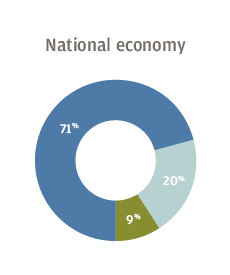
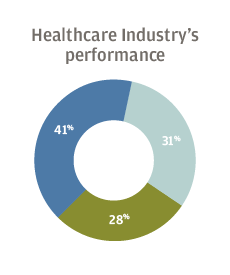
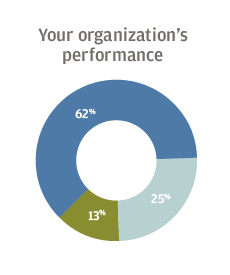
A majority of US healthcare executives surveyed by J.P. Morgan said they were optimistic about the financial performance of their own organizations going into 2019, as well as the national and local economies. But most were less positive about the outlook for the industry as a whole, with 28 percent expressing pessimism and another 31 percent merely neutral.

National economy 71% optimistic, 20% neutral, 9% pessimistic
Healthcare Industry's performance 41% optimistic, 31% neutral, 28% pessimistic
Your organization's performance 62% optimistic, 13% neutral, 25% pessimistic
Legend - Optimistic, Blue
Legend: Neutral Gray
Legend: Pessimistic, Green

Respondents to the survey, conducted Oct. 16 to Nov. 2 of 2018, said their biggest concerns were revenue growth, rising expenses and labor costs. The executives said their organizations plan to invest the most in information technology and physician recruitment.

Healthcare Changes Shape Perceptions

The pessimism about the industry likely stems, in part, from regulatory uncertainty and an ongoing shift from a fee-for-service model toward a value-based payment system, said Will Williams, Senior Healthcare Industry Executive within J.P. Morgan’s Commercial Banking Healthcare group. “Healthcare is going through the most transition of any industry in the country right now,” he said. Amid this upheaval, healthcare organizations face a combination of challenges, including lower reimbursement rates for Medicaid and Medicare patients, increased competition, and higher costs for labor, pharmaceuticals and technology investments.

The optimism that executives feel about their own hospital or healthcare group may come from a sense that an individual organization can adapt to industry changes, said Jenny Edwards, Commercial Banker in the healthcare practice at J.P. Morgan. “You can control certain factors, and make adjustments to compensate for the headwinds.”

Biggest Challenges for the New Year

Growth Strategies

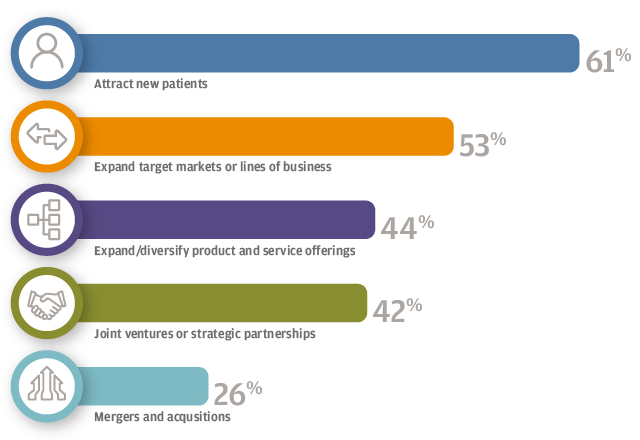
For 61 percent of respondents, the focus is on attracting new patients, followed by expanding target markets or lines of business (53 percent), and expanding or diversifying product and service offerings (44 percent). Hospitals, for example, have worked to add more patients to their broader healthcare system by opening clinics for urgent care or physical therapy, Edwards said.

As patient habits change, hospital systems have needed to become more consumer-focused, Edwards said. Patients are more likely to shop around for their care, expect transparent pricing and review healthcare workers on social media sites. This “retail-ization” trend in healthcare is accelerating, Edwards said. “You can shop for healthcare like you would a new pair of jeans.”

Skilled Talent Wanted

The talent shortage is top of mind for many healthcare executives, with 92 percent of survey respondents saying they were at least somewhat concerned with finding candidates with the right skill set. For 35 percent of respondents, the talent shortage is one of their top three challenges.

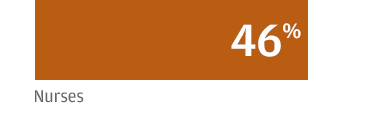
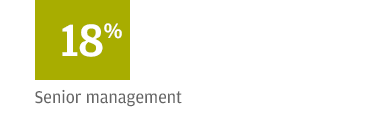
For those respondents who expressed concern, the most difficulty arises in filling positions for physicians (52 percent) and nurses (46 percent). To address the challenge, 76 percent said they expect to increase compensation of their staff over the next 12 months. According to 37 percent of respondents, the talent pool’s high compensation expectations factor into the shortage.

Most Challenging Positions to Fill

52%
46%
38%
29%
21%
21%

The talent shortage is an issue across the industry, Williams said, and burnout among doctors and nurses presents an ongoing problem. One contributing cause could be evolving changes in daily practice, with considerably more time today spent on electronic medical record entries and less on patient care. Williams said, “Doctors are getting frustrated. The problem is trying to replace those doctors as they quit practicing.”

Healthcare executives are particularly concerned about shortages of primary care professionals. “Rural communities already have these shortages,” said Brendan Corrigan, Vice Chair of the J.P. Morgan Healthcare Council.

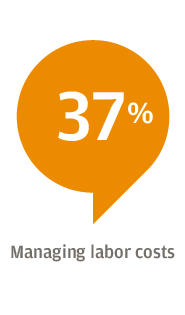
Labor costs tend to be higher in healthcare than in other sectors, Williams said, as a hospital must have coverage for all of its major roles 24 hours a day. When asked where they struggle with workforce management, the survey respondents cite staff turnover and its associated cost (47 percent), the ability to flex staff based on patient volumes (41 percent), and the cost of overtime and premium labor (36 percent). These workforce issues not only represent specific challenges; they all contribute to labor costs, which, as noted above, rank in the top three challenges for 2019.

Investments for a Changing Industry

A majority (51 percent) of organizations plan to invest in IT over the next 12 months. Other areas for investment included physician recruitment (44 percent) and new or replacement facilities (36 percent).

Since healthcare organizations manage a large amount of private patient health information, data security remains a large part of IT expenditures. “It’s a huge focus—they’re spending a lot of time and money on preventing a breach,” Edwards said. She goes on to note that the transition to patient EMR systems brings another big IT expense—more than $1 billion for the largest healthcare systems.

Overall, the survey showed healthcare executives grappling with rising costs and structural changes that affect the entire industry. “Healthcare is trying to figure out how to fix themselves,” Williams said.


Organizers: Johns Hopkins Reaches Settlement With Nurses Seeking To Unionize

https://www.wbal.com/article/392993/3/organizers-hopkins-reaches-settlement-with-nurses-seeking-to-unionize


Johns Hopkins Hospital has reached a settlement with registered nurses seeking to unionize, their national organizing committee said.

“This settlement makes clear that nurses have the right to form a union, we have a right to speak with our coworkers about a union, and Johns Hopkins does not have the legal right to target and intimidate nurses who engage in union activity,” registered nurse Alex Laslett said in a statement. “We are organizing at Johns Hopkins because we know a union affords nurses the protection we need to advocate freely for the best care for our patients.”

Hopkins reached a settlement of claims filed by the National Nurses Organizing Committee/National Nurses United with the National Labor Relations Board. The board found that the hospital created the impression that union activity would lead to surveillance and unlawful surveillance. The hospital enforced a rule barring nurses access to break rooms in connection with union activity and prohibited nurses from talking about the union at work, the NLRB found.

The settlement requires management to post signs throughout the hospital affirming nurses’ right to unionize. Those signs must be in place by June 14.

“In Catholic social teaching, we teach and believe that all workers have a fundamental human right to organize and to form unions and when an employer such as Johns Hopkins violates this fundamental right, they are acting unjustly and must be held accountable,” Father Ty Hullinger, a pastor in East Baltimore and a member of the Coalition for a Humane Hopkins, said in a statement. “This settlement puts Johns Hopkins on notice that the community is watching their actions and holding them to a standard that is moral and just.”

Officials with the national union said nursing staff at Hopkins asked for help organizing a union to address high turnover due to poor staffing, inadequate equipment and low pay.