Storming of Capitol was textbook potential coronavirus superspreader, experts say

https://www.washingtonpost.com/health/2021/01/08/capitol-coronavirus/

Wednesday’s storming of the U.S. Capitol did not just overshadow one of the deadliest days of the coronavirus pandemic — it could have contributed to the crisis as a textbook potential superspreader, health experts warn.

Thousands of Trump supporters dismissive of the virus’s threat packed together with few face coverings — shouting, jostling and forcing their way indoors to halt certification of the election results, many converging from out of town at the president’s urging. Police rushed members of Congress to crowded quarters where legislators say some of their colleagues refused to wear masks as well.

“This was in so many ways an extraordinarily dangerous event yesterday, not only from the security aspects but from the public health aspects, and there will be a fair amount of disease that comes from it,” said Eric Toner, senior scholar at the John Hopkins Center for Health Security.

Experts said that resulting infections will be near-impossible to track, with massive crowds fanning out around the country and few rioters detained and identified. They also wondered if even a significant number of cases would register in a nation overwhelmed by the coronavirus. As Americans shared their shock and anger at the Capitol breach Thursday, the United States reported more than 132,000 people hospitalized with the virus, and more than 4,000 deaths from covid-19, the disease caused by the coronavirus — making it the highest single-day tally yet.

“It is a very real possibility that this will lead to a major outbreak but one that we may or may not be able to recognize,” Toner said. “All the cases to likely derive from this event will likely be lost in the huge number of cases we have in the country right now.”

Trump devotees who flocked to the capital this week said they were unconcerned by the virus, belittling common precautions known to slow its spread and echoing the president’s dismissive attitude toward rising case counts. Trump had encouraged them to gather in defiance of his election loss: “Big protest in D.C. on January 6th,” he tweeted last month. “Be there, will be wild!”

Mike Hebert, 73, drove two days from Kansas to participate. Marching toward the Capitol on Wednesday with an American flag, he said he did not feel the need to wear a face covering.

“I am as scared of the virus as I am of a butterfly,” said Hebert, adding that he is a veteran who was shot twice in Vietnam.

Sisters Courtney and Haley Stone left New York at 11 p.m. to make it to the Capitol by morning so they could quietly counterprotest, draped in Biden gear. “Do you want a mask? I have one,” Haley, 22, asked a Trump supporter, only to be rebuffed.

“Oh, you believe in the mask hoax?” the woman replied.

Health experts predicted Wednesday’s events will contribute to an ongoing case surge in the greater Washington region. The average number of daily new infections in Virginia, Maryland and the District of Columbia reached a record high Thursday, and current covid-19 hospitalizations in the District have risen 19 percent in the past week.

They also noted differences with other large gatherings such as Black Lives Matter protests. Fewer people wore masks during the Capitol protests and riot, they said, and crowds were indoors.

“If you wanted to organize an event to maximize the spread of covid it would be difficult to find one better than the one we witnessed yesterday,” said Jonathan Fielding, a professor at the schools of Public Health and Medicine at UCLA.

“You have the drivers of spreading at a time when we are bearing the heaviest burden of this terrible virus and terrible pandemic,” he said.

Calling in to CBS News Wednesday, Rep. Susan Wild (D-Pa.) described her evacuation to a “crowded” undisclosed location with 300 to 400 other people.

“It’s what I would call a covid superspreader event,” she said. “About half the people in the room are not wearing masks, even though they’ve been offered surgical masks. They’ve refused to wear them.”

She did not identify the lawmakers forgoing face coverings beyond saying they were Republicans, including some freshmen. The Committee on House Administration says it is a “critical necessity” to mask up while indoors at the Capitol, and D.C. has a strict mask mandate.

“It’s certainly exactly the kind of situation that we’ve been told by the medical doctors not to be in,” Wild said.

“We weren’t even allowed to get together with our families for Thanksgiving and Christmas,” she said, “and now we’re in a room with people who are flaunting the rules.”

At least one member of Congress has tested positive since the mob spurred an hours-long lockdown. Newly elected Rep. Jacob LaTurner (R-Kan.) tested positive for the coronavirus late Wednesday evening, according to a statement posted on his Twitter account. It said he is not experiencing symptoms.

“LaTurner is following the advice of the House physician and CDC guidelines and, therefore, does not plan to return to the House floor for votes until he is cleared to do so,” the statement said.

Luke Letlow, a 41-year-old congressman-elect from Louisiana, died of covid-19 last month.

Any infections among members of Congress and their staff will be far easier to contact-trace than those among rioters, said Angela Rasmussen, an affiliate at the Center for Global Health Science and Security at Georgetown University.

“It certainly would have been easier if they were detained by Capitol police and identified, but testing suspects may be something to consider as law enforcement begins to identify them,” Rasmussen said in an email.

She noted that some may try to evade identification and criminal charges, and said she is deeply concerned for the households and communities they might expose.

“I think really rigorous contact tracing of people who are not identified as being present on Capitol grounds will not be possible,” she said.

Nearly 60% of COVID-19 spread may come from asymptomatic spread, model finds

How asymptomatic cases fuelled spread of coronavirus - Times of India

People with COVID-19 who don’t exhibit symptoms may transmit 59 percent of all virus cases, according to a model developed by CDC researchers and published Jan. 7 in JAMA Network Open. 

Since many factors influence COVID-19 spread, researchers developed a mathematical approach to assess several scenarios, varying the infectious period and proportion of transmission for those who never display symptoms according to published best estimates.  

In the baseline model, 59 percent of all transmission came from asymptomatic transmission. That includes 35 percent of new cases from people who infect others before they show symptoms and 24 percent from people who never develop symptoms at all. Under a broad range of values for each of these assumptions, at least 50 percent of new COVID-19 infections were estimated to have originated from exposure to asymptomatic individuals. 

The more contagious variant first identified in the U.K. and since found in six states underscores the importance of the model findings, said Jay Butler, MD, CDC deputy director for infectious diseases and a co-author of the study.

“Controlling the COVID-19 pandemic really is going to require controlling the silent pandemic of transmission from persons without symptoms,” Dr. Butler told The Washington Post. “The community mitigation tools that we have need to be utilized broadly to be able to slow the spread of SARS-CoV-2 from all infected persons, at least until we have those vaccines widely available.”

Whether vaccines stop transmission is still uncertain and was not a scenario addressed in the model. 

Fauci says he didn’t expect such a high US death toll from COVID-19

https://thehill.com/homenews/sunday-talk-shows/532405-fauci-says-he-didnt-expect-such-a-high-us-death-toll-from-covid-19

Fauci says he didn't expect such a high US death toll from COVID-19

Anthony Fauci, the nation’s top infectious diseases expert, said Sunday he did not expect the death toll from the coronavirus to be so high in the U.S.

“There is no running away from the numbers,” Fauci told guest host Martha Raddatz on ABC’s “This Week.”

“It’s something that we absolutely have got to grasp and get our arms around and turn that, turn that inflection down by very intensive adherence to the public health measures uniformly throughout the country with no exceptions,” he added.

Statistics held by John Hopkins University show that 350,215 deaths have been recorded in the United States so far, a number that has been quickly growing over the last two months.

“I did not” expect the death toll to reach the recent milestone of 350,000 in the U.S., Fauci said.

“But, you know, that’s what happens when you’re in a situation where you have surges related to so many factors inconsistent adhering to the public health measures, the winter months coming in right now with the cold allowing people or essentially forcing people to do most of their things indoors as opposed to outdoors.”

Raddatz asked Fauci how effective he thought proposals by President-elect Joe Biden would be, such as a 100-day mask mandate and a target of 100 million vaccinations.

“The goal of vaccinating 100 million people in the first 100 days is a realistic goal. We can do 1 million people per day,” Fauci said. “You know we’ve done massive vaccination programs, Martha, in our history. There’s no reason why we can’t do it right now.”

US hits 350,000 COVID-19 deaths amid fear of surge after holiday gatherings

https://thehill.com/homenews/532396-us-hits-350000-covid-19-deaths-amid-fear-of-surge-after-holiday-gatherings

As U.S. inches closer to 350,000 Covid-19 deaths, one model proj -  WRCBtv.com | Chattanooga News, Weather & Sports

More than 350,000 people have died of the coronavirus in the U.S., with another surge of cases and deaths expected in the coming weeks as a result of smaller holiday gatherings.

The country reached the grim milestone early Sunday morning, according to data compiled by Johns Hopkins University. More than 20 million people have been infected since the pandemic began nearly one year ago, according to the tally.

Public health experts attributed a nationwide spike in cases, hospitalizations and deaths in early December to a large number of Americans traveling over the Thanksgiving holiday, and pleaded with citizens to stay home for Christmas and New Year’s celebrations. 

Multiple states have reported a record number of cases, including North Carolina and Arizona, according to the Associated Press. New York hit 1 millions cases total as of Saturday, becoming the fourth state to do so along with Texas, Florida and California.

Last month, federal officials approved two vaccines by Pfizer and Moderna for emergency use. The first round of doses have been administered to doctors, nurses and other front line healthcare workers as well as nursing home residents.

The elderly and other patients deemed “high risk” are the next group of Americans slated to receive vaccines with public health officials estimating younger and healthy citizens can expect to be eligible for vaccination toward the middle to end of spring. 

The Centers of Disease Control and Prevention last week reported more than 2 million people in America have been vaccinated, far short of the 20 million figure the federal government initially said it hoped to top by this time. That number has since grown to 4.2 million as of Sunday. 

“We would have liked to have seen it run smoothly and have 20 million doses into people today by the end of the 2020, which was the projection,” said Dr. Anthony Fauci, the nation’s leading infectious disease doctor. “Obviously, it didn’t happen, and that’s disappointing.”

Fauci said a targeted approach in assisting local governments in vaccine rollout programs is the best way for the federal government to make up for lost time. 

“There really has to be a lot more effort in the sense of resources for the locals, namely, the states, the cities, the counties, the places where the vaccine is actually going into the arms of individuals,” Fauci said. 

Banner Health halts elective surgeries

History

Banner Health will pause elective surgeries Jan. 1, the Phoenix-based system announced Dec. 30. 

The health system is suspending nonurgent elective surgeries that can reasonably be postponed for 30 to 60 days without a negative impact on the patient’s health, according to TV station CBS 5

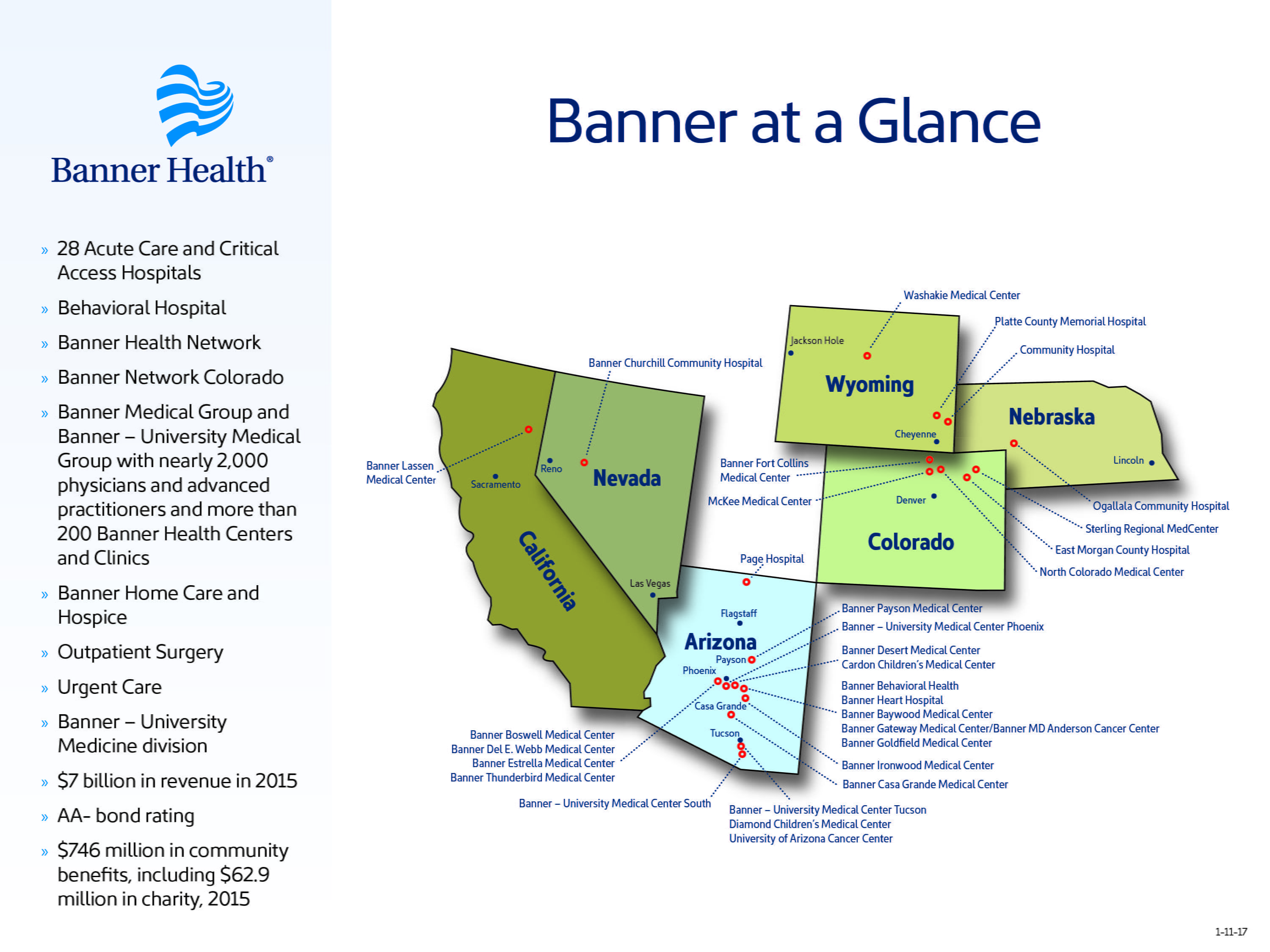
Banner’s hospitals are facing a surge of COVID-19 patients. As of Dec. 29, the system was at 104 percent licensed bed capacity, Banner Chief Clinical Officer Marjorie Bessel, MD, said Dec. 30, according to TV station ABC 15. Some Banner hospitals have exceeded 120 percent licensed bed capacity.

Because of a backlog of patients, some Banner hospitals are diverting incoming ambulance transports. 

“This diversion activity is an early indication that triage may soon be necessary if volumes continue to increase like they did this past week,” Dr. Bessel said, according to CBS 5. “What triage would look like, would be that we might, if we got to that point, be unable to care for everybody.”

California reports first case of new coronavirus variant

https://www.axios.com/california-covid-coronavirus-variant-1081cbb4-5d2c-42f2-8785-b35e567296c9.html

California reported its first case of a new variant of the coronavirus that may be more transmissible, AP reports.

The big picture: California is the second state to document a confirmed case of the variant — which originated in the United Kingdom — after Colorado reported the first case in the United States on Tuesday.

  • California Gov. Gavin Newsom announced the infection during an online conversation with Anthony Fauci, head of the National Institute of Allergy and Infectious Diseases, according to AP.
  • The governor said the case was located in Southern California, but he did not provide any other details about the person who was infected.
  • “I don’t think Californians should think that this is odd. It’s to be expected,” Fauci said Wednesday, per AP.

Of note: There is thus far no evidence that the new variant is more deadly — only that it appears more transmissible. There is also no evidence that COVID-19 vaccines will be less effective against the new variant.

  • A non-peer reviewed study by the Centre for Mathematical Modelling of Infectious Diseases at the London School of Hygiene and Tropical Medicine found that the variant is 56% more transmissible than other strains.
  • The British government previously warned that a new variant could be up to 70% more transmissible.

Go deeper: What you need to know about the coronavirus mutation

Scripps CEO: Care rationing near if Californians ignore COVID-19 mitigation efforts

Prepare for Health Emergencies Like War Says CEO - Scripps Health

Hospitals in Southern California will need to start rationing care if more action isn’t taken by the community to mitigate the spread of COVID-19, Chris Van Gorder, president and CEO of Scripps Health, wrote in a Dec. 28 op-ed for The San Diego Union-Tribune

As of Dec. 29, 20,642 California residents were hospitalized with COVID-19. The state’s hospital bed capacity is 72,511. In San Diego County, where Scripps is headquartered, 18 intensive care unit beds were available as of Dec. 28, “not even enough to handle a single mass casualty incident,” Mr. Van Gorder wrote. Out of Scripps’ 173 ICU beds, seven staffed beds were available as of Dec. 28.

“This past weekend, one of our community hospitals ran out of room in their morgue. We are nearing the point where we have to make the decision of who gets care and who does not,” Mr. Van Gorder wrote.

He pleaded with the San Diego and California community to adhere to mask-wearing and social distancing guidelines, especially as the New Year’s Day holiday approaches. He called on residents to stay home for New Year’s, wear a mask, wash their hands, and not eat or drink with people who aren’t in their immediate family household.

Mr. Van Gorder’s commentary comes as Kaiser Permanente hospitals in Northern California are suspending elective, non-urgent procedures through Jan. 4 as they continue to face a surge in COVID-19 hospitalizations. The Oakland, Calif.-based system announced the suspension Dec. 26, days after Chair and CEO Greg Adams said during a news conference, “We simply will not be able to keep up if the COVID surge continues to increase. We’re at or near capacity everywhere.”

Operation Warp Speed at a crawl

Boise's Leading Local News: Weather, Traffic, Sports and more | Boise,  Idaho | KTVB.com | ktvb.com

The Centers for Disease Control and Prevention reported on Monday that 2.1 million doses of coronavirus vaccines have been administered in two weeks. While this might sound like an impressive number, it should set off alarms.

Let’s start with the math. Anthony S. Fauci, the government’s top infectious-disease doctor, estimates that 80 to 85 percent of Americans need to be vaccinated to reach herd immunity. Both the Pfizer and Moderna vaccines require two doses. Eighty percent of the American population is around 264 million people, so we need to administer 528 million doses to achieve herd immunity.

At the current rate, it would take the United States approximately 10 years to reach that level of inoculation. That’s right — 10 years. Contrast that with the Trump administration’s rosy projections: Earlier this month, Health and Human Services Secretary Alex Azar predicted that every American will be able to get the vaccine by the second quarter of 2021 (which would be the end of June). The speed needed to do that is 3.5 million vaccinations a day.

There’s reason to believe the administration won’t be able to ramp up vaccination rates anywhere close to those levels. Yes, as vaccine production increases, more will be available to the states. And Brett Giroir, assistant secretary for health at HHS, argued on Sunday that the 2.1 million administered vaccines figure was an underestimate due to delayed reporting. So let’s be generous and say the administration actually administered 4 million doses over the first two weeks.

But even that would still fall far short of the 3.5 million vaccinations needed per day. In fact, it falls far short of what the administration had promised to accomplish by the end of 2020 — enough doses for 20 million people. And remember, the first group of vaccinations was supposed to be the easiest: It’s hospitals and nursing homes inoculating their own workers and residents. If we can’t get this right, it doesn’t bode well for the rest of the country.

Here’s what concerns me most: Instead of identifying barriers to meeting the goal, officials are backtracking on their promises. When states learned they would receive fewer doses than they had been told, the administration said its end-of-year goal was not for vaccinations but vaccine distribution. It also halved the number of doses that would be available to people, from 40 million to 20 million. (Perhaps they hoped no one would notice that their initial pledge was to vaccinate 20 million people, which is 40 million doses, or that President Trump had at one point vowed to have 100 million doses by the end of the year.) And there’s more fancy wordplay that’s cause for concern: Instead of vaccine distribution, the administration promises “allocation” in December. Actual delivery for millions of doses wouldn’t take place until January, to say nothing of the logistics of vaccine administration.

The vaccine rollout is giving me flashbacks to the administration’s testing debacle. Think back to all the times Trump pledged that “everyone who wants a test can get one.” Every time this was fact-checked, it came up false. Instead of admitting that there wasn’t enough testing, administration officials followed a playbook to confuse and obfuscate: They first attempted to play up the number of tests done. Just like 2 million vaccines in two weeks, 1 million tests a week looked good on paper — until they were compared to the 30 million a day that some experts say are needed. The administration then tried to justify why more tests weren’t needed. Remember Trump saying that “tests create cases” or the CDC issuing nonsensical testing guidance?

When that didn’t work, Trump officials deflected blame to the states. Never mind that there should have been a national strategy or that states didn’t have the resources to ramp up testing on their own. It was easier to find excuses than to admit that they were falling short and do the hard work to remedy it.

Instead of muddying the waters, the federal government needs to take three urgent steps. First, set up a real-time public dashboard to track vaccine distribution. The public needs to know exactly how many doses are being delivered, distributed and administered. Transparency will help hold the right officials accountable, as well as target additional resources where they are most needed.

Second, publicize the plan for how vaccination will scale up so dramatically. States have submitted their individual plans to the CDC, but we need to see a national strategy that sets ambitious but realistic goals.

Third, acknowledge the challenges and end the defensiveness. The public will understand if initial goals need to be revised, but there must be willingness to learn from missteps and immediately course-correct.

I remain optimistic that vaccines will one day end this horrific pandemic that has taken far too many lives. To get there, we must approach the next several months with urgency, transparency and humility.

First case of highly infectious coronavirus variant detected in Colorado

Colorado officials on Tuesday reported the first known case in the United States of a person infected with the coronavirus variant that has been circulating rapidly across much of the United Kingdom and has led to a lockdown of much of southern England.

Scientists have said the variant is more transmissible but does not make people sicker.

The Colorado case involves a man in his 20s, who is in isolation in Elbert County, about 50 miles southeast of Denver, and has no travel history, according to a tweet from the office of Gov. Jared Polis (D).

“The individual has no close contacts identified so far but public health officials are working to identify other potential cases and contacts through thorough contact tracing interviews,” the statement said.

A federal scientist familiar with the investigation said the man’s lack of known travel — in contrast with most confirmed cases outside the United Kingdom — indicates this is probably not an isolated case. “We can expect that it will be detected elsewhere,” said the official, who spoke on the condition of anonymity to discuss the broader context of the announcement.

The Centers for Disease Control and Prevention confirmed as much in a statement Tuesday afternoon, saying additional cases with the new variant will be detected in the United States in coming days. The variant’s apparent increase in contagiousness “could lead to more cases and place greater demand on already strained health care resources,” the agency said in a statement.

Researchers have detected the more transmissible variant in at least 17 countries outside the United Kingdom, including as far away as Australia and South Korea, as of Tuesday afternoon. Officials in Canada had previously said they had identified two cases.

Although the U.K. variant appears more contagious, it is not leading to higher rates of hospitalizations or deaths, according to a report from Public Health England, a government agency. Nor is there any sign that people who were infected months ago with the coronavirus are more likely to be reinfected if exposed to the variant, according to the report. All available evidence indicates that vaccines, and immunity built up in the population, should be protective against this variant.

The Colorado case occurred in a county of about 27,000, which is currently classified, along with much of the state, in the “red” level for the virus, denoting serious but not extreme risk.

Two weeks ago, several hundred people gathered at a community church in the county seat of Kiowa to consider whether to pursue legal actions against Polis and other state officials for imposing coronavirus-related restrictions, according to the Elbert County News. County commissioners and the county sheriff have declined to enforce restrictions emanating from Denver.

“I was expecting to see it in ski country first because those areas are where people from across Colorado, the U.S. and internationally, gather,” said Elizabeth Carlton, an assistant professor of environmental and occupational health at the Colorado School of Public Health. The absence of any apparent travel history associated with the infected person, she said, suggests he “can’t be the only case in Colorado.”

Polis, in his statement, called on Coloradans to do everything they could to prevent transmission by wearing masks, standing six feet apart when gathering with others, and interacting only with members of their immediate households.

The arrival of the new variant “doesn’t fundamentally change the nature of the threat,” said Justin Lessler, an epidemiologist at Johns Hopkins Bloomberg School of Public Health. “It’s no more deadly than the virus was before, and it doesn’t look like it infects people who are immune.”

Lessler echoed others, saying he would be “astounded” if this was the only chain of transmission of the new variant in the United States. “We know that the virus spreads easily and quickly between countries,” he said, and the fact that the infected person had no travel history indicates “this strain has gotten here sometime in the past, and there are chains of transmission ongoing.”

The variant has a higher attack rate, according to the U.K. report, which bolsters the hypothesis that the variant has out-competed other versions of the coronavirus and is now the dominant variant across much of the United Kingdom. Among people known to have been exposed to someone already infected with the variant, 15.1 percent became infected. People exposed to someone infected with the non-variant version had a 9.8 percent infection rate.

That difference suggests the variant is more transmissible, though Public Health England said more investigation is needed to bolster the hypothesis.

The working theory among many scientists is that the increased transmissibility of the variant, known as B.1.1.7, is driven by mutations that have altered the spike protein on the surface of the virus. The variant has 17 mutations — eight of which alter the spike protein.

Precisely how those changes are leading to more infections is unknown. The virus may be binding more easily to receptor cells in the human body, or replicating more easily and driving higher viral loads, enhancing viral shedding by someone who is infected. Another possibility is that people are shedding the virus for a longer period, increasing the chances of passing it along.

“Preliminary evidence suggests that the new variant does not cause more severe disease or increased mortality,” Susan Hopkins, a senior medical adviser to Public Health England, said in a statement released Tuesday.

The newly published data echo the findings in a separate study published last week, based on modeling and hospitalization data — and not yet peer-reviewed — that estimated that the variant is 56 percent more transmissible but does not appear to alter the lethality of the virus.

“The good news is that B.1.1.7 does not seem to cause much more severe disease, and there’s no evidence that it is managing to evade the immune system, which means vaccines are expected to protect against it,” William Hanage, an epidemiologists at the Harvard T.H. Chan School of Public Health, said Tuesday after reviewing the new report. “The bad news is that B.1.1.7 does appear to be much more transmissible.”

Officials in the United States have been signaling since last week that the new variant was probably already present in this country.

“I’m not surprised,” Anthony S. Fauci, director of the National Institute of Allergy and Infectious Diseases, said Tuesday. “I think we have to keep an eye on it, and we have to take it seriously. We obviously take any kind of mutation that might have a functional significance seriously. But I don’t think we know enough about it to make any definitive statements, except to follow it carefully and study it carefully.”

Research findings on coronavirus variants have been ambiguous at times, and scientists say they are still trying to extract reliable signals from noisy data. There have been several false alarms sounded about virus mutations in the past. A major challenge is discerning whether a virus variant is spreading rapidly because it has a competitive advantage based on genetic and structural differences, or because it is simply lucky, having arrived early to a location or leveraged a few superspreader events to gain dominance.

But with the United Kingdom seeing a severe winter surge of infections, public officials are taking no chances and have effectively locked down southern England, including London. Other countries have banned travelers from the United Kingdom.

The United States, despite having the world’s highest number of documented infections, has a weak track record in publishing genomic sequences, the process that enables researchers to track changes in the virus. Most sequences have been published by academic or private research institutions. By comparison, the United Kingdom has a national health system with a robust surveillance system.

“The U.K. made the decision in the spring to do this. The U.S. has sequencing equipment and infrastructure. As with many things in this pandemic, it was not executed the way it should have been,” said Neville Sanjana, a geneticist at New York University.

All viruses mutate randomly, and over time some of those mutations appear to confer some kind of advantage to the virus as it adapts to the human species. The novel coronavirus, SARS-CoV-2, mutates at a slow rate, and scientists do not think the genetic changes seen in the variant so far are sufficient to allow it to elude the vaccines now being administered to millions of people in many countries. But the coronavirus is a moving target and these mutations require surveillance.

Many scientists call the arrival of more transmissible mutations a wake-up call. “The lack of virus sequencing and case tracking in the USA is a scandal,” said Jeremy Luban, a virologist at the University of Massachusetts Medical School.

Francois Balloux, who directs the Genetics Institute at University College London, on Twitter predicted that within two weeks, enough data will accumulate to determine whether this new variant is indeed more transmissible. Previously, Balloux and his colleagues combed through genome sequences, looking for evidence that common variants had increased transmissibility.

“We don’t see much,” he said, referring to a report published in the journal Nature in November that found no signs of mutations that helped the virus to spread more easily. However, he said he “wouldn’t underestimate the evolutionary potential of SARS-CoV-2.”

Biden to address nation on pandemic as Fauci says coronavirus surge ‘has just gotten out of control’

Fauci: U.S. may see “surge upon surge” of coronavirus in weeks ahead – The  Denver Post

President-elect Joe Biden plans to deliver an address on the coronavirus pandemic as the nation experiences what his chief medical adviser on the issue, Anthony S. Fauci, described Tuesday as a surge in cases “that has just gotten out of control in many respects.”

Biden’s remarks, planned Tuesday afternoon in Wilmington, Del., are expected to be his most extensive comments to date since early this month, when he laid out a plan for his first 100 days in office that included imploring all Americans to wear masks.

Fauci, appearing on CNN on Tuesday morning, lamented what he expects to be a post-holiday increase in cases and the strong possibility than January’s caseload will exceed even that of December. “You just have to assume it’s going to get worse,” Fauci said.

Fauci also acknowledged that the rollout of vaccines was not reaching as many Americans as quickly as the 20 million that Trump administration had pledged by the end of the month.

“We certainly are not at the numbers that we wanted to be at the end of December,” said Fauci, director of the National Institute of Allergy and Infectious Diseases. “We are below where we want to be.”

But Fauci, who accepted Biden’s invitation to play an expanded role in his administration, expressed hope that by “showing leadership from the top,” Biden could make an impact — comments that appeared to be implicit criticism of President Trump, who has said little publicly about the crisis since Election Day.

“What he’s saying is that let’s take at least 100 days and everybody, every single person put aside this nonsense of making masks be a political statement or not,” Fauci said of Biden. “We know what works. We know social distancing works. We know avoiding congregant settings works. For goodness sakes, let’s all do it, and you will see that curve will come down.”

Separately Tuesday, Vice President-elect Kamala D. Harris plans to get vaccinated in Washington. Biden received his first shot last week.

In remarks earlier this month, Biden also pledged to distribute 100 million vaccine shots in his first 100 days in office and said he wanted to open as many schools safely during the period as possible. He has also promised to sign an executive order requiring masks to be worn on federal property.

On Monday, Celine Gounder, a member of Biden’s covid-19 advisory board, said during a television appearance that Biden is also considering invoking the Defense Production Act to increase production of coronavirus vaccines,

Appearing on CNBC’s “Squawk Box,” Grounder said Biden could invoke the wartime-production law “to make sure the personal protective equipment, the test capacity and the raw materials for the vaccines are produced in adequate supply.”

During his CNN appearance, Fauci said that getting children back to school safely should remain an imperative, despite rising caseloads.

“You can’t have one size fits all, but the bottom line, what I call default position, should be that wherever we are, try as best as we can to get the children back to school and to keep them in school and to have a plan to try and keep them as safe as possible,” he said.

About 200,000 new coronavirus cases have been reported daily in recent weeks, with a record high of 252,431 on Dec. 17.

The nation’s overall caseload surpassed 19 million Sunday, even as the holidays were expected to cause a lag in reporting. Hospitalizations have exceeded 100,000 since the start of December and hit a peak of 119,000 on Dec. 23. Deaths are averaging more than 2,000 a day, with the most ever reported — 3,406 fatalities — on Dec. 17.