


Cartoon – 2020 Sanitized Santa


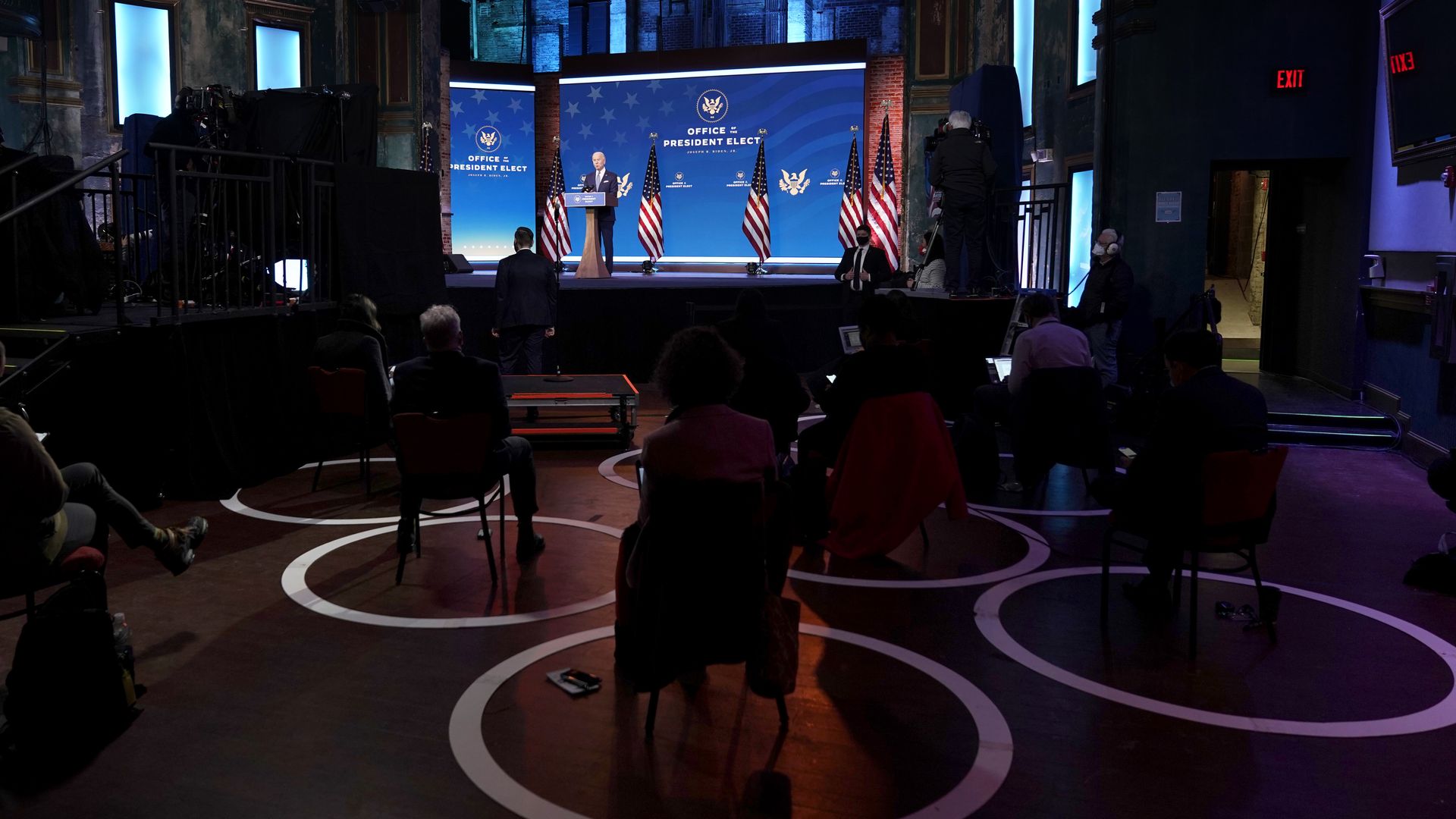
Rare words from an incoming president: “Our darkest days in the battle against COVID are ahead of us, not behind us,” President-elect Biden warned this afternoon during remarks in Wilmington.
Why it matters: Biden is promising to tell America the truth, which includes the reality of many more horrific months, no matter who is in charge.
Another blunt reality: Most of the benefits in the $900 billion coronavirus rescue package expire months before America has any hope of being back to normal.
The other side: There’s funding for schools and childcare and mass transit and vaccination distribution, which helps bail out the above from those obligations.
The bottom line: Georgia’s Jan. 5 Senate runoffs could be the difference between a big stimulus under Biden, or more trouble for parts of the U.S. hospitality sector.

When a group of friends rebuffed multiple demands to wear masks inside the Sahara Theater in Anaheim, they were kicked out of the strip club in the early-morning hours of Halloween for not following the state’s coronavirus restrictions.
The men returned to the gentleman’s club in their Honda sedan shortly thereafter, but they were not looking to reenter and keep the party going. Instead of masks, they brought with them an AK-47 to shoot at the outside of the establishment, according to authorities, firing 15 rounds from the car and hospitalizing three people with gunshot wounds.
Nearly two months later, the Anaheim residents were arrested in what police described to The Washington Post as the most extreme anti-mask incident in the city to date.
On Monday, Edgar Nava-Ayala, 34, and Daniel Juvenal Ocampo, 22, were charged with three felony counts of attempted murder with premeditation and deliberation, three felony counts of assault with an assault weapon, and one felony count of shooting into an occupied building. A third man, Juan Jose Acosta-Soto, 20, was charged with three felony counts of assault with an assault weapon and one felony count of shooting into an occupied building.
All three men have pleaded not guilty to the charges, according to a news release from the Orange County District Attorney’s Office.
If convicted on all charges, Nava-Ayala and Ocampo face a maximum sentence of life in prison. Acosta-Soto faces a maximum prison sentence of more than 17 years.
Anaheim Police Sgt. Shane Carringer told The Post that the men were arrested Thursday, adding that the city avoided a near-tragedy with the dozens of people inside the club at the time of the Halloween shooting.
“It is nothing short of a miracle that no one was killed,” Carringer said. “There were over 30 people in there and these guys are suspected of indiscriminately firing at innocent bystanders with a high-powered rifle.”
The strip club shooting is just one example in a long line of mask disputes that have led to gunfire since the start of the pandemic. In May, a Family Dollar security guard in Flint, Mich., was killed after telling a customer that her child had to wear a mask to enter the store. That same month, a maskless San Antonio man who was denied entry on a bus proceeded to shoot and critically injure a passenger who had confronted him for not wearing a face covering, authorities said. In August, a Pennsylvania man was charged after allegedly opening fire outside a cigar shop that had asked him to wear a mask.
The district attorney’s office said Nava-Ayala and Ocampo were “escorted out of the club because they refused to wear face coverings.” When the three men came back in their car at about 1:35 a.m. on Oct. 31, police say Nava-Ayala ripped off 15 rounds from an AK-47 into the Sahara Theater.
Three people — two employees and a customer — were hospitalized and suffered minor to moderate injuries to their upper body that were not life-threatening. A fourth person was wounded, but refused medical attention, Carringer said.
In California, gentlemen’s clubs like the Sahara Theater are allowed to operate if they provide food, which would classify them as a restaurant instead of a bar or live entertainment venue.
A manager with the club declined to comment to The Post, saying, “All the info is out there.”
Carringer said Anaheim police had worked “nonstop” for about six weeks as part of the investigation to track down the three men, arresting them in different locations Thursday. None of them had a significant previous record before the shooting, he said.
“In Anaheim, this is as close as we’ve gotten to a mass shooting,” Carringer said.
Nava-Ayala, Ocampo and Acosta-Soto are being held at the Orange County Jail on $5 million bail each. Their attorneys did not immediately return a request for comment early Tuesday.

Three dozen people at a Chilean army base in Antarctica have reportedly tested positive for the novel coronavirus, marking the first time a case has been recorded on the continent.
Base General Bernardo O’Higgins Riquelme is one of 13 active Chilean army stations in Antarctica, the Australian Broadcasting Corporation noted.
Sky News reports that of the 36 who tested positive, 26 are members of the Chilean military while the rest are maintenance workers.
Though there are few people in Antarctica, the implications of the coronavirus diagnoses could be significant. The number of people in Antarctica fluctuates widely throughout the year depending on the season, Sky News notes, with around 1,000 in the winter and about 5,000 in the summer.
“The detection of cases of COVID-19 in Antarctica will impact upon a range of areas, from planning and logistics of human activity on the continent through to high-level decision-making back home,” Hanne Nielsen of the the University of Tasmania told the Australian Broadcasting Corporation.
“The presence of COVID-19 in Antarctica also has implications for local wildlife, with the threat of humans transmitting the virus to other species,” Nielsen added.
Chile’s government announced on Sunday that doses of Pfizer’s coronavirus vaccine could begin being administered as early as next week. The vaccine was reportedly approved by Chile’s health regulators last Wednesday.
Chilean President Sebastian Pinera said the first doses would be limited to health care workers, as many governments have done, with the goal of sending out 20,000 doses by the end of the month.

Pre-Christmas air travel surpassed 1 million daily passengers nationwide for three consecutive days this weekend — breaking the record for most weekend travelers of the pandemic and outpacing Thanksgiving numbers that assumed that title and worried health experts last month. The 3.2 million passengers screened Friday, Saturday and Sunday mark the only time during the pandemic that over 1 million air travelers were seen three days in a row.
The influx in air travel undercuts health officials’ guidance for Americans to stay home this holiday season. The Centers for Disease Control and Prevention issued guidance earlier this month that discouraged travel and urged those who need to travel to acquire coronavirus tests before and after their journey.
The next two contenders for busiest travel weekends were those before and after Thanksgiving, Transportation Security Administration spokesperson Daniel Velez said in an email. Pre-Thanksgiving weekend saw 3,052,139 travelers, with the following weekend logging 2,961,120.
On Saturday, TSA spokesperson Lisa Farbstein noted the upswing in passenger volume on Twitter and shared images of TSA agents sanitizing security checkpoints, which have new touchless procedures and glass barriers between travelers and staff.
Farbstein also reminded passengers that they are permitted to bring up to 12 ounces of hand sanitizer through security — more than the standard three-ounce limit that applies to other liquids — during the pandemic.
“Until further notice, passengers may bring one container of hand sanitizer up to 12oz in carry-on bags,” the TSA said in a tweet. “Expect containers to be screened separately, which may add time to the checkpoint screening experience.”
While the amount of people flying every day is still consistently less than half of the same numbers seen last year before the pandemic began, the influx marks a steady increase in the frequency of days in which travel volumes surpass 1 million daily passengers. Since March, there have been a total of eight days that saw more than 1 million screenings: One occurred in October, four in November, and three have been recorded so far this month.https://a85aee93c838e6222057ae0ce825fc95.safeframe.googlesyndication.com/safeframe/1-0-37/html/container.html
“Travel can increase your chance of spreading and getting COVID-19. Postponing travel and staying home is the best way to protect yourself and others from COVID-19,” the CDC said in updated guidance on Dec. 2. For those who do plan to travel, the agency recommends getting tested one to three days before the trip and three to five days afterward. It also says to “reduce non-essential activities for a full 7 days after travel, even if your test is negative.”
Those unable to acquire a test, the guidance says, should “reduce non-essential activities for 10 days after travel.”
Christmas travel numbers are likely to plummet in some other countries, like England, where officials have imposed lockdowns and banned holiday gatherings because of a fast-spreading strain of the coronavirus. Canada and some nations in Europe have moved to ban travel from England through Christmas.https://a85aee93c838e6222057ae0ce825fc95.safeframe.googlesyndication.com/safeframe/1-0-37/html/container.html
While the strain has not yet been reported in the United States, New York Gov. Andrew M. Cuomo (D) on Monday called for the country to follow suit and ban travel from the United Kingdom.
“Right now, this variant in the U.K. is getting on a plane and flying to JFK,” Cuomo said on a conference call with reporters. “We have about six flights a day coming in [to JFK airport] from the U.K., and we have done absolutely nothing.”

A flurry of European travel restrictions announced Sunday over worries about a fast-spreading new variant of the coronavirus have spurred curiosity and concern that the mutation could infect Americans.
After officials in the United Kingdom said Saturday that the variant first identified there was spreading 70 percent faster than others, Google searches about the mutation have spiked. But American public health experts and federal officials say that although it appears that the variant may be more contagious, it is not any more dangerous than others already detected in the United States.
“I don’t think there should be any reason for alarm right now,” Adm. Brett Giroir, who has been in charge of testing, told George Stephanopoulos on ABC’s “This Week.”
Variations to the virus are nothing new, and experts say the novel coronavirus does not mutate as much as influenza, meaning it is less likely that a vaccine would need to be developed every year to keep up with the new strains.
Still, much about this variant remains unknown, such as whether it is a new strain — a functionally different version of the virus.
“The take-home message for right now is that we need to get more information,” said Krutika Kuppalli, an infectious-diseases specialist at the Medical University of South Carolina. “In the meantime, we all need to really double down on our public health measures — wearing masks, remaining physically distanced, avoiding crowds of people.”
In September, U.K. researchers discovered the variant’s prevalence when they collected samples from infected people in southeastern England. It seemed to spread quickly.
“This lineage came up quite rapidly,” Nick Loman, one of the researchers and a professor of microbial genomics at the University of Birmingham, told The Washington Post.
Since then, Australia, Denmark and the Netherlands have identified cases of the variant in their countries, the World Health Organization told the BBC. On Sunday, Italian officials announced that a patient returning from Britain “in the last few days” was in isolation after scientists detected the mutation.
In South Africa, health officials said Sunday that a version of the virus similar to the U.K. variant has been found in 80 to 90 percent of samples analyzed since mid-November.
The virus has not been detected in the United States, but officials are watching for developments in Britain, Giroir told Stephanopoulos.
Although guidance from federal agencies discourages traveling to Britain, the United States has not banned travel from there.
“I really don’t believe we need to do that yet,” Giroir said.
But New York Gov. Andrew M. Cuomo (D) pointed out Sunday that it would take only one flight to the United States to spread the mutation, urging federal officials to restrict travel.
“Right now, this variant in the U.K. is getting on a plane and flying to JFK,” Cuomo said on a conference call with reporters.
However, Kuppalli warned that little is known about the effectiveness of a ban, referring to instances in which people rushed to airports and congregated in long lines trying to travel before restrictions were put into effect earlier in the pandemic.
It is also not entirely certain whether the virus gained its foothold in the southeast of England because of its altered genetic markers or through super-spreading events, said Scott Gottlieb, a former head of the Food and Drug Administration.
“It seems like this new strain is more contagious,” Gottlieb said on CBS’s “Face the Nation.” “It doesn’t seem to be any more virulent, any more dangerous than run-of-the-mill covid. The next question is: Will it obviate our natural immunity?”
As of now, experts say there has been no indication that the variant is resistant to the Pfizer and Moderna vaccines authorized by the FDA.
“There is no reason to believe that the vaccines that have been developed will not be effective against this virus as well,” Vivek H. Murthy, President-elect Joe Biden’s nominee for surgeon general, told host Chuck Todd on NBC’s “Meet the Press.” “The bottom line is if you’re at home and hearing this news, it does not change what we do in terms of precautions.”
Although the vaccine remains out of reach for most Americans, following guidance such as social distancing and wearing masks remains the most practical way to prevent transmission.
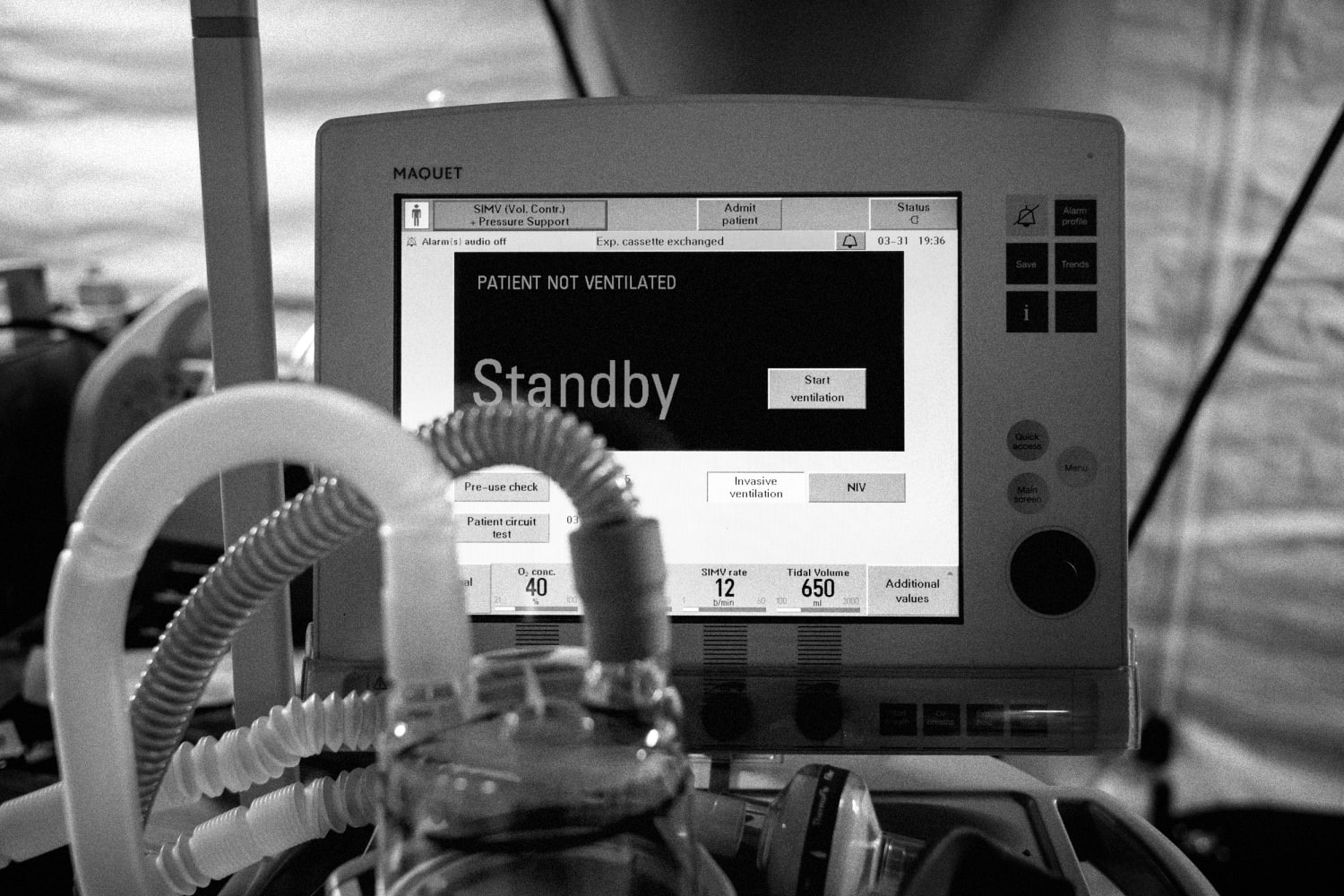
Several hospitals in Los Angeles County are preparing for the possibility of restrategizing care delivery in the coming weeks amid growing COVID-19 hospitalizations, according to the Los Angeles Times.
Los Angeles County reported 6,018 COVID-19 hospitalizations Dec. 20 — a 2.5 percent increase from the day prior — with 1,198 patients in ICUs, according to the state’s data dashboard. Statewide, 17,750 patients are hospitalized with COVID-19, 3,710 of them in ICUs.
The LA Times obtained a document recently circulated among physicians at the four county-run hospitals that outlines resource allocation in crisis situations. The guidelines call for physicians to save as many patients as possible versus trying everything to save a patient, meaning those less likely to survive will not receive the level of care they would have otherwise. L.A. County Health Services Director Christina Ghaly, MD, told the LA Times that the guidelines were not in place as of Friday night.
California activated its “mass fatality” program last week, which coordinates mutual aid across several government agencies when more deaths take place in a period of time than can be handled by local coroner or medical emergency personnel, NPR reports.
Nearly all of the state is under stay-at-home orders, with residents prohibited from gathering with anyone outside their immediate household.
“I have yet to see any clear signals that things are slowing down, and I’m very concerned about the next two months,” Timothy Brewer, MD, an epidemiologist with UCLA Health, told the LA Times. He said UCLA Health is scheduling several infectious disease specialists to be on call at any time, and the biggest issue is that hospitals may quickly run out of providers who can administer ICU-level care.

 HENRY KOTULA