With US COVID case counts hitting levels not seen since February, hospitalizations climbing rapidly in many states—topping the number seen nationally during last summer’s surge—and mortality figures beginning to edge worrisomely upward, it’s increasingly clear that talk of a “hot vax summer” was premature at best.
While this week the nation crested President Biden’s July 4th goal of 70 percent of Americans getting at least one dose of the vaccine, attention has now turned in earnest to the need to dramatically accelerate vaccinations the face of the highly contagious Delta variant.
Of particular concern: a report from the Centers for Disease Control and Prevention (CDC) suggesting that vaccinated people who become infected with the variant may be able to spread the disease at a greater rate than previously thought.
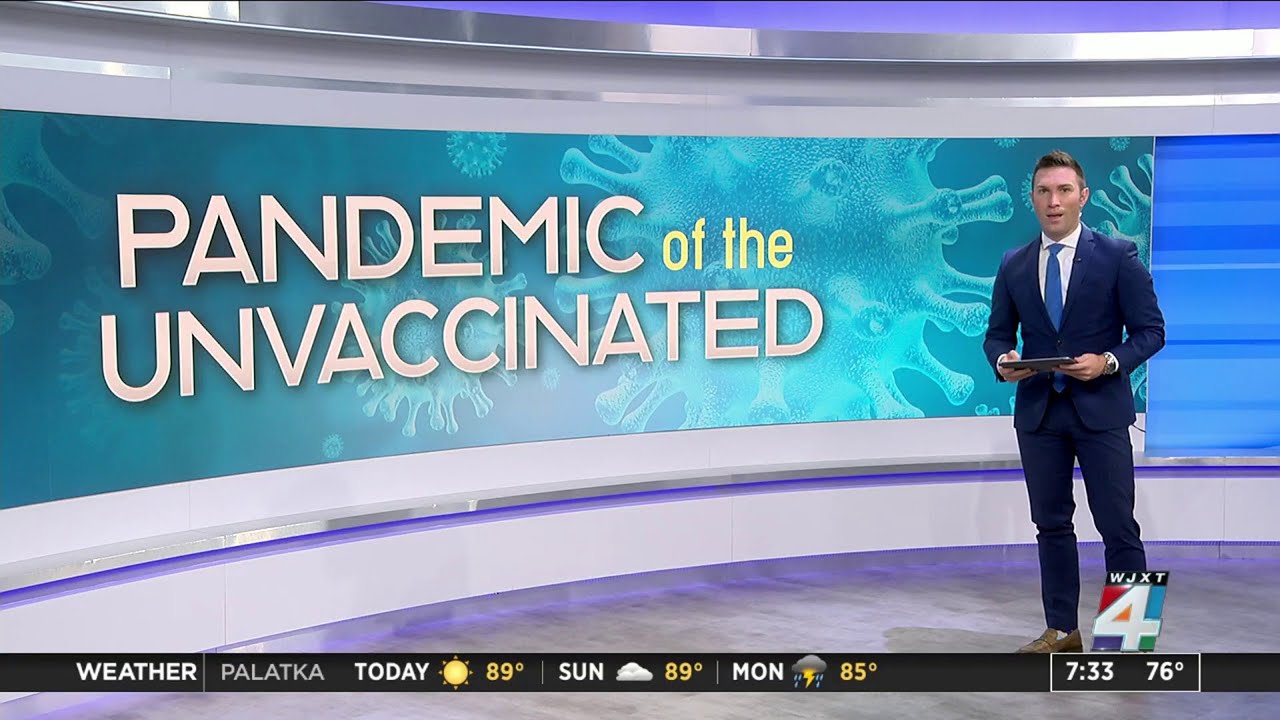
Although it’s clear that we’re largely experiencing a “pandemic of the unvaccinated” at this point, it wasn’t reassuring to learn that the CDC has been citing pre-Delta data (from January to July) on hospitalizations to bolster its reassurances to vaccinated Americans about the low numbers of “breakthrough” cases in hospitals, nor to hear (as we have, anecdotally) from hospital leaders that vaccinated patients now account for 15 percent of COVID admissions.
Attention has rapidly turned to the need for booster shots, with the Food and Drug Administration (FDA) reported to be readying a plan for early September, focused on the over-65 population and those whose immune systems are compromised. Already, Zuckerberg San Francisco General Hospital has begun supplemental mRNA boosters for those who received the one-dose Johnson & Johnson shot earlier this year.
Meanwhile, in an attempt to reassure those still harboring concerns about getting an “experimental” vaccine, the FDA is fast-tracking its full approval process for Pfizer’s vaccine, which can’t come soon enough.
The ticking clock: students of all ages, vaccinated or otherwise, return to school in less than a month. Will we be ready?
More than 99.99% of people fully vaccinated against Covid-19 have not had a breakthrough case resulting in hospitalization or death, according to the latest data from the US Centers for Disease Control and Prevention.The data highlights what leading health experts across the country have highlighted for months: Covid-19 vaccines are very effective at preventing serious illness and death from Covid-19 and are the country’s best shot at slowing the pandemic down and avoiding further suffering.The CDC reported 6,587 Covid-19 breakthrough cases as of July 26, including 6,239 hospitalizations and 1,263 deaths. At that time, more than 163 million people in the United States were fully vaccinated against Covid-19.
Divide those severe breakthrough cases by the total fully vaccinated population for the result: less than 0.004% of fully vaccinated people had a breakthrough case that led to hospitalization and less than 0.001% of fully vaccinated people died from a breakthrough Covid-19 case.
Most of the breakthrough cases — about 74% — occurred among adults 65 or older.
Since May, the CDC has focused on investigating only hospitalized or fatal Covid-19 cases among people who have been fully vaccinated. The agency says the data relies on “passive and voluntary reporting” and is a “snapshot” to “help identify patterns and look for signals among vaccine breakthrough cases.”
“To date, no unexpected patterns have been identified in the case demographics or vaccine characteristics among people with reported vaccine breakthrough infections,” according to the CDC.
The agency shared a study this week that showed the Delta variant produced similar amounts of virus in vaccinated and unvaccinated people if they get infected. Experts continue to say that vaccination makes it less likely you’ll catch Covid-19 in the first place. But for those who do, the findings suggest they could have a similar tendency to spread it as unvaccinated people. That study also convinced CDC leaders to update the agency’s mask guidance on Tuesday, recommending that fully vaccinated people also wear masks indoors when in areas with “substantial” and “high” Covid-19 transmission to prevent further spread of the Delta variant. Guidance for unvaccinated people remains to continue masking until they are fully vaccinated. Beyond severe cases, an analysis of official state data from the Kaiser Family Foundation showed that breakthrough cases of any kind are also extremely rare.vAbout half of states report data on Covid-19 breakthrough cases, and in each of those states, less than 1% of fully vaccinated people had a breakthrough infection, ranging from 0.01% in Connecticut to 0.9% in Oklahoma.
The KFF analysis also found that more than 90% of cases — and more than 95% of hospitalizations and deaths — have been among unvaccinated people. In most states, more than 98% of cases were among the unvaccinated.
Pace of vaccinations is going up
But experts say those vaccinated, while they may be able to transmit the virus, remain very well protected against getting seriously ill. Amid the latest surge of Covid-19 cases nationwide fueled by the Delta variant, local leaders across the US are reporting that the majority of new infections and hospitalizations are among unvaccinated people. The Delta variant is now so contagious, one former health official recently warned that people who are not protected — either through vaccination or previous infection — will likely get it. Amid concerns over the rising cases and the dangerous strain, the country has seen a steady rise in the pace of vaccinations in the past three weeks — and an even sharper increase in states that had been lagging the most, according to a CNN analysis of CDC data.
The seven-day average of new doses administered in the US is now 652,084, up 26% from three weeks ago. The difference is even more striking in several southern states: Alabama’s seven-day average of new doses administered is more than double what it was three weeks ago. The state has the lowest rate of its total population fully vaccinated in the US, at roughly 34%. Arkansas, with just 36% of its population fully vaccinated, has also seen its average daily rate of doses administered double in the last three weeks. Louisiana, which had by far the most new Covid-19 cases per capita last week and has only fully vaccinated 37% of its population, saw daily vaccination rates rise 111% compared to three weeks ago.
Any COVID-19 uptick is a tragedy, but the first major U.S. surge since the start of the vaccination rollout has been uniquely painful to watch because it likely could have been prevented. The Delta variant has driven up cases across the country, with the worst outbreaks in southern states where vaccination rates fall far short of that of the country as a whole, which is nearly half vaccinated. A few examples:
In Louisiana, 37.1% of the population is fully vaccinated and the seven-day average of new cases is 4,622, up from 1,426 two weeks ago.
In Arkansas, 36.6% of the population is fully vaccinated and the seven-day average of new cases has nearly doubled over the last two weeks to 1,900 new cases a day.
In Alabama, 34.4% of the population is fully vaccinated and the seven-day average for daily cases has tripled over the last two weeks to 2,400 new cases a day.
In Mississippi—which has the country’s lowest vaccination rate, at 34.5%—the number of new cases has nearly tripled in the last two weeks; it’s now reporting a seven-day average of nearly 1,700 daily cases.
These surges have left many people scrambling to protect themselves, with several hard-hit states reporting an increase in vaccine uptake. In Louisiana, for example, about 52,000 doses were administered during the week ending July 31, compared to about 20,000 the week ending July 10. Unfortunately, people getting vaccinated now won’t be fully protected for another two to four weeks, depending on the shot they receive, meaning the virus will likely continue to spread for some time.
At least some southern governors are taking steps to prevent that, turning to tried and true methods like masking to contain viral spread. Louisiana governor John Bel Edwards (D), for instance, issued an order yesterday mandating face masks in many indoor public settings, including businesses, schools and churches. “I cannot in good conscience sit by while our hospitals lose the capacity to deliver life-saving care to COVID patients and non-COVID patients alike,” Edwards said when announcing the new rules, which begin tomorrow and are currently set to expire Sept. 1.
However, the leaders of other badly hit states are not following suit. Mississippi governor Tate Reeves (R), for instance, has rejected the U.S. Centers for Disease Control and Prevention’s (CDC) updated guidance calling for indoor masking in areas with substantial viral spread, calling it “foolish.” The state may continue to pay the price; Mississippi hospitals are reportedly struggling to find enough nurses to care for patients, even as the state health officer warned last week that new hospitalizations are “skyrocketing” (as of July 27, Mississippi’s seven-day average for new hospitalizations was 126, compared to about 20 on July 1).
The best anyone can do in these states now is get vaccinated, mask up, and socially distance whenever possible. Delta burned hot but fast in India and the United Kingdom, and it’s possible it will do the same in the States as well.
TODAY’S CORONAVIRUS OUTLOOK
Over 400.6 million doses of the COVID-19 vaccine have been shipped to various U.S. states as of this afternoon, of which some 347 million doses had been administered, according to TIME’s vaccine tracker. About 49.7% of Americans had been completely vaccinated.
Nearly 198.9 million people around the world had been diagnosed with COVID-19 as of 1 a.m. E.T. today, and more than 4.2 million people have died. On August 2, there were 556,672 new cases and 7,784 new deaths confirmed globally.
Here’s how the world as a whole is currently trending:
Here’s where daily cases have risen or fallen over the last 14 days, shown in confirmed cases per 100,000 residents:
And here’s every country that has reported over 3 million cases:
The U.S. had recorded more than 35.1 million coronavirus cases as of 1 a.m. E.T. today. Nearly 614,000 people have died. On August 2, there were 127,976 new cases and 451 new deaths confirmed in the U.S.
Here’s how the country as a whole is currently trending:
Here’s where daily cases have risen or fallen over the last 14 days, shown in confirmed cases per 100,000 residents:
The month of July has seen Covid-19 cases in the United States increase at the fastest pace since last winter, marking the start of the latest wave of infections to afflict the nation. A new STAT analysis of Covid-19 case data reveals this new wave is already outpacing the spring and summer waves of 2020.
There are many metrics that governments, scientists, and media outlets have used to try and reckon with the Covid-19 pandemic. One of the most popular ways of visualizing Covid data has been to track the weekly average of new cases. This is pictured below.
J. EMORY PARKER/STAT
The number represented by the line could be thought of as the velocity of cases in the U.S. It tells us how fast case counts are increasing or decreasing and does a good job of showing us the magnitude of each wave of cases.
The chart, however, fails to show the rate of acceleration of cases. This is the rate at which the number of new cases is speeding up or slowing down.
As an analogy, a car’s velocity tells you how fast the car is going. Its acceleration tells you how quickly that car is speeding up.
Using Covid-19 case data compiled by the Center for Systems Science and Engineering at Johns Hopkins University and Our World in Data, combined with data from the Centers for Disease Control and Prevention, STAT was able to calculate the rate of weekly case acceleration, pictured below.
J. EMORY PARKER/STAT
In this chart, we see how quickly the weekly average of new cases is changing. When the values are positive, new case counts are increasing, and when the values are negative, new case counts are falling. Highlighted in red, we can see each previous wave’s intensity and duration.
Looking at the data this way is useful because the rate at which cases increase is a reasonable indicator of how intense that wave might be and how long it might last. For example, case acceleration in the U.S. reached a peak in November 2020, closer to the start of the nation’s deadly winter wave than to when cases reached their zenith in January of 2021.
This view of the data reveals that the United States is currently in the midst of a fifth wave of cases and that this new wave is growing faster than the first and second waves from spring and summer of 2020.
STAT also calculated case acceleration rates for each state and major territory in the U.S., revealing where cases are increasing the fastest.
J. EMORY PARKER/STAT
In the last two weeks, new case counts in Louisiana accelerated the fastest in the nation at an average rate of 444 cases per week per day (2.38 cases per 100,000 people per week per day). Only 36% of the state’s residents are vaccinated, making it among the least vaccinated in the country.
J. EMORY PARKERJ. EMORY PARKER/STAT
By looking at the state’s case acceleration rate, we can see that cases in Louisiana are currently increasing faster than they did at the start of last winter’s wave.
Likewise, in the state of Florida, the case acceleration rate has outpaced that state’s 2020 summer wave.
J. EMORY PARKER/STATJ. EMORY PARKER/STAT
In Florida, about 48% of residents are fully vaccinated against Covid-19.
Cases are increasing in nearly every region of the country, but they are not increasing at the same rate everywhere. Vaccination rates likely help explain these variations.
The five states where cases are accelerating the fastest all have vaccination rates below the national average. But consider the state of Massachusetts, where about 63% of the population is fully vaccinated.
The New York Times’ Covid Dashboard reports the state has an alarming 351% increase in cases over the last 14 days, the highest such percentage change in the nation. Looking at Massachusetts’ case acceleration paints a different picture.
J. EMORY PARKER/STATJ. EMORY PARKER/STAT
While cases in Massachusetts are increasing, the rate at which case reports are accelerating is much lower than it has been for any of the state’s previous waves, and is below the national average for case acceleration.
Experts are warning that the greatest threat to the pandemic recovery in the United States are the large swaths of Americans who remain unvaccinated.
Over the past few weeks, the U.S. has seen a surge of coronavirus cases across the country in the wake of the highly infectious delta variant. The new strain has particularly wreaked havoc in states with low vaccination rates.
The state of Missouri has recently become a U.S. hot spot, averaging more than 2,100 cases per day over the last seven-day period, according to data from The New York Times. About 41 percent of the state population is fully vaccinated.
Florida, Arkansas, Louisiana and Nevada have also seen an increase in coronavirus cases.
The nationwide vaccination rate has also dropped following the mad dash for the vaccine earlier in the year. Health experts warn that unvaccinated individuals pose a risk to the country, and could spread the disease until other, vaccine-resistant strains arise.
Some say the U.S. has missed its chance at outrunning the delta strain.
“I think we probably could have done that here in the U.S., if we hadn’t slowed our vaccination rates so much,” Andy Pekosz, professor of molecular microbiology and immunology at Johns Hopkins University, told The Hill.
“But I think it’s important also to emphasize that variants will emerge anywhere the virus is replicating in people to a great degree. And globally, there are so many places where this virus is just freely infecting people and replicating and it’s those situations that are going to be generating variants at a higher frequency.”
The delta variant isn’t even the only variant to worry about.
The lambda strain, first detected in Peru, is now present in the U.S. The World Health Organization (WHO) has designated this strain as a “variant of interest,” the designation beneath that of a “variant of concern,” like that of the delta variant.
Jen Kates, director of global health and HIV policy for the Kaiser Family Foundation, and Pekosz told The Hill that data on the lambda variant is limited at the moment, but what information is available suggests that it is similar to delta in that it is more transmissible than previously dominant strains like the alpha and beta variants. They added that vaccines should still offer protection against it.
At the same time, the lambda variant is not spreading as quickly as the delta variant.
“There’s a lot that we do not yet know about the lambda variants, including compared to the delta,” said Leana Wen, an emergency physician and public health professor at George Washington University.
“Is it more contagious? This is a really important question, because when there is a new variant, and it’s more contagious, it displaces the previous variant. But if there is already a very contagious variant and you have other variants that are appearing as they are all the time, they probably are not going to take over,” Wen said.
Wen, who previously served as Baltimore’s health commissioner, expressed frustration that vaccinations have not been properly incentivized even when she warned earlier in May that the window for intervention was quickly narrowing.
“If we had tied vaccinations to reopening policy, we had a much higher chance of achieving the kinds of immunity that we needed,” Wen said.
Pekosz opined that if the U.S. had reached a 90 percent vaccination rate earlier this year, the nation could have avoided the current situation.
“We stalled at a place where essentially half the population has immunity and half doesn’t and that’s a really awful place to be from a vaccine perspective,” Pekosz said.
According to the most recent data from the Centers for Disease Control and Prevention, around 69 percent of adults in the U.S. have received at least one dose. The country has still yet to reach President Biden‘s 70 percent vaccination goal, weeks after his initial July 4 deadline.
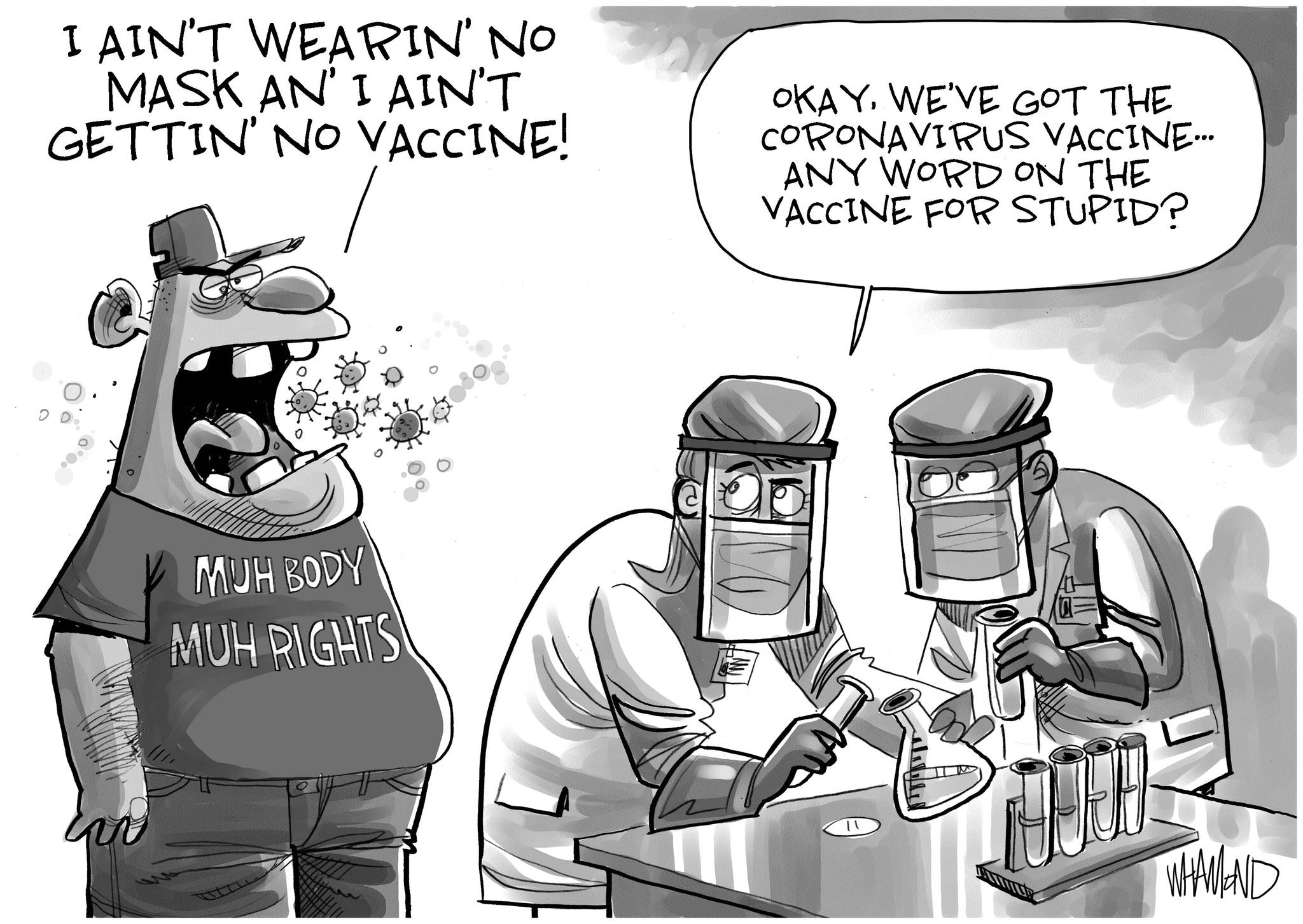
All health experts who spoke with The Hill agreed that the biggest challenge that the U.S. faces to overcome the pandemic is vaccine hesitancy.
The large groups of people holding out from vaccinations pose a significant threat because they are not immune, and are still capable of spreading COVID-19 and new variants. They added another major issue is that unvaccinated people are behaving as though they were vaccinated, going without masks in public and attending large indoor and outdoor gatherings that they should avoid.
However, Pekosz added that the progress that has been made is substantial.
“I always want to emphasize the positive, which is right now the vaccine seems to be working well against the delta variant. And that should be something that people are using to get motivated to get the vaccine,” he said. “I think that’s the critical thing to get across to everybody.”






 HENRY KOTULA