Over the weekend I realized that my son Henry, born in June 2019, has lived more than half of his life in the pandemic era. He’s too young to be cognizant of it, of course, but my wife and I are acutely conscious of the experiences his older brother had already enjoyed by the time he was Henry’s age, things that are impractical or impossible in the moment.
He’s not alone in that, of course. Most Americans are experiencing some ongoing deprivations because of the pandemic. (Most of those for whom the pandemic is not imposing unusual restrictions are, ironically, probably contributing to the pandemic’s extent and duration.) Just about everyone in the United States is eagerly scanning the horizon for signs of normalcy — as we have been for months, occasionally spotting oases that too often turn out to be mirages.
So when will we return to some semblance of normal? It’s hard to say with certainty. The best tool we have to reach that point, though, is the broad deployment of the vaccines approved for emergency use by the government. But even the existence of those vaccines can’t completely answer the question.
For example, the rate at which the vaccines are deployed makes a massive difference. A pace of 2 million shots per day as opposed to 1 million seems like a subtle distinction but, obviously, means achieving immunity for recipients twice as fast.
What level of immunity is necessary is a question of its own. Do we need 70 percent of the country to have been immunized? Or, as infectious-disease expert Anthony S. Fauci has recently said, is the figure closer to 80 or 85 percent?
When doing this calculation, do you include the 26 million Americans who have already had coronavirus infections? What about young people? The vaccine trials included only those age 16 and over. Those younger have constituted about a 10th of the total infections. And what vaccine are we talking about? The Pfizer and Moderna iterations require two shots; the vaccine from Johnson & Johnson requires only one.
All of these factors affect how we can figure out when the country might hit the herd-immunity mark. If we assume that young people will be included among those needed to be vaccinated — a complicated question on its own — the calculator below will allow you to figure out when immunity might be achieved at various immunization rates.
At this rate, the country would reach 70 percent herd immunity through vaccinations by Nov. 10
How we calculate this: There are about 330 million Americans, meaning that we need 231 million to be resistant to the virus to hit 70 percent immunity. We can take out the 5.8 million Americans who’ve already been vaccinated. That leaves 211.3 million people to be vaccinated.
From there the math is straightforward: doing two-shot vaccinations at a rate of 1.5 million shots per day means it will take 282 days to complete the job.
Bear in mind that sliding the little bar to determine how quickly shots are administered is far easier than actually scaling up the infrastructure to do so. President Biden’s original target for daily vaccinations was 1 million; he recently increased it to 1.5 million. At that rate, we’re still months from resolution. But because administering the vaccine is more complicated and requires more tracking than vaccinations such as that for the seasonal flu, it’s necessarily trickier to scale up.
At this point, the more urgent concern is the efficacy of the vaccine against any variants of the virus that might emerge. Manufacturers have already noted that the vaccine works less well against a virus variant first identified in South Africa, though the vaccines are still broadly effective, particularly at protecting the recipient from severe illness or death after infection.
Well, that and the fact that a fifth of Americans said in a recent Kaiser Family Foundation poll that they won’t get the vaccine or would do so only if it was required. Happily, more Americans are now saying they’re eager to get a vaccine.
The faster we get people immunized, the better we protect against the emergence of new mutations that prove less able to be controlled by the vaccines. The faster we get shots in arms, as the phrasing has it, the faster we get back to normal.
Which would be nice for all of us, including my 1-year-old.
A view of the JHMR slopes and the village at the base of the mountain in Jackson, Wyoming.
Tucked in the shadow of the Tetons, the town of Jackson, Wy., and surrounding Teton County is home to less than 25,000 fulltime residents, but annually hosts over 2.5 million visitors. The valley’s natural beauty attracts an influx of tourists, who in turn are responsible for roughly 30% of the region’s jobs and over $1 billion in annual revenue, but this year, visitors came with an unwelcome price tag for locals: “Every time in this pandemic that we’ve had an influx of visitation, whether that’s second homeowners, or people just coming for a weekend, it follows with an uptick in cases and hospitalizations” says Dr. Jeff Greenbaum, medical director at the Emergency Department for St. John’s hospital and the Jackson Hole Mountain Ski Resort (JHMR) ski patrol.
With just one major hospital and eight emergency room physicians serving Teton County, any increase in COVID-19 cases is cause for concern. And in January, following the Christmas and New Year’s tourism rush, COVID-19 cases in Teton County skyrocketed to some of their highest levels since the pandemic began. Despite these developments, the ski resort, hotels, bars and restaurants remain open in the town. And Greenbaum remains optimistic that with the right strategies and precautions, the small hospital will not be overwhelmed by cases and skiing can stay open during the season for both visitors and locals. “The nightmare scenario is if the patients are stacking up in the emergency room and we don’t have enough personnel to treat them,” says Greenbaum. “But we’ll see that coming in advance, and we are not there yet.” The local hospital still has over 50% of its ICU beds unoccupied and has no COVID-19 patient on a ventilator. JHMR is similarly optimistic that it can stay open the entire season, trusting in the protocols it has put in place to protect both guests and staff.
Teton is the wealthiest county in the U.S., with a per capita income of over $250,000. At the start of the pandemic, a flurry of private jets landed at the Jackson Hole Airport, sometimes with a private ventilator in tow, as second homeowners and new buyers escaped to this rural paradise. Greenbaum posits that part of the reason why St. John’s hasn’t been overrun by cases is that many of the tourists that get COVID-19 in Teton County might not stay to get treatment in Teton County. At a time when millions of Americans are out of work, when daily infection rates are at an all-time high, and when thousands across the country are dying daily from the virus, should the wealthy indulge in an après ski, looking out onto the beautiful Teton mountains, all while potentially shuttling COVID-19 into and out of Jackson?
“This place is pretty much a gigantic country club, relying on second homeowners and tourism for its revenue,” says Jesse Bryant, a doctoral candidate in American Sociology at Yale University and creator of Yonder Lies, a podcast exploring the history of Jackson Hole. “But Jackson has to balance the ultra-wealthy with the real reality of people eking out a living here.” Teton County has the largest income gap of any county in the U.S., with the top 1% making almost 150 times more than the other 99%. From mountain guides to house cleaners to bartenders, much of the employment in Jackson cannot easily be transitioned to remote work, meaning that Jackson’s working class are among the most susceptible to unemployment from the pandemic. All across America the costs of the pandemic are being born by the poorest members of society; a Pew Research Center survey from September found that about 50% of low-income Americans say they or someone in their household has lost employment or had take a pay cut due to the pandemic, and similarly about 50% of low-income Americans reported having trouble paying their bills since the pandemic started.
During the spring and summer, the Coronavirus Aid, Relief, and Economic Security Act passed by the federal government at the start of the pandemic had provided $600 in additional unemployment payment per week, assuring many local and seasonal workers that their livelihoods were safe even if their jobs weren’t. But almost a year into the pandemic, Jackson’s working class are left with far fewer options: federal unemployment relief dropped to $300 and state unemployment benefits in Wyoming, although extended by 13 weeks, dry up after 39 weeks. “Many of the workers here don’t have a six-month buffer saved up,” said one restaurant worker who wished to remain anonymous for risk of losing their job, “so, while tourism presents a risk, we’re willing to take it to keep our paychecks coming in.”
This is the predicament that America has put herself in: a country with a limited safety net during the pandemic forces her workers to choose between the risk of getting sick, or losing their livelihoods. The mountain and the town are left trying to find a balance between keeping the economy open for tourists, and keeping COVID-19 out. As the second largest employer in Teton County, JHMR takes center stage in this unfolding drama. The resort is responsible for the livelihood of around 2,000 seasonal and local workers, and if the mountain were to shut down, many of the ancillary services in the town, like hotels, restaurants, rental shops, clothing stores and other retailers, would likely shutter their doors as well. In 2017, when the resort had to close for five days because of a power outage, the net economic impact to the local economy topped $5.5 million. “What’s happening in Jackson isn’t just a story of wealthy people coming into the rural west and getting the locals sick,” says Bryant. “This place has become more like a symbiotic relationship.”
One particularly vulnerable population is the Latino community, a significant number of which is undocumented, that lives in Jackson, and in the neighboring towns of Victor and Driggs. While it’s difficult to get exact numbers of their contribution to the economy, these workers keep Jackson running by filling jobs in all sectors, from house cleaners and construction workers to cooks and waiters.
“I’ve lived in Jackson for 25 years and used to go back to Mexico every winter because it was just too cold,” says Jorge, an undocumented construction worker in the town. “But then I got used to the cold and began skiing every single day.” Asked whether opening up the resort is worth the risk of bringing more COVID-19 into Jackson, Jorge says that by and large the Latino community welcomes the tourism with open arms, because it means job security. This lines up with findings from a survey undertaken by the Yale School of Environment this past summer, showing that Latino residents in the rural West had some of the highest rates of COVID-related unemployment in the country. “My wife and I work hard, her as a house cleaner, me in construction,” said Jorge. “The resort opening up and tourists coming to town is how many of us make our living.”
For its part, JHMR has been doing nearly everything within its power to keep COVID-19 from spreading on its slopes, iterating as the situation evolves to try to keep the 2021 season operating. In March of 2020, as the first wave of the pandemic was sweeping across the globe, the Wyoming State Health Officer shut down JHMR for the remainder of the season. The resort reopened in May, first for hikers and then mountain bikers—the summer tourists that in total are only about 10% the size of the winter tourist population. Before reopening for the summer crowd, it tested every single one of its staff members for COVID-19, and the resort’s human resources department transitioned into a contact-tracing team, coordinating with town officials whenever a case arose. While Wyoming didn’t issue a statewide mask mandate until Dec. 7, the resort instituted a mandatory mask policy during the summer. JHMR also learned to be more flexible in its operations: staff are now trained to perform a number of different functions, so they can sub in if there’s a shortage in a department, and shifts function as separate pods, meaning that if a person in one group has been exposed to COVID-19, another totally isolated pod can come in to take its place.
Over the summer and fall, tourists came in droves to Jackson, with as many as 40,000 total visitors in a day. According to the Jackson Hole Chamber of Commerce, both Yellowstone and Grand Teton National Parks—both within a quick drive from of Jackson—had about 50% more visitors in October of 2020 than they did for the same month in 2019. While many of the outdoor activities that bring people to Teton County during the summer—hiking, biking, climbing—have been deemed relatively safe during the pandemic, tourists also flocked indoors to the bars, restaurants and stores that remained open throughout most of the summer and fall. As a result, Teton County experienced large COVID-19 spikes in July and again at the end of October and into November.
Unsurprisingly, workers got sick. In response, Teton County’s Health Officer, Travis Riddell, sent out a series of recommendations pressing citizens to not gather with groups outside of their immediate family, avoid crowded indoor spaces and not congregate at trail heads, parks or other outside spaces. Still, most businesses stayed open as patrons kept coming. Riddell noted that the town had little choice: “Economic disasters are public health disasters,” Riddell said in an interview in July 2020 to National Geographic. “We know that when there are economic downturns, where there is an increase in poverty, an increase in uninsured numbers—that has direct health effects.”
Once JHMR opened for skiing the weekend after Thanksgiving, it was clear that demand for outdoor recreation would carry into winter; even with almost no international travel, JHMR expects demand during the 2021 winter months to be comparable to past years, at least. “If we just opened up [completely], the mountain would be packed, because demand itself is through the roof,” says LaMotte, “but we’ve imposed a maximum daily capacity for the mountain, to keep guests and staff safe.”
On a bluebird day near Christmas, the resort was sold out. It had snowed almost 15 inches the day before, and cars inched into the packed parking lot. Skiers and snowboarders waited in line for the lot shuttle bus, which, despite operating at 25% capacity, still felt uncomfortably full. The restaurants and bars looking out onto the sunny mountain were similarly capped at 25% capacity, and while masks and social distancing were required, patrons waiting for tables escaped the cold by standing shoulder to shoulder in the foyer.
At the resort, the socially distanced lines for the gondola were dangerously compressing. A resort worker cheerfully reminded guests from every corner of the U.S. to keep their distance and their masks above their noses. “We’re going to make it all the way through the season, without closing” yelled the worker, to cheers from the crowds. The lines moved slow—normally eight people fit onto the gondola, but under the new policies there was no mixing between groups, so often times the gondola ascends with just one or two passengers. At the top of the mountain, with views of the valley floor against the backdrop of the jagged Tetons, everyone breathed a bit easier.
Rob Kingwill and Emilé Zynobia, professional snowboarders based out of Jackson, stepped off the gondola into the cold Wyoming air, about 4,000 feet above the valley floor. Both sported COVID-19 masks made by Kingwill’s apparel company, Avalon 7. “I feel like this is almost an essential service, to give people the opportunity to be outside, said Kingwill. “We need this for our mental health.” When JHMR shut down in March of 2020, Kingwill strapped his snowboard to his backpack and hiked up Teton Pass’s infamous 1,300-foot Glory Boot Pack—every day for 77 days until all the snow had melted. But, he points out, most recreational skiers don’t have the knowledge and skills to navigate such technical terrain—and without the money those tourists bring in, Jackson’s working class would suffer. “It seems like the benefits outweigh the costs of keeping the resort open,” agreed Zynobia, as she and Kingwill strapped onto their boards. “Even though this is an activity skewed towards to wealthier people, it is helping a remote economy, and it is getting people outside at a time when we feel caged in.”
By the middle of January, Teton County’s COVID-19 cases were skyrocketing.Teton County currently has the highest caseload per capita of any county in the state of Wyoming and the highly contagious U.K. variant of COVID-19 was found to be circulating in the area. While the state of Wyoming had loosened COVID-19 gathering restrictions, the county reissued a series of guidelines on Jan. 25 that kept indoor gatherings capped at 25% and limited outdoor gatherings to 250 guests. At the resort, group ski lessons have been replaced by private lessons (at no extra cost), and the gondolas and lifts are ascending the mountain with minimal group mixing. Still JHMR can only control what happens on the mountain; “My main concern is not skiing itself,” says Greenbaum. “But rather I’m concerned about peripheral activity to skiing that lead people indoors, whether it’s a bar, a restaurant, a hotel lobby, a rental shop, a bus.”
Across the nation cases are surging, and other Colorado mountain towns like Telluride and Crested Butte have had similar spikes, likely due to an influx of winter tourism. The infection ratein Pitkin County, Colo., home to the Aspen and Snowmass ski resorts, was skyrocketing in the middle of January, with an incidence rate of about 3,500 per 100,000 people. In response, the county’s health department shut down all indoor dinning operations, but left the ski resorts open. The results were promising: in the past two weeks the COVID-19 rates for Pitkin County dropped by over 50%. “We’re on pace to be below 700 [cases per 100,000 people] in early February and I don’t think any of us thought that would happen so quickly,” said Josh Vance, the county’s epidemiologist, in an interview with the Aspen Times. “I’ll be honest—I think not having indoor dining plays a role.”
In Teton County, restaurants and bars remain open for indoor operations long as they follow social distancing guidelines. The reliance on the ultra-rich creates an undeniable risk to the livelihood of Jackson residents and workers. In the early days of the pandemic, ski resorts across Europe became super spreaders, with visitors transporting the virus like carry-on luggage, threatening other tourists and locals alike. As a result, resorts have been closed this winter across much of Europe, including in France, Germany and Italy. These precautions protect remote mountain towns from an influx of the virus, but there are other, massive costs associated with closing down. Without government support, there is little option for communities like Jackson but to stay open, follow existing public health guidelines and hope for the best. “When the pandemic first started coming to work felt like entering the lion’s den,” said the restaurant worker from Jackson who wished to remain anonymous. “But by now we’re all used to the risk, and really what choice do we have?”
Some teachers don’t want to return to the classroom until they’ve been vaccinated — setting up potential clashes with state and local governments pushing to reopen schools.
Why it matters:Extended virtual learning is taking a toll on kids, and the Biden administration is pushing to get them back in the classroom quickly. But that will only be feasible if teachers are on board.
Where it stands:Although the rise of new, more contagious variants has scrambled the calculus on school reopening, for now the expert consensus is that vaccinations aren’t essential to safely reopening schools.
A pair of studies from the CDC this week reiterated the agency’s stance that schools can operate safely with the proper precautions, along with other mitigation measures in the broader community.
Most states haven’t put teachers at the front of the line for vaccines. Only 18 have included teachers in the early priority groups that can get vaccinated now, and in all but four of those states, teachers are competing for shots with other higher-risk populations, including the elderly.
Yes, but: Teachers in some large school districts don’t want to return to the classroom without being vaccinated — which could mean several more months of virtual classes.
The Chicago teachers union has asked to delay reopening until teachers receive at least the first dose of the vaccine, but the city’s public health commissioner has said it could take months for teachers to be vaccinated, the Chicago Tribune reports.
“If you are required to work with students in person — which thousands of educators have been doing for months now — you should be vaccinated as soon as possible,” Jessica Tang, president of the Boston Teachers Union, said in statement after teachers were bumped behind the elderly in the state’s priority line, per Boston.com.
What they’re saying:“The issue is that we should be aligning vaccination with school opening. That doesn’t mean every single teacher has to be vaccinated before you open one school, it means there has to be that alignment,” Randi Weingarten, the president of the American Federation of Teachers, told ABC News.
Teachers should be eligible for vaccination by “late January,” she wrote in a USA Today op-ed over the weekend.
The other side: Ohio Gov. Mike DeWine has said school staff will be prioritized for vaccination, with the goal of having students return to classrooms by March 1.
But prioritizing teachers can be controversial. Oregon Gov. Kate Brown has been criticized for the decision to vaccinate teachers ahead of the elderly, high-risk essential workers and other vulnerable communities.
In a rural county in Georgia and at a private school in Philadelphia, teacher vaccine clinics were shut down by their state health departments, which said that educators were not yet eligible.
The bottom line:“It’s challenging to make those decisions about how to prioritize different populations, all of whom are at significant risk,” the Kaiser Family Foundation’s Jennifer Tolbert said.
Norma Leiva, a Food 4 Less warehouse manager, waits Saturday to be let into work in Panorama City, Calif. The state’s decision to expand vaccine eligibility to millions of older residents has stark consequences for communities of color disproportionately affected by the pandemic.
As a warehouse manager at a Food 4 Less in Los Angeles, Norma Leiva greets delivery drivers hauling in soda and chips and oversees staff stocking shelves and helping customers. At night, she returns to the home she shares with her elderly mother-in-law, praying the coronavirus isn’t traveling inside her.
A medical miracle at the end of last year seemed to answer her prayers: Leiva, 51, thought she was near the front of the line to receive a vaccine, right after medical workers and people in nursing homes. Now that California has expanded eligibility to millions of older residents — in a bid to accelerate the administration of the vaccines — she is mystified about when it will be her turn.
“The latest I’ve heard is that we’ve been pushed back. One day I hear June, another mid-February,” said Leiva, whose sister, also in the grocery business, was sickened last year with the virus, which has pummeled Los Angeles County — the first U.S. county to record 1 million cases. “I want the elderly to get it because I know they’re in need of it, but we also need to get it, because we’re out there serving them. If we’re not healthy, our community’s not healthy.”
Delaying vaccinations for front-line workers, especially food and grocery workers, has stark consequences for communities of color disproportionately affected by the pandemic. “In the job we do,” Leiva said, “we are mostly Blacks and Hispanics.”
Many states are trying to speed up a delayed and often chaotic rollout of coronavirus vaccines by adding people 65 and older to near the front of the line. But that approach is pushing others back in the queue, especially because retired residents are more likely to have the time and resources to pursue hard-to-get appointments. As a result, workers who often face the highest risk of exposure to the virus will be waiting longer to get protected, according to experts, union officials and workers.
The shifting priorities illuminate political and moral dilemmas fundamental to the mass vaccination campaign: whether inoculations should be aimed at rectifying racial disparities, whether the federal government can apply uniform standards and whether local decision-making will emphasize more than ease of administration.
Speed has become all the more critical with the emergence of highly transmissible variants of the virus. Only by performing 3 million vaccinations a day — more than double the current rate — can the country stay ahead of the rapid spread of new variants, according to modeling conducted by Paul Romer, a Nobel Prize-winning economist.
People with appointments wait in line to receive coronavirus vaccine in Los Angeles.
But low-wage workers without access to sick leave are among those most likely to catch and transmit new variants, said Richard Besser, president of the Robert Wood Johnson Foundation and former acting director of the Centers for Disease Control and Prevention. Because there are not enough doses of the vaccines to immunize front-line workers and everyone over 65, he said, officials should carefully weigh combating the pernicious effects of the virus on communities of color against the desire to expedite the rate of inoculation.
“If the obsession is over the number of people vaccinated,” Besser said, “we could end up vaccinating more people, while leaving those people at greatest risk exposed to ongoing rates of infection.”
The move to broaden vaccine availability to a wider swath of the elderly population — backed by Trump administration officials in their final days in office and members of President Biden’s health team — marks a departure from expert guidance set forth in December, as the vaccine rollout was getting underway.
A panel of experts advising the CDC recommended that the second priority group include front-line essential workers, along with adults 75 and older. The guidance represented a compromise between the desire to shield people most likely to catch and transmit the virus — because they cannot socially distance or work from home — and the effort to protect people most prone to serious complications and death.
People of color and immigrants are overrepresented not just in grocery jobs but also in meatpacking, public transit and corrections facilities, where outbreaks have taken a heavy toll. Black and Latino Americans are three to four timesmore likely than White people to be hospitalized and almost three times more likely to die of covid-19, the illness caused by the coronavirus, according to the CDC.
The desire to make vaccine administration equitable was central to recommendations from the Advisory Committee on Immunization Practices.
“We cannot abandon equity because it’s hard to measure and it’s hard to do,” Grace Lee, a committee member and a pediatrics professor at Stanford University’s School of Medicine, said at the time.
On Wednesday at a committee meeting, Lee said officials need both efficiency and equity to “ensure that we are accountable for how we’re delivering vaccine.”
“Absolutely agree we do not want any doses in freezers or wasted in any way,” Lee said.
But efficiency has won out in most places.
Some state leaders, such as Florida Gov. Ron DeSantis (R) and Texas Gov. Greg Abbott (R), acted on their own, lowering the age threshold to 65 soon after distribution began last year. Others followed with the blessing of top federal officials.
Biden’s advisers have said equity will be central to their efforts, calling access in underserved communities a “moral imperative” and promising, in a national vaccination strategy document, “we remain focused on building programs to meet the needs of hard-to-reach and high-risk populations.” In the meantime, they have similarly encouraged states to broaden vaccine availability to a larger segment of their older populations without providing guidance about how to ensure front-line workers remain a priority.
Experts studying health disparities say prioritizing people over 65 disproportionately favors White people, because people of color, especially Black men, tend to die younger, owing to racism’s effect on physical health. Twenty percent of White people are 65 or over, while just 9 percent of people of color are in that age group, according to federal figures.
“People are thinking about risk at an individual level as opposed to at a structural level. People are not understanding that where you work and where you live can actually bring more risks than your age,” said Camara Phyllis Jones, a family physician, epidemiologist and past president of the American Public Health Association. “It’s worse than I thought.”
The constantly changing priorities have made the uneven rollout all the more difficult to navigate. There is confusion over when, where and how to get shots, with different jurisdictions taking different approaches in an illustration of the nation’s decentralized public health system.
While praising the effort to expand access and speed up the administration of shots, Marc Perrone, president of the United Food and Commercial Workers International Union, said increasing reliance on age-based eligibility “must not come at the expense of the essential workers helping families put food on the table during this crisis.
“Public health officials must work with governors in all 50 states to end the delays and act swiftly to distribute the vaccine to grocery and meatpacking workers on the front lines, before even more get sick and die,” he said.
Mary Kay Henry, president of the Service Employees International Union, said the only way to ensure front-line workers get the vaccines they need is to involve them and their union representatives in decisions about eligibility and access. Unions, she said, could also be tapped to conduct outreach in hard-to-reach communities, including those not conversant in English.
“Essential workers who’ve been on the front lines both in health care but also across the service and care sectors — child care, airline, janitorial, security — face extraordinary risk,” she said.
Leiva, a 33-year member of UFCW Local 770, said the celebration of essential workers should come with recognition of their sacrifice, which is unevenly felt across racial groups. When the virus tore through the grocery store, she said, “every single one of them in that cluster was Hispanic.”
But with hospitals dangerously full in recent weeks, and less than half of distributed vaccine doses administered, many states broadened their top priority groups to include older adults, hoping to lessen the burden on hospitals and expedite vaccine administration.
Leiva is concerned about bringing the coronavirus into the home she shares with her elderly mother-in-law. She wants the elderly to receive the vaccine, “but we also need to get it, because we’re out there serving them. If we’re not healthy, our community’s not healthy.”
Protecting people 65 and older, officials say, saves the lives of those who face the gravest consequences and reduces the stress on intensive care units. Risk for severe covid-19 illness increases with age; 8 out of 10 deaths reported in the United States have been in people 65 and older.
Older people in the United States have also encountered enormous hurdles in gaining access to the vaccines. Faced with overloaded sign-up websites and jammed phone lines, they have sometimes spent nights waiting in line.
In more than half the states — at least 28, by one count — people 65 and older are in the top two priority groups, behind health-care workers and residents in long-term care facilities. As a result, front-line workers either fall behind the older group or are squeezed into the same pool, according to a Kaiser Family Foundation analysis.
“When you make that pool of eligible people much bigger, you’re creating much longer wait times for some of these groups,” said Jennifer Kates, a senior vice president at the foundation.
Front-line workers often labor in crowded conditions. Some live in multigenerational households. By contrast, many older adults are retired, have greater access to sign-up portals and have more time to wait in lines outside of clinics, health officials said.
People wait in line for coronavirus vaccine at a Sarasota, Fla., health department clinic.
“The 65-year-old person who is wealthier and can stay home and isn’t working and is retired and can ride it out for another two months … is less likely to get infected than the person who has to go outside every day for work,” said Roberto B. Vargas, assistant dean for health policy at Charles R. Drew University of Medicine and Science in Los Angeles.
In California, Gov. Gavin Newsom (D) announced Jan. 13 that the state was “significantly increasing our efforts to get these vaccines administered, get them out of freezers and get them into people’s arms” by increasing the number of people eligible to receive shots. “Everybody 65 and over — about 6.6 million Californians — we are now pulling into the tier to make available vaccines.”
On Jan. 25, Newsom said the state would move to an age-based eligibility system after vaccinating those now at the front of the line, including health-care workers, food and agriculture workers, teachers, emergency personnel and seniors 65 and older.
The abrupt changes confused local health officials.
Julie Vaishampayan, public health officer in San Joaquin Valley’s Stanislaus County, said the county had just finished vaccinating health-care workers and was getting ready to reach out to farm laborers at a tomato-packing company and food-processing workers. When the state added those 65 and older, the county had to pivot abruptly,as it faced a quintessential supply-and-demand dilemma.
“There isn’t enough vaccine to do it all, so how do we balance?” she said in an email. “This is really hard.”
In Tennessee, teachers were initially promised access but then were told to wait until people 70 and older got their shots. The state’s health commissioner, Lisa Piercey, said she was moving more gradually through the age gradations so as not to crowd out workers, treating the federal framework as guidance, which is often how officials have characterized it. “It’s not an either/or situation,” she said in an interview this month.
Keyona Simms puts a hat on Nylah Cooper, 2, at a day-care center in Baltimore. Day-care staff are considered essential workers in many states.
But with vaccine supply sharply limited, priorities had to be narrowed. By vaccinating older residents, she said, the state was also protecting its medical infrastructure by reducing the likelihood that older people, who are more likely to be hospitalized, would fall ill. Once there is more supply, she said, she would be able to amplify aspects of the state’s planning geared toward underserved and hard-to-reach populations. “I can’t wait to manifest that equity plan.”
In Nebraska, the health department in Douglas County, which includes Omaha, prioritized older residents over “critical industry workers who can’t work remotely” after the state expanded eligibility to residents 65 and older, according to a January news release. Meatpacking workers, grocery store employees, teachers and public transit workers were bumped lower in line.
Omaha’s teachers union had wanted its approximately 4,100 members to get shots before the district resumes full-time, in-person instruction for elementary and middle school students Tuesday. Now, they must wait until late spring, said Robert Miller, president of the Omaha Education Association.
“The fear, it goes hand in glove with going back to school five days a week,” he said, despite CDC reports that schools operating in person have seen scant transmission. “We’ve had some teachers who have multigenerational homes, who live in the basement, … and they can’t interact with their parents. We have some teachers who are staying at a different apartment away from their elder loved ones.”
Some state leaders sought to defend broadening eligibility to more of the elderly population, saying it was consistent with efforts to address racial disparities. Illinois had reduced the age requirement to 65, Gov. J.B. Pritzker (D) said recently, “in order to reduce covid-19 mortality and limit community spread in Black and Brown communities.” His office did not respond to a request for comment about how lowering the age threshold would have that effect.
In Massachusetts, state leaders announced Jan. 25 that people 65 and older and those with at least two high-risk medical conditions were next in line, ahead of educators and workers in transit, utility, food and agriculture, sanitation, and public works and public health.
That means Dorothy Williams, who runs a day-care center in a predominantly Black community where the infection rate is among the highest in Boston, has to wait. Her center stayed open throughout the pandemic, caring for children of essential workers, many of them in low-wage jobs in hospitals or nursing homes.
She recognizes the long hours and the exposure risks of those health-care aides. That means “we’re exposed,” she said, “each and every single day.” She has been able to keep the coronavirus at bay, but two weeks ago, she had a scare that forced her to close and get everyone tested after a child became ill. The tests came back negative, but the fear remains.
Two members of Congress from Massachusetts have tested positive for the coronavirus, one after receiving both doses of the vaccine, a reminder that people can still be vulnerable to infection after being vaccinated, particularly in the two weeks after receiving the second dose.
Rep. Stephen F. Lynch (D-Mass.) tested positive for the virus on Friday afternoon after a staff member in his Boston office tested positive earlier in the week, his spokeswoman Molly Rose Tarpey said.
Lynch received a second dose of the Pfizer-BioNTech vaccine before the inauguration of President Biden on Jan. 20, but his office declined to specify the date it was administered. Lynch had tested negative for the virus before attending the inaugural ceremonies, Tarpey said.
“While Mr. Lynch remains asymptomatic and feels fine, he will self-quarantine and will vote by proxy in Congress during the coming week,” she said.
Tarpey added that Lynch “has followed CDC guidelines and continues to do so since he received the vaccine.”
Another Democrat from Massachusetts, Rep. Lori Trahan,announced Thursday that she had tested positive for the virus and was asymptomatic. Trahan, whose staff members have been working remotely, also said she planned to vote by proxy next week.
“I encourage everyone to continue taking this virus seriously and to follow the science and data-driven guidance to wear a mask, maintain a safe social distance from others, avoid large gatherings and stay home whenever possible,” Trahan said.
Trahan received her first shot of one of the vaccines last week, spokeswoman Francis Grubar told The Washington Post.
Occasional cases of people testing positive after receiving one or both doses are not unexpected, medical experts say. Clinical trial data published by Pfizer show that the vaccine is about 52 percent effective at preventing illness after the first shot, compared to 95 percent effectiveness seven days after the second dose.
A small number of patients can still become mildly sick even after they are fully vaccinated. But only one of the roughly 20,000 people who received both doses in the clinical trial developed severe covid-19, suggesting the vaccine is powerful protection against the most dangerous cases of the disease.
Members of Congress began getting vaccinated as early as Dec. 18, but Lynch at the time said he was “waiting for the vaccine to be first offered to health care personnel, first responders and vulnerable seniors” in his district, the Boston Herald reported. It is unclear when Lynch ultimately received his first dose of the vaccine; he would have received the second dose of the Pfizer-BioNTech vaccine about three to four weeks after the first.
Public health experts have emphasized that it usually takes one week after the second dose of the Pfizer-BioNTech vaccine to reach 95 percent efficacy and two weeks after the second dose of the Moderna vaccine to reach 94 percent efficacy.
“There’s no vaccine that I know that protects you the same day you get it,” Onyema Ogbuagu, the principal investigator for Pfizer’s vaccine trial at Yale University, told The Post’s Allyson Chiu. “On a population level, 95% efficacy still translates to 5/100, or 50/1,000, or 500/10,000 vaccinated persons still being vulnerable to symptomatic disease and maybe even more having asymptomatic carriage.”
At least 23.2 million people in the United States have received one or both doses of the vaccine. The Centers for Disease Control and Prevention recommends that vaccinated people continue to wear masks, socially distance, avoid poorly ventilated spaces and wash their hands frequently to prevent the spread of the virus.
“We also don’t yet know whether getting a covid-19 vaccine will prevent you from spreading the virus that causes covid-19 to other people, even if you don’t get sick yourself,” CDC guidelines state. “While experts learn more about the protection that covid-19 vaccines provide under real-life conditions, it will be important for everyone to continue using all the tools available to help stop this pandemic.”
Mask-wearing in particular has become politicized, including in the hallways of Congress. After the Jan. 6 siege at the Capitol, several Democrats said they feared they had been exposed to the virus after sheltering with Republican lawmakers who refused to wear masks. In the following, at least three lawmakers tested positive for the virus.
On Friday, Rep. Cori Bush (D-Mo.) accused Rep. Marjorie Taylor Greene (R-Ga.) of berating her in the hallways after she told Greene to put on a mask. The incident, coupled with other hostile rhetoric and Greene’s refusal to abide by rules and protocols put in place because of the pandemic, prompted Bush to decide to move her office away from Greene’s for safety reasons, the Missouri lawmaker said.
The Johnson & Johnson coronavirus vaccine prevented 100% of hospitalizations and deaths in clinical trials, the company said today.
Why it matters:The single-dose vaccine could speed up the vaccinations of America’s vulnerable populations, as new variants spread.
By the numbers:
Overall: 66% effective in preventing moderate to severe COVID in nearly 44,000 participants in Phase 3 trials across eight countries.
In the U.S.: 72% effective.
In South Africa, home of a more aggressive variant: 57% effective.
What they’re saying:
Former CDC director Tom Frieden on the Axios Re:Cap podcast: “It has a lot of advantages, easier to store, easier to make.”
Former FDA commissioner Scott Gottlieb: “The J&J vaccine turns in a fantastic result. We now have three highly effective vaccines. This vaccine showed sustained (and increasing!) immune protection over time, perhaps from a robust early induction of memory immune cells (CD4 and CD8).”
What’s next:J&J is expected to apply for an emergency use authorization next week, the N.Y. Times reports.
“Federal regulators are also still waiting on data from Johnson & Johnson’s new manufacturing facility in Baltimore that prove it can mass-produce the vaccine. The company is counting on that factory to help reach its contractual pledge to the federal government of 100 million doses by the end of June.”
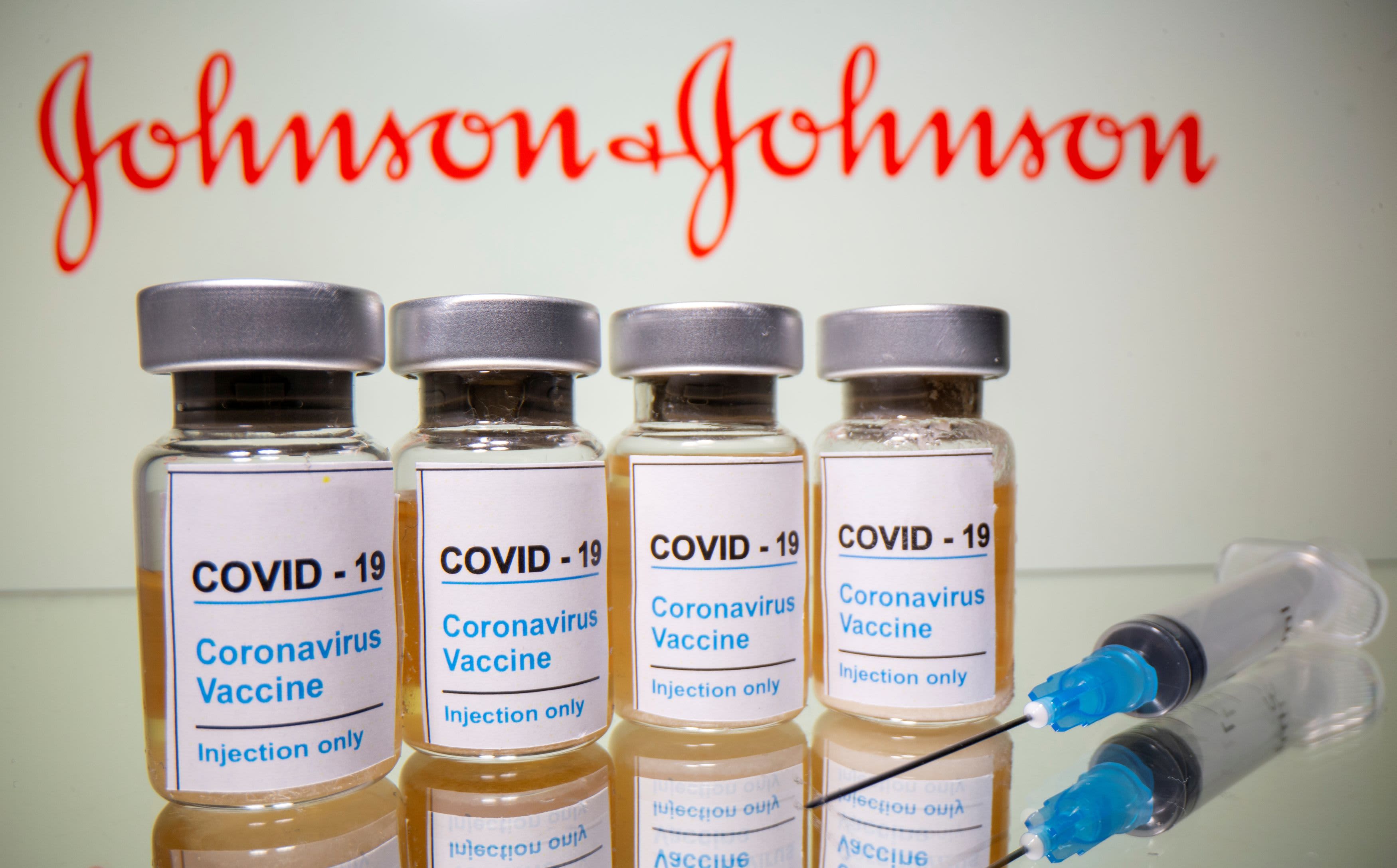
Johnson & Johnson announced Friday that its single-shot coronavirus vaccine was 66% effective in protecting against moderate to severe COVID-19 disease in Phase 3 trials, which was comprised of nearly 44,000 participants across eight countries.
Between the lines: The vaccine was 72% effective in the U.S., but only 57% effective in South Africa, where a more contagious variant has been spreading. It prevented 85% of severe infections and 100% of hospitalizations and deaths, according to the company.
The big picture: The vaccine is not as effective as some of its two-dose competitors, but still provides strong protection against the most serious COVID-19 symptoms.
J&J’s vaccine, which results in development of neutralizing antibodies, is long-lasting and doesn’t require freezing like Moderna and Pfizer-BioNTech’s shots,per Bloomberg. The vaccine can be stored at refrigerator temperatures for three months.
The company said it will file for emergency use authorization from the FDA within a week. The U.S. has purchased 100 million vaccine doses from J&J.
What they’re saying: “The J&J vaccine turns in a fantastic result. We now have 3 highly effective vaccines. This vaccine showed sustained (and increasing!) immune protection over time, perhaps from a robust early induction of memory immune cells (CD4 and CD8),” tweeted former FDA commissioner Scott Gottlieb.
“This one shot vaccine was highly effective at preventing severe disease, even with new variants. The milieu of disease now is more complex; even in U.S. – trials done today are running into more mutated cases. Make no mistake: this is an important and wonderful development.”
“And we believe that we’ll soon be able to confirm the purchase of an additional 100 million doses for each of the two FDA-authorized vaccines: Pfizer and Moderna,” Biden said. “That’s 100 million more doses of Pfizer and 100 million more doses of Moderna — 200 million more doses than the federal government had previously secured. Not in hand yet, but ordered. We expect these additional 200 million doses to be delivered this summer.”
After review of the current vaccine supply from manufacturing plants, the federal government believes it can increase overall weekly vaccination distribution to states, tribes, and territories from 8.6 million doses to a minimum of 10 million doses, starting next week.
But the pandemic is expected to get worse before it gets better, Biden said, with experts predicting the death toll as likely to top 500,000 by the end of February.
“But the brutal truth is: It’s going to take months before we can get the majority of Americans vaccinated. Months. In the next few months, masks — not vaccines — are the best defense against COVID-19,” he said.
WHY THIS MATTERS
The increases in the total vaccine order in the United States from 400 million ordered to 600 million doses will be enough vaccine to fully vaccinate 300 Americans by the end of the summer or the beginning of fall, Biden said.
“It’ll be enough to fully vaccinate 300 [million] Americans to beat this pandemic — 300 million Americans,” he said. “And this is an aggregate plan that doesn’t leave anything on the table or anything to chance, as we’ve seen happen in the past year.”
Biden’s team said they found the vaccine program to be in worse shape than they thought it would be and that they were starting from scratch.
“But it’s also no secret that we have recently discovered, in the final days of the transition — and it wasn’t until the final days we got the kind of cooperation we needed — that once we arrived, the vaccine program is in worse shape than we anticipated or expected,” Biden said.
Governors have been guessing at what they’ll receive for vaccine shipments, the president said.
The federal government is working with the private industry to ramp up production of vaccine and protective equipment such as syringes, needles, gloves, swabs and masks. The team has already identified suppliers and is working with them to move the plan forward.
Also, the Federal Emergency Management Agency is being directed to to stand up the first federally-supported community vaccination centers and to make vaccines available to thousands of local pharmacies beginning in early February.
THE LARGER TREND
Last week, Biden signed a declaration to begin reimbursing states 100% for the use of their National Guard to help the COVID-19 relief effort, both in getting sites set up and in using some of their personnel to administer the vaccines.
Biden has also said he wants to expand testing, which will help reopen schools and businesses.
He has formalized the Health Equity Task Force to ensure that the most vulnerable populations have access to vaccines.
He is also pushing for a $1.9 trillion relief package.
Welcome to COVID Questions, TIME’s advice column. We’re trying to make living through the pandemic a little easier, with expert-backed answers to your toughest coronavirus-related dilemmas. While we can’t and don’t offer medical advice—those questions should go to your doctor—we hope this column will help you sort through this stressful and confusing time. Got a question? Write to us at covidquestions@time.com.
Today, E.B. in New York asks:
My parents and in-laws will hopefully be vaccinated soon. My husband and toddler and I don’t expect to be vaccinated for quite some time. How should we think about whether it’s safe to spend time together in a mixed-vaccinated group? Could they get on a plane and fly to visit with us unmasked and indoors? Or is there enough risk that we should wait until we are all vaccinated (which may be a very long time especially with children in the mix)? Or split the difference and take some precautions?
To state the obvious, we are in a strange limbo state right now. The vaccines we’ve eagerly awaited for almost a year are here, and yet…nothing about our daily lives has really changed. Unfortunately, that’s going to be the case for a bit longer.
“The end is in sight,” says Dr. Colleen Kelley, a vaccine researcher and associate professor of infectious diseases at the Emory University School of Medicine in Georgia. “I just don’t know that it’s right now.”
Your loved ones getting vaccinated is unequivocally a step forward, Kelley says. It would certainly be safer to visit with your parents or in-laws after they’ve gotten both vaccine doses, but the safest plan is to wait until you and your husband are also vaccinated, she says.
The two coronavirus vaccines currently authorized for use in the U.S.—those made by Pfizer-BioNTech and Moderna—are both extremely effective at preventing people from getting sick with COVID-19. That’s a huge benefit on its own, especially for people at high risk of severe illness, such as elderly adults and people with underlying medical conditions.
But the outstanding question is whether COVID-19 vaccines also stop people from getting asymptomatically infected with the virus. Early evidence suggestsboth shots offer at least some protection against asymptomatic infection, and many experts are optimistic about their chances of stopping transmission, but the data are still coming together.
If the shots turn out not to stop asymptomatic infections entirely, even your vaccinated parents could feasibly get your family sick if they picked something up while traveling to see you. Or, if you happened to be exposed to the virus, your parents could potentially carry it and pass it to others. And, while the authorized COVID-19 vaccines are very effective, there is always a tiny chance of them failing, leaving your parents at risk of illness.
These are all worst-case scenarios, of course. But given the uncertainty and the extent to which COVID-19 is still spreading in the U.S., Kelley says you should wait a little while longer to visit with your parents and in-laws. If that’s not possible, you should take the same precautions you’ve been hearing about for a year: quarantining beforehand, and ideally staying outdoors and masked when possible.
Here’s the good news, though. Once you and your husband are fully vaccinated (along with more of the general population), Kelley says you can feel much better about spending time with other vaccinated people indoors and unmasked—even if your toddler isn’t yet vaccinated.
As you suggest, it may be a while before kids younger than 16 are eligible for COVID-19 vaccination, since pharmaceutical companies haven’t yet finished testing their shots on younger children. But “if the toddler is the only one who’s not vaccinated, I would say that’s a pretty darn safe scenario,” Kelley says.
Luckily, young kids rarely get seriously ill with COVID-19, so once all the adults in the room are fully protected, Kelley says you can feel pretty comfortable with your parents or in-laws coming for a visit.
“We’re not going to get to a zero-risk situation,” Kelley says, “but we are going to get to places that are safer and safer.”





 HENRY KOTULA