Healthcare Executives See a Mixed Outlook

https://www.jpmorgan.com/commercial-banking/insights/healthcare-mixed-outlook

Image result for Healthcare Executives See a Mixed Outlook

In a recent survey of healthcare leaders, most were confident about their own organizations going into the new year. But respondents expressed concern about a range of evolving industry-wide challenges, including costs, technology and talent.

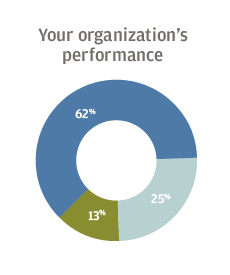
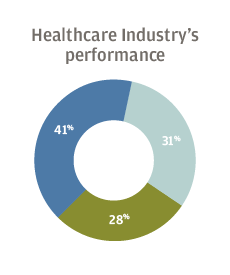
A majority of US healthcare executives surveyed by J.P. Morgan said they were optimistic about the financial performance of their own organizations going into 2019, as well as the national and local economies. But most were less positive about the outlook for the industry as a whole, with 28 percent expressing pessimism and another 31 percent merely neutral.
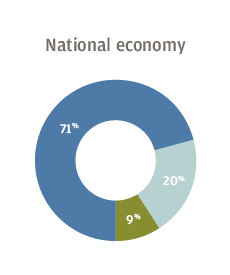
National economy 71% optimistic, 20% neutral, 9% pessimistic
Healthcare Industry's performance 41% optimistic, 31% neutral, 28% pessimistic
Your organization's performance 62% optimistic, 13% neutral, 25% pessimistic
Legend - Optimistic, Blue
Legend: Neutral Gray
Legend: Pessimistic, Green

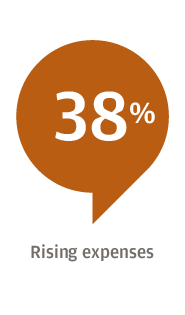
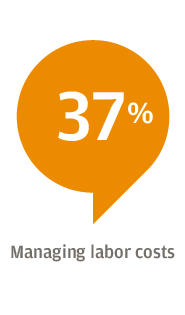
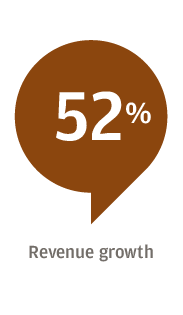
Respondents to the survey, conducted Oct. 16 to Nov. 2 of 2018, said their biggest concerns were revenue growth, rising expenses and labor costs. The executives said their organizations plan to invest the most in information technology and physician recruitment.

Healthcare Changes Shape Perceptions

The pessimism about the industry likely stems, in part, from regulatory uncertainty and an ongoing shift from a fee-for-service model toward a value-based payment system, said Will Williams, Senior Healthcare Industry Executive within J.P. Morgan’s Commercial Banking Healthcare group. “Healthcare is going through the most transition of any industry in the country right now,” he said. Amid this upheaval, healthcare organizations face a combination of challenges, including lower reimbursement rates for Medicaid and Medicare patients, increased competition, and higher costs for labor, pharmaceuticals and technology investments.

The optimism that executives feel about their own hospital or healthcare group may come from a sense that an individual organization can adapt to industry changes, said Jenny Edwards, Commercial Banker in the healthcare practice at J.P. Morgan. “You can control certain factors, and make adjustments to compensate for the headwinds.”

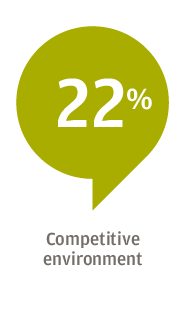
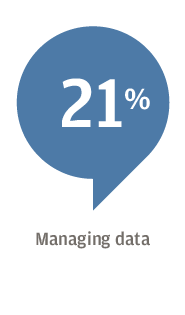
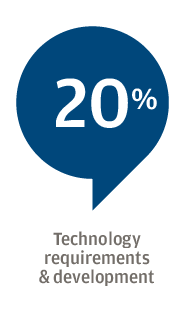
Biggest Challenges for the New Year
Growth Strategies

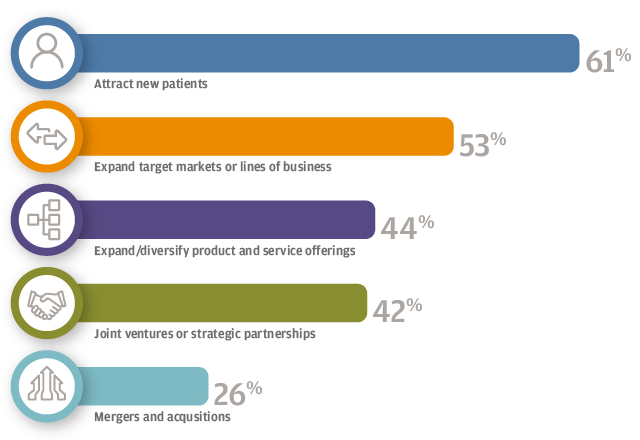
For 61 percent of respondents, the focus is on attracting new patients, followed by expanding target markets or lines of business (53 percent), and expanding or diversifying product and service offerings (44 percent). Hospitals, for example, have worked to add more patients to their broader healthcare system by opening clinics for urgent care or physical therapy, Edwards said.
As patient habits change, hospital systems have needed to become more consumer-focused, Edwards said. Patients are more likely to shop around for their care, expect transparent pricing and review healthcare workers on social media sites. This “retail-ization” trend in healthcare is accelerating, Edwards said. “You can shop for healthcare like you would a new pair of jeans.”

Skilled Talent Wanted

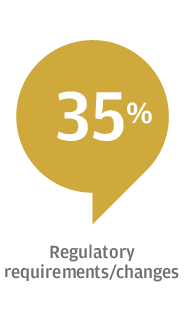
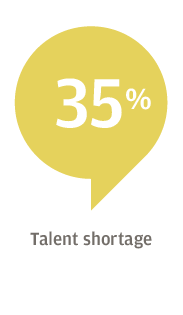
The talent shortage is top of mind for many healthcare executives, with 92 percent of survey respondents saying they were at least somewhat concerned with finding candidates with the right skill set. For 35 percent of respondents, the talent shortage is one of their top three challenges.

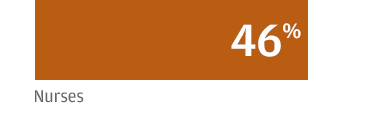
For those respondents who expressed concern, the most difficulty arises in filling positions for physicians (52 percent) and nurses (46 percent). To address the challenge, 76 percent said they expect to increase compensation of their staff over the next 12 months. According to 37 percent of respondents, the talent pool’s high compensation expectations factor into the shortage.

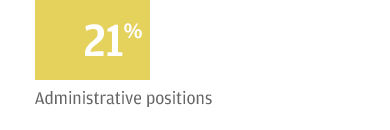
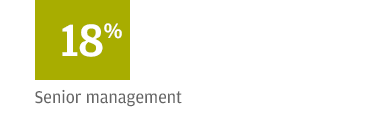
Most Challenging Positions to Fill

52%
46%
38%
29%
21%
21%

The talent shortage is an issue across the industry, Williams said, and burnout among doctors and nurses presents an ongoing problem. One contributing cause could be evolving changes in daily practice, with considerably more time today spent on electronic medical record entries and less on patient care. Williams said, “Doctors are getting frustrated. The problem is trying to replace those doctors as they quit practicing.”

Healthcare executives are particularly concerned about shortages of primary care professionals. “Rural communities already have these shortages,” said Brendan Corrigan, Vice Chair of the J.P. Morgan Healthcare Council.

Labor costs tend to be higher in healthcare than in other sectors, Williams said, as a hospital must have coverage for all of its major roles 24 hours a day. When asked where they struggle with workforce management, the survey respondents cite staff turnover and its associated cost (47 percent), the ability to flex staff based on patient volumes (41 percent), and the cost of overtime and premium labor (36 percent). These workforce issues not only represent specific challenges; they all contribute to labor costs, which, as noted above, rank in the top three challenges for 2019.

Investments for a Changing Industry

A majority (51 percent) of organizations plan to invest in IT over the next 12 months. Other areas for investment included physician recruitment (44 percent) and new or replacement facilities (36 percent).

Since healthcare organizations manage a large amount of private patient health information, data security remains a large part of IT expenditures. “It’s a huge focus—they’re spending a lot of time and money on preventing a breach,” Edwards said. She goes on to note that the transition to patient EMR systems brings another big IT expense—more than $1 billion for the largest healthcare systems.

Overall, the survey showed healthcare executives grappling with rising costs and structural changes that affect the entire industry. “Healthcare is trying to figure out how to fix themselves,” Williams said.



Healthcare’s Leading Financial Challenges and Opportunities in 2019

https://www.jpmorgan.com/commercial-banking/insights/healthcare-financial-challenges-2019

Image result for Healthcare’s Leading Financial Challenges and Opportunities in 2019

Faced with slim margins and rising costs, the healthcare industry is looking to blockchain, data analytics and innovation to help drive savings and unlock new revenue.

The healthcare industry is facing an urgent need to reduce costs and increase revenue. Research from the Healthcare Advisory Council reveals the not-for-profit health system will need between $40 million and $44 million annually in cost avoidance over the next eight years to maintain a sustainable margin. The challenge is significant, but emerging technologies and innovative strategies are creating opportunities for greater efficiency, better patient care and decreased costs, according to executives and other leaders in healthcare.

Making a Margin on Medicare

Health systems with the best margin sustainability pursue effective cost-avoidance practices, including:

  • Embedding cost discipline throughout the organization
  • Escalating spending decisions
  • Reducing unnecessary hires
  • Matching patient acuity to the level of care
  • Reducing drug formulary costs

But even with these practices, cost avoidance is challenging—particularly when it comes to Medicare-reliant seniors, who often require frequent medical treatments and hospital admissions. Turning to advanced electronic medical records (EMRs) that are designed around a health system’s risk and workflow can improve treatment decisions and continuity of care, leading to decreased admissions, better cost effectiveness and a greater profit margin.

Simultaneously, some health systems are looking to a pre-paid, value-based medicine model, as opposed to the more common fee-for-service model. Value-based medicine moves the payment upstream, incentivizing providers to focus on maintaining patient health rather than on providing medical interventions. Decreasing the amount of care needed to keep patients healthy has a direct impact on the size of an organization’s margins.

Blockchain: The Potential to Change Healthcare

One of the most common inefficiencies in healthcare is how physicians are credentialed. The months-long process for clinician credentialing commands significant time and costs. Emerging blockchain technology may be one solution to this persistent point of inefficiency.

With blockchain, rather than sending a clinician credentialing application to several organizations for verification, the physician and all credentialing locations—as members of a dedicated blockchain network—can have access to the physician’s highly encrypted log. Any changes to the physician’s log can be transmitted to the network and validated by private keys known only to each party and with algorithms agreed upon by the network. In this, trust transfers from a third-party clearinghouse to the network as a whole.

In the blockchain world, the physician could provide access codes to the hospital to review their verified credentials. This could save as much as 80 percent of the current cost and time invested in physician credentialing. Using the same technology and process, blockchain may also be a valuable tool for finding efficiencies when working with patient records.

Venture Capital: Strategic Investing 2.0

Healthcare system-based venture capital funds are growing rapidly. In 2017, more than 150 distinct corporate venture groups operated within the healthcare arena, according to Health Enterprise Partners, and these groups participated in 38 percent of all healthcare IT financing.

There are four common objectives for starting such a fund:

  • Generate new income sources not subject to healthcare reimbursement pressure
  • Identify promising companies that executives might not otherwise encounter
  • Create a vehicle to enhance brand integrity and expand market reach
  • Foster a culture of innovation

Once healthcare investors establish their fund objectives (or mix of objectives), they define their investment approach. This includes establishing a decision-making chain with operational leaders and board members that can allow decisions to be made quickly and in an established pattern. It also includes building infrastructure and could mean adopting a rigorous information environment system, like a healthcare customer relationship management (CRM) system, as well as developing stringent custody and accounting procedures for securities.

Funds should gather resources to support the interactions between the investment fund and the companies in which they invest. At the outset, they should decide the relationship they will have with their investment targets and whether return on investment is a primary or secondary goal. As a part of choosing investment targets, it is important that funds address an important problem of the parent organization and in a way that the organization supports.

Time Is Money: Accelerating the Pace of Care

For health systems, every patient hour costs $250 in direct operating costs, more than half of which owe to labor. By this, improving efficiency and decreasing the time needed for tasks can save money and support a healthy margin. A mix of advanced analytical data and targeted interpersonal relations can help reduce the time required for common hospital and health system tasks. Predictive analytic modeling software can help yield clearer insight into operations, revealing ways to break down barriers between departments and more effectively manage census levels. This optimizes census distribution inside a complex medical center.

Another rich source of potential healthcare savings lies in the staff hiring process. Successful staff hiring for all income levels is one of the great challenges for health systems, but data analytics can help make the hiring process more efficient. With models built on the characteristics of successful hires, predictive analytics can point to applicants with the best potential for success, improving confidence in hiring decisions. Importantly, while analytics and automation can play a big part in finding the best applicants, once a candidate becomes an employee, important decisions like promotions or relocations require direct personal contact.

Data and Dollars Innovation

As health systems explore avenues for increased efficiency, lower costs and better margins, J.P. Morgan has developed digital innovations to support healthcare investment, strategy and operation. Two of the most applicable include:

  • Enhanced Healthcare Lockbox: J.P. Morgan has supercharged its lockbox technology with machine learning. The auto-posting rate has increased by nearly one-fifth, allowing hospitals and health systems to redeploy assets to other revenue-generating sectors like denial management. The high-tech upgrade has also saved three to four days in clients’ working capital.
  • Corporate Quick Pay: The need for hospitals and health systems to collect an increasing amount of money directly from patients has resulted in an explosion in low-dollar patient refunds. This creates a problem for the accounts payable departments of healthcare institutions, which were not designed to issue thousands of small checks to patients. J.P. Morgan’s Corporate Quick Pay solution allows health systems to send payments directly to a patient’s bank account using email or text message.

These innovations in artificial intelligence and machine learning drive efficiency across a range of areas. Consider the benefits one client enjoyed by virtue of J.P. Morgan’s digital tools:

  • 70,000 paper-based claims converted to electronic
  • 99.3 percent lift rate for all paper received in lockbox
  • 18 percent increase in auto-posting after implementation
  • Three to four days’ improvement to working capital

Going forward, emerging technologies and strategies are indispensable for healthcare systems striving to grow margins in a time when health costs and needs are increasing. Ultimately, hospitals and health systems that find pathways to greater profitability will be best positioned to achieve their primary goal: delivering better care that leads to better patient outcomes.


CFO Retirements Climb as Good Times Roll On

https://www.wsj.com/articles/cfo-retirements-climb-as-good-times-roll-on-11563355800

Image result for CFO Retirements Climb as Good Times Roll On

Market watchers say the surging stock-market could be prompting finance chiefs to hang up the abacus before a downturn hits.

Bill Rogers had climbed the corporate mountain, ascending to the finance chief role at CenterPoint Energy Inc. He had just guided the Houston-based utility through the $6 billion purchase of natural gas and electricity supplier Vectren Corp. And he was approaching an important milestone: his 60th birthday.

So, in March, Mr. Rogers retired. “The timing was right,” he said.

It is an increasingly familiar refrain. CFOs are retiring at the fastest pace in at least a decade—a generational changing of the guard that experts put down to factors including the increasing complexity of the role and the booming stock market.

One in six executives who left the CFO position at a U.S. public company in 2018 did so to retire, the highest share since at least 2007, according to an analysis of 12 years of regulatory filings by Audit Analytics for The Wall Street Journal.

Many CFOs leaving the role are simply reaching retirement age. Others point to new pressure from expanding job descriptions, which now often encompass oversight of human resources and information technology. Meanwhile, a rich array of advisory opportunities for seasoned executives may be tempting some into early retirement.

The market also plays a role: CFOs’ compensation often includes restricted equity grants, which in some cases can only be cashed out in full after retirement. A hot stock market has made that option more enticing. The S&P 500 stock index, which recouped losses suffered during the 2008 global financial crisis by 2013, has reached record highs this year.

Warning sign

Campbell Harvey, a professor at Duke University’s Fuqua School of Business, said the uptick in retirements could show that the executives overseeing American companies’ finances increasingly believe the long bull market will soon come to an end.

“It’s an intriguing market timing signal by people that are well able to assess the pulse and direction of the U.S. economy,” he said. “These executives are sitting on a pile of stock and it’s difficult to sell that stock as an insider, so when do you want to retire? Do you want to retire when the stock market is near an all-time high, or do you want to retire in the depths of the inevitable correction that might be a recession?”

A surge in deal activity has also been a factor. Last year was one of the busiest on record for mergers and acquisitions. Deals can trigger contract clauses that accelerate vesting requirements of restricted shares, giving CFOs an incentive to walk away, said Rhoda Longhenry, co-head of the financial officers practice at executive recruiter True Search.

The robust economy allowed Kenneth Pollak to retire from the CFO position at women’s apparel company Eileen Fisher Inc. in 2017 at the age of 66. “If the stock market didn’t come back, then I would say there was a good chance I would have worked a few more years,” he said.

Under pressure

CFOs are also tapping out because of escalating demands, recruiters said. CFOs once focused on regulatory compliance, accounting and reporting of financial results. Today, they are increasingly involved in setting strategy, finding and executing deals, and overseeing operations, technology, cybersecurity, talent management, human resources and risk.

Comparing the turnover rate for CFOs and CEOs provides some support for the idea that financial executives in particular are facing increased pressure at work. In 2009, the departure rates for CEOs and CFOs—for all reasons, not just retirement—were roughly the same, at 13.5% and 13.4% respectively, according to Audit Analytics. By 2018, the exit rate for CFOs had risen to 17.5%, compared with 15.2% for CEOs.

Image result for CFO Retirements Climb as Good Times Roll On

“The role has become increasingly more sophisticated,” said Peter Crist, chairman of executive recruiting firm Crist|Kolder Associates. “The pressure on a public company CFO is very high.”

Neil Edwards said his once-high blood pressure has eased to a normal range since 2014, when he retired at 59 from his role as CFO of internet-access company United Online Inc. “In the early days I really looked forward to getting into the office,” he said. “The last 18 months were very hard work. I was tired at the end of it.”

Retiring executives are also presented with more options, as consulting and outsourcing has permeated into more fields, recruiters said.

“We don’t believe anybody at this level ever retires, they are looking for flexibility,” said Gail Meneley, co-founder of Shields Meneley Partners, a Chicago firm that helps executives find their next job.

Mr. Edwards saw retirement as a second act, not the final scene. He does some consulting. He also puts his skills to use as a volunteer, helping impoverished schools in Cambodia with their finances.

Once Mr. Pollak was satisfied with his nest egg, his next priority was keeping busy. In his first year of retirement from Eileen Fisher, he traveled to Europe with his wife and secured a seat on a company board.

Downshifting from his hard-charging schedule was still a challenge. “When I was doing the board work and consulting, I was busy,” he said. “But there were times when I woke up on a Monday morning and wondered what I was going to do with the week.”

For Mr. Rogers, the aim of retiring from CenterPoint before age 60 was to leave time for his postwork goals. Since retiring, he has walked the Camino de Santiago in Spain with a group from the University of St. Thomas in Houston, one of several organizations that Mr. Rogers advises.

“You really can’t be sure what your health is after age 70,” Mr. Rogers said. “I have other interests, I want to make sure I have some span of time to see what I might do with them.”


Will you get your Money’s Worth?

Will you get your Money’s Worth?

InterimCFO

All about Interim Executive Services in healthcare administration.

Will you get your Money’s Worth?

Abstract: This article is a continuation of the series on the value proposition of Interim Executive Consulting.  In this article, I look at the value proposition from the consultant’s perspective.

Recently, I was discussing an interim opportunity in a smaller hospital with a referral source.  The prospective argument was that the client did not have the capacity (did not want) to pay a market rate fee.  You never hear hospitals argue with their lawyers or other consultants on this point, but I digress.

Based on my experience, there are two things that you can be sure of in any interim engagement.  One is that as soon as you think you have an idea of what is going on around you, you had better get ready for a big and sometimes very nasty surprise.  The other is that you are going to find challenges and problems in the situation that the client either intentionally withheld or that the client had no idea of in the first place.  Some clients have told me after skeletons started falling from closets that they harbored the fear that if they were fully transparent that an interim consultant would refuse the gig.  What they do not know is that as professional Interim Executives, we usually do not get the call until the situation is challenging and that if we are distressed by the surprises and uncertainty that characterize Interim Executive Services, we would have found something else to do.  Remember, firefighters run toward a fire when everyone else is running away.

Another principle of doing interim work in my experience is that there is no correlation between the size of the organization and its capacity to produce drama, challenges, and vexing problems.  An argument can be made, and my on-point experience confirms that the risk is higher the smaller the organization because smaller organizations do not have the intellectual and bandwidth resources necessary to avoid creating or falling into serious problems.  If the issues have anything to do with compliance, the potential risks to the interim executive increase exponentially, especially if they are going to be executing documents or making representations on behalf of the organization.  Compliance related signatory authority risk is a risk that cannot be insured by either the consultant or the client. I told the referral source that if anything, there should probably be a significant premium associated with going into a smaller place.

What is a client to do?  I try to mitigate this risk for my client by offering a no-notice, no-fault termination clause in my contract.  The day that the client decides that I am not providing value, I am out of there.  I do not wish to become a perceived burden to an organization during what is already likely an awkward transition.  I have not been released from an interim engagement.  To the contrary, the opposite is true.  In every one of my interim engagements, the timeline has been extended, extensively in some cases once the client appreciates the value proposition.  My average ’90 – 120′ day gig lasts around nine months, and my longest has been over two years.

I have stated repeatedly in these articles that I do not follow bad people and I stand by that contention.  However, this does not mean that there will not be serious problems in an organization.  I followed a CFO that was compelled to resign among other things for digging in over what he believed was a non-compliant acquisition of a physician practice that had millions of dollars of goodwill baked into the deal along with lavish estimates of the value of furniture, fixtures, and equipment.  In another situation, the CEO had been overridden on multiple occasions by a Board that was determined to do non-compliant deals with physicians.  I could go on and on about these types of challenges.

Problems do not have to be compliance related to be challenging and of high potential value.  During the course of every engagement, I am routinely asked, “Is this the worst you have ever seen?”  Most of the time the answer is no, and in every case, it is situation specific.  I was engaged by a hospital to assess the revenue cycle.  Other than the AR being currently fairly valued following multiple unfavorable audit adjustments, about everything else in the revenue cycle process was broken as the client had expected.  The resulting intervention increased cash collections more than $10 million in the next year on around $300 million of revenue.  As an aside, in an organization of this size with a typical operating margin in the 3% range, this intervention more than doubled operating income so, in context, it was a pretty big deal.  This organization was trying to save money by doing things like buying thinner tongue depressors and cutting the amount of soap housekeeping could put in mop buckets while it threw away all of the savings and more in the revenue cycle.  It was the worst revenue cycle operation I have seen measured by results or lack thereof.  This same organization had some of the strongest and highest performing functions in other areas that I have experienced.  Even in the revenue cycle, I got to meet some of the smartest, most dedicated people I have ever known.  They were handicapped by a dearth of leadership and decrepit systems.  None of this supported a conclusion that the organization was terrible or on balance, it was the worst I have ever seen although the revenue cycle concerns did have something to do with the prior CFO being ‘freed up to seek other opportunities.’

What is a consultant to do?  My advice is to the degree possible and reasonable, stand your ground on your professional fee.  It would be nice if you knew you were going to a cake-walk that would mainly be a paid vacation and that you could confidently offer a come-on rate to land the gig.  You know the reality is that you are probably going into a complicated, high-stress situation that is going to tax all of your physical and mental capacity.  This situation is exacerbated by desperate or ignorant consultants and firms that will take any gig at any rate when they have an unsophisticated buyer or just to have something to do.  I have considered offering such a price based on not finding any problems.  For example, I could offer a 30% – 50% discount for a lush sabbatical that would be reversed if (when) issues begin to emerge.  Maybe I could even bargain to double my rate upon discovery of the first compliance problem.   Unfortunately, the world does not work this way, and if you are up against an unsophisticated or ignorant potential client, there is an excellent chance you are going to be undercut by an equally ignorant potential consultant.  You have to decide for yourself how much risk you are willing to take on.  How much is it worth to you to put yourself, your net worth and your family’s livelihood into play in a situation where you may be exposing yourself to the risk of becoming the target of a government compliance investigation?  In a bad case scenario, you could become a witness in a hostile position vis-a-vis the client. The government is currently pursuing multiple felony charges against John Holland (look him up on the internet) even though he alleges and there is apparently little evidence that he benefited directly or indirectly from compliance problems that occurred in organizations he served.  By the way, John may and probably did inherit some of the issues that resulted in criminal charges, i.e., the problems were present in the organization when he started.  Tell me again Mr. cut-rate consultant or firm how anxious you are to get yourself into a situation like this?  By the way, if you are placed by a firm and compliance problems emerge, you are going to be on your own.  Do not forget this.

If you are a decision maker and you are getting resistance to rate discounting from interim executive services providers, it is probably because of their prior experiences and bias about potential problems in your organization.  Instead of dismissing them for something cheaper, you might want to understand better where they are coming from and how that might translate into risk you are bearing that you might not even recognize.  You have to accept the fact that you would not be seeking interim services if you did not have a significant challenge on your hands.  Your best defense against getting into a deal that could make the situation worse is to negotiate an agreement that can be exited rapidly and without recourse. You may have problems that are as yet undiagnosed.  Your run in your current situation could be riding on the ability of the interim executive you choose to pull your bacon out of a fire and potentially save many of your direct reports’ jobs in the process.  What is that worth to you?

Contact me to discuss any questions or observations you might have about these articles, leadership, transitions or interim services.  I might have an idea or two that might be valuable to you.  An observation from my experience is that we need better leadership at every level in organizations.  Some of my feedback is coming from people that are demonstrating an interest in advancing their careers, and I am writing content to address those inquiries.

The easiest way to keep abreast of this blog is to become a follower.  You will be notified of all updates as they occur.  To become a follower, click the “Following” bubble that usually appears near the bottom of each web page.

I encourage you to use the comment section at the bottom of each article to provide feedback and stimulate discussion.  I welcome input and feedback that will help me to improve the quality and relevance of this work.

This blog is original work.  I claim copyright of this material with reproduction prohibited without attribution.  I note and provide links to supporting documentation for non-original material.  If you choose to link any of my articles, I’d appreciate a notification.

If you would like to discuss any of this content, provide private feedback or ask questions, you can reach me at ras2@me.com.


Healthcare Industry Consolidation Raises New Workforce Challenges

https://www.amnhealthcare.com/healthcare-industry-consolidation-raises-new-workforce-challenges/?utm_source=email&utm_medium=pardot&utm_campaign=story-3

Image result for hospital consolidation

When health systems consolidate, one of the major challenges they face is integrating, managing, and optimizing their much larger workforce. The newly integrated workforce must deliver on the value promised by the consolidated enterprise, which is why healthcare industry consolidations need the most advanced workforce solutions available.

The mission of every sector in the consolidation — whether it’s in enhancing the patient experience, improving care quality, realizing economies of scale, expediting the shift from volume- to value-based care, implementing new population health strategies, improving revenue cycle management, or launching new technology — is dependent on the effectiveness of its workforce.

Most healthcare organizations already face workforce problems in the form of shortages of nurses, physicians, technicians and technologists, coders, leaders, and others. Consolidation doesn’t relieve shortage problems, because most organizations’ workforces are already stretched very thin. The paramount challenge may be that the new organization must integrate workforces that have entrenched and often widely different quality standards, procedures, training, values, and cultures. Consistency across the newly consolidated organization must be attained through standardization and adoption of best practices.

Consolidation is producing sophisticated regional enterprises of vertical services and facilities stretching across multiple states, including some emerging as Fortune 500 companies. Solutions to workforce challenges need to become more sophisticated to match this growing organizational complexity. A continuum of effective workforce innovations, many of which have been in use in other industries, are now available in the healthcare industry, though they have been largely untapped until recently.

The talent imperative in healthcare can be effectively addressed through these innovations. Comprehensive managed services programs that optimize the contingent workforce are becoming mainstream. Radical new credentialing innovations can be leveraged to improve time-to-revenue and productivity for physicians and other clinicians. Predictive labor analytics can accurately forecast patient volume months in advance and then match scheduling and staffing practices to the forecasts. Workforce solutions also are available to help find the best talent for leadership roles, which are critically important to guide an industry undergoing fundamental change to revenue based on value instead of volume. The vital realm of health information management is another area where workforce solutions can raise performance in quality, efficiency, and revenue generation.

However, when it comes to workforce solutions, many healthcare organizations remain in a reactive mode, with managers scrambling to fill holes in staffing needs on a daily basis. And many still rely on inadequate paper-based and other outdated systems to manage workforce challenges. Such practices do not fulfill the needs of the sophisticated healthcare organizations emerging from the wave of consolidations. Modern healthcare workforce solutions are needed, but many healthcare organizations don’t have the resources, capacity, or bandwidth to develop and operate these solutions on their own. Or, they are unaware that advanced, technology-enabled workforce solutions are available.

The bright spot is that new entities emerging from consolidations can often leverage combined resources to invest in advanced workforce solutions that will ensure that their enterprise-wide workforce is optimized and performing at its highest level.

Expert workforce partners who are entirely focused on solving healthcare workforce problems hold the key. Such partners are found outside the walls of hospitals and healthcare systems, and the best ones can quickly integrate with patient-care organizations to customize solutions. Since the healthcare workforce is the greatest differentiator in the success of a healthcare enterprise, the services of an expert workforce solutions partner are critical during and after consolidation.