

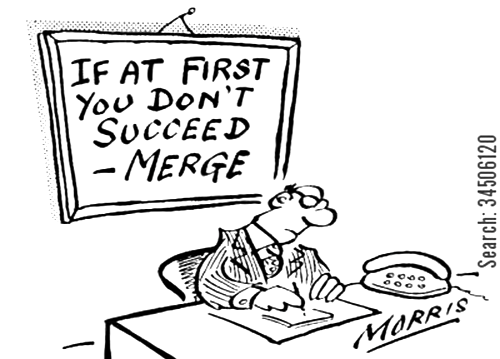
Cartoon – If at first you don’t succeed




Interest rates are rising, inflation is lingering at four-decade highs, the economy appears to be slowing and experts fear a recession is on the way. But Americans are still quitting their jobs at near-record rates in the face of growing economic uncertainty.
The percentage of American workers who quit their jobs set a record earlier this year and has only dropped slightly as the economy slows from two years of torrid growth. After reaching 2.9 percent this spring, the quits rate dropped to 2.7 percent in July, according to data released Tuesday by the Labor Department.
The idea of quitting a job amid a period of increased cost of living and a dubious economic future may seem counterintuitive. But the labor market has remained stacked in favor of workers, who see ample opportunities to boost their earnings to supplant increased costs from inflation.
“Despite recent declines, job openings still outnumber unemployed workers by a sizable margin, illustrating just how tight the labor market remains,” wrote AnnElizabeth Konkel, an economist at Indeed Hiring Lab, in a Monday analysis.
There were roughly two open jobs for every unemployed American, according to Labor Department data, giving job seekers ample opportunities to find new jobs with better pay or working conditions. Businesses are still scrambling to find enough workers to keep up with consumer spending — which is well above pre-pandemic levels — from a workforce that remains smaller than it was before COVID-19.
“It seems possible that employer demand would need to cool significantly more before recruiters start to notice an easing in recruiting conditions,” Konkel wrote.
In other words, employers still have too many open jobs and not enough candidates to avoid boosting wages and other perks to find talent. And that means workers still have ample incentive to quit for a better-paying job, particularly with inflation still high.
Job seekers on Indeed.com are looking for ever-higher wages, Konkel explained. The number of Indeed users seeking jobs with a $20 per hour wage rose above those seeking $15 per hour in June 2022, and the number of jobseekers looking for $25 per hour is up 122 percent over the past 12 months.
Konkel attributed the spike in job seekers looking for more money to the steady increase in advertised wages and the inflation they’ve helped to feed.
“Once job seekers know it’s possible to attain a higher wage, their expectations may shift and act as a pull factor in searching for a higher dollar amount. In this case, the shift in job seeker expectations from searching for $15 to instead $20 is clear,” Konkel explained.
“On the flip side, inflation continues to take a bite out of workers’ paychecks,” she continued, noting that only 46 percent of workers saw wage gains that outpaced inflation.
The pressure to quit for a higher paying job has been highest in the private sector, where 3.5 percent of the workforce left their current employer in July. Workers in industries with historically low wages, tough working conditions and limited teleworking options have led the charge.
The leisure and hospitality sector posted a whopping 6.1 percent quit rate in July, down sharply from 6.9 percent a year ago but still nearly twice the national quit rate.
Restaurants and bars in particular have struggled to return to pre-pandemic employment levels despite rapidly raising wages. The pressure has also made it nearly impossible for those businesses to fire or lay off employees, even amid usual season turnover.
“Hospitality companies tell us that what was once a ‘one strike, you’re out’ rule for employees who failed to show up at work without notice is now more like a ‘ten strikes, you’re out’ rule. They cannot afford to fire workers because they cannot afford to replace them,” said Julia Pollak, chief economist at ZipRecruiter.
“The decline in terminations in industries like hospitality have been so large, they have more than offset the increase in layoffs in the tech sector,” she explained.
Quits have also remained high in retail (4 percent) and the transportation and warehousing sectors (3.5 percent), with both industries facing threats from a decline in goods spending and rising interest rates.
Even so, there are some signs of waning worker confidence, which may lead to a decline in quits.
ZipRecruiter’s job seeker confidence index dropped 4.5 points in August to an all-time low of 97.8, Pollak said, with a greater number of applicants looking for job security over higher wages.
“Since the pandemic, job seekers have been looking for higher pay, less stress, and greater flexibility. In August however, job security rose to the second-place spot in their priority ranking,” Pollak explained.
“One in four employed job seekers say they feel less secure about their current job than they did six months ago. Rising risk of a recession, paired with a wave of recent tech layoffs, has made employees more concerned about the precarity of their jobs.”

The trend of “quiet quitting” has recently gained traction on social media, referring to a phenomenon in which workers to reduce their enthusiasm at work and stick to the minimum expectations of their role. Some professionals, including Generation Z workers, have embraced the concept as an increased form of work-life balance, and others see it as a lesser-version of actually quitting. Regardless of how an individual interprets the idea, the concept is not new among the U.S. workforce or in healthcare, according to Jeremy Sadlier, executive director of the American Society for Healthcare Human Resources Administration.
“Before the term quiet quitting was in vogue, we were talking about employees who would ‘quit and stay,'” said Mr. Sadlier, who previously served as a market director of human resources and provided operational support at Advocate Aurora Health, an organization with dual headquarters in Downers Grove, Ill., and Milwaukee. “In essence, it’s the same concept with a nearly identical motivation. No matter the term used, many disengaged employees will stick around long after they’re finding motivation and stimulation in their work.”
In healthcare, this phenomenon has only grown. An April Gallup poll found that 34 percent of U.S. employees were actively engaged at work in 2021, compared to only 32 percent this year. Healthcare professionals saw the largest dip in engagement, with their engagement scores dropping nine points year over year.
Mr. Sadlier noted that this trend can have significant effects in the industry.
“Any lack of engagement on the part of staff ultimately impacts patient care, teamwork, safety and throughput, all of which impact the financial health of an organization and the patient experience. It’s incredibly important for leaders to focus on engagement, growth opportunities, and to recognize and reward hard work. These are a few ways to focus on your employees to help them feel engaged with their work,” he said.
Still, quiet quitting doesn’t look significantly different in healthcare than it does in other industries, according to Mr. Sadlier. “Colleagues in other industries like hospitality and retail, for example, all talk about a lack of willingness among workers to pick up extra shifts, or work beyond the bare minimum requirements. That’s a sign of growing disengagement and may be quiet quitting,” he said. It is greatly concerning that, while the motivation may not be largely different than in other industries, the effects of quiet quitting in healthcare have a direct connection to patient care, quality and safety, according to Mr. Sadlier.
He also said lower patient experience scores may indicate that a hospital is experiencing decreased employee engagement, which can spread among all its staff.
“There’s an absolute hierarchy [in healthcare], and it doesn’t require somebody to work in healthcare to recognize that when physician engagement falters, that impacts nurses, and when nurses don’t feel engaged, that impacts the rest of the staff, whether it’s ancillary staff, support services,” he said. “There’s a trickledown effect to a lack of engagement at any part of the organization. Inevitably that impacts every position and is ultimately felt by those we serve.”
Additionally, he pointed to financial struggles at U.S. hospitals as a contributing factor for workloads increasing. On Aug. 29, Kaufman Hall released a new report that showed hospitals are experiencing some of the worst margins since the beginning of the COVID-19 pandemic. This means some organizations have had to implement layoffs and other cost-cutting measures.
“Cost-cutting measures are becoming harder to accomplish without having a direct effect on the care patients receive. When [full-time equivalents] are affected, in many cases the responsibilities are shifted to other members of the team. The additional responsibilities can lead to frustration and burnout and negatively impact employee engagement. These factors are what then lead to quiet quitting,” Mr. Sadlier said.
To avoid quiet quitting or disengagement, he recommends that hospitals provide open and honest communication, set and maintain realistic work expectations, closely monitor employee engagement, recognize and reward high performance through options that extend beyond pay, and provide opportunities for career growth.
At the same time, he acknowledged there’s no absolute formula to identify disengagement at the individual level.
“The more you round, the more that you spend time with your staff, the more likely you are to recognize changes in demeanor and perspective,” Mr. Sadlier said. “The sooner you recognize it, the sooner you’re able to have an influence on it. So that’s where the regular engagement for leaders and supervisors has the biggest benefit — recognizing [disengagement] early and trying to find a way to reenergize and reengage staff.”
During an interview with Fortune, Katarina Berg, Spotify’s chief human resources officer, said her company is working to avoid quiet quitting by encouraging a culture of trust where workers feel psychologically safe.
Her advice for leaders is to talk about “the part of quiet quitting that has to do with people not [being] trusted, and they also don’t trust their management team. Therefore, they don’t find any other resolution other than doing this type of very silent activism. So, I think with culture you always have to be proactive … and you have to be very deliberate and intentional.”

 HENRY KOTULA