


Cartoon – Drive’em Wild With


https://www.healthleadersmedia.com/strategy/market-share-still-matters-3-ways-win

Health system CEOs have always worked to meet their mission of caring for the poor and underserved and improving the health of their community. They often cite that mission as their top priority. But in truth, they are evaluated by how well they grow revenue and margin, both of which come through expanding market share.
Market share used to be easy to define. CEOs counted on a reliably increasing reimbursement model that exceeded inflation and an aging population that meant more hospital days every year. No longer. But even though market share growth is much more complex now, failing to achieve that growth could mean termination.
To win the market share battle, healthcare organizations must first redefine what it is (see the sidebar on new market share proxies) and then build strategies that take advantage of the shifts in healthcare delivery. Here’s how three healthcare leaders are doing it.
Michael Dowling, president and CEO of Northwell Health in Great Neck, New York, acknowledges the need to provide access, value, and convenience for consumers who are increasingly looking for a wide-ranging array of services offered by a single health system. The key to this strategy is the consumer as the focal point of healthcare decision-making.
Northwell is currently investing heavily in home health and digital care access, including a major initiative in telemedicine, but tying it all together into a seamless consumer experience is critical.
“You need hospitals as anchors, but the strategy is very consumer-focused in providing access and convenience,” Dowling says. “We’ve been doing this for 10 years, and it’s one of the reasons we’ve grown to being one of the biggest players in the New York City market. It’s the interconnection of all these pieces that makes all the difference.”
Although it’s not a perfect analogy, Dowling says Northwell wants to emulate Starbucks’ approach to market coverage. It’s not a location on every street corner, but it’s close.
“The traditional way of looking at market share isn’t valid anymore.”
—Chris Van Gorder
Also, getting critical market share mass in a variety of modalities is necessary to becoming the viable narrow network that employers and insurers are looking for. Smart health systems are spending more on smaller facilities, like micro-hospitals, or on freestanding ERs, homecare, urgent care centers, and telehealth capabilities. Such investment aims to meet the everyday health needs of consumers, not just provide for their increasingly rare inpatient stays.
This means focusing on organic growth that complements or even stands alone from the inpatient realm rather than buying hospitals, for example. Specialized areas of investment in both inpatient and outpatient care are the usual profitable service lines, such as orthopedics, neurology, and cardiac care, says Dowling.
He says he seeks two kinds of market share when it comes to reimbursement: Medicare and Medicaid, and commercial. Both kinds are needed to serve the community comprehensively, he says, but only one of the two makes a margin. Patients don’t see that distinction, though, and Northwell must serve them all.
“[Commercial] is what everyone’s going after,” he says. “So, you try to be the preferred provider. You take market share from competitors by developing the physician relationship and by the expansion of ambulatory. We’ve built a massive ambulatory network with over 650 locations. It’s a marketing and consumer experience strategy. If patients are not happy with experience, they will go somewhere else, so it’s multifaceted.”
Hospital-centric organizations used to measure market share in terms of inpatient volume or discharges, but as more services have moved outside the hospital environment, those have become less reliable measures of success.
“We’re all moving toward understanding that the consumer is the determinant of success, rather than just the patient care business,” says Dowling. “The consumer is going to be determining how they want care and where, and since more of it is not needed in the hospital, you have to create locations for cancer care and imaging and surgery where it can be done on an ambulatory basis.”
Chris Van Gorder, the longtime president and CEO of Scripps Health in San Diego, is content with a level of uncertainty around market share, and says that growing it depends partially on instinct in a time of upheaval.
“Market share’s an odd thing. Everyone still wants to gain commercial market share, of course,” he says. “But today we’re not so focused on the inpatient side. We’re doing total hips on the ambulatory side. So, the traditional way of looking at market share isn’t valid anymore.”
Even though the discharge-based methodology isn’t as relevant as it used to be, it’s still important. Rating agencies still use discharges as an important tool to measure financial health, and with the relative lack of precise alternatives, discharges can be an important factor in how they determine borrowing capacity and interest rate terms for healthcare organizations.
“As an industry, we have to figure that out,” Van Gorder says. “Rating agencies use discharges, but you could be reducing that number and getting stronger as an organization.”
Scripps went through its rating agency sessions about three months ago and has seen a small decline in those traditional market share measures, but Van Gorder says those measures don’t tell the full story anymore. Scripps’ market is dominated by three major players: itself, Kaiser Permanente, and Sharp HealthCare, so fluctuations in discharges are often small and at the edges.
Rating agencies are smart enough to recognize that healthcare is changing, Van Gorder says. For example, they know it’s the right strategy to move to ambulatory, and Scripps experienced growth in covered lives in its health plan, which is part of Scripps’ strategy to build its own narrow network. But even rating agencies are frustrated that there’s no metric to enable consistent comparisons, he says.
“We still talk about market share because I still need to make sure the hospitals are occupied enough. Half-full hospitals are the fastest way to go bankrupt,” he says.
Scripps is strong in cardiovascular services, particularly interventional cardiology. “So, we focus on maintaining our strength in that area and in ortho, which is becoming much more ambulatory than it used to be,” says Van Gorder.
One area where it’s not as strong is cancer, he says, even though Scripps is a major oncology provider in San Diego. To maintain and even buttress that market share, the health system has partnered with Houston’s MD Anderson Cancer Center to build a new comprehensive cancer program that started treating patients this summer.
“[MD Anderson] is building a network strategy, and they have 23,000 people just working on cancer, so we are taking advantage of their knowledge to make us stronger,” he says. “It was a market share play, but it’s much more than just that, with increased access to research and clinical trials.”
Facing fierce competition in ambulatory, Van Gorder says the health system is focusing on areas where it’s strongest and trying to grow there.
In all areas, he says Scripps must aggressively focus on cutting costs, because he sees cost as a proxy for quality. In fact, he notes, cost may be the major limitation for most health systems in growing market share for the foreseeable future.
“People are paying more out of pocket to come in, and insurance companies have gotten so good at narrow networks,” he says. “People tell me you can’t lead with cost, and I say no. Cost is a quality indicator.”
Safety-net hospitals, such as Grady Health System in Atlanta, have historically been overrun by mission patients—that is, patients who do not bring margin, such as Medicaid patients. But its leadership has recognized that the health system needs to be more competitive in commercial patients.
For Grady, that hasn’t meant investment in traditional service lines, but instead investment in highly complex tertiary and quaternary services that can’t easily be found elsewhere in its market, says John Haupert, its president and CEO. With seed funding from philanthropic sources, Grady has made multimillion-dollar investments in stroke and neurological surgery, interventional cardiology, and surgical subspecialties.
“In our case, it was a matter of survival. If all your patients are Medicaid or unfunded, you’re not going to be in business. Part of Grady coming back to life 10 years ago involved developing strategies to grow in funding the mission,” says Haupert.
The complex cases that have come from Grady’s recent investments weren’t previously present in the market. Unlike many organizations, Grady needed to create additional inpatient capacity to maximize those investments in capital and talent. It will soon be operating around 700 occupied beds; 10 years ago, it was barely operating 400. It’s building new outpatient facilities as well, expanding ambulatory surgical and oncology capacity across the street to free up space in the main facility where its cancer center is now.
“In the next three years, we’ll have 750 beds in operation,” Haupert says. “We’ve gone from 9% to 20% commercial. That helps with sustainability.”
Healthcare Triage News: ACA Risk Adjustment is out of Danger. For Now.

A few weeks ago, we were critical of the Trump administration’s handling of ACA risk adjustment payments. We’re fair-minded types around here, so we though you should know that they’ve taken steps to fix it.

Health insurer Molina is considering providing Obamacare plans in Wisconsin and Utah for 2019, after taking a one-year hiatus from these states, company executives said in an earnings call Wednesday.
Molina left these states for 2018 after suffering $230 million in overall losses and undertaking 1,500 planned layoffs. Company executives said in April that they would consider re-entering the market, and on Wednesday they said they were still evaluating how the plans are performing in the states where they still have Obamacare customers.
“I’m inclined to say that we would re-enter, but we have until the end of the summer to decide,” said Joseph Zubretsky, the company’s CEO.
Roughly 409,000 people are still enrolled in Molina’s Obamacare plans, and premiums for these customers increased by an average of 55 percent from 2017 to 2018, though many of them received subsidies from the federal government to cover the cost.
Zubretsky said that the current prices on their plans were “no longer corrective” but were priced about right in order to cover medical claims. Molina has customers on Obamacare plans in California, Florida, New Mexico, Michigan, Ohio, and Texas. It also has plans in Washington state but scaled back its participation by reducing the number of counties in which it offered plans.
“The strategy was to maintain [enrollment] and grow profits,” Zubretsky said of 2018, adding that re-entering Utah or Wisconsin would likely increase growth in enrollment for 2019.
Molina scaled back during a time of uncertainty, when President Trump had not yet announced he would be cutting off payments to insurers known as cost-sharing reduction subsidies, which under Obamacare help insurers offer lower out-of-pocket prices to their low-income customers. Though the payments were ended, many insurers have restructured their plans to make up for the loss by raising premiums, a move that shifts more expenses to the federal government and offers cheaper prices to Obamacare customers who get subsidies.
Early filings show that Obamacare customers will have more options for coverage in 2019, largely because of this strategy employed by insurers.
Molina’s overall performance is improving. Net income for the second quarter of 2018 was $202 million, compared with a net loss of $230 million for the second quarter of 2017. The company’s business focuses on managed care plans in Medicare and Medicaid.
Though Molina is a relatively small insurer, it drew headlines for enthusiastically embracing Obamacare. The company’s former chief executive, J. Mario Molina, was a major industry supporter of Obamacare and he has been a vocal critic of Republican efforts to repeal and replace the law. He and his brother, former Chief Financial Officer John Molina, were fired from their positions in May 2018 after poor first-quarter financial results.
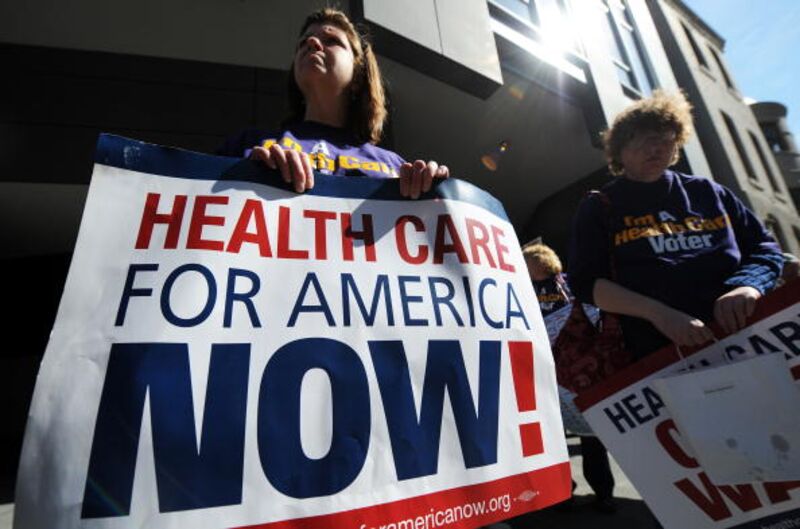
America’s health-care debate is entering a new phase. Liberals, inspired by self-described socialists such as Senator Bernie Sanders and Representative-to-be Alexandria Ocasio-Cortez, are excited about the possibility of “Medicare for All.” Republicans have at the same time largely abandoned efforts to enact major reforms of health care.
This new phase of the debate is full of opportunity for Republicans, and peril for conservatives.
But perhaps it would be better to say that the debate is reverting to an older pattern. For roughly four decades, liberals have highlighted the flaws of the existing health-care system, chiefly high costs and unequal access, and proposed increased governmental involvement as the solution. Conservatives talked up the dangers of bigger government, chiefly even higher costs and the disruption of existing arrangements, and reminded voters of the virtues of the status quo.
Most of the time, health care has been a back-burner issue, and discontent with the system has been a modest source of political strength for liberals. When health care has become a dominant issue, however, public fear of disruption has helped conservatives. From 2009 through 2016, Republicans were able to exploit public unhappiness with the changes that Obamacare first threatened to make and then did make.
There have been two brief exceptions to this pattern. In 1995-96 and 2017-18, Republicans advanced their own sweeping changes to health policy. Led by Newt Gingrich 20 years ago, they tried to reform Medicare and Medicaid. Over the last two years, they tried to replace Obamacare and reform Medicaid. 1
Both times the public’s fear of change was turned against Republican politicians, who did not like the pressure one bit. Most of them are relieved to have dropped their party’s Obamacare and Medicaid proposals. They are eager to settle into the familiar role of criticizing liberal health-care proposals.
There’s plenty to criticize. In polls, most people say they like their existing insurance policies — which may be a way for them to signal to politicians that they fear their meddling with those policies. The single-payer plans that are ascending among Democrats would by definition threaten most existing coverage.
These plans pose much bigger political risks than Obamacare did. Obamacare was carefully designed to insulate Democrats from charges that they were turning people’s coverage upside down.
In selling the legislation, President Barack Obama spent much of his time reassuring people that they could keep their doctors and their insurance plans if they liked them. The law mostly avoided changes to the employer-provided coverage through which most Americans get health care.
Yet Obamacare still provoked a backlash. That backlash was especially intense when, in the fall of 2013, it resulted in a significant number of plan cancellations. But many voters have also resented the narrower networks and higher premiums and deductibles that Obamacare has foisted on them.
As even more sweeping left-wing proposals move to the center of the debate, Republicans can reclaim the advantage of opposing disruption. But they may also again be saddled with the disadvantage of being associated with an unsatisfactory status quo.
They are in charge of Congress and the White House; they have been talking about reworking the health-care system for years; and they have succeeded in making significant changes, albeit much less ambitious ones than they sought. They have, for example, ended the fines on people without health insurance that were a major part of Obamacare. In addition, the Trump administration is in the process of liberalizing the rules for short-term insurance plans that do not have to comply with the regulations Obamacare imposes on most other plans.
The Republicans therefore have some, and growing, political ownership of the health-care system. The more they argue against left-wing proposals to change the system, the more ownership they will have.
For Republican politicians, defending even a flawed status quo is probably preferable to trying to impose disruptive changes to it. But if they adopt that position, it will mean that the only solutions on offer to popular concerns about health care will be left-wing ones.
It will mean, as well, that occasionally liberals will have enough political power to enact some, and maybe a lot, of their preferred changes to the system. We will move, that is, toward a health-care system with a larger and larger degree of governmental control even as Republicans make political gains by resisting that trend.
The new shape of the debate may be good news for Republican politicians, then, but it’s bad news for conservatives who favor limited government and free markets.
http://www.thefiscaltimes.com/2018/08/03/Chart-Day-Where-Prescription-Drug-Spending-Goes

U.S. spending on pharmaceuticals totaled $480 billion in 2016, according to a report published this week in Health Affairs.
“Two-thirds of this total ($323 billion) was captured by drug manufacturers in the form of net revenues,” the researchers from Memorial Sloan Kettering’s Center for Health Policy and Outcomes write. “The remaining third ($157 billion) was retained as gross profits in the supply chain. Of this share, nearly half was captured by retail and specialty pharmacies ($73 billion), and about 20 percent ($35 billion) by providers, such as hospitals and doctors’ offices. PBMs and wholesalers together captured approximately 25 percent ($23 billion and $18 billion, respectively).”
The takeaway: The analysis — which factors in the entire prescription drug supply chain, including pharmacies and pharmacy benefit managers as well as drugmakers themselves — shows that prescription drugs make up closer to 15 percent of all health care spending rather than the 10 percent more typically cited.
https://www.politico.com/story/2018/08/03/trump-drug-prices-companies-721145
Recent price freezes and rollbacks are symbolic measures with little lasting impact.
A July tweet from President Donald Trump sent panic through the C-suites of some of the world’s biggest drug companies, prompting Pfizer and nine other companies to roll back or freeze prices.
But there’s less to those announcements than meets the eye. The gestures turned out to be largely symbolic — efforts to beat Trump at his own game by giving him headlines he wants without making substantive changes in how they do business.
The token concessions are “a calculated risk,” said one drug lobbyist. “Take these nothing-burger steps and give the administration things they can take credit for.”
Of the few companies that actually cut prices, for instance, most targeted old products that no longer produce much revenue — such as Merck’s 60 percent discount to a hepatitis C medicine that had no U.S. revenues in the first quarter.
Others volunteered to halt price increases for six months — in some cases, just weeks after announcing what is normally their last price hike for the year.
“A lot of this shit is meaningless to satisfy Trump,” said another drug lobbyist.
The industry’s deft response to Trump’s tweet shaming has also become a test of whether his administration is serious about following up with an aggressive crackdown on the companies or will simply declare victory based on token measures and move on.
“I think right now it’s a lot of noise, not a lot of substantial impact to the companies,” said Les Funtleyder, a health care portfolio manager at E Squared Asset Management, which owns shares in Pfizer. The prospect for meaningful change “is out there … but that will take motivation on the part of regulators and policymakers.”
Analysts are in broad agreement that the spate of recent concessions won’t hurt bottom lines, or rein in drug prices beyond this six-month period, because many companies already increased prices this year — in some cases, just weeks before publicly pledging to freeze them for the rest of 2018.
“There’s the glass-half-full and glass-half-empty interpretation,” said Walid Gellad, director of the Center for Pharmaceutical Policy and Prescribing at the University of Pittsburgh. “Glass half full says we have never before seen pharma promise not to raise prices anymore. So this is a step forward — including for patients. Glass half empty is that these are token measures — either on drugs few people use, or drugs that just had their price raised, and that prices will just go up next year.”
Either way, Gellad said, “this is not the kind of structural change we want in the market so that prices go down.”
Drug prices are a fixation for Trump, who rants about them in conversations with aides and advisers, according to people close to the president. He sees the issue as a political winner, especially among his conservative — and largely older — base, which relies heavily on prescription drugs. And after facing huge hurdles moving his legislative priorities through Congress, he sees this as something he can win on by using his executive authority.
That has put huge pressure on Health and Human Services Secretary Alex Azar, a former top official of Eli Lilly and Co.
“They talk three times a week, and they never have a conversation where drug pricing isn’t a topic,” said one person briefed on the conversations, adding that Trump has also interrupted Cabinet meetings to encourage Azar to brief the group on the latest developments.
But even as Azar implements his 44-page blueprint aimed at lowering prices, Trump has grown impatient with the glacial pace of rulemaking and arcane details of drug policy.
His outlet is Twitter, where he can marshal the rage of his millions of followers in an instant. White House aides say he sees his Pfizer tweet as a warning shot to other drug companies — part of a public “shaming” campaign designed to pressure companies to take voluntary steps to lower prices.
That strategy diverges sharply from what Azar is saying publicly — raising doubts about how serious the administration is about cracking down on drugmakers.
The HHS secretary’s rhetoric often targets pharmacy benefits managers — the obscure middlemen who manage the drug side of patients’ health insurance benefits — not drug companies. And targeting the middlemen is a play directly out of pharma’s strategy book — drug companies have long sought to pin patients’ frustration with rising costs on PBMs. HHS has also signaled it wants to overhaul a drug discount program for hospitals that could put money back in pharma’s pocket.
Pfizer CEO Ian Read himself praised the president’s blueprint on the company’s recent second-quarter earnings call, just a few weeks after Trump’s Pfizer tweet.
“I don’t think the administration is gunning for [pharma],” said Ronny Gal, a financial analyst at Sanford Bernstein. Everything they are doing right now is “scratching around the problem,” he said.
“You can tell by the way the stock has performed that investors aren’t too concerned,” Funtleyder said. “They figure, ‘OK, the pharma companies waved the white flag for now, so they’re out of the cross hairs.‘”
Meanwhile, HHS and drug industry officials have worked closely to show Trump they are getting results, administration and pharmaceutical industry sources tell POLITICO.
In private meetings with drug officials, HHS officials ask what steps they’ve taken that they might relay to Trump to keep the president satisfied, said drug company sources.
“They’re also like, ‘Hey, don’t be stupid. If you’re going to do something you feel like we can mutually take some credit for, let us know. … If you can get a good tweet out of it, don’t be an idiot. Let us know [ahead of time],’” said one person familiar with the conversations.
“They’ve said: ‘What would it take for you to lower prices?’” said another top drug industry official.
“There is a real fear that Trump only understands things very simplistically,” said a lobbyist for several drug companies. “So they want to keep tossing treats for him or he will go after blunt instruments,” like government drug price negotiations — steps neither the conservative leadership at HHS nor the drug industry want.
Observers both inside HHS and outside the administration see Azar’s drug pricing team as a buffer for the drug industry.
“To be candid, the secretary is pro-patient, pro-innovation and pro-competition and, quite frankly, really standing in between the industry and some faster ways to lower prices that some would say are not pro-competition,” said HHS’ John O’Brien, a senior adviser to Azar, at a drug cost event one day after Trump’s tweet attacking Pfizer.
Azar prefers the industry and HHS work to make change together, rather than it being adversarial, according to people familiar with HHS’ strategy.
He publicly touts industry price freezes and reversals “in part to show Trump they’re making progress, but also to show the industry that you get recognized for playing ball,” said a person familiar with the discussions.
The White House, meanwhile, was thrilled about the industry’s recent price freezes, even as officials acknowledged the companies’ announcements are only a first step — and promised what one official characterized as a “deluge” of drug price-related regulatory action in the coming months.
“Nothing about what they do or don’t do is going to really turn the tide in a major, major way on a voluntary basis,” the official said of the drug companies’ actions, promising that the administration will take aggressive action.
In the meantime, the White House isn’t ruling out more Twitter shaming.
“You’ll see continuing of the tweeting and announcing different actors doing good or bad things in the market,” the official said.
That will get particularly tricky for the industry come January, when drugmakers would typically take their biggest price increases of the coming year — and when their public concessions sunset.
“They can live with the changes that were made — but they can’t live with not raising prices forever,” Gal said. “It’s a noose they put their head into. In January, we will see what happens with that noose. Does it tighten or not?”
 HENRY KOTULA