


Cartoon – Medicare for All!


Americans won’t give up their private insurance unless the government option is better. And that won’t be cheap.
The conventional wisdom these days is that the major Democratic presidential candidates for 2020 will end up endorsing some version of single-payer health care. Senator Bernie Sanders is expected to introduce his Medicare for All bill this week, with a considerable number of co-sponsors. This political posturing, however, is far from a practical proposal.
There’s an obvious problem with moving Americans to a single-payer system: Most people with private health insurance are pretty happy with their current arrangements. They are not looking to trade in that coverage for a new government program of uncertain quality, along with unknown higher taxes. When President Barack Obama was selling the Affordable Care Act, he promised Americans that they could keep their health insurance if they wanted to. When this didn’t turn out to be true for everyone, there was a significant backlash.
Progressive analysts thus have turned to how a single-payer system might come about more gradually. But longer transition times don’t solve the core problem.
Let’s say the federal government sets up a “public option,” as it sometimes is called. Individuals would have the opportunity to buy into government insurance at some price. The new government program would be competing with private insurance, but just how good will the new benefits be? If you’re healthy and have other coverage, you probably won’t switch — if you did, that would be a sign that the new government program was of very high quality and probably too expensive for the nation as a whole. Boosting the health care of the best-covered Americans isn’t the policy priority right now.
Instead, the public option might be set up to attract those who don’t already have good coverage. But those are the same people who don’t have the money to pay a fair market price for health insurance now. In essence, the program would come to resemble a Medicaid expansion, whether or not it would fall under the formal rubric of Medicaid.
That’s a plausible option for a marginal change; many states, of course, have already done a Medicaid expansion. The question remains whether such a program can evolve into single-payer health insurance. The answer is probably not. To become a single-payer system, as coverage climbs up the income ladder, the new reform would have to lure Americans out of private health insurance. It either has to make the private alternative worse, say by penalties like a stiff “Cadillac tax” on policies that exceed a certain level, or it has to make the public alternative especially appealing. We are then back to the change either being unpopular or spending too much money on people who already have decent coverage.
You can make a good case for continuing the forthcoming Cadillac tax on private insurance, as is embedded in Obamacare. But the point of that change was to get people to move to less health insurance coverage and to use less health-care resources, not to bounce them into a system with yet lower marginal cost for a doctor’s visit or extra medical procedures.
It’s worth thinking through why some single-payer systems, such as those on the European continent or in Hong Kong and Taiwan, seem to work. Typically those systems were instituted while health-care costs were still fairly low, and then kept down by government fiat. The U.S. is not in that position, and it’s hard to see doctors and hospitals — powerful lobbies — going along with significant cuts to their payments.
Single-payer systems can work for yet another reason: If a citizenry consumes much less health care, and it doesn’t damage patient outcomes so much. Patient queuing isn’t a disaster if people who really need treatment get priority, as is the case in the better-run single-payer systems. In other words, single payer has to be sold as a way of getting us all to cut back on the consumption of medical resources. Unfortunately, the Medicare for All movement is more about easing everyone’s access and boosting the usage of health-care resources, a typically American approach.
When it comes to access, the major problem in the U.S. is distributional: Some of the poor have insufficient access, and arguably some of the well-off receive health care at too low a user price. Given Americans’ love for consumption, it’s probably too late to fix the latter problem. We can, to some extent, improve lower-income access by Medicaid expansions.
The political war along the way to a full single-payer system is unlikely to be rewarding. According to one poll, single payer is supported by only 43 percent of Americans, hardly enough to overcome political gridlock.
Progress will come in bits and pieces. The notion of a universal cure-all is a myth, whether it comes to improving your health or improving America’s health-care system.

This is a pivotal moment in American history. Do we, as a nation, join the rest of the industrialized world and guarantee comprehensive health care to every person as a human right? Or do we maintain a system that is enormously expensive, wasteful and bureaucratic, and is designed to maximize profits for big insurance companies, the pharmaceutical industry, Wall Street and medical equipment suppliers?
We remain the only major country on earth that allows chief executives and stockholders in the health care industry to get incredibly rich, while tens of millions of people suffer because they can’t get the health care they need. This is not what the United States should be about.
All over this country, I have heard from Americans who have shared heartbreaking stories about our dysfunctional system. Doctors have told me about patients who died because they put off their medical visits until it was too late. These were people who had no insurance or could not afford out-of-pocket costs imposed by their insurance plans.
I have heard from older people who have been forced to split their pills in half because they couldn’t pay the outrageously high price of prescription drugs. Oncologists have told me about cancer patients who have been unable to acquire lifesaving treatments because they could not afford them. This should not be happening in the world’s wealthiest country.
Americans should not hesitate about going to the doctor because they do not have enough money. They should not worry that a hospital stay will bankrupt them or leave them deeply in debt. They should be able to go to the doctor they want, not just one in a particular network. They should not have to spend huge amounts of time filling out complicated forms and arguing with insurance companies as to whether or not they have the coverage they expected.
Even though 28 million Americans remain uninsured and even more are underinsured, we spend far more per capita on health care than any other industrialized nation. In 2015, the United States spent almost $10,000 per person for health care; the Canadians, Germans, French and British spent less than half of that, while guaranteeing health care to everyone. Further, these countries have higher life expectancy rates and lower infant mortality rates than we do.
The reason that our health care system is so outrageously expensive is that it is not designed to provide quality care to all in a cost-effective way, but to provide huge profits to the medical-industrial complex. Layers of bureaucracy associated with the administration of hundreds of individual and complicated insurance plans is stunningly wasteful, costing us hundreds of billions of dollars a year. As the only major country not to negotiate drug prices with the pharmaceutical industry, we spend tens of billions more than we should.
The solution to this crisis is not hard to understand. A half-century ago, the United States established Medicare. Guaranteeing comprehensive health benefits to Americans over 65 has proved to be enormously successful, cost-effective and popular. Now is the time to expand and improve Medicare to cover all Americans.
This is not a radical idea. I live 50 miles south of the Canadian border. For decades, every man, woman and child in Canada has been guaranteed health care through a single-payer, publicly funded health care program. This system has not only improved the lives of the Canadian people but has also saved families and businesses an immense amount of money.
On Wednesday I will introduce the Medicare for All Act in the Senate with 15 co-sponsors and support from dozens of grass-roots organizations. Under this legislation, every family in America would receive comprehensive coverage, and middle-class families would save thousands of dollars a year by eliminating their private insurance costs as we move to a publicly funded program.
The transition to the Medicare for All program would take place over four years. In the first year, benefits to older people would be expanded to include dental care, vision coverage and hearing aids, and the eligibility age for Medicare would be lowered to 55. All children under the age of 18 would also be covered. In the second year, the eligibility age would be lowered to 45 and in the third year to 35. By the fourth year, every man, woman and child in the country would be covered by Medicare for All.
Needless to say, there will be huge opposition to this legislation from the powerful special interests that profit from the current wasteful system. The insurance companies, the drug companies and Wall Street will undoubtedly devote a lot of money to lobbying, campaign contributions and television ads to defeat this proposal. But they are on the wrong side of history.
Guaranteeing health care as a right is important to the American people not just from a moral and financial perspective; it also happens to be what the majority of the American people want. According to an April poll by The Economist/YouGov, 60 percent of the American people want to “expand Medicare to provide health insurance to every American,” including 75 percent of Democrats, 58 percent of independents and 46 percent of Republicans.
Now is the time for Congress to stand with the American people and take on the special interests that dominate health care in the United States. Now is the time to extend Medicare to everyone.

http://www.politico.com/story/2017/09/13/bernie-sanders-single-payer-democrats-medicare-242616

Most liberals are on board with the bill being introduced Wednesday, but Democratic leaders and vulnerable incumbents largely steer clear.
Bernie Sanders’ single-payer health care plan has won over most other liberal senators, including many weighing 2020 bids.
The rest of the Democratic Party is another matter.
As Sanders prepares to unveil his Medicare for All legislation on Wednesday, most of the party’s congressional leaders and vulnerable Senate incumbents are steering clear. Even as the left celebrates Sanders’ ability to push the Democratic agenda leftward after his primary challenge to Hillary Clinton last year, that success appears to have its limits.
Senate Minority Leader Chuck Schumer told reporters that he would be “looking at all of” the party’s “many good” proposals to expand health care access, but declined to back Sanders. House Minority Leader Nancy Pelosi declared that her priority is shielding Obamacare from a GOP repeal push that’s not yet dead for good.
Connecticut Sen. Chris Murphy, one of the few Democrats subject to 2020 speculation who has not signed on to the Sanders bill, warned against letting the party’s attention slip to “longer-term health care policy” while the future of the Affordable Care Act remains up for debate.
“I think the risk is that we get distracted,” Murphy told reporters. “September’s not done. They can still ram through a repeal bill.”
Wisconsin Sen. Tammy Baldwin on Tuesday became the single-payer bill’s first supporter from the class of Senate Democrats up for reelection next year in states Trump carried. But other politically imperiled incumbent Democrats have said no to Sanders.
Sen. Claire McCaskill said in a brief interview that lawmakers have more work to do to keep health care costs in check “before we would think about expanding that [Medicare] system to everyone.”
Single-payer on a national level would have “a lot of problems,” McCaskill added, although she came out in support of allowing individuals as young as 55 to buy into Medicare. That idea is also backed by Baldwin and two other red-state Democrats up for reelection next year who are declining to endorse Sanders’ bill: Sens. Sherrod Brown of Ohio and Debbie Stabenow of Michigan.
Stabenow, also a member of Democratic leadership, said Tuesday that she would keep working on her Medicare-at-55 plan “because I think there is some bipartisan interest in that.” She said the party’s first order of business should be shoring up the Obamacare markets, followed by other goals.
“The first thing has to be to protect the health care people have now and stabilize markets, no question,” Stabenow said. “But we need to focus on lowering the cost of prescription drugs and providing more health care, more health care options.”
Improving the Affordable Care Act is the core of a bipartisan effort in the Senate health committee. The panel’s ranking member, Sen. Patty Murray of Washington, a member of the Democratic leadership, also declined to endorse Sanders’ bill on Tuesday.
“There’s a lot of Democratic ideas out there, and I haven’t had the chance to look at all of them,” Murray said, adding that she remains “very focused” on the committee’s work.
Republicans have already seized on the high costs of imposing a single-payer system — which Sanders’ presidential campaign proposed to pay for with new taxes on employers and wealthy individuals — to hammer Democrats for supporting the idea. The National Republican Senatorial Committee criticized Baldwin on Tuesday for backing “the left’s radical plans for government-run health care.”
Sen. John Barrasso (R-Wyo.), a member of GOP leadership, also reminded reporters Tuesday that Sanders’ home state of Vermont had to back away from its own single-payer health proposal after the economic burden proved too onerous.
Backers of the Sanders bill acknowledge that single-payer is a heavy political lift but describe it as an important benchmark for Democrats’ future. As the party hones its identity beyond opposition to Trump’s agenda, single-payer fans see enough room to set big long-term goals while waging the shorter-term battle to protect Obamacare.
“There’s nothing about the politics of the moment or the Affordable Care Act that in any way precludes supporting Medicare-for-all as the ultimate goal, and there’s a clear path to it,” said Sen. Richard Blumenthal. The Connecticut Democrat signed on to the bill Tuesday.
Sen. Al Franken (D-Minn.), who has been mentioned as a possible 2020 candidate, also expects to sign on to the single-payer bill, a spokesman said Tuesday. Franken noted that his cosponsorship reflects the bill’s status as a long-term goal while the party continues short-term work on Obamacare.
“This bill is aspirational, and I’m hopeful that it can serve as a starting point for where we need to go as a country,” Franken said in a statement. “In the short term, however, I strongly believe we must pursue bipartisan policies that improve our current health care system for all Americans — and that’s exactly what we’re doing right now in the Senate Health Committee, on which both Senator Sanders and I sit.”
For other Democrats, however, the idea’s time may have not yet come.
Ben Cardin said in an interview that he supports universal health coverage but has “certain concerns” about using single-payer to achieve that goal.
“There’s the political issue, but there’s also the issue about how you make sure there will be adequate resources put into health care,” the Maryland Democrat said.
Sen. Joe Manchin of West Virginia, a member of leadership who’s among the GOP’s top targets in 2018, walked a fine line Tuesday as Republicans revived his past comments welcoming a discussion of a government-run health care system.
“I am skeptical that single-payer is the right solution, but I believe that the Senate should carefully consider all of the options through regular order so that we can fully understand the impacts of these ideas on both our people and our economy,” Manchin said in a statement on Tuesday.
Sen. Dianne Feinstein, facing consternation from liberals in her home state of California — where an effort to enact single-payer statewide ran aground this year — said that she would want to see the price tag before taking a position on Sanders’ bill.
“My understanding is, the cost of single-payer is enormous,” Feinstein said, noting that she supports a public option for health insurance outside the private market.
Murphy and Hawaii Sen. Brian Schatz have offered their own ideas to shift the party’s health care debate leftward without going as far as Sanders’ plan would. The Connecticut Democrat is working on legislation creating a Medicare buy-in for all individuals and businesses, while Schatz told POLITICO he expects to release a Medicaid buy-in proposal later this month.
Murphy said he would not sign on to Sanders’ bill before its release, urging “our party to take some time and look at all the options available to us before we decide on one unitary route.”
And even as some Sanders-aligned activists spook Democrats with talk of possible primary challenges to candidates who don’t support the single-payer plan, other liberals were content to cheer the Vermont independent for attracting more than one-quarter of the caucus to his legislation. Progressive Change Campaign Committee co-founder Adam Green, who worked with Murphy on the Medicare buy-in plan, said that “Democrats are increasingly wrapping themselves in the flag of” Medicare for all without closing off other options that advance the ball.
“This is how big ideas like expanding Social Security and debt-free college were moved into the mainstream — the North Star gets put up, solid organizing is done, critical mass is built in Congress and on the campaign trail, and party consensus falls into place,” Green said by email. “It’s happening now.”
http://abcnews.go.com/Health/wireStory/senate-bargainers-deal-reached-childrens-health-49809048

Senate Republican and Democratic bargainers reached agreement late Tuesday to extend financing for the children’s health insurance program for five years, a pact that if approved would avert an end-of-month cash crunch for the popular program.
In a concession to Republicans, the agreement would phase out extra federal funds that have gone to states for the program since the additional money was mandated as part of President Barack Obama’s 2010 health care law.
Money for the federal-state program is due to expire at the end of September. The program provides health coverage to around 8 million low-income children and pregnant women.
It was initially unclear how the agreement would fare in the Senate and the House.
But the two negotiators — Senate Finance Committee Chairman Orrin Hatch, R-Utah, and that panel’s top Democrat, Ron Wyden of Oregon — work closely with party leaders. In addition, having embarrassingly failed in this year’s attempt to repeal Obama’s health care statute, Republicans and President Donald Trump are eager for an accomplishment and would be unlikely to stymie the continuation of such a widely supported initiative.
It was also unclear if the pact would move quickly and by itself through Congress, or become a vehicle for other, less widely backed legislation.
In a written statement, Hatch said “Congress needs to act quickly” to extend the program.
Without providing detail, Hatch said the agreement would give states “increased flexibility” to run the program. He also said lawmakers will “continue to advance this agreement in a way that does not add to the deficit,” suggesting that a compromise on how to pay for the extra funds may have not yet been found.
Wyden called the agreement “a great deal for America’s kids.”
The federal government pays around $7 billion annually for the program. States by law pay a small share — until recently, an amount ranging from 15 percent to 35 percent of costs.
But under Obama’s law, states each received an additional 23 percent share from Washington. Many Republicans, particularly conservatives, have chafed at that added amount.
Under the agreement, the full 23 percent share would continue for two more years. It would phase down to 11.5 percent in 2020 and the extra money would disappear completely the following year. The details were provided by a Senate aide who spoke on condition of anonymity because full details weren’t released.
After months of protests from families, city supervisors and public health officials, California Pacific Medical Center (CPMC) announced that it will continue to care for 28 patients with complex medical needs, instead of transferring them to other facilities outside the city.
In June, the patients and their families received letters from CPMC saying that the skilled nursing unit where they lived at St. Luke’s Hospital, known as a “subacute” unit, was closing permanently. The hospital as a whole is closing because it doesn’t meet earthquake codes, but CPMC officials are replacing it with a new building on the same site in the Mission district. But they did not plan to include any subacute beds in the new hospital, nor would they create a subacute unit in another new hospital under construction near Japantown.
But in an unexpected reversal, CPMC CEO Dr. Warren Browner said Monday the hospital system will continue to care for the 28 patients who would have been affected. Spokesman Dean Fryer said the medical center changed course after hearing concerns about the potential impact of the transition on patients and their families. CPMC officials also changed their minds after facing challenges securing beds for patients elsewhere in the Bay Area.
Subacute nursing units treat patients with complex medical needs, such as those on ventilators, for months or even years. The patients don’t need as much care as a regular “acute” hospital patient, but do need a level of skilled nursing care that is difficult to provide at home.
The subacute unit at St. Luke’s is the last one in San Francisco based at a hospital. Regionally and nationally, hospitals have been shuttering these units. The patients demand a high level of care, but reimbursements for the treatment — typically through Medicaid — are low compared to private insurance.
Families were concerned that the move from St. Luke’s to another facility would be difficult for patients, who are in medically fragile states, and would also impose a burden on them because of the cost and difficulty of traveling farther away for visits.
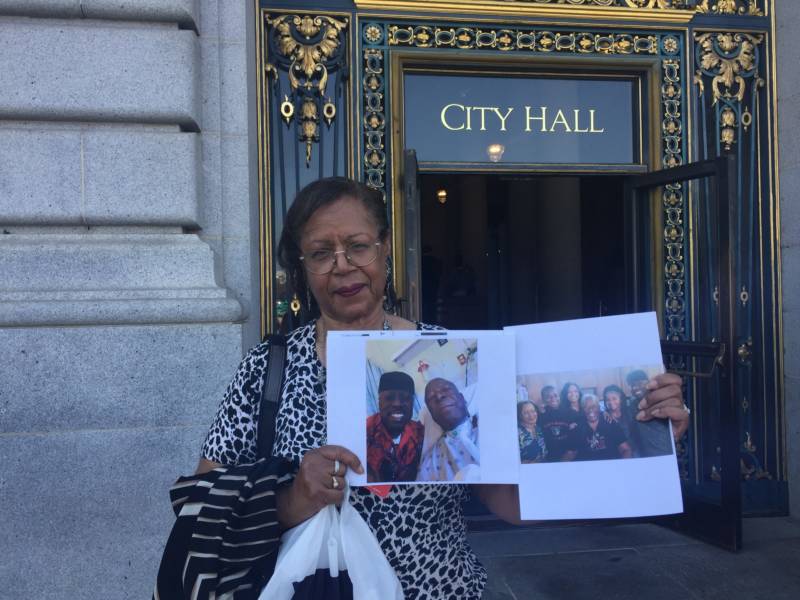
When word circulated on Monday that the patients would stay in San Francisco, family members rejoiced. Leneta Anderson’s husband has lived in St. Luke’s subacute unit for 18 months. She visits him nearly every day at dinner time.
“I could cry right now. I am just thrilled, thrilled that my husband and the other patients don’t have to leave,” Anderson said over the phone on Monday. “It’s a victory.”
The new plan is for patients to move to another CPMC facility in August 2018 — either the new Van Ness hospital, the new Mission Bernal hospital, which will replace St. Luke’s, or CPMC Davies.
Family members, subacute nurses, and city supervisors said Tuesday that their next goal is to increase access by advocating for the creation of more skilled nursing beds in San Francisco.

Three years after the Affordable Care Act’s coverage expansion took effect, the number of Americans without health insurance fell to 28.1 million in 2016, down from 29 million in 2015, according to a federal report released Tuesday.
The latest numbers from the U.S. Census Bureau showed the nation’s uninsured rate dropped to 8.8 percent. It had been 9.1 percent in 2015.
Both the overall number of uninsured and the percentage are record lows.
The uninsured rate has fallen in all 50 states and the District of Columbia since 2013, although the rate has been lower among the 31 states that expanded Medicaid under the health law. California’s rate was 7.3 percent in 2016, less than half of its 17.2 percent rate in 2013.
“California has shown that the Affordable Care Act is working to expand health coverage and provide new patient protections,” said Anthony Wright, executive director of Health Access California, a consumer advocacy group. “While many thought our nation’s rising uninsured rate was unsolvable, the advancement in California shows that if policymakers and the public are united in trying to make reform work, we can do big things.”
The latest figures from the Census Bureau effectively close the book on President Barack Obama’s record on lowering the number of uninsured. He made that a linchpin of his 2008 campaign, and his administration’s effort to overhaul the nation’s health system through the ACA focused on expanding coverage.
When Obama took office in 2009, during the worst economic recession since the Great Depression, more than 50 million Americans were uninsured, or nearly 17 percent of the population.
The number of uninsured has fallen from 42 million in 2013 — before the ACA in 2014 allowed states to expand Medicaid, the federal-state program that provides coverage to low-income people, and provided federal subsidies to help lower- and middle-income Americans buy coverage on the insurance marketplaces. The decline also reflected the improving economy, which has put more Americans in jobs that offer health coverage.
The dramatic drop in the uninsured over the past few years played a major role in the congressional debate over the summer about whether to replace the 2010 health law. Advocates pleaded with the Republican-controlled Congress not to take steps to reverse the gains in coverage.
The Census numbers are considered the gold standard for tracking who has insurance because the survey samples are so large.
Among the states, the lowest uninsured rate last year was 2.5 percent in Massachusetts and the highest was 16.6 percent in Texas, the Census Bureau said. States that expanded Medicaid had an average uninsured rate of 6.5 percent compared with an 11.7 percent average among states that did not expand, the Census Bureau reported.
More than half of Americans — 55.7 percent — get health insurance through their jobs. But government coverage is becoming more common. Medicaid now covers more than 19 percent of the population and Medicare nearly 17 percent.

