A surge in the uninsured population from Medicaid redetermination could swamp some health systems that struggled to stay afloat during the pandemic. But experts say it could also translate into a financial boost for networks, if enough individuals find new sources of coverage.
Why it matters:
Even the temporary loss of coverage as states unwind their COVID-era Medicaid enrollment requirements means more people will go without checkups and other primary care, increasing the likelihood they’ll wait until they’re sick to seek help.
A key question is how many of the disenrolled will find new arrangements through workplace insurance or subsidized Affordable Care Act plans, both of which pay providers at higher rates than Medicaid.
Driving the news:
More than 170,000 people lost their Medicaid coverage in four states in April, and it’s not clear from state data how many of those people found new arrangements, reapplied successfully for Medicaid or remain uninsured.
An estimated 17 million children and adults could lose Medicaid coverage this year, after pandemic-era protections are rolled back, per a recent KFF survey.
Trinity Health, an 88-hospital health system operating in 26 states, estimates that Medicaid redetermination could result in a loss of $70 million to $90 million if disenrolled people don’t find other arrangements and the system has to provide them with charity care.
“It’s painful to watch; it’s not good for people and for our communities and those who are most vulnerable,” Dan Roth, chief clinical officer at Trinity Health, told Axios.
Emergency departments could fill up quickly if enough people who delay care wait for a health crisis to get help, said Ben Finder, director of policy research and analysis at the American Hospital Association.
He said other patients could cut pills in half or otherwise make medications last longer, “which can create cascading problems for folks.”
What we’re watching:
Redeterminations could change the payer mix in a revenue-positive way if patients go from Medicaid to employer-sponsored or ACA plans.
One Urban Institute report estimates that as many as 10.5 million patients could shift from Medicaid to employer-sponsored coverage or a marketplace plan.
This could boost payments to hospitals significantly, per Duane Wright, a Bloomberg Intelligence analyst, since commercial payment rates for hospital services are on average 223% higher than Medicare payments.
Zoom in:
Providers might be the first ones to inform patients who don’t know that their coverage has been terminated when they come in seeking care.
Health systems can create special teams to proactively reach out to Medicaid patients before they even come to the hospital, said Karen Shields, chief client engagement officer at Gainwell and former deputy director at the Centers for Medicare and Medicaid Services.
“There is a moral and financial imperative for us to be good at this,” Shields told Axios.
The bottom line:
Most health systems have bounced back from a shaky 2022. But redeterminations, combined with inflation, supply chain problems and staffing shortages, could prove too much, especially during the colder months when respiratory viruses proliferate.
“Everyone is holding their breath watching for how this unfolds in each state,” Finder told Axios.
This brief examines past-due medical debt among nonelderly adults and their families using nationally representative survey data collected in June 2022. The analysis assesses the share of adults ages 18 to 64 with past-due medical bills owed to hospitals and other health care providers as well as the actions taken by hospitals to collect payment or make bills easier to settle.
It focuses on the experiences of adults with family incomes below and above 250 percent of the federal poverty level (FPL), approximating the income cutoff used by many hospitals to determine eligibility for free and discounted care.
WHY THIS MATTERS
In their efforts to protect patients from medical debt, policymakers have increasingly focused on the role of hospital billing and collection practices, with particular scrutiny directed toward nonprofit hospitals’ provision of charity care. Understanding the experiences of people with past-due bills owed to hospitals and other providers can shed light on the potential for new consumer protections to alleviate debt burdens.
WHAT WE FOUND
More than one in seven nonelderly adults (15.4 percent) live in families with past-due medical debt. Nearly two-thirds of these adults have incomes below 250 percent of FPL.
Nearly three in four adults with past-due medical debt (72.9 percent) reported owing at least some of that debt to hospitals, including 27.9 percent owing hospitals only and 45.1 percent owing both hospitals and other providers. Adults with past-due hospital bills generally have much higher total amounts of debt than those with past-due bills only owed to non-hospital providers.
Most adults (60.9 percent) with past-due hospital bills reported that a collection agency contacted them about the debt, but much smaller shares reported that the hospital filed a lawsuit against them (5.2 percent), garnished their wages (3.9 percent), or seized funds from a bank account (1.9 percent).
Though about one-third (35.7 percent) of adults with past-due hospital bills reported working out a payment plan, only about one-fifth (21.7 percent) received discounted care.
Adults with incomes below 250 percent of FPL were as likely as those with higher incomes to experience hospital debt collection actions and to have received discounted care.
The concentration of past-due medical debt among families with low incomes and the large share who owe a portion of that debt to hospitals suggests that expanded access to hospital charity care and stronger consumer protections could complement health insurance coverage expansions and other efforts to mitigate the impact of unaffordable medical bills.
HOW WE DID IT
This analysis draws on data from the June 2022 round of the Urban Institute’s Health Reform Monitoring Survey (HRMS), a nationally representative, internet-based survey of adults ages 18 to 64 that provides timely information on health insurance coverage, health care access and affordability, and other health topics. Approximately 9,500 adults participated in the June 2022 HRMS.
The film “American Hospitals: Healing a Broken System” premiered in Washington, D.C., on March 29. This documentary exposes the inconvenient truths embedded within the U.S. healthcare system. Here is a dirty dozen of them:
Hospitals are largely unaccountable for poor clinical outcomes.
The cost of commercially insured care is multiples higher than the cost of government-insured care for identical procedures.
Customer service at hospitals is dreadful.
Frontline clinicians are overburdened and leaving the profession in droves.
Healthcare still operates the same way it has for the last one hundred years — delivering hierarchical, fragmented, hospital-centric, disease-centric, physician-centric “sick” care. Accordingly, healthcare business models optimize revenue generation and profitability rather than health outcomes. These factors explain, in part, why U.S. life expectancy has declined four of the five years and maternal deaths are higher today than a generation ago.
It’s hard to imagine that the devil itself could create a more inhumane, ineffective, costly and change-resistant system. Hospitals consume more and more societal resources to maintain an inadequate status quo. They’re a major part of America’s healthcare problem, certainly not its solution. Even so, hospitals have largely avoided scrutiny and the public’s wrath. Until now.
“American Hospitals” is now playing in theaters throughout the nation. It chronicles the pervasive and chronic dysfunction plaguing America’s hospitals. It portrays the devastating emotional, financial and physical toll that hospitals impose on both consumers and caregivers.
Despite its critical lens, “American Hospitals” is not a diatribe against hospitals. Its contributors include some of healthcare’s most prominent and respected industry leaders, including Donald Berwick, Elizabeth Rosenthal, Shannon Brownlee and Stephen Klasko. The film explores payment and regulatory reforms that would deliver higher-value care. It profiles Maryland’s all-payer system as an example of how constructive reforms can constrain healthcare spending and direct resources into more effective, community-based care.
The United States already spends more than enough on healthcare. It doesn’t need to spend more. It needs to spend more wisely. The system must downsize its acute and specialty care footprint and invest more in primary care, behavioral health, chronic disease management and health promotion. It’s really that simple.
My only critique of “American Hospitals” is many of its contributors expect too much from hospitals. They want them to simultaneously improve their care delivery and advance the health of their communities. This is wishful thinking. Health and healthcare are fundamentally different businesses. Rather than pivoting to population health, hospitals must focus all their efforts on delivering the right care at the right time, place and price.
If hospitals can deliver appropriate care more affordably, this will free up enormous resources for society to invest in health promotion and aligned social-care services. In this brave new world, right-sized hospitals deliver only necessary care within healthier, happier and more productive communities.
All Americans deserve access to affordable health insurance that covers necessary healthcare services without bankrupting them and/or the country. Let me restate the obvious. This requires less healthcare spending and more investments in health-creating activities. Less healthcare and more health is the type of transformative reform that the country could rally behind.
At issue is whether America’s hospitals will constructively participate in downsizing and reconfiguring the nation’s healthcare system. If they do so, they can reinvent themselves from the inside out and control their destinies.
Historically, hospitals have preferred to use their political and financial leverage to protect their privileged position rather than advance the nation’s well-being. Like Satan in Milton’s “Paradise Lost,” they have preferred to reign in hell rather than serve in heaven.
Pride comes before the fall. Woe to those hospitals that fight the nation’s natural evolution toward value-based care and healthier communities. They will experience a customer-led revolution from outside in and lose market relevance. Only by admitting and addressing their structural flaws can hospitals truly serve the American people.
April 1st marked the start date of a one-year window for state Medicaid offices to reassess their beneficiary rolls, as Medicaid’s continuous enrollment policy sunsets. Since the early days of the pandemic, the federal government has boosted state Medicaid funding by 6.2 percent, in exchange for a requirement that current Medicaid beneficiaries maintain eligibility, regardless of changes to their income or other qualifiers. This policy helped grow national Medicaid enrollment to a record 90M, but a projected 15M may now lose coverage through the redetermination process.
The Gist: After the US uninsured rate recently hit a record low, millions of Americans will now lose insurance coverage, at least temporarily.Of those no longer eligible for Medicaid, an estimated 2.7M will qualify for subsidized exchange plans, while around 400K in non-expansion states will have incomes too high for Medicaid and too low for exchange subsidies. The impact will vary in each state, both in terms of how quickly and how many Medicaid beneficiaries are disenrolled.
But in over half of states,at least one-fifth of those who will lose Medicaid coverage are projected to remain uninsured—a significant step backward in the effort to ensure universal coverage.
Communication from Medicaid offices and exchange plan navigators will be key to preventing as many people as possible from becoming uninsured.
Researchers estimate 15 million people will lose their Medicaid starting April 1 when states begin removing people from the low-income health insurance program for the first time in three years.
In March 2020, Congress banned states from removing people from Medicaid during the pandemic in exchange for more federal funding for state Medicaid programs. Medicaid enrollment is usually tied to people’s incomes, and individuals normally have to regularly prove they still qualify in what’s known as a redetermination. (In the 39 states and Washington, D.C., that have expanded Medicaid, a family of four has to make less than $40,000 to qualify. In non-expansion states, the cutoff is even lower.)
With redeterminations paused, Medicaid enrollment nationwide has grown from 71 million in February 2020 to an estimated 95 million in March 2023.Research shows Medicaid coverage is associated with better access to care, more financial security, better health and lower mortality. During the pandemic, beneficiaries have been able to enjoy these benefits without worrying about confirming their eligibility.
In December, Congress voted to let states restart the process of clearing their rolls on April 1, what’s sometimes referred to as “unwinding.”Lawmakers are giving states 14 months to redetermine millions of people’s eligibility — an unprecedented task made even more difficult by serious staffing and experience shortages in many Medicaid offices.
“It’s going to be a big lift,” said Sayeh Nikpay, a health policy researcher at the University of Minnesota and Tradeoffs Senior Research Advisor. “States have never had to do this many redeterminations this quickly before, and there’s a lot of uncertainty about what will happen.”
We asked Nikpay to pick out a few relevant studies to help us understand what is happening and how states and employers could keep more people insured. Here are three she identified as particularly helpful.
Two types of people will lose coverage
The Office of the Assistant Secretary for Planning and Evaluation, which provides research for the U.S. Department of Health and Human Services, released a report in August 2022 that estimated 15 million people will lose Medicaid coverage as a result of the unwinding. (The estimate is similar to another analysis by the independent Urban Institute.)
ASPE breaks those 15 million people into two groups. In the first group are people who make too much money to qualify for Medicaid. ASPE estimates there are about 8 million people in that category, and they should be able to get insurance through work or the Obamacare exchanges.
In the second group are roughly 7 million people ASPE estimates are still eligible but will lose coverage because of what’s called “administrative churn.”This can happen if the Medicaid office can’t get in touch with someone to confirm their eligibility because they’ve moved or changed their phone number or if they’re unable to make an in-person appointment because of work or child care responsibilities. (The Urban Institute projects about 4 million people will be in this group.)
These two groups represent a key tension to the unwinding process: States want to shed people who make too much money, but officials also know eligible people often lose coverage during redeterminations, and that danger is heightened given the scale and speed of this process.
Making the switch from Medicaid to private insurance
This next paper looks at the first group: the roughly 8 million people expected to move from Medicaid to private coverage, and specifically the roughly 4 million who are expected to get coverage through the Obamacare exchanges. Adrianna McIntyre, an assistant professor of health policy at Harvard, wrote in JAMA Health Forum in October 2022 about the most effective ways to move people from Medicaid onto private Obamacare plans.
There’s limited data on this, but based on the few studies available, McIntyre found that only 3 to 5 percent of people who leave Medicaid end up getting an Obamacare plan. Many policymakers are relying on the Obamacare exchanges to provide a life preserver to millions of people losing Medicaid coverage, but the research cited by McIntyre shows getting people into these plans is not guaranteed and will take focused effort by states.
McIntyre’s review cites several randomized controlled trials where states tested different ways of increasing enrollment in Obamacare plans. These studies found simple reminders from the state – like physical letters, emails and phone calls help – boost sign-ups anywhere from 7 to 16 percent.
But what really seems to make a difference is reminders plus connecting people to someone who can get them signed up while they are on the phone. In one of those trials published in 2022, people in California who got a reminder email and a call connecting them to enrollment assistance were almost 50% more likely to sign up for a plan. Such extra effort is obviously costly, and it may not be a priority or financially feasible for some states.
McIntyre’s review did not include any research on what employers can do to help their workers transition from Medicaid to work-based coverage, but based on the studies McIntyre cited, Nikpay said she thinks it’s a good idea for employers to make sure people know Medicaid could be going away and provide as much help as possible in getting new coverage.
Making it easier to stay on Medicaid can have other benefits
The final study looks at the second group of people expected to lose Medicaid coverage: the 7 million people who may lose coverage due to administrative churn even though they are still eligible.
Some states have tried to limit that churn, and researchers at the RAND Corporation evaluated New York’s effort. Starting in 2014, New York allowed people to stay on Medicaid without any redeterminations for 12 months once enrolled.
In addition to keeping more people on Medicaid for longer, researchers found that after this policy was in place, hospital admissions and monthly costs per beneficiary went down. The researchers can’t say whether the continuous enrollment policy directly caused these improved outcomes, but the findings suggest that avoiding administrative churn can help people stay covered without ballooning costs.
“It seems reasonable to me,” Nikpay said of the findings, “that making it easier to stay on Medicaid, even outside of a global pandemic, could benefit people’s health given what we know about how Medicaid affects people.”
A recent Urban Institute report highlights the issue of medical debt but fails to examine two of the chief driving forces of this debt: inadequate enrollment in comprehensive health care coverage and high-deductible health plans that intentionally push more costs onto patients. It also fails to appreciate the looming crisis when the public health emergency ends and Medicaid enrollment could plummet.
As the extent of medical debt shows, both the government and the private market is failing too many patients, leaving too many either uninsured or with subpar plans that expose too many people to bills they cannot afford to pay. While hospital financial assistance is crucial to helping many individuals of limited means access care, it is no substitute for a solution that gets to the root causes of medical debt.
Affordable, comprehensive health care coverage is the most important protection against medical debt. While the U.S. health care system has achieved record rates of coverage, significant gaps remain and new threats are on the horizon. One of the gaps is the failure by some states to expand Medicaid, while the most imminent threat is the potential loss of Medicaid coverage for millions of people as the public health emergency ends. We must ensure that every individual has access to some form of comprehensive coverage.
In doing so, we must put an end to deceptively inadequate health plans. These include short-term limited duration health plans and health sharing ministries that often appeal to consumers because they are cheaper and often marketed to appear comprehensive. The reason they are cheaper is because when you read the fine print you discover they cover fewer benefits and include few-to-no consumer protections, like required coverage of pre-existing conditions and limits on out-of-pocket costs. Subscribers for these types of plans often find themselves responsible for their entire medical bill without any help from their health plan and can accumulate significant medical debt.
Many of the same concerns apply to high-deductible health plans. These plans are specifically designed to increase patients’ financial exposure through high cost-sharing – the amount the subscriber must pay out-of-pocket. Yet, many individuals enrolled in these plans find they can’t manage the gap between what their insurance pays and what they themselves owe as a result. It’s not a mystery why high-deductible health plans contribute to medical debt.
Hospitals and other providers do not determine how much insured patients owe for their care. Instead, that amount is set by the health plan. While every hospital has a financial assistance policy to help those most in need, they can only help so much and so many. And no matter how generous, hospital financial assistance will never be a substitute for a health plan that covers preventive and necessary care at an affordable price on the front and back end of coverage.
We must tackle the problem of medical debt, and we must do so at the root: ensuring all individuals are enrolled in comprehensive health care coverage and ending deceptive marketing of health plans and unaffordable cost-sharing.
Potential solutions include:
Restricting the sale of high-deductible health plans to only those individuals with the demonstrated means to afford the associated cost-sharing.
Prohibiting the sale of health sharing ministry products and short-term limited duration plans that go longer than 90 days.
Lowering the maximum out-of-pocket cost-sharing limits.
Eliminating the use of deductibles and co-insurance and rely solely on flat co-payments, which are easier for patients to anticipate.
Removing providers from the collection of cost-sharing altogether and require that health plans collect directly from their enrollees the cost-sharing payments they impose. This approach would eliminate the vast majority of patient bills from providers altogether.
Moreover, the AHA has been actively engaged in identifying and promoting best practices in patient billing for decades. The AHA updated our voluntary patient billing guidance in 2020. The guidelines include assisting patients who cannot pay for the care they receive and protecting patients from certain debt collection practices, such as garnishment of wages, liens, interest on debt, adverse credit reporting and lawsuits. Most hospitals provide free care for patients with the most limited means as defined by income below 200% of the federal poverty limit. In the event of an unpaid bill, the Internal Revenue Service has prescribed an extensive series of steps and wait times that most hospitals must adhere to before taking any collection actions, which is a last resort.
Hospitals’ doors are always open to anyone who needs care, regardless of ability to pay. In total, hospitals and health systems of all types provided in 2020 more than $42 billion in uncompensated care, or care for which they received no payment.
Hospitals and health systems will continue to work to advance solutions that make care more affordable and accessible for all patients. But health plans must do their part by providing adequate coverage that does not subject patients to unaffordable bills and medical debt.
About 64% of adults in a Medicaid-enrolled family in December said they did not know they may lose coverage once pandemic-era policy ends and eligibility checks resume on April 1, according to a survey from the Robert Wood Johnson Foundation.
The percentage of respondents who said they heard nothing about upcoming Medicaid renewals rose from June, when 62% said they knew nothing about the changes, the survey found.
Awareness was low across the board regardless of geographic region or a state’s Medicaid expansion status, according to the survey.
Dive Insight:
The federal government barred states from resuming Medicaid eligibility checks amid widespread job losses and other challenges during the pandemic.
Once eligibility checks resume, as many as 18 million people are expected to lose coverage, according to the Robert Wood Johnson Foundation.
About 7 million of those people are expected to gain coverage through the individual markets or employer-sponsored plans, though 8 million will not and will likely become uninsured, according to a report from Moody’s Investor Services.
Awareness levels regarding looming redetermination checks remained low and varied only slightly regionally, the report found.
Similarly, above 60% of respondents reported unawareness of Medicaid redeterminations both in Medicaid expansion states and those that haven’t expanded Medicaid, “which suggests the need for widespread outreach and education efforts,” the report said.
“Reducing information gaps about the change is a critical first step,” the report said.
In non-expansion states, people will need help learning about navigating marketplace options, while in expansion states they’ll need information on how to stay enrolled, the report said.
The suspension of eligibility checks led Medicaid membership to rise substantially during the pandemic, growing from 70.7 million members in February 2020 to 90.9 million in September, according to the Moody’s Investor Services report.
The end of the policy is expected to deal a blow to payers that have touted recent enrollment growth while hospitals could see more self-pay patients and “higher bad debt” for facilities, the Moody’s report said.
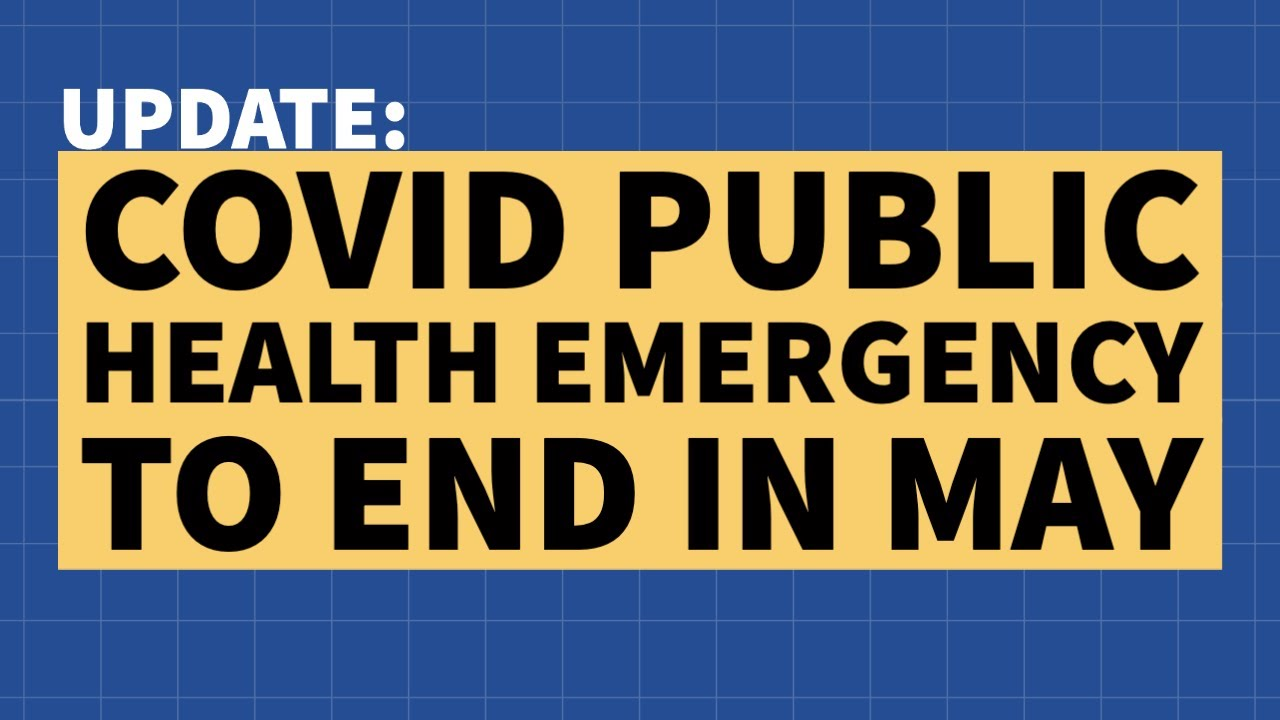
On the eve of a scheduled House vote on a bill that would immediately end the federal public health emergency (PHE), the Biden administration announced Monday that both the PHE and the COVID national emergency will end on May 11. With the Omnibus legislation passed at the end of December, Congress already decoupled several key provisions once tied to the PHE, including setting April 1st as the date on which states can resume Medicaid redeterminations, and extending key Medicare telehealth flexibilities.
However, once the PHE ends,various other provider flexibilities will expire: hospitals will no longer receive boosted Medicare payments for COVID admissions, and the cost of COVID tests, vaccines, and treatments will shift from the government to insurers and consumers.
The Gist: While previous Congressional action addressed some pressing provider concerns, the end of the PHE will still bring big changes.
The healthcare system will soon be responsible for covering, testing, and treating COVID like any other illness, even as the virus continues to take the lives of hundreds of Americans each day.
Many patients may soon find it difficult to access affordable COVID care, and many health systems will see an increase in uncompensated care, exacerbating current margin challenges. COVID remains an urgent public health concern in need of a coordinated strategy.
The national rate of uninsured people under the age of 65 fell from 11.1% in 2019 to 10.5% in 2021 as government policies aimed at increasing accessible coverage for those with lower incomes, according to an HHS report out last week.
The rate decline was highest among those who had incomes between 100% and 200% of the federal poverty level. Those in traditionally uncovered demographies, such as people who are Latino, American Indian/Alaska native and those who don’t speak English, saw larger gains in coverage.
Half of the top 10 states for coverage gains expanded Medicaid under the Affordable Care Act between 2019 and 2021. The leading state, Maine, reached a 7.1% uninsured population in 2021, dropping from 10.2% in 2019. Officials shifted to a state-based exchange for the 2022 plan year.
“Many of the areas with the greatest coverage gains since 2019 had higher than average uninsured rates in 2021, suggesting progress in narrowing geographic disparities but still with substantial gaps remaining; the lack of Medicaid expansion in 11 states plays a key ongoing role in coverage disparities across states,” the report authors wrote.
The state with the largest increase in uninsured people was Alabama, which reached 12.5% in 2021 compared to 12.1% in 2019.
In addition to Medicaid expansion, other policies that helped those receive coverage include increased premium tax subsidies under the American Rescue Plan.
Also helping is the Medicaid continuous coverage provision, which has barred states from kicking people off rolls during the COVID-19 public health emergency.
That policy is set to end in April, however. Researchers have said that as many as 15 million to 18 million people could be affected.
States are taking some steps to help those eligible remain in the program. Most states plan to update enrollee mailing addresses and follow up with those people when action is recovered to maintain coverage, according to a recent Kaiser Family Foundation report.
Forty-one states said it will take up to 12 months to process renewals, KFF said.
Over 1.8 million more people enrolled in marketplace coverage compared to last year — a 13% increase, and the most amount of plan selections of any year since the launch of the ACA marketplace a decade ago, according to the CMS. The record-breaking enrollment numbers include 3.6 million first-time marketplace enrollees.
Enrollment comes after last year’s passage of the Inflation Reduction Act extended ACA subsidies into 2025, protecting millions of Americans from premium hikes and reflecting a broader push in policy from the Biden administration aimed at increasing healthcare insurance coverage. This month, the HHS announced that thenational rate of uninsured people under the age of 65 fell from 11.1% in 2019 to 10.5% in 2021.
However, some coverage protections rely on the federal COVID-19 public health emergency status, which will expire without an extension in mid-April. Medicaid enrollment numbers are expected to drop at the end of the public health emergency, with as many as 18 million enrollees projected to lose Medicaid coverage, according to the Robert Wood Johnson Foundation.
In addition to a boost from subsidies, the CMS announced this month that it had quadrupled the number of navigators used to assist plan signups.








 HENRY KOTULA