United States is ‘out of the pandemic phase,’ Fauci says

https://www.yahoo.com/news/united-states-pandemic-phase-fauci-094908627.html

The United States is finally “out of the pandemic phase,” the country’s top infectious disease expert said, as cases and hospitalizations are notably down and mask mandates are all but extinct.

While there are still new infections spreading throughout the country – an average of 50,000 per day as of Tuesday – the country is far from the heights of the pandemic, when daily case counts surpassed 1 million. Restrictions, too, are easing as many Americans appear to be putting the pandemic behind them. Masking requirements have been lifted across most of the country, and officials stopped enforcing a federal mask mandate in transportation settings after a judge struck down the requirement.

“We are certainly right now in this country out of the pandemic phase,” Anthony Fauci, President Joe Biden’s chief medical adviser, said Tuesday evening on PBS’s “NewsHour.”

Fauci said the United States was no longer seeing “tens and tens and tens of thousands of hospitalizations and thousands of deaths. We are at a low level right now.”

During the pandemic’s darkest moments, many wondered when the country would officially declare itself past the nationwide disaster, which has killed nearly 1 million Americans.

Fauci’s comments are likely to fuel debate about whether this is truly the moment: New cases are on the rise in the United States, and deaths are down, though they often lag spikes in cases. The Centers for Disease Control and Prevention said Tuesday that as of the end of February, nearly 60 percent of Americans – including three out of every four children – have been infected with the coronavirus. But officials cautioned that the data did not indicate that Americans have widespread immunity against the virus because of their prior infections.

While previous infections are believed to offer some protection against serious disease for most people, health experts say the best protection against infection and serious disease or death from the coronavirus is vaccination.

The coronavirus will not be eradicated, Fauci said, but can be handled if its level of spread is kept “very low” and people are “intermittently” vaccinated, though he said he did not know how frequently. And Fauci echoed warnings from the World Health Organization and the United Nations this month that worldwide, the pandemic is far from over as vaccinations lag, particularly in developing nations.

The Biden administration, meanwhile, is appealing a ruling by a Trump-appointed federal judge that struck down the federal mask mandate on transit, including on planes, though it is unclear whether they will be successful, and likely face an American public that could be unwilling to comply again.

And in a less-than-subtle reminder that the coronavirus is still hanging around, the White House on Tuesday announced arguably the nation’s highest-profile coronavirus infection since former president Donald Trump, saying that Vice President Kamala Harris had tested positive and was asymptomatic. She was not considered in close contact to Biden, the White House said.

Coronavirus has infected majority of Americans

But officials caution that people should not presume they have protection against the virus going forward.

Before omicron, one-third of Americans had been infected with the coronavirus, but by the end of February, that rate had climbed to nearly 60 percent — including about 75 percent of kids and 60 percent of people age 18 to 49according to federal health data released Tuesday.

The data from blood tests offers the first evidence that over half the U.S. population, or 189 million people have been infected at least once since the pandemic began — double the number reflected in official case counts. Officials cautioned, however, that the data, in a report from the Centers for Disease Control and Prevention, does not indicate people have protection against the virus going forward, especially against increasingly transmissible variants.

“We continue to recommend that everyone be up to date on their vaccinations, get your primary series and booster, when eligible,” CDC Director Rochelle Walensky said during a media briefing.

Kristie Clarke, the CDC official who authored the report, said by February, “evidence of previous COVID-19 infections substantially increased among every age group, likely reflecting the increase in cases we noted as omicron surged in this country.”

Clarke said the greatest increases took place in those with the lowest levels of vaccination, noting that older adults were more likely to be fully vaccinated.

The largest increases were in children and teenagers through age 17 — about 75 percent of them had been infected by February, based on blood samples that look at antibodies developed in response to a coronavirus infection but not in response to vaccination. That’s about 58 million children.

The blood test data suggests 189 million Americans had covid-19 by end of February, well over double the 80 million cases shown by The Washington Post case tracker, which is based on state data of confirmed infections. Clarke said that’s because the blood tests captures asymptomatic cases and others that were never confirmed on coronavirus tests.

With the omicron surge, officials had expected there would be more infections. “But I didn’t expect the increase to be quite this much,” Clarke added.

Separately, CDC is about to publish another study that estimates three infections for every reported case, she said.

Omicron subvariant BA.2 now dominant strain in the US: CDC

https://thehill.com/policy/healthcare/600172-omicron-subvariant-ba2-now-dominant-strain-in-the-us-cdc/?utm_source=Sailthru&utm_medium=email&utm_campaign=03.29.22%20JB%20Health%20Care&utm_term=Health%20Care

A subvariant of omicron known as BA.2 is now the dominant strain in the United States, according to new data from the Centers for Disease Control and Prevention (CDC).  

The variant has been steadily rising in proportion because of its increased transmissibility compared to the original omicron strain, and it represented 54.9 percent of new cases for the week ending March 26, according to CDC data. That is up from about 27 percent two weeks earlier.  

The BA.2 subvariant is thought to be about 30 percent more transmissible than the original BA.1 omicron strain, which itself was already more contagious than earlier versions of the virus.

Importantly, though, experts say there is no evidence that BA.2 causes more severe disease than the original omicron strain or that it evades the protection from vaccines to a greater degree.

The subvariant may cause some increase in cases after weeks of steady declines that have led to a relative lull in the virus. But it is unclear how sharp the increase will be, and people who are vaccinated and boosted are still well-protected against severe disease.  

The Food and Drug Administration on Tuesday authorized a fourth COVID-19 vaccine shot for people 50 and older, which could further help protect the most vulnerable from the subvariant.  

“CDC says the BA.2 subvariant of Omicron is now dominant in the US,” tweeted Leana Wen, a public health professor at George Washington University. “Reminder that while this appears to be even more contagious than the original Omicron, it is not more virulent than previous strains, and existing vaccines still protect well against severe disease.” 

CDC Director Rochelle Walensky said last week that her agency was monitoring the subvariant, particularly in the Northeast, where it has been concentrated so far.  

“Over the past week, we have seen a small increase in reported COVID-19 cases in New York state and New York City, and some increases in people in the hospital with COVID-19 in New England, specifically where the BA.2 variant has been reaching levels above 50 percent,” she said. 

“This small increase in cases in the Northeast is something that we are closely watching as we look for any indication of an increase in severe disease from COVID-19 and track whether it represents any strain on our hospitals. We have not yet seen this so far.” 

Failing to fund the U.S. covid response bodes trouble for the entire world

Atul Gawande leads global health and is co-chair of the Covid-19 Task Force at the U.S. Agency for International Development.

Nearly a year ago, President Biden announced that the United States would be the “arsenal of vaccines for the world,” just as America served as an arsenal for democracies during World War II. With the president’s leadership and the consistent bipartisan support of Congress, the United States has delivered more than half a billion coronavirus vaccines to 114 lower-income countries free of charge, a historic accomplishment. This example spurred contributions from other wealthy nations and contributed to vaccination of almost 60 percent of the world.

But the global battle against covid-19 is not done. Instead, the challenge has changed. The lowest-income countries, where vaccinations have reached less than 15 percent of people, are now declining free vaccine supply because they don’t have the capacity to get shots in arms fast enough.

We must therefore not just provide an arsenal; to protect our allies against future variants, we must also provide the support they need to ramp up their vaccination campaigns. That effort requires money, and despite generously funding our covid-19 response up to this point, Congress is now failing to provide the resources we need.

I am writing to say: This bodes serious trouble for the world.

Despite a period of relative calm here at home, we’re again seeing cases and hospitalizations spike in Europe and Asia, even in places with higher levels of vaccination than the United States. These surges are due to the more-transmissible BA.2 subvariant of the already highly infectious omicron strain. Without additional funding, we risk not having the tools we need — vaccines, treatments, tests, masks and more — to manage future surges at home. And no less troubling, if we don’t close the vaccine gap between richer and poorer countries, we will give the virus more chances to mutate into a new variant.

Since the virus first emerged, the package of tools we’ve developed to fight it has proved resilient against all coronavirus variants. But there’s no guarantee that will remain true. A new variant that evades our defenses might once again fuel new surges of severe illness and batter the global economy. Helping all countries protect their populations by supercharging vaccination campaigns is our best hope to prevent future strains from emerging and ending this pandemic once and for all.

Turning vaccines into actual vaccinations has been difficult even in wealthy countries, where capable health systems, state-of-the-art cold chains and public awareness campaigns mean that anyone who wants a vaccine can get one. In countries without strong health infrastructure — without enough freezers and refrigerated trucks to keep vaccines from spoiling or enough health-care workers to reach rural populations living miles from the nearest health facility — it’s much tougher. We’ve also seen the same vaccine myths and disinformation that swirl through our media ecosystem spread just as rapidly through social media and hurt public trust abroad.

But we’ve also learned how to successfully tackle these challenges. In December, the Biden administration launched an initiative called Global VAX to help low-income countries train health workers, strengthen health infrastructure and raise vaccine access and awareness. While vaccine coverage in those countries remains far below the global average, the rapid progress we’ve supported in places such as Ivory Coast, Uganda and Zambia show what is possible when governments that are committed to fighting covid-19 have the global support they need.

Without more funding, we would have to halt our plans to expand the Global VAX initiative. The United States would have to turn its back on countries that need urgent help to boost their vaccination rates. And many countries that finally have the vaccines they need to protect their populations would risk seeing them spoil on the tarmac.

We can’t let this happen. It not only endangers people abroad but also risks the health and prosperity of all Americans. The virus is not waiting on Congress to negotiate; it is infecting people and mutating as we speak.

Over the past two years, both parties in Congress have repeatedly stepped up to fight covid-19 in an inspiring show of bipartisan unity. Now, we need our leaders to come together once more. With an effective strategy in place and the tools to transform covid-19 from a killer pandemic to a manageable respiratory disease, the United States has the expertise and capabilities the world needs to win the fight against this virus. We need Congress to let us take the fight to the front lines.

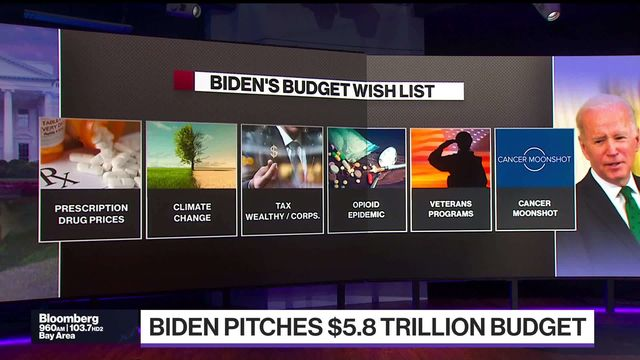
Biden’s $5.8 trillion budget: 9 healthcare takeaways

President Joe Biden proposed a $5.8 trillion budget March 28 for fiscal year 2023, which includes funding for healthcare. 

Nine healthcare takeaways:

1. Pandemic preparedness. The budget calls for a five-year investment of $81.7 billion to plan ahead for future pandemics. The funding would help support research and development of vaccines, improve clinical trial infrastructure and expand domestic manufacturing. 

2. Mental health parity. Under the proposed budget, federal regulators would get the power to levy fines against health plans that violate mental health parity rules. The budget calls for $275 million over 10 years to increase the Labor Department’s capacity to ensure health plans are complying with the requirements and take action against those plans that do not. The budget also proposes funding to bolster the mental healthcare workforce and boost funding for suicide prevention programs. 

3. Vaccines for uninsured adults. The proposed budget calls for establishing a new Vaccines for Adults program that would provide uninsured adults access to recommended vaccines at no cost.

4. Title X funding. The budget proposes providing $400 million in funding for the Title X Family Planning Program, which provides family planning and other healthcare services to low-income individuals.

5. Cancer Moonshot initiative. The budget proposes several investments across the FDA, CDC, National Cancer Institute and Advanced Research Projects Agency for Health to advance President Biden’s Cancer Moonshot initiative. The initiative aims to reduce the cancer death rate by 50 percent over the next 25 years. 

6. Spending to reduce HIV. The proposed budget includes $850 million to reduce new HIV cases by increasing access to HIV prevention services and support services.

7. Veterans Affairs medical care. President Biden’s proposed budget allocates $119 billion, or a 32 percent increase, to medical care for veterans. The money will fully fund inpatient, outpatient, mental health and long-term care services, while also investing in training programs for clinicians to work in the VA.

8. Discretionary funding for HHS. President Biden is asking Congress to approve $127.3 billion in discretionary funding for HHS in fiscal 2023, representing a $26.9 billion increase from the department’s allotment for fiscal 2021.

9. Mandatory spending for the Indian Health Service. The budget request for the Indian Health Service calls for shifting the healthcare agency from discretionary to mandatory funding. The budget calls for $9.1 billion in funding, a 20 percent increase from the amount allocated in fiscal 2021.

Cartoon – Betting on Management

How do you convince a skeptical public to get a fourth shot?

The expected green light for a second coronavirus booster shot poses a challenge to the Biden administration, which will need to work overtime to convince a public that has largely decided to move on from the COVID-19 pandemic.

Both Pfizer and Moderna have filed for emergency use authorization with the Food and Drug Administration for a fourth dose of their respective vaccines, citing evidence that protection from the third shot has decreased enough to warrant a fourth dose.

Yet the nation’s vaccination and booster rates have dropped to record lows, just as experts and officials are bracing for the possibility of another wave of infections from the BA.2 subvariant of omicron.

The BA.2 version of omicron is much more transmissible than the original variant. Combined with relaxed precautions like indoor masking and waning immunity among those who have not received a vaccine booster, cases have risen sharply in Europe in the past few weeks, and the U.S. could follow shortly. 

The omicron subvariant is responsible for about 35 percent of all cases in the country. In some regions though, like the northeast, it is responsible for the majority of infections.

Federal health officials are reportedly poised to authorize a fourth dose of coronavirus vaccine for adults age 50 and older as soon as this week. A fourth shot is already authorized for the immunocompromised.

But the issues that plagued the administration during the first booster campaign loom large, and officials are likely eager to avoid the same pitfalls. 

Chaotic and at times disparate messages from administration health officials culminated in a complicated set of recommendations about who should be getting booster shots, and why, which experts said helped depress enthusiasm. 

“I think that some of the low uptake of boosters, especially amongst people who would benefit, the high risk population, is because that message has been diluted,” said Amesh Adalja, a senior scholar at the Johns Hopkins Center for Health Security.

But the underlying disagreement about the goal of booster shots has not changed. While there’s widespread agreement that older Americans are much more at risk for severe outcomes, it’s still not clear if younger people will benefit from an additional dose. 

Much of the debate has centered on whether the goal is to prevent people from being hospitalized with COVID-19 or whether the goal is to prevent them from getting sick at all, even if it is milder. 

Anthony Fauci, White House chief medical advisor and the nation’s top infectious disease doctor, said regulators are trying to determine how low protection against hospitalization needs to drop before a booster is warranted.

“So the real open question that we don’t know definitively the answer to, is how long is the durability of protection against severe disease going to last even when the protection against infection diminishes substantially,” Fauci said during a Washington Post event last week. 

“For example, we know that when you get down to a rather low level 30, 40 or so percent of protection against infection, you still have, when you look at hospitalization, a high degree [of protection],” Fauci said.

President Biden last summer promised widespread boosters for all Americans by the end of September, well before the FDA and the Centers for Disease Control and Prevention (CDC) had examined the evidence. 

While officials were careful to say the booster program was contingent on the FDA and CDC giving the green light, scientists inside and outside the government argued there wasn’t enough evidence showing protection against severe illness and hospitalization dropped to levels that warranted a booster.

The CDC initially decided against recommending broad authorization, and instead recommended a booster shot for people over the age of 65, as well as anyone who was at “high risk” of exposure to the virus in the workplace. 

The agency eventually decided to make everyone eligible, but by then much of the damage had been done. Vaccinated Americans have largely shown they are not interested in getting a booster.

According to current CDC data, less than 45 percent of all adults have received a booster shot, but the number rises to about 67 percent of adults age 65 and older. 

Adalja said it makes sense to be proactive and have a plan to get additional booster shots to the older group. But he said the decisions should be left to the scientists, and the health agencies should make decisions independent of the White House. 

Keep the politicians out of it,” Adalja said. “The miscommunications occurred because they made boosters a political issue, not a scientific issue.”

But even if there is a targeted recommendation, a stalled funding request in Congress further complicates matters. The U.S government does not have enough doses on hand to vaccinate everyone who would be eligible for another booster.

The White House says it needs tens of billions of dollars in COVID response funding, which is tied up due to political disagreements. Administration officials say they don’t have enough doses on hand to cover anyone other than the immunocompromised and people aged 65 and older.

But an independent analysis from the Kaiser Family Foundation found the government only has enough vaccine supplies to cover 70 percent of the 65 and older group. 

Coronavirus Updates

As parents await an approved vaccine for children under 5, Moderna said on Wednesday a study had found its two-dose pediatric vaccine to be safe for young children, toddlers and babies. Its effectiveness, however, was complicated by the spread of the coronavirus’s omicron variant. While the pediatric vaccine generated an immune response equivalent to that of young adults before the highly transmissible variant emerged, those immune defenses were less strong in the face of omicron. In children, the pediatric vaccine was about 40 percent effective, Moderna said. The company plans to submit the data to the Food and Drug Administration for consideration in the coming weeks. 

The FDA also faces requests to authorize a second booster vaccine dose for adults. But even if they are authorized, Biden administration officials said they lack the funds to purchase those shots. They said they’ve bought enough doses for Americans age 65 and older, as well as the potential initial regimen for children under 5, but can’t buy more doses for people in other age groups unless Congress passes a delayed $15 billion funding package. It’s not yet clear whether additional doses for adults will be necessary, but officials said placing orders for doses ahead of time has been an important lesson of the pandemic. White House officials have expressed worry that vaccine manufacturers will prioritize orders placed by other countries.

That concern comes as omicron’s BA.2 subvariant of the coronavirus now amounts to as much as 70 percent of new infections in much of the United States, according to the genomic surveillance company Helix. That version of the virus has prompted a surge of cases in Europe and fear that the United States will experience its own wave, similarly to how it has mirrored Europe in the past. A broad increase in cases has so far not happened in the United States, and disease experts don’t know for sure whether it will. If it does, it’s unclear whether the pandemic policies of the Biden administration and private institutions would substantially change. 

A program to ensure global vaccine equity was doomed from the beginning to fall short, a Washington Post analysis found. The initiative, called Covax, was meant to convince wealthy and poor countries to combine their money to order vaccine doses in advance and then share them in a way that would protect the most vulnerable people first. But the program’s supporters underestimated the desperation of the wealthier countries, which snatched up doses from manufacturers for their own residents. Covax was also slow to adapt as nations declined to participate. Now, more than one-third of the world has not received a vaccine dose — a result that not only is inequitable, but also makes it easier for new variants to emerge.

In a study published Monday, people who had covid-19 had a 46 percent higher risk of developing Type 2 diabetes or being prescribed medication to control their blood sugar within a year than those who had not had the coronavirus. Greater severity of covid symptoms was associated with a higher chance of developing diabetes, but even people with less severe or asymptomatic infection had an increased risk, according to the study of more than 181,000 Department of Veterans Affairs patients. The study did not prove cause and effect but did show a strong association between covid-19 and diabetes. 

Other important news

Omicron’s BA.2 subvariant has become the world’s dominant form of the coronavirus. The Post created a map and several charts to help you visualize how it’s spreading around the world. 

White House press secretary Jen Psaki said Tuesday that she had tested positive for the coronavirus a second time. She had been scheduled to travel to Europe with President Biden and other administration officials, but canceled her trip.

What is the new COVID-19 variant BA.2, and will it cause another wave of infections in the US?

A new omicron subvariant of the virus that causes COVID-19, BA.2, is quickly becoming the predominant source of infections amid rising cases around the world. Immunologists Prakash Nagarkatti and Mitzi Nagarkatti of the University of South Carolina explain what makes it different from previous variants, whether there will be another surge in the U.S. and how best to protect yourself.

What is BA.2, and how is it related to omicron?

BA.2 is the latest subvariant of omicron, the dominant strain of the SARS-CoV-2 virus that causes COVID-19. While the origin of BA.2 is still unclear, it has quickly become the dominant strain in many countries, including India, Denmark and South Africa. It is continuing to spread in Europe, Asia and many parts of the world.

The omicron variant, officially known as B.1.1.529, of SARS-CoV-2 has three main subvariants in its lineage: BA.1, BA.2 and BA.3. The earliest omicron subvariant to be detected, BA.1, was first reported in November 2021 in South Africa. While scientists believe that all the subvariants may have emerged around the same time, BA.1 was predominantly responsible for the winter surge of infections in the Northern Hemisphere in 2021.

The first omicron subvariant, BA.1, is unique in the number of alterations it has compared to the original version of the virus – it has over 30 mutations in the spike protein that helps it enter cells. Spike protein mutations are of high concern to scientists and public health officials because they affect how infectious a particular variant is and whether it is able to escape the protective antibodies that the body produces after vaccination or a prior COVID-19 infection.

BA.2 has eight unique mutations not found in BA.1, and lacks 13 mutations that BA.1 does have. BA.2 does, however, share around 30 mutations with BA.1. Because of its relative genetic similarity, it is considered a subvariant of omicron as opposed to a completely new variant.

Why is it called a ‘stealth’ variant?

Some scientists have called BA.2 a “stealth” variant because, unlike the BA.1 variant, it lacks a particular genetic signature that distinguishes it from the delta variant.

While standard PCR tests are still able to detect the BA.2 variant, they might not be able to tell it apart from the delta variant.

Is it more infectious and lethal than other variants?

BA.2 is considered to be more transmissible but not more virulant than BA.1. This means that while BA.2 can spread faster than BA.1, it might not make people sicker.

It is worth noting that while BA.1 has dominated case numbers around the world, it causes less severe disease compared to the delta variant. Recent studies from the U.K. and Denmark suggest that BA.2 may pose a similar risk of hospitalization as BA.1.

Does previous infection with BA.1 provide protection against BA.2?

Yes! A recent study suggested that people previously infected with the original BA.1 subvariant have robust protection against BA.2.

Because BA.1 caused widespread infections across the world, it is likely that a significant percentage of the population has protective immunity against BA.2. This is why some scientists predict that BA.2 will be less likely to cause another major wave

However, while the natural immunity gained after COVID-19 infection may provide strong protection against reinfection from earlier variants, it weakens against omicron.

How effective are vaccines against BA.2?

recent preliminary study that has not yet been peer reviewed of over 1 million individuals in Qatar suggests that two doses of either the Pfizer–BioNTech or Moderna COVID-19 vaccines protect against symptomatic infection from BA.1 and BA.2 for several months before waning to around 10%. A booster shot, however, was able to elevate protection again close to original levels.

Importantly, both vaccines were 70% to 80% effective at preventing hospitalization or death, and this effectiveness increased to over 90% after a booster dose.

How worried does the US need to be about BA.2?

The rise in BA.2 in certain parts of the world is most likely due to a combination of its higher transmissibility, people’s waning immunity and relaxation of COVID-19 restrictions.

CDC data suggests that BA.2 cases are rising steadily, making up 23% of all cases in the U.S. as of early March. Scientists are still debating whether BA.2 will cause another surge in the U.S.

Though there may be an uptick of BA.2 infections in the coming months, protective immunity from vaccination or previous infection provides defense against severe disease. This may make it less likely that BA.2 will cause a significant increase in hospitalization and deaths. The U.S., however, lags behind other countries when it comes to vaccination, and falls even further behind on boosters.

Whether there will be another devastating surge depends on how many people are vaccinated or have been previously infected with BA.1. It’s safer to generate immunity from a vaccine, however, than from getting an infection. Getting vaccinated and boosted and taking precautions like wearing an N95 mask and social distancing are the best ways to protect yourself from BA.2 and other variants.

Fauci says COVID-19 cases will likely increase soon, though not necessarily hospitalizations

https://www.yahoo.com/gma/fauci-says-covid-19-cases-100200293.html

Over the next few weeks, the U.S. should expect an increase in cases from the BA.2 variant, Dr. Anthony Fauci told ABC News, but it may not lead to as severe a surge in hospitalizations or deaths.

“I would not be surprised if in the next few weeks we see somewhat of either a flattening of our diminution or maybe even an increase,” Fauci told ABC News’ Brad Mielke on the podcast “Start Here.”

His prediction is based on conversations with colleagues in the U.K., which is currently seeing a “blip” in cases, Fauci said. The pandemic trajectory in the U.S. has often followed the U.K. by about three weeks.

However, he added, “Their intensive care bed usage is not going up, which means they’re not seeing a blip up of severe disease.”

The BA.2 variant, a more transmissible strain of omicron, now represents around 23% of all cases in the U.S., according to the latest data from the Centers for Disease Control and Prevention.

And while Fauci predicted that the BA.2 variant will eventually overtake omicron as the most dominant variant, it’s not yet clear how much of a problem that will be.

“Whether or not that is going to lead to another surge, a mini surge or maybe even a moderate surge, is very unclear because there are a lot of other things that are going on right now,” Fauci said.

Similar to the U.K., much of the U.S. has recently relaxed mitigation efforts like mask mandates and requirements for proof of vaccination. At the same time, people who were vaccinated over six months ago and still haven’t gotten a booster shot, which is about half of vaccinated Americans, according to the CDC, are facing continuously waning immunity.

It’s also not yet clear how long immunity from prior infection will last, Fauci said.

Taken together, it’s why Fauci and other experts, including CDC Director Rochelle Walensky, have increasingly predicted that elderly people will need a second booster shot soon. The Food and Drug Administration began reviewing data from Pfizer on the safety and efficacy this week, and its advisory panel will debate if and when the additional booster shot is necessary in the coming weeks.

At the same time, Fauci urged Americans who haven’t yet gotten their first booster, which would be their third shot in a Pfizer or Moderna series, to do so.

A resurgence of cases could also mean Americans are asked to wear masks again, which Fauci predicted would be an uphill battle.

“From what I know about human nature, which I think is pretty much a lot, people are kind of done with COVID,” Fauci said.

Still, he defended the CDC decision to loosen its mask recommendations earlier this month by shifting to a strategy that focused more on severe outcomes, like hospitalizations and deaths, rather than on daily case spread.

“You can go ahead and continue to tiptoe towards normality, which is what we’re doing, but at the same time, be aware that you may have to reverse,” Fauci said.

And if the U.S. does continue to make its way back toward normal times, Fauci himself has a personal choice to consider. At 81 years old, the director of the National Institute of Allergy and Infectious Diseases is “certainly” thinking about retirement.

“I have said that I would stay in what I’m doing until we get out of the pandemic phase and I think we might be there already, if we can stay in this,” Fauci said, referring to the falling cases and hospitalizations in the U.S.

“I can’t stay at this job forever. Unless my staff is gonna find me slumped over my desk one day. I’d rather not do that,” he said, laughing.

While he doesn’t currently have retirement plans, the recent hire of Dr. Ashish Jha, dean of the Brown University School of Public Health, to be White House coronavirus coordinator, could alleviate some of his pandemic response duties and give him a window.

But Fauci, who has dedicated his career to public health, primarily studying HIV and AIDS, and worked under seven U.S. presidents, said he doesn’t have any particular hobbies waiting for him in retirement.

“I, unfortunately, am somewhat of a unidimensional physician, scientist, public health person. When I do decide I’m going to step down, whenever that is, I’m going to have to figure out what it is I’m going to do,” he said.

“I’d love to spend more time with my wife and family. That would really be good.”