COVID-19 Is Still Devastating the World—Especially India

The pandemic won’t end for anyone until it ends for everyone. That sentiment has been repeated so many times, by so many people, it’s easy to forget it’s not just a cliche—particularly if you live in one of the wealthy countries, like the U.S. and Israel, that has made significant moves toward what feels like an end to the COVID-19 era.

Israel, for example, has fully vaccinated more than half of its population and about 90% of its adults 50 and older are now immune to the virus—enough that the country is “busting loose” and “partying like it’s 2019,” as the Washington Post put it last week. The U.S. is a bit further behind, with nearly 30% of its population fully vaccinated, but the possibility of a post-pandemic reality is already coming into focus. While daily case counts remain high, they are far lower than they were even a few months ago—about 32,000 diagnoses were reported on April 25, compared to daily tallies well above 250,000 in January. Deaths have also trended downward for most of 2021. The U.S. Centers for Disease Control and Prevention has relaxed its guidance on travel and indoor gatherings, and some states have repealed mask mandates and other disease precautions.

But while people in certain affluent countries celebrate a return to vacations and parties, COVID-19 remains a dire threat in many nations around the world—nowhere more so than India. For five days in a row, the country has set and reset the global record for new cases in a single day, tallying about 353,000 on April 26.

By official counts, about 2,000 people in India are dying from COVID-19 every day as hospitals grow overtaxed and oxygen supplies run short. Experts say the true toll is likely even higher than that. People are dying as they desperately seek treatment, and crematoriums nationwide are overwhelmed.

It can be difficult to grapple with that devastating reality when people in countries like the U.S. are reuniting with loved ones and cautiously emerging from lockdown. How can both scenarios be happening at once? The answer, as it often has during the pandemic, lies in disparity. As of April 26, 83% of vaccinations worldwide had been given in high- and upper-middle-income countries, according to a New York Times data analysis. In the developing world, many countries are preparing for the reality that it could take until 2022 or even 2023 to reach vaccination levels already achieved by richer countries today. Even in India, one of the world’s leading vaccine manufacturers, fewer than 10% of people have gotten a vaccine—a cruel irony, as people in India die in the streets while those thousands of miles away celebrate receiving their second doses.

To truly defeat COVID-19, we must reckon with that cognitive dissonance, says Dr. Rahel Nardos, who is originally from Ethiopia and now works in the University of Minnesota’s Center for Global Health and Social Responsibility. As an immigrant and global health physician who lives in the U.S., Nardos says she inhabits two worlds: one in which the U.S. may feasibly vaccinate at least 70% of its population this year, and another in which many countries struggle to inoculate even 20% of their residents in the same time frame.

“It’s a huge disparity,” Nardos says. “We need to get out of our silos and start talking to each other and hearing each other.”

That’s imperative, first and foremost because it could save lives. More than 13,000 people around the world died from COVID-19 on April 24. Remaining vigilant about disease prevention and monitoring, and working to distribute vaccines in countries that desperately need them to fight back COVID-19 surges, could help prevent more deaths in the future. That’s especially critical for developing countries, many of which are so overwhelmed by COVID-19 that nearly all other aspects of health care have suffered. “We may be looking at five, 10 years before they can get back to their baseline, which wasn’t that great to begin with,” Nardos says.

There’s also a global health argument for distributing vaccines more equitably. Infectious diseases do not respect borders. If even one country remains vulnerable to COVID-19, that could allow the virus to keep spreading and mutating, potentially evolving to such a point that it could infect people who are vaccinated against original strains of the disease. Already, vaccine makers are exploring the possibility of booster shots to add extra protection against the more transmissible variants currently circulating in various parts of the world.

We aren’t at that point yet; currently authorized vaccines appear to hold up well against these variants. But if the virus keeps spreading for years in some areas, there’s no telling what will happen, says Jonna Mazet, an epidemiologist and emerging infectious disease expert at the University of California, Davis.

Evolution of those new strains could go into multiple directions. They may evolve to cause more severe or less severe disease. Some of the variants [could be] more concerning for young people,” Mazet says. “The whole dynamics of the disease change.”

And if the virus is mutating somewhere, chances are good it will eventually keep spreading in multiple areas, Mazet says. “Unless or until we have a major shift, we are still going to have large parts of every country that have a susceptible population,” she says. “The virus is going to find a way.”

The only way to stop a virus from mutating is to stop giving it new hosts, and vaccines help provide that protection. COVAX—a joint initiative of the World Health Organization; Gavi, the Vaccine Alliance; the Coalition for Epidemic Preparedness Innovations; and UNICEF—was meant to ensure that people in low-income countries could get vaccinated at the same time as people in wealthier ones. COVAX is providing free vaccines to middle- and low-income countries, using funds gained through purchase agreements and donations from richer countries. But supply and funding shortages have made it difficult for the initiative to distribute vaccines as quickly as it intended to. Many of the doses it planned to disseminate were supposed to have come from the Serum Institute of India, which delayed exporting doses in March and April as India focused on domestic vaccine rollout to combat its COVID-19 surge at home.

In the meanwhile, many poorer countries have been unable to vaccinate anywhere close to as many people as would be required to reach herd immunity. That will almost surely improve as new vaccines are authorized for use by regulators around the world, and as manufacturers scale up production, but those moves may be months away.

COVAX is also developing a mechanism through which developed countries could donate vaccine doses they don’t need. Some wealthy countries, including the U.S. and Canada, have contracts to purchase more than enough doses to vaccinate their entire populations, and have signaled their intent to eventually donate unneeded supplies—but timing is everything. That is, these countries will likely only donate once they are sure their own populations have been vaccinated at a level that ensures herd immunity.

On April 25, the Biden Administration said the U.S. would provide India with raw supplies for making AstraZeneca’s vaccine, as well as COVID-19 tests and treatments, ventilators, personal protective equipment, and funding. That’s a significant shift, since the export of raw vaccine materials was previously banned, but it still doesn’t provide India with ready-to-go vaccines. That step may be next, though. The U.S. will export as many as 60 million doses of AstraZeneca’s vaccine once the shot clears federal safety reviews, the Associated Press reports.

Gian Gandhi, UNICEF’s COVAX coordinator for supply, says he fears many wealthy countries’ vaccine donations may not come until late in 2021, just when global supply is expected to ramp up. That may cause a bottleneck effect: all doses may come in at once, rather than at a slow-but-steady pace that allows countries with smaller health care networks to distribute them. “We need doses now, when we’re not able to access them via other means,” Gandhi says.

The global situation is also critical now. Worldwide, more than 5.2 million cases and 83,000 deaths were reported during the week leading up to April 18. Indian hospitals are so overrun, crowds have formed outside their doors and desperate families are trying to source their own oxygen. Hospitals in Brazil are reportedly running out of sedatives. Iran last week broke daily case count records three days in a row. Countries across Europe remain under various forms of lockdown. Vaccines won’t change those realities immediately—but without them, the global community stands little chance of containing COVID-19 worldwide.

Europe to set a vaccine passport standard

Vaccine passports may dictate future of stepping out - The Economic Times

Europe seems poised to set the global standard for vaccine passports, now that European Commission President Ursula von der Leyen has signaled that vaccinated Americans will be allowed to travel to the continent this summer.

Why it matters: Opening up travel to vaccinated Americans will bring new urgency to creating some kind of trusted means for people to prove they’ve been vaccinated, Axios’ Felix Salmon reports.

The big picture: There will probably never be a single credential that most people use to prove they’ve been vaccinated, for every purpose.

  • But the EU’s system will help set a standard for a proof of vaccination that’s both easily accessible and difficult to forge.
  • The U.S. is being closely consulted on the European passport, so any future American system will likely use similar protocols.

Details: Informal mechanisms like simply asking someone whether they’re had a shot can suffice in many situations. A system for international travel will likely be far more stringent. And there’s a wide middle, too.

  • Other activities that don’t need the same rigorous standards as international travel could rely on the CDC’s vaccination cards; options like a printed QR code, similar to what’s been proposed by PathCheck; or a digital QR code, like the ones created by CommonPass or the Vaccine Credential Initiative.

The bottom line: The world of vaccine passports is almost certainly going to end up as a mishmash of different credentials for different activities, rather than a single credential used by everybody for everything.

Cartoon – Preventable Diseases

Sack cartoon: Vaccinations | Star Tribune

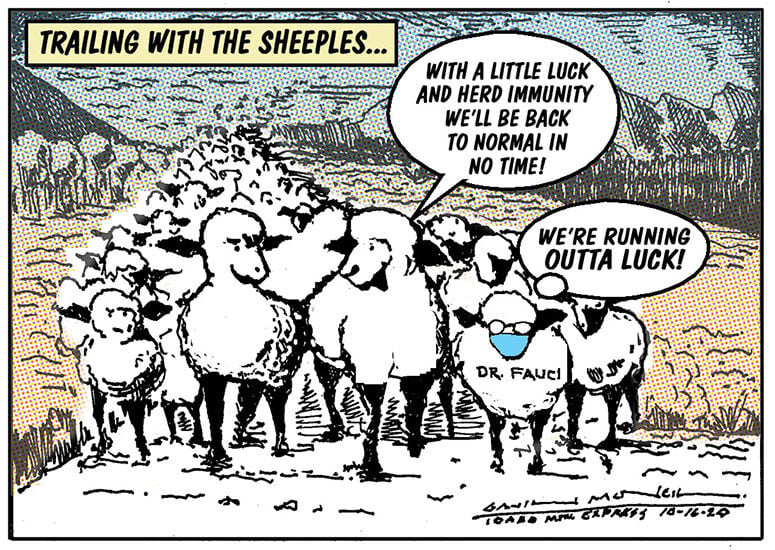
Cartoon – Trailing with the Sheeples

Herd Immunity | Cartoon | mtexpress.com

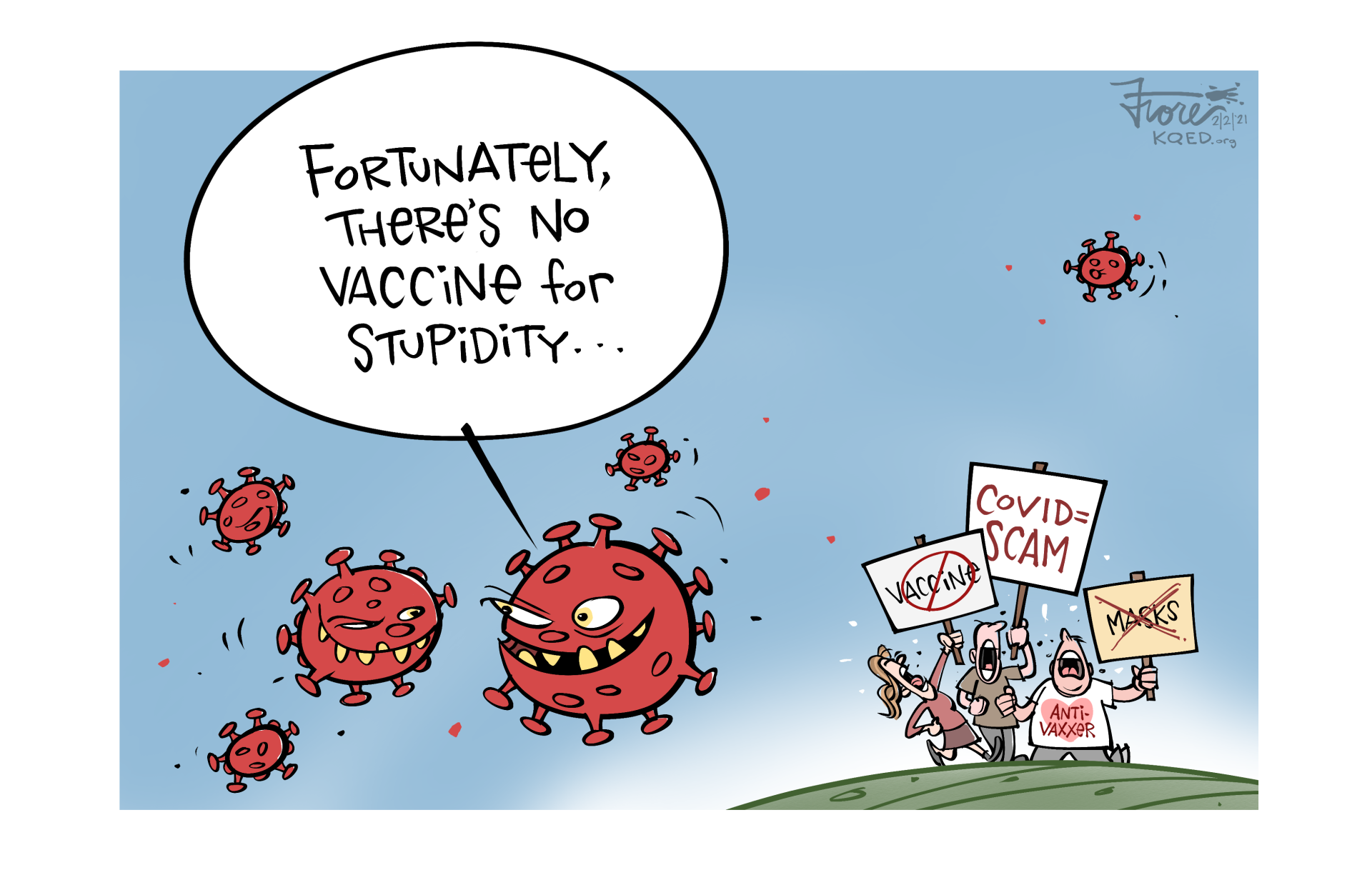
Cartoon – No Vaccine for Stupidity

Anti-Vaxxers vs. Reality | KQED

Turning to primary care for vaccine distribution

https://mailchi.mp/da8db2c9bc41/the-weekly-gist-april-23-2021?e=d1e747d2d8

U.S. Starts Vaccine Rollout as High-Risk Health Care Workers Go First - The  New York Times

Now that we’ve entered a new phase of the vaccine rollout, with supply beginning to outstrip demand and all adults eligible to get vaccinated, we’re hearing from a number of health systems that their strategy is shifting from a centralized, scheduled approach to a more distributed, access-driven model. They’re recognizing that, in order to get the vaccine to harder-to-reach populations, and to convince reticent individuals to get vaccinated, they’ll need to lean more heavily on walk-in clinics, community settings, and yes—primary care physicians.

For some time, the primary care community has been complaining they’ve been overlooked in the national vaccination strategy, with health systems, pharmacy chains, and mass vaccination sites getting the lion’s share of doses. But now that we’re moving beyond the “if you build it, they will come” phase, and into the “please come get a shot” phase, we’ll need to lean much more heavily on primary care doctors, and the trusted relationships they have with their patients.

As one chief clinical officer told us this week, that means not just solving the logistical challenges of distributing vaccines to physician offices (which would be greatly aided by single-dose vials of vaccine, among other things), but planning for patient outreach. Simply advertising vaccine availability won’t suffice—now the playbook will have to include reaching out to patients to encourage them to sign up.

There will be workflow challenges as well, particularly while we await those single-dose shots—primary care clinics will likely need to schedule blocks of appointments, setting aside specific times of day or days of the week for vaccinations. The more distributed the vaccine rollout, the more operationally complex it will become. Health systems won’t be able to “get out of the vaccine business”, as one health system executive told us, because many have spent the past decade or more buying up primary care practices and rolling out urgent care locations. Now those assets must be enlisted in the service of vaccination rollout.

Health systems will have to orchestrate a “pull” strategy for vaccines, rather than the vaccination “push” they’ve been conducting for the past several months. To put it in military terms, the vaccination “air war” is over—now it’s time for what’s likely to be a protracted and difficult “ground campaign”.
 

Entering a new phase of the vaccine rollout

https://mailchi.mp/da8db2c9bc41/the-weekly-gist-april-23-2021?e=d1e747d2d8

Why some Americans are hesitant to receive the COVID-19 vaccine - Vital  Record

With more than 222M Americans having received at least one dose of COVID vaccine, and 27.5 percent of the population now fully vaccinated, we are now nearing a point at which vaccine supply will exceed demand, signaling a new phase of the rollout.

This week, for the first time since February, the daily rate of vaccinations slowed substantially, down about 11 percent from last week on a seven-day rolling average. Several states and counties are dialing back requests for new vaccine shipments, and the New York Times reported that some local health departments are beginning to shutter mass vaccination sites as appointment slots go unfilled.

On Friday, the White House’s COVID response coordinator, Jeff Zients, said that the Biden administration now expects “daily vaccination rates will fluctuate and moderate,” after several weeks of accelerating pace. In every state, everyone over the age of 16 is now eligible to be vaccinated, but experts expect that demand from the “vaccine-eager” population will run out over the next two weeksnecessitating a more aggressive campaign to distribute vaccines in hard-to-reach populations, and to convince vaccine skeptics to get the shot.

Vaccine hesitancy, like so many other issues related to the COVID pandemic, has now become starkly politicized—one recent survey found that 43 percent of Republicans “likely will never get” the vaccine, as opposed to only 5 percent of Democrats. Another 12 percent of those surveyed, regardless of party identification, say they plan to “see how it goes” before getting the vaccine, a subset that will surely be unnerved by continued doubts about the safety of the Johnson & Johnson (J&J) vaccine.

An expert advisory panel on Friday recommended that use of the J&J shot be resumed, but advised that a warning be included about potential risk of rare blood clots in women under 50. The first three months of the COVID vaccination campaign have been a staggering success—but getting from 27 percent fully vaccinated to the 80 percent needed for “herd immunity” will likely be a much tougher slog.

U.S. lifts pause on Johnson & Johnson’s coronavirus vaccine

The CDC and FDA on Friday lifted the recommended pause on use of Johnson & Johnson’s coronavirus vaccine, saying the benefits of the shot outweigh the risk of a rare blood clot disorder.

Why it matters: The move clears the way for states to immediately resume administering the one-shot vaccine.

  • The Johnson & Johnson shot had been seen as an important tool to fill gaps in the U.S. vaccination effort. But between the pause in its use and repeated manufacturing problems, its role in that effort is shrinking.

Driving the news: J&J shots have been paused for about two weeks, in response to reports that they may have caused serious blood clots in a small number of patients.

  • Only six people had experienced those blood clots at the time of the pause. The CDC said Friday that there have been nine additional cases.
  • Regulators said the number is small enough to safely resume the use of J&J’s vaccine.

What they’re saying: Safety is our top priority. This pause was an example of our extensive safety monitoring working as they were designed to work — identifying even these small number of cases,” said acting FDA Commissioner Janet Woodcock.

  • “We’ve lifted the pause based on the FDA and CDC’s review of all available data and in consultation with medical experts and based on recommendations from the CDC’s Advisory Committee on Immunization Practices,” she said.
  • “We are confident that this vaccine continues to meet our standards for safety, effectiveness and quality.”

What’s next: Regulators said health care providers administering the shot and vaccine recipients should review revised fact sheets about the J&J vaccine, which includes information about the rare blood clot disorder.

  • That heightened attention is important because the standard treatment for blood clots can make this particular type of clot worse.

Yes, but: J&J was already a relatively small part of the overall domestic vaccination effort, in part because the company missed some of its early manufacturing targets.

  • Multiple problems have since emerged at a Baltimore facility that makes a key ingredient for the vaccine, which could sideline production for weeks.

Blood Clots, FDA Approval, and the AstraZeneca Covid Vaccine

Blood Clots, FDA Approval, and the AstraZeneca Covid Vaccine - YouTube

There’s a lot of anxiety about the AstraZeneca vaccine thanks to recent reports of incomplete data, as well as reports on blood clot risks. Let’s take a look at both issues in context, understanding the efficacy data before and after numbers were updated, and understanding blood clot risk in relation to other common situations where blood clots are a potential concern.

India’s devastating outbreak is driving the global coronavirus surge

India's covid surge is bringing its healthcare system to the brink -  Washington Post

NEW DELHI — More than a year after the pandemic began, infections worldwide have surpassed their previous peak. The average number of coronavirus cases reported each day is now higher than it has ever been.

“Cases and deaths are continuing to increase at worrying rates,” said World Health Organization chief Tedros Adhanom Ghebreyesus on Friday.

A major reason for the increase: the ferocity of India’s second wave. The country accounts for about one in three of all new cases.

It wasn’t supposed to happen like this. Earlier this year, India appeared to be weathering the pandemic. The number of daily cases dropped below 10,000 and the government launched a vaccination drive powered by locally made vaccines.

But experts say that changes in behavior and the influence of new variants have combined to produce a tidal wave of new cases.

India is adding more than 250,000 new infections a day — and if current trends continue, that figure could soar to 500,000 within a month, said Bhramar Mukherjee, a biostatistician at the University of Michigan.

While infections are rising around the country, some places are bearing the brunt of the surge. Six states and Delhi, the nation’s capital, account for about two-thirds of new daily cases. Maharashtra, home to India’s financial hub, Mumbai, represents about a quarter of the nation’s total.

Mohammad Shahzad, a 40-year-old accountant, was one of many desperately seeking care. He developed a fever and grew breathless on the afternoon of April 15. His wife, Shazia, rushed him to the nearest hospital. It was full, but staffers checked his oxygen level: 62, dangerously low.

For three hours, they went from hospital to hospital trying to get him admitted, with no luck. She took him home. At 3:30 a.m., with Shahzad struggling to breathe, she called an ambulance. When the driver arrived, he asked if Shahzad truly needed oxygen — otherwise he would save it for the most serious patients.

The scene at the hospital was “harrowing,” said Shazia: a line of ambulances, people crying and pleading, a man barely breathing. Shahzad finally found a bed. Now Shazia and her two children, 8 and 6, have also developed covid-19 symptoms.

From early morning until late at night, Prafulla Gudadhe’s phone does not stop ringing. Each call is from a constituent and each call is the same: Can he help to arrange a hospital bed for a loved one?

Gudadhe is a municipal official in Nagpur, a city in the interior of Maharashtra. “We tell them we will try, but there are no beds,” he said. About 10 people in his ward have died at home in recent days after they couldn’t get admitted to hospitals, Gudadhe said, his voice weary. “I am helpless.”

Kamlesh Sailor knows how bad it is. Worse than the previous wave of the pandemic, like nothing he’s ever seen.

Sailor is the president of a crematorium trust in the city of Surat. Last week, the steel pipes in two of the facility’s six chimneys melted from constant use. Where the facility used to receive about 20 bodies a day, he said, now it is receiving 100.

“We try to control our emotions,” he said. “But it is unbearable.”