US’s largest registered nurses union calls on CDC to bring back universal mask guidelines

Nurses' Union Condemns C.D.C.'s New Mask Advice - The New York Times

The largest union for registered nurses in the U.S. called on the Centers for Disease Control and Prevention (CDC) to bring back recommendations for universal masking in public regardless of people’s vaccination status. 

The National Nurses Union (NNU) in a Monday letter to CDC Director Rochelle Walensky requested that the agency reinstitute guidelines for all people to wear masks in public and in close proximity to those outside their household.

NNU Executive Director Bonnie Castillo pointed to a 16 percent uptick in U.S. COVID-19 cases from last week, according to CDC data, as well as rises in case counts in more than 40 states and hospitalizations in more than 25 states as reasons to return to previous, stricter guidelines.

“NNU strongly urges the CDC to reinstate universal masking, irrespective of vaccination status, to help reduce the spread of the virus, especially from infected individuals who do not have any symptoms,” Castillo wrote in the letter. “Our suggestions are based on science and the precautionary principle and are made in order to protect nurses, other essential workers, patients, and the public from Covid-19.”

The union also cited the World Health Organization’s (WHO) call for vaccinated people to continue wearing masks in public amid the spread of the highly transmissible delta variant. Several U.S. officials and experts have said the WHO’s guidance reflects the state of the pandemic worldwide, which overall has seen lower vaccination rates than the U.S.

Castillo acknowledged that COVID-19 vaccines are effective at preventing severe illness and death but noted “no vaccine is 100 percent effective, and the emergence and spread of variants of concern may reduce vaccine effectiveness.”

The NNU in its letter also appeals for the CDC to update its guidance to “fully recognize aerosol transmission,” mandate tracking and reporting of cases among health care and essential workers, and keep records of cases, including mild and asymptomatic infections, among fully vaccinated people to measure the shots’ effectiveness. 

The CDC did not immediately return a request for comment on the letter, but officials have consistently defended the updated mask guidance, saying fully vaccinated individuals are protected against the virus.

The NNU vocally opposed the CDC’s current mask guidance updated in May to permit fully vaccinated individuals to go maskless in virtually all settings. The union has argued that the change in recommendations endangered patients, front-line workers and nurses as the pandemic continues.

In the Monday letter, the union wrote that the CDC’s relaxation of mask guidance “failed to account for” the possibility of fully vaccinated people contracting and spreading the virus. It also said the agency’s guidelines do not protect people, including children, who cannot get the vaccine.

The NNU sent the letter days after the CDC urged schools to reopen for full in-person learning in the fall, saying that fully vaccinated teachers and students do not need to wear masks.

It also comes after Los Angeles County and St. Louis County recommended their residents to wear masks in public indoors.

New COVID-19 cases up 94 percent in two weeks: NYT

Overnight Health Care: New COVID-19 cases up 94 percent in two weeks |  Nurses union calls on CDC to bring back universal mask guidelines | Texas  sued over law that lets citizens

The average number of new daily COVID-19 cases has increased 94 percent over the past two weeks, according to data from The New York Times, as worries over outbreaks climb nationwide.

The U.S. recorded a seven-day average of more than 23,000 daily cases on Monday, almost doubling from the average two weeks ago, as less than half of the total population is fully vaccinated.

Monday’s count of 32,105 newly confirmed cases pushed the seven-day average up from its Sunday level of more than 19,000 new cases — a 60 percent increase from two weeks prior.

All but four states — West Virginia, Maine, South Dakota and Iowa — have seen increased daily averages in the past 14 days, and the average in 16 states at least doubled in that period.

This comes as the highly transmissible delta variant was declared the dominant strain in the U.S. last week.

At the same time, vaccinations have stalled, with the daily rate reaching its lowest point during President Biden’s tenure on Sunday at slightly more than 506,000. Monday saw a small uptick in the average rate to more than 527,000 per day, according to Our World in Data.

The rise in case counts comes as the Centers for Disease Control and Prevention says just 48 percent of the total population is fully vaccinated. Officials have said fully vaccinated people are protected from the virus, while unvaccinated people are at much higher risk for serious illness and death. 

This leaves a majority of Americans still vulnerable to the virus, particularly children under 12 years old, who are not authorized to get the vaccine. More than 56 percent of the eligible population aged 12 and older is fully vaccinated. 

The Biden administration has strived to boost vaccination numbers over the past few months and signaled a new strategy focused on grassroots campaigning to promote the vaccine last week. The country fell short of the president’s goal to get 70 percent of adults at least one dose by the Fourth of July.

Increases in COVID-19 cases have previously signaled during the pandemic an upcoming rise in hospitalizations and deaths. The Times data shows that average deaths are still decreasing, but average daily hospitalizations are climbing, with a 16 percent increase from two weeks ago.

Still, case counts are much lower than the devastating peak that hit the U.S. in January, and experts say the country will not reach that level of infection again, as vulnerable populations have gotten vaccinated. Seventy-nine percent of those aged 65 and older are considered fully vaccinated.

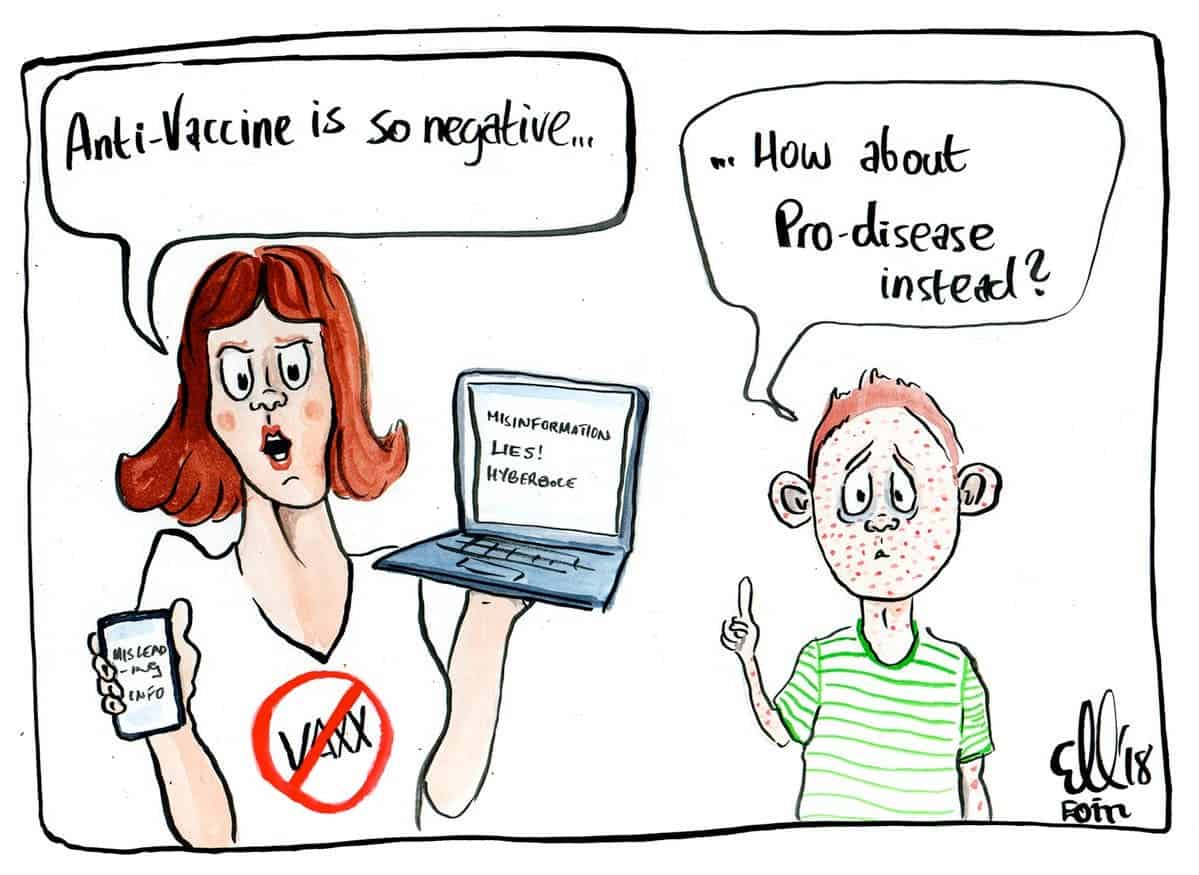
Cartoon – Anti-Vaccine or Pro-Disease?

Vaccine hesitancy among the top 10 global health threats

Vaccine Development, Covid-19, and mRNA vaccines

Vaccine Development, Covid-19, and mRNA vaccines | The Incidental Economist

In this last episode of our six-part series on vaccinations, supported by the National Institute for Health Care Management Foundation, we cover vaccine development – particularly in the context of the current global pandemic. We discuss the timeline of Covid-19 vaccine development and the mRNA vaccine approach.

Why vaccine production is taking so long

Illustration of a turtle carrying a vial of liquid

COVID-19 vaccine makers are under intense pressure to rev up production, but the scale of the challenge is unprecedented — and the speed of production is limited.

Why it matters: Even with help from the federal government and outside companies, vaccine-making is a complex, time-consuming biological process. That limits how quickly companies like Pfizer and Moderna can accelerate their output even during a crisis.

The big picture: With new, more transmissible variants emerging, we’re in a race to get shots into more people’s arms. What would normally take years to set up is being compressed into less than a year, leaving engineers to adapt manufacturing processes on the fly.

  • “The bottlenecks keeps moving. It keeps changing,” said Chaz Calitri, who leads the COVID-19 vaccine program at Pfizer’s Kalamazoo, Mich., facility.
  • “It’s a dream project, but at the same time, it’s the weight of the world,” he tells Axios.

Between the lines: Making vaccines is complex, and the process can be hindered at different steps.

  • “There’s a lot of science and engineering that goes into the manufacturing of any vaccine,” adds Margaret Ruesch, a vice president of Worldwide Research and Development at the company. “It’s molecular biology at a large scale.”

How it works: Axios got a deep dive into the making of Pfizer’s vaccine, a three-phase process that takes weeks from start to finish and involves three different facilities.

1) DNA manufacturing: At a plant near St. Louis, Mo., Pfizer produces DNA that encodes messenger RNA — instructions for cells to make part of the spike protein on the surface of the coronavirus. That primes the immune system to defend against future encounters with the virus.

  • The DNA is produced by bacterial cells, then purified, frozen and shipped to another Pfizer facility in Andover, Mass.

2) Making the mRNA: In Andover, the template DNA is incubated with messenger RNA building blocks in a reactor to make the mRNA. Pfizer has been making two, 40-liter batches per week — up to 10 million doses worth —but expects to double that to four batches per week.

  • After purification and quality checks, the frozen mRNA is shipped to a Pfizer plant in Kalamazoo, Mich.

3) Formulating the vaccine: In Kalamazoo, the mRNA and lipid nanoparticles (oily envelopes that deliver mRNA to cells in the body) are combined and go through a series of filtrations.

  • The bulk vaccine is then transferred to sterile vials, capped, inspected, labeled and packed into containers the size of pizza boxes. Those containers are then stored in sub-zero freezers to await shipment to vaccine distribution sites.

Where it stands: Both Pfizer and Moderna say they’re on track to meet their commitments to deliver 200 million doses each to the U.S. over the first half of the year.

  • The Biden administration yesterday announced it had secured deals for another 200 million doses, bringing the total to roughly 600 million doses, enough to fully vaccinate 300 million Americans by the end of July.
  • Pfizer and its German partner BioNTech recently upped supplies 20% by getting FDA approval to squeeze a sixth dose (instead of five) out of every vial.
  • Yes, but: Extracting a sixth dose requires the use of specialized syringes, which have their own production constraints, as Reuters explained.

The latest: The Biden administration said last week that it will use its wartime powers under the Defense Production Act to give Pfizer priority access to critical components such as filling pumps and filtration units to try to help address bottlenecks.

  • Meanwhile, Pfizer continues to tweak its processes to boost output and says it is adding more suppliers and contract manufacturers to the vaccine supply chain.
  • Novartis, Sanofi and Merck KGaA are among 10 contract manufacturers that will help the company manufacture more doses, a Pfizer spokesman tells Axios.
  • Pfizer and BioNTech will still do most of the work in their facilities, but contract manufacturers will help with specific tasks like formulating lipid nanoparticles, sterile filling, inspection and packaging.

Ordering other drug manufacturers to stand up manufacturing lines to whip up extra batches of Pfizer’s or Moderna’s vaccines is not an efficient or practical way for the federal government to quickly increase supplies, some experts say.

  • “Making vaccines is not like making cars, and quality control is paramount,” Stanley Plotkin, a vaccine industry consultant, told Kaiser Health News. “We are expecting other vaccines in a matter of weeks, so it might be faster to bring them into use.”

What to watch: Johnson & Johnson has requested emergency use authorization from the FDA for its single-dose vaccine, but is reportedly lagging in production, the NYT first reported last month.