Is the delta surge truly ending? Here’s why some experts aren’t so sure.

The Delta Surge May Collapse Faster Than You Think | MedPage Today

With Covid-19 cases, hospitalizations, and deaths declining across the country, some people are hopeful about a potential end to the delta surge. However, public health experts continue to encourage safety measures and vaccinations to mitigate another potential winter surge.

Is the delta surge declining?

According to the New York Times, delta-driven coronavirus cases, hospitalizations, and deaths are declining. Since Sept. 1, the number of daily new Covid-19 cases in the United States has decreased by 35%. In the past two weeks alone, the number of new daily cases has fallen by 24% to around 101,000.

In addition, new Covid-19 deaths have decreased by 12% to 1,829 a day, and hospitalizations have decreased 20% to fewer than 75,000 a day—a first since early August, the Times reports.

“Barring something unexpected,” Scott Gottlieb, a former FDA commissioner, said, “I’m of the opinion that this is the last major wave of infection.”

Edwin Michael, a professor of epidemiology at the University of South Florida, agreed with Gottlieb’s assessment, saying, “[T]his might be the last wave, pending any new variants that arrive, and the boosters will help with that.”

According to STAT News, some experts suggest that the United States has reached an “inflection point,” in which the coronavirus is gradually transitioning from an epidemic phase to an endemic phase. As an endemic virus, the coronavirus will still cause infection, disease, and death, but it will be more manageable.

When asked whether Covid-19 could be endemic, Stephen Kissler, an epidemiologist at Harvard University‘s T.H. Chan School of Public Health, said, “We’ve still got a little work left to do, but my hope is that we’re approaching something ever closer to normalcy.”

Health experts continue to urge caution

However, even with the delta surge on an apparent decline, many public health experts continue to urge caution, saying that the pandemic is still a threat, the Times reports.

“We don’t want to celebrate even though we feel like we’re on the back end of this surge—we learned our lesson from doing that,” said Kirsten Bibbins, an epidemiologist and physician at the University of California, San Francisco. “[I]n this pandemic, you’re always waiting for the other shoe to drop.”

Ali Mokdad, an epidemiologist at the University of Washington, agreed. “We’re not out of danger,” he said. “This virus is too opportunistic and has taught us one lesson after another.”

Mokdad said he was worried people would disregard public safety precautions by wearing masks less often and traveling more, just as they did when earlier surges declined—potentially fueling a jump in cases in December and January.

Some experts are also concerned about the potential emergence of a new coronavirus variant that could kick-start another surge, much like the delta variant did at the beginning of the summer.

“There were similar conjectures [about the pandemic ending] before the delta variant appeared and knocked all our assumptions for a loop,” said Stephen Morse, an epidemiologist at Columbia University Medical Center. “We don’t know whether [a new variant will emerge], but we weren’t expecting delta either.”

In addition, there is still the possibility of a surge in cases during the winter months, STAT News reports.

According to Sen Pei, who studies the transmission dynamics of infectious disease at the University of Columbia‘s Mailman School of Public Health, viruses survive better in cooler, drier weather, and people will gather indoors more frequently in the fall and winter. Holiday gatherings could also lead to more close social contact, further increasing the risk of spreading the virus.

Vaccination remains a necessity to combat surges

Most Covid-19 deaths during the latest surge were among the unvaccinated, the Times reports. Today, around 68 million eligible Americans remain unvaccinated—leaving the United States vulnerable to future surges.

In particular, areas with low vaccination rates, along with a lack of public safety precautions, may be more likely to experience Covid-19 surges in the future, STAT News reports. According to data from the University of Iowa, rural Americans are already twice as likely to die from Covid-19 than urban Americans.

“It is becoming clearer that any challenge to hospital capacity this fall and winter is likely to be dictated by regional vaccination rates,” modelers at the Children’s Hospital of Philadelphia’s PolicyLab said.

Currently, vaccination rates in the United States have slowed to fewer than 700,000 doses a day, the Commonwealth Fund reports.

However, a simulation model of 10 states by the Commonwealth Fund found that increasing daily vaccination rates by 50% over the pace they were at in the last week of August would lead to 344,341 fewer Covid-19 cases; 19,500 fewer hospitalizations; and 6,900 fewer deaths across the next six months. These potential reductions were largely concentrated in the Southern states included in the model, such as Texas and Florida.

Vaccination works best as prevention,” the Commonwealth Fund said. “Quickly increasing population immunity now can prevent needless Covid-19 hospitalizations and deaths while keeping hospital beds open and staffed for people with other serious health problems.”


A $200 surcharge for unvaccinated spouses? It’s coming to one Louisiana health system.

Louisiana Health System to Charge Fee to Employees with Unvaccinated Spouses  - The New York Times

As more companies consider implementing insurance surcharges for their unvaccinated employees, Ochsner Health plans to add a $200 monthly surcharge for employees with unvaccinated spouses and domestic partners covered by the organization’s health plan.

Unvaccinated employees face potential insurance surcharges

While many companies have relied on incentives to encourage employee Covid-19 vaccination, some have recently opted to implement penalties, such as premium surcharges, for those who remain unvaccinated instead.

Recent polling suggests that these surcharges could spur a significant portion of unvaccinated employees to get the Covid-19 vaccine. According to an Affordable Health Insurance poll of 1,000  unvaccinated individuals with employer-based health plans, nearly 75% said a health insurance surcharge could motivate them to get vaccinated, with 43% saying a surcharge would definitely motivate them to get vaccinated.

“As they say, the vaccine is not mandatory, but if people have extra charges with their insurance due to not being vaccinated, people will surely push themselves to be vaccinated,” Nick Schrader, insurance agent at Texas General Insurance, said.

So far, Delta Airlines is the largest employer to implement an insurance surcharge for unvaccinated employees, and it has already seen significant increases in employee vaccination.

In August, Delta announced unvaccinated employees would have to pay a $200 monthly health insurance surcharge to remain on the company’s health insurance plan beginning Nov. 1.

According to Delta, the surcharge will protect the company from lost revenue due to unvaccinated employees being hospitalized with Covid-19—which costs the company an average of $50,000 for each case.

Henry Ting, Delta’s chief health officer, said almost 20% of the company’s unvaccinated employees received the Covid-19 vaccine in the two weeks after the surcharge was announced. In addition, the company did not see any employee turnover or resignation due to the announcement, Ting said.

Ochsner Health’s ‘spousal Covid vaccine fee’

Ochsner Health, Louisiana’s largest health system with nearly 32,000 employees and more than 4,500 physicians, plans to implement a $200 monthly surcharge for employees with unvaccinated domestic partners and spouses on the organization’s health insurance plan, the Associated Press reports.

Ochsner is the first health system to apply insurance surcharges to unvaccinated family members, not just employees. Other Louisiana health care organizations, such as Our Lady of the Lake Regional Medical Center and LCMC Health, said they would ask families of employees to be vaccinated, but did not plan on implementing a surcharge for unvaccinated spouses or partners, the Times-Picayune/New Orleans Advocate reports.

According to a letter sent from Ochsner leaders to employees, the surcharge, called the “spousal Covid vaccine fee,” will begin in 2022 and could deduct up to $2,400 a year from an employee’s paycheck. The surcharge will only apply to domestic partners or spouses, not other dependents covered by an employee’s health plan like children.

Warner Thomas, Ochsner’s president and CEO, said the surcharge for unvaccinated spouses and partners is similar to a surcharge for tobacco users and will be used to help keep health premiums low for employees. As a self-insured organization, Ochsner is responsible for the cost of Covid-19 treatment for patients on its health insurance plan, the Associated Press reports.

The reality is the cost of treating Covid-19, particularly for patients requiring intensive inpatient care, is expensive, and we spent more than $9 million on Covid care for those who are covered on our health plans over the last year,” Thomas said.

“We know that Covid-19 vaccination dramatically reduces transmission, severity of symptoms, hospitalizations, and death. Approximately 90% of those hospitalized with Covid in our facilities have been unvaccinated since vaccines were approved in December 2020,” he added. “Widespread vaccination is critical to stopping the spread of Covid-19, and we hope this change will encourage even more community members to get vaccinated.”

Thomas also clarified that unvaccinated spouses and partners are not required to be vaccinated because of the surcharge. “This is not a mandate as non-employed spouses and domestic partners can choose to select a health plan outside of Ochsner Health offerings,” he said.

Unvaccinated spouses and partners can also apply for medical or religious exemptions for the Covid-19 vaccine, Thomas said. Currently, around 300 Ochsner employees have applied for medical or religious exemptions, the Times-Picayune/New Orleans Advocate reports.

U.S. hits 700,000 COVID deaths

https://www.axios.com/covid-deaths-700000-us-6dd0223d-562a-41b9-a780-ef54e646b07e.html

The U.S. surpassed 700,000 deaths from the coronavirus on Friday, according to data from Johns Hopkins University.

Why it matters: A summer of division over vaccine and masking mandates only added to the surge in cases caused by the Delta variant. The U.S. went from 600,000 deaths to 700,000 in the span of three-and-a-half months.

  • Public health experts have become increasingly frustrated as thepandemic of the unvaccinatedspread across the country.
  • Roughly 70 million eligible Americans remain unvaccinated, AP reports.

Coronavirus vaccine mandates are working — for now

Coronavirus vaccine mandates imposed by employers seem to be working so far, suggesting that most vaccine holdouts would rather get the shot than lose their job, Axios’ Caitlin Owens writes.

Why it matters: Every vaccine helps in our fight against the coronavirus, although the U.S. still has a long way to go.

Driving the news: States with vaccine mandates for health care workers that have taken effect, like California and New York, have seen a large uptick in vaccinations.

  • These, of course, are blue states and have higher vaccination rates to begin with. But some health systems in red states, like Texas, have seen similar results when their mandates took effect.
  • High-profile mandates outside of the health care sector have also been successful. For instance, United Airlines achieved nearly 100% vaccination among its employees, and Tyson Foods announced that more than 90% of its workers are now vaccinated.
  • The Biden administration announced that it will require all employers with 100 or more employees to ensure their workers are vaccinated or tested weekly, but this hasn’t yet been implemented.

Yes, but: Hospitals and long-term care facilities are already stretched so thin that it won’t take a mass exodus for them to feel the effects of layoffs.

  • In New York, Gov. Kathy Hochul signed an executive order last week to help provide relief to health systems struggling with staff shortages.
  • The Biden administration announced nursing home workers will soon be required to be vaccinated, which could be a much tougher lift. Only about two-thirds of nursing home staff are vaccinated.

What they’re saying: “As we get down to the harder core unvaccinated who are more resistant, what we are seeing is that reality is a more powerful tool to change behavior than information and messaging,” said Drew Altman, president and CEO of KFF.

An unsettling start to the school year

https://mailchi.mp/a2cd96a48c9b/the-weekly-gist-october-1-2021?e=d1e747d2d8

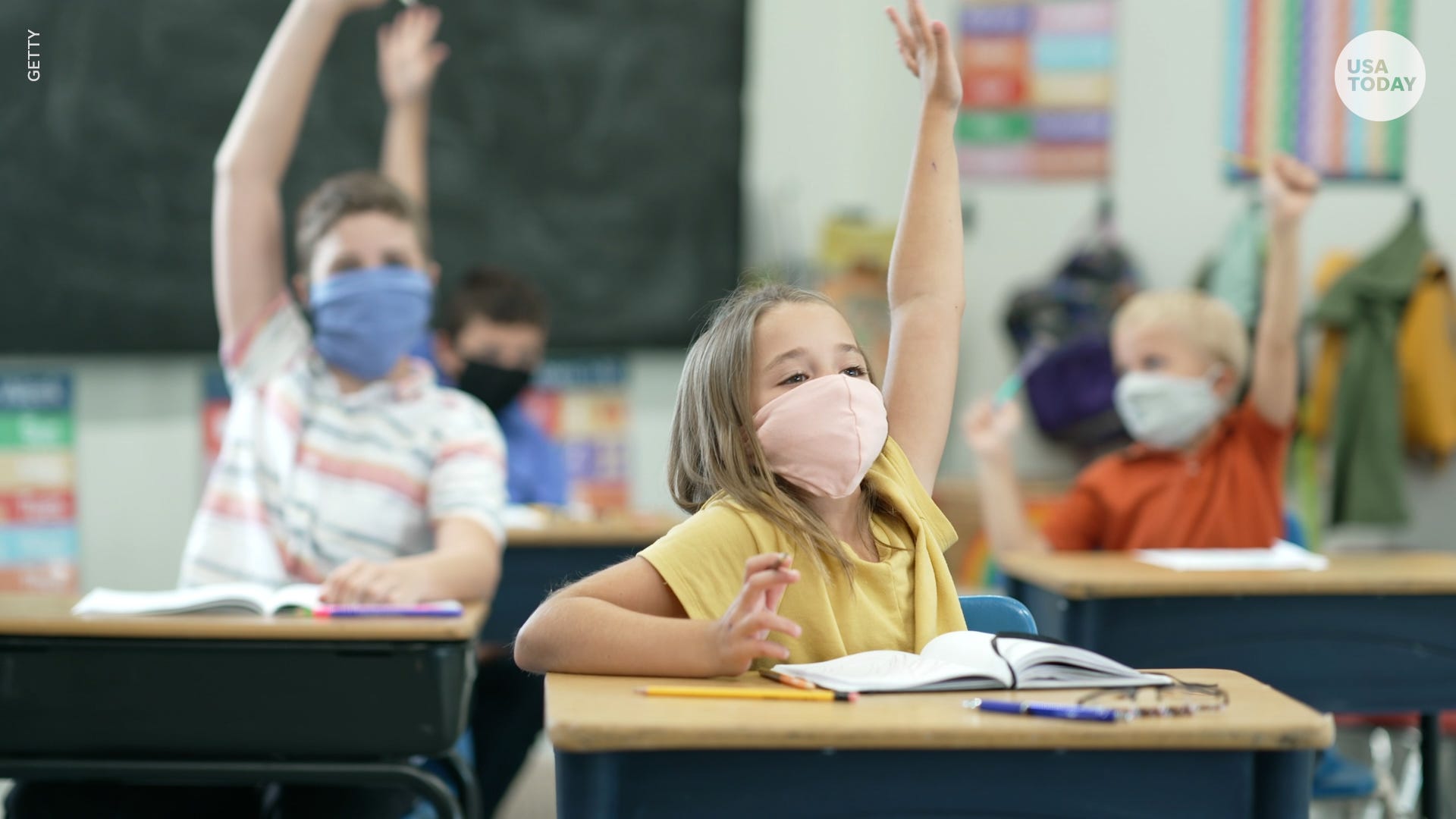
As a long hoped-for sign of the “return to normal”, most children went back to in-person learning this fall. And with the patchwork of COVID safety protocols and masking policies across school districts, classrooms became a learning lab for scientists studying the efficacy of masking and other precautions.

Unsurprisingly, getting a bunch of unvaccinated kids back together caused a surge in pediatric COVID cases. But recent Centers for Disease Control and Prevention (CDC) data from 500 counties demonstrate just how effective mask mandates have been at mitigating outbreaks.

The graphic above shows that cases in counties without school mask mandates increased at nearly three times the rate of those with mask mandates. In the five-week period spanning the start of the school year, cases in counties without a mask mandate rose by 62.6 cases per 100K children, while cases in counties with a mask mandate rose by only 23.8 per 100K. COVID outbreaks are incredibly disruptive to learning; according to a recent KFF survey, nearly a quarter of parents report their child has already had to quarantine at home this school year following a possible COVID exposure.

Even once vaccines are approved for children under 12, recent data suggest that a majority of parents will be hesitant to vaccinate their child. Just over half of 12- to 17-year-olds have received at least one dose of the vaccine so far, and only a third of parents of 5- to 11-year-olds plan to vaccinate their child right away, once the shot is approved.

Many want more information, or are worried about side effects—concerns that will best be assuaged by their pediatricians and other trusted sources of unbiased information.

A new antiviral pill shows promise, as do vaccine mandates

https://mailchi.mp/a2cd96a48c9b/the-weekly-gist-october-1-2021?e=d1e747d2d8

Everything we know about the covid-19 coronavirus

Two pieces of hopeful news on the COVID front this week.

First, pharmaceutical manufacturer Merck announced this morning that molnupiravir, the oral antiviral drug it developed along with Ridgeback Biotherapeutics, reduced hospitalizations among newly diagnosed COVID patients by 50 percent. A five-day course of the drug was so successful in Merck’s clinical study that an independent monitoring group recommended halting the study and submitting the pill to the Food and Drug Administration (FDA) for emergency use authorization. Molnupiravir is activated by metabolism, and upon entering human cells, is converted into RNA-like building blocks, causing mutations in the COVID virus’s RNA genome and interfering with its replication. For that reason, the drug is unlikely to be prescribed during pregnancy, but otherwise the therapy seems to hold great promise in adding to the limited armamentarium available to fight the pandemic. One possible concern: the drug’s price tag. The federal government has agreed to purchase 1.7M courses of the drug at $700 per course, and with most insurance companies having returned to normal cost-sharing for COVID treatments, the drug may be out of reach for some patients. Still, a major clinical development to be celebrated, and more to come as Merck’s drug is vetted by the FDA.
 
At $20 to $40 per dose, with costs fully absorbed by the federal government, and remarkable effectiveness at preventing severe disease, hospitalizations, and deaths, vaccines remain far and away our best frontline weapon for fighting the COVID pandemic. Promising, then, that the much-debated vaccine mandates have begun to demonstrate success in increasing vaccination rates, even among those who have thus far resisted getting the shot.

Despite concerns about massive staffing shortages among hospitals resulting from the implementation of its mandate, the state of New York found that 92 percent of healthcare workers had been vaccinated by Monday, when the mandate went into effect. That was a 10-percentage-point increase from a week earlier, holding promise that the Biden administration’s planned federal mandate for healthcare workers could have the desired effect.

California’s mandate for healthcare workers went into effect yesterday, and was credited with boosting vaccination rates to 90 percent at many of the state’s health systems. Among private employers considering mandates, the experience of United Airlines may also be instructive: its employee mandate led to the vaccination of more than 99 percent of its workers, resulting in the termination of only 700 of its 67,000 employees. Of course, everyone prefers carrots to sticks, but sweepstakes and bonuses have only gotten so far in encouraging people to get vaccinated—now it appears mandates have a useful role to play as well.

With 56 percent of the population fully vaccinated, the US now ranks 43rd among nations, just ahead of Saudi Arabia and far behind most of Europe. In the next few days we’ll reach the grim milestone of 700,000 COVID deaths in this country—anything that helps stop that number from growing further should be welcome news.

Statistics of the Day on Vaccination

The Biden administration’s booster strategy gets clumsily underway

https://mailchi.mp/72a9d343926a/the-weekly-gist-september-24-2021?e=d1e747d2d8

After a confusing week of mixed messaging and conflicting opinions from the public health officials advising the Food and Drug Administration (FDA) and the Centers for Disease Control and Prevention (CDC), late Thursday night CDC Director Dr. Rochelle Walensky announced her decision to recommend COVID booster vaccines for adults over 65, residents of long-term care facilities, and those younger than 65 with underlying medical conditions.

Controversially, Dr. Walensky contradicted the CDC’s own Advisory Committee on Immunization Practices (ACIP) by also recommending that people who are at greater risk of COVID exposure due to occupation or institutional setting—including healthcare workers and teachers—receive a booster shot. Earlier Thursday, ACIP members voted down a recommendation to provide boosters to healthcare workers, despite the FDA’s endorsement of that approach earlier in the week.
 
By Friday morning, President Biden announced he would soon get a booster shot himself, urging those eligible to do so, and re-emphasizing the administration’s primary focus on delivering first doses to those still unvaccinated. There will be more to come on boosters: the FDA and CDC guidance only applies to those who received the Pfizer-BioNTech vaccine at least six months ago; boosters for the Moderna and Johnson & Johnson vaccines are still under review.

This week’s saga caps a month of back-and-forth between public health officials, the White House, and the medical community, following Biden’s August promise—considered by many to be premature—that boosters would be broadly available starting September 20th. The inclusion of healthcare workers in the booster campaign is welcome news; we were flummoxed by ACIPs decision to bypass that critical segment, given mounting hospital staffing shortages amid the surging Delta variant.

More broadly, we’re increasingly distressed by the relatively uncoordinated and poorly-managed communication approach of the Biden administration on vaccines—particularly following a campaign in which competence was touted as a key advantage over the previous administration.
 

Pfizer says its COVID-19 vaccine is safe, effective in kids ages 5 to 11

Pfizer says its COVID-19 vaccine is safe, effective in kids ages 5 to 11

COVID vaccine for kids 5-11: Pfizer says low dose safe, effective

Pfizer on Monday announced that testing showed that its COVID-19 vaccine was “safe” and “well tolerated” by children ages 5 to 11 and “robust neutralizing antibody responses” were observed.

The pharmaceutical company said that a “favorable safety profile” had been observed in its trial of the vaccine among children under the age of 12. For its trial, the company used doses a third of what is administered to people ages 12 and up.

“Over the past nine months, hundreds of millions of people ages 12 and older from around the world have received our COVID-19 vaccine. We are eager to extend the protection afforded by the vaccine to this younger population, subject to regulatory authorization, especially as we track the spread of the Delta variant and the substantial threat it poses to children,” Pfizer CEO Albert Bourla said.

“Since July, pediatric cases of COVID-19 have risen by about 240 percent in the U.S. – underscoring the public health need for vaccination. These trial results provide a strong foundation for seeking authorization of our vaccine for children 5 to 11 years old, and we plan to submit them to the [Food and Drug Administration (FDA)] and other regulators with urgency,” he added.

Pfizer’s trial included 2,268 participants between the ages of 5 and 11. According to the company, the doses resulted in side effects comparable to what was observed among the trial for patients ages 16 to 25. It also said that it expects to include its results in an upcoming submission to the FDA for emergency use authorization.

In the U.S., no COVID-19 vaccines have been approved for children under the age of 12, leaving many children and the adults who are in close proximity to them particularly vulnerable during the most recent surge brought on by the delta variant.

National Institute of Health Director Francis Collins on Sunday said he believed parents and teachers should be placed in the same category as health care workers in terms of COVID-19 risk, due to their close contact with children who are ineligible to be vaccinated.

In August, the number of pediatric hospitalizations in the U.S. due to COVID-19 reached a record high of nearly 2,000. While children are generally believed to be less likely to develop severe cases of the coronavirus, new variants continue to pose the potential threat of causing more severe symptoms.

This announcement comes shortly after an advisory panel for the FDA voted last week in favor of recommending a third dose of the Pfizer-BioNTech vaccine for people over 65 and in certain high-risk groups. The panel voted against administering a third dose to all vaccine-eligible people.

According to the Centers for Disease Control and Prevention, nearly 75 percent of the eligible population — ages 12 and up — has received at least one dose of a COVID-19 vaccine. Around 64 percent of those over the age of 12 are fully vaccinated.

The pandemic marks anothergrim milestone: 1 in 500Americans have died of covid-19

At a certain point, it was no longer a matter of if the United States would reach the gruesome milestone of 1 in 500 people dying of covid-19, but a matter of when. A year? Maybe 15 months? The answer: 19 months.

Given the mortality rate from covid and our nation’s population size, “we’re kind of where we predicted we would be with completely uncontrolled spread of infection,” said Jeffrey D. Klausner, clinical professor of medicine, population and public health sciences at the University of Southern California’s Keck School of Medicine. “Remember at the very beginning, which we don’t hear about anymore, it was all about flatten the curve.”

The idea, he said, was to prevent “the humanitarian disaster” that occurred in New York City, where ambulance sirens were a constant as hospitals were overwhelmed and mortuaries needed mobile units to handle the additional dead.

The goal of testing, mask-wearing, keeping six feet apart and limiting gatherings was to slow the spread of the highly infectious virus until a vaccine could stamp it out. The vaccines came but not enough people have been immunized, and the triumph of science waned as mass death and disease remain. The result: As the nation’s covid death toll exceeded 663,000 this week, it meant roughly 1 in every 500 Americans had succumbed to the disease caused by the coronavirus.

While covid’s death toll overwhelms the imagination, even more stunning is the deadly efficiency with which it has targeted Black, Latino, and American Indian and Alaska Native people in their 30s, 40s and 50s.

Death at a younger age represents more lost years of life. Lost potential. Lost scholarship. Lost mentorship. Lost earnings. Lost love.

Neighborhoods decimated. Families destroyed.

“So often when we think about the majority of the country who have lost people to covid-19, we think about the elders that have been lost, not necessarily younger people,” said Abigail Echo-Hawk, executive vice president at the Seattle Indian Health Board and director of the Urban Indian Health Institute. “Unfortunately, this is not my reality nor that of the Native community. I lost cousins and fathers and tribal leaders. People that were so integral to building up our community, which has already been struggling for centuries against all these things that created the perfect environment for covid-19 to kill us.”

Six of Echo-Hawk’s friends and relatives — all under 55 — have died of covid.

“This is trauma. This is generational impact that we must have an intentional focus on. The scars are there,” said Marcella Nunez-Smith, chair of President Biden’s COVID-19 Health Equity Task Force and associate dean for health equity research at Yale University. “We can’t think that we’re going to test and vaccinate our way out of this deep pain and hurt.”

The pandemic has brought into stark relief centuries of entwining social, environmental, economic and political factors that erode the health and shorten the lives of people of color, putting them at higher risk of the chronic conditions that leave immune systems vulnerable to the coronavirus. Many of those same factors fuel the misinformation, mistrust and fear that leave too many unprotected.

Take the suggestion that people talk to their doctor about which symptoms warrant testing or a trip to the hospital as well as the safety of vaccines. Seems simple. It’s not.

Many people don’t have a physician they see regularly due in part to significant provider shortages in communities of color. If they do have a doctor, it can cost too much money for a visit even if insured. There are language barriers for those who don’t speak English fluently and fear of deportation among undocumented immigrants.

“Some of the issues at hand are structural issues, things that are built into the fabric of society,” said Enrique W. Neblett Jr., a University of Michigan professor who studies racism and health.

Essential workers who cannot avoid the virus in their jobs because they do not have the luxury of working from home. People living in multigenerational homes with several adult wage-earners, sharing housing because their pay is so low. Even the fight to be counted among the covid casualties — some states and hospitals, Echo-Hawk said, don’t have “even a box to check to say you are American Indian or Alaskan Native.”

It can be difficult to tackle the structural issues influencing the unequal burden of the pandemic while dealing with the day-to-day stress and worry it ignites, which, Neblett said, is why attention must focus on both long-term solutions and “what do we do now? It’s not just that simple as, ‘Oh, you just put on your mask, and we’ll all be good.’ It’s more complicated than that.”

The exacting toll of the last year and a half — covid’s stranglehold on communities of color and George Floyd’s murder — forced the country to interrogate the genealogy of American racism and its effect on health and well-being.

“This is an instance where we finally named it and talked about structural racism as a contributing factor in ways that we haven’t with other health disorders,” Neblett said.

But the nation’s attention span can be short. Polls show there was a sharp rise in concern about discrimination against Black Americans by police following Floyd’s murder, including among White Americans. That concern has eroded some since 2020, though it does remain higher than years past.

“This mistaken understanding that people have, almost this sort of impatience like, ‘Oh, we see racism. Let’s just fix that,’ that’s the thing that gives me hives,” Nunez-Smith said. “This is about generational investments and fundamental changes in ways of being. We didn’t get here overnight.”