How the Midterms Could Impact Medicaid

http://www.governing.com/topics/health-human-services/gov-medicaid-expansion-election-midterms-november-2018.html

Image result for 2018 midterm elections


The fate of Medicaid expansion, a central tenet of President Obama’s signature health-care legislation, is in the hands of the people in several states.

In Idaho, Nebraska and Utah, voters will decide whether to make more low-income people, those up to 138 percent of the federal poverty line, eligible for Medicaid, the government-run health insurance program. In most of the other states, who voters elect as governor and to the legislature will influence the direction of this health-care policy for years to come.

Since the Affordable Care Act passed in 2010, 33 states have expanded Medicaid, largely along partisan lines, with Republicans leading the holdout movement. But in some cases, Republican governors tried for years to convince their GOP legislatures to expand.

Health policy experts say that, generally, a state’s status of expansion guides which races are most important to watch in the midterms.

“For a state that hasn’t yet expanded, the governor can’t do it all, so you have to watch what happens with the legislature,” says David Jones, associate professor of health law at Boston University who recently examined where Medicaid expansion appears more vulnerable. “But for states that have already expanded, the legislature doesn’t matter as much” because the governor has authority to tweak the current law or to end expansion in some cases.

The midterms come at a crucial time for health care. The Trump administration gave states the greenlight to adopt new rules for Medicaid that the Obama administration rejected. For instance, Arkansas, Kentucky, Indiana and New Hampshire have been approved to add work requirements, and several other states have applied. In July, a federal judge struck down Kentucky’s work requirements plan, putting the rest of the states’ policies into legal jeopardy. Despite the ruling, the Trump administration has signaled that it plans to proceed with work requirements.

Michigan is one expansion state where health policy could veer far to the right if the Republican nominee for governor, ‎Bill Schuette, wins what is considered a tossup race. Schuette, the state’s attorney general, leans more conservative than term-limited Republican Gov. Rick Snyder. On the campaign trail, Schuette has supported repealing and replacing the Affordable Care Act.

“He talks a lot about what he doesn’t like [about the ACA], but he has yet to say what he’d do that’s positive,” says Marianne Udow-Phillips, executive director of the Center for Healthcare Research and Transformation based in Ann Arbor, Mich. “I see him being in the mold of Scott Pruitt at the Environmental Protection Agency, doing a lot of rolling back of regulations.”

In Michigan, 680,000 people gained coverage under Medicaid expansion, and 350,000 could lose it if work requirements are put in place. Snyder signed a bill in June to submit a waiver to the federal government that, if approved, would require Medicaid recipients in the state to have a job.

“We’ve gotten used to thinking that Michigan is a moderate state because they have Democratic senators and sometimes go blue in presidential elections,” says Jones, “but … it’s a pretty conservative group of senators in the statehouse,” and a more conservative governor might be able to drum up support for far-right Medicaid changes.

Schuette’s Democratic opponent, Gretchen Whitmer, supports Medicaid expansion and opposes the work requirements waiver, according to a spokesperson in her campaign office.

In Ohio, another expansion state, GOP Gov. John Kasich is term-limited. While he is one of the staunchest defenders of Medicaid expansion, he did pass off a waiver request for work requirements to the feds. Republican Attorney General Mike DeWine and Democrat Richard Cordray, the former head of the Consumer Financial Protection Bureau, are in a tossup race to succeed him.

DeWine leans more pragmatic in general, so John Corlette, executive director of the Center for Community Solutions based in Cleveland, says “I would expect his approach would be closer to Kasich.” DeWine has said he supports expansion with a work component, while Cordray supports expansion with no work requirements.

In Ohio, work requirements threaten coverage for 36,000 adults.

If any states elect governors who are more conservative than their predecessors, “Kentucky is a good example of what a change in leadership can mean for Medicaid expansion,” says Jones. There, a Democratic governor expanded Medicaid to 500,000 Kentuckians. When Republican Matt Bevin was elected in 2015, he added work requirements, along with premiums and reporting income changes.

A governor’s authority, however, isn’t limitless. Since residents in Maine voted in favor of expansion last year, GOP Gov. Paul LePage has refused to enact the policy. The state’s Supreme Court last week ordered him to move forward with expansion.

Implementation of it, though, will likely fall to his successor. LePage is term-limited. Running to take his place is Democratic Attorney General Janet Mills, who supports expansion. Republican challenger Shawn Moody, a business owner, is following LePage’s lead and opposing it. If the state expands Medicaid per the court’s orders, 70,000 people would gain coverage.

Among states that haven’t expanded Medicaid, Jones says the state to watch is Kansas. In 2017, the legislature passed a Medicaid expansion bill, but then-GOP Gov. Sam Brownback vetoed it. The legislature narrowly missed getting enough votes to override him.

While it’s unlikely that the legislature in a state that deep red would flip Democrat, “the state seems to be treading more moderate,” says Jones. On a recent trip to Topeka, he says “many Republicans were willing to say they would support Medicaid expansion. They saw it as a way to save their rural hospitals.”

The governor’s race in the state is a matchup between hardline conservative Secretary of State Kris Kobach and Democratic state Sen. Laura Kelly. Kobach has a slight edge. Kelly has vowed to expand Medicaid, and Kobach is opposed to it.

While it’s a wild card, the political landscape in Florida has the potiential to completely shift in November, laying the groundwork for the state to expand Medicaid. Despite support from GOP Gov. Rick Scott, who is running for U.S. Senate, the GOP-controlled legislature has rebuffed all expansion efforts over the years.

Now, Democrats have a real shot at taking control in the Senate. While it’s unlikely they’ll take control of the House, they are expected to gain ground. The governor’s race is between Tallahassee Mayor Andrew Gillum, who supports the Democratic Socialist platform of “Medicare for all.” His opponent, Republican Congressman Ron DeSantis, is against expanding Medicaid.

“Supporters of the ACA think of Florida as the holy grail in terms of expansion,” says Jones.
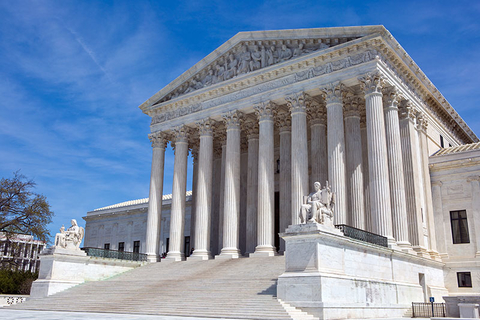
KAVANAUGH CONFIRMATION HEARINGS COMMENCE: WHAT ARE THE HEALTHCARE STAKES?

https://www.healthleadersmedia.com/strategy/kavanaugh-confirmation-hearings-commence-what-are-healthcare-stakes

Image result for supreme court nomination healthcare

The nominee’s approach to politically charged healthcare topics, such as the ACA and abortion, are among the items at issue in the debate.

Confirmation hearings for U.S. Supreme Court nominee Judge Brett Kavanaugh began with fireworks Tuesday morning before the Senate Judiciary Committee.

Democrats and protestors alike interrupted Chairman Chuck Grassley, R-Iowa, repeatedly in apparent attempts to block the hearing from proceeding. The episode reflects a high-stakes and largely partisan debate that could dramatically impact U.S. healthcare for decades to come.

Kavanaugh, 53, would be the second-youngest member on the court if confirmed, resulting in a 5–4 reliably conservative majority, as NPR reported. His approach to hot-button healthcare topics, such as abortion and the Affordable Care Act, have received particular scrutiny.

On the presidential campaign trail, then-candidate Donald Trump promised to nominate only justices who would overturn Roe v. Wade. Kavanaugh reportedly told one senator that he views Roe as “settled law.” But that doesn’t necessarily mean he believes Roe can’t be overturned, as The Atlantic’s Garrett Epps wrote.

Kanaugh dissented in an opinion last year, writing that the government has “permissible interests in favoring fetal life, protecting the best interests of a minor, and refraining from facilitating an abortion,” and it “may further those interests so long as it does not impose an undue burden on a woman seeking an abortion.”

Another healthcare-related decision by Kavanaugh likely to come up is his 2011 dissent holding that the ACA’s individual mandate was legal as a tax authorized by the Commerce Clause.

Kavanaugh’s reading could come full circle, if a legal challenge launched by conservative states progresses to the Supreme Court. The states argue that the entire ACA was rendered unconstitutional when Congress zeroed out the tax penalty tied to the individual mandate, canceling its status as a tax. In response to the lawsuit, the Trump administration abandoned its defense of key ACA provisions.

It’s worth noting, though, as Bloomberg’s Sahil Kapur did, that Kavanaugh’s 2011 ACA ruling effectively “ducked the issue,” enabling him to avoid ruling on the ACA’s merits. That’s significant because some senators have said Kavanaugh’s views on the ACA will affect how they vote on his nomination.

While liberals fear that Kavanaugh could contribute to the ACA’s dismantling, some conservatives worry he’s too moderate on the ACA. Kavanaugh himself has reportedly signaled in private meetings with Democrats that that he’s skeptical of certain claims in the current Republican-led effort to overturn the Obama-era law.

Senators Consider Dueling Bills Over Texas Individual Mandate Litigation

https://www.healthaffairs.org/do/10.1377/hblog20180828.283008/full/?utm_term=Read%20More%20%2526gt%3B%2526gt%3B&utm_campaign=Health%20Affairs%20Sunday%20Update&utm_content=email&utm_source=Act-On_2018-08-05&utm_medium=Email&cm_mmc=Act-On%20Software-_-email-_-Individual%20Mandate%20Litigation%3B%20Housing%20And%20Equitable%20Health%20Outcomes%3B%20Simplifying%20The%20Medicare%20Plan%20Finder%20Tool-_-Read%20More%20%2526gt%3B%2526gt%3B

Litigation in Texas over the constitutionality of the individual mandate and, with it, the entire Affordable Care Act (ACA) is receiving more and more attention in Congress. On August 23, 2018, Republican Senators released new legislation that they believe would help blunt the impact of a ruling for the plaintiffs in Texas v. United States. The stated aim of the bill is to “guarantee” equal access to health care coverage regardless of health status or preexisting conditions. However, in the event that the court agrees with the plaintiffs—or even just the Trump administration—the legislation leaves significant gaps.

At the same time, Democratic Senators had their efforts to potentially intervene in the litigation rebuffed during the debate over a recent appropriations bill for the Departments of Labor, Health and Human Services (HHS), Education, and Defense. With a hearing on Texas scheduled for September 5, 2018—the same time as hearings are set to begin in Congress over the confirmation of D.C. Circuit Judge Brett Kavanaugh to the Supreme Court—attention on the case is only likely to increase.

Brief Background On Texas

In Texas, 20 Republican state attorneys general and two individual plaintiffs challenge the constitutionality of the individual mandate, which was zeroed out by Congress beginning in 2019. Without the penalty, the plaintiffs argue that the mandate is unconstitutional. Because the mandate cannot be severed from the rest of the law, they believe the entire ACA should also be struck down.

In June, the Department of Justice (DOJ) declined to defend the constitutionality of the individual mandate alongside the ACA’s provisions on guaranteed issue (42 U.S.C. §§ 300gg-1, 300gg-4(a)), community rating (42 U.S.C. §§ 300gg(a)(1), 300gg-4(b)), and the ban on preexisting condition exclusions and discrimination based on health status (42 U.S.C. § 300gg-3). These provisions collectively ensure that individuals with preexisting conditions cannot be charged more for their coverage or denied coverage or benefits based on health status or other factors.

The plaintiffs have asked Judge Reed O’Connor of the federal district court in the Northern District of Texas to enjoin HHS and the Internal Revenue Service (IRS) from enforcing the ACA and its implementing regulations—or, at a minimum, to strike down the law’s guaranteed issue and community rating provisions alongside the mandate. Judge O’Connor is considering ruling on the merits of the case (instead of issuing a preliminary injunction) and has scheduled a hearing on the motion for a preliminary injunction for September 5.

As noted above, the hearing will coincide with confirmation hearings for Judge Kavanaugh. Texas will likely be a focal point in the Kavanaugh proceedings because of the possibility that the case will reach the Supreme Court and because previous decisions suggest that Judge Kavanaugh believes that a President can decline to enforce laws that he or she believes to be unconstitutional.

The New Republican Legislation

Recognizing the potential impact of the Texas lawsuit, 10 Republican Senators released new legislation on August 23. The bill is sponsored by Senators Thom Tillis (NC), Lamar Alexander (TN), Chuck Grassley (IA), Dean Heller (NV), Bill Cassidy (LA), Lisa Murkowski (AK), Joni Ernst (IA), Lindsey Graham (SC), John Barrasso (WY), and Roger Wicker (MS). It is tied directly to the Texas litigation: Press releases acknowledge the September 5 hearing and state that “protections for patients with pre-existing conditions could be eliminated” if Judge O’Connor rules in favor of the plaintiffs.

The legislation would amend the Health Insurance Portability and Accountability Act of 1996 (HIPAA). Although HIPAA offered significant new protections at the time it was passed, these protections were limited in terms of ensuring that people with preexisting conditions could access affordable, comprehensive coverage, particularly in the individual market. HIPAA established a minimum set of federal protections for certain consumers—for example, those who lost their group coverage—facing certain situations, such as job lock because of a new preexisting condition exclusion period. HIPAA also required guaranteed issue in the small group market and guaranteed renewability in the individual and group markets.

As mentioned, the DOJ has declined to defend the ACA’s provisions on guaranteed issue (42 U.S.C. §§ 300gg-1, 300gg-4(a)) and community rating (42 U.S.C. §§ 300gg(a)(1), 300gg-4(b)), and the ban on preexisting condition exclusions and discrimination based on health status (42 U.S.C. § 300gg-3). Thus, their position in the lawsuit implicates parts of four provisions of federal law: 42 U.S.C. §§ 300gg, 300gg-1, 300gg-3, and 300gg-4.

The legislation introduced by Republican Senators would restore only two of the four provisions that stand to be invalidated in Texas: 42 U.S.C. § 300gg-1 (guaranteed issue) and most of § 300gg-4 (guaranteed issue and rating based on health status). So the bill would prohibit the denial of coverage and rating based on health status, but it would not prohibit preexisting condition exclusions or rating based on other factors, such as age, gender, tobacco use, or occupation. This means that many individuals, including those with preexisting conditions, could still face higher premiums, higher out-of-pocket costs, and the denial of benefits because of a preexisting condition even after paying premiums for many months.

Implications 

The protections offered by the restoration of the two provisions included in the Senate GOP bill, § 300gg-1 and most of § 300gg-4, are largely illusory without the other parts of the ACA—community rating and the ban on preexisting condition exclusions—that are at risk in the lawsuit. Assuming the at-risk provisions are struck down and the new legislation is adopted, consumers would still face significant gaps. For instance, a woman with a history of cancer could purchase a policy under the new bill, but she could be charged more based on her gender and age, potentially pricing her out of the market. In addition, her policy could have a preexisting condition exclusion, meaning that any recurrence of cancer—or any other health condition—might not be covered at all; this could lead to much higher out-of-pocket costs and far less financial protection.

If Congress were to enact this bill today, it would largely be duplicative of existing law (and would do nothing to disturb the ACA). If Congress were to enact this bill in response to the Texas litigation, its effect would depend on how (if at all) a court would invalidate the ACA provisions in Texas. Would a court strike the entire provisions, including what was adopted under HIPAA and other federal laws? Or would a court simply strike the amendments that were made by the ACA?

If the latter, the new legislation might do even less than its authors think, because much of the bill is, in fact, devoted to readopting existing federal law that may not be at issue in Texas. These provisions were adopted before the ACA and touch on, for instance, genetic information nondiscrimination and long-standing exceptions to guaranteed issue.

No Vote On Manchin Resolution To Potentially Intervene In Texas

In July, Democratic Senators led by Joe Manchin (WV) introduced a resolution with the goal of intervening in Texas to defend the ACA’s protections for people with preexisting conditions. The resolution would authorize the Senate Legal Counsel to move to intervene in the case on behalf of the Senate and defend the ACA. During last week’s debate over an HHS appropriations bill, Senate leadership blocked a vote on the amendment.


1 big thing: Pre-existing conditions as a political hammer

Mapping Pre-existing Conditions across the U.S.


The number of people with pre-existing medical conditions varies substantially between metropolitan areas, according to Kaiser Family Foundation data. That means even within a single state, different locations would see different results under legislation that erodes the Affordable Care Act’s protections, my colleague Caitlin Owens reports.

Why it matters: The more people who have a pre-existing condition, the more likely health care is to resonate as an issue in the midterm elections in that state or district.

  • Democrats have been making the case that Republicans threaten pre-existing conditions protections — through legislation, executive action and the courts — and have made this a dominant theme of the midterms.
  • Some of the areas with the highest number of people with pre-existing conditions are in states with competitive Senate races, such as West Virginia, Tennessee and Indiana.

The issue makes for absolutely brutal ads, and Democrats know it. They believe one of their most potent lines of attack against Brett Kavanaugh, President Trump’s Supreme Court nominee, is arguing he could be the deciding vote against these protections.

  • Protect Our Care has a new TV ad out today, provided to Axios, that depicts an imaginary broadcast in 2019 or 2020 announcing SCOTUS has struck down the ACA’s pre-existing conditions regulations.
  • The ad targets Sen. Susan Collins of Maine, who voted against the GOP health care bill last year. The pro-ACA group is airing radio ads tying Kavanaugh to pre-existing conditions in both Maine and Alaska.
  • Kavanaugh’s Senate hearing begins Sept. 4, the day before oral arguments in the court case that would strike down the ACA regulations.


GOP eyes another shot at ObamaCare repeal after McCain’s death

GOP eyes another shot at ObamaCare repeal after McCain’s death

Image result for senator mccain vote on aca repeal


Senate Republicans say they would like Arizona Gov. Doug Ducey (R) to appoint a successor to the late Sen. John McCain (R-Ariz.) who, unlike McCain, would support GOP legislation to repeal ObamaCare.

Republican lawmakers say they won’t have time to hold another vote to repeal the law in 2018 but vow to try again next year if they manage to keep their Senate and House majorities.

“If we re-engage in that discussion in some point in the future, it would be nice to have members who enable us to pass it,” Senate Republican Conference Chairman John Thune (S.D.) said when asked about the possibility of ObamaCare repeal legislation coming up for a future vote.

Sen. Ron Johnson (R-Wis.) said he hopes the next senator from Arizona will be a “strong ally” who “recognizes that ObamaCare is not a proper solution.”

“It hasn’t worked. It’s created a lot of harm and damage to real people,” he added.

A senior Senate GOP aide said the chamber would “absolutely” vote again to repeal ObamaCare but cautioned it would depend on “if we keep the House.”

“McCain was personally conservative but ideologically inconsistent,” the aide said. “I think Ducey is going to pick someone more like himself. He’s a more reliable conservative.”

McCain’s surprise vote to reject legislation that would repeal core pillars of the 2010 Patient Protection and Affordable Care Act — also known as ObamaCare — was the most impactful decision of his final year in the Senate.

It quashed the GOP’s eight-year quest to repeal the law and forced party leaders to drop major health-care legislation for the rest of the 115th Congress.

McCain’s vote remained a point of contention with President Trump for months afterward.

The president mocked McCain at a Nevada rally in June for voting “no” on the repeal measure with a thumbs-down gesture.

The vote caught Trump and GOP leaders completely by surprise.

“Nobody knew he was going to do that. He campaigned on repeal and replace,” Trump told the Nevada audience. “Nobody talked to him. Nobody needed to, and then he walked in: thumbs down.”

More generally, GOP senators say they would like the new senator from Arizona to have a better working relationship with Trump.

“I think it would serve a useful purpose to get along with the president,” Sen. James Inhofe (R-Okla.) said. “By having a sincere appreciation, admiration and respect, you can get a lot more done than [by being] adversarial.”

“It’s hard to imagine he could pick anyone more antagonistic,” quipped a GOP senator who requested anonymity, referring to Ducey.

Republican senators say they don’t want similar surprises from McCain’s successor.

“I’d love to have somebody to take care of that,” Sen. David Perdue (R-Ga.) said of repealing ObamaCare.

Republicans repealed a main component of ObamaCare last year when they eliminated the law’s requirement that individuals obtain health insurance or pay a fine.

But GOP lawmakers say they can do more.

“Can we make insurance more affordable? Absolutely,” said Sen. Bill Cassidy (R-La.). “More needs to be done.”

Cassidy said he doesn’t know whether the Senate will move another comprehensive health-care reform package, but he expects Republican leaders will push “piecemeal efforts to make affordable once more that which has not been affordable since ObamaCare passed.”

GOP senators think they have a good chance to increase their Senate majority because Democrats have to defend 24 seats, including seats in 10 states that Trump won in the 2016 presidential election.

There is only one Republican running for reelection in a state that voted for Democratic nominee Hillary Clinton, while five Democrats are running in states that Trump won by double digits: Indiana, Missouri, Montana, North Dakota and West Virginia.

Future Republican control of the House is more in doubt.

House Republicans need to defend 25 seats carried by Clinton in 2016, and Democrats need to flip only 23 to capture the majority.

Republicans want Ducey to appoint someone who will be a more reliable vote on health care in case they retain their congressional majorities.

“I want somebody who is for affordable health care, and right now ObamaCare is not affordable, nor is health care, which is a direct result of ObamaCare,” Cassidy said.

Ducey, who was governor when the Senate debated ObamaCare repeal legislation in 2017, initially had serious reservations about the GOP bill.

Arizona was a state that opted to expand Medicaid coverage under ObamaCare, which enabled almost 500,000 residents in the state to gain health coverage.

But in a phone call with McCain shortly before his dramatic “no” vote, Ducey recommended that the senator vote for it, McCain recalled in his book “The Restless Wave.”

“On balance he thought it was worth voting for,” McCain wrote.

A Republican senator who requested anonymity to discuss Ducey’s choice said he expects the governor will tap someone who is more aligned with his political views.

“I think he’s going to pick someone where he knows the answers to those questions,” the senator said.

Senate Majority Leader Mitch McConnell (R-Ky.) is keeping his agenda for next year secret.

He declined on Tuesday to say whether Republicans would make another push to repeal ObamaCare if they keep control of Congress.

“I’m concerned about September,” McConnell told reporters, emphasizing that he’s more focused on the remaining 2018 agenda. “We have, I hope, three conference reports on minibuses; I hope a conference report on the farm bill; I hope an up-or-down vote on a bipartisan opioid agreement.

“We have a full plate for September, and I’m not willing to speculate beyond the end of September,” he added.


Ohio Gov. Kasich Stumps Again In Support Of Medicaid Expansion

https://www.npr.org/sections/health-shots/2018/08/21/640636316/ohio-gov-kasich-stumps-again-in-support-of-medicaid-expansion

Four years after going out on a limb to get Medicaid expansion enacted in Ohio, outgoing Republican Gov. John Kasich is worried about the future of the program. So he is now defending it — through a study and through the stories of people who have benefited from the coverage expansion.

One of those people is Brenda Jean Searcy, a 55-year-old law student who lives with her 93-year-old father in the Columbus suburb of Westerville. She says she had always been healthy but was felled by Lyme disease and then Graves’ disease; the diagnosis of the latter came after she had signed up for Medicaid through the expansion.

“I am very grateful to have Medicaid. It has made my life much better and made me much healthier,” Searcy says at a press conference.
Searcy is one of the 653,000 Ohioans who gained coverage through the Medicaid expansion, four years after Kasich defied his fellow Republican legislators in pushing Medicaid expansion through.

He claimed it would bring $13 billion in federal funding to help low-income people in Ohio get health care — especially those struggling with mental illness and addiction. Kasich is nearing the end of his second term and will leave office in January. He wants the Medicaid expansion to continue, and his Medicaid department commissioned an independent study on the effects of the expansion to support it.

Ohio Medicaid Director Barbara Sears says the analysis shows Medicaid expansion has cut in half the number of uninsured Ohioans. Ninety-six percent of people in the program with opioid addiction got treatment, and 37 percent of smokers were able to quit. One-third reported improved health, including better access to medical care for high blood pressure and diabetes. ER visits went down 17 percent, and there was a 10 percent increase in the number of people seeing primary care doctors. And most recipients said Medicaid expansion made it easier to find work, earn more money and care for their families.

The state’s budget office, part of the executive branch, estimates Medicaid expansion will cost nearly $5.2 billion in 2021, the first year Ohio will pay its full share of the costs as determined by the Affordable Care Act.

Ohio budget director Tim Keen says the state’s projected share would amount to $354.1 million. However, with drug rebates, assessments on managed care plans, a 1 percent tax on premiums and other offsets, the state’s share drops to $163.1 million. “Medicaid expansion is a significantly better deal for the states and for Ohio than the traditional program, and that’s important as one considers our ability to fund this program,” Keen says.

But Republican lawmakers have long had concerns about the program’s cost.

And so does the Republican candidate to replace Kasich, Attorney General Mike DeWine. After stating for months that he feels the Medicaid expansion is financially unsustainable, DeWine says he’ll keep it but makes changes, such as implementing work requirements and wellness programs. DeWine hasn’t made clear how much those changes would save the program – for instance, 96 percent of Medicaid expansion recipients in Ohio would be exempt from work requirements.

Kasich says he has talked to DeWine’s team about supporting the program. “I worry a little bit about somebody kind of nickeling and diming it away somehow — a little bit here, a little bit there — but I think they’ll be for it,”


California Legislature bans short-term health insurance

https://www.sfchronicle.com/business/article/Defying-Trump-California-legislature-bans-13169686.php

Image result for california legislature


The California Legislature has passed a bill banning the sale of short-term health insurance plans — a type of insurance the Trump administration is seeking to expand.

The bill, SB910, authored by State Sen. Ed Hernandez (D-West Covina), was approved by the Senate on Monday and the Assembly last week. It will need the signature of Gov. Jerry Brown to become law.

Short-term plans are generally cheaper but do not need to cover all the benefits required under the Affordable Care Act, such as preventive care, essential health benefits and protections for people with pre-existing conditions. An estimated 10,000 people in California are currently enrolled in such plans.

The U.S. Department of Health and Human Services this month finalized a rule extending the amount of time consumers can be on short-term plans from three months to almost 12 months, after which they can be renewed for up to three years. However, the HHS rule allows states to regulate the sale of such plans on their own terms.

California had long capped the amount of time consumers could be on short-term plans to six months; the Obama administration limited it even further, to three months. Hernandez’s bill eliminates the sale of such plans altogether, for any amount of time.

If Brown signs the bill, California would join a handful of states, including New Jersey, Massachusetts and New York, that have severely restricted or banned short-term plans, according to the California Health Care Foundation.

If the bill becomes law, it would take effect in January 2019. Californians would still be able to buy short-term coverage — if they are in between jobs, for instance — through the state insurance exchange Covered California, or directly from health insurers like Blue Shield or Kaiser. These plans do comply with Affordable Care Act consumer protections like essential health benefits. Consumers would be able to do this at any time during the year, not just during annual enrollment, because losing job-based coverage counts as a qualifying life event.


Health Insurance Premiums Are Stabilizing

http://www.pewtrusts.org/en/research-and-analysis/blogs/stateline/2018/08/16/health-insurance-premiums-are-stabilizing-despite-gop-attacks

Stateline Aug16


Despite Republican efforts to undermine the Affordable Care Act, insurance premiums will go up only slightly in most states where carriers have submitted proposed prices for next year. And insurance carriers are entering markets rather than fleeing them.

The improvements stem from less political uncertainty over health policy, steeper than necessary increases this year, better understanding of the markets, improvements in care and a host of actions taken by individual states.

Average proposed premiums for all levels of plans in California, Colorado, Delaware, Florida, Indiana, Nevada, Ohio and Pennsylvania will increase less than 9 percent in 2019, according to the Kaiser Family Foundation.

By contrast, this year’s mid-priced plans increased an average of 37 percent nationally compared to 2017.

In some states, 2019 premiums are projected to decrease. Prices also are expected to drop for people in a number of metropolitan areas, including Atlanta, Baltimore, Denver, New York and Washington, D.C.

And unless the Trump administration launches new attacks on the Affordable Care Act in the coming months, analysts believe the average increase across the United States will hold to the single digits.

To be sure, not all areas will fare as well. Some can still expect to see big increases next year, according to the Kaiser Family Foundation. For instance, proposed premium increases in Maryland average 30 percent for 2019.

(In some states, carriers have not yet had to file their rate proposals for 2019, but will in the coming weeks.)

But after a couple years in which carriers fled many markets around the country, insurers are planning to enter exchanges in many states, including Arizona, Florida, Michigan, New Mexico and Wisconsin. In some states, existing insurers are pushing into new areas.

“That they are entering markets is a sign that the insurers are pretty confident about those markets,” said Rabah Kamal, who analyzes health reform and health insurance for Kaiser.

“After several years of big losses, insurers are actually turning a profit,” said Kamal. “They’re doing well, so overall, there’s no justification for big increases.”

To a large extent, premiums in 2019 appear to be moderating because carriers raised rates higher than necessary in 2018 in reaction to the uncertainty over how Congress and the Trump administration might undermine the ACA. “It boils down to the fact that last year’s rates were too high,” said Emily Curran, a research fellow at Georgetown University’s Health Policy Institute.

Carriers also understand the marketplace much better than they did in 2014 when the exchanges were launched across the country, Curran and others say. Carriers have a better sense of who they are covering and how to predict their health risks, Curran said. Insurers and medical providers also have better coordinated care to reduce duplication.

State Roles

States also have had a major hand in stabilizing their markets, seeking to limit the damage the federal government is doing to the ACA.

Massachusetts had its own individual mandate before the ACA, and now New Jersey does as well. Three states, Massachusetts, New Jersey and New York, have passed outright bans on issuing short-term health insurance policies, while 12 others have adopted standards more restrictive than federal policy. Some states, including Alaska, Minnesota and Oregon, have also created state-funded reinsurance pools, which protect carriers from financially crippling individual medical claims.

Finally, a number of states have done their own outreach to publicize their exchanges and promote enrollment in the absence of federal efforts.

Pennsylvania is one of those states. The insurance market has stabilized there, said Jessica Altman, the state’s insurance commissioner. She projects the average state premium increase in 2019 will amount to 0.7 percent, compared to 30.6 percent this year. She said in 31 of 67 Pennsylvania counties, there will be more carriers selling policies next year compared to 2018. And, she said, many carriers are pushing into new territories.

Her agency estimates that the increase this year would have been only 7.6 percent absent the federal government’s elimination of cost-sharing reductions, which were federal payments to insurance carriers to cushion them from exorbitant individual medical claims.

“We had pretty significant increases last year, and we shouldn’t have,” Altman said.

Julie Mix McPeak, commissioner of the Department of Commerce and Insurance in Tennessee, where premiums are expected to fall and more carriers are intending to operate, said the ACA brought more than 200,000 Tennesseans into health plans — many of whom previously had not sought routine health care — which meant higher claims in the first years.

“We had a pretty negative health score in terms of dollars spent on claims because so many people coming into primary care had health issues that needed to be addressed. Now that they’ve been in care for several years now, we aren’t seeing those claims rising any more. They are leveling off.”

Whether the stability that appears to be settling the markets in 2019 will continue beyond that largely depends on what Washington does. “No one,” said Curran, “wants to see more uncertainty.”

Undermining the ACA

A Brookings Institution study released this month estimated that insurers on the health insurance market this year will enjoy an underwriting profit margin of 10.5 percent, up from 1.2 percent last year.

The study estimated that, absent federal policies disrupting the marketplaces, premiums would have dropped 4.3 percent nationwide in 2019.

Many health care analysts agree. “In cases where we are seeing modest increases, we might have seen decreases,” said Myra Simon, executive director of individual market policy for America’s Health Insurance Plans, a lobbying arm of the health insurance industry.

Steps taken by Republicans in Washington to undermine the exchanges include Congress’ repeal starting next year of the individual mandate, which requires all Americans to obtain health insurance, and the Trump administration’s decision to end the Obama-era cost-sharing reduction payments.

The administration also eliminated most funds for outreach to encourage enrollment in the markets and shortened the periods during which people could sign up for plans. In addition, the administration has moved forward with plans to loosen regulation on association and short-term health plans that don’t have to be as comprehensive as plans sold under the Affordable Care Act.

Health insurance analysts of all stripes had said those actions would draw people away from the insurance exchanges, particularly the young and healthy. Their departure, analysts said, could drive up premiums for all those remaining and set the markets on a “death spiral” that would ultimately drive all carriers from the exchanges.

The president has been clear about his intentions. “Essentially, we are getting rid of Obamacare,” he said in April.

But as carriers file their plans with state insurance offices for next year, it appears that warnings of imminent catastrophe were, at the least, premature.

“The administration has done almost everything on its list to destabilize the market or, in their words, ‘create more choice,’” said Chris Sloan, a director at Avalere Health, a Washington-based health policy research and consulting firm. “They’ve done it all and the market is still standing.”


Nobody loves the ACA as much as New Jersey

Related image

New Jersey leads the nation in so many important things: rest stops named for historical figures, willingness to wear track suits in public — and now, reconstituting the Affordable Care Act under President Trump.

No state has moved faster or more aggressively to shore up its ACA markets than Jersey.

  • Yesterday, the Trump administration approved the state’s proposal for a new, five-year reinsurance program — essentially a subsidy that helps insurers pay for their most expensive customers, so they don’t have to pass those costs on through higher premiums.
  • That program will be paid for, in part, by New Jersey’s newly enacted individual mandate.
  • New Jersey also bans short-term insurance plans that don’t cover pre-existing conditions. The Trump administration has loosened the rules for those plans, but states are free to enact their own restrictions.

Those three policies — an individual mandate, a reinsurance program and limits on short-term plans — are states’ most muscular options for stabilizing their individual insurance markets, especially if they want to stick to the same core model of the pre-Trump ACA.

  • Right now, Jersey is the only state that has all three.

Meanwhile: The California State Assembly passed a bill yesterday to ban short-term plans.

The big picture: As more states — mostly blue states — restrict short-term plans and win approval for reinsurance programs, expect to see a deepening red-blue divide in state insurance markets and, as a result, in average premiums within the ACA’s exchanges.

2018 Mid-Term Healthcare Issues

https://www.washingtonpost.com/news/powerpost/paloma/the-health-202/2018/08/15/the-health-202-senate-democrats-stay-focused-on-health-care-even-during-short-august-recess/5b72f0901b326b4f9e90a72c/?utm_term=.2403975557c2

Senate Democrats used their truncated August recess to talk to their constituents about one key issue: Health care. 

And though they are returning to Washington tonight, they have no plans to stop talking about it. 

That’s a remarkable turnaround for Democrats who have been on the defensive about health care for the better part of a decade. Obamacare played a major role in their loss of control of the House in the first midterm election of President Obama’s presidency in 2010. But now, they’re hoping to take back the House and retain their seats in the Senate largely by running on the merits of the Affordable Care Act.

Over their 10-day mini break, Sen. Joe Donnelly (D-Ind.) held a roundtable discussion with voters about health care, as did Sen. Joe Manchin (D-W.Va.), who held his third roundtable this year focused specifically on pre-existing conditions. And Sen. Claire McCaskill (D-Mo.) also met with voters with pre-existing conditions on Tuesday.

“Cutting people off from insurance and making it harder for people to get insurance, we’re all still gonna pay the bill because in America we’re not going to stop people at the door at the emergency room and I’m sorry you don’t have health insurance, we’re gonna let you die,” she said, according to Missourinet.

In Nevada, Democratic Rep. Jacky Rosen, who is hoping to unseat GOP Sen. Dean Heller, also held a public meeting with voters with pre-existing conditions.  Sen. Bob Casey (D-Pa.) met with health care providers and patients to talk pre-existing conditions, and Rep. Kyrsten Sinema (D-Ariz.), who is vying for the open Senate seat there, also met with constituent groups to discuss health care.

“It doesn’t matter which community you are in, health care is the number-one issue that Arizonans are talking about,” Sinema told the Arizona Daily Star. “It is not just Arizonans who don’t have health-care coverage, many of those who are expressing concerns and fear are Arizonans who do have coverage but cannot afford it.”

As campaign cycles go, it’s still early in this one. And the deluge of ads will really heat up come fall. Republicans still see an opening to talk about rising costs of health care and President Trump continues to declare that the ACA is dead. But unlike years past when the GOP could run on an anti-Obamacare message, this year the party is more likely to focus on other issues like tax cuts and job creation. 

It’s harder for GOP candidates to make their case that health care policy is failing in the first election where they are in control of both houses in Congress and the White House. And recent scuttlebutt that Republicans would consider another repeal effort if they held Congress may not be helpful this cycle.

And so Democrats, if August activity is the precursor to the fall campaign, are going all in on health care. 

Earlier this month, the New York Times’ Margot Sanger-Katz had a great anecdote from an event with McCaskill. The senator, who may be in the toughest fight of her career, asked voters to stand if they have a pre-existing condition. There were reportedly few people left in their seats.

The Democrats and the groups who support them have homed in specifically on the warning that if the ACA is struck down, people with pre-existing conditions would lose protection. Notably, McCaskill and Manchin, two of the Democrats’ most vulnerable members, are running against state attorneys general who joined a lawsuit arguing the ACA should be deemed unconstitutional. If the law were struck down, it would take with it protections for people with past and current health conditions.

Before the Senate left, Minority Leader Chuck Schumer (N.Y.)  pledged to keep health care front and center this month in Congress, which is in keeping with Democrats’ election strategy this year.  Schumer’s office declined to show its hand, but on the floor he detailed exactly what the Democrats would be pushing for, including votes to protect people with pre-existing conditions and a Medicare buy-in program. They’re unlikely to get those votes, but that’s all part of the game plan to keep the attention on health care.

“The number one thing Americans want is health care, and we Democrats will spend August recess focusing on that issue, and forcing Republicans to cast votes or deny votes on those important issues,” Schumer said. “It’s a great opportunity, not just for Democrats, not just for Republicans, but for America. We are going to do it.”

The first television ad the campaign arm for the Democrats released in 2017 was about health care. It showed a man selling his car and a woman pawning her engagement ring. Then it cuts to them sitting at the hospital bedside of a sick child.

Most of the heavy ad buys are still to come, but an independent analysis of political ads so far this cycle found pro-Democrat ads have been overwhelmingly about health care.  According to Kantar Media/CMAG data by the Wesleyan Media Project, “An astounding 63 percent of pro-Democratic ads for U.S. House discuss healthcare, and 16 percent contain an explicit statement about being in favor of the Affordable Care Act. U.S. Senate contests are less likely to feature health care, but it is still the top issue, appearing in over a quarter (28 percent) of all ad airings.”

Take Rosen, the congresswoman running against Heller. She has a television ad that shows her talking to voters about their anxieties over the ACA being repealed. She says in the ad that ACA has “real problems,” but repealing it isn’t the answer. 

It’s a strategy divergent from previous years when Democrats were defensive of their support for Obamacare. They’d make macro arguments about the millions of people who would lose coverage without it. But now, with the focus on pre-existing conditions, they’ve found a way to make it personal and accessible for voters. 

“What we’re seeing on the trail is that health care remaining the defining issue of the election and voters are aware and concerned that GOP policies will increase their costs and jeopardize their coverage and voters are preparing to hold GOP candidates accountable on this issue,” said David Bergstein, a spokesman for the Democratic Senatorial Campaign Committee.

When asked, most Republicans will say they support keeping protections for pre-existing conditions. For example, when asked, McCaskill’s opponent, Missouri Attorney General Josh Hawley, said he thinks“insurance companies should be forced to cover pre-existing conditions.”

For his part, Hawley’s first television ad of the campaign was about his work as a clerk on the Supreme Court and accused McCaskill of supporting “liberal activist judges.”

In a press release in response to the ad, McCaskill’s campaign said, “Josh Hawley is suing to strip protections for nearly 2.5 million Missourians with pre-existing conditions.”