Trump’s top Medicare official slams ‘Medicare for All’

https://apnews.com/a69f5ada0db24ada9bc5bd8a44604f3b
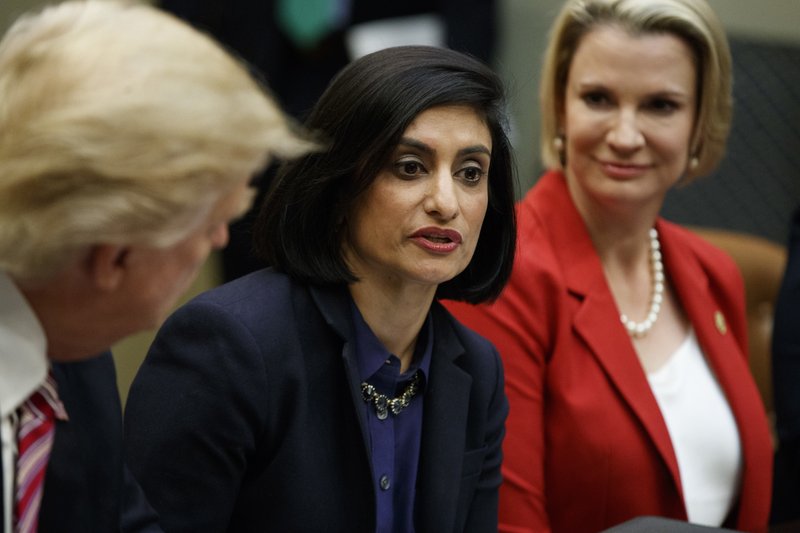
The Trump administration’s Medicare chief on Wednesday slammed Sen. Bernie Sanders’ call for a national health plan, saying “Medicare for All” would undermine care for seniors and become “Medicare for None.”

The broadside from Medicare and Medicaid administrator Seema Verma came in a San Francisco speech that coincides with a focus on health care in contentious midterm congressional elections.

Sanders, a Vermont independent, fired back at Trump’s Medicare chief in a statement that chastised her for trying to “throw” millions of people off their health insurance during the administration’s failed effort to repeal the Affordable Care Act.

Verma’s made her comments toward the end of a lengthy speech before the Commonwealth Club of California, during which she delved into arcane details of Medicare payment policies.

Denouncing what she called the “drumbeat” for “government-run socialized health care,” Verma said “Medicare for All” would “only serve to hurt and divert focus from seniors.”

“You are giving the government complete control over decisions pertaining to your care, or whether you receive care at all,” she added.

“In essence, Medicare for All would become Medicare for None,” she said. Verma also said she disapproved of efforts in California to set up a state-run health care system, which would require her agency’s blessing.

In his response, Sanders said that “Medicare is, by far, the most cost-effective, efficient and popular health care program in America.

He added: “Medicare has worked extremely well for our nation’s seniors and will work equally well for all Americans.”

The Sanders proposal would add benefits for Medicare beneficiaries, coverage for eyeglasses, most dental care, and hearing aids. It would also eliminate deductibles and copayments that Medicare and private insurance plans currently require.

Independent analyses of the Sanders plan have focused on the enormous tax increases that would be needed to finance it, not on concern about any potential harm to seniors currently enrolled in Medicare.

But so-called “Mediscare” tactics have been an effective political tool for both parties in recent years, dating back to Republican Sarah Palin’s widely debunked “death panels” to fan opposition to President Barack Obama’s health care overhaul. Democrats returned the favor after Republicans won control of the House in 2010 and tried to promote a Medicare privatization plan.

Democrats clearly believe supporting “Medicare for All” will give them an edge in this year’s midterm elections.

More than 60 House Democrats recently launched a “Medicare for All” caucus, trying to tap activists’ fervor for universal health care that helped propel Sanders’ unexpectedly strong challenge to Hillary Clinton for the 2016 Democratic presidential nomination. Just a few years ago, Sanders could not find co-sponsors for his legislation.

A survey earlier this year by the Kaiser Family Foundation and The Washington Post found that 51 percent of Americans would support a national health plan, while 43 percent opposed it. Nearly 3 out of 4 Democrats backed the idea, as did 54 percent of independents. But only 16 percent of Republicans supported the Sanders approach.

Early in his career as a political figure, President Donald Trump spoke approvingly of Canada’s single-payer health care system, roughly analogous to Sanders’ approach. But by the 2016 presidential campaign Trump had long abandoned that view.

 

CMS ends risk-adjustment freeze, releasing $10.4B to insurers

https://www.fiercehealthcare.com/payer/cms-risk-adjustment-final-rule-methodology-aca?mkt_tok=eyJpIjoiTXpNek1HSm1NRGRqWVRKayIsInQiOiI3bHlhXC8rXC9uTkhJWkNGN1lvZTRHWjZYbVZ2SXRibEo5b0o3NUd5NUZrSkpwN0VwRlZmdW5vUXB6clI3cHQwVW1uZVg2dkZtRHExM3B6SytHOWJuSmk2T2lVQlNGQ0lLaTJMZWJuTEpxYzFDcENYdXVjQnNGRk1JU1o0UG9LTUZsIn0%3D&mrkid=959610

Image result for cms risk adjustment freeze


The Trump administration will release billions in risk-adjustment payments to insurers this fall, ending a relatively short-lived freeze that generated pushback from payers and providers alike.

“This rule will restore operation of the risk-adjustment program and mitigate some of the uncertainty caused by the New Mexico litigation,” CMS Administrator Seema Verma said in a statement. “Issuers that had expressed concerns about having to withdraw from markets or becoming insolvent should be assured by our actions today. Alleviating concerns in the market helps to protect consumer choices.”

The final rule (PDF), released by the Centers for Medicare & Medicaid Services (CMS) on Tuesday evening, maintains the same methodology for risk-adjustment transfers previously outlined by the agency, using statewide average premiums as part of the formula. CMS included an additional explanation in the rule on the formula.

For the 2018 and 2019 benefit years, CMS will adjust statewide average premiums by 14% to account for an estimated proportion of administrative costs that do not vary with claims. The agency will not apply an adjustment to the 2017 plan payments “to protect the settled expectations of insurers” that have already calculated pricing and offering decisions based on the 2017 formula.

“Absent this administrative action, HHS would be unable in the coming months to collect charges or make payments to issuers for the 2017 benefit year,” the rule states. “These amounts total billions of dollars, and failure to make the payments in a timely manner threatens to undermine the stability of the insurance markets.”

CMS suspended the $10.4 billion in risk-adjustment payments earlier this month, citing a New Mexico court decision in February that vacated the use of statewide average premiums to calculate risk-adjustment payments. The agency asked the district court judge to reconsider his ruling, but that decision isn’t expected until the end of August.

Most policy experts expected CMS to unfreeze the payments, and late last week the agency sent an interim rule to the Office of Management and Budget (OMB) for review.

Several insurers were quick to denounce the freeze. Physician and hospital groups like the American Hospital Association and the American Medical Association had also urged CMS to reinstate the payments in recent weeks.


Walmart drug program cheaper for many Medicare patients

https://www.nbcnews.com/health/health-news/walmart-drug-program-cheaper-many-medicare-patients-n893811

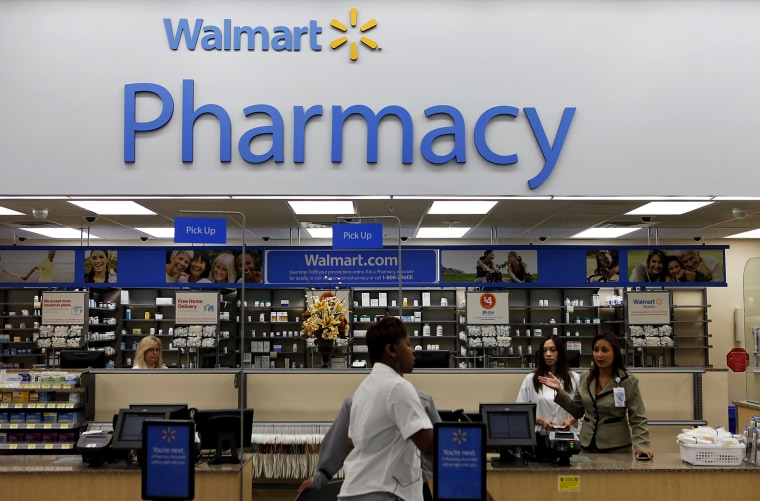
Grand Opening At A New Wal-Mart Store

Walmart’s $4 generic prescription drug program ends up being cheaper for some Medicare patients than their own health insurance, according to a new study released Monday.

It’s more evidence that patients cannot always rely on their health insurance to get them the lowest prices for their prescription drugs, said Dr. Joseph Ross of the Yale School of Medicine, who led the study.

“Patients were paying more out of pocket when they were using their insurance than when they went to Walmart,” Ross told NBC News.

The study, published in the Annals of Internal Medicine, documents that Walmart provides a better deal than the government’s health insurance plan for people over 65. And that is bad news for Medicare, because if people don’t take their drugs, whether for cost or for other reasons, they tend to get sicker and then end up costing even more to treat.

“Everyone’s talking about pharmacy costs these days,” Ross said. “We did this study in part because of all the discussion about pharmacy gag rules.”

Pharmacy gag rules prevent pharmacists from telling patients that they could save money on drugs, for instance by not using their health insurance.

Pharmacy benefit managers are the middlemen between drug companies and pharmacies, and some of those companies have agreements forbidding talk of discounts. But some states have also banned pharmacists from giving this information to customers.

According to the National Conference of State Legislatures, at least 22 states have some kind of gag rule legislation.

One way patients can get around this is to ask, but few people think to do so.

Ross and colleagues decided to see what would happen if Medicare patients just took advantage of Walmart’s program offering $4 generic prescription drugs.

They looked at Walmart’s generic list for drugs commonly used to treat heart conditions, including high blood pressure and high cholesterol.

“Next, we used Medicare prescription drug plan data from June 2017 to determine beneficiary out-of-pocket costs for the lowest-priced dose of each drug in each plan,” they wrote. They got data on more than 2,000 Medicare prescription drug plans, including Medicare Advantage plans.

Overall, 21 percent of the plans asked patients to pay more out of pocket for the drugs than they would pay if they just got them for $4 at Walmart, the team reported.

Medicare Advantage plans were the most expensive for patients, Ross said. And the higher-tier programs were the worst, he found.

“Twenty percent of the time, at least, we should go to Walmart,” Ross said.

It doesn’t help that Medicare is very complicated. Patients can choose from dozens of different plans, depending on where they live, and it can take a great deal of research to find out which plan is most likely to cover a particular person’s health conditions for the least amount of money.

“Each Medicare drug plan has its own list of covered drugs (called a formulary),” the Center for Medicare and Medicaid Services says on its website.

“Many Medicare drug plans place drugs into different ‘tiers’ on their formularies. Drugs in each tier have a different cost. A drug in a lower tier will generally cost you less than a drug in a higher tier.”

Ross said it is time-consuming to compare one Medicare plan to another. But understanding one of the many plans tells people very little about what the others might offer.

“If you have read through the details and material for one plan, you have read through the details and materials for one plan. It’s very hard to compare,” he said.

In addition, any given plan may change the drugs that it covers and their prices throughout the year.

Ross said he studied Walmart because its $4 price for a 30-day supply of a generic drug seemed like the least expensive option, but other retailers also have inexpensive drug plans. Some grocery-based pharmacies even offer free drugs, such as antibiotics.

These offers get customers into the store, and the hope is that they’ll buy something else while they are there.

Ross said no patient should decide on a Medicare plan based solely on whether Walmart offers a better deal on prescriptions.

Switching plans might not be the best idea, because different plans provide different levels of coverage for doctor visits, medical procedures and other health needs.

“What we are showing is there may be some ways to save some money on some drugs by going to Walmart,” Ross said.

According to the Kaiser Family Foundation, about 90 percent of prescriptions filled in the U.S. are for generic drugs. Most people get health insurance through an employer, and the typical co-pay for a generic drug for a patient covered by employer-provided health insurance is $11, Kaiser found. For a brand-name drug, the average co-pay is $33.

Walmart is moving aggressively to get a big share of the U.S. health care market. Besides having large pharmacies, stores offer free health screenings and the company has said it intends to expand its locations of retail walk-in health clinics.

Walmart is also negotiating a closer partnership with health insurer Humana, including the possibility of buying it outright, according to CNBC.

The discount retailer’s $4 generic prescriptions beat Medicare’s co-pays 21 percent of the time, a study found.


Trump Administration Seeks a Big Change in How Medicare Pays Doctors

http://www.thefiscaltimes.com/2018/07/23/Trump-Administration-Seeks-Big-Change-How-Medicare-Pays-Doctors

The Trump administration wants to change the way Medicare pays doctors for office visits by creating a flat payment of about $135 for all appointments. The change is intended to reduce paperwork significantly but is meeting resistance from specialists who say they will be underpaid for their services, which could result in more doctors refusing to see Medicare patients.

Currently, there are five levels of Medicare office visits, each with its own payment amount, ranging from a short visit with a nurse (level 1) to an in-depth evaluation from a specialist (level 5). Visits with doctors typically start at level 2, with a current billing rate for new patients of $76, and move up in complexity to level 5, with a billing rate of $211.

Not all doctors would lose out, since less complex visits would be billed at a higher rate under the proposal, but the specialists currently billing at the top level would see a reduction in fees. “This proposal is likely to penalize physicians who treat sicker patients, even though they spend more time and effort and more resources managing those patients,” Deborah J. Grider, an expert on the subject, told The New York Times.

On the other hand, the proposal would reduce the time-intensive requirement to document the different levels of services, particularly at the upper end. “The differences between Levels 2 to 5 are often really difficult to discern and time-consuming to document,” Dr. Kate Goodrich, Medicare’s chief medical officer, toldthe Times.

One thing the proposed billing system won’t change is the overall cost of spending on physician services under Medicare. While the proposal would redirect some of the fees from one set of doctors to another, spending would remain at roughly $70 billion a year.


Trump Administration Preparing Fix for Obamacare Risk Payments

https://www.bloomberg.com/news/articles/2018-07-19/obamacare-potential-fix-is-prepared-after-halt-in-risk-payments

Image result for Trump Administration Preparing Fix for Obamacare Risk Payments


The Trump administration is preparing a regulation that would allow the resumption of billions of dollars in payments to health insurers in Obamacare.

The Office of Management and Budget was sent a rule on Wednesday from the Centers for Medicare and Medicaid Services tied to the risk-adjustment program, which transfers money to insurers who take on sicker customers.

An administration official said the rule is an option being considered to resolve the legal dispute that has held up the payments.

The rule is labeled as an interim final rule, a status that would allow it to go into effect immediately. It’s titled “Ratification and Reissuance of the Methodology for the HHS-operated Permanent Risk Adjustment Program under the Patient Protection and Affordable Care Act.”

The administration official asked not to be identified, because the rule hasn’t been made public. Details of government rules aren’t released to the public until they’re reviewed by the budget office.

Health-insurance industry groups had pushed the Trump administration to issue an interim final rule for the risk-adjustment program to resolve a legal dispute that had threatened to halt payments under the program. The risk-adjustment payments, worth $10.4 billion for 2017, are part of a program in the Affordable Care Act meant to help balance the insurance markets when some insurers inevitably got stuck with costlier patients.

Insurers had warned they might have to raise Obamacare premiums for 2019 if the dispute wasn’t resolved quickly. The program moves money among insurers, transferring funds from insurers with healthier customers to those with sicker ones. Among publicly traded insurers, Centene Corp. and Molina Healthcare Inc. owe money to other insurers under the program, while Anthem Inc. is set to receive funds.

The Blue Cross Blue Shield Association, an industry trade group whose members include Anthem, said it approves of the effort, though it will need to examine the details of the rule carefully once it’s available.

“This regulation needs to be put in place quickly and effectively in order to avoid disruption for consumers and small businesses who will be purchasing coverage this fall,” Kris Haltmeyer, vice president for legislative and regulatory policy at the association, said by email.


Sniffles? Cancer? Under Medicare Plan, Payments for Office Visits Would Be Same for Both


Image result for Sniffles? Cancer? Under Medicare Plan, Payments for Office Visits Would Be Same for Both

The Trump administration is proposing huge changes in the way Medicare pays doctors for the most common of all medical services, the office visit, offering physicians basically the same amount, regardless of a patient’s condition or the complexity of the services provided.

Administration officials said the proposal would radically reduce paperwork burdens, freeing doctors to spend more time with patients. The government would pay one rate for new patients and another, lower rate for visits with established patients.

“Time spent on paperwork is time away from patients,” said Seema Verma, the administrator of the Centers for Medicare and Medicaid Services. She estimated that the change would save 51 hours of clinic time per doctor per year.

But critics say the proposal would underpay doctors who care for patients with the greatest medical needs and the most complicated ailments — and could discourage some physicians from taking Medicare patients. They also say it would increase the risk of erroneous and fraudulent payments because doctors would submit less information to document the services provided.

Medicare would pay the same amount for evaluating a patient with sniffles and a head cold and a patient with complicated Stage 4 metastatic breast cancer, said Ted Okon, the executive director of the Community Oncology Alliance, an advocacy group for cancer doctors and patients. He called that “simply crazy.”

Dr. Angus B. Worthing, a rheumatologist, said he understood the administration’s objective. “Doctors did not go to medical school to type on a computer all day,” he said.

But, he added: “This proposal is setting up a potential disaster. Doctors will be less likely to see Medicare patients and to go into our specialty. Patients with arthritis and osteoporosis may have to wait longer to see the right specialists.”

Private insurers often follow Medicare’s lead, so the proposed change has implications that go far beyond the Medicare program.

The proposal, part of Medicare’s physician fee schedule for 2019, is to be published Friday in the Federal Register, with an opportunity for public comment until Sept. 10. The new policies would apply to services provided to Medicare patients starting in January.

“We anticipate this to be a very, very significant and massive change, a welcome relief for providers across the nation,” Ms. Verma said, adding that it fulfills President Trump’s promise to “cut the red tape of regulation.”

“Evaluation and management services” are the foundation of an office visit. Medicare now recognizes five levels of office visits, with Level 5 involving the most comprehensive medical history and physical examination of a patient, and the most complex decision making by the doctor.

Level 1 is mostly for nonphysician services: for example, a five-minute visit with a nurse to check the blood pressure of a patient recently placed on a new medication.

A Level 5 visit could include a thorough hourlong evaluation of a patient with heart failure, chronic obstructive pulmonary disease, high blood pressure and diabetes with blood sugar out of control.

“The differences between Levels 2 to 5 are often really difficult to discern and time-consuming to document,” said Dr. Kate Goodrich, Medicare’s chief medical officer.

Medicare payment rates for new patients now range from $76 for a Level 2 office visit to $211 for a Level 5 visit. The Trump administration proposal would establish a single new rate of about $135. That could mean gains for doctors who specialize in routine care, but a huge hit for those who deal mainly with complicated patients, such as rheumatologists and oncologists.

For established patients, the proposal calls for a payment rate of about $93, in place of current rates ranging from $45 to $148 for the four different levels of office visits.

“This proposal is likely to penalize physicians who treat sicker patients, even though they spend more time and effort and more resources managing those patients,” said Deborah J. Grider, who has audited tens of thousands of medical records and written a book on the subject.

Dr. Atul Grover, the executive vice president of the Association of American Medical Colleges, said, “The single payment rate may not reflect the resources needed to treat patients we see at academic medical centers — the most vulnerable patients, those who have complex medical needs.”

While the proposal would redistribute money among doctors, it is not intended to cut spending under Medicare’s physician fee schedule, which totals roughly $70 billion a year.

If the new rules really do simplify their work, doctors say, they will be elated.

“We can focus more on patient care and less on the administrative burden of documentation and billing,” said Dr. David B. Glasser, an assistant professor of ophthalmology at the Johns Hopkins University School of Medicine. “We sometimes joke that it can be more complicated trying to get the coding level right than it is to figure out what’s wrong with the patient.”

But, Dr. Glasser said, the financial impact of the proposal on eye doctors is not yet clear.

Documentation requirements have increased in response to growing concerns about health care fraud and improper payments that cost Medicare billions of dollars a year.

In many cases, federal auditors could not determine whether services were actually provided or were medically necessary. In some cases, they found that doctors had billed Medicare — and patients — for more costly services than they actually performed.

In a report required by federal law, officials estimated early this year that 18 percent of Medicare payments for office visits with new patients were incorrect or improper, about three times the error rate for established patients.

To prevent fraud and abuse, Medicare officials have repeatedly told doctors to document their claims. “If it is not documented, it has not been done” — that is the principle set forth in Medicare’s billing manual for doctors.

The Trump administration is moving away from that policy.

“We have proposed to move to a system with minimal documentation requirements for Levels 2 to 5 and one single payment rate,” Dr. Goodrich said.

Doctors now must provide more documentation for higher levels of care. Under the proposal, “practitioners would only need to meet documentation requirements currently associated with a Level 2 visit.” That would reduce the need for audits to verify the level of office visits.

Medicare officials acknowledged that doctors who typically bill at Levels 4 and 5 could see financial losses under the proposal. But they said some of the losses could potentially be offset by “add-on payments” for primary care doctors and certain other medical specialists.

With such adjustments, Medicare officials said, the impact on most doctors would be relatively modest. A table included in the proposed rule indicates that obstetricians and gynecologists would gain the most, while dermatologists, rheumatologists and podiatrists would lose the most.


Healthcare Triage News: Ending Risk Adjustment Payments Will Further Undermine Obamacare

Healthcare Triage News: Ending Risk Adjustment Payments Will Further Undermine Obamacare

Image result for Healthcare Triage News: Ending Risk Adjustment Payments Will Further Undermine Obamacare


Maryland governor signs federal all-payer health contract

https://www.myjournalcourier.com/news/medical/article/Maryland-governor-signs-federal-all-payer-health-13060454.php

Maryland Gov. Larry Hogan, center, signs a contract with the federal government for the state's unique all-payer health care model in Annapolis, Md., on Monday, July 9, 2018. Seema Verma, administrator of the federal Centers for Medicare and Medicaid Services, is on the right and Maryland Senate President Thomas V. Mike Miller is on the left. Robert Neall, Maryland's health secretary is standing behind the governor. Photo: Brian Witte, AP / AP

Maryland Gov. Larry Hogan signed a contract with the federal government on Monday to enact the state’s unique all-payer health care model, which he said will create incentives to improve care while saving money.

Hogan signed the five-year contract along with the administrator of the federal Centers for Medicare and Medicaid Services, Seema Verma.

“The Maryland Model provides incentives across the health system to provide greater coordinated care, expanded patient-care delivery and collaboration of chronic-disease management … all while improving the quality of care at lower cost to the consumer,” Hogan said.

He said the model emphasizes the quality of care over the quantity of care.

The Hogan administration said the new contract is expected to provide an additional $300 million in savings a year by 2023, totaling $1 billion in savings over five years.

Maryland is the only state that can set its own rates for hospital services, and all payers must charge the same rate for services at a given hospital. The policy has been in place since the 1970s, though Maryland modernized its one-of-a-kind Medicare waiver about four years ago to move away from reimbursing hospitals on a fee-for-service basis to a fixed budget.

Because that change focused on hospitals only, the federal government required the state to develop a new model that would provide comprehensive coordination across the entire health care system.

Under the agreement, Maryland will be relieved of federal restrictions and red tape that the other 49 states face in the Medicare program. However, the state will have to meet benchmarks of improving access to health care while improving quality and reducing costs.

Verma said the model is the first involving the Centers for Medicare and Medicaid Services that holds the state “fully at risk for total Medicare costs for all residents.”

“The state and CMS have agreed on the goals, and now our job is to get out of the way and give the state the maximum flexibility to achieve success.”

Maryland health secretary Robert Neall says if successful, the plan could be replicated around the country to address financial strain on Medicare. Neall described the model as being “less transactional and more just taking care of the total person.”

“The incentives are going to be aligned so that it’s right place, right time, right purpose, right price, instead of, ‘Come back and see me in two weeks, and we’ll run the same set of tests on you,'” Neall said.


Insurers warn of rising premiums after Trump axes Obamacare payments again

https://www.reuters.com/article/us-usa-healthcare-obamacare/insurers-predict-market-disruption-after-trump-suspends-obamacare-risk-payments-idUSKBN1JY0RI

Image result for Insurers warn of rising premiums after Trump axes Obamacare payments again

Health insurers warned that a move by the Trump administration on Saturday to temporarily suspend a program that was set to pay out $10.4 billion to insurers for covering high-risk individuals last year could drive up premium costs and create marketplace uncertainty.

The Affordable Care Act’s (ACA) “risk adjustment” program is intended to incentivize health insurers to cover individuals with pre-existing and chronic conditions by collecting money from insurers with relatively healthy enrollees to offset the costs of other insurers with sicker ones.

President Donald Trump’s administration has used its regulatory powers to undermine the ACA on multiple fronts after the Republican-controlled Congress last year failed to repeal and replace the law propelled by Democratic President Barack Obama. About 20 million Americans have received health insurance coverage through the program known as Obamacare.

America’s Health Insurance Plans (AHIP), a trade group representing insurers offering plans via employers, through government programs and in the individual marketplace, said the CMS suspension would create a “new market disruption” at a “critical time” when insurers are setting premiums for next year.

“It will create more market uncertainty and increase premiums for many health plans – putting a heavier burden on small businesses and consumers, and reducing coverage options. And costs for taxpayers will rise as the federal government spends more on premium subsidies,” AHIP said in a statement.

It could also encourage more insurers to bow out of Obamacare.

“This is occurring right at the time of year that people (insurers) are making decisions about whether to participate in the exchanges and what premiums to charge if they do,” said Eric Hillenbrand, a managing director at consultancy AlixPartners. “This will affect their thinking on both of those decisions.”

The Centers for Medicare and Medicaid Services (CMS), which administers ACA programs, said on Saturday that months-old conflicting court rulings related to the risk adjustment formula prevent them from making payments.

CMS was referring to a February ruling from a federal court in New Mexico that invalidated the risk adjustment formula, and a January ruling from a federal court in Massachusetts that upheld it.

CMS administrator Seema Verma said in a statement the administration was “disappointed” in the February ruling and that CMS has asked the court to reconsider and “hopes for a prompt resolution that allows CMS to prevent more adverse impacts on Americans.”

But supporters of the ACA criticized the CMS announcement as the latest move by the Trump administration to undermine Obamacare.

“We urge the Trump administration to back off of this dangerous and destabilizing plan, and instead begin working on bipartisan solutions to make coverage more affordable,” said Brad Woodhouse, the executive director of Protect Our Care, a progressive group that supports Obamacare.

The administration has made several other moves in recent years to scale back or halt implementation of certain aspects of the ACA.

Late last year, it said it would halt so-called cost-sharing payments, which offset some out-of-pocket healthcare costs for low-income patients.

It has also scaled back the advertising budget for Obamacare healthcare plans during the open-enrollment period by about 90 percent.

“What you are effectively doing is dismantling pieces of [the ACA] without replacing them,” Hillenbrand said. “It moves us back to some extent to the status quo where people with pre-existing conditions found it very difficult to get insurance.”

Five Worrisome Trends in Healthcare

https://www.medpagetoday.com/publichealthpolicy/healthpolicy/72001?pop=0&ba=1&xid=fb-md-pcp&trw=no

Image result for five worrisome trends in healthcare

A reckoning is coming, outgoing BlueCross executive says.

A reckoning is coming to American healthcare, said Chester Burrell, outgoing CEO of the CareFirst BlueCross BlueShield health plan, here at the annual meeting of the National Hispanic Medical Association.

Burrell, speaking on Friday, told the audience there are five things physicians should worry about, “because they worry me”:

1. The effects of the recently passed tax bill. “If the full effect of this tax cut is experienced, then the federal debt will go above 100% of GDP [gross domestic product] and will become the highest it’s been since World War II,” said Burrell. That may be OK while the economy is strong, “but we’ve got a huge problem if it ever turns and goes back into recession mode,” he said. “This will stimulate higher interest rates, and higher interest rates will crowd out funding in the federal government for initiatives that are needed,” including those in healthcare.

Burrell noted that 74 million people are currently covered by Medicaid, 60 million by Medicare, and 10 million by the Children’s Health Insurance Program (CHIP), while another 10 million people are getting federally subsidized health insurance through the Affordable Care Act’s (ACA’s) insurance exchanges. “What happens when interest’s demand on federal revenue starts to crowd out future investment in these government programs that provide healthcare for tens of millions of Americans?”

2. The increasing obesity problem. “Thirty percent of the U.S. population is obese; 70% of the total population are either obese or overweight,” said Burrell. “There is an epidemic of diabetes, heart disease, and coronary artery disease coming from those demographics, and Baby Boomers will see these things in full flower in the next 10 years as they move fully into Medicare.”

3. The “congealing” of the U.S. healthcare system. This is occurring in two ways, Burrell said. First, “you’ll see large integrated delivery systems [being] built around academic medical centers — very good quality care [but] 50%-100% more expensive than the community average.”

To see how this affects patients, take a family of four — a 40-year-old dad, 33-year-old mom, and two teenage kids — who are buying a health insurance policy from CareFirst via the ACA exchange, with no subsidy. “The cost for their premium and deductibles, copays, and coinsurance [would be] $33,000,” he said. But if all of the care were provided by academic medical centers? “$60,000,” he said. “What these big systems are doing is consolidating community hospitals and independent physician groups, and creating oligopolies.”

Another way the system is “congealing” is the emergence of specialty practices that are backed by private equity companies, said Burrell. “The largest urology group in our area was bought by a private equity firm. How do they make money? They increase fees. There is not an issue on quality but there is a profound issue on costs.”

4. The undermining of the private healthcare market. “Just recently, we have gotten rid of the individual mandate, and the [cost-sharing reduction] subsidies that were [expected to be] in the omnibus bill … were taken out of the bill,” he said. And state governments are now developing alternatives to the ACA such as short-term duration insurance policies — originally designed to last only 3 months but now being pushed up to a year, with the possibility of renewal — that don’t have to adhere to ACA coverage requirements, said Burrell.

5. The lackluster performance of new payment models. “Despite the innovation fostering under [Center for Medicare & Medicaid Innovation] programs — the whole idea was to create a series of initiatives that might show the wave of the future — ACOs [accountable care organizations] and the like don’t show the promise intended for them, and there is no new model one could say is demonstrably more successful,” he said.

“So beware — there’s a reckoning coming,” Burrell said. “Maybe change occurs only when there is a rip-roaring crisis; we’re coming to it.” Part of the issue is cost: “As carbon dioxide is to global warming, cost is to healthcare. We deal with it every day … We face a future where cutbacks in funding could dramatically affect accessibility of care.”

“Does that mean we move to move single-payer, some major repositioning?” he said. “I don’t know, but in 35 years in this field, I’ve never experienced a time quite like this … Be vigilant, be involved, be committed to serving these populations.”