State Efforts to Protect Consumers from Balance Billing

https://www.commonwealthfund.org/blog/2019/state-efforts-protect-consumers-balance-billing?omnicid=EALERT1547609&mid=henrykotula@yahoo.com

Image result for balance billing

Health insurance rates for working-age Americans have improved over the past decade. But not everyone with health insurance today has adequate financial protection. About one-fourth of insured Americans are underinsured because they have significant coverage gaps or high out-of-pocket costs. And all consumers are vulnerable to surprise medical bills, or balance bills for out-of-network care. These balance bills arise when insurance covers out-of-network care, but the provider bills the consumer for amounts beyond what the insurer pays and beyond cost-sharing, as well as in situations where out-of-network care is not normally covered but the selection of provider is outside the consumer’s control.

Consumers are most likely to receive surprise medical bills from health providers outside their insurance plan’s network after receiving emergency care or medical procedures at in-network facilities. In the latter cases, for example, consumers may select a surgeon and facility in network, but discover that other providers, such as an anesthesiologist or surgical assistant, are out of network. These unexpected medical bills are a major concern for Americans, with two-thirds saying they are “very worried” or “somewhat worried” that they or a family member will receive a surprise bill. In fact, these bills are the most-cited concern related to health care costs and other household expenses.

While employers and insurers may voluntarily protect employees or enrollees from some types of balance billing, no federal law regulates charges submitted by out-of-network providers. States can help protect enrollees from unexpected balance bills. However, state protections are limited by federal law (ERISA), which exempts self-insured employer-sponsored plans, covering 61 percent of privately insured employees, from state regulation.

Despite Recent State Activity, Consumers in Most States Are Not Protected from Balance Billing

We conducted a study, published in June 2017, that found that 21 states had laws offering consumers at least some protections in a balance billing situation. But only six of those states — California, Connecticut, Florida, Illinois, Maryland, and New York — had laws meeting our standard for “comprehensive” protections.

Critical elements of state laws that offer “comprehensive” protections against balance billing:

  • Extend protections to both emergency department and in-network hospital settings
  • Apply laws to all types of insurance, including both HMOs and PPOs
  • Protect consumers both by holding them harmless from extra provider charges — meaning they are not responsible for the charges — and prohibiting providers from balance billing, and
  • Adopt an adequate payment standard — a rule to determine how much the insurer pays the provider — or a dispute-resolution process to resolve payment disputes between providers and insurers.

In 2017 and 2018, states continued taking steps to protect consumers. Four states — Arizona, Maine, Minnesota, and Oregon — created balance-billing consumer protections for the first time, and two states — New Hampshire and New Jersey — substantially expanded existing protections. We now classify New Hampshire, New Jersey, and Oregon as states offering comprehensive protections against balance billing. As of December 2018, 25 states have laws offering some balance-billing protection to their residents, and nine of them offer comprehensive protections.

New Jersey has met our criteria for comprehensive protection by creating a strong dispute-resolution process to establish a payment amount for the out-of-network service. Other states have recently acted to protect consumers from balance billing in a more limited way that does not meet our criteria. For example, Missouri’s protections against balance billing apply only if the provider and insurer voluntarily agree to participate in the process.

Interest in a Federal Solution to Balance Billing

At the same time, interest has grown in federal measures, in part, because only federal legislation can protect those in self-funded insurance plans that are exempt from state regulation. During the 115th Congress, proposals were released by Senator Bill Cassidy (R–La.)Senator Maggie Hassan (D–N.H.)Representative Lloyd Doggett (D–Texas), and Representative Michelle Lujan Grisham (D–N.M.). The Cassidy proposal has bipartisan support, with three Democrats and two other Republicans as cosponsors.

Federal approaches vary along some of the same lines as state laws. For example, the Hassan bill relies most heavily on a dispute-resolution approach. By contrast, the Cassidy proposal relies on a payment standard that is the greater of a) the median in-network rate paid by the insurer or b) 125 percent of the average allowed amount across payers. Several federal proposals make protections contingent on failure of providers to notify the consumer that they could be billed by an out-of-network provider. States that have enacted protections have mostly viewed such contingent protections as an insufficient means of protecting consumers. Federal proposals also vary in the degree to which they allow a state role in implementing protections.

Some federal proposals, like some state laws, have potential gaps. For example, some address balance bills only from hospital-based physicians such as anesthesiologists and radiologists. Also, state laws and federal proposals mostly do not address ground or air emergency transport providers.

Looking Forward

The bipartisan interest in the surprise billing issue offers the potential for federal action in the new Congress. States are frustrated by their inability to address all insurance plans. And states without laws have often faced opposition from stakeholder groups, even when there is a consensus around protecting consumers. A federal solution could offer a more comprehensive approach, while giving states appropriate flexibility to seek an approach fitting their particular market environments.


IN SEARCH OF INSURANCE SAVINGS, CONSUMERS CAN GET UNWITTINGLY WEDGED INTO NARROW-NETWORK PLANS

https://www.healthleadersmedia.com/search-insurance-savings-consumers-can-get-unwittingly-wedged-narrow-network-plans?utm_source=silverpop&utm_medium=email&utm_campaign=ENL_181101_LDR_BRIEFING%20(1)&spMailingID=14541829&spUserID=MTY3ODg4NTg1MzQ4S0&spJobID=1520057837&spReportId=MTUyMDA1NzgzNwS2

Wedged Into Narrow-Network Plans

Despite federal rules requiring plans to keep up-to-date directories, consumers may lack access to clear information about which health plans have ‘narrow networks’ of providers or which hospitals and doctors are in or out of an insurer’s network.

As a breast cancer survivor, Donna Catanuchi said she knows she can’t go without health insurance. But her monthly premium of $855 was too high to afford.

“It was my biggest expense and killing me,” said Catanuchi, 58, of Mullica Hill, N.J.

A “navigator” who helps people find coverage through the Affordable Care Act found a solution. But it required Catanuchi, who works part time cleaning offices, to switch to a less comprehensive plan, change doctors, drive farther to her appointments and pay $110 a visit out-of-pocket — or about three times what she was paying for her follow-up cancer care.

She now pays $40 a month for coverage, after she qualified for a substantial government subsidy.

Catanuchi’s switch to a more affordable but restrictive plan reflects a broad trend in insurance plan design over the past few years. The cheaper plans offer far narrower networks of doctors and hospitals and less coverage of out-of-network care. But many consumers are overwhelmed or unaware of the trade-offs they entail, insurance commissioners and policy experts say.

With enrollment for ACA health plans beginning Nov. 1, they worry that consumers too often lack access to clear information about which health plans have “narrow networks” of medical providers or which hospitals and doctors are in or out of an insurer’s network, despite federal rules requiring plans to keep up-to-date directories.

“It’s very frustrating for consumers,” said Betsy Imholz, who represents the advocacy group Consumers Union at the National Association of Insurance Commissioners. “Health plan provider directories are often inaccurate, and doctors are dropping in and out all the time.”

These more restrictive plans expose people to larger out-of-pocket costs, less access to out-of-network specialists and hospitals, and “surprise” medical bills from unforeseen out-of-network care.

More than 14 million people buy health insurance on the individual market — largely through the ACA exchanges, and they will be shopping anew this coming month.

TREND APPEARS TO BE SLOWING

For 2018, 73 percent of plans offered through the exchanges were either health maintenance organizations (HMOs) or exclusive provider organizations (EPOs), up from 54 percent in 2015.

Both have more restrictive networks and offer less out-of-network coverage compared with preferred provider organizations (PPOs), which represented 21 percent of health plans offered through the ACA exchanges in 2018, according to Avalere, a health research firm in Washington, D.C.

PPOs typically provide easier access to out-of-network specialists and facilities, and partial — sometimes even generous — payment for such services.

Measured another way, the number of ACA plans offering any out-of-network coverage declined to 29 percent in 2018 from 58 percent in 2015, according to a recent analysis by the Robert Wood Johnson Foundation.

For example, in California, HMO and EPO enrollment through Covered California, the state’s exchange, grew from 46 percent in 2016 to 70 percent in 2018, officials there said. Over the same period, PPO enrollment declined from 54 percent to 30 percent.

In contrast, PPOs have long been and remain the dominant type of health plan offered by employers nationwide. Forty-nine percent of the 152 million people and their dependents who were covered through work in 2018 were enrolled in a PPO-type plan. Only 16 percent were in HMOs, according to the Kaiser Family Foundation’s annual survey of employment-based health insurance.

The good news for people buying health insurance on their own is that the trend toward narrow networks appears to be slowing.

“When premiums shot up over the past few years, insurers shifted to more restrictive plans with smaller provider networks to try and lower costs and premiums,” said Chris Sloan, a director at Avalere. “With premium increases slowing, at least for now, that could stabilize.”

Some research supports this prediction. Daniel Polsky, a health economist at the University of Pennsylvania, found that the number of ACA plans nationwide with narrow physician networks declined from 25 percent in 2016 to 21 percent in 2017.

Polsky is completing an analysis of 2018 plans and expects the percent of narrow network plans to remain “relatively constant” for this year and into 2019.

“Fewer insurers are exiting the marketplace, and there’s less churn in the plans being offered,” said Polsky. “That’s good news for consumers.”

Insurers may still be contracting with fewer hospitals, however, to constrain costs in that expensive arena of care, according to a report by the consulting firm McKinsey & Co. It found that 53 percent of plans had narrow hospital networks in 2017, up from 48 percent in 2014.

“Narrow networks are a trade-off,” said Paul Ginsburg, a health care economist at the Brookings Institution. “They can be successful when done well. At a time when we need to find ways to control rising health care costs, narrow networks are one legitimate strategy.”

Ginsburg also notes that there’s no evidence to date that the quality of care is any less in narrow versus broader networks, or that people are being denied access to needed care.

Mike Kreidler, Washington state’s insurance commissioner, said ACA insurers in that state “are figuring out they can’t get away with provider networks that are inadequate to meet people’s needs.”

“People have voted with their feet, moving to more affordable choices like HMOs but they won’t tolerate draconian restrictions,” Kreidler said.

The state is stepping in, too. In December 2017, Kreidler fined one insurer — Coordinated Care — $1.5 million for failing to maintain an adequate network of doctors. The state suspended $1 million of the fine if the insurer had no further violations. In March 2018, the plan was docked another $100,000 for similar gaps, especially a paucity of specialists in immunology, dermatology and rheumatology. The $900,000 in potential fines continues to hang over the company’s head.

Centene Corp, which owns Coordinated Care, has pledged to improve its network.

Pennsylvania Insurance Commissioner Jessica Altman said she expects residents buying insurance in the individual marketplace for 2019 to have a wider choice of providers in their networks.

“We think and hope insurers are gradually building more stable networks of providers,” said Altman.

NEW STATE LAWS

Bad publicity and recent state laws are pushing insurers to modify their practices and shore up their networks.

About 20 states now have laws restricting surprise bills or balance billing, or which mandate mediation over disputed medical bills, especially those stemming from emergency care.

Even more have rules on maintaining accurate, up-to-date provider directories.

The problem is the laws vary widely in the degree to which they “truly protect consumers,” said Claire McAndrew, a health policy analyst at Families USA, a consumer advocacy group in Washington, D.C. “It’s a patchwork system with some strong consumer protections and a lot of weaker ones.”

“Some states don’t have the resources to enforce rules in this area,” said Justin Giovannelli, a researcher at the Center on Health Insurance Reforms at Georgetown University. “That takes us backward in assuring consumers get coverage that meets their needs.”


Health care mega-mergers may get green light from feds

https://www.axios.com/health-care-mega-mergers-justice-department-approval-a48cb213-ae0a-45da-9e99-dfb031957e55.html

The Department of Justice headquarters in Washington, D.C.


Antitrust regulators at the Department of Justice are expected to approve two major health care deals — CVS Health’s $69 billion buyout of Aetna and Cigna’s $67 billion deal for Express Scripts — within a matter of weeks, the Wall Street Journal reports.

Why it matters: The health insurance and pharmacy benefits industries would be even more heavily consolidated than they currently are, which has worried consumer advocates and providers. The WSJ reports the only required antitrust remedies would be for CVS and Aetna to divest overlapping assets in their Medicare prescription drug plans.


Senators Consider Dueling Bills Over Texas Individual Mandate Litigation

https://www.healthaffairs.org/do/10.1377/hblog20180828.283008/full/?utm_term=Read%20More%20%2526gt%3B%2526gt%3B&utm_campaign=Health%20Affairs%20Sunday%20Update&utm_content=email&utm_source=Act-On_2018-08-05&utm_medium=Email&cm_mmc=Act-On%20Software-_-email-_-Individual%20Mandate%20Litigation%3B%20Housing%20And%20Equitable%20Health%20Outcomes%3B%20Simplifying%20The%20Medicare%20Plan%20Finder%20Tool-_-Read%20More%20%2526gt%3B%2526gt%3B

Litigation in Texas over the constitutionality of the individual mandate and, with it, the entire Affordable Care Act (ACA) is receiving more and more attention in Congress. On August 23, 2018, Republican Senators released new legislation that they believe would help blunt the impact of a ruling for the plaintiffs in Texas v. United States. The stated aim of the bill is to “guarantee” equal access to health care coverage regardless of health status or preexisting conditions. However, in the event that the court agrees with the plaintiffs—or even just the Trump administration—the legislation leaves significant gaps.

At the same time, Democratic Senators had their efforts to potentially intervene in the litigation rebuffed during the debate over a recent appropriations bill for the Departments of Labor, Health and Human Services (HHS), Education, and Defense. With a hearing on Texas scheduled for September 5, 2018—the same time as hearings are set to begin in Congress over the confirmation of D.C. Circuit Judge Brett Kavanaugh to the Supreme Court—attention on the case is only likely to increase.

Brief Background On Texas

In Texas, 20 Republican state attorneys general and two individual plaintiffs challenge the constitutionality of the individual mandate, which was zeroed out by Congress beginning in 2019. Without the penalty, the plaintiffs argue that the mandate is unconstitutional. Because the mandate cannot be severed from the rest of the law, they believe the entire ACA should also be struck down.

In June, the Department of Justice (DOJ) declined to defend the constitutionality of the individual mandate alongside the ACA’s provisions on guaranteed issue (42 U.S.C. §§ 300gg-1, 300gg-4(a)), community rating (42 U.S.C. §§ 300gg(a)(1), 300gg-4(b)), and the ban on preexisting condition exclusions and discrimination based on health status (42 U.S.C. § 300gg-3). These provisions collectively ensure that individuals with preexisting conditions cannot be charged more for their coverage or denied coverage or benefits based on health status or other factors.

The plaintiffs have asked Judge Reed O’Connor of the federal district court in the Northern District of Texas to enjoin HHS and the Internal Revenue Service (IRS) from enforcing the ACA and its implementing regulations—or, at a minimum, to strike down the law’s guaranteed issue and community rating provisions alongside the mandate. Judge O’Connor is considering ruling on the merits of the case (instead of issuing a preliminary injunction) and has scheduled a hearing on the motion for a preliminary injunction for September 5.

As noted above, the hearing will coincide with confirmation hearings for Judge Kavanaugh. Texas will likely be a focal point in the Kavanaugh proceedings because of the possibility that the case will reach the Supreme Court and because previous decisions suggest that Judge Kavanaugh believes that a President can decline to enforce laws that he or she believes to be unconstitutional.

The New Republican Legislation

Recognizing the potential impact of the Texas lawsuit, 10 Republican Senators released new legislation on August 23. The bill is sponsored by Senators Thom Tillis (NC), Lamar Alexander (TN), Chuck Grassley (IA), Dean Heller (NV), Bill Cassidy (LA), Lisa Murkowski (AK), Joni Ernst (IA), Lindsey Graham (SC), John Barrasso (WY), and Roger Wicker (MS). It is tied directly to the Texas litigation: Press releases acknowledge the September 5 hearing and state that “protections for patients with pre-existing conditions could be eliminated” if Judge O’Connor rules in favor of the plaintiffs.

The legislation would amend the Health Insurance Portability and Accountability Act of 1996 (HIPAA). Although HIPAA offered significant new protections at the time it was passed, these protections were limited in terms of ensuring that people with preexisting conditions could access affordable, comprehensive coverage, particularly in the individual market. HIPAA established a minimum set of federal protections for certain consumers—for example, those who lost their group coverage—facing certain situations, such as job lock because of a new preexisting condition exclusion period. HIPAA also required guaranteed issue in the small group market and guaranteed renewability in the individual and group markets.

As mentioned, the DOJ has declined to defend the ACA’s provisions on guaranteed issue (42 U.S.C. §§ 300gg-1, 300gg-4(a)) and community rating (42 U.S.C. §§ 300gg(a)(1), 300gg-4(b)), and the ban on preexisting condition exclusions and discrimination based on health status (42 U.S.C. § 300gg-3). Thus, their position in the lawsuit implicates parts of four provisions of federal law: 42 U.S.C. §§ 300gg, 300gg-1, 300gg-3, and 300gg-4.

The legislation introduced by Republican Senators would restore only two of the four provisions that stand to be invalidated in Texas: 42 U.S.C. § 300gg-1 (guaranteed issue) and most of § 300gg-4 (guaranteed issue and rating based on health status). So the bill would prohibit the denial of coverage and rating based on health status, but it would not prohibit preexisting condition exclusions or rating based on other factors, such as age, gender, tobacco use, or occupation. This means that many individuals, including those with preexisting conditions, could still face higher premiums, higher out-of-pocket costs, and the denial of benefits because of a preexisting condition even after paying premiums for many months.

Implications 

The protections offered by the restoration of the two provisions included in the Senate GOP bill, § 300gg-1 and most of § 300gg-4, are largely illusory without the other parts of the ACA—community rating and the ban on preexisting condition exclusions—that are at risk in the lawsuit. Assuming the at-risk provisions are struck down and the new legislation is adopted, consumers would still face significant gaps. For instance, a woman with a history of cancer could purchase a policy under the new bill, but she could be charged more based on her gender and age, potentially pricing her out of the market. In addition, her policy could have a preexisting condition exclusion, meaning that any recurrence of cancer—or any other health condition—might not be covered at all; this could lead to much higher out-of-pocket costs and far less financial protection.

If Congress were to enact this bill today, it would largely be duplicative of existing law (and would do nothing to disturb the ACA). If Congress were to enact this bill in response to the Texas litigation, its effect would depend on how (if at all) a court would invalidate the ACA provisions in Texas. Would a court strike the entire provisions, including what was adopted under HIPAA and other federal laws? Or would a court simply strike the amendments that were made by the ACA?

If the latter, the new legislation might do even less than its authors think, because much of the bill is, in fact, devoted to readopting existing federal law that may not be at issue in Texas. These provisions were adopted before the ACA and touch on, for instance, genetic information nondiscrimination and long-standing exceptions to guaranteed issue.

No Vote On Manchin Resolution To Potentially Intervene In Texas

In July, Democratic Senators led by Joe Manchin (WV) introduced a resolution with the goal of intervening in Texas to defend the ACA’s protections for people with preexisting conditions. The resolution would authorize the Senate Legal Counsel to move to intervene in the case on behalf of the Senate and defend the ACA. During last week’s debate over an HHS appropriations bill, Senate leadership blocked a vote on the amendment.


States sue Trump administration over AHP expansion

https://www.healthcaredive.com/news/states-sue-trump-administration-over-ahp-expansion/528875/

Dive Brief:

  • Attorneys general from 11 states and Washington, D.C. are suing the Trump administration in hopes of putting the brakes on association health plan expansion.
  • Expanding AHPs is a key plank in President Donald Trump’s healthcare platform, but critics call the plans “junk insurance” that will sidestep Affordable Care Act regulations.
  • Meanwhile, the House of Representatives passed two bills last week that look to lower restrictions on health savings accounts (HSAs).

Dive Insight:

Trump, who repeatedly calls the ACA a “disaster,” said AHPs and allowing anyone to get catastrophic health insurance will offer flexibility and reduce health insurance costs.

In announcing the final rule last month, the Department of Labor said the regulation included anti-discrimination protections similar to those for large employers. It also allows states to regulate AHPs.

Though supportive of those protections, AHP critics are still concerned about the plans. They charge that AHPs will offer fewer consumer protections, lead to higher premiums in individual and small-group markets and result in fraudulent companies in the AHP market.

Tempting people with lower-cost offerings, AHPs and catastrophic plans could cause millions to flee the ACA exchanges. A recent report from the Society of Actuaries predicted between 3% and 10% of those in ACA marketplace plans will leave for AHPs. Those people are more likely to be young and healthy. Leaving the marketplace plans will result in an unstable risk pool with higher premiums in the exchanges.

A recent report from Avalere predicted individual rates would increase by between 2.7% and 4% and small group by between 0.1% and 1.9% with AHP expansion. Avalere said 130,000 to 140,000 more people will become uninsured because of the premium increases in the individual market by 2022.

Millions of people and small employers once got coverage through AHPs. However, the ACA instituted consumer protections for AHPs and said they should be regulated the same as individual and small-group market plans, such as requiring them to cover people with pre-existing conditions. The consumer protections increased the costs of AHPs, and many of them folded. The Kaiser Family Foundation said only 6% of employers with fewer than 250 employees offered health insurance through AHPs in 2017.

The Trump administration wants to make AHPs a low-cost solution with fewer regulations and consumer protections. However, the lawsuit involving 11 states and Washington, D.C. alleges the Department of Labor’s rule to expand AHPs violates the Administrative Procedures Act. The suit said that allowing for more AHPs “increases the risk of fraud and harm to consumers, requires states to redirect significant enforcement resources to curb those risks and jeopardizes state efforts to protect their residents through stronger regulation. The rule is unlawful and should be vacated.”

Meanwhile, the Republican-led House of Representatives is promoting more use of health savings accounts, which are a crucial part of high-deductible health plans and the drive toward consumerism.

One bill the House passed would allow members more flexibility to use their HSA until meeting their deductible. It also lets spouses contribute to an HSA and loosens restrictions on how members can use the account. The second piece of legislation would let people set aside more money for their HSA. That bill would also reduce the health insurance tax for two years, a change supported by the insurance lobby. The ACA created the tax as a way to pay for coverage improvements, but payers say it increases premiums.


Medigap Enrollment and Consumer Protections Vary Across States

Medigap Enrollment and Consumer Protections Vary Across States

One in four people in traditional Medicare (25 percent) had private, supplemental health insurance in 2015—also known as Medigap—to help cover their Medicare deductibles and cost-sharing requirements, as well as protect themselves against catastrophic expenses for Medicare-covered services. This issue brief provides an overview of Medigap enrollment and analyzes consumer protections under federal law and state regulations that can affect beneficiaries’ access to Medigap. In particular, this brief examines implications for older adults with pre-existing medical conditions who may be unable to purchase a Medigap policy or change their supplemental coverage after their initial open enrollment period.

Key Findings

  • The share of beneficiaries with Medigap varies widely by state—from 3 percent in Hawaii to 51 percent in Kansas.
  • Federal law provides limited consumer protections for adults ages 65 and older who want to purchase a supplemental Medigap policy—including, a one-time, 6-month open enrollment period that begins when they first enroll in Medicare Part B.
  • States have the flexibility to institute consumer protections for Medigap that go beyond the minimum federal standards. For example, 28 states require Medigap insurers to issue policies to eligible Medicare beneficiaries whose employer has changed their retiree health coverage benefits.
  • Only four states (CT, MA, ME, NY) require either continuous or annual guaranteed issue protections for Medigap for all beneficiaries in traditional Medicare ages 65 and older, regardless of medical history (Figure 1). Guaranteed issue protections prohibit insurers from denying a Medigap policy to eligible applicants, including people with pre-existing conditions, such as diabetes and heart disease.
  • In all other states and D.C., people who switch from a Medicare Advantage plan to traditional Medicare may be denied a Medigap policy due to a pre-existing condition, with few exceptions, such as if they move to a new area or are in a Medicare Advantage trial period.

Medigap is a key source of supplemental coverage for people in traditional Medicare

Medicare beneficiaries can choose to get their Medicare benefits (Parts A and B) through the traditional Medicare program or a Medicare Advantage plan, such as a Medicare HMO or PPO. Roughly two-thirds of Medicare beneficiaries are in traditional Medicare, and most have some form of supplemental health insurance coverage because Medicare’s benefit design includes substantial cost-sharing requirements, with no limit on out-of-pocket spending. Medicare requires a Part A deductible for hospitalizations ($1,340 in 2018), a separate deductible for most Part B services ($183), 20 percent coinsurance for many Part B (physician and outpatient) services, daily copayments for hospital stays that are longer than 60 days, and daily copays for extended stays in skilled nursing facilities.

To help with these expenses and limit their exposure to catastrophic out-of-pocket costs for Medicare-covered services, a quarter of beneficiaries in traditional Medicare (25 percent) had a private, supplemental insurance policy, known as Medigap in 2015 (Figure 2). Medigap serves as a key source of supplemental coverage for people in traditional Medicare who do not have supplemental employer- or union-sponsored retiree coverage or Medicaid, because their incomes and assets are too high to qualify. Medicare beneficiaries also purchase Medigap policies to make health care costs more predictable by spreading costs over the course of the year through monthly premium payments, and to reduce the paperwork burden associated with medical bills.1

Medigap policy benefits were standardized through the Omnibus Budget Reconciliation Act of 1990, which also included additional consumer protections discussed later in this issue brief.2 Of the 10 standard Medigap policies available to beneficiaries, Plan F is the most popular, accounting for over half of all policyholders in 2016, because it covers the Part A and B deductibles (as does Plan C), and all cost-sharing for Part A and B covered services.3

The share of all Medicare beneficiaries with Medigap coverage varies widely by state—from 3 percent in Hawaii to 51 percent in Kansas in 2016 (Figure 3, Appendix Table). In 20 states, at least one-quarter of all Medicare beneficiaries have a Medigap policy. States with higher Medigap enrollment tend to be in the Midwest and plains states, where relatively fewer beneficiaries are enrolled in Medicare Advantage plans.4

Medigap coverage is substantially more common for Medicare beneficiaries ages 65 and older than it is for younger Medicare beneficiaries, many of whom qualify for Medicare because of a long-term disability. Only 5 percent of traditional Medicare beneficiaries under age 65 had Medigap in 2015—considerably lower than the shares in older age brackets (Figure 4). The low enrollment in Medigap by beneficiaries under age 65 is likely due to the absence of federal guarantee issue requirements for younger Medicare beneficiaries with disabilities (discussed later in this brief) and higher rates of Medicaid coverage for people on Medicare with disabilities who tend to have relatively low incomes.

Federal law provides limited consumer protections for Medigap policies

In general, Medigap insurance is state regulated, but also subject to certain federal minimum requirements and consumer protections. For example, federal law requires Medigap plans to be standardized to make it easier for consumers to compare benefits and premiums across plans. Federal law also requires Medigap insurers to offer “guaranteed issue” policies to Medicare beneficiaries age 65 and older during the first six months of their enrollment in Medicare Part B and during other qualifying events (listed later in this brief). During these defined periods, Medigap insurers cannot deny a Medigap policy to any applicant based on factors such as age, gender, or health status. Further, during these periods, Medigap insurers cannot vary premiums based on an applicant’s pre-existing medical conditions (i.e., medical underwriting). However, under federal law, Medigap insurers may impose a waiting period of up to six months to cover services related to pre-existing conditions, only if the applicant did not have at least six months of prior continuous creditable coverage.5 As described later in this brief, states have the flexibility to institute Medigap consumer protections that go further than the minimum federal standards.

Federal law also imposes other consumer protections for Medigap policies. These include “guaranteed renewability” (with few exceptions), minimum medical loss ratios, limits on agent commissions to discourage “churning” of policies, and rules prohibiting Medigap policies to be sold to applicants with duplicate health coverage.6 (For further details on these requirements and a history of federal involvement in the Medigap market, see Medigap: Spotlight on Enrollment, Premiums, and Recent Trends, April 2013.)

When does federal law require guaranteed issue protections for Medigap?

Federal law provides guaranteed issue protections for Medigap policies during a one-time, six-month Medigap open enrollment period for beneficiaries ages 65 and older when enrolling in Medicare Part B, and for certain qualifying events. These limited circumstances include instances when Medicare beneficiaries involuntarily lose supplemental coverage, such as when their Medicare Advantage plan discontinues coverage in their area, or when their employers cancel their retiree coverage. Beneficiaries who are in a Medicare Advantage plan also have federal guaranteed issue rights when they move to a new area and can no longer access coverage from their Medicare Advantage plan. In these qualifying events, people ages 65 and older in Medicare generally have 63 days to apply for a supplemental Medigap policy under these federal guaranteed issue protections.

Federal law also requires that Medigap polices be sold with guaranteed issue rights during specified “trial” periods for Medicare Advantage plans. One of these trial periods is during the first year older adults enroll in Medicare. During that time, older adults can try a Medicare Advantage plan, but if they disenroll within the first year, they have guaranteed issue rights to purchase a Medigap policy under federal law. Another trial period applies to Medicare beneficiaries who cancel their Medigap policy to enroll in a Medicare Advantage plan. These beneficiaries have time-limited guaranteed issue rights to purchase their same Medigap policy if, within a year of signing up for a Medicare Advantage plan, they decide to disenroll to obtain coverage under traditional Medicare.

States have the flexibility to institute Medigap consumer protections that go further than the minimum federal standards, such as extending guaranteed issue requirements beyond the open enrollment period or adding other qualifying events that would require insurers to issue policies, as discussed later in this brief.

When does federal law not provide guaranteed issue protections for Medigap?

Broadly speaking, after 6 months of enrolling in Medicare Part B, older adults do not have federal guaranteed issue protections when applying for Medigap, except for specified qualifying events described earlier (Table 2). Therefore, older adults in traditional Medicare who miss the open enrollment period may, in most states, be subject to medical underwriting, and potentially denied a Medigap policy due to pre-existing conditions, or charged higher premiums due to their health status.

Medical Underwriting. Insurance companies that sell Medigap policies may refuse to sell a policy to an applicant with medical conditions, except under circumstances described above. The Text Box on this page provides examples of health conditions that may lead to the denial of Medigap policies, derived from underwriting manuals/guides from multiple insurance companies selling Medigap policies. Examples of conditions listed by insurers as reasons for policy denials include diabetes, heart disease, cancer, and being advised by a physician to have surgery, medical tests, treatments, or therapies.

Barriers for Beneficiaries Under Age 65 with Disabilities. Under federal law, Medigap insurers are not required to sell Medigap policies to the over 9 million Medicare beneficiaries who are under age of 65, many of whom qualify for Medicare based on a long-term disability. (However, when these beneficiaries turn age 65, federal law requires that they be eligible for the same six-month open enrollment period for Medigap that is available to new beneficiaries age 65 and older.)

Beneficiaries Choosing to Switch from Medicare Advantage to Traditional Medicare. There are no federal guarantee issue protections for individuals who choose to switch from a Medicare Advantage plan to traditional Medicare and apply for a Medigap policy, except under limited circumstances described in Table 2. In most states, therefore, beneficiaries who want to switch from their Medicare Advantage plan to traditional Medicare may be subject to medical underwriting and denied coverage when they apply for a Medigap policy because they do not have guaranteed issue rights, with some exceptions (e.g., if they have moved or if they are in a limited trial period). In states that allow medical underwriting for Medigap, Medicare Advantage enrollees with pre-existing conditions may find it too financially risky to switch to traditional Medicare if they are unable to purchase a Medigap policy. Without Medigap, they could be exposed to high cost-sharing requirements, mainly because traditional Medicare does not have a limit on out-of-pocket spending (in contrast to Medicare Advantage plans).7

Some states require guaranteed issue and other consumer protections for Medigap beyond the federal minimum requirements

States have the flexibility to institute Medigap consumer protections that go further than the minimum federal standards. While many states have used this flexibility to expand guarantee issue rights for Medigap under certain circumstances, 15 states and the District of Columbia have not, relying only the minimum guarantee issue requirements under federal law (Table 3).

Only four states require Medigap insurers to offer policies to Medicare beneficiaries age 65 and older (Figure 5). Three of these states (Connecticut, Massachusetts, and New York) have continuous open enrollment, with guaranteed issue rights throughout the year, and one state (Maine) requires insurers to issue Medigap Plan A (the least generous Medigap plan shown earlier in Table 1) during an annual one-month open enrollment period. Consistent with federal law, Medigap insurers in New York, Connecticut, and Maine may impose up to a six-month “waiting period” to cover services related to pre-existing conditions if the applicant did not have six months of continuous creditable coverage prior to purchasing a policy during the initial Medigap open enrollment period.8 Massachusetts prohibits pre-existing condition waiting periods for its Medicare supplement policies.

Many other states have expanded on the federal minimum standards in more narrow ways by requiring Medigap insurers to offer policies to eligible applicants during additional qualifying events (Table 3). For example, 28 states require Medigap insurers to issue policies when an applicant has an involuntary change in their employer (retiree) coverage. (This qualifying event is more expansive than federal law, which applies only when retiree coverage is completely eliminated.) Nine states provide guaranteed issue rights for applicants who lose their Medicaid eligibility.9

As noted above, federal law does not require Medigap insurers to issue policies to Medicare beneficiaries under the age of 65, most of whom qualify for Medicare because of a long-term disability. However, 31 states require insurers to provide at least one kind of Medigap policy to beneficiaries younger than age 65 (typically through an initial open enrollment period).10

Some states provide stronger consumer protections for Medigap premiums than others

States also have the flexibility to establish rules on whether or not Medigap premiums may be affected by factors such as a policyholder’s age, smoking status, gender, and residential area. Federal law allows states to alter premiums based on these factors, even during guaranteed issue open enrollment periods.

There are three different rating systems that can affect how Medigap insurers determine premiums: community rating, issue-age rating, or attained-age rating (defined in the Text box below). States can impose regulations on which of these rating systems are permitted or required for Medigap policies sold in their state. Of the three, community rating provides the strongest consumer protection for Medigap policies because it does not allow premiums to be based on the applicant or policyholder’s age or health status. However, insurers in states that require community rating may charge different premiums based on other factors, such as smoking status and residential area. In states that allow attained age rating, older applicants and policyholders have considerably less protection from higher premiums because premiums may increase at unpredictable rates as policyholders age.

Premium rating systems

Community rating: Insurers must charge all policyholders within a given plan type the same premium without regard to age (among people age 65 and older) or health status. Insurers can raise premiums only if they do so for all policyholders of the given plan type. Insurers may still adjust premiums based on other factors, including smoking status, gender, and residential area.

Issue-age rating: Insurers may vary premiums based on the age of the policyholder at the time of purchase, but cannot increase the policyholder’s premium automatically in later years based on his/her age. Additionally, insurers may charge different premiums based on other factors, including health status, smoking status, and residential area.

Attained-age rating: Insurers may vary premiums based on the age of the policyholder at the time of purchase and increase premiums for policyholders as they age. Additionally, insurers may charge different premiums based on other factors, including health status, smoking status, and residential area.

Currently, eight states (AR, CT, MA, ME, MN, NY, VT, and WA) require premiums to be community rated among policyholders ages 65 and older. This means that Medigap insurers cannot charge higher premiums to people because they are older or sicker, and therefore, must charge an 80-year old policyholder the same as a 70-year old policyholder regardless of health status (Table 4). Insurers may still adjust premiums based on other factors, including smoking status, gender, and residential area. A state’s community rating requirement does not, in itself, guarantee that applicants will be issued a policy in the state. However, as described earlier, four of the states that have community rating (CT, MA, ME, NY), have guarantee issue protections and require insurers to issue Medigap policies to eligible applicants either continuously during the year, or during an annual enrollment period.

The remaining 38 states and the District of Columbia do not require premiums to be community rated; therefore, Medigap premiums in these states may be subject to issue-age and attained-age rating systems, depending on state regulation. Medigap insurers are permitted to offer community rated policies in these states, but most do not.11 Additionally, Medigap insurers may increase premiums due to inflation, regardless of the premium rating system.12

Discussion

Medigap plays a major role in providing supplemental coverage for people in traditional Medicare, particularly among those who do not have an employer-sponsored retiree plan or do not qualify for cost-sharing assistance under Medicaid. Medigap helps beneficiaries budget for out-of-pocket expenses under traditional Medicare. Medigap also limits the financial exposure that beneficiaries would otherwise face due to the absence of an out-of-pocket limit under traditional Medicare.

Nonetheless, Medigap is not subject to the same federal guaranteed issue protections that apply to Medicare Advantage and Part D plans, with an annual open enrollment period. As a result, in most states, medical underwriting is permitted which means that beneficiaries with pre-existing conditions may be denied a Medigap policy due to their health status, except under limited circumstances.

Federal law requires Medigap guaranteed issue protections for people age 65 and older during the first six months of their Medicare Part B enrollment and during a “trial” Medicare Advantage enrollment period. Medicare beneficiaries who miss these windows of opportunity may unwittingly forgo the chance to purchase a Medigap policy later in life if their needs or priorities change.13 This constraint potentially affects the nearly 9 million beneficiaries in traditional Medicare with no supplemental coverage; it may also affect millions of Medicare Advantage plan enrollees who may incorrectly assume they will be able to purchase supplemental coverage if they choose to switch to traditional Medicare at some point during their many years on Medicare.

Only four states (CT, MA, NY, ME) require Medigap policies to be issued, either continuously or for one month per year for all Medicare beneficiaries age 65 and older. Policymakers could consider a number of other policy options to broaden access to Medigap. One approach could be to require annual Medigap open enrollment periods, as is the case with Medicare Advantage and Part D plans, making Medigap available to all applicants without regard to medical history during this period. Another option would be to make voluntary disenrollment from a Medicare Advantage plan a qualifying event with guaranteed issue rights for Medigap, recognizing the presence of beneficiaries’ previous “creditable” coverage. For Medicare beneficiaries younger than age 65, policymakers could consider adopting federal guaranteed issue protections, building on rules already established by the majority of states.

On the one hand, these expanded guaranteed issue protections would increase beneficiaries’ access to Medigap, especially for people with pre-existing medical conditions. They would also treat Medigap similarly to Medicare Advantage in this regard, and make it easier for older adults to switch between Medicare Advantage and traditional Medicare if their Medicare Advantage plan is not serving their needs in later life. On the other hand, broader guaranteed issue policies could result in some beneficiaries waiting until they have a serious health problem before purchasing Medigap coverage, which would likely increase premiums for all Medigap policyholders. A different approach altogether would be to minimize the need for supplemental coverage in Medicare by adding an out-of-pocket limit to traditional Medicare.14

Ongoing policy discussions affecting Medicare and its benefit design could provide an opportunity to consider various ways to enhance federal consumer protections for supplemental coverage or manage beneficiary exposure to high out-of-pocket costs. As older adults age on to Medicare, they would be well-advised to understand the Medigap rules where they live, and the trade-offs involved when making coverage decisions.


California attorney general sues Sutter Health for anticompetitive practices

https://www.fiercehealthcare.com/regulatory/california-ag-sues-sutter-health-for-anticompetitive-practices?mkt_tok=eyJpIjoiTkdNMU56bGxOVGRpWlRRMyIsInQiOiJOQmExNkliUVBkRFNHMGRBUFZiRG5MazRJVHJxQjFvRTl3NjVNV0pxeDlHc0dyVEhBS01HRjlcL1ZLaXFcL3hpOHVzVkxtdEpZb1BPYTc3SE82VnN3U05nejlNNEVOWUhhY2h2NThFdUluTjY1SU5zUkgxZEExRTFTemI5a3dSNkZJIn0%3D&mrkid=959610

Gavel

California’s attorney general has filed a lawsuit against Sutter Health, the largest system in the northern part of the state, claiming the organization’s anticompetitive practices have driven up healthcare prices throughout the region

The charges in the lawsuit (PDF) are “not new to Sutter,” AG Xavier Becerra said at a press conference Friday afternoon. The filing follows a statewide investigation into healthcare costs that revealed wide price disparities between the northern and southern parts of the state.

“Sutter Health is throwing its weight around in the healthcare market, engaging in illegal, anticompetitive pricing that hurts California families,” Becerra said in an announcement. “Big business should not be able to throttle competition at the expense of patients.”

Sutter was able to jack up prices for care at its facilities in several ways, according to the lawsuit:

  • Forcing insurance companies to negotiate with it in an “all-or-nothing” systemwide fashion
  • Blocking payers from offering patients low-cost health plan options
  • Charging extremely high rates for out-of-network visits
  • Limiting price transparency

Karen Garner, a spokesperson for Sutter, said in a statement emailed to FierceHealthcare that the system is “aware that a complaint was filed, but we have not seen it at this time, so we cannot comment on specific claims.”

Garner said that data from the state’s Office of Statewide Health Planning and Development show lower prices at Sutter Health facilities compared to other providers operating in Northern California. Sutter has also kept rate increases for its health plan in “low single digits since 2012,” she said.

“It’s also important to note that healthy competition and choice exists across Northern California,” Garner said. “There are 15 major hospital systems and 142 hospitals in Northern California, including Kaiser Permanente, Dignity, Adventist, Tenet, UC and more. And health plans can elect to include or exclude parts of the Sutter Health system from their networks, and health plans have been doing so for many years.”

Multiple California employers and labor unions have taken action against the health system for anticompetitive practices prior to the AG’s involvement. Sutter came under fire late last year after it was revealed that in 2015 it destroyed 192 boxes of documents that these entities sought as evidence, which the system said was a regrettable mistake.

A California judge said there was “no good reason” for Sutter to have destroyed the documents and said the “most generous interpretation” was that the system was “grossly reckless.”

The AG’s lawsuit also alleges that in addition to driving up healthcare costs in Northern California, Sutter’s actions enriched its executives, and fueled acquisitions that led to further consolidation and funding for its own health plan.

Becerra’s office was spurred to act, according to the announcement, following the release earlier this week of a report from the University of California that detailed how much consolidation has impacted healthcare costs in the state, with northern regions especially affected.

The average cost for an inpatient stay in Northern California was $223,278, compared to an average of $131,586 in the southern regions, according to the report (PDF).

Kathleen Foote, senior assistant attorney general in California who heads the antitrust unit, said at the press conference that taking action against Sutter’s practices should lead to increased competition that benefits both price and care quality.

A video of the full press conference is embedded below:


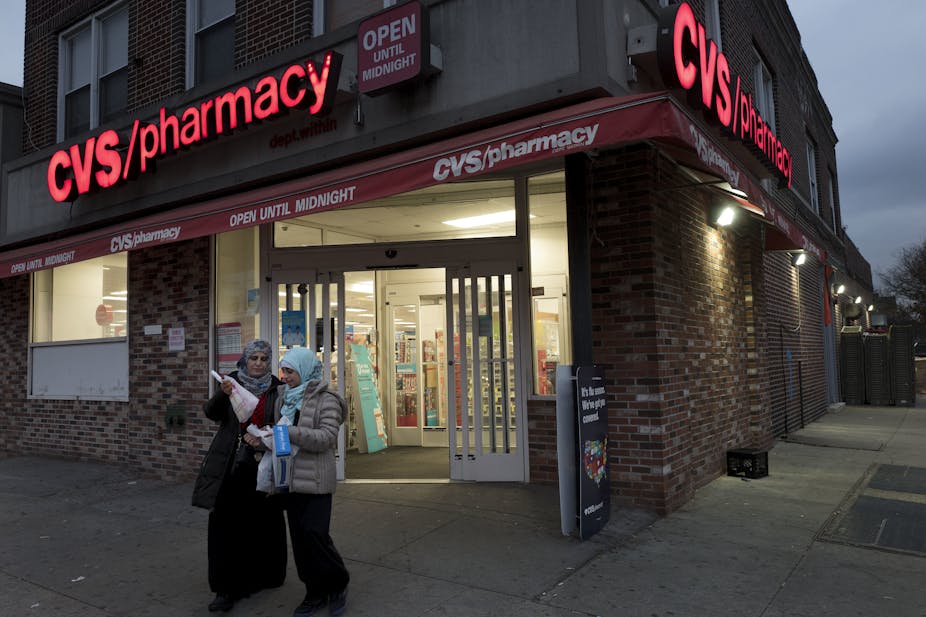
CVS merger with Aetna: Health care cure or curse?

https://theconversation.com/cvs-merger-with-aetna-health-care-cure-or-curse-88670?utm_medium=email&utm_campaign=Latest%20from%20The%20Conversation%20for%20December%206%202017%20-%2089557547&utm_content=Latest%20from%20The%20Conversation%20for%20December%206%202017%20-%2089557547+CID_461096d86af0ad8c2eedceabf8b8a42f&utm_source=campaign_monitor_us&utm_term=CVS%20merger%20with%20Aetna%20Health%20care%20cure%20or%20curse

The announcement that CVS plans to acquire Aetna for US$69 billion raises hope and concerns.

The transaction would create a new health care giant. Aetna is the third-largest health insurer in the United States, insuring about 46.7 millionpeople.

CVS operates 9,700 pharmacies and 1,000 MinuteClinics. A decade ago, it also purchased Caremark and now operates CVS/Caremark, a pharmacy benefits manager, a type of business that administers drug benefit programs for health plans. CVS/Caremark is one of the three largest pharmacy benefits managers in the United States. Along with ExpressScripts and OptummRXTogether, these three control at least 80 percent of the market.

Should American consumers be happy or concerned about the proposed merger? As a professor of health law and bioethics, I see compelling arguments on both sides.

Good for consumers, or for the companies?

CVS and Aetna assert they are motivated by a desire to improve services for consumers and that the merger will lower health care costs and improve outcomes.

Many industry experts have postulated, however, that financial gain is at the heart of the deal.

CVS has suffered declining profits as consumers turn to online suppliers for drugs. Reports that Amazon is considering entry into the pharmacy business raise the specter of increasingly fierce competition.

The merger would provide CVS with guaranteed business from Aetna patients and allow Aetna to expand into new health care territory.

The heart of the deal

The merger would eliminate the need for a pharmacy benefits manager because CVS would be part of Aetna.

Pharmacy benefits managers, which sprang up in the early 2000s in response to rising costs of care, administer drug benefit programs for health plans. Most large employers contract with pharmacy benefits managers that are different from their health insurers.

Nevertheless, a consolidation along the lines of a CVS/Caremark and Aetna merger would not be unprecedented. The nation’s largest health insurance company, United Healthcare, operates its own pharmacy benefits manager, OptumRx.

Pharmacy benefits managers process and pay prescription drug claims, negotiate with manufacturers for lower drug prices, and can employ other cost-saving mechanisms. They thus act as intermediaries between the insurer and pharmacies.

They also make a lot of money. They have been controversial in recent years for how they do so, allegedly keeping a keener focus on profits than on patients.

The merger has not been finalized and requires approval from government regulators, which isn’t always easy to get. In 2016 the U.S. Department of Justice sued to block two health insurer mergers: one between Aetna and Humana and a second between Anthem and Cigna. The government objected on antitrust grounds, arguing that the mergers would unduly restrict competition. Both efforts were abandoned.

CVS and Aetna argue that their proposed merger is different. It is a vertical rather than a horizontal merger, which means that it would combine companies providing different services for patients (insurance and filling prescriptions) rather than two companies doing the same thing.

However, the Trump administration is currently opposing another vertical merger, that between AT&T and Time Warner. It is unclear whether the administration will likewise oppose the CVS/Aetna merger.

Benefits of a merger

There is some evidence that a merger could help consumers.

A merger could result in more negotiating power. Combining the power of a leading pharmacy and a top insurer may allow CVS/Aetna to negotiate more effectively for price discounts from drug and device manufacturers.

It also could cut out the middleman. PBMs themselves have been blamed for raising health care costs. They often do not pass on negotiated drug discounts to consumers, but rather keep the money themselves. In addition, many believe they “make money through opaque rebates that are tied to drug prices (so their profits rise as those prices do).” With the merger, CVS/Aetna would not need CVS/Caremark to function as an intermediary. Eliminating a profit-seeking middleman from the picture could lower consumer prices.

The merger could provide easy access to health care for minor injuries and illnesses. CVS said it plans to expand its MinuteClinics, walk-in clinics that provide treatment by nurse practitioners for minor conditions. Also, CVS said it would offer more services, such as lab work, nutritional advice, vision and hearing care, and more. Thus, CVS promises that its clinics will become “health hubs.”

Many patients could turn to these clinics instead of seeking more expensive care from physicians or emergency rooms. Furthermore, health hubs could provide “one-stop shopping” convenience for some patients. This could be particularly beneficial to elderly individuals or those with disabilities.

Another benefit could be improved and expanded data analytics, which could result in better care. Combining information from patients’ health insurers with that of their pharmacies, including nonprescription health purchases, may promote better care. CVS pharmacists and health hub providers would be able to monitor and counsel patients regarding chronic disease management, pain management, prenatal care and other matters. Such attention could reduce the risk of complications and hospitalizations and thus also decrease expenditures.

Increase of other risks?

Skeptics argue that the CVS/Aetna merger is unlikely to yield cost savings and improved outcomes. They note that mergers in the health care sector generally lead to higher, not lower, prices and worry about other adverse consequences.

If the market shrinks to fewer pharmacy benefits managers because of consolidation, costs may actually increase. The remaining pharmacy benefits managers may have little incentive to compete with each other by demanding discounts from drug companies. As noted above, they may actually profit from higher pharmaceutical prices and thus welcome increases.

After the merger, Aetna may require those it insures to use only CVS pharmacies. In addition, it may require individuals to turn to CVS MinuteClinics for certain complaints even if patients prefer to visit their own doctors. Such restrictions would mean less choice for consumers, and many may find them to be very distressing.

The merger could also decrease competition and bar other companies from entering the pharmacy market. For example, Aetna may refuse to cover prescription drugs that are not purchased from CVS. In that case, Amazon may find it extremely difficult if not impossible to break into the industry. Less competition, in turn, often means higher prices for consumers.

It is difficult to predict the precise consequences of a CVS/Aetna merger. One way or another, however, its impact will likely be significant.


Ambulance trips can leave you with surprising — and very expensive — bills

https://www.washingtonpost.com/national/health-science/ambulance-trips-can-leave-you-with-surprising–and-very-expensive–bills/2017/11/17/6be9280e-c313-11e7-84bc-5e285c7f4512_story.html?tid=ss_tw-bottom&utm_term=.78d3dfa36d97

Image result for high ambulance bill trends


One patient got a $3,660 bill for a four-mile ride. Another was charged $8,460 for a trip from a hospital that could not handle his case to another that could. Still another found herself marooned at an out-of-network hospital, where she’d been taken by ambulance without her consent.

These patients all took ambulances in emergencies and got slammed with unexpected bills. Public outrage has erupted over surprise medical bills — generally out-of-network charges that a patient did not expect or could not control — prompting 21 states to pass laws over the years protecting consumers in some situations. But these laws largely ignore ground ambulance rides, which can leave patients stuck with hundreds or even thousands of dollars in bills and with few options for recourse, finds a Kaiser Health News review of 350 consumer complaints in 32 states.

Patients usually choose to go to the doctor, but they are vulnerable when they call 911 or get into an ambulance. The dispatcher picks the ambulance crew, which may be the local fire department or a private company hired by the municipality. The crew, in turn, often picks the hospital. Moreover, many ambulances are not summoned by patients, but by police or a bystander.

Betsy Imholz, special projects director at the Consumers Union, which has collected more than 700 patient stories about surprise medical bills, said at least a quarter concern ambulances.

“It’s a huge problem,” she said.

Forty years ago, most ambulances were free for patients, provided by volunteers or town fire departments using taxpayer money, said Jay Fitch, president of Fitch & Associates, an emergency services consulting firm. Today, ambulances are increasingly run by private companies and venture capital firms. Ambulance operators now often charge by the mile and sometimes for each “service,” such as providing oxygen. If the ambulance is staffed by paramedics rather than emergency medical technicians, that will result in a higher charge — even if the patient didn’t need paramedic-level services. Charges range from zero to thousands of dollars.

The core of the problem is that ambulance companies and private insurers often can’t agree on a fair price, so the ambulance service doesn’t join the insurer’s network. That leaves patients stuck with out-of-network charges that are not negotiated, Imholz said.

This happens to patients frequently, according to a recent study of more than half a million ambulance trips taken by patients with private insurance in 2014. The study, by two staffers at the Federal Trade Commission, found that 26 percent of these trips were billed on an out-of-network basis.

That figure is “quite jarring,” said Loren Adler, co-author of a recent report on surprise billing.

The KHN review of complaints revealed two common scenarios leaving patients in debt: First, patients get into an ambulance after a 911 call. Second, an ambulance transfers them between hospitals. In both scenarios, patients later learn the fee is much higher because the ambulance was out-of-network, and after the insurer pays what it deems fair, they get a surprise bill for the balance, also known as a “balance bill.”

The Better Business Bureau has received nearly 1,200 consumer complaints about ambulances in the past three years; half were related to billing, and 46 mentioned out-of-network charges, spokeswoman Katherine Hutt said.

While the federal government sets reimbursement rates for patients on Medicare, it does not regulate ambulance fees for patients with private insurance. Those patients are left with a highly fragmented system in which the cost of a similar ambulance trip can vary widely from town to town. There are about 14,000 ambulance services across the country, run by governments, volunteers, hospitals and private companies, according to the American Ambulance Association. (The Washington area reflects that mix.)

For a glimpse into the unpredictable system, consider the case of Roman Barshay. The 46-year-old software engineer, who lives in Brooklyn, was visiting friends in the Boston suburb of Chestnut Hill last November when he took a nasty fall.

Barshay felt a sharp pain in his chest and back, and he had trouble walking. An ambulance crew responded to a 911 call at his friends’ house and drove him four miles to Brigham and Women’s Hospital, taking his blood pressure as he lay down in the back. Doctors there determined he had sprained tendons and ligaments and a bruised foot, and released him after about four hours, he said.

After Barshay returned to Brooklyn, he got a bill for $3,660, or $915 for each mile of the ambulance ride. His insurance had covered nearly half, leaving him to pay the remaining $1,890.50.

“I thought it was a mistake,” Barshay said.

But Fallon Ambulance Service, the private company that brought him to the hospital, was out-of-network for his UnitedHealthcare insurance plan.

“The cost is outrageous,” said Barshay, who reluctantly paid the bill after Fallon sent it to a collection agency. If he had known what the ride would cost, he said, he would at least have been able to refuse the ride and “crawl to the hospital myself.”

In a statement, UnitedHealthcare said: “Out-of-network ambulance companies should not be using emergencies as an opportunity to bill patients excessive amounts when they are at their most vulnerable.”

“You feel horribly to send a patient a bill like that,” said Peter Racicot, senior vice president of Fallon, a family-owned company based outside Boston.

But ambulance firms are “severely underfunded” by Medicare and Medicaid, Racicot said, so Fallon must balance the books by charging higher rates for patients with private insurance.

Racicot said his company has not contracted with Barshay’s insurer because they couldn’t agree on a fair rate. When insurers and ambulance companies can’t agree, he said, “unfortunately, the subscribers wind up in the middle.”

It’s also unrealistic to expect EMTs and paramedics at the scene of an emergency to determine whether their company takes a patient’s insurance, Racicot added.

Ambulance services must charge enough to subsidize the cost of keeping their crews ready around the clock, said Fitch, the ambulance consultant. In a third of the cases where an ambulance crew answers a call, he added, they end up not transporting anyone and the company typically isn’t reimbursed for the trip.

In part, Barshay had bad luck. If his injury had happened just a mile away — inside Boston’s city limits — he could have ridden a city ambulance, which would have charged $1,490, according to Boston EMS, a sum that his insurer probably would have covered in full.

Very few states have laws limiting ambulance charges, and most state laws that protect patients from surprise billing do not apply to ground ambulance rides, according to Brian Werfel, a consultant to the American Ambulance Association. And none of the surprise-billing protections apply to people with self-funded employer-sponsored health insurance plans, which are regulated only by federal law. That’s a huge exception: 61 percent of privately insured employees are covered by self-funded employer-sponsored plans.

Some towns that hire private companies to respond to 911 calls may regulate fees or prohibit balance billing, Werfel said, but each locality is different.

Insurers try to protect patients from balance billing by negotiating rates with ambulance companies, said Cathryn Donaldson, a spokeswoman for America’s Health Insurance Plans. But “some ambulance companies have been resistant to join plan networks” that offer Medicare-based rates, she said.

Medicare rates vary widely by geographic area. On average, ambulance services make a small profit on Medicare payments, according to a report by the Government Accountability Office. If a patient uses a basic life support ambulance in an emergency in an urban area, for instance, Medicare payments range from $324 to $453, plus $7.29 per mile. Medicaid rates tend to be significantly lower.

There’s evidence of waste and fraud in the ambulance industry, Donaldson added, citing a study from the Office of Inspector General at the Department of Health and Human Services. The report concluded that in 2012 Medicare paid more than $50 million in improper ambulance bills, including for supposedly emergency-level transport that ended at a nursing home, not a hospital. One in 5 ambulance services had “questionable billing” practices, said the report, which noted that Medicare spent $5.8 billion on ambulance transport that year.

Most complaints reviewed by Kaiser Health News did not appear to involve fraudulent charges. Instead, patients got caught in a system in which ambulance services can legally charge thousands of dollars for a single trip — even when the trip starts at an in-network hospital.

That’s what happened to Devin Hall, a 67-year-old retired postal inspector in Northern California. While he faces Stage 3 prostate cancer, Hall is also fighting a $7,109.70 bill from American Medical Response, the nation’s largest ambulance provider.

On Dec. 27, 2016, Hall went to a local hospital with rectal bleeding. Because the hospital didn’t have the right specialist to treat his symptoms, it arranged for an ambulance ride to another hospital about 20 miles away. Even though the hospital was in his network, the ambulance was not.

Hall was stunned to see that AMR billed $8,460 for the trip. His federal health plan, the Special Agents Mutual Benefit Association, paid $1,350.30 and held Hall responsible for $727.08, records show. (According to his plan’s explanation of benefits, it paid that amount because AMR’s charges exceeded the plan’s Medicare-based fee schedule, which is based on Medicare rates.) But AMR turned his case over to a debt collector, Credence Resource Management, which sent an Aug. 25 notice seeking the full balance of $7,109.70.

“These charges are exorbitant — I just don’t think what AMR is doing is right,” said Hall, noting that he had intentionally sought treatment at an in-network hospital.

He has spent months on the phone calling the hospital, his insurer and AMR trying to resolve the matter. Given his prognosis, he worries about leaving his wife with a legal fight and a lien on their Brentwood, Calif., house for a debt they shouldn’t owe.

After being contacted by Kaiser Health News, AMR said it pulled Hall’s case from collections while it reviews the billing. After further review, company spokesman Jason Sorrick said the charges were warranted because it was a “critical care transport, which requires a specialized nurse and equipment on board.”

Sorrick faulted Hall’s health plan for underpaying, and said Hall could receive a discount if he qualifies for AMR’s “compassionate care program” based on his financial and medical situation.

“In this case, it appears the patient’s insurance company simply made up a price they wanted to pay,” Sorrick said.

In July, a California law went into effect that protects consumers from surprise medical bills from out-of-network providers, including some ambulance transport between hospitals. But Hall’s case occurred before that, and the state law doesn’t apply to him because of his federal insurance plan.

The consumer complaints reviewed by Kaiser Health News reveal a wide variety of ways that patients are left fighting big bills:

• An older patient in California said debt collectors called incessantly, including on Sunday mornings and at night, demanding an extra $500 on top of the $1,000 that his insurance had paid for an ambulance trip.

• Two ambulance services responded to a New Jersey man’s 911 call when he felt burning in his chest. One of them charged him $2,100 for treating him on the scene for less than 30 minutes — even though he never rode in that company’s ambulance.

• A woman who rolled over in her Jeep in Texas was charged a $26,400 “trauma activation fee” — a fee triggered when the ambulance service called ahead to the emergency department to assemble a trauma team. The woman, who did not require trauma care, fought the hospital to get the fee waived.

In other cases, patients face financial hardship when ambulances take them to out-of-network hospitals. Patients don’t always have a choice in where to seek care; that’s up to the ambulance crew and depends on the protocols written by the medical director of each ambulance service, said Werfel, the ambulance association consultant.

Sarah Wilson, a 36-year-old microbiologist, had a seizure at her grandmother’s house in rural Ohio on March 18, 2016, the day after having hip surgery at Akron City Hospital. When her husband called 911, the private ambulance crew that responded refused to take her back to Akron City Hospital, instead driving her to an out-of-network hospital that was 22 miles closer. Wilson refused care because the hospital was out-of-network, she said.

Wilson wanted to leave. But “I was literally trapped in my stretcher,” without the crutches she needed to walk, she said. Her husband, who had followed by car, wasn’t allowed to see her right away. She ended up leaving against medical advice at 4 a.m. She landed in collections for a $202 hospital bill for a medical examination, a debt that damaged her credit score, she said.

Ken Joseph, chief paramedic of Emergency Medical Transport, the private ambulance company that transported Wilson, said company protocol is to take patients to the “closest appropriate facility.” Serving a large area with just two ambulances, the company has to get each ambulance back to its station quickly so it can be ready for the next call, he said.

Patients such as Wilson are often left to battle these bills alone, because there are no federal protections for patients with private insurance.

Rep. Lloyd Doggett (D-Texas), who has been pushing for federal legislation protecting patients from surprise hospital bills, said in a statement that he supports doing the same for ambulance bills.

Meanwhile, patients do have the right to refuse an ambulance ride, as long as they are older than 18 and mentally capable.

“You could just take an Uber,” said Adler, co-author of the surprise-billing report. But if you need an ambulance, there’s little recourse to avoid unexpected bills, he said, “other than yelling at the insurance company after the fact, or yelling at the ambulance company.”

AMA: Nearly 70% of payer markets ‘highly concentrated’

http://www.healthcaredive.com/news/ama-nearly-70-of-payer-markets-highly-concentrated/507916/

Dive Brief:

  • A new American Medical Association (AMA) report found that one health insurer has at least a 50% market share in 43% of metropolitan areas. Nearly 90% of markets have at least one insurer with a 30% or greater market share.
  • Anthem, a major Blues payer and one of the largest insurers in the country, had the largest geographic footprint. The payer had the highest market share in 82 metropolitan areas.
  • The report found that 69% of markets are “highly-concentrated.”

Dive Insight:

The AMA study looked at where payer consolidation “may cause anti-competitive harm to consumers and providers of care.”

The authors said market concentration is a “useful indicator of competition and market power” and is an area the U.S. Department of Justice and Federal Trade Commission analyze when evaluating proposed mergers.

The annual report found a further consolidation of markets. The percentage of markets with one dominant insurer increased by 8% over the past two years.

Consolidation of insurers can affect premiums and reimbursements. A recent Health Affairs report found mergers involving hospitals, providers and payers resulted in insurers achieving more bargaining power to reduce provider prices in highly concentrated markets. That report said hospital admission prices were 5% lower in highly consolidated provider and insurer markets compared to those that are not as dense.

The AMA report warned along a similar theme. “We find that the majority of U.S. commercial health insurance markets are highly concentrated. These markets are ripe for the exercise of health insurer market power, which harms consumers and providers of care,” according to the report.

The AMA said major mergers like Anthem-Cigna and Aetna-Humana are reasons why the organization conducts the annual report. Neither merger ultimately happened, but they would have further consolidated the payer market.

The AMA warned about further consolidation. “Our findings should prompt federal and state antitrust authorities to vigorously examine the competitive effects of proposed mergers between health insurers. Given the uncertainty in predicting the competitive effects of consolidation, some mergers that are allowed cause competitive harm,” according to the report.

Anthem’s growing market share comes as the payer is creating policies that attempt to bring down health costs by pushing services away from hospital inpatient settings. Anthem announced this year that it won’t reimburse for emergency department visits deemed unnecessary and will no longer pay for MRIs and CT scans at hospitals in 13 states unless the tests are an emergency.

Given Anthem’s footprint, the payer’s new policies may mean other payers competing in the same markets will follow suit.