Health Care’s New ‘Skinny Plans’: Winners and Losers

https://www.wsj.com/articles/health-cares-new-skinny-plans-winners-and-losers-1524654000

Image result for Health Care’s New ‘Skinny Plans’: Winners and Losers


Trump’s ‘skinny plans’ offer a cheaper alternative to the Affordable Care Act, but may have far less coverage.


New, more-limited health plans may draw consumers away from Affordable Care Act coverage and drive up prices on insurance sold in the health law’s marketplaces. These “skinny” plans offer lower premiums, making them an attractive alternative for young, healthy buyers.

New, more-limited health plans may draw consumers away from Affordable Care Act coverage and drive up prices on insurance sold in the health law’s marketplaces.

These “skinny” plans offer lower premiums, making them an attractive alternative for young, healthy buyers.

Why health care costs are making consumers more afraid of medical bills than an actual illness

https://www.cnbc.com/2018/04/22/why-health-care-costs-are-making-consumers-more-afraid-of-medical-bills-than-an-actual-illness.html

Image result for Why health care costs are making consumers more afraid of medical bills than an actual illness

  • Health care costs are spiraling higher, but patient visits to a doctor have been on the decline.
  • A growing number of consumers are staying away out of fear of big bills.
  • However, “untimely visits or delay of visits to the physician ultimately leads to the increased cost of care,” the Cleveland Clinic’s CEO told CNBC.


As health care costs keep rising, more people seem to be skipping physician visits.

It’s not fear of doctors, however, but more of a phobia about the bills that could follow. Higher deductibles and out-of-network fees are just some of the out-of-pocket costs that can hit a consumer’s pockets.

U.S. health care costs keep rising, and hit more than $10,000 a year per person in 2016. According to a recent national poll, over the past 12 months, 44 percent of Americans said they didn’t go to the doctor when they were sick or injured because of financial concerns. Meanwhile, 40 percent said they skipped a recommended medical test or treatment.

Also, the study found most people who are delaying or skipping care actually have health insurance. Some 86 percent of those surveyed said they’re covered either through their employer, have insurance they purchased directly, or through government programs like Medicare and Medicaid.

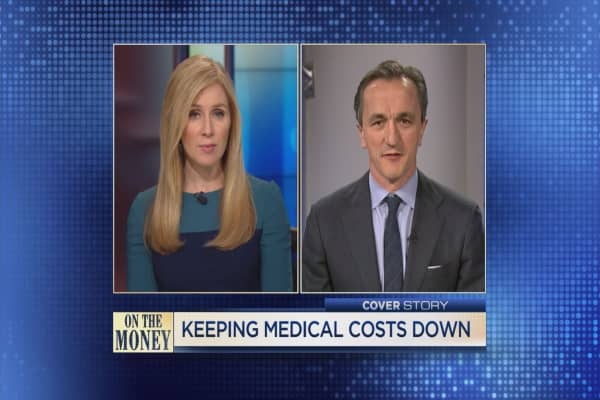
“There have been so many changes in the health care landscape in the United States that this news is not entirely surprising,” Cleveland Clinic president and CEO Tom Mihaljevic told CNBC’s “On the Money” in a recent interview. However, Mihaljevic warned that skipping visits or treatment can be counterproductive.

“One of most important consequences of skipping medical care or delaying care ultimately impacts the quality of care, impacts the outcome,” he said. “Untimely visits or delay of visits to the physician ultimately leads to the increased cost of care.”

However, the poll, conducted by the University of Chicago and the West Health Institute, found Americans fear large medical bills more than they do serious illness. The data showed 33 percent of those surveyed were “extremely afraid” or “very afraid” of getting seriously ill. About 40 percent said paying for health care is more frightening than the illness itself.

“Part of problem here is healthcare tends to be very complex, and every patient typically requires a number of procedures and tests to be done, so it’s really difficult to estimate the upfront cost of care, ” Mihaljevic told CNBC.

Additionally, the survey found 54 percent of those polled received one or more medical bills over the past year for something they thought was covered by their insurance. And 53 percent received a bill that was higher than they expected.

Mihaljevic acknowledged the range of different fees for the same services should be made clearer for consumers. “There is an absolute need for increased transparency when it comes to cost and this is one of mandates for our industry as a whole,” he said.

How technology can help

To combat rising health costs, Mihaljevic explained that the Cleveland Clinic is focused on the “standardization of care.”

“When we reduce the variability of the way we take care of patients, we manage to decrease the cost and at the same time improve the quality of care that we provide,” he added.

In addition, the health system is also pushing ahead with advances in medical technology, which may help bring down costs in the future. “We firmly believe digital technology is going to have a transformative effect,” Mihaljevic said. Among the initiatives is a partnership with IBM Watson to use big data to help clinical decision making.

And through the Cleveland Clinic’s Express Care Online, 25,000 virtual doctor visits were completed in 2017. Although virtual visits are billed as more cost effective,new data suggest otherwise.

“We are constantly looking how to make our care more accessible more affordable and of higher quality,” Mihaljevic added.

State Regulation of Coverage Options Outside of the Affordable Care Act: Limiting the Risk to the Individual Market

http://www.commonwealthfund.org/publications/fund-reports/2018/mar/state-regulation-coverage-options-outside-aca?omnicid=EALERT1377329&mid=henrykotula@yahoo.com

Abstract

  • Issue: Certain forms of individual health coverage are not required to comply with the consumer protections of the Affordable Care Act (ACA). These “alternative coverage arrangements” — including transitional policies, short-term plans, health care sharing ministries, and association health plans — tend to have lower upfront costs and offer far fewer benefits than ACA-compliant insurance. While appealing to some healthy individuals, they are often unattractive, or unavailable, to people in less-than-perfect health. By leveraging their regulatory advantages to enroll healthy individuals, these alternatives to marketplace coverage may contribute to a smaller, sicker, and less stable ACA-compliant market. The Trump administration recently has acted to reduce federal barriers to these arrangements.
  • Goal: To understand how states regulate coverage arrangements that do not comply with the ACA’s individual health insurance market reforms.
  • Methods: Analysis of the applicable laws, regulations, and guidance of the 50 states and the District of Columbia.
  • Findings and Conclusions: No state’s regulatory framework fully protects the individual market from adverse selection by the alternative coverage arrangements studied. However, states have the authority to ensure a level playing field among coverage options to promote market stability.

Background

Recent federal actions have created the potential for instability in the individual health insurance market, through which approximately 18 million Americans currently purchase their health insurance coverage.1 In October 2017, President Trump issued an executive order to encourage the sale of health insurance products that do not comply with the consumer protections of the Affordable Care Act (ACA).2 In December, Congress repealed, effective in 2019, the tax penalty for individuals who can afford to maintain health insurance coverage but decline to do so (the individual mandate penalty).3

Prior to health reform, insurers in the individual market had wide latitude to deny coverage, charge an unaffordable premium, or limit benefits based on a person’s medical history. As a consequence, individual market health insurance routinely proved inadequate for consumers’ health and financial needs and was often inaccessible to those with even minor health problems.4 The ACA established numerous consumer protections designed to make it easier for consumers in the individual market to access affordable, adequate health insurance. The law requires insurers that sell individual health insurance to offer coverage to all individuals regardless of health status, requires coverage of preexisting conditions, and prohibits insurers from charging higher premiums based on a person’s medical history or gender. It also includes limits on cost-sharing and requires insurers to cover a minimum set of essential health benefits, including coverage for mental and behavioral health care, prescription drugs, and maternity services.

For these consumer protections to work as intended and to keep premiums affordable, they need to be paired with policies that encourage a broad and balanced risk pool. To promote continuous enrollment by the sick and healthy alike, the ACA imposes an individual mandate and provides financial assistance to make coverage more affordable for those with lower and moderate incomes. Importantly, the ACA also defines what types of coverage were sufficiently protective for purposes of satisfying the individual mandate. To prevent cherry-picking of individuals who are low health risks, it also requires all individual market insurers to play by the same rules.

In many ways, the ACA’s regulatory approach to the individual market has proven successful. During the most recent open enrollment period, approximately 11.7 million Americans signed up for coverage through the ACA marketplaces (also called exchanges), most of whom are eligible for subsidies to help with the cost of coverage.5 In turn, improved access to comprehensive individual health insurance under the ACA, along with the expansion of Medicaid, has helped to reduce the uninsured rate by a third, as of 2018, and lower consumers’ average out-of-pocket costs.6 And, despite insurers’ continued uncertainty over the possible repeal of the health law and the Trump administration’s approach to implementing the ACA, analysis showed that, on average, states’ individual markets were stabilizing, with some insurers reaching profitability.7

However, challenges remain. In the past two years, the individual market in most states has seen significant increases in premiums, coupled with decreases in the number of participating insurers.8 While the ACA’s premium subsidies insulate many consumers from these price hikes, many millions of consumers are not eligible for subsidies, and those individuals identify the cost of coverage as a significant barrier to care.9 And though marketplace sign-ups remain stable despite federal policy uncertainty and Trump administration actions seen as undermining the ACA, enrollment remains well below early expectations.10

These challenges are interrelated and can be attributed to many factors. Still, the availability of coverage options that are not compliant with the ACA’s rules, as well as confusion over them, likely has played an important contributing role.

Policy Implications

Although states’ approaches to implementing the ACA can sharply differ, the law’s consumer protections operate nationwide, and nearly all states have taken responsibility for enforcing these reforms in their jurisdictions. The insurance exchanges in most states have proven resilient in the face of significant change and uncertainty, with millions of Americans now able to depend on individual health insurance to protect them both medically and financially.

However, maintaining a stable individual market will become more challenging, thanks to an environment in which healthy consumers are not required to maintain insurance and federal regulations are loosened to promote coverage arrangements likely to weaken insurance risk pools and raise premiums. These developments may incline healthy individuals to look increasingly outside the compliant market for coverage, leaving those who remain to face higher costs and fewer plan choices.68

Based on our review of state laws and standards, it appears that no state maintains a regulatory environment that fully protects its individual health insurance market from being undermined by the alternative coverage options we have identified. However, states continue to be the primary regulators of private health insurance. Although the ACA set a federal floor of consumer protections for insurers that operate in the individual market, it did not curtail states’ power to regulate above these minimum standards and to exercise full authority over coverage arrangements that fall outside the scope of federal insurance law.

How We Conducted This Study

This analysis is based on a review of applicable laws, regulations, and guidance enacted or promulgated prior to February 1, 2018, by each of the 50 states and the District of Columbia. This review was supplemented by correspondence with state regulators in 48 states and the District of Columbia.

A number of states have taken steps to limit the availability of non-ACA-compliant products and protect against adverse selection. Massachusetts and New York promptly discontinued transitional coverage and effectively prohibit underwritten short-term policies, while several other states tightly restrict the duration of such plans. Significantly, Massachusetts also has its own individual mandate, requiring state residents to maintain coverage that meets minimum standards.69 Other states have begun to explore enactment of similar policies in anticipation of the federal mandate’s 2019 repeal.

On many fronts, states face a federal regulatory approach to the individual market that is significantly different from what was originally envisioned under the Affordable Care Act. In light of these changed circumstances, there may be value for states in considering regulatory options for protecting their individual insurance markets and their insured beneficiaries from the detrimental effects of non-ACA-compliant policies. The decisions states make will likely have a significant impact on their residents’ access to adequate and affordable coverage and on the stability of their individual health insurance markets.


Health Care and the 2018 Midterms, Attitudes Towards Proposed Changes to Medicaid

Kaiser Health Tracking Poll – February 2018: Health Care and the 2018 Midterms, Attitudes Towards Proposed Changes to Medicaid


KEY FINDINGS:
  • Medicaid continues to be seen favorably by a majority of the public (74 percent) and about half (52 percent) believe the Medicaid program is working well for most low-income people covered by the program.
  • When asked about proposed changes to the Medicaid program, attitudes are largely driven by party identification. A large majority of Democrats (84 percent) and most independents (64 percent) oppose lifetime limits for Medicaid benefits, while Republicans are more divided in their views with half (51 percent) believing Medicaid should only be available for a limited amount of time.

    Poll: Public split on whether adding work requirements for Medicaid beneficiaries aims at reducing spending (41%) or lifting people out of poverty (33%) 

  • Party identification also drives views on what individuals believe is the main reason behind some states imposing Medicaid work requirements. A larger share of Democrats and independents believe the main reason for these work requirements is to reduce government spending (42 percent and 45 percent, respectively) than believe it is to help lift people out of poverty (26 percent and 31 percent). On the other hand, a similar share of Republicans say it is to reduce government spending (40 percent) as say it is to help lift people out of poverty (42 percent). Individuals living in states pursuing Medicaid work requirements are also divided on the main reason for these limits, even when controlling for party identification.

    54% of the public now holds favorable views of the Affordable Care Act – the highest share in more than 80 tracking polls 

  • The February Kaiser Health Tracking Poll finds a slight increase in the share of the public who say they have a favorable view of the Affordable Care Act (ACA), from 50 percent in January 2018 to 54 percent this month. This is the highest level of favorability of the ACA measured in more than 80 Kaiser Health Tracking Polls since 2010. This change is largely driven by independents, with more than half (55 percent) now saying they have a favorable opinion of the law compared to 48 percent last month. Large majorities (83 percent) of Democrats continue to view the law favorably (including six in ten who now say they hold a “very favorable” view, up from 48 percent last month) while nearly eight in ten Republicans (78 percent) view the law unfavorably (unchanged from last month).
  • The majority of the public are either unaware that the ACA’s individual mandate has been repealed (40 percent) or are aware that it has been repealed but incorrectly think the requirement is not in effect in 2018 (21 percent). Few (13 percent) are aware the requirement has been repealed but is still in effect for 2018.
  • More than twice as many voters mention health care costs (22 percent) as mention repealing/opposing the ACA (7 percent) as the top health care issue they most want to hear 2018 candidates discuss in their campaigns. Health care costs are the top issue mentioned by Democratic voters (16 percent) and independent voters (25 percent), as well as one of the top issues mentioned by Republican voters (22 percent), followed by repealing or opposing the ACA (17 percent).

2018 Midterm Elections

With still a few months until the midterm elections are in full swing, the latest Kaiser Health Tracking Poll finds health care costs as the top health care issue mentioned by voters when asked what they want to hear 2018 candidates discuss. When asked to say in their own words what health care issue they most want to hear the candidates talk about during their upcoming campaigns, one-fifth (22 percent) of registered voters mention health care costs. This is followed by a series of other health care issues, such as Medicare/senior concerns (8 percent), repealing or opposition to the Affordable Care Act (7 percent), improve how health care is delivered (7 percent), increasing access/decreasing the number of uninsured (6 percent), or a single-payer system (5 percent). Health care costs is the top issue mentioned by Democratic voters (16 percent) and independent voters (25 percent), as well as one of the top issues mentioned by Republican voters (22 percent), followed by repealing or opposing the ACA (17 percent).

Figure 1: Health Care Costs Are Top Health Care Issue Voters Want 2018 Candidates to Talk About During Their Campaigns

Battleground Voters

Health care costs are also the top issue mentioned by voters living where there are competitive House, Senate, or Governor races. One-fourth (23 percent) of voters in areas with competitive elections mention health care costs when asked what health care issue they most want to hear candidates talk about. Fewer mention other health care issues such as improve how health care is delivered (9 percent) or increasing access/decreasing the number of uninsured (6 percent).

2018 Midterm Election Analysis

As part of Kaiser Family Foundation’s effort to examine the role of health care in the 2018 midterm elections, throughout the year we will be tracking the views of voters – paying special attention to those living in states or congressional districts in which both parties have a viable path to win the election. This group, referred to in our analysis as “voters in battlegrounds” is defined by the 2018 Senate, House, and Governor ratings provided by The Cook Political Report. Congressional and Governor races categorized as “toss-up” were included in this group. A complete list of the states and congressional districts included in the comparison group is available in Appendix A.

The Affordable Care Act

This month’s Kaiser Health Tracking Poll finds a slight increase in the share of the public who say they have a favorable view of the 2010 Affordable Care Act (ACA). The share of the public who say they hold a favorable view of the law has increased to 54 percent (from 50 percent in January 2018) while 42 percent currently say they hold an unfavorable view. This is the highest level of favorability of the ACA measured in more than 80 Kaiser Health Tracking Polls since 2010.  This change is largely driven by independents, with more than half (55 percent) now saying they have a favorable opinion of the law compared to 48 percent last month. Large majorities (83 percent) of Democrats continue to view the law favorably (including six in ten who now say they hold a “very favorable” view, up from 48 percent last month) while nearly eight in ten Republicans (78 percent) view the law unfavorably (unchanged from last month).

Figure 2: More of the Public Hold a Favorable View of the ACA

Public Awareness of the Repeal of the ACA’s Individual Mandate

The February Kaiser Health Tracking Poll finds a slight uptick (from 36 percent in January 2018 to 41 percent this month) in the share of the public who are aware that the ACA’s requirement that nearly all individuals have health insurance or else pay a fine, known commonly as the individual mandate, has been repealed. Yet, misunderstandings persist. The majority of the public (61 percent) are either unaware that this requirement has been repealed (40 percent) or are aware that it has been repealed but incorrectly think the requirement is not in effect in 2018 (21 percent of total). Few (13 percent) are aware the requirement has been repealed but is still in effect for 2018.

Figure 3: Confusion Remains on the Status of the ACA’s Individual Mandate

Medicaid

In recent months, President Trump’s administration has supported state efforts to make changes to their Medicaid programs, the government health insurance and long-term care program for low-income adults and children. Seven in ten Americans say they have ever had a connection to the Medicaid program either directly through their own health insurance coverage (32 percent) or their child being covered by the program (9 percent), or indirectly through a friend or family member covered by the program (29 percent).

Figure 4: Seven in Ten Americans Say They Have Ever Had A Connection to Medicaid

Majority of the Public Holds Favorable Views of Medicaid and Thinks the Program is Working Well

Overall, the majority of the public (74 percent) holds favorable views of Medicaid, including four in ten who have a “very favorable” view. About one-fifth of the public (21 percent) hold unfavorable views of the program. Unlike attitudes towards the ACA, opinions towards Medicaid are not drastically different among partisans and majorities across parties report favorable views. However, a larger share of Republicans do hold unfavorable views (29 percent) compared to independents (21 percent) or Democrats (13 percent).

Figure 5: Large Shares Across Parties Say They Have a Favorable Opinion of Medicaid

In addition, more believe the program is working well than not working well for most low-income people covered by the program. This holds true across partisans with about half saying the Medicaid program is “working well” and about one-third saying it is “not working well.”

Figure 6: Larger Shares Say Medicaid Is Currently Working Well for Most Low-Income People Covered by the Program

Support for Medicaid Expansion in Non-Expansion States

One of the major changes brought on by the ACA was the option for states to expand Medicaid to cover more low-income people. As of February 2018, 18 states have not expanded their Medicaid programs.

Figure 7: Status of Medicaid Expansion Among States

Among individuals living in states that have not expanded their Medicaid programs, most (56 percent) say they think their state should expand Medicaid to cover more low-income uninsured people while four in ten (37 percent) say their state should keep Medicaid as it is today. Slightly more than half of Republicans living in non-expansion states say their state should keep Medicaid as it is today (54 percent) while four in ten (39 percent) say their state should expand their Medicaid program. Majorities of Democrats (75 percent) and independents (57 percent) say their state should expand their Medicaid program.

Figure 8: Democrats and Independents Are More Likely to Want Their State to Expand Medicaid Than Republicans

Proposed Changes to Medicaid

SECTION 1115 WORK REQUIREMENT WAIVERS

In January, the Centers for Medicare and Medicaid Services (CMS) provided new guidance for Section 1115 waivers, which would allow states to impose work requirements for individuals to be covered by Medicaid benefits. As of February 21, CMS has approved work requirement waivers in two states (KY and IN) and eight other states have pending requests.1 When asked what they think the reasoning is behind these proposed changes to Medicaid, a larger share of the public (41 percent) believe the main reason is to reduce government spending by limiting the number of people on the program than say the main reason is to help lift people out of poverty (33 percent). There are differences among demographic groups with a larger share of Democrats and independents believing the main reason is to reduce government spending, while Republicans are more divided with similar shares saying the main reason is to lift people out of poverty (42 percent) as reduce government spending (40 percent).

Figure 9: Republicans Are Divided on the Main Reason Behind the Trump Administration Permitting Work Requirements

There are also differences between individuals living in states that have either filed a Medicaid waiver for a work requirement or have had a waiver approved and those living in states that do not have Medicaid work requirement waivers pending or approved.2 Individuals living in states with pending or approved Medicaid work requirements are divided on whether the main reason for these limits is to lift people out of poverty (37 percent) or reduce government spending (36 percent). This holds true even when controlling for other demographic variables such as party identification and income that may influence beliefs.

Figure 10: Those in States with Medicaid Work Requirements Are Divided on the Main Reason Behind Them

SECTION 1115 LIFETIME LIMIT WAIVERS

In addition to work requirement waivers, five states are currently seeking waivers from the Trump administration to impose Medicaid coverage limits. These “lifetime limits” would cap Medicaid health care benefits for non-disabled adults. When asked how they think Medicaid should work, two-thirds of the public say Medicaid should be available to low-income people for as long as they qualify, without a time limit, while one-third say it should only be available to low-income people for a limited amount of time in order to provide temporary help. The vast majority of Democrats (84 percent) and most independents (64 percent) say Medicaid should be available without lifetime limits, while Republicans are divided with similar shares saying they favor time limits (51 percent) as saying they do not favor such limits (47 percent). Seven in ten (71 percent) of individuals who have ever had a connection to Medicaid say they do not support lifetime limits compared to three in ten (28 percent) who say it should only be available for a limited amount of time in order to provide temporary help.

Figure 11: Majorities of Democrats and Independents Say Medicaid Should Be Available Without a Time Limit; Republicans Are Divided


Poll: 44% Of Americans Skip Doctor Visits Because Of Cost

https://www.forbes.com/sites/brucejapsen/2018/03/26/poll-44-of-americans-skip-doctor-visits-due-to-cost/#31398d56f57e

Because of the high cost of healthcare, 44% Americans didn’t go see a physician last year when they were sick or injured, according to a new survey.

The West Health Institute/NORC at the University of Chicago national poll comes as policymakers and health insurance companies are predicting a jump in health premiums and out-of-pocket costs, particularly for Americans with individual coverage under the Affordable Care Act. The $1.3 trillion spending bill signed into law last week by President Donald Trump didn’t include reinsurance programs and money to restore Obamacare funds to help Americans pay co-payments and deductibles despite bipartisan support in the Senate.

Cost continues to be a barrier to treatment with 40% of Americans who say they “skipped a recommended medical test or treatment in the last 12 months due to cost.” Another 32% were “unable to fill a prescription or took less of a medication because of the cost,” the West Health/NORC poll of more than 1,300 adults said.

“The high cost of healthcare has become a public health crisis that cuts across all ages as more Americans are delaying or going without recommended medical tests and treatments,” West Health Institute chief medical officer Dr. Zia Agha said in a statement accompanying the poll results. The survey is being released at this week’s American Society on Aging 2018 Aging in America Conference in San Francisco.

The West Health-NORC poll is the latest national survey showing Americans continued frustration with high healthcare costs even as the U.S. spends more than $3.3 trillion annually on healthcare.

Several recent polls have indicated healthcare is back on the top of voters’ concerns as they head to the polls this November for mid-term Congressional and statewide general elections. A Kaiser Health Tracking poll published earlier this month ranked “health care costs as the top health care issue mentioned by voters when asked what they want to hear 2018 candidates discuss.”


What to watch for in the individual health insurance market

https://www.brookings.edu/blog/usc-brookings-schaeffer-on-health-policy/2018/03/08/what-to-watch-for-in-the-individual-health-insurance-market/?utm_campaign=Economic%20Studies&utm_source=hs_email&utm_medium=email&utm_content=61590808

Image result for What to watch for in the individual health insurance market


On Tuesday, March 6, the Brookings Institution’s Hutchins Center on Fiscal and Monetary Policy and the USC-Brookings Schaeffer Initiative for Health Policy co-hosted an event examining where the individual health insurance market is today and where it is heading. The event featured an opening presentation followed by a panel discussion featuring speakers from a variety of perspectives. The discussion examined how the individual market has evolved since the implementation of the main Affordable Care Act (ACA) reforms in 2014, the likely impact of recent policy changes implemented by the Trump Administration and Congress, and how federal policy toward the market might evolve in years to come.

Here are highlights from each of the participants.

Fiedler’s opening presentation: An overview of recent individual market trends and policy changes

The event opened with a presentation by Matthew Fiedler, a fellow at the Brookings Institution’s Center for Health Policy (slides available here). Fiedler started by showing that individual market enrollment grew significantly after implementation of the ACA’s reforms in 2014, but that individual market insurers also incurred significant losses. Those losses set the stage for a pricing correction in 2017, which he estimated returned premiums to a roughly sustainable position.

Fiedler then examined the implications of three significant policy changes under the Trump Administration: the end of cost-sharing reduction payments, the pending repeal of the individual mandate, and the proposed expansion of short-term, limited-duration plans. Fiedler argued that “the market will survive and will find a new equilibrium” because many enrollees in the ACA-compliant individual market are eligible for large subsidies that will make remaining in the market attractive.

Nevertheless, he concluded that repeal of the individual mandate and the expansion of short-term plans, will reduce the number of people covered, increase the number of people with lower-quality coverage, and reduce pooling of risk between healthier and sicker individuals. On the other hand, he argued that the Trump Administration’s decision to end cost-sharing reduction payments will have the unintended consequence of lowering premiums after subsidies for many enrollees and increasing federal spending.

Corlette: Short-term plans pose risks to consumers

A major topic for the panel discussion was the Trump Administration’s proposal to expand the definition of “short-term, limited duration” plans from a plan lasting less than 3 months (with no renewals permitted) to a plan lasting less than 12 months (with renewals permitted). Short-term plans are exempt from a broad range of federal regulatory requirements, including the ban on varying premiums based on health status and the ACA requirement to cover the so-called essential health benefits package.

Panelists noted that broader availability of short-term plans is likely to weaken the market for ACA-compliant plans since many healthier enrollees will migrate into the short-term market. Sabrina Corlette, a research professor at Georgetown University, argued that short-term plans pose significant risks not only to the market for ACA-compliant plans but also to consumers who buy them. These short-term plans are potentially harmful, she argued, because they “walk and talk a lot like traditional comprehensive health insurance” but many consumers will find themselves liable for “thousands of dollars of medical bills because these things simply don’t cover anything.”

Capretta: Recent policy changes are expanding state flexibility in beneficial ways

In discussing various policy changes implemented by the Trump Administration, James C. Capretta, a fellow at the American Enterprise Institute, noted that many of these policy changes have the effect of increasing state flexibility. He argued that state flexibility could help illuminate the path forward for federal policy. Given the stalemate at the national level, maybe we need a two or three-year period where a lot of states try a couple of different things,” he said. “If some states want to re-impose the individual mandate they can do so. If they want to impose continuous coverage penalties they can do so. They can restrict which plans are sold on the insurance market,” he said.

Patterson: What is the next national goal for health policy?

Panelists discussed their views on next steps for federal policymakers. Kevin Patterson, CEO of Connect for Health Colorado, said that policymakers need “to think about what we are going to challenge ourselves to actually deal with.” Patterson noted that the Affordable Care Act had a national goal of improving access to care. “But what’s the next national goal? Is there one?,” Patterson asked. Patterson identified reducing the underlying cost of care as a potential priority. Patterson noted that the “big bad insurance company” often gets blamed for high premiums, “but a lot of what they have to do is just reflect the cost that they’re seeing in what the provider networks are charging.”

Geraghty: Increasing competition among providers can reduce the cost of care

Following on Patterson’s comment, Geraghty highlighted the importance of increasing competition among health care providers if the goal is to reduce costs. “We as a country have not looked at competition on the delivery side,” he said. Geraghty noted that there were particular challenges in many rural markets.  “If you’re in a rural area and you’ve got one hospital and they bought up the physician groups around them, they now set the market and they set the price,” he explained. Geraghty argued that improvements in communications technology might make it possible to deliver more care remotely, which could facilitate increased competition in many markets with a small number of providers.


Americans’ Views on Health Insurance at the End of a Turbulent Year

http://www.commonwealthfund.org/publications/issue-briefs/2018/mar/americans-views-health-insurance-turbulent-year?omnicid=EALERT1363672&mid=henrykotula@yahoo.com


The Affordable Care Act’s 2018 open enrollment period came at the end of a turbulent year in health care. The Trump administration took several steps to weaken the ACA’s insurance marketplaces. Meanwhile, congressional Republicans engaged in a nine-month effort to repeal and replace the law’s coverage expansions and roll back Medicaid.

Nevertheless, 11.8 million people had selected plans through the marketplaces by the end of January, about 3.7 percent fewer than the prior year.1 There was an overall increase in enrollment this year in states that run their own marketplaces and a decrease in those states that rely on the federal marketplace.

To gauge the perspectives of Americans on the marketplaces, Medicaid, and other health insurance issues, the Commonwealth Fund Affordable Care Act Tracking Survey interviewed a random, nationally representative sample of 2,410 adults ages 19 to 64 between November 2 and December 27, 2017, including 541 people who have marketplace or Medicaid coverage. The findings are compared to prior ACA tracking surveys, the most recent of which was fielded between March and June 2017. The survey research firm SSRS conducted the survey, which has an overall margin of error is +/– 2.7 percentage points at the 95 percent confidence level. See How We Conducted This Study to learn more about the survey methods.

HIGHLIGHTS

Adults were asked about:

  • INSURANCE COVERAGE 14 percent of working age adults were uninsured at the end of 2017, unchanged from March–June 2017.
  • AWARENESS OF THE MARKETPLACES 35 percent of uninsured adults were not aware of the marketplaces.
  • REASONS FOR NOT GETTING COVERED Among uninsured adults who were aware of the marketplaces but did not plan to visit them, 71 percent said they didn’t think they could afford health insurance, while 23 percent thought the ACA was going to be repealed.
  • CONFIDENCE ABOUT STAYING COVERED About three in 10 people with marketplace coverage or Medicaid said they were not confident they would be able to keep their coverage in the future. Of those, 47 percent said they felt this way because either the Trump administration would not carry out the law (32%) or Congress would repeal it (15%).
  • SHOULD AFFORDABLE HEALTH CARE BE A RIGHT? 92 percent of working-age adults think that all Americans should have the right to affordable health care, including 99 percent of Democrats, 82 percent of Republicans, and 92 percent of independents.

A Big Divergence Is Coming in Health Care Among States


Little by little, the Trump administration is dismantling elements of the Affordable Care Act and creating a health care system that looks more like the one that preceded it. But some states don’t want to go back and are working to build it back up.

Congress and the Trump administration have reduced Obamacare outreach, weakened benefit requirements, repealed the unpopular individual insurance mandate and broadened opportunities for insurers to offer inexpensive but skimpy plans to more customers.

Last week, the administration released its latest proposal along these lines, by changing the definition of so-called short-term plans. These plans don’t need to follow any of the Obamacare requirements, including popular rules that plans include a standard set of benefits, or cover people with pre-existing conditions. If the rule becomes final, these plans could go from short term to lasting nearly a year or longer.

Taken together, experts say, the administration’s actions will tend to increase the price of health insurance that follows all the Affordable Care Act’s rules and increase the popularity of health plans that cover fewer services. The resultcould be divided markets, where healthier people buy lightly regulated plans that don’t cover much health care, lower earners get highly subsidized Obamacare — and sicker middle-class peopleface escalating costs for insurance with comprehensive benefits.

But not everywhere. Several states are considering whether to adopt their own versions of the individual mandate, Obamacare’s rule that people who can afford insurance should pay a fine if they don’t obtain it. A few are looking to tighten rules for short-term health plans. Some states are investing heavily on Obamacare outreach and marketing, even as the federal government cuts back.

The result is likely to be big differences in health insurance options and coverage, depending on where you live. States that lean into the changes might have more health insurance offerings with small price tags, but ones that are inaccessible to people with health problems and don’t cover major health services, like prescription drugs. States pushing back may see more robust Obamacare markets of highly regulated plans, but the price of those plans is likely to remain higher.

 Legislation to replace the individual mandate has already been introduced in Maryland and New Jersey with prominent sponsors. Political leaders in other states, including California, Washington, Rhode Island, Vermont, Connecticut as well as the District of Columbia, are weighing options for replacing the mandate this year, as Stephanie Armour reported in The Wall Street Journal. The mandate was designed to give healthier people an incentive to buy insurance before they fell ill, lowering the cost of insurance for everyone who buys it.

“Clearly, I think the federal administration and Congress are moving in one direction,” said Brian Feldman, a Maryland state senator who leads the state health subcommittee and was the primary sponsor of mandate legislation there. “And I think states like Maryland would like to move in a different direction.”

Mr. Feldman and his colleagues aren’t planning simply to replicate the federal individual mandate. Instead, they are trying a new strategy. People who fail to obtain insurance would still be charged a fine, but they would be allowed to use that money as a “down payment” on a health plan if they wished. Legislators estimate that many people subject to the penalty would not owe anything more to buy health insurance, after federal tax credits are applied.

Other states are hoping to mimic the expiring federal policy more closely. The board governing the insurance marketplace for the District of Columbia voted last week to recommend the adoption of an individual mandate replacement. Connecticut’s governor, Dannel Malloy, is considering a proposal by a Yale health economist.

Those plans are more similar to the Affordable Care Act’s approach, in part for expedience. The federal mandate is set to expire next year, and insurance companies need to develop their health plans and submit 2019 prices by this summer.

“The idea that a state would be able to stand up something, and put out any guidance, and advise stakeholders, and be able to do it by 2019, is pretty infeasible,” said Jason Levitis, a former Obama administration Treasury Department official who has developed legislation to help states draft mandate replacement bills.

Imposing state-level versions of the mandate may be a political challenge even in blue states. But other strategies are in play, too. California is one of a handful of states considering a bill that would effectively ban the short-term insurance plans proposed by the Trump administration. (New York, New Jersey and Rhode Island already effectively block them.)

A number of states across the political spectrum are also considering policies that would provide so-called reinsurance funds, to help protect health insurers from rare, very expensive patients, and help them lower the prices for everyone else.

Alaska, Minnesota and Oregon have already adopted such plans. Washington, New Jersey, Maine, Colorado, Wisconsin and Maryland are working on proposals. Heather Howard, who directs the state health and values strategies program at Princeton University, said that reinsurance plans operated more like a “carrot” in stabilizing insurance markets. They may prove appealing to a broader array of states, while the mandate, a “stick,” may interest politicians only in the most liberal places.

Some Obamacare-averse states are pursuing policies meant to circumvent the health law’s rules for insurance, and broaden options for cheaper, lightly regulated health plans. Idaho has announced a plan to allow insurers to offer health plans that don’t comply with many of Obamacare’s core rules, and one insurer, Blue Cross of Idaho, has said it will begin selling such plans next month.

Alex Azar, the Health and Human Services secretary, has been cagey about whether he will step in to enforce federal law forbidding such products. Meanwhile, the Iowa legislature is considering a bill that would allow a different type of health plan to circumvent Obamacare rules, as The Des Moines Register recently reported. Medica, the only insurer currently offering Obamacare plans, said it might depart the Iowa market if the plan were approved.

The Affordable Care Act was drafted with room for state customization, but one of its primary goals was to make health insurance around the country more uniform. Thanks to state resistance to the health law, varying local conditions and a Supreme Court decision that made the Medicaid expansion optional, results have been much more uneven. Some states have seen much bigger reductions in the share of the uninsured than others. Only some states have seen insurance premiums stabilize.

“Without question I think we’re going to see a natural experiment in the states and a growing divergence in outcomes,” said Sabrina Corlette, a research professor at Georgetown University’s Health Policy Institute.

Evidence of that divergence is already here. This year, signups for Affordable Care Act health plans were nearly flat compared with last year, despite huge cuts in federal outreach and advertisement. But states that ran their marketplaces and spent heavily on advertising saw stronger signups, while states that were more resistant to the health law experienced drops. The loss of the mandate, and the proliferation of health plans that don’t follow Obamacare’s rules, are likely to widen those gulfs.


UPDATE: CMS seeks expansion of short-term plans to sidestep ACA

https://www.healthcaredive.com/news/cms-seeks-expansion-of-aca-skirting-short-term-plans/517399/

Image result for Out of Pocket expenses

Dive Brief:

  • HHS issued a proposed rule on Tuesday that expands the availability of short-term health insurance by allowing the purchase of plans providing coverage for up to 12 months, the latest in the Trump administration’s plans to weaken the Affordable Care Act. The action builds off a request for information by HHS last June on ways to increase affordability of health insurance.
  • The current maximum period for such plans is less than three months, a change made by the Obama administration in 2016. The proposed rule would mark a return to the pre-2016 era, but CMS noted that it is seeking comment on offering short-term plans for periods longer than 12 months.
  • Short-term plans are not required to comply with federal rules for individual health insurance under the ACA, so the plans could charge more for those with preexisting conditions and not provide what the ACA deemed essential health benefits like maternity care.

Dive Insight:

The proposed rule builds off of an executive order President Donald Trump signed in October, which instructed the federal government to explore more access to association health plans, expanding short-term limited duration plans and changes to health reimbursement arrangements or HRAs.

Consumers buying these short-terms plans could lose access to certain healthcare services and providers and experience an increase in out-of-pocket expenditures for some patients, according to the proposal.

The short-term plans “would be unlikely to include all the elements of ACA-compliant plans, such as the preexisting condition exclusion prohibition, coverage of essential health benefits without annual or lifetime dollar limits, preventive care, maternity and prescription drug coverage, rating restrictions and guaranteed renewability,” according to the proposed rule.

The Trump administration argues that expanding access to short-term plans is increasingly important due to rising premiums in the individual markets.

But if young and healthy people leave the individual market for short-term plans, it could contribute to an unbalanced risk pool. HHS itself states that the exodus of young and healthy exchange members could contribute to rising premiums within the ACA exchange markets.

“If individual market single risk pools change as a result, it would result in an increase in premiums for the individuals remaining in those risk pools,” the proposed rule stated.

But when asked about concerns that the idea might hurt the stability of the ACA marketplaces by siphoning healthy people away, CMS Administrator Seema Verma argued there would be little impact.

“No, we don’t think there’s any validity to that — based on our projections only a very small number of healthy people will shift from the individual market to these short-term limited duration plans. Specifically, we estimate that only 100,000 to 200,000 people will shift. And this shift will have will have virtually no impact on the individual market premiums,” Verma said on a press call.

But the insurance lobby cautioned that the action could increase insurance prices for the most vulnerable.

The American Hospital Association and Association for Community Affiliated Plans also slammed the short-term plans, saying they would increase the cost of comprehensive coverage.

“Short-term, limited-duration health plans have a role for consumers who experience gaps in coverage. They are not unlike the small spare tire in a car: they get the job done for short periods of time, but they have severe limitations and you’ll get in trouble if you drive too fast on them,” ACAP CEO Margaret Murray said in a statement.

“While we are reviewing the proposed rule to understand its impact on the people we serve, we remain concerned that expanded use of short-term policies could further fragment the individual market, which would lead to higher premiums for many consumers, particularly those with pre-existing conditions,” said Kristine Grow, SVP of communications at America’s Health Insurance Plans.

HHS anticipates most individuals switching from individual market plans to short-term coverage plans would be relatively young or healthy and not eligible to receive ACA’s premium tax credits.

CMS said the proposal is one to help the 28 million Americans without health insurance, pointing to the 6.7 million who chose to pay the individual mandate penalty in 2015 as evidence that ACA-compliant plans are too expensive.

“In a market that is experiencing double-digit rate increases, allowing short-term, limited-duration insurance to cover longer periods gives Americans options and could be the difference between someone getting coverage or going without coverage at all,” Verma said in a statement.

Senate HELP Committee Chair Lamar Alexander, R-Tenn., praised the action, but cautioned that states still have a responsibility to protect consumers.

“Millions of Americans who are between jobs and who pay for their own insurance will welcome this extended option for lower-cost, short-term policies. States will have the responsibility for making sure these policies benefit consumers,” Alexander said in a statement.

Democrats largely oppose the move, arguing it will further destabilize the market for millions of Americans in the ACA exchanges. “Widespread marketing of these bare bones, junk plans will further destabilize health insurance markets, and will lead to higher premiums for everyone,” a group of House Democrats said in a joint statement.

As Republicans are not likely to take up ACA repeal again any time soon, the Trump administration has been working to pare back the law in the past several months. It halved the enrollment period and stopped paying cost-sharing reduction payments to insurers. Also, the recent tax overhaul included a repeal of the law’s requirement that most people have coverage.

California confronts the complexities of creating a single-payer healthcare system

http://www.latimes.com/business/hiltzik/la-fi-hiltzik-singlepayer-20180209-story.html

California confronts the complexities of creating a single-payer healthcare system

California Assembly Speaker Anthony Rendon may have expected to torpedo the idea of a statewide single-payer healthcare system for the long term last June, when he blocked a Senate bill on the issue from even receiving a hearing in his house.

He was wrong, of course. His shelving of the Senate bill created a political uproar (including the threat of a recall effort), forcing him to create a special committee to examine the possibility of achieving universal health coverage in the state. On Monday and Wednesday, the Select Committee on Health Care Delivery Systems and Universal Coverage held its final hearings.

The panel ended up where it started, with the recognition that the project is hellishly complex and politically daunting but still worthwhile — yet can’t happen overnight. “I’m anxious to see what it is that we can actually be working on this year,” committee Co-Chair Jim Wood (D-Healdsburg) said toward the end of Wednesday’s seven-hour session. “Some of the logistics and the challenges we have to deal with are multiyear challenges.”

The No. 1 experience missing from the American healthcare system is peace of mind.

Little has changed since last year, when a measure sponsored by the California Nurses Assn., SB 562, passed the Senate in June and was killed by Rendon (D-Paramount) in the Assembly. The same bill, aimed at universal coverage for all residents of the state, including undocumented immigrants, is the subject of the select committee’s hearings and the template for statewide reform.

Backers of the Healthy California program envisioned by the bill feel as if they’re in a race with federal officials intent on dismantling healthcare reforms attained with the Affordable Care Act, and even those dating from the 1960s with enactment of Medicare and Medicaid.

In just the last few weeks, the U.S. Department of Health and Human Services has approved adding a work requirement to Medicaid in Kentucky and begun considering a plan to place lifetime limits on Medicaid benefits — profound changes in a program traditionally aimed at bringing healthcare to needy families.

The Republican-controlled Congress effectively repealed the individual mandate in the Affordable Care Act. That is likely to drive up premiums for unsubsidized middle-income insurance buyers and has prompted California and other states to consider implementing such a mandate on their own. (Idaho is moving distinctly in the opposite direction from California, proposing to allow “state-based health plans” that allow insurers to discriminate against applicants with pre-existing conditions.

Healthy California would be the most far-reaching single-state project for universal health coverage in the nation. That’s to be expected, since the state’s nation-leading population (39 million) and gross domestic product ($2.6 trillion) provide the impetus to solve big social and economic issues on its own.

The program would take over responsibility for almost all medical spending in the state, including federal programs such as Medicare and Medicaid, employer-sponsored health plans, and Affordable Care Act plans. It would relieve employers, their workers and buyers in the individual market of premiums, deductibles and co-pays, paying the costs out of a state fund.

All California residents would be eligible to obtain treatment from any licensed doctor in the state. Dental and vision care and prescription drugs would be included. Insurance companies would be barred from replicating any services offered by the program.

Doctors and hospitals would be paid rates roughly analogous to Medicare reimbursements, and the program would be expected to negotiate prices with providers and pharmaceutical companies, presumably by offering them access to more than 39 million potential patients.

Wood stressed that the goal of reform is to lower healthcare prices, or at least to slow the rate of growth. Yet that may mean focusing on the wrong challenge.

The mechanics of cost reduction aren’t much of a mystery. As several witnesses at the latest hearings observed, the key is reducing unit prices — lower prices per dose of drug, lower reimbursements for physicians and hospitals, all of which are higher in the U.S. than the average among industrialized countries. It will also help to remove insurance industry profit and overhead (an estimated 15% of healthcare spending), not to mention the expenses they impose on billing departments at medical offices and hospitals, from the system.

The real challenge, however, lies in the politics of transitioning to a new healthcare system. Advocates of reform often overlook an important aspect of how Americans view the existing system. Although it’s roundly cursed in the abstract, most people are reasonably satisfied with their coverage.


That’s because most people seldom or never experience difficult or costly interactions with the healthcare system. Horror stories of treatments denied and astronomical bills charged are legion. But the truth is that annual healthcare spending is very heavily concentrated among a small number of people.

The top 5% of spenders account for half of all spending, the top 20% of spenders for about 80%. According to the National Institute for Health Care Management, the bottom 50% of spenders account for only about 3% of all spending.

These are annual figures, so over a lifetime any person may have more contacts with the system. But that may explain why it’s hard to persuade Americans to abandon a system many consider to be just good enough for something entirely new, replete with possibilities that it could turn out to be worse.

The nurses association is pegging its reform campaign to the uncertainties built into the existing system. “The experience of most Americans is that they’re satisfied with what they’re getting, but there’s a great deal of anxiety,” says Michael Lighty, the group’s director of public policy. “The No. 1 experience missing from the American healthcare system is peace of mind. People are not afraid that what they have will be taken away, but that what they have will not be adequate for what they need.”

In terms of funding, the idea is for the state to take over the $370 billion to $400 billion a year already spent on healthcare in California. (The higher estimate is from the state Legislative Analyst’s Office, the lower from the nurses association.) That includes $200 billion in federal funds, chiefly Medicare, Medicaid, and Obamacare subsidies; and an additional $150 billion to $200 billion in premiums for employer insurance and private plans and out-of-pocket spending by families.

University of Massachusetts economist Robert Pollin, the nurses’ program consultant, estimates that the program will be about 18% cheaper than existing health plans, thanks to administrative savings, lower fees for drugs, physicians, and hospitals, and a step up in preventive services and a step down in unnecessary treatments.

That would leave about $106 billion a year, as of 2017, needed to replace the employer and private spending that would be eliminated. Pollin suggests doing so through an increase of 2.3% in the sales tax and the addition of a 2.3% gross receipts tax on businesses (or a 3.3% payroll tax, shared by employers and workers), instead of the gross receipts tax. Each levy would include exemptions for small businesses and low-income families.

Anyone with experience in California tax politics knows this is a potential brick wall. Taxes of this magnitude will generate intense opposition, despite the nurses’ argument that relief from premiums and other charges means that families and business will come out ahead.

But that’s not the only obstacle. A workaround would have to be found for California Constitution requirements that a portion of tax revenues be devoted to education. A California universal coverage plan would require “a high degree of collaboration between the federal government and the state,” Juliette Cubanski of the Kaiser Family Foundation told the committee Monday. Waivers from Medicare and Medicaid rules would have to be secured from the Department of Health and Human Services; redirecting Medicare funds to the state might require congressional approval.

A federal law that preempts state regulations of employee health benefits might limit how much California could do to force employer plans into a state system.

Obtaining the legal waivers needed from the federal government to give the state access to federal funds would take two to three years “with a friendly administration,” Wood said. “We don’t have a friendly administration now.”

Advocates of change are understandably impatient in the face of rising healthcare costs and the federal government’s hostility to reform. Shocked gasps went up from the hearing audience Wednesday when Wood casually remarked, “It is absolutely imperative that we slow this down.” Startled by the reaction, he quickly specified that he meant “slow the costs down.”

The desire to pursue the goal of universal coverage, whether through a single-payer model or a hybrid, plainly remains strong in Sacramento, in the face of the vacuum created by the Republican Congress and Trump White House.

As Betsy Estudillo, a senior policy manager for the California Immigrant Policy Center put it at Wednesday’s hearing, “The nation needs California’s leadership, now more than ever.”