Health Care and the 2018 Midterms, Attitudes Towards Proposed Changes to Medicaid

Kaiser Health Tracking Poll – February 2018: Health Care and the 2018 Midterms, Attitudes Towards Proposed Changes to Medicaid


KEY FINDINGS:
  • Medicaid continues to be seen favorably by a majority of the public (74 percent) and about half (52 percent) believe the Medicaid program is working well for most low-income people covered by the program.
  • When asked about proposed changes to the Medicaid program, attitudes are largely driven by party identification. A large majority of Democrats (84 percent) and most independents (64 percent) oppose lifetime limits for Medicaid benefits, while Republicans are more divided in their views with half (51 percent) believing Medicaid should only be available for a limited amount of time.

    Poll: Public split on whether adding work requirements for Medicaid beneficiaries aims at reducing spending (41%) or lifting people out of poverty (33%) 

  • Party identification also drives views on what individuals believe is the main reason behind some states imposing Medicaid work requirements. A larger share of Democrats and independents believe the main reason for these work requirements is to reduce government spending (42 percent and 45 percent, respectively) than believe it is to help lift people out of poverty (26 percent and 31 percent). On the other hand, a similar share of Republicans say it is to reduce government spending (40 percent) as say it is to help lift people out of poverty (42 percent). Individuals living in states pursuing Medicaid work requirements are also divided on the main reason for these limits, even when controlling for party identification.

    54% of the public now holds favorable views of the Affordable Care Act – the highest share in more than 80 tracking polls 

  • The February Kaiser Health Tracking Poll finds a slight increase in the share of the public who say they have a favorable view of the Affordable Care Act (ACA), from 50 percent in January 2018 to 54 percent this month. This is the highest level of favorability of the ACA measured in more than 80 Kaiser Health Tracking Polls since 2010. This change is largely driven by independents, with more than half (55 percent) now saying they have a favorable opinion of the law compared to 48 percent last month. Large majorities (83 percent) of Democrats continue to view the law favorably (including six in ten who now say they hold a “very favorable” view, up from 48 percent last month) while nearly eight in ten Republicans (78 percent) view the law unfavorably (unchanged from last month).
  • The majority of the public are either unaware that the ACA’s individual mandate has been repealed (40 percent) or are aware that it has been repealed but incorrectly think the requirement is not in effect in 2018 (21 percent). Few (13 percent) are aware the requirement has been repealed but is still in effect for 2018.
  • More than twice as many voters mention health care costs (22 percent) as mention repealing/opposing the ACA (7 percent) as the top health care issue they most want to hear 2018 candidates discuss in their campaigns. Health care costs are the top issue mentioned by Democratic voters (16 percent) and independent voters (25 percent), as well as one of the top issues mentioned by Republican voters (22 percent), followed by repealing or opposing the ACA (17 percent).

2018 Midterm Elections

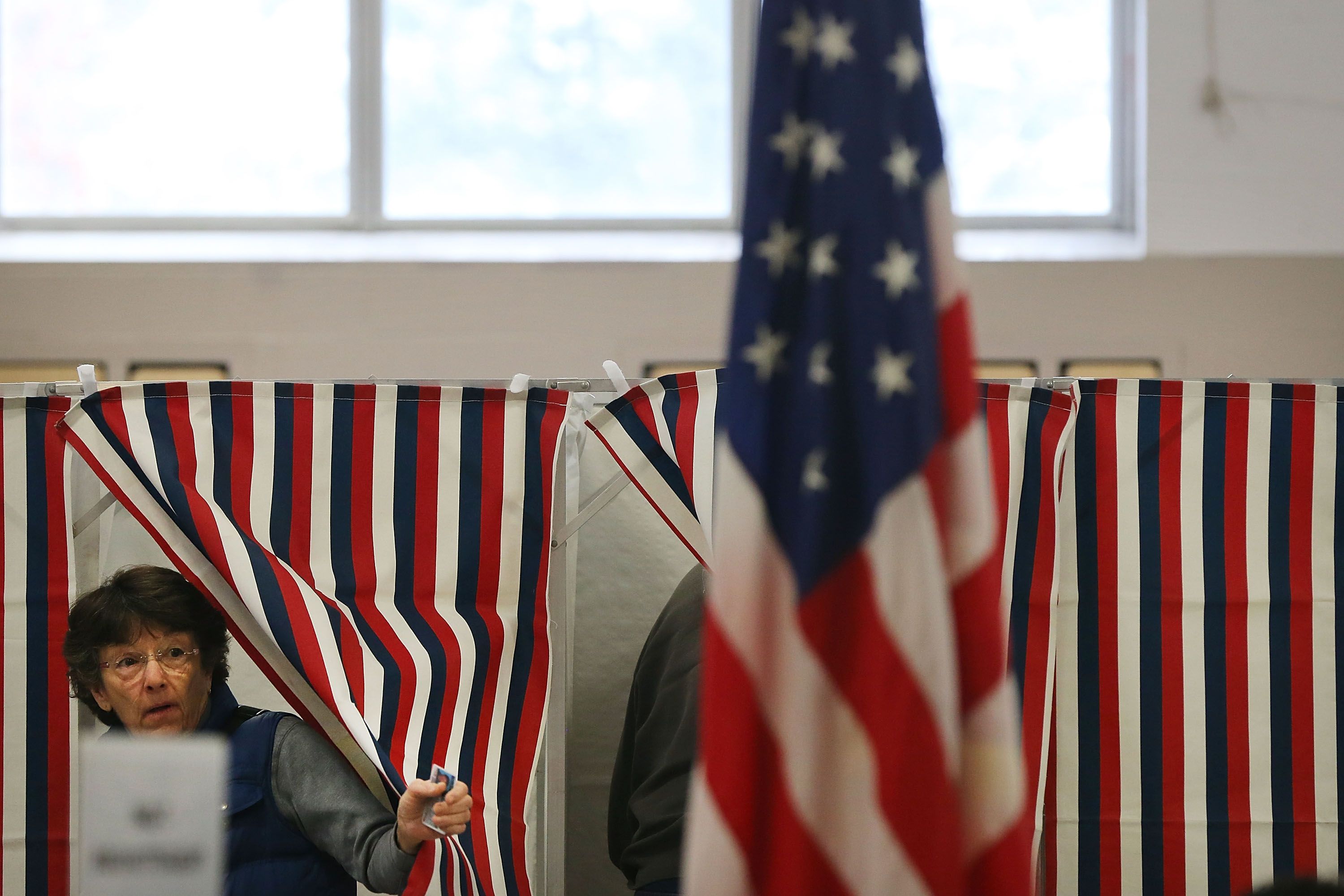
With still a few months until the midterm elections are in full swing, the latest Kaiser Health Tracking Poll finds health care costs as the top health care issue mentioned by voters when asked what they want to hear 2018 candidates discuss. When asked to say in their own words what health care issue they most want to hear the candidates talk about during their upcoming campaigns, one-fifth (22 percent) of registered voters mention health care costs. This is followed by a series of other health care issues, such as Medicare/senior concerns (8 percent), repealing or opposition to the Affordable Care Act (7 percent), improve how health care is delivered (7 percent), increasing access/decreasing the number of uninsured (6 percent), or a single-payer system (5 percent). Health care costs is the top issue mentioned by Democratic voters (16 percent) and independent voters (25 percent), as well as one of the top issues mentioned by Republican voters (22 percent), followed by repealing or opposing the ACA (17 percent).

Figure 1: Health Care Costs Are Top Health Care Issue Voters Want 2018 Candidates to Talk About During Their Campaigns

Battleground Voters

Health care costs are also the top issue mentioned by voters living where there are competitive House, Senate, or Governor races. One-fourth (23 percent) of voters in areas with competitive elections mention health care costs when asked what health care issue they most want to hear candidates talk about. Fewer mention other health care issues such as improve how health care is delivered (9 percent) or increasing access/decreasing the number of uninsured (6 percent).

2018 Midterm Election Analysis

As part of Kaiser Family Foundation’s effort to examine the role of health care in the 2018 midterm elections, throughout the year we will be tracking the views of voters – paying special attention to those living in states or congressional districts in which both parties have a viable path to win the election. This group, referred to in our analysis as “voters in battlegrounds” is defined by the 2018 Senate, House, and Governor ratings provided by The Cook Political Report. Congressional and Governor races categorized as “toss-up” were included in this group. A complete list of the states and congressional districts included in the comparison group is available in Appendix A.

The Affordable Care Act

This month’s Kaiser Health Tracking Poll finds a slight increase in the share of the public who say they have a favorable view of the 2010 Affordable Care Act (ACA). The share of the public who say they hold a favorable view of the law has increased to 54 percent (from 50 percent in January 2018) while 42 percent currently say they hold an unfavorable view. This is the highest level of favorability of the ACA measured in more than 80 Kaiser Health Tracking Polls since 2010.  This change is largely driven by independents, with more than half (55 percent) now saying they have a favorable opinion of the law compared to 48 percent last month. Large majorities (83 percent) of Democrats continue to view the law favorably (including six in ten who now say they hold a “very favorable” view, up from 48 percent last month) while nearly eight in ten Republicans (78 percent) view the law unfavorably (unchanged from last month).

Figure 2: More of the Public Hold a Favorable View of the ACA

Public Awareness of the Repeal of the ACA’s Individual Mandate

The February Kaiser Health Tracking Poll finds a slight uptick (from 36 percent in January 2018 to 41 percent this month) in the share of the public who are aware that the ACA’s requirement that nearly all individuals have health insurance or else pay a fine, known commonly as the individual mandate, has been repealed. Yet, misunderstandings persist. The majority of the public (61 percent) are either unaware that this requirement has been repealed (40 percent) or are aware that it has been repealed but incorrectly think the requirement is not in effect in 2018 (21 percent of total). Few (13 percent) are aware the requirement has been repealed but is still in effect for 2018.

Figure 3: Confusion Remains on the Status of the ACA’s Individual Mandate

Medicaid

In recent months, President Trump’s administration has supported state efforts to make changes to their Medicaid programs, the government health insurance and long-term care program for low-income adults and children. Seven in ten Americans say they have ever had a connection to the Medicaid program either directly through their own health insurance coverage (32 percent) or their child being covered by the program (9 percent), or indirectly through a friend or family member covered by the program (29 percent).

Figure 4: Seven in Ten Americans Say They Have Ever Had A Connection to Medicaid

Majority of the Public Holds Favorable Views of Medicaid and Thinks the Program is Working Well

Overall, the majority of the public (74 percent) holds favorable views of Medicaid, including four in ten who have a “very favorable” view. About one-fifth of the public (21 percent) hold unfavorable views of the program. Unlike attitudes towards the ACA, opinions towards Medicaid are not drastically different among partisans and majorities across parties report favorable views. However, a larger share of Republicans do hold unfavorable views (29 percent) compared to independents (21 percent) or Democrats (13 percent).

Figure 5: Large Shares Across Parties Say They Have a Favorable Opinion of Medicaid

In addition, more believe the program is working well than not working well for most low-income people covered by the program. This holds true across partisans with about half saying the Medicaid program is “working well” and about one-third saying it is “not working well.”

Figure 6: Larger Shares Say Medicaid Is Currently Working Well for Most Low-Income People Covered by the Program

Support for Medicaid Expansion in Non-Expansion States

One of the major changes brought on by the ACA was the option for states to expand Medicaid to cover more low-income people. As of February 2018, 18 states have not expanded their Medicaid programs.

Figure 7: Status of Medicaid Expansion Among States

Among individuals living in states that have not expanded their Medicaid programs, most (56 percent) say they think their state should expand Medicaid to cover more low-income uninsured people while four in ten (37 percent) say their state should keep Medicaid as it is today. Slightly more than half of Republicans living in non-expansion states say their state should keep Medicaid as it is today (54 percent) while four in ten (39 percent) say their state should expand their Medicaid program. Majorities of Democrats (75 percent) and independents (57 percent) say their state should expand their Medicaid program.

Figure 8: Democrats and Independents Are More Likely to Want Their State to Expand Medicaid Than Republicans

Proposed Changes to Medicaid

SECTION 1115 WORK REQUIREMENT WAIVERS

In January, the Centers for Medicare and Medicaid Services (CMS) provided new guidance for Section 1115 waivers, which would allow states to impose work requirements for individuals to be covered by Medicaid benefits. As of February 21, CMS has approved work requirement waivers in two states (KY and IN) and eight other states have pending requests.1 When asked what they think the reasoning is behind these proposed changes to Medicaid, a larger share of the public (41 percent) believe the main reason is to reduce government spending by limiting the number of people on the program than say the main reason is to help lift people out of poverty (33 percent). There are differences among demographic groups with a larger share of Democrats and independents believing the main reason is to reduce government spending, while Republicans are more divided with similar shares saying the main reason is to lift people out of poverty (42 percent) as reduce government spending (40 percent).

Figure 9: Republicans Are Divided on the Main Reason Behind the Trump Administration Permitting Work Requirements

There are also differences between individuals living in states that have either filed a Medicaid waiver for a work requirement or have had a waiver approved and those living in states that do not have Medicaid work requirement waivers pending or approved.2 Individuals living in states with pending or approved Medicaid work requirements are divided on whether the main reason for these limits is to lift people out of poverty (37 percent) or reduce government spending (36 percent). This holds true even when controlling for other demographic variables such as party identification and income that may influence beliefs.

Figure 10: Those in States with Medicaid Work Requirements Are Divided on the Main Reason Behind Them

SECTION 1115 LIFETIME LIMIT WAIVERS

In addition to work requirement waivers, five states are currently seeking waivers from the Trump administration to impose Medicaid coverage limits. These “lifetime limits” would cap Medicaid health care benefits for non-disabled adults. When asked how they think Medicaid should work, two-thirds of the public say Medicaid should be available to low-income people for as long as they qualify, without a time limit, while one-third say it should only be available to low-income people for a limited amount of time in order to provide temporary help. The vast majority of Democrats (84 percent) and most independents (64 percent) say Medicaid should be available without lifetime limits, while Republicans are divided with similar shares saying they favor time limits (51 percent) as saying they do not favor such limits (47 percent). Seven in ten (71 percent) of individuals who have ever had a connection to Medicaid say they do not support lifetime limits compared to three in ten (28 percent) who say it should only be available for a limited amount of time in order to provide temporary help.

Figure 11: Majorities of Democrats and Independents Say Medicaid Should Be Available Without a Time Limit; Republicans Are Divided



Poll: 44% Of Americans Skip Doctor Visits Because Of Cost

https://www.forbes.com/sites/brucejapsen/2018/03/26/poll-44-of-americans-skip-doctor-visits-due-to-cost/#31398d56f57e

Because of the high cost of healthcare, 44% Americans didn’t go see a physician last year when they were sick or injured, according to a new survey.

The West Health Institute/NORC at the University of Chicago national poll comes as policymakers and health insurance companies are predicting a jump in health premiums and out-of-pocket costs, particularly for Americans with individual coverage under the Affordable Care Act. The $1.3 trillion spending bill signed into law last week by President Donald Trump didn’t include reinsurance programs and money to restore Obamacare funds to help Americans pay co-payments and deductibles despite bipartisan support in the Senate.

Cost continues to be a barrier to treatment with 40% of Americans who say they “skipped a recommended medical test or treatment in the last 12 months due to cost.” Another 32% were “unable to fill a prescription or took less of a medication because of the cost,” the West Health/NORC poll of more than 1,300 adults said.

“The high cost of healthcare has become a public health crisis that cuts across all ages as more Americans are delaying or going without recommended medical tests and treatments,” West Health Institute chief medical officer Dr. Zia Agha said in a statement accompanying the poll results. The survey is being released at this week’s American Society on Aging 2018 Aging in America Conference in San Francisco.

The West Health-NORC poll is the latest national survey showing Americans continued frustration with high healthcare costs even as the U.S. spends more than $3.3 trillion annually on healthcare.

Several recent polls have indicated healthcare is back on the top of voters’ concerns as they head to the polls this November for mid-term Congressional and statewide general elections. A Kaiser Health Tracking poll published earlier this month ranked “health care costs as the top health care issue mentioned by voters when asked what they want to hear 2018 candidates discuss.”


Why DOJ must block the Cigna-Express Scripts merger

Why DOJ must block the Cigna-Express Scripts merger

Why DOJ must block the Cigna-Express Scripts merger

If one message is becoming clear, it’s that increased concentration is harming consumers and leading to less competition, decreased choice and higher cost. The need for corporations to compete is dampened when markets are dominated by a small number of firms. Worse, when consumers don’t have the ability to discipline markets there is a lack of transparency or accountability.

Nowhere is that more true than in the market for Pharmacy Benefit Managers (PBMs) — the unregulated entities that control the reimbursement of drugs. These little known, unregulated middlemen are able to ramp up the cost of drugs by demanding rebates and other payments from drug manufacturersand because of a lack of transparency and choice they are able to pocket much of these rebates, escalating the cost of drugs.

The Council of Economic Advisors, after a comprehensive review of rising drug costs, identified the lack of PBM competition as a major culprit. It found that only three PBMs controlled more than 85 percent of the market, “which allows them to exercise undue market power against manufacturers and against the health plans and beneficiaries they are supposed to be representing, thus generating outsized profits for themselves.”

The effect of market power on rebates and other payments to PBMs is clear. As one study found pharmaceutical manufacturer rebates skyrocketed 108 percent from 2011 to 2016 — rising from $66 billion to $127 billion in those five years.

Do skyrocketing rebates benefit consumers? Not much. As Health and Human Services Secretary Alex Azar has observed, “this thicket of negotiated discounts makes it impossible to recognize and reward value, and too often generates profits for middlemen rather than savings for patients.” Consumers pay more because their copays are based on list prices that are inflated by the rebates and other payments secured by the PBMs.

You do not need a Ph.D. in economics to figure out that the market is not competitive and that consumers are paying more than they otherwise would. FDA Commissioner Scott Gottlieb observed, “Kabuki drug-pricing constructs — constructs that obscure profit taking across the supply chain that drives up costs; that expose consumers to high out of pocket spending; and that actively discourage competition.”

Gottlieb identifies the lack of PBM competition and transparency as the real culprit. “The consolidation and market concentration make the rebating and contracting schemes all that more pernicious. And the very complexity and opacity of these schemes help to conceal their corrosion on our system — and their impact on patients.”

Now the two largest PBMs seek to merge with two insurance giants — CVS Caremark’s proposed acquisition of Aetna and Cigna’s proposed acquisition of Express Scripts. I have already observed how the CVS deal will harm competition and consumers. Adding another deal is like fighting a fire with gasoline.

These mergers rightly face tough scrutiny before the Antitrust Division of the Department of Justice. As the American Antitrust Institute’s recent comprehensive white paper documents in detail, these mergers significantly threaten competition in health insurance, pharmacy and PBM markets and must be blocked.

And as Rep. Rick Crawford’s (R-Ariz.) recent letter to Attorney General Jeff Sessions opposing the CVS/Aetna merger nicely emphasizes, such “vertical integration does not encourage competition or lower prices, but rather, could limit the choices and access for patients, driving out competitors while driving up prices and reimbursements for themselves.”

The reasons are straightforward and compelling. Many insurance companies want the service of an independent PBM — one not aligned with a rival insurance company. PBM services and the ability to control pharmaceutical costs are a crucial input for any insurance company, especially since the costs of drugs is an increasing part of the costs that need to be controlled.

Such reforms would include meaningful transparency and disclosure of rebates to payers, eliminating pharmacy gag clauses that prevent pharmacists from disclosing lower priced drugs, preventing PBMs from egregious reimbursement practices that force pharmacists to dispense below cost, and proper disclosure of pricing to pharmacists. As a basic first step both Express Scripts and Cigna must commit to pass through rebates to lower consumer costs as UnitedHealthcare has done.

But even these commitments are probably not enough. History tells a dismal story — past mergers have harmed consumers through less choice and higher costs as PBM profits have soared. No promises of good conduct can overcome the excessive concentration in the PBM market. The CEA recommended, “policies to decrease concentration in the PBM market … can increase competition and further reduce the price of drugs.” DOJ can begin this process by preventing the market from getting worse and simply blocking these mergers.


We Must Hold Big Pharma Accountable For Predatory Pricing

https://www.huffingtonpost.com/entry/opinion-beggelman-price-gouging_us_5ab45270e4b008c9e5f5c47f


It’s hard to remember now, but there once was a time when pharmaceutical companies were considered heroes, not villains.

In the 1920s, Dr. Frederick Banting and Charles Best discovered insulin could be purified and administered to diabetes patients via injection. Before this groundbreaking discovery, people living with diabetes were placed on starvation diets as a form of treatment, and many patients died.

Banting and Best understood the enormity of their discovery and considered insulin a public good. But as these researchers soon realized, insulin wouldn’t be able to save lives if patients couldn’t access it. They sold the rights to the drug to the University of Toronto for $1. The university, in turn, gave it to pharmaceutical company Eli Lilly for a 5 percent royalty so the company could manufacture at scale to meet the enormous demand. In 1923, insulin became widely available and saved countless lives, thanks to Banting and Best – and Eli Lilly.

Now, just under a century later, Eli Lilly and other insulin manufacturers are taking the exact opposite approach.

Big Pharma is pushing every scheme imaginable to squeeze money from the pockets of patients who need insulin to survive. Many with diabetes, faced with tripling insulin prices ($200 to $700 per month), are now forced to choose between life and rent. Some patients ― like 26-year-old Alec Raeshawn Smith, who aged out of his parents’ health insurance plan and whose job didn’t offer comprehensive coverage ― have died from a lack of affordable insulin.

Pharmaceutical companies can become heroes again, but only if they stop taking advantage of the patients who need them.

Eli Lilly says the company strives “to make life better for all those affected by diabetes around the world.” And because drug companies do save and improve lives (or, at least, are supposed to), the U.S. government allows them special privileges and protections. This includes tax breaks, government subsidies, extensive patent protection, free access to publicly funded scientific discoveries and more.

However, when drug companies use empty words to make promises they have no intentions of honoring, they do not deserve the public’s largesse.

Big Pharma has not shown any inclination to change its price gouging practices. On the contrary, drug companies continue to push higher costs despite the horrific impact this has both on human life and the U.S. economy. Price freezes in the U.S. are rare (and are exclusively voluntary). They also tend to be set at high levels, like the price “freeze” for the HIV drug Isentress, which caused a stir among HIV patients because of its exorbitant cost compared to competitive products.

Some companies have rolled back drug prices but typically only in response to public humiliation. Doctors at Memorial Sloan-Kettering publicly rejected Sanofi’s Zaltrap, a colon cancer drug, because it was priced twice as high as a competing product. Three weeks after the doctors’ announcement, Sanofi cut its price in half. This is why consumers shouldn’t be satisfied with price freezes; only rolling back prices will return us to reasonable drug costs.

Pharmaceutical companies do sometimes offer “solutions” to runaway drug prices, like value-based pricing and discount cards, but though these practices may help some, they are generally gimmicks meant to distract the public. Value-based pricing sets prices according to a drug’s perceived value rather than according to the actual costs of developing and manufacturing it. Such a practice can put a limit on the price of marginally effective drugs, but on the other hand, it increases the price of medications like insulin ― drugs that save lives but have been around for years and are cheap to produce. Discount cards are sometimes offered to a small subset of insured patients and do very little to help the vast majority of users or those who need the drugs most.

In the U.S., our 20 top-selling medications cost consumers three times more than the exact same drugs cost in Britain. I once paid $36 for a medication in Canada that costs me more than $700 here at home. In many European countries, government committees calculate “reference prices” for classes of drugs with similar ingredients, based on the costs to develop and manufacture them and their clinical effectiveness. That said, it’s probably not realistic to expect our politicians to agree to this kind of approach; in the U.S., pharmaceutical companies are some of the largest contributors to political campaigns, giving more than $2.3 billion over the past 10 years.

Big Pharma is pushing every scheme imaginable to squeeze money from the pockets of patients who need insulin to survive.

Our legislators, too afraid to challenge Big Pharma’s pocketbooks, continue to propose tepid solutions, like price transparency, that only work around the edges. Pharmacy benefit managers ― the industry middlemen who play a role in drug pricing ― take a piece of the pie, but how large a piece remains a secret. Legislation around transparency regarding undisclosed PBM deals could drive down drug prices somewhat, but it likely wouldn’t affect the baseline prices set by drug manufacturers.

The Right Care Alliance ― a group of patients, physicians, nurses, patient advocates, students and other community members with chapters around the country ― is currently organizing a campaign to target price gouging in the pharmaceutical industry. We are planning year-long grassroots actions, including town hall meetings, marches and demonstrations, to pressure Big Pharma to stop predatory pricing, particularly for life-saving medications.

We must force companies like Eli Lilly to address the gap between what they say they stand for and their actions. We must be loud with our demands to counterbalance the hold Big Pharma has on U.S. politics. Drug companies can become heroes again but only if they stop taking advantage of the patients who need them.


Poll: Americans Aghast Over Drug Costs But Aren’t Holding Their Breath For A Fix

https://khn.org/news/poll-americans-aghast-over-drug-costs-but-arent-holding-their-breath-for-a-fix/

The recent school shootings in Florida and Maryland have focused attention on the National Rifle Association’s clout in state and federal lobbying activities.

Yet more than the NRA or even Wall Street, it’s the pharmaceutical industry that Americans think has the most muscle when it comes to policymaking.

poll from the Kaiser Family Foundation found that 72 percent of people think the drug industry has too much influence in Washington —outweighing the 69 percent who feel that way about Wall Street or the 52 percent who think the NRA has too much power. Only the large-business community outranked drugmakers. (Kaiser Health News is an editorially independent program of the foundation.)

Drug prices are among the few areas of health policy where Americans seem to find consensus. Eighty percent of people said they think drug prices are too high, and both Democrats (65 percent) and Republicans (74 percent) agreed the industry has too much sway over lawmakers.

Democrats were far more likely than Republicans — 73 vs. 21 percent — to say the NRA had too much influence.

The monthly poll also looked at views about health care. Americans may be warming to the idea of a national health plan, such as the Medicare-for-all idea advocated by Sen. Bernie Sanders (I-Vt.). Overall, 59 percent said they supported it, and even more, 75 percent, said they would support it if it were one option among an array for Americans to choose.

Americans are far more concerned with lowering prescription drug prices, though they don’t trust the current administration to fix the problem. Fifty-two percent said lowering drug costs should be the top priority for President Donald Trump and Congress, but only 39 percent said they were confident that a solution would be delivered.

“There’s more action happening on the state level; what we are finding is they’re not seeing the same action on the federal level,” said Ashley Kirzinger, a senior survey analyst for KFF’s public opinion and survey research team. “They’re holding the president accountable as well as leaders of their own party.”

Overall, at least three-quarters of people don’t think Democrats and Republicans in Congress, as well as the Trump administration, are doing enough to bring costs down.

Twenty-one percent reported that they didn’t trust either party to lower prices, up from 12 percent in 2016. And, unlike other health-related policy questions such as repealing the Affordable Care Act or creating a national health plan, the poll does not find a partisan divide on this perception.

Passing legislation to lower drug prices was at the top of the list of the public’s priorities, making it more important than infrastructure, solving the opioid epidemic, immigration reform, repealing the ACA or building a border wall.

Looking ahead to the 2018 midterm elections, 7 percent reported that creating a national health plan was the “single most important factor” for how they would vote in 2018. However, 7 in 10 said it is an important consideration, and 22 percent said it is not an important factor at all.

The poll found that support for the federal health law fell this month, from February’s all-time high of 54 percent to 50 percent in March. Opposition moved up slightly from 42 to 43 percent.


Medical Research, Drug Treatment And Mental Health Are Winners In New Budget Bill

https://www.npr.org/sections/health-shots/2018/03/22/596116779/medical-research-drug-treatment-and-mental-health-are-winners-in-new-budget-bill?utm_source=Sailthru&utm_medium=email&utm_campaign=Issue:%202018-03-23%20Healthcare%20Dive%20%5Bissue:14589%5D&utm_term=Healthcare%20Dive

Sen. Susan Collins, R-Maine (center), is joined on Wednesday by Sen. Lindsey Graham (from left), R-S.C., Sen. Lisa Murkowski, R-Alaska, and Rep. Greg Walden, R-Ore. Collins was pushing for provisions in the budget bill aimed at lowering premiums for people purchasing health insurance in the Affordable Care Act’s marketplaces. That didn’t happen.


The big budget deal reached this week in the House doesn’t include a long-sought-after provision to stabilize the Affordable Care Act marketplaces. But the $1.3 billion plan, set to fund the government through September, has lots of new money for medical research, addiction treatment and mental health care.

Here’s the rundown of what’s included in the 2,232-page spending bill, now in the hands of a Senate vote, based on summaries released by the House and Senate appropriations committees.

  • $78 billion in overall funding for the Department of Health and Human Services, a $10 billion increase
  • $3.6 billion to fight the opioid addiction crisis
    • This more than doubles the money allocated in fiscal 2017 and boosts funding for treatment and prevention, as well as helping to find alternatives for people suffering from pain.
  • $3.2 billion for mental health care
    • This is a 17 percent boost from last year and goes to treatment, prevention and research.
  • $37 billion for the National Institutes of Health
    • This is a $3 billion increase over fiscal 2017 and boosts spending on research into Alzheimer’s disease and a universal flu vaccine, among other things.

Lawmakers could not agree on language designed to stabilize the Affordable Care Act insurance markets and lower insurance premiums that Sens. Lamar Alexander, R-Tenn., and Susan Collins, R-Maine, have been fighting for since last fall. That bill would have reinstated the cost-sharing reduction payments, by which the government reimburses insurance companies that give the lowest-income customers a break on their copayments and deductibles.

Last year President Trump announced that the government would stop making the payments, a decision that drove the unsubsidized premiums on insurance policies higher.

Alexander says his proposal would restore those payments and cut premiums as much as 40 percent.

“Nothing is more important to Americans than health care, and nothing is more frightening than the prospect of not being able to afford health insurance, which is the case for a growing number of Americans,” he said at a news conference Wednesday.

But Democrats refused to support the provision because it also included language that would have barred any insurance policy sold on the ACA marketplaces from covering abortion.


What to watch for in the individual health insurance market

https://www.brookings.edu/blog/usc-brookings-schaeffer-on-health-policy/2018/03/08/what-to-watch-for-in-the-individual-health-insurance-market/?utm_campaign=Economic%20Studies&utm_source=hs_email&utm_medium=email&utm_content=61590808

Image result for What to watch for in the individual health insurance market


On Tuesday, March 6, the Brookings Institution’s Hutchins Center on Fiscal and Monetary Policy and the USC-Brookings Schaeffer Initiative for Health Policy co-hosted an event examining where the individual health insurance market is today and where it is heading. The event featured an opening presentation followed by a panel discussion featuring speakers from a variety of perspectives. The discussion examined how the individual market has evolved since the implementation of the main Affordable Care Act (ACA) reforms in 2014, the likely impact of recent policy changes implemented by the Trump Administration and Congress, and how federal policy toward the market might evolve in years to come.

Here are highlights from each of the participants.

Fiedler’s opening presentation: An overview of recent individual market trends and policy changes

The event opened with a presentation by Matthew Fiedler, a fellow at the Brookings Institution’s Center for Health Policy (slides available here). Fiedler started by showing that individual market enrollment grew significantly after implementation of the ACA’s reforms in 2014, but that individual market insurers also incurred significant losses. Those losses set the stage for a pricing correction in 2017, which he estimated returned premiums to a roughly sustainable position.

Fiedler then examined the implications of three significant policy changes under the Trump Administration: the end of cost-sharing reduction payments, the pending repeal of the individual mandate, and the proposed expansion of short-term, limited-duration plans. Fiedler argued that “the market will survive and will find a new equilibrium” because many enrollees in the ACA-compliant individual market are eligible for large subsidies that will make remaining in the market attractive.

Nevertheless, he concluded that repeal of the individual mandate and the expansion of short-term plans, will reduce the number of people covered, increase the number of people with lower-quality coverage, and reduce pooling of risk between healthier and sicker individuals. On the other hand, he argued that the Trump Administration’s decision to end cost-sharing reduction payments will have the unintended consequence of lowering premiums after subsidies for many enrollees and increasing federal spending.

Corlette: Short-term plans pose risks to consumers

A major topic for the panel discussion was the Trump Administration’s proposal to expand the definition of “short-term, limited duration” plans from a plan lasting less than 3 months (with no renewals permitted) to a plan lasting less than 12 months (with renewals permitted). Short-term plans are exempt from a broad range of federal regulatory requirements, including the ban on varying premiums based on health status and the ACA requirement to cover the so-called essential health benefits package.

Panelists noted that broader availability of short-term plans is likely to weaken the market for ACA-compliant plans since many healthier enrollees will migrate into the short-term market. Sabrina Corlette, a research professor at Georgetown University, argued that short-term plans pose significant risks not only to the market for ACA-compliant plans but also to consumers who buy them. These short-term plans are potentially harmful, she argued, because they “walk and talk a lot like traditional comprehensive health insurance” but many consumers will find themselves liable for “thousands of dollars of medical bills because these things simply don’t cover anything.”

Capretta: Recent policy changes are expanding state flexibility in beneficial ways

In discussing various policy changes implemented by the Trump Administration, James C. Capretta, a fellow at the American Enterprise Institute, noted that many of these policy changes have the effect of increasing state flexibility. He argued that state flexibility could help illuminate the path forward for federal policy. Given the stalemate at the national level, maybe we need a two or three-year period where a lot of states try a couple of different things,” he said. “If some states want to re-impose the individual mandate they can do so. If they want to impose continuous coverage penalties they can do so. They can restrict which plans are sold on the insurance market,” he said.

Patterson: What is the next national goal for health policy?

Panelists discussed their views on next steps for federal policymakers. Kevin Patterson, CEO of Connect for Health Colorado, said that policymakers need “to think about what we are going to challenge ourselves to actually deal with.” Patterson noted that the Affordable Care Act had a national goal of improving access to care. “But what’s the next national goal? Is there one?,” Patterson asked. Patterson identified reducing the underlying cost of care as a potential priority. Patterson noted that the “big bad insurance company” often gets blamed for high premiums, “but a lot of what they have to do is just reflect the cost that they’re seeing in what the provider networks are charging.”

Geraghty: Increasing competition among providers can reduce the cost of care

Following on Patterson’s comment, Geraghty highlighted the importance of increasing competition among health care providers if the goal is to reduce costs. “We as a country have not looked at competition on the delivery side,” he said. Geraghty noted that there were particular challenges in many rural markets.  “If you’re in a rural area and you’ve got one hospital and they bought up the physician groups around them, they now set the market and they set the price,” he explained. Geraghty argued that improvements in communications technology might make it possible to deliver more care remotely, which could facilitate increased competition in many markets with a small number of providers.


The ACA at Eight: Resilient but Still at Risk

http://www.commonwealthfund.org/publications/blog/2018/mar/aca-at-eight?omnicid=EALERT1374267&mid=henrykotula@yahoo.com

Image result for The ACA at Eight: Resilient but Still at Risk


It’s Obamacare’s birthday. After eight years of relentless pounding, the Affordable Care Act (ACA) is still the law of the land. Its resilience reflects the fundamental decency of the American people who — when faced with the reality of taking coverage away from millions of their neighbors — refused to let that happen. They filled town hall meetings, they flooded the corridors of Congress, and support for the law surged to its current 54 percent.

That is not to say that the law’s future is assured. As part of its recent tax reform legislation, Congress eliminated financial penalties for not having health insurance — the teeth of the so-called individual mandate. The Congressional Budget Office (CBO) predicts that this will raise health insurance premiums in individual private markets by an average of 10 percent, and 13 million Americans could lose their health insurance. If Congress fails to enact recent bipartisan market stabilization proposals, these numbers could go even higher.

The current administration is also using executive authority to weaken the law. The U.S. Department of Health and Human Services has encouraged states to impose a range of new restrictions on Medicaid recipients — work requirements, premiums, copays — that may reduce the number of poor and near-poor Americans who enroll in this program.

The administration has also proposed new rules that would allow health insurers to sell plans that evade the ACA’s standards regarding preexisting conditions and minimum benefits. For example, the administration would permit insurers to market short-term plans — coverage limited to a year in duration — without the requirement that they accept all comers, and with various restrictions on benefits. These cheaper, less generous plans would appeal to healthier individuals, who would then likely choose not to purchase the more expensive, comprehensive insurance sold in ACA marketplaces. Only sicker individuals would buy ACA plans, raising their costs and making them unaffordable to millions who have come to depend on them. The net effect is to add choices for healthy Americans, but reduce options for the sick.

Efforts to curtail the ACA will likely increase the number of Americans without insurance, now at a historic low of 14 percent of working-age adults, according to the Commonwealth Fund’s Affordable Care Act Tracking Survey. These efforts will also likely increase health disparities between states. A number of the restrictions sought by the administration will go into effect only if states embrace them. States must request waivers to limit Medicaid benefits. So far, only Republican-led states are doing so. Similarly, states have discretion about whether to permit the sale of short-term plans. Many blue states are considering banning or regulating them.

Despite these threats, however, fundamental elements of the ACA remain in effect. Federal financial assistance for purchase of health insurance in ACA marketplaces remains available for individuals with incomes below 400 percent of the federal poverty level. This is one reason why 11.8 million people had signed up for ACA plans through the marketplaces by the end of January. Federal support for states to expand Medicaid persists. Thirty-four states and the District of Columbia have done so, resulting in 15 million more beneficiaries of that program.

Recent legislative and executive restrictions on the ACA will not totally reverse these gains. Paradoxically, some states that refused previously to expand Medicaid may decide to do so now that they may be able to impose work requirements, premiums, and copays, and thus give expansion a conservative stamp. This could actually increase the total number of Americans with some Medicaid coverage.

In fact, the continuing struggle over the ACA fits a decades-old pattern of steady, if erratic, expansion of health insurance coverage in the United States. Since the creation of Medicare and Medicaid 53 years ago, the federal government has periodically extended insurance to new populations: the disabled, those with end-stage renal disease, children. The federal government also massively expanded Medicare benefits to cover drugs. Once provided, these benefits have proved politically difficult to peel back — in a recent poll, 92 percent of Americans said they felt all of us should have the right to health care.

What does this mean for the ACA? While it will not achieve all its supporters’ goals, it will survive, and provide a new foundation upon which Americans can build if they choose, as they have in the past, to help their vulnerable neighbors deal with the scourge of illness. To paraphrase Martin Luther King, one might even say that the arc of history is long, but it bends toward health coverage.


Drug prices are still skyrocketing

https://www.axios.com/newsletters/axios-vitals-60130f85-58f2-499f-abf8-271cf0d1c225.html

Falcon Heavy Rocket GIF - Find & Share on GIPHY

The Trump administration — primarily the president himself — has talked a lot about cracking down on prescription drug prices. But the pharmaceutical industry hasn’t changed its ways since Trump took office: 20 drugs have seen price hikes of 200% or more since January 2017, my colleague Bob Herman reports this morning.

  • The drugs to watch: High-cost, high-use prescriptions like Humira, Enbrel and Revlimid. AbbVie hiked the price of Humira, the highest-selling drug in the world, by 19% over the 14-month period, and Amgen did the same for Enbrel. Celgene raised the list price of Revlimid by 20%.
  • The big one: SynerDerm, a prescription skin cream, had the largest price hike. Phlight Pharma, the maker of SynerDerm, raised the list price by 1,468% over the past 14 months.
  • The runners-up: A total of 39 drugs saw price hikes of at least 100%, although many of them — like anti-venom extracts — are rarely used and don’t cost the health care system much overall.

The impact: These increases, which can be found in an analysis by Pharmacy Benefits Consultants, are in the drugs’ list prices, before rebates and discounts are applied. People with insurance don’t pay these full amounts, but price hikes still affect everyone.

  • Copays and deductibles are often based on drugs’ list prices, and uninsured patients can find themselves on the hook for a drug’s entire list price.


Why health care probably didn’t decide the Pennsylvania election

https://www.axios.com/health-care-pennsylvania-election-conor-lamb-b9731a9f-d7b1-4db7-8483-bee9a29d48fa.html

Image result for Why health care probably didn't decide the Pennsylvania election

The buzz is that health care played a leading role in Conor Lamb’s upset win in last week’s special House election in Pennsylvania. But in reality, we can’t say that health care was a decisive factor in Lamb’s win, at least not based on the one poll that is being used as a basis for that claim.

Between the lines: The poll, conducted by Public Policy Polling and funded by advocacy groups, found that 15% of self-reported voters said health care was the “most important issue” in the election, and an additional 37% said it was a “very important issue.” However, and notably, the poll didn’t ask about any other issue, making it impossible to determine whether health care was more important than other issues for voters.

The big picture: Yes, the Affordable Care Act is becoming more popular. And yes, the energy has flipped from Republicans to Democrats on health care, and health care will be a rallying cry for Democrats in upcoming races. But that doesn’t mean it’s the only issue that matters.

Our own polling shows that health care is among the top issues that registered voters want 2018 candidates to talk about. But other issues like the economy and jobs and immigration are high on voters’ minds as well.

In interpreting the PPP poll, some have combined the “very important” responses with the “most important” responses. When you do that, more than 50% of voters say health care was important to their vote. That sounds impressive, but the same is true for many other issues, including the economy and jobs, immigration, North Korea, and some others.

A few things to keep in mind:

  • Voters who said health care is their most important issue tend to be more liberal and Democratic, and that’s exactly who turned out in the special election in Pennsylvania (according to Cook Political Report). So it is unsurprising that they said health care was important to their vote, as it has historically been among the top issues with this group of voters.
  • This was also an interactive voice response (IVR) poll (sometimes referred to as a “robo-poll”), in which pollsters only interview households with landline phones. More than half of U.S. homes do not have a landline telephone. While these polls are widely used, polls that rely on landline-only interviews disproportionately miss younger, more diverse, and lower-income populations.
  • These groups tend to be less likely to be vote, but the past several months have demonstrated that we may need to reassess our assumptions about who will be showing up to vote this November.

The bottom line: As the head of a leading health policy organization, of course I always root for health care to be as important as possible. But we cannot be sure that it was the top issue in Lamb’s victory, or that it will be one in the coming elections, which will turn not just on issues but on other factors — including the public’s views of President Trump.

And how important health care is will depend on how much, and how effectively, candidates campaign on the issue.