How health care creates wage inequality

https://www.washingtonpost.com/opinions/how-health-care-creates-wage-inequality/2016/06/22/7d6974ae-3885-11e6-9ccd-d6005beac8b3_story.html?_hsenc=p2ANqtz-8vYCgTydHwYstwKLMGcojFFxInfu511ZO2gKjiviG0olgNel-V8f5RkeIaELQ94TQxWBT8n2D5uYJiMYrJhUVtizdVPQ&_hsmi=30930741&utm_campaign=KHN%3A%20Daily%20Health%20Policy%20Report&utm_content=30930741&utm_medium=email&utm_source=hs_email

You can add health care to the causes of growing wage inequality in America. There’s a largely unknown paradox at work. Companies that try to provide roughly equal health insurance plans for their workers — as many do — end up making wage and salary inequality worse. A new economic study shows how this perverse bargain works.

It’s simple arithmetic, writes Mark Warshawsky of the Mercatus Center at George Mason University, author of the study. Paying for expensive health insurance squeezes what’s left for wage and salary raises. Economic inequality increases, because health insurance typically represents a larger share of total compensation for lower-paid than higher-paid workers. Their wages are squeezed the most.

St. Joseph Health to merge with Providence

http://www.ocregister.com/articles/health-720170-joseph-providence.html?utm_campaign=CHL%3A+Daily+Edition&utm_source=hs_email&utm_medium=email&utm_content=30933831&_hsenc=p2ANqtz-84oHGPtH_oRfHq3swG_j9AVMRkPwDtHEOWMklCCFuqjT7IgwZsV-j9ABe7Am4TIq4TYpsIyOw5qZdD_63sNUO1GzmdVQ&_hsmi=30933831

StJosephHealth LogoProvidence Logo

St. Joseph Health and Providence Health and Services have received regulatory approval for a merger that will create the nation’s third-largest nonprofit health system, officials said Wednesday.

The California Attorney General’s office signed off on the deal between the two nonprofit Catholic hospital chains. The new entity, Providence St. Joseph Health, will include 16 St. Joseph hospitals, including five in Orange County, and 34 Providence hospitals, including six in Los Angeles County.

MemorialCare extends ACO to Boeing employees

http://www.beckershospitalreview.com/accountable-care-organizations/memorialcare-extends-aco-to-boeing-employees.html

Memorial-Care-Health-System-20151009-770x300Boeing

Fountain Valley, Calif.-based MemorialCare Health System is teaming up with the Boeing Company to offer a customized health plan for the aerospace company’s employees and dependents in Long Beach, South Bay and Orange County. The new option for Boeing employees will include benefits such as reduced paycheck deductions for healthcare coverage, no copayments for in-network primary care visits, complete coverage for generic prescriptions and the ability to choose in-network specialists without a referral, among others. Services will begin Jan. 1, 2017.

Republicans unveil long-sought ACA replacement

http://www.fiercehealthcare.com/payer/republicans-unveil-long-sought-aca-replacement?utm_medium=nl&utm_source=internal&mrkid=959610&mkt_tok=eyJpIjoiTVROaVlUYzFOV1psTnpJNSIsInQiOiI4MDNhTTZwVEtacWtLV0k2NjZTaDBSc24zYndQNGh2aUE0cUNqRnhISGV0eEdVaUErbjl1K05rSksyOFhKYUljWHBPVDM0Zm9lM1JjOUJNdWdVU3dtZEJrUXNmNXZMM1AxU0w0WnhZMms0cz0ifQ%3D%3D

Paul Ryan holding up "A Better Way" document

Click to access ABetterWay-HealthCare-PolicyPaper.pdf

http://khn.org/news/house-republicans-unveil-long-awaited-plan-to-replace-health-law/


Questions to Ask About the House Republican Health Reform Proposal

http://blogs.wsj.com/washwire/2016/06/20/questions-to-ask-about-the-house-republican-health-reform-proposal/?utm_campaign=KFF-2016-Drew-WSJ-Jun20-HouseGOP&utm_medium=email&_hsenc=p2ANqtz-_NbfoCIZCQG6kGUv8vUld3vokzSuvVI9VWa9kHidYn8XYKLqHjC9eueS2Fqt39v_03tgl-QzorxDZgvw5Gkw7Fo5VqJA&_hsmi=30791782&utm_content=30791782&utm_source=hs_email&hsCtaTracking=092901de-a8d1-4b84-8ccf-2a923a6826ad%7C85e450b8-093a-4acd-840b-c16aa780d05c

Paul+Ryan21

House Speaker Paul Ryan’s health-care task force is expected to outline its alternative to Obamacare this week. The outline reportedly will not include the level of detail that would allow much external analysis of its impact by health-care experts and the media, though Democrats are likely to attack its concepts, most of which will be familiar proposals that Republicans favor and that Democrats have opposed in the past. The outline is part of Mr. Ryan’s effort to add Republican policy ideas to the election debate, in particular to the presidential campaign, and seems aimed at helping down-ticket Republicans as a part of an agenda that can appeal to their base. Details will be needed to understand whether the plan is more progressive or regressive and how many uninsured people would be covered. Another big question is how Donald Trump will respond.


The Fundamentally Different Goals of the Affordable Care Act and Republican ‘Replacement’ Plans

http://blogs.wsj.com/washwire/2016/06/07/the-fundamentally-different-goals-of-the-affordable-care-act-and-republican-replacement-plans/

cover art


Rep. Pete Sessions and Sen. Bill Cassidy introduced legislation last month calling for replacing elements of the Affordable Care Act. A House task force established by SpeakerPaul Ryan is expected to follow with more health-care proposals. These Republican health plans are generally referred to as “replacements” for the ACA–in the spirit of “repeal and replace”–as though they would accomplish the same objectives in ways that conservatives prefer. But the proposals are better understood as alternatives with very different goals, trade-offs, and consequences. Whether they are “better” or “worse” depends on your perspective.

To boil down to the most basic differences: The central focus of the Affordable Care Act is expanding coverage and strengthening consumer protections in the health insurance marketplace through government regulation. By contrast, the primary objective of Republican plans is to try to reduce health-care spending by giving people incentives to purchase less costly insurance with more “skin in the game,” with the expectation that they will become more prudent consumers of health services. They also aim to reduce federal spending on Medicare and Medicaid and the federal government’s role in both programs. Elements of the ACA were designed to reduce costs, such as the law’s Medicare payment reforms, and elements of Republican plans such as tax credits aim to expand access to insurance, but the primary aims of the ACA and the Republican plans differ.

Declining Charity Care Levels Raise Questions About 340B Hospital Eligibility

https://morningconsult.com/opinions/declining-charity-care-levels-raise-questions-340b-hospital-eligibility/

340B Drug Pricing Program

The 340B program was created for an important purpose: to help uninsured, needy patients access the medicines they need. However, a new analysis paints a very different picture of how the program is currently operating. While 340B hospitals are tasked with serving vulnerable patients, data show 64 percent of these hospitals provide less charity care than the national average for all hospitals, including for-profit entities. Not only is this low number concerning, it represents a decrease in charity care rates for 340B hospitals since 2011. This begs the question of whether hospitals or patients are benefitting more from the program.

Hospital Valuation: Analyzing the Correlation of Hospital Size and Deal Multiple

http://vmghealth.com/hospital-valuation-size-influences/

Valuation

Click to access HospitalJointVentureTrendsPostTransactionContractualConsiderations.pdf


$450K Cap Proposed on Hospital CEO Salaries in California

https://nonprofitquarterly.org/2016/06/14/450k-cap-proposed-on-hospital-ceo-salaries-in-california/

CEOPay

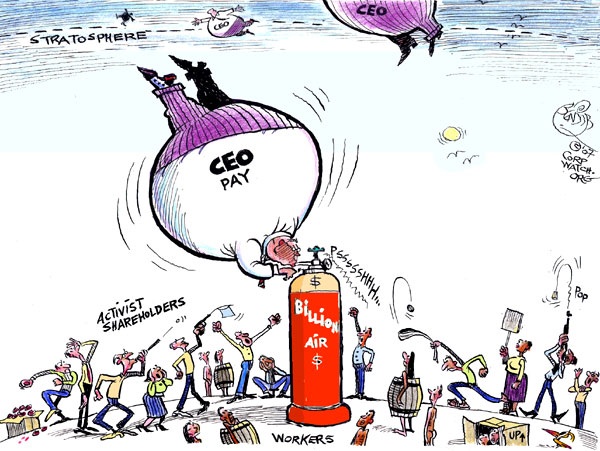
One of America’s largest labor unions is taking a third attempt at capping hospital CEO salaries. The latest proposal by Service Employees International Union (SEIU)-United Healthcare Workers West would give authority to the California attorney general’s office to oversee a salary ceiling equal to the compensation of the President of the United States, or $450,000 a year.


Largest Share of Health Spending is on Mental Disorders

http://www.healthleadersmedia.com/finance/largest-share-health-spending-mental-disorders?spMailingID=9084486&spUserID=MTMyMzQyMDQxMTkyS0&spJobID=941950601&spReportId=OTQxOTUwNjAxS0

Mental Illness Awareness

Reductions in deaths from cardiovascular and cerebrovascular disease are likely to drive spending on mental disorders even higher, as more people survive to older ages when mental disorders become more prevalent.