


Healthcare Triage: Republican Plans for The Affordable Care Act

After campaigning for years on a plan of “repeal and replace Obamacare,” Republicans finally have the means within their grasp to make much of that possible. They control the presidency, the House, and the Senate. The filibuster still poses some potential threats to their plans, but it’s also within their means to abolish its widespread use in such a way that they could both repeal the Affordable Care Act and replace it with something of their own design.
What would that be? In contrast to what many say, there are Republican plans out there to consider. They’re the topic of this week’s Healthcare Triage.

Much of the recent attention on the future of the Affordable Care Act (ACA) has focused on the fate of the 22.5 million people likely to lose insurance through a repeal of Medicaid expansion and the loss of protections and subsidies in the individual insurance market. Overlooked in the declarations of who stands to lose under plans to “repeal and replace” the ACA are those enrolled in employer-sponsored health plans — the primary source of coverage for people under 65.
Job-based plans offered to employees and their families cover 150 million people in the United States. If the ACA is repealed, they stand to lose critical consumer protections that many have come to expect of their employer plan.
It’s easy to understand the focus on the individuals who gained access to coverage thanks to the health reform law. ACA drafters targeted most of the law’s insurance reforms at the individual and small-group markets, where consumers and employers had the greatest difficulty finding affordable, adequate coverage prior to health reform. The ACA’s market reforms made coverage available to those individuals with pre-existing conditions who couldn’t obtain coverage in the pre-ACA world, and more affordable for those low- and moderate-income families who couldn’t afford coverage on their own.
Less noticed, but no less important, the ACA also brought critical new protections to people in large employer plans. Although most large employer plans were relatively comprehensive and affordable before the ACA, some plans offered only skimpy coverage or had other barriers to accessing care, leaving individuals—particularly those with costly, chronic health conditions—with big bills and uncovered medical care. For that reason, the ACA extended several meaningful protections to employees of large businesses.
http://www.latimes.com/politics/la-na-obamacare-repeal-costs-20170117-story.html
Repealing Obamacare without a replacement would result in higher costs for consumers and fewer people with insurance coverage, according to a report Tuesday from the nonpartisan Congressional Budget Office.
In the first year, insurance premiums would jump by 20% to 25% for individual policies purchased directly or through the Obamacare marketplace, according to the report. The number of people who are uninsured would increase by 18 million.
Americans may be beginning to worry about such costs. For the first time, more Americans view the Affordable Care Act as a “good idea,” rather than a bad one, according to a new Wall Street Journal/NBC News poll also released Tuesday.

The future of healthcare policy is a bit murky these days. President-elect Donald Trump has pledged to repeal the Affordable Care Act, and the Republican-run U.S. Congress is already fast at work to make that happen.
What’s not known, however, is what will change for the thousands of U.S. healthcare businesses that have not only adapted to the ACA but also made millions in investments in areas such as electronic health records, value-based reimbursement and reporting to align with the policies of the outgoing administration.
Healthcare Finance spoke with several executives at healthcare businesses to get their perspectives on not only the changes they expect but also their thoughts on what the healthcare sector actually needs to do to provide the best care while still safeguarding the health of its business model.

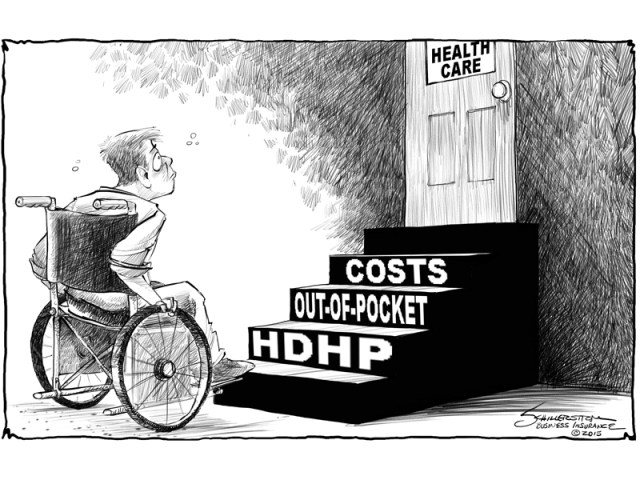
One of the few things that both Donald trump and Hilary Clinton seemed to agree on is that high out-of-pocket spending, specifically as it relates to the Affordable Care Act, is a problem. One of Clinton’s most popular health care proposals during her campaign was to reduce out of pocket spending to more “manageable” levels for many Americans. President-elect Trump sought to fix this problem by repealing the ACA and replacing it with something better.
Reducing out-of-pocket spending, however, will require some tradeoffs. No easy solution exists, but there are examples out there worthy of consideration. That’s the topic of this week’s Healthcare Triage.
http://www.commonwealthfund.org/publications/blog/2016/dec/crossing-the-political-chasm

As a new chapter in the saga of U.S. health care reform is written in the coming year, it’s worth remembering that, behind the layers of jargon and obscure political maneuvers, the consequences of success—and of failure—will be shared by individuals and groups across our society…regardless of ideology, demography, or geography.
http://www.healthcaredive.com/news/hospital-groups-aca-repeal-may-cost-billions-jobs/431786/

Click to access impact-repeal-aca-exec-summary.pdf
Click to access impact-repeal-aca-report.pdf
Members of the Republican party have been attempting to repeal the ACA ever since the healthcare law was implemented in 2010. In the proposed ACA repeal-and-replace plans currently available, such a replacement plan may not come for up to three years, Kahn said. In addition, there still doesn’t seem to be a unified front on what that replacement would actually entail.
President-elect Donald Trump has said he would make repealing and replacing the healthcare law a top priority. However, HHS Secretary Sylvia Mathews Burrell has warned that getting rid of the ACA could potentially have dire consequences, including the estimated 22 million people that could be left without health insurance coverage. In addition, current repeal-and-delay plans could widely change the already fragile individual insurance markets.
The hospital groups sent a letter to Trump and members of Congress to urge any repeal bill include a simultaneous mechanism for replacement coverage. “We strongly believe that any repeal legislation must be accompanied by provisions that protect the coverage for those currently receiving such protection,” the letter noted. What would be “absolutely essential” to include would be to restore the Medicare and Medicaid payment cuts so that hospitals can provide the care that communities “both respect and deserve,” according to Tom Nickels, executive vice president of government relations and public policy at the American Hospital Association.
Hospitals were under the impression that they would be getting more insured patients, so they reasoned that the Medicare and Medicaid payment cuts that came with the ACA implementation were not necessarily going to have a major impact, both AHA President and CEO Richard Pollack and Kahn noted on the media call. Yet the payment cuts to hospitals that date back to 1997 with the Balanced Budget Act have caused hospitals to “cut back staff, services, education, research, investments in new technology, and modernization, and upgrading of aging facilities,” the letter stated.
The losses that would come from ACA repeals as they have been proposed “cannot be sustained and would adversely impact patients’ access to care, decimate hospitals’ and health systems’ to provide services, weaken local economies that hospitals sustain and grow and result in massive job losses,” Nickels said on the media call.
One of the Dobson reports explains why the groups support using HR 3762 as a starting point. Even though the bill, which President Obama vetoed after it passed Congress, repeals ACA provisions that expand health insurance coverage and does not offer a replacement plan, it restores all ACA reductions in hospital payments that were supposed to help to finance the additional coverage, the report states.

 HENRY KOTULA